Jerry Hey Trumpet Interview

Welcome to the show notes for Episode #146 of The Other Side of the Bell – A Trumpet Podcast. This episode features trumpeter and arranger Jerry Hey. Listen to or download the episode below:


About Jerry Hey

Jerry Hey returns to The Other Side of the Bell and shares insights from his extensive career as a trumpet player and arranger, discussing his new book, ‘Notes from the Past 50 Years’.
Jerry reflects on the process of compiling his work and writing out the charts in the book (from memory!), the challenges of arranging for horn sections, and the evolution of his sound over the years.

Quincy Jones, Michael Jackson, Earth, Wind & Fire, Chaka Khan, Al Jarreau, David Foster, Elton John, Aretha Franklin, Toto – the list goes on and on of the timeless artists and albums Jerry has played on, and arranged horns. Yet, as he tells us, Jerry considers himself primarily a trumpet player, not an arranger.
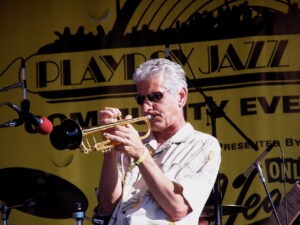
He reminisces about his collaborations with so many notable musicians, and the intensity of studio work in the 80’s. We learn valuable advice on mic placement when recording horns, techniques for falls and slurs, and he shares thoughts on the transition from analog to digital recording.
Tune in for amazing stories behind some of your favorite songs and horn parts: it’s all here, in the stone.

About Jerry Hey:
Jerry Hey is one of the defining trumpet voices and horn arrangers in modern popular music. Born in Dixon, Illinois, into a deeply musical family, he honed his craft with Charlie Geyer and later at Indiana University under legendary pedagogue William Adam. After an early run co-founding the jazz-fusion band Seawind in Hawaii, Hey moved to Los Angeles in the mid-1970s and quickly became a first-call session player and arranger.
From there, his sound is heard on a staggering number of iconic recordings. Hey’s horn writing and trumpet playing helped shape Michael Jackson’s Off the Wall and Thriller albums, and his long association with Quincy Jones produced landmark work for Earth, Wind & Fire, George Benson, Al Jarreau, Patti Austin, Barbra Streisand, Toto, and countless others. A six-time Grammy winner, he has been recognized repeatedly for his instrumental and vocal arrangements, as well as his contributions to major film and television scores, including Flashdance, The Color Purple, the Back to the Future trilogy, Forrest Gump, and Dreamgirls.
Most recently, Hey has opened his personal archives in Notes From The Past 50 Years, a 250-page collection of pop excerpts spanning his studio career. The book gathers more than 200 of his favorite licks, along with personal stories and rare photos that trace his path from early days in Los Angeles to his most iconic sessions—including a few lesser-known musical gems.
Equally at home leading a horn section, crafting a string chart, or delivering a lyrical flugelhorn solo, Hey remains a benchmark for precision, style, and imagination in the studio, with an influence that continues to shape how artists, arrangers, and producers think about horn sections today.

Jerry Hey episode links
Podcast Credits
- “A Room with a View“ – composed and performed by Howie Shear
- Audio Engineer – Ted Cragg
- Cover Photo Credit – Jerry Hey/Megan Noller
- Blog Photos Credit – Olivier Girard
- Podcast Host – John Snell
Transcript
Please note, this transcript is automatically generated. It may contain spelling and other errors. If you would like to assist us in editing or translating this transcript, please let us know at info@bobreeves.com.
JOHN SNELL: Hello and welcome to The Other Side of the Bell, a podcast dedicated to everything trumpet brought to you by Bob Reeves Brass. We’ll help you take your trumpet playing to the next level. I’m John Snell, trumpet specialist here at Bob Reeves Brass, and I’ll be your host for this episode. Joining me today is trumpeter and arranger, Jerry Hey. We’ll get to Jerry’s interview here in a moment after a word from our sponsor and some trumpet news.
JOHN SNELL: Well, I hope everyone had a wonderful Thanksgiving holiday here, at least in the US if you celebrate. we’re thankful for all of our listeners around the world. and I got to visit some of them in, uh, Tokyo, [00:02:00] Japan. I got back, uh, last week. Had a wonderful, trip over there.
A huge thank you to our hosts, Joy Brass, Mr. Sonata and all of their staff. They, uh, take amazing care of us just as they take care of their customers. I leave every trip to Japan always inspired, by how they serve their customers, the products that they carry, the selection, the service, the knowledge, the expertise that they have.
and it shows every time. So I’m always blown away. again, we were sold out on valve alignments. I was, uh, working up to the very last moment, packing up. And, uh, thankfully Haida airport is just, uh, 10 minutes away from the store. So, I was able to pack up and get over to my flight home. And, uh, found lots of, uh, new homes for mouthpieces.
A few Charlie Davis horns, a couple, uh, like I said, plenty of alignments and it was great to see the Alvin Mutes, Mr. Sonata and Joy Brass have carried Alvin Mutes, uh, for years. And, now that we’re, the new owners of Vin, it was great to [00:03:00] see the response to those, mutes and also the poppy water, which I haven’t talked about yet.
Mainly ’cause we don’t have any in the US and we’re gonna work on getting that. but, uh, the poppy water that is produced by Vin Mutes is very popular, not only for trumpet players as kind of a valve oil replacement, but also, uh, they package ’em in spray bottles for f. Trombone players, which to this audience, I know we have a few trombone players that listen, but, for those of you that double and or use slide trumpet, then, uh, you might consider the poppy water, as your, water for your slides, but less, I digress.
It was great to see, all of, the mutes over there being represented, and a few of them found happy homes as well. and if you’re just listening to this for the first time and you haven’t been listening to the podcast, the Bob Reeves Brass Company, purchased Vin Mutes, last spring.
So we are in the midst of ramping up production and getting things going. Uh, you know, tariffs and some, uh, you know, not being able to ship to the us. Uh, a [00:04:00] few, uh, hitches in the giddy up, but, nonetheless, we are still moving forward. And, uh, if you are interested in VIN mutes, we do have plenty of inventory on, uh, most of the models here in the us.
and if you’re abroad, you can get ’em from Japan, you can get ’em in Germany, and we still, we have lots of inventory in Sweden and can ship worldwide. Outside of the US without having to worry about tariffs and things. so anyway, not to go off on, uh, VIN Mutes. Uh, to wrap up on my trip to Japan.
it was a beautiful four or five days there. Uh, had great views of Mount Fuji. Check our Instagram, and our, actually some TikTok. I posted some videos. the pro players, the symphony players, the studio players, always show up and it’s not just them. I mean, we have, now that we’ve been going almost 20 years now, we have amateur players, weekend warriors, you know, whatever you want to call them.
They’re still fans of music and, uh, fans of great brass equipment, both for trumpet trombone, and now for french horn. we even had a few french horn players show [00:05:00] up to try the Dylan heart mouth pieces. So all in all, a great trip. And, uh, can’t wait to go back next year. a few dates coming up after the holidays.
I know a lot of you have asked about our next Dylan music trip. we have confirmed last weekend in, February, so I think that’s the 26th, 27th, and 28th of February. Mark your calendars. We will be at Dylan Music, in New Jersey. So more details to that as we get through the holidays and get a little closer.
we’ll be doing alignments by appointments, so we’ll be sure to send out a link for that. we’re working on a trip to the Pacific Northwest to visit our friends at Metropolitan Music. that’s gonna look like a springtime trip, so if we have anyone in the Seattle, Tacoma, you know, even, uh, Eastern Washington, Portland area and can make it up to the Seattle area.
We will be doing a multi-day event at Metropolitan Music, looking at, uh, early April right now. So put that on [00:06:00] your radar. Of course, we have the TMEA San Antonio conference coming up in February and, the National Trumpet Competition coming up in March. I believe that one’s in Iowa. So already starting to do a lot of traveling, next year in the first quarter, and hope to see you at one of them.
So that’s all the news I have for today. A special note. I am very excited. I’m always excited about my guests, but, I remember the first time I heard Ducktales, growing up. I didn’t know who the horn section was until many years later, but I just knew I loved the theme to Ducktales, to cartoon.
And come to find out, of course it is Jerry Hey and his horns, on that Disney cartoon back in the, what was it, late eighties, nineties. And, ever since then, my band director in high school, Tom Whaley, turned me on to the sea wind horns and. You know, Michael Jackson and what a pop horn arranging was and playing.
and then that just became a lifelong love of Jerry’s playing his horn section’s, playing, and of course his writing. [00:07:00] So, uh, when I saw this, I was literally in Japan when this got posted. Of course, this is the, uh, notes from the past 50 years, and if you haven’t heard about it, if you’ve been under a rock these past few months, it is a huge compendium.
Uh, you can see how thick this is if you’re watching this on YouTube that Jerry has put together of some of his popular charts and some of his not so popular charts that, uh, were surprises to me. but as soon as that came out, I said, I gotta get Jerry back on here. a quick, note. So if you’ve never listened to this podcast before.
I’ve had Jerry on twice. the first one was episode 15, which was our tribute to William Adam. It was not too long after Mr. Adam, his, uh, famed teacher from Indiana University passed away. And, he’s on a fabulous panel. Jerry Hey, Larry Hall Charlie Davis, Chris Bode, Bob Slack I’m sure I’m forgetting some folks.
Plus a lot of contributions from folks that couldn’t be there in person. That’s episode 15. We’ll throw a link to that down in the description, and on the show notes. and then Jerry did his [00:08:00] own interview on episode 22, over a hundred episodes ago. It’s amazing. so, and in that episode we did more of the traditional.
You know, how did you get started? his upbringing, his transition from student to professional player. Uh, and we touch a little bit on the, on the, arranging, aspects in that episode, but more primarily about, his trumpet playing his routine, that sort of thing. so if you, you’re interested in that sort of thing, follow those links or scroll back up to episode 15 into episode 22.
but in this episode we’re gonna break from the, uh, the mold a little bit, to focus more on his arrangement. And we do have some geeky trumpet talk in there as well. Uh, you know, we can’t avoid it. but really wanted to focus on, um, one on this book and his, uh, stories and tales from the 50 years of horn section writing he’s been doing.
So let’s get right to my interview with Jerry Hey.
JOHN SNELL: Well, today’s guest is one of the true architects of modern [00:09:00] horn writing, Grammy winning trumpeter and arranger. Jerry Hey from Michael Jackson’s Off the Wall and Thriller to landmark projects with Quincy Jones, earth, wind and Fire, George Benson, Al Jarreau, and countless others. His sound has defined an era of recording.
He’s now opened his archives in his new book notes from the past 50 years, and we’ll dig into these sessions, the writing and the stories behind some of the most iconic brass parts in pop history. And now here’s my interview with Jerry Hey.
JOHN SNELL: Well, I’m so honored to have joining me again for the second time, on the other side of the bell. Jerry Hey. Jerry, thanks for joining me again.
JERRY HEY: My pleasure.
JOHN SNELL: I didn’t run you off the first time. So,
JERRY HEY: no, I’m back again for more pain.
JOHN SNELL: uh, you know, the first interview, we talked a lot about your upbringing, your studies with Mr. Adam, you know, more of your playing stuff. And, this time we’re gonna focus more on your arranging, your studio work. you [00:10:00] know, thanks in part to your new book, uh, notes from the past 50 years.
so congratulations on that.
JERRY HEY: You.
JOHN SNELL: I mean, just an amazing tome of horn section plane. and, uh, I want to, to quote Gary Grant. Start with an easy one.
JERRY HEY: Yeah,
JOHN SNELL: So,
JERRY HEY: exactly.
JOHN SNELL: so can we start with what gave you the idea to do the book and kind of talk us through the process of putting it together?
JERRY HEY: Well, I had a lot of people ask about. An arranging book. I don’t really consider myself an arranger. you know, I’m a trumpet player who likes to play, good charts. So I, you know, I ended up doing that. so I just decided, what about if I, looked at some of these things and started putting ’em together.
So I kind of forced myself starting like, I don’t know, the third or 4th of January this year to put in four or five hours a week because I don’t have any of these charts. I had to transcribe everything.
JOHN SNELL: Really, so like
JERRY HEY: I don’t have one chart.
JOHN SNELL: [00:11:00] wow.
JERRY HEY: all of that is taken off. You know, recently, so, you know, there, there might be a mistake or two or a wrong rhythm or something in there just because the process of taking it off and then I put it into logic, which is not user friendly to this, and then printed that out and then sent it to my friend Mark Graham, who’s an, an amazing, has an amazing office at Joanne Kane’s office. they had to recopy I put in and who knows, you know, things happen. But, it just seemed like, one thing I can put out there. People have asked me to do this arranging book about, you know, my voicing and all that stuff. And, there’s not really any secrets to that that I have that like worthy of a book.
JOHN SNELL: So you took, took down the trumpet parts and, I mean, that’s amazing to know that you, you didn’t, I just assumed you had, you know, files full of stuff that you’d done through the years and [00:12:00] went through and pulled out the trumpet parts.
JERRY HEY: be outta house and home if that’s the case. Yeah. If I kept all my charts.
JOHN SNELL: but you said four or five hours a day, so it was, it was like a new Year’s resolution or something. You’re just like, okay, I’m gonna come back from the holidays and just do this.
JERRY HEY: Yeah,
JOHN SNELL: Wow. and how did you choose the charts?
JERRY HEY: so I went
JOHN SNELL: I.
JERRY HEY: all music.com, which is, has an amazing compendium of everything that I’ve done, record wise. they listed it in chronological order. So I went back to sea wind, which is basically the first thing we did that I recorded here. I listened to every song and so. to looked at every album. They list the album. Then I would try to see if it mentioned which songs we were on, if there were some credits that you know, we played on this song so I wouldn’t have to listen to the whole record to see what we played [00:13:00] on. there’s a website called Session Days, which really broke down very well, A lot of different earlier in my career.
recordings to each tune and who played on each tune. So that was good. There’s another one called discogs.com. Couple others that, so I’d had to research, go back and forth and research all of these when I looked, see an album. Okay, we played on this album. What songs are we on? Can I find out what songs were on so I don’t have to listen to the whole record? But if I couldn’t find that, then I’d listen to, I’d, know, spot check each to see if we were on it
JOHN SNELL: Yeah.
JERRY HEY: you know, move on.
JOHN SNELL: Yeah.
JERRY HEY: It was, it was quite a task.
JOHN SNELL: But that’s fascinating. Researching your own, your own life, your own history.
JERRY HEY: I, you know, and interesting, I included some things that I had totally forgotten about.
JOHN SNELL: Yeah. Well that, that, that’s what I gonna ask you about. ‘ cause I, I mean, and I, we’ve talked [00:14:00] before and I’ve asked you about certain things that I’ve heard you were on and you know, of like, I think might have been on that session, I don’t remember. ‘ cause you’ve done so many. So what are some of the surprises for you as you were going through this?
JERRY HEY: There was one by a French group called Sav, K-A-S-S-A-V, which we played on, several of the tunes, but I didn’t do the arranging on it. and. the horn parts were so unusual. We only played eight bars on each tune. In the middle of the tune there would be like a horn break and we’d do eight bars and that’s it.
Next tune. So I put one of those in. That was great. Couple others, I, I can’t really remember what they were right off hand, but that one for sure. and then when I did the, conference in Paris recently those guys came and I
JOHN SNELL: Really?
JERRY HEY: and I met the guy who did the arranging. Yeah, that was great.
JOHN SNELL: Oh, how cool. Had you remember when that session was? How long ago? I mean, was that an early one or was [00:15:00] it.
JERRY HEY: 12 years ago maybe.
JOHN SNELL: Okay. So not like sea wind days, but still,
JERRY HEY: no,
JOHN SNELL: still not yesterday.
JERRY HEY: Yeah,
JOHN SNELL: but what, what fun. That’s, uh, yeah, a little serendipity there. yeah, so it, that was the thing when I got the book, uh, my book arrived last Wednesday, and I mean, I, I mean, I’ve been a fan of yours for 30 something years. I remember my high school band director first told me about the sea wind horns and started playing me these tracks.
And, you know, I was going through, I was like, wow, I didn’t know you were on this. I’ve never heard of this. So it was like Christmas, that, along with your curated playlist, which will make a Yeah. Of a link to was 16 something hours, almost 17 hours of
JERRY HEY: wow.
JOHN SNELL: your charts. I mean, it’s absolutely incredible.
JERRY HEY: But I decided not to put the whole chart in on most of these things, some of the major ones that have the whole chart in. But, I just put little snippets in of a few licks, like the orchestral trumpet excerpts. You
JOHN SNELL: Mm,
JERRY HEY: [00:16:00] get, you know, four
JOHN SNELL: mm-hmm.
JERRY HEY: and the petruska or something, you know. So that’s kind of what I, I started out doing that and just putting. Snip it in. Okay. This is, you know, this is kind of a cool lick from this tune, you know, and move on.
JOHN SNELL: Yeah. And, and it’s, it’s great ’cause then you can fit more in, I mean, the, the thing looks like the bible almost what, 300 something pages?
JERRY HEY: Yeah.
JOHN SNELL: but uh, yeah, it’s great ’cause you can fit more tunes in and get the, the meaty licks but some of your more seminal works. You have you know, almost the full chart, if not the, the full trumpet chart, which is great for playing along or, or in my case, trying, trying to play along.
I’m still writing my fingerings in. So May, may, maybe by Christmas I’ll have the first half, written in. well, I did want, because you’d mentioned in the book, how you started writing and arranging and you, you said you used to do take downs of like, some of your favorite, horn sections.
Uh, tt Talk us through that. Who were, who were some of the folks you just, transcribed? What did you get from ’em?
JERRY HEY: Well, when we started off with [00:17:00] Sea Wind, we were playing of top 40 dance clubs, so we were playing stuff from the time. And Tower of Power was one. What
JOHN SNELL: Mm-hmm.
JERRY HEY: Of course, soul Vaccination. You got to fun Phis. there were only three of us at most in the horn section at the time, so I had to figure out how to take their five horns it three and, you know, make it kind of work for us. we also did some Edgar Winter White trash stuff, and we did, then we did Aretha Franklin, we did Little Pop Tunes. so varied playlist for us back then. And. We gotta have horn parts, so somebody had to take ’em off. So I, I ended up taking ’em off, which, looking back was kind of my schooling on arranging.
So you, you know, I kind of [00:18:00] learned how, tower of Power voiced their, five horns and how the Brecker Brothers, we did Skunk Funk and we did a couple, you know, we did some of their things, how they voiced things and, people from Motown on the Aretha and the other tunes that we were doing.
How, how that worked. So it was kind of my schooling on, that’s how I learned how to arrange for horns Plus, plus the fact that when we started in LA and we were playing at the baked potato, would come in and they’d say, we want the horn section to play on our record. Who’s arranging? Well, you are okay.
You know, we’d go in. three of us trumpet, two saxes, and you know, we would place my charts and, I go, well, that, you know, that sucks. Let’s change that. You know, we listened to it back and, didn’t like that. Let’s change it. Okay. Try this. Yeah, that’s better. So kinda learning on other [00:19:00] people’s dimes, you know, and, and that’s how I learned,
JOHN SNELL: So, taking down charts, learning on the job. I mean, was any of your trumpet backgrounds, I know you studied orchestral trumpet a lot, but you also were an avid jazz player as well, right? So did that vo vocabulary kind of creep into your writing?
JERRY HEY: the jazz part of, the rhythmic to the That comes into play. but nothing to do with harmony or arranging or any of
JOHN SNELL: Mm-hmm. So more of the phrasing and the, like I said, yeah. so at what point did you move from like the sea wind trumpet and two saxes to then adding another trumpet and adding trombone?
JERRY HEY: well we did, the Wiz with Quincy, with Michael Jackson. And then when we did that, it was for that ease on down the road. It was [00:20:00] three trumpets, Chuck, Gary, me, and two saxes and trombone. And that’s sort of kind of the first time that group got together. and then we did the brothers Johnson and. again, blam with Quincy. And, and that was the first time that wa it was the five of us together. Gary, myself, Kim and Larry on Saxes and Bill Reichenbach on trombone.
JOHN SNELL: So just kind, kind of became, you know, organically, so to speak, you know,
JERRY HEY: you
JOHN SNELL: was it something about the sound or something about just the, the players that you’re like, this is it.
JERRY HEY: I, well, Kim and Larry and I went to Indiana University together, so we, you know, been playing together for a long time. And then we went to Hawaii all together. Gary was in Hawaii with us for four years and we, you know, we played in big bands and shows and we had a small group, all of us together in Hawaii, kind of the predecessor to Sea Wind Gary, with Larry [00:21:00] Hall, and you know, a bunch of other people over there.
So we had that. We’d been playing together for a long time. We came over to la you know, why not continue that? was getting me on a lot of sessions outside of my writing. and then I heard Bill Rockenbach play and said, oh, well, you know, we, we gotta have that, you know? So it just became kind of, this feels good and feels, you know, family and everybody had the right attitude and knew that we were, were gonna do our job as it were, and we were gonna do it to the best of our ability no matter what it took.
JOHN SNELL: Hmm. Yeah. Amazing. So speaking of Gary, I mean we’ve, you know, lost him last year which is just terrible. And I know you guys were very close. Do you remember the, the first time you met Gary, was, was it in Hawaii?
JERRY HEY: it was in Hawaii.
I went over to Hawaii. In March of 71, and Larry Hall was, had gone over in January. And then [00:22:00] the, music contractor in Honolulu, we were working a lot. There was a lot of shows going on. Then he needed another trumpet player, so they called Gary Grant. I, oh man, Gary Grant’s coming to, why, why, why would he do that?
And, you know, I had heard him on Woody’s band, the record that he was on, and I thought, man, if he’s not really working in LA it’s, you know, so he came over. First day we met and he said, you wanna go practice? And I, yeah, sure. So we go down to the showroom where we were working. Larry and I were working, we started practicing and I’m listening to him and he goes up to a high F sharp, like I’d never heard before. And I went. Oh. I said, if this guy’s coming over here and he is not really working a lot in LA I’m in trouble
JOHN SNELL: Wow.
JERRY HEY: because I’ve never heard anything like that.
JOHN SNELL: Yeah.
JERRY HEY: So, you know, kind of from that point on [00:23:00] it was, whatever I do, he’s on.
JOHN SNELL: so did you guys practice together that first time? That was like the first introduction and then,
JERRY HEY: that
JOHN SNELL: yeah.
JERRY HEY: day we practiced, he said, you wanna play old jazz? And I said, yeah, sure. And I said, I know you know Clifford Brown’s Joy Spring Soul. And he goes, no way. And so I played him Joy Spring solo, and he, you know, freaked him out a little bit. so, you know, it was kind of a mutual love fest from the word go.
JOHN SNELL: Yeah, I always remember yeah, Gary’s interview on here where he talked about, you know, what it takes to be a great lead player. He is like, you gotta be a great jazz player first. You know, and that, uh, he always thought of himself, correct me if I’m wrong, as a jazz player, you know, happened to be able to play in the upper register and do that sort of thing.
But, uh, always thought of himself as a jazz player, which, uh, was surprising to me. I never, you know, not knowing him that closely. so through the years, I mean, would you, how the relationship, you guys just were in the studio seven to days a week, sometimes, right?
JERRY HEY: yeah. Like, 16 hours a day [00:24:00] kind of for a long time, it was pretty amazing.
JOHN SNELL: Yeah, you talk about like symphonies where you have a trumpet section or a brass, like Chicago for instance, you know, where the players are playing together for decades, but they’re playing what, three or four concerts a week, maybe a rehearsal here and there. you guys are literally, yeah, like you said, 16 hours a day.
I mean, talk about that. What kind of like trust and phrasing and things like that. Do you develop, almost, almost like one mind, right? Mm-hmm.
JERRY HEY: knows, where the cutoff is on the, you know, end of four or the 16th of four. And, you know, we’re all, doing the same inflections and, all the same, you know, short and long notes. And it, becomes a team basically.
JOHN SNELL: Mm-hmm.
JERRY HEY: working together, trying to, make one great horn section sound.
JOHN SNELL: And, uh, I, there’s a couple, notes you mentioned in your book about particular times when Gary was just on fire. Do [00:25:00] you remember any of those?
JERRY HEY: Many times and not, you know, Gary was also always on,
JOHN SNELL: Mm-hmm.
JERRY HEY: it that way. if you needed him to do anything, he was always there. A hundred percent. Anything. If, you know, let’s do it another time, you know, the most difficult parts. it’s not good enough, let’s do it again.
You know, Gary’s best point was his attitude.
JOHN SNELL: That kind of,
JERRY HEY: you know, yeah, he could play a high F sharp and if you were playing a high F sharp, you might as well go home. No one had an attitude like he
JOHN SNELL: mm-hmm.
JERRY HEY: as far as it’s not good enough. Let’s do it again.
JOHN SNELL: Get it done.
JERRY HEY: I’d have to say, you know, Gary, that’s damn good. I, I don’t need to know if we need to struggle a few more times with that. Especially, especially back in those days, tape when okay, you got a really good performance on tape, do you decide to erase that one, to do another take? that’s where it, you know, it, it [00:26:00] came. Okay. That’s good enough
JOHN SNELL: Yeah. That risk reward is different than going to a hard drive
JERRY HEY: Yeah. Let, yeah, let’s hear that last one back and you know, can you take that and just move that? Yeah, no, none of that. It had to be, right.
JOHN SNELL: talk about, you know, go walking to school in the snow uphill both ways.
JERRY HEY: Exactly.
JOHN SNELL: literally
JERRY HEY: Yeah.
JOHN SNELL: had to go through to get some of these parts down. Which, uh, it actually kinda leads me, I, I mean, I, one of the, I think. Most iconic, intros ever is in the stone. Can you tell us about that, like how I know you in the book, you’ve mentioned that you originally kind of shied away from it ’cause you hadn’t scored for that big of a horn section.
walk us through it, like why did you decide to do it and then what was the creative process like on that?
JERRY HEY: David Foster a great producer, keyboard player, songwriter, arranger, you, you know, impresario, you name it, guy’s Brilliant. Was working with Maurice White and he had a bunch of the tracks in, including [00:27:00] in The Stone is it’s his music. and he called me up and we, we had done some things with David as a producer, bill Champlin’s, first record called Single.
We did. and so he called me up and asked, you know, I’m doing Earth, wind and Fire. You want to do it? it’s gonna be four trumpets, four trombones, or five trombones, three saxes, and three French horns. I said, David, you know, I’m not really comfortable writing for a band like that. You know, I’d only written for either the three of us or the five of us most at that point. And so I originally said No. Plus there were gonna be guys in there that weren’t my first call. And at that point, I’m still kind of green in LA and I’m not in control. So it was, I’m doing the arranging and then it kind of going out into the air and I don’t have any control [00:28:00] over that. So it was a little scary and I said no, and he finally talked me into it, fortunately. so, you know, he went in and did it, and it, Bobby Bryant. Beshear, Steve meo and myself, Gary isn’t even on that record ’cause I couldn’t get him on it. I did get Bill Reichenbach on some of it.
JOHN SNELL: Mm-hmm.
JERRY HEY: so, anyway, so Dave and I, um, would get together at his house. were both working a lot during the day.
He was, at that point still mostly a studio piano player, in high demand. so I would go over to his house late at night, take a trumpet. He would sit at the piano, he’d play the parts, and I came in with some ideas. And so I’d play, how’s this, you know, I’d play that and he’d play the, you know, he, okay. So was a little bit of a process. With both [00:29:00] of us at the same time.
JOHN SNELL: Hmm
JERRY HEY: the horns are mine. Mostly the strings are his
JOHN SNELL: But there was a collaboration.
JERRY HEY: on, in the stone. Yeah. But we spent a couple days kind of going back and forth, and then I, you know, after Love is gone, same thing. I took my trumpet over there.
I took Ugal over there. it was a little bit of both.
JOHN SNELL: Fascinating. So, I mean, I, the idea of you like sitting at a desk, like where, I mean, would you actually write out ideas or was it more improvisational like that where you would go over and just hear lines and play it, play it off of him?
JERRY HEY: I would write that out,
JOHN SNELL: Okay.
JERRY HEY: just, I mean a bear sketch, you know, to start with on that, you know, a couple ideas. How’s this? And, you know, how’s this, especially on the intro.
JOHN SNELL: I mean, was the idea to always have a horn intro like that, or was it that that kind of developed, you know?
JERRY HEY: know, it’s such a big statement.
JOHN SNELL: Mm-hmm.
JERRY HEY: and it, I have the trek and, it’s nothing. It goes [00:30:00] bone, nothing, just hanging there and then blah, blah, blah. You know, again, hanging, hanging. So it’s gotta be something. It’s gotta be, why not trumpet?
JOHN SNELL: There’s our next bumper sticker
JERRY HEY: yeah.
JOHN SNELL: or T-shirt. Why not trumpet? I love it. That’s the, that’s the attitude to have. And then, you know, the rest is history. I mean, it’s, uh, that creative process. It’s just so fascinating, to hear about because I mean, these are tunes we’ve heard millions of times, some of us.
so you said yes to the project, even though it was a big horn section, didn’t have control, but then that was your intro into earth, one of fire. Right? You ended up doing several records for them, several hits.
JERRY HEY: yeah.
JOHN SNELL: it evolved into Euro horn section right on the sessions.
JERRY HEY: the on one album and we, we’d start at 10 o’clock in the morning on, you know, we’d go 10, sometimes we’d go 10 in the morning till midnight on these records with him, Maurice, and he was great. but [00:31:00] on one session, the, Earth Wind and Fire guys were in Chicago. They’re from Chicago and they were in Chicago. missed their flight to la and Maurice called me up and said, just hire whoever you want for this session. So that’s when Gary Chuck or Larry
JOHN SNELL: Mm-hmm.
JERRY HEY: Larry Williams Biba and Charlie Loper, that’s when that happened. And then, by this point I’m a little more able to be in control and, you know, say, you know, we need to do that again.
Or smaller section, little tighter. Maurice kind of said, yeah, just do your thing with, and then he ended up calling us in his book. He ended up calling us the white mob.
JOHN SNELL: You guys come in, lay it down, and, uh, yeah, the number of hits and tunes that aren’t necessarily, you know, blockbuster hits, billboard hits that are still just [00:32:00] incredible to listen to, um, is amazing. And all of those are on the, on that playlist that you put together. So you do an Earth, wind, and fire.
you, you had already done stuff for Michael Jackson, right? With Quincy, how much, when did the like thriller come around? That was a little bit later, right?
JERRY HEY: that was 83 I think we recorded, or 82 and it came out in 83,
JOHN SNELL: Yeah.
JERRY HEY: But that was after, you know, we did The Wiz originally, so that was kind of Quincy’s foot in the door with Michael Jackson.
JOHN SNELL: Mm-hmm.
JERRY HEY: and then the record company didn’t want him to do off the wall. They wanted somebody else to do off the
JOHN SNELL: Really?
JERRY HEY: Yeah. So I believe Michael picked Quincy, if I’m not mistaken on that.
JOHN SNELL: Yeah.
JERRY HEY: but
JOHN SNELL: Wow.
JERRY HEY: we did off the wall and we did a whole bunch of other records with Quincy, and then Thriller came up.
JOHN SNELL: Yeah. So, I mean in in terms of your career, was that the busiest? I mean, is that the point where you were just like, or was it already busy by that time? With LA Studio work?
JERRY HEY: pro probably. Well, because of
JOHN SNELL: [00:33:00] Mm-hmm.
JERRY HEY: came from Hawaii to LA a year before I did. And Chuck Finley had come over to Hawaii a few times also to play in shows and stuff and to be on vacation. We became friends then. when Gary moved over, and Gary started doing a lot of stuff together. Gary became pretty busy. And then when I came over, Gary got me on everything he was on, if he could. we did the Donny and Marie show, which was one of the first kind of major shows that I did. And, and we did, you know, a bunch of stuff Anyhow, and then we became really busy in the studio. There was a lot of TV shows. We were doing movies jingles this, a guy named Don Pi Strip would have 10 jingles a week. Brilliant writer and a great guy. he would’ve 10 jingles. So we were doing all of that. Plus I was starting to do some, quite a bit of arranging. So then it got [00:34:00] to be okay, well I can say we can only make the session at, you know, eight at night for the stuff that I’m arranging because we’re booked all day. So, you know, then it goes, okay, well how much do you really wanna work?
it became really crazy there for about or five years.
JOHN SNELL: Yeah. we had on the, the Horn podcast that we do Phil Yao, and he was talking about the scene in the eighties just with the film and TV and live work and, you know, he said, you know, they talked about three slots, morning, afternoon, evening. So you have 21 slots a week, you know, over the seven days.
And he would regularly have 17, 18 slots filled, 52 weeks a year kind of thing. Like just to give a picture of the people outside of LA to realize how much work there was back then. So I mean, my assumption is you were doing that kind of work plus the extra evening work with your, your own horn section.
Correct.
JERRY HEY: yeah. [00:35:00] had called one time for a session. He said, we, you know, we need to do a horn session. I said, Quincy the, and he called on a Wednesday. I said, Quincy, I don’t have anything available until a week from Saturday night at midnight is the first time I can do anything. And he said, great, let’s do it then. so that’s 10 days in advance and there was not a moment in there that I could fit Quincy in. So, you know, it was crazy
JOHN SNELL: Amazing. It’s, I mean, how did, how, how did you stay alive? How did you stay healthy? I mean, was it just you were young and just made it through?
JERRY HEY: didn’t know any better and all of that, you know? Yeah. Little bit of that. I always try to stay in pretty good shape,
JOHN SNELL: Mm-hmm.
JERRY HEY: running and eventually Gary and I got into racket ball, serious record ball. We play a couple hours every day.
JOHN SNELL: Really?
JERRY HEY: Yeah. Yeah.
JOHN SNELL: Wow. So
JERRY HEY: Re really serious.
JOHN SNELL: but before that you would run like casually [00:36:00] kind of thing or like a routine?
JERRY HEY: you know, three, four miles every day.
JOHN SNELL: Every day. Well, that’s, that’s more than an average. I go out for a jog kind of thing, so. So you did, I mean, obviously you just have to eat when you could eat on the go kind of thing. I mean, obviously that was at some sort of conscious thing just to survive, like
JERRY HEY: yeah,
I tried to eat pretty, you know, as good as possible. You
JOHN SNELL: mm-hmm.
JERRY HEY: sometimes it’s just, you just can’t do it. But
JOHN SNELL: Yeah, that’s just some of the logistical things that have just, you know, when I have a long day, I’m, I’m done for a week,
JERRY HEY: yeah.
JOHN SNELL: let alone having
JERRY HEY: yeah.
JOHN SNELL: just years of that kind of thing, and be able to come out the other side. one thing I wanna ask about, Gary, did you guys ever talk trumpet at all in all that, or did you guys just show up and do sessions?
I’m curious on your thoughts if there was any, you know. Geeky talk between you two.
JERRY HEY: So I believe when Gary came over to Hawaii, he was playing Gatson.
JOHN SNELL: Mm-hmm.
JERRY HEY: So he switched to Bach In Hawaii, through Mr. Adam, we had a, some kind of crazy [00:37:00] connection that we could get. trumpets, $235. So Gary switched to Bach. So we were playing Bach when we moved back to la then we moved over there and then all of a sudden we heard Chuck Finley.
And we go, oh man, listen to that. he’s playing Collicchio. Okay, well we better do that. little did we know that Chuck Finley sounds good on a garden hose, you know. so we switched to Kalik and it, bill Reichenbach hated it. It was such an intensely hard sound.
JOHN SNELL: Huh.
JERRY HEY: Recorded really well, not necessarily pleasant to the ear. so we played that for a while, then switched back to box. So, you know, we, we did talk that, a little bit, but it was always, put ’em out, piece of a horn and play it.
JOHN SNELL: Yeah.
JERRY HEY: , I’d show him Adam’s routine and he’d show me some of the stuff that he liked to do. And, but [00:38:00] we didn’t practice too much together.
JOHN SNELL: Probably didn’t need to. You guys were playing, playing so much together.
JERRY HEY: Playing. Yeah, we were playing a lot together. Well, I, I did like to do on my own warmup routine, you know, that been doing the Adam that I’d kind of figured out that works for me. so, we didn’t really have chance to play much together other than, 20 hours in the studio.
JOHN SNELL: Yeah. Then when you’re not in the studio, you’re taking the horn off the face
JERRY HEY: Yeah.
JOHN SNELL: for respite. So another thing I wanted, another topic I wanna talk about is the, the phrasing and the, articulations and things that you guys would come up with in the horn section. I was listening to some stuff coming up and that like your falls, the way you guys do your falls is so precise.
was that something that developed through the years or was that something you guys practiced together? how did that come about?
JERRY HEY: The phrasing part that comes
JOHN SNELL: Mm-hmm.
JERRY HEY: so that [00:39:00] when you’re playing 16th notes in a row, on certain occasions, da da sounds cool. When everybody is going, when everybody is doing that, really straight 16th notes 16th tongue sounds cool, but when it’s not, if you can make more jazz phrasing and we kind, it’s kind of slur across 16th notes, da da like that to, to try to make it swing a little bit more. And that kind of came from the, Kim and Larry and me playing together wise. and then trying to make that feel good in a pop situation. so that’s sort of how the phrasing thing came around. And that is one thing that makes [00:40:00] us sound different than I think everybody else is that kind of phrasing.
And so then, okay, we, you know, we’re gonna slur, we’re gonna tongue the first 16th note, we’re gonna slur the next two, and then we’re gonna slur the next two, da, da, da da like that to make it so it doesn’t go da da
JOHN SNELL: Mm-hmm.
JERRY HEY: that. Fall offs. I learned from Gary about the fall off. the fall off is as important as the note, you have to keep that intensity all the way down. It’s not down, it’s not half valve like that. It is down all the way down. that’s why those sound so good, the bottom of the fall off is as intense as the top of the note.
JOHN SNELL: And is that like physically, what do you, I mean, what do you have to do? Is it a mental thing?
JERRY HEY: it’s a little raw. It gets a little raw, doing that. so when you play that, and [00:41:00] you keep the intensity going down on the fall off and they put us back in the mix, you don’t necessarily hear all the fall off, but you hear the, you get the intensity of it.
JOHN SNELL: Mm-hmm. That and then the swells, the, like the, the, I could always tell your horn section if it wasn’t painfully obvious. Painfully obvious isn’t the right word. Obvious.
JERRY HEY: It’s painfully as, as, yeah.
JOHN SNELL: thinking about your chops. Yeah. No, if it isn’t obvious. Anyway the swells, like you guys, the way you do them is incredible.
Like, is that, again, is that something developed through the years, your signature, or is it a technique? What is that? I.
JERRY HEY: Just a little bit of us, playing together all that time, figuring out what we like, the cutoffs, making sure everybody’s cutting off at the same time, you know? Yeah. We’re gonna swell here, we’re, we’re gonna go up and down here and then, do all of, crazy in and out stuff.
And so, yeah, it’s, kind of just developed over the years.
JOHN SNELL: Mean in an in and out? Meaning like off [00:42:00] the mic or, yeah.
JERRY HEY: yeah. Off the mic and, swelling up and down quickly on a, like, of that and craziness, whatever we could do you, do something different.
JOHN SNELL: That come, comes at three in the morning.
JERRY HEY: Exactly.
JOHN SNELL: Yeah. So which which brings up, speaking of three in the morning, the Al Giro sessions. that was Jay Grayden, right? Who wanted to record or could only record starting at 11 at night? Is that,
JERRY HEY: he liked to work at night, so, I mean, he was a very busy studio guitar player, and when he decided to move into producing, he didn’t want the phone to bother him. So kind of turned his day around into working at night. He would get up at like eight at night and work eight at night till eight in the morning,
JOHN SNELL: Hmm.
JERRY HEY: and then sleep all day, and then work at night.
So consequently, he said, let’s start the session at 10 at night 10 at night usually meant [00:43:00] like. You know, we’d start at 11 at night go until six or seven in the morning. And then one day we had done four days of movie dates and TV film and stuff during the day. Jarome at night, four days in a row. had 13 hours sleep to Friday, from Monday to Friday. And we go to Bill Conte doing the Olympic music Friday morning at nine o’clock,
JOHN SNELL: Oh.
JERRY HEY: trumpets. And, so I got there. we didn’t finish till seven o’clock in the morning on Giro. So it’s nine o’clock, so you got ti enough time to go home and take a shower and try to get there by nine. So six trumpets I got there. Gary had jumped on the sixth book in a hurry. I think Bobby Finley was there. He was on fifth, so I was on fourth and I forget who else was there. [00:44:00] And Chuck shows up right at nine o’clock. I mean, with his hairs wet, you know. so the, the chart is four pages long and it starts out and the strings go DA dome Olympic music trumpets, high trumpet solo, like 16 bars long. Amazing. And I, I’m not kidding you, literally at this point, I was lucky to get a note out after Jerre.
JOHN SNELL: Mm-hmm.
JERRY HEY: He played the hell out of it, and then there’s like, the second two pages were all like notes and pads and stuff, and then the end, last 16 bars and that same trumpet soul again. And I think it ended on Id Unbelievable.
JOHN SNELL: That was Chuck.
JERRY HEY: Perfect. Yeah. Perfect. The first time. Okay, let’s record it.
He recorded it again better if that was [00:45:00] possible. The second time, literally a violist after the recording says, I think I have a wrong note.
JOHN SNELL: Oh no.
JERRY HEY: Yeah. Okay. So Bill said, yeah, it’s a wrong, okay, we gotta do it again. And Chuck played it better the third time. It was incredible. I mean, that was when I said, okay. I get Chuck Finley now.
JOHN SNELL: Yeah,
JERRY HEY: that, that was one of those moments that no way I could have done that
JOHN SNELL: yeah. Incredible. Incredible.
JERRY HEY: Yeah. Really amazing.
JOHN SNELL: And that was the do you want, which AU sessions those were that week? Was that the,
JERRY HEY: album
JOHN SNELL: that was au.
JERRY HEY: boogie Down and, you know, all of those save me step by step. Yeah. That was those
JOHN SNELL: You know, you could have taken it easier on yourself. You didn’t have to write,
JERRY HEY: Yeah. Gary said, say who wrote this shit.
JOHN SNELL: so the, I mean, the, the B flats on Love is Waiting. So that was you, I read in the [00:46:00] book that was
JERRY HEY: is me. Yeah.
JOHN SNELL: Yeah, man.
JERRY HEY: Yeah. They were, that was Good night. That night. Yeah. ’cause Gary and Chuck are playing down in Octave, it’s not always that strong when you got two killers below you in Octave.
JOHN SNELL: Yeah. Give you a good, foundation to sit on. was that, you don’t, was that like at 11 o’clock or was that at four in the morning? Do you remember?
JERRY HEY: on that one, I’m not sure if that was the first tune we did that night,
JOHN SNELL: Yeah.
JERRY HEY: probably started with the intro and then did the rero again. You know, so we would do stuff like sections at a time. So we, you know, okay, we’ve learned that,
JOHN SNELL: Okay.
JERRY HEY: it on the rero again.
JOHN SNELL: Yeah.
JERRY HEY: but I don’t remember when it was, but I mean, some of the other tunes for sure were at six at night, but we would always, if, if there was some crazy fade, you know, there usually
JOHN SNELL: Mm-hmm.
JERRY HEY: would usually do the fade first.
JOHN SNELL: [00:47:00] Yeah. get the chops outta the way and then Yeah.
JERRY HEY: the ridiculous stuff over with
There’s just no way you can play that stuff, you
JOHN SNELL: Yeah. Well, I was gonna say, like the subtitle of your book should be, how much chops were left on the cutting room floor or at the Mercy of the Fader, right? Because I mean, how many times, what was it, Quincy, I think you said that like loved going on vamp after vamp, after vamp, after vamp, and then ended up using 16 measures for the album kind of thing.
JERRY HEY: yeah. We, we had a five minute vamp one time. One of the harder things we ever played that maybe made, you know, 15 seconds on the record that lasted the vamp lasted five minutes. just crazy. And we did Quincy every time because he liked back in the days with tape, it roll, let the band. Do their thing and it would go on for 15 minutes and maybe there would be [00:48:00] something, down in minute 10 he would wanna edit and put in earlier. You never know. like on, don’t stop on the vamp on that, that goes. So we played that probably for three or four minutes. and then he didn’t even use it, you know, it’s just, it’s just gnet I guess, on there.
JOHN SNELL: Yeah.
JERRY HEY: I mean, stuff like that. On the end of Burn This disco out, Bow, I bet we played that for four minutes, killing minutes and you know, it makes it one and a half times.
JOHN SNELL: Yeah. It was that time. Well, I mean, Quincy was a trumpet player, right? Like he was a fabulous musician, and I’m sure he knew when you have musicians, especially if you’re caliber the people on the sessions caliber, things happen. Magic happens, you know,
JERRY HEY: [00:49:00] yeah.
JOHN SNELL: As does
JERRY HEY: he, they on, on the one Brother Johnson ban that went for five minutes. That was the one so we recorded and we came back the next day to do some more tunes. And when we came back, Quincy And, Bruce were in listening to that vamp. I mean, it was cranked up loud in there, just loud. And, Gary and I was talking like, I think we’re in, you know, that was kind of the first big record that we’d done with Quincy so he knew we could do the job at that point.
JOHN SNELL: Yeah. Had that, had that trust in you and Yeah. Amazing. Amazing. so I obviously gone through your career the, I mean, there is a big shift from, as we kind of alluded to earlier, from tape to then digital recording. I mean, do you think something gets lost now that, uh, we’ve gone to digital and you can punch in and move, pitch up and [00:50:00] down and time left and right, et cetera?
Or do you have a preference between one or the other? I mean, I’m sure your chops prefer one over the other, but
JERRY HEY: I think the advancement of, you know,
JOHN SNELL: mm-hmm.
JERRY HEY: When we first switched over, Bruce wasn’t really that Quincy’s engineer wasn’t really that thrilled with it. you know, hard, a little brittle sounding, but, let’s face it these days, how many people listen to, high fidelity and, you know, it’s MP three, which is the sound is reduced and computer speakers and or buds, you know? But the difference, you know, the difference between tape of course and today is pro tools. that’s what really makes the difference and the ease of at one time pretty good being able to make it sound good.
JOHN SNELL: Mm-hmm.
JERRY HEY: but the beauty [00:51:00] is when you have really good players. So Wayne Bergeron plays on everything I do now. you still have really good players with my son who is engineering, who is brilliant in the studio. That you can do what would have taken us two hours back in the day to now it takes 20 minutes maybe. And because he, Andrew, my son, is so good and so musical it’s, I won’t say it’s better, but it’s easier.
JOHN SNELL: You get to the end product faster,
JERRY HEY: Way faster.
JOHN SNELL: Less blood and sweat
JERRY HEY: Yeah. But,
JOHN SNELL: from the horn section.
JERRY HEY: but only with a few guys,
JOHN SNELL: Yeah.
JERRY HEY: I mean, it, it’s, I won’t do anything now without him.
JOHN SNELL: Mm-hmm.
JERRY HEY: because I have done some things with other people is like pulling teeth. You know? They don’t, they don’t understand the [00:52:00] whole process. First of all, Andrew knows everything.
All my mics set up how I like to record, how I like to pan. Verb, all of that stuff. He’s got it all just set up. When we walk in. There’s, you know, we don’t, we rehearse a couple of the hard licks and there’s no, let me hear Trump at one, we’re ready to go.
JOHN SNELL: Yeah, well-oiled machine. Yeah. But it’s, it’s how you use the tool. It’s,
JERRY HEY: definitely.
JOHN SNELL: I think it’s a lot easier to abuse digital stuff, you know, than it is to actually use it musically. so fortunately good DNA
JERRY HEY: Yeah.
JOHN SNELL: this apparently. so speaking about micing, um, any, any advice on how to properly mic horn section or specifically trumpet since we’re a trumpet podcast?
JERRY HEY: trumpet in particular I prefer fewer mics on. Up to three players, maybe even four players. We have done some things with four players on one mic. You gotta have four guys that are [00:53:00] basically equal quality caliber players that blends on the mic. And it, you know, a, a great mike.
obviously Mike’s these days are really expensive. Noman Tube mikes, which I prefer are, outrageous these days. A Royer Mike is, a great sounding microphone for certain things. I use a KM 54 microphone for like more kind of high intensity things. It gives a little bit of a end help. To the trumpets, I think, you know, three or four feet away as Bruce Sine said, how would you like if you Micah Trumpet, how would you like to put your ear in front of a trumpet bell? Basically the same thing is what you’re putting a microphone into.
JOHN SNELL: Hm.
JERRY HEY: So, you know, you get, you get [00:54:00] a chance to have a little bit of sound development when the microphone is three or four feet away. if it’s two guys they can easily balance on Micro one microphone. The Giro stuff is three guys on one microphone. wind and fires. Three guys on the microphone.
JOHN SNELL: Hm.
JERRY HEY: all of the Quincy stuff is one Gary and me. Or Chuck and me on one microphone. So the fewer the better. And of course, good microphones. Trombone, same thing. I, you know, we’ve used Royer on trombone. now with Andrew, the studio he’s working at bought a big microphone collection, so he’s got some really crazy mics now two 50 ones and AKGs and all kinds of, you know, U 47, M fifties. He, you know, he sets up really amazing microphones now, and he, he also on [00:55:00] saxophone, he puts U 47 on a saxophone U 67. He puts cam 54 on a sax which I know is Brendan Field’s favorite saxophone, Mike. so. Good, Mike. a lot comes down to the players, a lot comes down to the engineer, a lot comes down to the arrangement, the room, it’s a little bit of everything.
JOHN SNELL: Yeah, it’s using the tools though, but it’s fast. There’s so many steps in the process. I was reading some of the excerpts you have in your book. you would double stack the horns. and in fact, there’s one in particular, I can’t think of the name right now, where you had, recorded on the mic and then like six feet away and then like 20 feet away, something like that.
what was the purpose of that and what effect did you get?
JERRY HEY: So, that is on, don’t stop till you get it up.
JOHN SNELL: That’s right. Yeah.
JERRY HEY: the, the bridge section, is another verse. And then, and I are playing this. trumpet part, which is sort of the guitar part and the bass part kind of put together. So [00:56:00] we played that and we, doubled it and Bruce said, step back five feet. stepped back five feet and we did it again, and he stepped back another five feet. We did it again. We kept it. did six tracks stepping back five feet each time. So we were 30 at least feet away from the microphone on the sixth track. So because of the distance of the microphone, it gives it a little bit more depth. you don’t really hear it on the record. but you would hear it we hadn’t done that. be a little bit more in your face.
JOHN SNELL: Hmm.
JERRY HEY: was working on the. Upcoming Michael Jackson movie, and are using the original, music for, throughout Michael’s career. So he, you know, Andrew has copies of the mix stems [00:57:00] for like A, B, C, and I, you know, I want you back. And he also has Don’t Stop. So we listened to Don’t Stop the other day, and he sold it up those trumpets. So it’s the mixed stem of those trumpets. Sold it up with all of Bruce’s reverb and just beautiful sound. So there you could hear There’s, 12 trumpets playing that.
JOHN SNELL: Wow. Oh, that’d be amazing. That’d be amazing to hear.
JERRY HEY: was, it was really, uh, it, it was, um, do you know who Greg Wells is?
JOHN SNELL: Yeah, yeah, yeah.
JERRY HEY: Greg was, happened to be working on the new Wicked Movie soundtrack in the next room, the Adobe Atmos room. He happened to be working on it. He came in and listened to it and Andrew was soloing up all everything and he was floored,
JOHN SNELL: Wow.
JERRY HEY: know, just to listen to that.
JOHN SNELL: Well, you know, I mean, we have what, what all those Rudy Van Gelder editions of the great jazz. I think we need a Jerry Hay [00:58:00] editions of your tracks.
JERRY HEY: yeah,
JOHN SNELL: Uh, because I, I mean, one of the running themes I think in your book also is, you know, I wish the horns had been a little bit hotter in this mix. You know?
’cause you guys are playing some crazy lick and it gets hidden behind strings or a synth or something, or taken out completely.
JERRY HEY: yeah, yeah,
JOHN SNELL: God, I mean, how cool would it be to have, have the Jerry Hay mixes with the horns front and center?
JERRY HEY: Well, you know that one. I had that cassette of, a hot mix of all of that stuff that I think it’s still out there
JOHN SNELL: Mm-hmm.
JERRY HEY: because every time that I would go into the studio when we first started, I would go in and I would, cassette that I would get sent to write the song, I would take it back in and on the other side I would have, the engineer record with the horns real hot. So that’s how some of those things came out I had, you know, hot horn takes of those
JOHN SNELL: Mm-hmm.
JERRY HEY: on. And then, you know, you can only do that for so long.
JOHN SNELL: Yeah. [00:59:00] Oh, but some someday maybe we can, uh, we can start a petition,
JERRY HEY: There, there is one guy on the internet that called Score Man, that he has a real good program that he isolates the horns on things. It’s kind of cool.
JOHN SNELL: but still taken from the final recording though, right? Because that
JERRY HEY: is still,
JOHN SNELL: just.
JERRY HEY: not the real hearing it, yeah. It’s still digitally analyzed
JOHN SNELL: The essence of your horn section, and that sound is as a purist.
JERRY HEY: Yeah,
JOHN SNELL: Uh, beggars can’t be choosers though, you know? Uh, well, Jerry, man, I, I absolutely thank you for your time. I know you’ve jet lag. You’ve been dealing with a cold thing. And to sit and talk about, uh, your life and your ranging hass been absolute honor, as always.
so, uh, hay horns.com right, is where folks can get the book, and learn about all that’s going on. And, uh, but most importantly, get the book. and, uh, I mean, the, the first time you were on here, I asked for your best piece of advice, so I can’t ask that again. [01:00:00] But you know, your notes from the past 50 years kind of goes through the last 50 years, of your different plane you could do.
Um, so if you could go back 50 years and tell a younger Jerry Hay, Do something different or change something. You know what? What would you tell the younger version of yourself 50 years ago?
JERRY HEY: Well, I mean, I always consider myself a trumpet player and not an arranger. And if I had it to do over again, I would say concentrate on trumpet more, because that’s really where my heart is. But because of my arranging, we got to play on all of these things. So it’s kind of a two-edged sword, but that would be, you know, if I had it to do over again, I wish I was still playing.
JOHN SNELL: Mm-hmm.
JERRY HEY: but the arranging became more, not more important, but it became an equal to trumpet. the focus was on, do the producers [01:01:00] like the charts? Are we in tune, are we in time? all of that stuff. How’s the, is the engineer good? And, you know, so I had to, you know, it was all of that. then I had to play trumpet, so it, trumpet lost,
JOHN SNELL: Mm-hmm. Yeah.
JERRY HEY: so that, that would kind of be, I guess I wish I was still playing trumpet. So
JOHN SNELL: Jeff,
JERRY HEY: comes
JOHN SNELL: you, you’d go back and tell yourself that, but certainly some amazing opportunities and, the listeners out there around the world, I mean, the impact that you’ve had, uh, through your trumpet plane and your arranging is been, you know, absolutely amazing. So,
JERRY HEY: you.
JOHN SNELL: wonderful advice.
Thank you for the book. Again, I, I, I don’t wanna say I ignored my family over Thanksgiving, but I certainly have, I mean, I have it right here. I’ve been, I’ve just been pouring through it. I mean, what an amazing resource and thank you also for including Ducktales in there. Probably the mo not your most seminal work, but for me, that’s what got me like horn section, hearing that as an [01:02:00] anthem of my youth.
So it was cool to see that included and I tried to play along.
JERRY HEY: The, the, i, I missed. So the book is mostly chronological. And then, so I saw there was a, I was listed as a Disney compilation. I said, Disney compilation, what is that? And, you know, so I, okay, he goes, well, Ducktales, I forgot about Ducktales. So, you know, I couldn’t put everything in this book.
And
JOHN SNELL: Yeah,
JERRY HEY: a whole, I could do another book stuff that I left out. but, you know, I saw Ducktales and, oh man, I don’t care. It’s not in order. I don’t care.
JOHN SNELL: toss it in there.
JERRY HEY: yeah, I gotta throw it in.
JOHN SNELL: Well, if there’s more stuff, maybe a New Year’s resolution for 2026.
JERRY HEY: Uh, Of that. And then, and then because of this, people, you know, have written me and say, well, we were hoping that these would be the charts, and then I’d say, well, you know what? I don’t have any charts. So for me to write, rewrite the charts. Would be my version [01:03:00] today of what I think they might have been back then.
JOHN SNELL: Yeah.
JERRY HEY: is a little different now
JOHN SNELL: Yeah,
JERRY HEY: it was then voicing wise and who plays what. so that would be a major task to do that. But I might do some kind of, 20 page, this is what I do when I’m arranging, little thing. It, there’s no secrets,
JOHN SNELL: yeah,
JERRY HEY: you gotta sit down and up with something you like.
JOHN SNELL: yeah,
JERRY HEY: So basically it.
JOHN SNELL: Well if, if, if you do come up with something like that, let us know and I’m sure it’ll be on the website.
JERRY HEY: I’ll
JOHN SNELL: Uh,
absolute pleasure, Jerry. Thank you so much. And I’ve a little disappointed that the book didn’t come with a bottle of wine, but,
JERRY HEY: well, oh, then, then the next thing is, I wrote, wrote to somebody, Wine friend of mine, I said the next, that I’ll have is a bottle of wine from the year of the record and we’ll do a, like a listening party. And I said, [01:04:00] it’s going to a thousand a seat.
JOHN SNELL: Okay. Sign me up please. Lemme know when the, lemme know when the pre-sale is. I’ll be there. Alright, thank you.
JERRY HEY: yeah, sit there with a bottle of wine and, you know, charts and yeah.
JOHN SNELL: Okay. We gotta do it.
JERRY HEY: Yep.
JOHN SNELL: Sounds good. Thank you so much Jerry.
JERRY HEY: Yep. John.
JOHN SNELL: A huge thank you to Jerry for his, time. he had just come back from Europe. He did a, great masterclass in France and then another one in the UK, in London, and picked up a cold somewhere along the way and was still recovering from that. So, and I mean. In true, uh, Jerry Hey fashion, still got up, had his coffee, and gave a just a tremendous interview, just like he did for decades.
Those stories that he told. I mean, really unbelievable. You know, what did he say? 13 hours of sleep from Monday through Friday during, uh, one of the Al Jarreau albums, plus the TV and movie dates he was doing during the [01:05:00] day. So, I mean his, his institution, his dedication, perseverance, and everything he does just always shows including.
giving us a killer interview, when he could have been in bed sipping on some tea and having some chicken noodle soup. So again, thank you Jerry for your time. Of course, as we mentioned, hay horns.com is the website where you can pick up the book. He also on Instagram @heyhorns as well.
And we’ll have the links to those. But, uh, if you don’t wanna follow the links, you can just look ’em up yourself. he is being, getting more active on social media and sharing more stories and pictures and things. So, uh, definitely recommend following him on there. and if you haven’t picked up the book I highly recommend it. I got my copy. I couldn’t order it fast enough. I was sitting, I think it was like three in the morning in Japan, uh, when it went live. And I, I ordered it Apple Pay. I didn’t even have to type anything in. I just double clicked. And uh, when I got back it was sitting at my front doorstep and it was like Christmas.
cause not only is it, great to see the music written [01:06:00] down that I’ve heard. My whole life. but just about every excerpt he has in there includes an anecdote, short or long about a story about the session or who was on it or who was playing particularly good that day. things like that. So, even if you’re not a trumpet player, even if you’re just a fan of the music, just the history in the book, is worth the price of admission itself.
Like I said, I mean it’s 300 pages. There’s a lifetime, worth of stuff in there and, uh, I was kind of joking with Jerry afterwards. I’m still writing the fingerings in, uh, and counting some of the ledger lines. I haven’t read some of those notes above the staff. So it takes me some time to count the ledger lines to figure out what note they were actually playing on that session.
Anyway, hey, horns.com. all the information’s there. Thank you for listening. Uh, we got some wonderful guests coming up shortly. So hit that subscribe button, hit that five star review button. If you’re watching this on YouTube, feed the algorithm monster. Hit that thumbs up. You know, leave a comment. What [01:07:00] was your favorite, part of the interview?
What was your favorite, Jerry Hey track? You know, those kinds of things are fun and, uh, it helps make this podcast more visible to the other brass players out there. Until next time, let’s go out and make some music.