Louis Dowdeswell Trumpet Interview
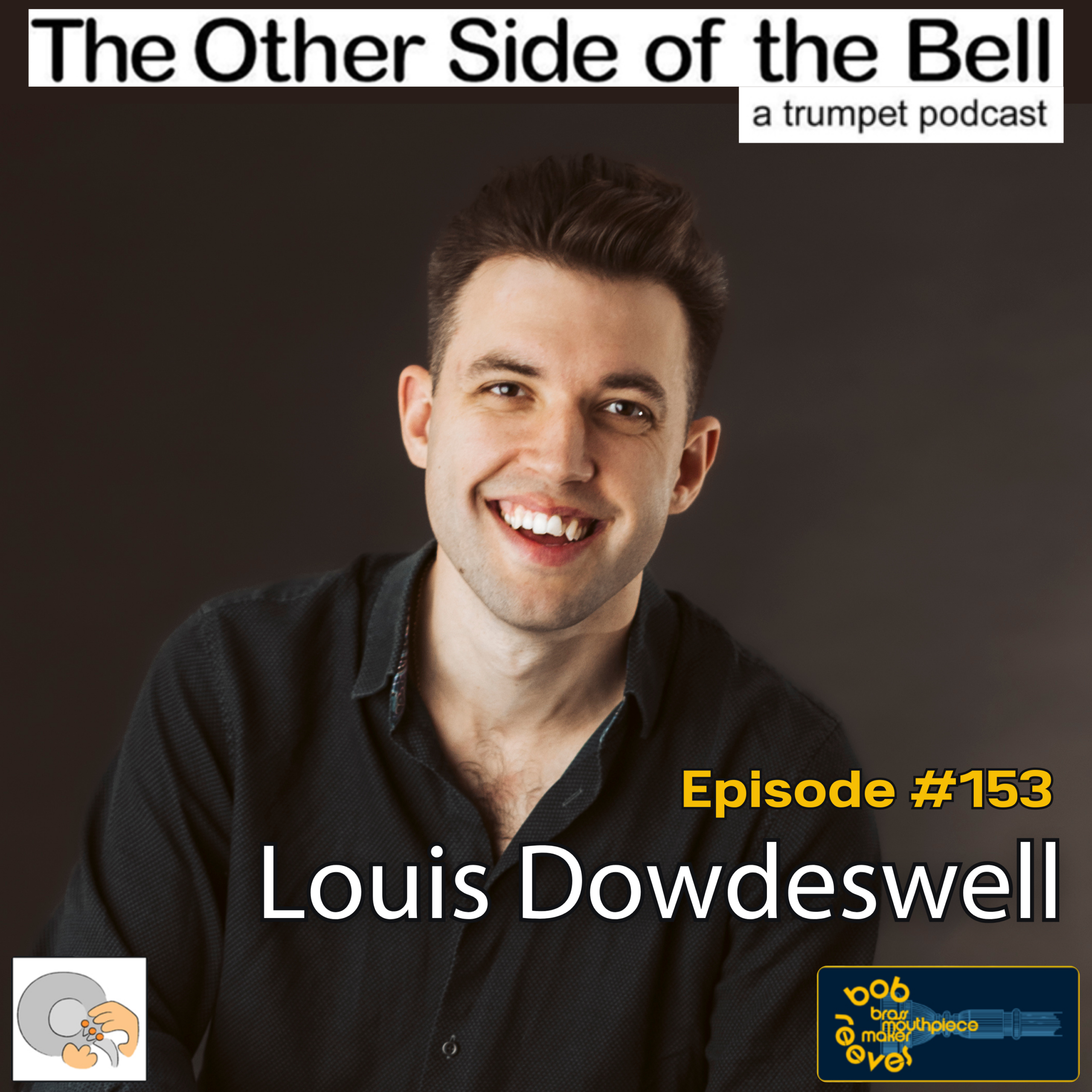
Welcome to the show notes for Episode #153 of The Other Side of the Bell – A Trumpet Podcast. This episode features trumpet performer, producer and creator Louis Dowdeswell.
Listen to or download the episode below:


About Louis Dowdeswell





Louis Dowdeswell episode links
Upcoming Bob Reeves Brass Mouthpieces Events
-
National Trumpet Festival, March 20-22, University of Iowa, Iowa City, IA
https://trumpetmouthpiece.com/products/national-trumpet-competition-valve-alignment-special - Metropolitan Music, April 10-11, Seattle, WA
https://calendly.com/bobreevesbrass/metropolitan-music-valve-alignment-appointment - Arkansas Trumpet Day, April 18th, Arkansas State University, Jonesboro, AR
Podcast Credits
- “A Room with a View“ – composed and performed by Howie Shear
- Audio Engineer – Ted Cragg
- Cover Photo Credit – Courtesy Louis Dowdeswell
- Podcast Host – John Snell
Transcript
Please note, this transcript is automatically generated. It may contain spelling and other errors. If you would like to assist us in editing or translating this transcript, please let us know at info@bobreeves.com.
JOHN SNELL: Hello and welcome to The Other Side of the Bell, a podcast dedicated to everything trumpet brought to you by Bob Reeves Brass. We’ll help you take your trumpet playing to the next level. I’m John Snell, trumpet specialist here at Bob Reeves Brass, and I’ll be your host for this episode.
Joining me today is trumpeter Louis Dowdeswell.
We’ll get to Louis’s interview here in a moment after a word from our sponsor and some trumpet news.
[00:01:00]
JOHN SNELL: Well, as I’m recording this, I’m packing to go to the National Trumpet Competition, so I hope to see a lot of you there. it’s still not too late to sign up for a valve alignment. we’ll have the link in the description. Uh, we have a few slots left. so if you’re interested in getting a valve alignment at the National Trumpet [00:02:00] Competition, the dates March 20th to the 22nd, literally in a few days here.
Like I said, I’m heading to the airport. we still have a few slots left for valve alignment. click the link to pre-order and you can save 25 bucks. Should be a wonderful event. we shipped half the shop. we got lots of guard bags and set, including some cool one-off bags that we picked up from the Nam Show.
of course we’ll have the old vein mutes. We’ll have, uh, some other selection of mutes from Charlie Davison. Trump core and yon and, lots of fun things, uh, oh, by the way, as well as 350 trumpet mouth pieces, including our 19 backboard, our newest lead backboard that we came out with, as well as our, off menu, symphonic series.
So be sure to try those out. If you’re heading to the National Trumpet Competition, Iowa City, university of Iowa, March 20th to 22nd. Other than that, I do want to thank our newest dealer for, their opening order, Phil Parker. kind of fitting since we have a guest from the UK today, we [00:03:00] haven’t had a dealer in London or any of, UK in the history of Bob Reeves for some reason.
We have dealers all over the world. so it’s great to finally have some representation. And, uh, Phil Parker’s got a wonderful store in London. If you’re in and around the area or just traveling through London, pop over. They have a huge selection of our mouthpieces for trumpet, flugel. They have some provenance mouthpieces.
They have some, artist models. They also picked up some trombone mouth pieces as well. So let your trombone buddies know. we have a lot of customers in the UK and they have to ship either, internationally from Europe or directly from us. So now you can just pop in to Phil Parker’s and try a.
From a great selection of our pieces, coming up after the National Trumpet Competition. As I mentioned before, metropolitan Music, we will be there April 10th and 11th. we’ll have the calendar link, to, uh, schedule an alignment appointment at Metropolitan Music. Again, make sure you go to the Kirkland Store, not their Seattle store.
So we’ll be at, uh, the Kirkland [00:04:00] Washington. Location. And then, the following day, Sunday, April 12th will be in Bellingham, Washington for the Washington State chapter of the International Trumpet Guild One day event. They have some wonderful artists giving masterclasses and recitals, and we’ll be in the vendor room doing v alignments as well.
those will just be first come, first serve. It’s a one day event, so if you want an alignment and you can’t make it to Metropolitan Music, head over and be first in line in Bellingham. Another event that just came up, that you’ll be interested in, and certainly your trombone friends. Uh, we will be hosting a principal trombonist of the New York Phil Harmonic and Shires artist, Joe Lesi here for a masterclass and a q and a session. the event will be held at the Colburn School in downtown la.
On April 4th, the masterclass starts at 2:00 PM and then I believe the q and a session starts at four 30. I might have the times wrong, but we’ll, we’ll have the information for you. There’ll also be a vendor room, where [00:05:00] we’ll have a great selection of shires, trombones, and mouthpieces. so if you double on trombone, and I know we have a few trombone players that listen to the trumpet podcast.
They won’t admit it to their friends, but they secretly listen. Nonetheless, uh, for all brass players, hearing Joe’s wisdom and advice is gonna be an amazing event. So come by. It’s completely free again, April 4th, at 2:00 PM at this Colburn school. And please share this with your trombone friends.
It’s gonna be a wonderful event. Looking forward to hosting it. The following week, I’ll be heading out to Jonesboro, Arkansas for the Arkansas Trumpet Festival held at Arkansas State. Hosted by my buddy rem Samoas. they have a wonderful event of, masterclasses and recitals. The date for that Saturday, April 18th, we’ll be doing v alignments there.
That’s gonna be first come, first serve, no pre-booking or anything since it’s just a one day event. And I’ll have. The road show, all the trumpet mouth pieces, some guard bags and some mutes. in addition for that [00:06:00] one, we’re honored to be, representing Trump core mutes at that, festival.
So we’ll have at a table. Chris from Trump Core is sending down a few boxes of goodies for us. hopefully some DACA fage, mutes. Those things are just amazing. They look incredible and they sound incredible. and, uh, he’s got so many fun mutes both of, uh, conventional. If I may, uh, designs cup mute, straight mutes, but also some of his, more creative mutes like the enigma, the vortex, things like that.
So we’ll have a great selection of those next to our normal setup. So see you in Arkansas. I’ll see you, uh, in Washington, and hopefully we’ll see you at the Joe Alessi event. And if you’re in the uk, go visit Phil Parker Music. All right. Now, this is an amazing guest today. we do talk a lot about trumpet, although this is not of your, uh, heavy valve cap and valve oil variety.
we go real deep. So buckle up for my guest today, Louis Dowdeswell.
[00:07:00] Louis Dowdeswell is an acclaimed trumpeter band leader and educator whose career spans recording, touring and education, a graduate of the Royal Academy of Music. He performed lead trumpet on Michael Les’s Grammy Award-winning track hire, and has worked with Paul McCartney, Taylor Swift, Billy Eilish, Robbie Williams, and more his plain features on films including James Bond.
No Time to Die Barbie and don’t look up founder of Louis’ Trumpet Academy and an international Khan Selmer Vincent Bach artist. Louis balances his international career with family life alongside his wife, opera singer, Millie and their two boys, Reggie and Stanley. And now here’s my interview with Louis Dowdeswell.
JOHN SNELL: Well, I’m so honored to have joining me today from across the pond, Louie Doswell. Louie, how’s it going?
LOUIS DOWDESWELL: Great, John, how are you? I’m, uh, yeah, very, very excited to be here. Well,
JOHN SNELL: Yeah, yeah. And I mean, you’ve been doing interviews [00:08:00] now as part of your, uh, you know, your education program. super cool to talk about some of those and a lot of things you’ve got going on. but before we get there, let’s start right from the beginning. And I’m curious how you found the trumpet, or did the trumpet find you?
LOUIS DOWDESWELL: huh, uh, so my mother, is a music teacher and my father, plays violin and dial like electric bass. And so they started a big band in 1997. I was about four years old. And, uh, music system been a huge part of my whole family. Both my sisters went to music college as well. My little sister plays in the Royal Air
Force, as a musician there.
And, yeah, went through music school and I, it’s just never, it was never gonna be anything else really. the trumpet was the last instrument I picked up. I originally started on piano and then went to
drums and then, trumpet last. But I had a, you know, a little special, skill on the trumpet, and that’s ultimately what ended up, sealing the deal. I don’t know, I think maybe I just [00:09:00] got a little bit better, a little quicker on the trumpet. The drums was probably my favorite for a long time, but,
JOHN SNELL: Get the aggression out.
LOUIS DOWDESWELL: yeah, tell me about it. Uh, but it was, yeah, it’s very competitive instrument as well. Trumpet is two, but drums in particular, so I think that. the trumpet just ended up being the, the choice. Um, there was no
chance of us not learning musical instruments and there was also no chance of us not taking it seriously.
JOHN SNELL: You’re just surrounded by it and your, your parents fostered,
LOUIS DOWDESWELL: Yeah, I don’t, I can’t imagine what it would be like to grow up in a, a house without it.
JOHN SNELL: so how old were you when you started the, you said piano and drums. How old are, were you when you started the trumpet?
LOUIS DOWDESWELL: seven,
JOHN SNELL: So,
LOUIS DOWDESWELL: piano at four and then drums at five.
JOHN SNELL: wow,
so you’re already
LOUIS DOWDESWELL: you could, if you could even call playing the drums at five, playing the drums, but, you know, uh,
JOHN SNELL: Well, I mean, look, you’re learning how to read, you’re learning how to count, and then you pick up the trumpet. Most of us trumpet players don’t even get that far, you know, ’cause we choose, we choose the trumpet ’cause it’s only got three buttons, you know. so you said you, you, you, you, I don’t wanna say use the word natural trumpet, but trumpet.
The, [00:10:00] pedagogical side came fairly easy to you at a young
age.
LOUIS DOWDESWELL: Yeah, I guess so. I, I dunno if this story is true. You know, how you rem you remember things differently as a kid. how I remember it being was that there was a trumpet in my house. Dunno if that’s true. I remember going into my old computer room, like my dad’s office, and I, and I was a trumpet on the bottom shelf of what?
One of those Ikea, you know, crisscross shelf things. and I picked it up, had a mouthpiece in it, and I found a book in the house called Abada Brass. And I just started making my way through it on my own. yeah, then my parents got me a teacher. They got me a bark TR 300, which I still have. and yeah, that was, that was what it was. I was playing a one and a quarter C for as long as I can remember until I was maybe 15. I did all of my grades with A-B-R-S-M grades. I think I did my grade eight, which is the top. At the top grade when I was about 11 years old. So I progressed very quickly on the instrument. I think just because I loved it so much, it was really fun. I also went to a, a [00:11:00] couple of specialist music schools and I had some of the best tuition there is in the country, so
I very, very, very lucky. I, you know, my mother sacrificed an unbelievable amount to make, you know, help all three of us go there.
Single mother doing all that, I’m, I’m very, very grateful for, for everything that she did was at boarding school doing that. And,
um, yeah, it, it
JOHN SNELL: was that experience like being away from home and just
immersed in music or,
LOUIS DOWDESWELL: That was when I was 10. And,
and, uh, it was pretty rough time at home at the time.
things were shaken up, changing and, I actually got pneumonia in my first term at that school. It was World’s Cathedral School, which is a specialist music school in the southwest of England. I got pneumonia and, yeah, it was really bad. Like, I was like coughing up blood and, it was, it was really bad. And, uh, the ambulance took me to the hospital.
I was in and out of consciousness and then I, I was off school for six months in my first year there. and I don’t think I played maybe much that year. [00:12:00] So, it was, yeah, it was pretty, pretty intense period. and I also think I got some permanent left lung damage, from that experience. And I don’t know whether that may made me figure out how to play the trumpet in a more efficient way.
I’m not sure I could be talking complete nonsense here,
but it’s the first time I’ve thought about it now. cause I couldn’t rely so much on just pushing air out. That all came later. Uh, it was just a very, very privileged musical upbringing. We had four hours of practice sessions, scheduled a day at school at 10 years old,
JOHN SNELL: Geez.
LOUIS DOWDESWELL: an hour and a bit before school, an hour and a bit after school, and then, yeah, a couple hours in the middle of school. yeah, that was the day it was get up breakfast practice, school practice, dinner, homework, bed every day. It was really a lot
for a 10-year-old. Yeah. And so that went until I was 16. And then I moved to the, the Percel School of Music in Watford, where I currently reside,
JOHN SNELL: Mm-hmm.
LOUIS DOWDESWELL: just, uh, northwest of London, uh, by [00:13:00] about 12 to 15 miles, some, something like that. And, uh, I boarded there as well. That was a really cool experience. It was a much freer school. not in a better sense, just different. and I loved that I was near London. I could go to the National News Jazz Orchestra on a Saturday morning, and that’s where I really honed my craft. So yeah, it was a, it was a cool experience.
The personal school was very fun.
JOHN SNELL: and you, you’d mentioned that, uh, you’re surrounded by music early on and hearing big bands. What, what were your inspirations, uh, during this time? Did you want to be a jazz big band player or were you just absorbing everything? What did that look like?
LOUIS DOWDESWELL: that’s a great question. My, I heard Wayne Bergon for the first time when I, in about 2001, from the big fat band albums, and that was what I really wanted to be. And, uh, I worked very, very hard at that. I was studying classical music pretty much exclusively. And, you know, I was a little, I was pretty rebellious kid. Not many of this, well, none of the teachers, they were amazing teachers, but none of the teachers were [00:14:00] particularly, specialists in big band music. so I think they didn’t really know how to deal with the fact that I wanted to do that thing. So I would go into the Salmon room, which was a big room full of Javanese Gamma land, just outside the beautiful 900 ad Cathedral. and just, spank high notes all day when I was about 15 years old with this, with, with the big fat band on full volume, you know, in this room I remember getting Artur Sandoval’s Trumpet evolution book as well,
and playing along with that. And then also playing along with Phil Collins’ big band, hot Night in Paris album because these were tunes that we were playing inside the school. Big band, which is interesting really to be doing that, that sort of music in a school, big band, you’d think maybe you’d do something more like hay burner or some Sam Ko,
but
no.
Yeah, yeah, exactly. Yeah. Straightforward
college. But I’m very
JOHN SNELL: band. That’s a smoking band though. Yeah.
Yeah.
LOUIS DOWDESWELL: But it’s, it’s not like normal repertoire for kids.
And the school is obviously a, especially school, so they had the players to do it, which was [00:15:00] really cool. And we learned a lot from that experience. But yeah, I, I’m totally classically trained. I did all my grades in that. I went to classical music college, kind of, I did a sort of on the fence, course between the ja two heads of departments
at the Royal Academy of Music.
And yeah, I’ve had a really very varied upbringing, on all the styles. and that served me for a, a really good opportunity in the business. so yeah, again, very lucky.
JOHN SNELL: Yeah. So then, you knew away that you wanted to do this your whole life. There was no question, right?
LOUIS DOWDESWELL: The only question is, was I gonna be a pilot? That was the only
question.
JOHN SNELL: it was, uh, this or that kind of thing. When, when when did you, uh, decide not to become a pilot?
LOUIS DOWDESWELL: I didn’t decide anything,
so it was just I loved playing a
flight simulator and I have a, I have a very intuitive spark. I’m one of those people that, not everything, but for a lot of things, I’ll just pick it up and I’ll get it pretty quickly. and flying, I should lead to fly. Really? I love
flying.
I think it’s
JOHN SNELL: no, no reason why you can’t do both.
LOUIS DOWDESWELL: Yeah, [00:16:00] right. I dunno why I never, well, actually I do know. It’s just that the, the gas prices in the UK are ridiculous. So, flying NCE are so expensive.
Maybe we’ll do that in the future. But yeah, the i flying a plane, driving, doing things like that, I find them very, very satisfying, fun.
So I could have been a pilot,
but I remember I started winning some prizes pretty early on from my trumpet playing. And then one thing kind of led to another. And not that everything’s about winning prizes, but it’s very difficult I think for a family. To know how good or not good, their kid is at something without like, obviously clear metrics, whether or not to push them in a particular direction. especially unfortunately my parents, my mother in particular was a musician, so she had a good idea. But I can imagine there many, parents out there that can’t really gauge how good their children are and whether or not it’s realistic for them to, to, actually pursue a career in it. So when we figured out that I was quite good at it, it no longer became an issue.
And I was also one of these people that just never had a backup plan. The [00:17:00] number of people that asked me to have a backup plan, why’s your backup plan? You know, if you’ve got something to fall back on. I just never, uh, subscribed to that nonsense. and the, the sad thing is, is that everyone I know that had a backup plan isn’t playing anymore. So, it’s pretty sad, sad reality. but going for a career like this, it’s complex. It’s complicated. Well, we’ll, I’m sure we’ll get into that in,
JOHN SNELL: Yeah. Yeah. It’s one of those things where you, you, in order to be at the top, you do have to go all in and you can’t go all in unless you
LOUIS DOWDESWELL: Go all in.
JOHN SNELL: on Yeah. You know, speaks, says, speaks for itself. but it’s risky. Yeah. You know, the risk reward thing and not that, that’s for everybody. yeah. And I, you know, I think what you’re saying as well is by gauging where you’re at, you know, in terms of the skill and the,
LOUIS DOWDESWELL: How can you gauge where you’re at at 14, 15 years old? Really? Unless you’re
really, like, serious, you know, but even then it’s still quite difficult. And then also, like, what does it even mean to move, to go into the industry? You know,
if you are so good at 15 years old, maybe you become a, a soloist and, and then the, the state of the industry is not [00:18:00] really relevant to you.
Right. but if you’re going to go into, be a side man. it’s difficult to know. plus
I know some people that never played trumpet until they were 16 years old and now they’re pros,
so,
JOHN SNELL: yeah.
Well, I said, uh, my teacher, Charlie Davis used to say, you never know when the light’s gonna turn on. And yeah, for some of us it turns on at nine, some of it it’s at 40, you know, and, and
if you give up before then you never know if you’re quitting before your, uh, your prime, you know, when things finally connect.
so you ended up going to right the Royal Academy right
after, uh, after high school.
LOUIS DOWDESWELL: Yeah,
JOHN SNELL: Was, was that an easy choice?
LOUIS DOWDESWELL: It was the only place I auditioned.
JOHN SNELL: Really,
one for one
LOUIS DOWDESWELL: there was, well, it kind of went a bit like this. I went over to LA when I was 18, to go hang out with Wayne
Bergon and, um, very, very good friends. he’s been an amazing mentor, for me and. That’s a whole other story.
But I went over and he took me to Northridge, college Uni, [00:19:00] and I, I checked it out and I did a little audition for John d Diversa at the time, back in 2011 or something. 20 12, and we were trying to figure out where, where I was gonna go. And as I was Dr.
Being driven back to the airport, I found out that I was gonna have to do, mathematics, geography, humanities at least. And I was thinking because it, it’s a different, if any of the American, listeners out there, we have a different system here. once you hit 16 years old, you start actually even before 16, but. Specifically after 16, if you go into a levels 16, 17, 18 years old, you really move all your subjects down and focus on like 2, 3, 4 or five subjects, but around three or four mainly. so I did maths, music, tech, and music. And then when you go to university, you study one thing, science, whatever science is gonna be, you study one thing. And for me it was trumpet performance, music performance. but the idea of having for two years only done music, maths and [00:20:00] music technology and not really enjoying any of that anyway, because I just wanted to play. I was already working while doing that. the idea of back and doing all the other stuff wasn’t, very appealing. So I spoke to the Royal Academy of Music and I was talking to them about possibly going over to LA and they, they, what they said to me was, I was talking to Nick Martin, Mark David, who were both my heads department, uh, jazz and classical, and I went and play to them and they said, why are we sending our talent over to the us?
We should be able to accommodate them here. So, very fortunate that they did. They kind of
strung together a cool course for me. That was, I’m the only person that’s ever done it where I had two heads of departments. A lot of my, chamber music stuff on the classical course was substituted with, jazz related stuff, big band.
I didn’t do much of the orchestral stuff, but I did a big band. And then the orchestral theory was jazz theory. And so they, they, they made this cool thing and then they gave me some great teachers. I had [00:21:00] Mike Lovet and Simon Gardner. It was, it was cool. And the whole time I was working anyway, during that period, I can’t say that I was like the, the perfect student there. Um, I some regards, I feel like I would be ready to go study at the Royal Academy. Now at 32 years old, you know, I think at 18 It’s just. an 18 year old’s pride can really be a hindrance.
You know, if you, if if, if you’re already working and you’re doing bits and pieces, you don’t think that you need to learn anything, it’s
kind of had that sort of attitude, which is a bit of a shame, really. cause there was le there was, there was meat left on the bone. But, uh, I also learned loads from doing that.
And because of that, I, I got to work so much as a kid. I have like a ridiculous amount of experience
at 32 years old because of that. So I’m very, again, very grateful for the opportunity and for the academy, for being so lenient with me and for understanding my needs and, and all those things. It was a complicated time and I think it’s a complicated time for any 18-year-old, especially in the middle of London, who’s, who wants to go and off and be a musician. It, how, how do you tell a music like a, like a trumpet player who [00:22:00] wants to be a musician when they’ve got gigs? How do you tell them that they can’t go and do them? You know, it’s complicated. So
they, they, they did, they let us go and do stuff, which was very, very cool. Yeah.
JOHN SNELL: Yeah. So you were, you were already on the freelance scene. What kind of stuff were you doing? Were you playing in the, the shows or?
LOUIS DOWDESWELL: So when I was still at school, I joined the Sid Lawrence Orchestra.
the Sid Lawrence Orchestra is in the uk, a very famous big band, that was founded in the seventies, I believe, by Sid Lawrence. And it played all the Glen Miller stuff, the basic stuff, that, classic stuff. But it played in its own very, very specific style. very fast vibrato, almost almost like commercial version of a brass band vibrato, the band was amazing because having been in the National Youth Jazz Orchestra, which was a paid gig by the way, amazing. The experience to go and play in a professional band that was maybe out four to five times a week, touring the country, was ridiculous.
At that age, I was still at school. I remember coming back to boarding school at two in the morning and my [00:23:00] housekeeper, my, my, what do they call them? the the person in charge,
he’d be waiting up for me at two o’clock. I remember them calling my mother up and saying, does he think that he’s in a hotel?
I get back from the middle of nowhere in north of England,
like kind of tropes him through the door, exhausted. Then I have to get up for an eight 30 drum lesson. You know, it’s like, it was quite, it, it just, the experience growing up, doing all of those things and, and navigating that. But yeah, the sit on orchestra and them. That was my main first stepping stone into the industry. And then from there it just, things started just, making themselves clear really. I got into the studio scene very young, mainly because I think because of my, ability in the up register and it, it became, people started writing music that needed that sort of thing.
So I did a lot, I did a lot of sitting on force trumpet to the best players, and then kind of doing the main art thing right at the end. Put double C on this or do this or do that. And, Honestly, I found that [00:24:00] difficult and didn’t enjoy it all that much, because I, it’s not actually very comfortable in the trumpet to do that.
I’d much rather just been playing either all fourth trumpet, very happy to do that,
or either all first trumpet happy to do that too. But to be jumping between the two was very, very difficult. But I think it also taught me loads. It was painful it got me into the, into that area of the industry, like the, the, the top echelons of the industry, uh, well before I was, um, I had earned it, So to get that experience, to be around those players, to learn from them was outrageous. Like, yeah, amazing. A dream come true. Like seriously, huge dream come true. What I wanted to do was be a studio musician and, by like 18 or 19 I was doing it. So,
JOHN SNELL: you were amazing. I, I wanna, I wanna jump back a little bit ’cause I don’t want this to, to escape. So you, you flew over to LA when you were 18
to to meet Wayne. How did you, first of all, how did you get connected with him? Did you just reach out to him, like send him an email or something?
LOUIS DOWDESWELL: no. Well, actually I did. I, I contacted him. I [00:25:00] contacted him on his website, which back then, honestly that was not normal. Or at least it didn’t feel normal at the time. Now it’s just like, crazy. How easy is it to contact people if, if you, if they let them be contacted. Anyway, I contacted him about a neck hernia. And he’d spoken in his things that he had, he had won too. So I asked him about that and he sent me a message back, which was really cool. And I got all excited ’cause he sent a message back. But then I started putting up YouTube videos around 2010. So, yeah, I was about 17, something like that, 16, 17 playing his music And May i’s music and stuff like that.
I’m sure some of the listeners, if they know me, will have seen those. And he contacted me on YouTube. I remember getting a message off Wayne RB and uh, I’ll never forget that. And I, I actually, I sat, I’ve sold this story a few times. I was sat in a mathematics class for my A Levels and I had a, like an old Skype phone and I sent Wayne my Skype details to contact me.
And I remember being in my [00:26:00] mathematics class and just getting a phone call, Wayne, when I be, and I remember just standing up, there were only four of us in the class ’cause it’s such a
small school, like 180 kids in the whole school. and I just stood up and I said, sir, I need to leave. He goes, no, no, no. Sit down, sit down. I’m going, I should walk out. And I just take the phone and I start talking to Wayne about the neck hernia.
And um, and then we put two and two together about the YouTube comments and he sent me like a bunch of stuff through. And, And, then we just, you know, slowly became friends. We took, took a few calls and then, Bob actually contacted my mom,
uh, Wayne’s wife.
Barb contacted my mom and said, would Lou like to come over for a week in, uh, Easter, half term, Easter break? And I, the, the day before I went, I broke my ankle,
JOHN SNELL: Oh, no.
LOUIS DOWDESWELL: playing soccer, uh, in goal. Not even the ball was outta play.
Like I walked over to pick the ball up and just like my, my leg leg snapped in two places.
Uh, so bizarre. I dunno why that happened. Anyway, so I flew over. They, they were okay with me flying over. I flew over, and had to [00:27:00] spend the whole time on my leg up. You know, I’ve got photos of me in in Wayne’s car with my leg on his dash. And then I remember watching a gig with Wayne Barb Arturo
was sat next to me, watching Chick career. and I had my foot up on a seat next to Arturo. And Arturo. I don’t think it was too pleased about my horrible foot being there, but, yeah, it was a funny old trip. I was amazing. I got to see, I went to Disney, Disney Hall. what else did we do? We did loads of stuff. I went to go and watch some great sessions at East West Ocean Way. yeah, it was a dream come true. I got to meet Gordon Goodwin.
JOHN SNELL: Geez.
LOUIS DOWDESWELL: Uh, I met Willie. Dan Ro didn’t meet Andy Martin on that trip.
and then from there on, I think I went over maybe three or four times after that. and now I have kids. It’s a little bit, a little bit more difficult, but I’ll definitely get, I’ll definitely get a chance to go over to Wayne at some point again, I’m sure.
JOHN SNELL: Yeah. That’s incredible. 18 years old coming over,
LOUIS DOWDESWELL: Yeah.
JOHN SNELL: Getting to experience that firsthand and [00:28:00] assuming, assuming you got to play with Wayne, take lessons with him,
that
sort of
LOUIS DOWDESWELL: Oh yeah, we just played the whole time.
JOHN SNELL: Yeah.
LOUIS DOWDESWELL: Yeah. I was playing at Smith Watkins at the trumpet at the time, and he took me to the Yamaha. He took me to the Yamaha Ater actually, with Bob Malone. And we specked out a, a bergeron horn
first gen. and it was a great horn. I just didn’t have any money at the time.
That was the honest
truth. And I was too scared to part with my Smith Watkins. Not that I really liked it very much, but yeah, just what the timing wasn’t right. But yeah, we hung out. We played loads. I got some ridiculous recordings from that session in East West that I, I have, and I don’t send to anyone because I want to keep them on my little private collection, but they’re. Wayne played crazy good that day.
JOHN SNELL: Geez.
I mean, it’s common for
LOUIS DOWDESWELL: yeah, yeah,
JOHN SNELL: you, but when you catch him, even on good day for Wayne, it’s unbelievable.
so going back to the Royal Academy, what, what kind of things did you pick up from? You said you, you know, obviously not as much as you would as, at 18, as you would at three, two, but, what kind of stuff did, Mike and Simon work on you with, and, how did you progress with them?
LOUIS DOWDESWELL: yeah. [00:29:00] Simon was really fun to learn from because he himself kind of didn’t, I remember him saying to me, I’m, you know, are you sure you want me as a teacher? I’m not really a teacher. Like I, you know, really know how I feel about that. And I said, I just wanna learn from him. I just wanna sit in a room with you and, and, and talk shop and, and figure stuff out.
And, and we just used to play Lee Trumpet stuff, just put on recording and play along with it. And I would just listen to him and then I would just copy him. And, and the thing is. I remember as well. Gordon Campbell, is incredible trombone player. He used to be in the John Wilson Orchestra, the BBC, big band, all these things.
Amazing. He used to take a, a project every year. I remember doing that and he had a big bang gig that he needed trumpet players for. So he asked me and one of the other guys in my year, James Kopa, who was a very good friend of mine, incredible player now. Like ridiculous. Yeah. Ridiculous player. James OPAs. Gordon, Campbell asked us to go and play with his band and that like, that was a dream come true. We went and play with his band and Simon Garner was playing lead trumpet on that. So everything was kind of coming together. So that, that was cool. [00:30:00] And uh, and Mike was a brilliant teacher.
Like he taught me a lot of stuff. A couple things he taught me. He is like tongue more than you think you need to. when you’re playing lead trumpet, I think the tendency is to kind of get lazy and just, you know, you gotta finish a phrase that goes, and that last eighth note, you, you need to tongue it that, and it sounds like a small thing,
but he made me really aware of that.
We spent a lot of time in our lessons playing a second line g like he was making me aware more of the resonance of the horn. just like fundamental basic things like that, really important. and then we, we spent quite a lot of time again working on style. One of my favorite teachers I’ve ever had was the head of brass, Mark David. That guy is a ridiculous trumpet teacher, principal, trumpet player for the Philharmonia orchestra for many, many years. And I think he’s actually leaving the academy this year, which is sad for everyone. incredible teacher taught me. We did loads of stuff. Like he, I would go in and he’d just be like, what do you wanna learn this week? I’d say, [00:31:00] I don’t know. Like, my production’s not as good as this person’s, or it’s not as good as it should be, you know? And he, and he’d say, all right, start. And then he would get me doing poo tongue, which is where you just say PP or poo down the horn.
Start with the lips closed and then, and they’re open. Um, we did a lot of stuff on toing, did a lot of stuff on airflow. I remember my first lesson, he said, it was really interesting, my first lesson at the academy. He said, what is your final recital going to be? It didn’t end up being this, but at the time I remember wanting it to be a bit of classical and a bit of jazz and a bit of lead, and a bit of this, and a bit of it didn’t end up being that, it ended up being my whole big band from YouTube, um, where we had like 650 people at the recital.
JOHN SNELL: Yeah.
LOUIS DOWDESWELL: And uh, usually, you know, there’s like 20 people at the recital.
JOHN SNELL: And they’re forced to be there. Yeah.
LOUIS DOWDESWELL: everyone came, they had to, they had to get more rushes. They had to open up the upstairs of the, the concert hall. And, um, I remember as well, the [00:32:00] three adjudicators walked in, like everyone sat there like making loads of noise and all the, in the evening as well.
So it’s like properly. And everyone was kind of get a bit fired up been to the bar downstairs all excited and, um. I remember standing backstage and one of the ushers went out and said in front of all these people, yeah, this is actually still a final recital. It’s very important that you remain silent.
And as she said that, like there was this eruption of, you know, proper like club vibes. And
then all three of the adjudicators sort of walk in sternly, you know, yes, we got,
we gotta do, we
JOHN SNELL: got their glasses on.
LOUIS DOWDESWELL: It was so funny, man. And like, mark was a just, he was just an amazing teacher. He said, well, are you gonna play?
He showed me this, I can’t remember what it was called. That’s a shame. I don’t remember what it’s called. A very, very difficult piece of music that finished on a high GI think at the end, maybe
even a double C classical piece. but very difficult. And, I never got close to playing that probably could have done if I’d spent bit more time doing that sort of thing.
But, things just sort of worked themselves out. In [00:33:00] a way that I didn’t expect them to, when the YouTube stuff started taking off, with my work with Callum, which was all done while I was at college.
So, uh, in my third year, I think all that stuff started. So once that started, that, that was, I guess I had, sowed the seed or, um, planted my flag even without realizing it, put myself in a box. and then it just made sense to put a, a, a cool gig on and ended up getting scored very well with it. And it, it was a great end to the, the college experience.
JOHN SNELL: Amazing. That’s so cool. It’s almost like a Ferris Bueller movie or something.
I just picture you. Royal Academy Senior Recital, and it’s this big band
GA gala. You know, everyone with the bar downstairs and stuff.
So
LOUIS DOWDESWELL: I remember I had to hire, I even had to hire a PA and get it delivered because there wasn’t one at the academy. I had to like get a sound guy in and it was ridiculous.
JOHN SNELL: so what year was that? How long? How long ago was that?
LOUIS DOWDESWELL: When I was studying
JOHN SNELL: Yeah,
LOUIS DOWDESWELL: 2012 to 2016,
JOHN SNELL: Okay, so that was still, yeah. and you said you were start, you started YouTube pretty early, right? [00:34:00] 2010. Started just uploading, just was that
LOUIS DOWDESWELL: started uploading. There was a period where I was uploading once a, you know, couple times a week or something. Just, obviously the internet world has changed so much since then. I was really the only person doing it. I don’t even know why I did it. Uh, but I started doing it and, um, just putting up covers those kind of videos I don’t think would really do very well now.
’cause it, they sort of short form style videos, but posted on YouTube, but it got me my first nine or 10,000 subscribers very quickly. and then when we made the first Let It Go video in 2015, that’s when things really started taking off as much as they could do in this niche. But, you know, I’m sure we’ll get onto this by, I had some kids recently, a couple kids, and, I was supposed to get an album out.
I recorded it in 2022 and, uh, hit a bit of a wall with that and, um, I think we’re gonna release it this year,
which I’m really excited about and maybe we’ll talk about a bit more later, but
that’s why there’s been a little hiatus of the old YouTubes, because I’ll tell you what, putting [00:35:00] together those big band videos and trying to make them as good as I can is like, it’s a lot of work, man. It’s, yeah, it’s
JOHN SNELL: Well, so take, take us into this. So what I mean, you, you started just like you said, recording covers, but I mean, I remember when you came across my algorithm, you know, you, you put the full, you know, full big band stuff together and it’s edited and, you know, camera cuts and I mean, it’s like a full on production.
So how, how did that evolve from the early days?
LOUIS DOWDESWELL: Um, I studied music technology at school. I’ve always been a tr uh, a computer guy. Big tech geek,
less so these days, big gamer when I was younger. And, um, just very comfortable and confident on a computer. and I think this came from my love of the big fat band, with it being so well produced.
I loved heavy metal music of this sort, you know, very highly produced music actually to the point where I found listening to unproduced or older or something like quite difficult to listen to because it,
I just couldn’t hear it. And it’s that hedonic treadmill, if anyone’s [00:36:00] heard that phrase before. You know, where once you’ve heard something that’s more modern or you if you will better, which is not really the case, but
hopefully people will be gracious with that
JOHN SNELL: Oh, it’s the internet. What could go wrong?
LOUIS DOWDESWELL: Well, you know what I mean? Like when you hear something that’s, that, that’s that clean,
it becomes very difficult to allow the kind of method. Now it’s interesting nowadays I’m, I’m actually maturing and I’m going more towards that, more holistic experience.
But, it gave me really good ears for detail. It’s one thing I’ve always been a big attention to detail guy, and I used to say things like, I’m much more of a product over process kind of guy. Like, you’re gonna get a good product. it doesn’t matter how the process is. I don’t even really know what that means anymore. It’s just a bit of an immature comment.
But the, the, the idea I think behind that was that I wasn’t. I didn’t care that the performance wasn’t like in one take done. It was more important that the process was. And I think [00:37:00] nowadays that’s common. That’s, that is just what every production is. It’s just, you know, stuck together, like with pritt stick, you know? but at the end of the day, if you’re giving something to someone that they love and that they, that they can groove out to, then, you know, I’ve done my job. That’s the way I see it.
Um, it is exhausting though, doing that. I did all of the edited, I did all the recording, all the editing, all the mixing, all the mastering, all the video editing, all the filming, and then stuck it all together. Then did all of the uploading and, and and um, marketing, which I didn’t know anything about. And I’ve only just recently started understanding more about the marketing side of it and I wish I had known a little bit more about it. ’cause I may have packaged everything slightly better, uh, if I had been aware of how or why that was necessary.
Um, but that’s another game.
JOHN SNELL: Yeah. Well, and that’s fascinating. Well, and the fact that you achieved, I don’t wanna say, you know, in, in our niche viral success without having that understanding of marketing [00:38:00] or, you know, uh, you all, it was just learned right from, just from trial and error.
Um,
LOUIS DOWDESWELL: was trial and error. yeah.
I never took a course on anything. My music technology was good in that I got a chance to do stuff, but I didn’t really learn anything about music technology on the courses. On, on my A level itself. The, they’re more busy talking about electronic music and things like that, which is great music.
It’s just, it wasn’t relevant to what I was trying to do. so yeah, I, I have a lot of skills and it’s really difficult to know how to to bring them all together. And I guess you could say, well, you bring them all together when you make YouTube videos, but man,
like, you wanna scale something like this, you have to start letting go of stuff.
And
that’s actually where I’m at now, is I, my new album, I’ve decided to offload the mixing duties, which I, I can’t offload the editing duties. I’m way too much of a control freak for that. But I’m sad to, give the mixing up. I’ve got these amazing speakers here, like I have a great setup, but it’s just too time consuming.
And [00:39:00] I get too, I’m too close to it, like just too close to the music. It just, you start going crazy
if you do every single part of it. and I had got into super overwhelm. You know, trying to do 10 at the same time. All different styles, different ensembles, different this, different that, like insanely difficult trumpet parts. So just trying to get everything to come together was very hard there. So, as I say, yeah, I’m, I’m, now I feel like I’ve learned what I needed to in the mixing world. I, I’ll still mix with clients ’cause I find it fun and I find it’s really good for my ear. But mixing for myself now, it’s too time consuming, with a family.
I need, I need to be better at scaling that. And that’s where the, that’s where the marketing comes in because ultimately if you’re gonna grow something like this and make it bigger, then you’ve gotta start taking the business side of it seriously, which is something I never did.
JOHN SNELL: Yeah, time. Time is your most valuable asset,
right?
And
LOUIS DOWDESWELL: well attention even in even more than that because I can spend as much time as I want on something if I can’t attend to it.
’cause my brain is elsewhere thinking about, you know, oh, that, that high note there, [00:40:00] I could have played it like 1% better. What should I do? Oh, I’ll just start rerecording that now instead of actually doing what I’m supposed to be doing, which is mixing. So again, a lot of this has come through, like, uh, spiritual growth and maturity over the last couple years, but I’m sad to say that I, can’t put all of those things together on my own anymore with, uh, without losing my brain.
JOHN SNELL: Yeah. Yeah. But you know, like, well, like Charlie said, you never know when the light’s gonna turn on. And the fact that you’re still very young and connecting these dots, I’m, I’m really excited to see where your career, uh, progresses from here on.
Um, so I mean, was there like a, a, I don’t wanna say tension or, you know, ’cause you’re, you’re working in, we call like the legitimate, you know, music scene studios and, shows, things like that.
but then you’re also, you know, a, a YouTube trumpet star. Like, was there any conflict there or, you know, where you were putting, speaking of attention and energy, like
sitting
LOUIS DOWDESWELL: a very wise question and, um, and a very, uh, yeah, very insightful thinking. [00:41:00] that’s one of the best questions I’ve ever been asked on a podcast,
JOHN SNELL: Oh, well, thank you.
LOUIS DOWDESWELL: but only because it’s something I’ve struggled with for so long now and I have mentioned before, but it’s usually me mentioning it and then maybe the host struggling to kind of understand why that would be an issue, or even friends or, or colleagues trying to understand why that would be an issue. But it’s a real massive issue. It’s like, it is a huge issue. It’s the issue. okay, so. a lot of this is down to fear and belief, and we get philosophical here now because, it’s impossible to answer this question without going this in this route. But if you believe that you can continue to earn money playing the instrument as a sideman. So I, I look at it like tradesman versus artist or sideman versus frontman, or business to business versus business to consumer, right? That you can see it that way. Selling to the masses, selling high ticket to a, to a to a contractor.
Now, musicians don’t tend [00:42:00] to think like this, but since learning a bit about business, I have a much better grasp on what my business was and, um, and how it broke down. And the vast majority of money that I earned as a player was as a sideman. because that was where my, career started in, and actually, for most trumpet players, that’s where it is. West End shows, Broadway sort of shows, studio work, touring, um, and, uh, the odd function here and there for, you know, in the middle of Europe for lots of money. So that was kind of how I, I made ends meet and then YouTube came along and while I didn’t have a family or anything, I could just dump all my extra spare time into doing that, that stuff and, and building and bear in mind, like all of the guys that made that recorded all my stuff, they did it for free because they wanted to be involved.
And like, I’m so grateful for that. And it meant that I could get this thing going, but I had like the best players in London come and do this. Like, it’s so cool that I could do that. And it was so cool that they all said yes. So if anyone out there who’s, who’s done anything for me like that, I’m very grateful.
[00:43:00] Thank you guys. but the thing I struggled with was scaling it in that I really wanted to pay them properly. I really wanted to make this like a business. That would work. But big bands are expensive and big bands with the best musicians in the world are really expensive. And I didn’t have the business acumen to do it. So I would go and work and then I would like, I remember dumping a whole house deposit basically on my second album. ’cause I said, I’m gonna do this the right way this time. And I did it the right way and it completely killed me. It didn’t kill me financially, it just burnt me out because of all the video for all the sessions were lost by the videographer.
It was, it was, there was so much carnage and chaos
with it. And um, so much of it was just, I didn’t really have a mentor to help me understand what it was that I was even doing in the world. And that it turned into, you know what, a lot of young men, particularly when they hit their late twenties, early thirties, it was a bit of a purpose crisis. You know, not really understanding how I was supposed to [00:44:00] navigate this because I have a leader mentality, and that’s helpful as a lead trumpet player, but. I’m interested in so many other things, not just other than the trumpet, but like how the Trump trumpet can be used more than just playing it.
And I never anticipated, it’s not fair to call this outgrowing what I was doing before. That’s not what it is. ’cause you can’t really outgrow, there’s always a, a next level to go to. But I would say like broadening, you know, I, I wanted to broaden, but I didn’t know I wanted to broaden. You know, I remember someone, I might be my wife saying to me something like, well, what is it that you want? And I didn’t know how to answer that question. I, I know I had a complete purpose crisis, meaning crisis.
JOHN SNELL: Hmm.
LOUIS DOWDESWELL: So once I had acknowledged that and realized then I could start reorg reordering things and reorganizing things in such a way that meant that I could, be more intentional about, gigs I was taking on, gigs I wasn’t taking on, versus like where I was gonna invest money. To start turning this thing into a bigger thing. [00:45:00] And there’s no fruits of that yet, and I appreciate that. But they’re on, they’re on their way. I mean, one fruit would be my trumpet academy, which has been an unbelievable shift in life, which we will talk about later, I think.
But that’s all come off the back of these, you know, this, this internet persona that I was putting on.
I, I don’t really view it that way anymore. Like I’m, I’m much more comfortable talking on camera and speaking on a podcast now than I’ve ever been. this all goes in. But the other thing is when you are working as a sideman that there are certain rules of the game, there’s certain rules of the business, there are certain things you can and can’t say.
There are certain things that you can and can’t do in order to maintain a reputation amongst your peers that makes you likable enough to have around.
JOHN SNELL: Mm-hmm.
LOUIS DOWDESWELL: And the problem is that I think, I think definitely in today’s society is that we have an epidemic of niceness. People are willing to show that they’re nice, but they’re not always willing to do the kind thing, which is sometimes a difficult thing to do.
And I found myself at odds with this a lot was that my peers wanted me to behave a particular way. I didn’t feel [00:46:00] comfortable doing that. ’cause I was doing, I wanted to start doing other things and I kept getting sucked in to if you could imagine a door, you know, from my old life was clearly being trying, it was trying to close, but I didn’t want it to.
I’d like look back and try and go through, and this had, this was going on for like 10 years, like easily 10 years because like the idea that I could be a soloist trumpet player just in it. I had a few people telling me it was possible, but like I didn’t know what that template looked like. I had no idea, and I didn’t have the faith to pursue it. I didn’t have the, the belief to pursue it ever. I just kept doing the thing that I could do to earn money, uh, and to live the lifestyle that I was living. And it’s really only the last couple of years where, I realized that, that I, I now have the belief to do it. I can do, mainly because I know why, like once I figured out the why,
everything fell into place. And the why is the [00:47:00] biggest question everyone needs to answer. If they can answer it, they can do anything. But I had such a bad story, man. It was such a bad story going on in my head to know how to actually, to go to the next level. I think for singers and for certain. Music types. There would be the odd, and, and by the way, I might have been offered mentorship by people and I, I was too close-minded to see it at the
time.
So like, well, I don’t know. I, I can’t be, I have no, I have no way of knowing that. But what I will say is that there are some people I know that maybe a singer is easier to spot. A jazz musician might be easier to spot. Like an obvious classical musician is easier to spot by, say, like an agency.
JOHN SNELL: Mm-hmm.
LOUIS DOWDESWELL: But what I do is so weird, like it’s so niche. And so why would an agency think that there was any reason to pursue using me or, or, or doing anything with that?
And I think that lack of mentorship or that lack of guidance, really, I was sort of left on my own to deal with it. And as I said, it was just easier. It was [00:48:00] just easier to just keep doing what I was doing.
And I also, I also got myself into like a, I. You know, a a, a position where I had convinced myself too that what I really wanted to do was just play with my friends all the time.
And part of me that’s true. but I can’t affect, like my purpose is it can’t only be wrapped up in that it has to be more to it.
Um, not for everyone, but that’s why I was feeling the crisis, right? Because there are some people in the industry that I know that are exactly where they should be. They’re not only great players, but they’re very content in the place that they’re in, and they’re doing it really, really well. But there was something in me that was just kicking out and I’m really grateful to have a hold of it now, actually know what it is, but it has been a, it has been a journey.
So, sorry that you asked that question, and
JOHN SNELL: No. I
LOUIS DOWDESWELL: you a long answer.
JOHN SNELL: No, we could, we could, we could talk all week about this. I mean, there’s so much to unpack there, but I’m, I’m curious what, what, was there like a, a moment or was it a kind of a gradual thing when the page turned into finding your why and, and having that belief?
LOUIS DOWDESWELL: [00:49:00] well, I almost gave the trumpet up in 2023. End of, because I was so just disoriented with, the whole thing. Like I, my neck was
hurting. It had just been COVID. I’d been, I’d maybe recorded two and a half thousand tracks in this studio for a client who was redoing all of their demo library. And I mean, I’m so grateful for the work, right? ’cause it was COVID and I got to do all this stuff here. So I’m not complaining about the work, but understand that it’s a really solitary, horrible thing to do all day, every day. Playing along with synthesizers that are slightly de-tuned or sped up.
So they’re out of pitch and you, you got a tuner on because you’re trying to, I’m on my own gonna give it to the trombone and the sax player to play after me. And like I’m trying to hit green on the tuna to give them something to go off. But the, the sense like, you know, caught aone out.
So, you start losing your mind, you start overblowing, your ambiance perspective [00:50:00] goes, ’cause this room’s dead. So you start messing around trying to add revver to your ears and, and then you forget what a trumpet sounds like. I’m not even joking. You forget what a trumpet sounds like because it is just you in a room that isn’t a, a nice room to play in.
JOHN SNELL: Mm-hmm.
LOUIS DOWDESWELL: And I went back to work after all that. And like, I, I had, I had tried to, fix some things in my playing during that period and I thought I’d fixed them, but really I’d just, like, I fixed a couple things and I had just lost loads of other stuff.
And then going back to work was such a shock because all of a sudden, like I heard what a trumpet sounded like and it had been so long since I had heard what one sounded like. So I went on like a four year, it’s now been like, yeah, four or five year journey to try and get back to where I was before or at least, you know, Not just back to where I was before, but a better musician. and what happened was I got so fed up with the whole thing. I had a couple, I had two lovely boys. My best thing in my life is my family. It’s,
you know, thing I care most about, obviously. And, um, after the second one came, [00:51:00] yeah, I just got to like the end of 2023 and, and I was like, I didn’t even know how unhappy I was.
It was awful. It was horrible. And my, my wife, I have a great marriage, I had a great house. Well for my age, a very, very comfortable here. Have a lovely backyard. I have a studio. Like I, kind of, everything I always wanted to have. So you’d say like, well, you know, what, what do you want?
What, what’s more? You know, that’s why my wife said, well, what do you want? Like, this is probably what it is. and, she was basically saying, I don’t think you like yourself very much. I was very self-deprecating kind of person, you know, very, very, um, British in that regard.
And, um,
JOHN SNELL: I mean also in music, like, you know, I think we’re trained not to, you know? Oh yeah, that was me. Oh yeah, sorry about that. You know,
LOUIS DOWDESWELL: ah, interesting. It’s not just Britain then
JOHN SNELL: well, I, you Brits certainly have, I think societally. Yeah. But, but, but I think also musicians fact that we’re always in the practice room, always,
you know, yeah.
LOUIS DOWDESWELL: I
JOHN SNELL: could have done that better.
I could, you know.
LOUIS DOWDESWELL: I did a call with a kid the other day in my academy called Logan, and we, [00:52:00] we chatted about just this and he said, I’ve just been self-deprecating. Like, and I was raised in my industry to, talk myself down.
I was raised in my industry to show fake humility. This is really the problem is it’s, it’s got nothing to do with, how good you are. it’s all to do with, self-talk and it’s to do with, the truth. and the truth unfortunately, was that for a lot of the time I was playing great, but I was telling myself that I was playing terribly because I needed to show that I was humble. And I’ll be honest, man, all I care about in this world is the truth. I am a deep truth seeker. I’m a very deep thinker. I love philosophy. I find it impossible to discuss things on the surface level without kind of breaking everything down, as I’m sure you’re finding out now.
But, if I was playing something well and, and then I was talking myself out of it by saying that I, that I, I dunno, what, what, would I give you an example of how it would be like, I [00:53:00] would drill right through a high A or something like that and someone would say, yeah man. And then I would, it would be like, oh no, it was a bit flat at the end.
You know, that would be the, and that’s a habit. That’s what it
is.
JOHN SNELL: you’re almost ashamed of hitting the note that Well, Yeah.
LOUIS DOWDESWELL: yeah,
yeah.
and and I think a lot of this comes down to the fact that for musicians, we have no job security. Zero. It’s the wild west. But the problem is, is that the musicians are also all each other’s best friends. So you have this really weird thing that doesn’t happen in any other industry. We have no job security. Everyone that is your friend. So what happens is everyone has to conform to a certain culture that doesn’t make anyone feel threatened.
JOHN SNELL: Mm-hmm.
LOUIS DOWDESWELL: And so it’s easier to just play down everything that you can do in order to make sure that people don’t think that you are, I don’t [00:54:00] know, speaking to the contractor about getting more work. In what industry do you not go and seek work? It seems
JOHN SNELL: Yeah,
LOUIS DOWDESWELL: to be the only one where you only sell yourself by, word of mouth. And I’m not, look, it is better to let the trumpet do the talking. It really is like, don’t get me on tape saying that you should go around kind of spurting, you know, how great you are. But. It is very damaging on the soul to spend an entirety of your life, honing your craft, only to tell yourself that you suck at it. And that’s genuinely what my experience with myself was,
was that no matter how well I did something, it could always be better and it was never good enough
and it’s really a horrible place to be.
JOHN SNELL: I, I mean, firsthand. I can speak to that and I’m sure, I mean, if there’s any listeners that haven’t experienced that, they haven’t experienced it yet, or they just haven’t realized, I think that’s, close to [00:55:00] universal and, and especially in our field. So, so what did you do? Like how did you, how did you turn that ship around?
LOUIS DOWDESWELL: Alright, oh, you ready?
Uh,
JOHN SNELL: let’s go.
LOUIS DOWDESWELL: pretty heavy.
JOHN SNELL: Let’s go.
LOUIS DOWDESWELL: So I, uh, I, at the time I was also a very, very deeply staunch aggressive atheist. And I’m sure you can see where this is going. I was a very aggressive atheist and I started like, I was a big sort of Chris Hitchin, Sam Harris fan. and I was also diagnosed with A DHD when I was 20 years old.
I don’t even know if I really even believe in any of that stuff anymore. But I was diagnosed with it while I was at the, uh, academy. ’cause I couldn’t, for people who have a DHD or something similar, it’s an extraordinary thing because they have a lack of attention or they have a lack of an ability to point their attention through bad habits. But, but crucially, they don’t even [00:56:00] maybe, uh, and this is the case for me, I didn’t even know what it meant to point my attention.
JOHN SNELL: Hmm.
LOUIS DOWDESWELL: I didn’t actually know. So I could do very focused work if I was passionate about it. And I used to use that as an excuse. I used to say, yeah, I won’t do it if I don’t like it. And that was just weak because you, we all have to do things we don’t wanna do. Just get over it. that was fine when I was making YouTube videos while I wanted, like, while everything was, while all the juices were going, but when I had two kids and I’m like, you know, trying to manage being a new father with running a self-employed trumpet business, going to bed at midnight after my gig and getting up at six o’clock with the kids.
And it was just like burnout was obvious that was gonna come.
And so all of these things together created that meaning crisis. And so I started, watching, you know, the usual thing, watching YouTube videos and whatnot. And I, I realized that Sam Harris had had his meditation app. Now I didn’t know what meditation was. I tried it before, but I didn’t know what it was [00:57:00] for. And I remember the first time I got hold of my attention for the first time. I remember realizing that I had just so many thoughts going through my head. Like I didn’t know I had all these thoughts going through my head. I realized all of a sudden I realized it. I said, oh wow, that’s exhausting. And then I started learning how to, to let them go. And I remember going onto
the golf course and realizing I just started golf as well in 2023 and got very addicted to it. I went out and bought myself. This is what I used to do. I used to go and buy like a cage with a golf simulator and just get ridiculous about things because I was filling a hole. I was filling a void
JOHN SNELL: Mm-hmm.
LOUIS DOWDESWELL: with just like obsession after obsession. And if you ask any of my friends who’ve known me for a long time, they’ll tell you. Yeah, Louis is just very, very obsessive. And he gets good at things real quick ’cause just ’cause he just like dumps tons and tons of time into it. I got pretty good at golf pretty quickly and um, I met a golf coach who taught me a little bit, uh, good bit of a tangent, but like he taught me. a more holistic way of seeing golf because the problem with golf was that it was still teaching me the same thing that I was struggling [00:58:00] with as a trumpet, which was that the issue was somehow technical. You know, it was actually not, it was an attention issue. It was that I didn’t know what I was thinking about or what I was focusing on when I was doing it. So, for example, I couldn’t read for like 12 years, 15 years. I couldn’t read you, gimme a book, couldn’t read it, could read the words I could read on my phone, but I couldn’t read a book because I couldn’t, attend for long enough. And I think that I’m not the only person that’s struggling with this.
I think the vast majority of the young generation are struggling with this and that they might not even know that they have an attention issue because there’s just so much distraction available to us at all times that it’s just easier to do the thing that’s more comfortable. Anyway, so I start looking at the, this meditation app. Start getting a hold of it. I’m like, ha, what is all this about? Before I didn’t even believe in a spirit or in, or in any, in any possible, like this was just all nonsense to me. I was a material materialist, you know, determinist, atheist, and my worldview was very coherent inside of [00:59:00] that until these questions came up.
When these questions came up, I was pretty screwed ’cause I didn’t have an answer to them because clearly it wasn’t, I was unhappy. But again, I didn’t know that you could feel a different way. So I started checking out, um, Jonathan Pacho, who’s an orthodox Christian from, Montreal, Canada. and he dealt with things in a very different way, dealt with things in a symbolic way. and I started understanding how nothing was really literal. I don’t wanna get like super crazy deep or silly or woowoo on here, but basically. Abstract ideas that I thought were completely stupid when I was an atheist, started to make loads of sense to the point where they started making way more sense than my old worldview. Then I started practicing prayer, which was a very, very difficult thing to do because I just had all these thoughts and sounds in my head. Just say, this is for stupid people. You shouldn’t be doing this. This is stupid. And then fortunately they went, and then I, I started gonna church with my kids. I was raised a Catholic as well, so I kind of knew [01:00:00] the, the ropes a bit with, with all that. but that was hard. I started gonna church very much as an atheist. And then slowly but surely, like, the whole that was being filled with golf cages and dah, dah, dah, dah, just kind of got filled up. And it’s, and since then, I have a purpose. Like I know exactly what I’m supposed to be doing. At pretty much every given moment.
And if I don’t, then I know how to find that very quickly. I feel like I have a track that I can aim at. I feel like I have a very clear aim every day. but it’s not just business related. Like it’s just how to live. It’s very clear, it’s very obvious. and every time I tried it, it just got more and more reliable to the point where I just couldn’t see that it wasn’t true anymore. And so I had to like do a whole 180 on my entire worldview, which was the most humbling thing anyone could ever do. It was ridiculous. I had to realize going from thinking I knew everything without realizing I thought I knew everything, to really realizing I knew nothing. And when I really realized I knew nothing.
And we were all just here, all together on this planet trying to [01:01:00] figure it all out. I realized what, why I was supposed to be doing. And this might seem completely bonkers to you, but I honestly had no idea why I was making YouTube videos. I seriously had no idea.
JOHN SNELL: It was just something you were doing.
LOUIS DOWDESWELL: I was just doing it. And
I, you could, maybe there was even some pride about it, right?
Like I was looking, but also I could only see the negative comments. I couldn’t see the positive ones. Like I was completely numb to it. It was horrible. It was just horrible. And that comes from the self-deprecating thing, right? It’s like, what’s gonna make me feel like me? Oh, I’ll read just bad stuff about me.
Okay. Like, try living like that. It’s
horrible.
JOHN SNELL: yeah, and your focus, you choose what to focus on, and that increases.
LOUIS DOWDESWELL: Exactly.
So, I figured out, and this is gonna sound really obvious to some people, but really was not obvious to me that what I was really there to do was to inspire the next generation with the gift that I had been afforded and because of the gift that I had been afforded.
I was obliged, actually obliged to make this stuff. So from [01:02:00] going from, oh, I shouldn’t be making these videos because what if my friends in the industry, what, what, what will they think of me? You know, look at this guy, who does he think he is to, oh, damnit, I have to make stuff. I have to offer my gift to the world because if I don’t, who is?
And if the people before who offered their gifts to the world didn’t, I wouldn’t be doing this. And that might sound so unbelievably obvious to some of you out there listening to this. But for me, that was not obvious. And for many people I know that’s still not obvious. I wish it was because it would lighten everything that they were doing and it would give them an incredible sense of purpose. You know, I think people forget that even if you are doing, you know, wedding functions or you’re playing on film soundtracks, or you’re doing this sort of thing, you are still, you are still inspiring. You’re just doing it through a different medium, but it doesn’t look like that ’cause you’re getting paid, you know, a, a bit of money and you don’t have to kind of sell yourself on the gig, [01:03:00] right?
It’s, it’s slightly different. So doing this online, it requires, you know, an amount of courage, a certain amount of courage because you are obviously gonna get huge amount of criticism. I just get criticism every day and I’m very used to it. Now. I know how to deal with it. And the amazing thing is that the criticism doesn’t really affect me anymore because I usually realize now that the people, and I’m not saying this from a bitter point of view, please understand I’m not bitter about it.
Like this is inevitable and it’s okay and I don’t mind being criticized. But the people that are criticizing are also tend to be the ones that don’t actually do anything. and. If you actually put yourself out there and do something, like if anyone gets out there and does say they’re gonna get full support from me, whatever it is that they’re gonna do, because I know how hard it is to break through that. So if I can inspire anyone out there, just start, just do it and whatever comes just like do it and it, you will regret not doing it and I regret wasting so much time. I don’t really
regret anything ’cause I’m very happy to be in the position I’m in now with all this. But
being a journey, man, it’s [01:04:00] been crazy.
JOHN SNELL: That is so inspiring. Absolutely. Well, w write a book because I will be, I want the first copy. Um, absolutely. I mean, absolutely amazing. I mean, I’m so glad I asked because this, this is the kind of stuff look, I mean, hey, hey Louis, how do you play so high? You know, like, like that’s, that’s the kind of stuff that, you know, This is the stuff you can’t get anywhere else, you know? And that’s the stuff no one told me when I was growing up playing the trumpet. And, I mean, so many of the things resonate with me, no pun intended, in my own life. And, I mean, amazing to think that you went from Christopher Hitchens to, uh, walking into a church, you know, that is literally a complete 180 and it changed your life.
And again, not that that’s the right path for any, everybody, but you’re a example of how that void was filled. and now you have your why. You have your purpose.
LOUIS DOWDESWELL: yeah, if all I can say for people is like, I’m not here to evangelize or tell anyone to go and do that, that’s not my, that’s not the way that I see things. But what I will, what I will say is that there was an [01:05:00] incredible
amount of freedom, and weight lifted when I realized. That I didn’t have all the answers or that I didn’t need to have all the answers. I think we live in a society now where we’ve got YouTube and we’ve got so much information that as soon as you feel uncertain about something or that you need to know something, what do you do? You immediately go and search for it.
We’ve become complete dependent on knowledge and, and information. We don’t hold any real true wisdom. So I’m not here to tell anyone to go to church or anything. But if you are struggling with the same sort of things that I struggle with, try dropping it if you can and see what, if you just assume that what you knew was all wrong, which is really hard to do ’cause that’s like a huge pride, like as an ego, destroyer, you’ll experience a totally different version of reality.
Like completely everything I experience now is completely different.
It’s extraordinary. I just won it for everyone. [01:06:00] Like, whatever that is, I just won that for everyone. And I think that’s my job now is to try and help people see what that is. and I do that with the trumpet.
JOHN SNELL: Amazing. Amazing. So was that the impetus behind the, trumpet Academy or was that something you were already starting,
LOUIS DOWDESWELL: This all kind, it kind of came all around sort of roughly around the same time because, I remember I got contacted by a 16-year-old kid who said, just cold emailed me, just said, you have a good following. You could probably make some money, coaching online. And I was like,
JOHN SNELL: I.
LOUIS DOWDESWELL: okay, if I wanna see a different world, I guess I need to make different decisions. I remember I went through a particular period in my growth through all of this where I decided to make. All opposite decisions. Now. This is an experiment that everyone should try. ‘ cause it is terrifying. It’s terrifying. And if you do it, you’ll learn so much about yourself. You know, like I would get contacted by, I don’t, I don’t think this ever happened, but if it had happened during this, I would’ve done it. Get contacted by the biggest contractor in London, you know, [01:07:00] and like for a date that I can make and just say No, you know, like, this didn’t happen. And I would, I would’ve done it at the time because I knew that I needed to start making different decisions to see what the outcomes were. I couldn’t just keep making the same ones to see the same world.
So this kid contacted me and he said, do you want to make a a coaching course? And I was like, uh, like this is uncomfortable. You know, like this means going even more heavy on the internet thing, which I was already scared of. I said, I’ll tell you what, I got on a call with him and I said, I’ll tell you what you, you seem amazing.
This kid was amazing from Sweden. You seem amazing. Contact me in six months and let me know. Just, just contact me in six months. And, and we’ll, we’ll see, we’ll see then. And I didn’t, from then, I, I thought he’d never contact me again. Six months to the day, hi Louis, do you wanna have another call? It’s been six months.
And I was like, okay, this guy’s awesome. yeah, I’ll take another [01:08:00] call.
I didn’t know anyone that was that organized. He was 16. so I took, I took the call with him and, and he came up with this idea, and he built the whole thing. he built all of it.
Not the resources and the videos, but like
the, all the tech side of it.
He built all, all of it. And so then I was stuck with it then. And I’m not saying that in a bad way. I was like, oh, I guess this is what I’m gonna do. And I said to him, if you could make me a certain amount of money, then, then I was real scared, man. I was really scared. I was really scared to make adverts. I was really scared.
He wrote all of the copy for the adverts and like, I felt like such an idiot making these adverts. I felt so like an imposter. I felt like, eh, like this is not me at all. Hey, come and join my trumpet academy. Woo. All this stuff. Like, I just, it was so not me, but I still did it
JOHN SNELL: Mm-hmm.
LOUIS DOWDESWELL: and I, I probably lost some trust with people and that’s fine, right?
Because like credibility and trust is super important. But also, you know, making it clear that I’m here to try and solve a problem for you is a business thing and it is necessary otherwise, like, [01:09:00] what am I paying for?
JOHN SNELL: Yeah.
LOUIS DOWDESWELL: So, This was really hard transition because going from never talking about what I do to just like splatting it all over the internet, people to see was huge.
But I trusted this kid and I just went for it. And, it did really, really well. And this, like, it started off great and it’s still, it’s still going great now, but like it started off well and I was like shocked. I felt a little out my depth at the beginning, but I, I kept being told by my wife and other people that I had value to offer.
I always have value to offer, so don’t panic, you know, so, okay. Like, is this enough? Is this enough? Am I enough? Am I enough? Kept thinking that like, I’m not good enough to do this. one thing led to another and we, you know, it, it, it started growing a bit and then there was a guy inside the academy who’s become one of my best friends now and lives in Florida, and he’s a builder. and he’s like, giving me all this business help and this business advice, you know, and no one had ever spoken to me like this. And I, all of a sudden I found that mentor that I always [01:10:00] needed. But he was a builder. Like he played trumpet for farm, but he’s a builder.
And he,
and, and I was like, why are you helping me? Why are you helping me? He says, well, because when you get where you’re going, take a look, you turn back, uh, if anyone’s ever heard the song, humble and Kind by Tim McGraw,
the, the Last phrases, the lyrics are, he said, this is why I’m helping you.
He said, when you get where you’re going, turn back around and take a look. help the next one in line. Always be humble and kind. And I couldn’t believe that someone would speak to me this much, you know, about business and, and, and help me. I was thinking, what’s he want? Like, what’s, what’s he gonna, he gonna want some of my business?
I, I couldn’t.
I came from such like defensive place with this. That was my experience of the world. And, he just turned out to be a great friend. He just wanted a friend, and we’ve been amazing friends ever since.
JOHN SNELL: he was in your course
and
LOUIS DOWDESWELL: he was in my course. and this is the other thing, like, I love my customers.
I love my customers.
I’m not just saying that I love them because they make me think different [01:11:00] and they challenge me to help them, but they’re also so positive about the trumpet. I’ve never heard anyone be so positive about the trumpet. It’s amazing. And so I’ve got this whole new, like, I’m getting better at the trumpet every day now because I’m practicing for them.
I’m practicing for my solo career. I’m practicing for my sessions that I still do. and I’m just like so inspired by them, by their growth. And it, this sounds like a, like a practiced, like pitch. I’m really not like, this is totally from the heart. Like I’m really enjoying. Working with these, with these people. and I get to speak, you know, there’s a guy in the academy who’s like, who built a bunch of recording studios in la. He is like a builder, a different guy, you know, and he’s like 81 years old and gonna the gym every day. And he’s like playing double Cs. And it’s just the coolest thing ever. it’s all making sense now. Like, it’s impossible to move up as in to transcend the, the spiritual position that you’re in [01:12:00] if you’re not willing to sort of help people get to, you know, do something that you can do. Honestly, you know, and humbly it’s, it’s, it’s not that, it’s not me going, oh, I’m so good. Like, look at me. It’s the opposite.
It’s like, oh, I, I need to, like, help people’s because I need help.
That that’s what it is.
JOHN SNELL: Ah, yeah. that’s so amazing. And yeah, for anyone who’s listening to this, I, you know, check out the YouTube. ’cause like it’s, you could see the energy, you know, like you could see the transformation in your face and your body language and stuff when you start talking about giving back. And it’s, I mean, yeah.
it’s so authentic. absolutely amazing. So inspired, I wanna sign up and I want to go to, uh, I want to go to the, the camp you’re doing with Johnny Kel in, uh, in Spain,
LOUIS DOWDESWELL: Yeah,
JOHN SNELL: incredible.
When we were talking about that. I don’t know if the second one, you guys added a second date and I think, is that one sold out
yet?
I,
LOUIS DOWDESWELL: Now one’s sold. out too.
JOHN SNELL: Ah, okay.
Next year. go. Next
LOUIS DOWDESWELL: year,
JOHN SNELL: I have, I have to send an email to Johnny and let me, uh, Hey, let me know when you’re gonna put that live so I can
LOUIS DOWDESWELL: [01:13:00] Yeah. Well, I’m hoping to, I’m hoping to put maybe a, I’ve got some ideas about putting some live events together.
For the academy and not just for academy members. Like put a, like a conference together, sort of, not a rival to ITG or anything like that. It would be a different structure entirely, but
maybe get my coaches, you know, that are in the program along Caleb Hudson, Freddie Gavita, uh, Jordy Albert, Steve Emory’s joining up. Steve
Emory’s amazing. Yeah. And, um, and Ollie Parker. And just get everyone put a gig on like loads of different sorts of music. Have people come, I dunno, I’ve just got some ideas. Maybe, maybe next year I could look at doing something like that in the us.
JOHN SNELL: Yeah, so, so it’s growing. So, for folks who don’t know about the academy, where can they find out about it mm-hmm.
LOUIS DOWDESWELL: but we’re about to rebrand it, so if anyone’s hearing this, it might be world of trumpet.com.
Here’s, uh, for anyone watching the video, like here’s the, here’s the branding if anyone wants to see it. There it.
JOHN SNELL: of trumpet. There it
is.
LOUIS DOWDESWELL: Right, but it’s, it is not, it’s technically not that yet.
But the, the plan is over the next couple weeks to do that. So when the, by
the time this time’s out, we may have relaunched, um, and we’re gonna [01:14:00] be, launching it with a one-on-one, mentorship program as well. So if anyone wants some of the best coaches in the world, this is the pitch.
Uh, yeah. all the coaches share the same, vision that I do, which is that we just wanna give back to the community as best as we possibly can. and help people with their playing. ’cause
it’s, it’s
JOHN SNELL: amazing. Absolutely amazing. I’m gonna take a moment for a special shout out to, to one of your, one of your students, Holly. Um, I just met, uh, well, I met her at IWBC and then she came to Dylan Music last weekend and,
what a dear soul she is. And, and, uh, she absolutely loves you and loves the kit class.
And, she’s like, when are you gonna have Louis on? We, I was like, actually, I’m gonna be interviewing him on Wednesday. So
LOUIS DOWDESWELL: She’s So
great. She’s at every single call and
she’s such a great spirit. And she came over here actually to take a lesson here.
JOHN SNELL: Did she?
Oh,
amazing.
LOUIS DOWDESWELL: over to do, um, some brass band stuff at the Royal Albert Hall. And then she took time and we hung out for a day, which is really cool. And it’s just great to get to meet people like that.
I don’t know if you could like put a funnel on my head,
but what’s happened is like, [01:15:00] I went from what I think, maybe this is the best way of saying, I went from like being, having a real fixed mindset about
who I was, what I did, who I tried to be, you know, wanna be the best drum player in the world to, like a really wide growth mindset.
Like I can do anything. I can see anything. I just have to get out the boat and actually. try and do it. And that’s, you know, even understanding about messaging and marketing and things like that, it’s been a real, real challenge for me because I’ve got, on one hand, I’ve got people that are pushing me, you know, business people that are pushing me to be, with a more celly mindset, like to, to actively try and sell.
And then I have like, my heart, really, my heart, and hopefully you guys can tell this from my, from the podcast is, is really telling me that I, I, I want to give a gentler message. you know, just an invitation. That’s generally how I feel about it. Just come and join us. but when these two worlds collide, that’s been a really interesting growth for me.
So I feel like I’m re, I’m kind of honing in my messaging now, and I’m able to speak with a level of confidence and authority now, not authority in the, I, I know I’ve said it before, [01:16:00] I don’t, but an authority in myself that I can, put this across in a better way. and, and ultimately Even if you’re not a trumpet player or, or even a musician, I’d be amazed if you weren’t a musician and you were listening to this podcast. Like, everything I’m saying, you know, uh, everyone can go through and experience, these changes or these shifts. you just have to accept that. here’s a good way of me saying it. Anyone that’s really good at one thing, and this is why I think musicians struggle with this a lot. I was at an entrepreneur dinner the other day, with some great entrepreneurs, none of the musicians. Um, it was really interesting. And I spoke to the COO ex, COO of JP Morgan.
and she had a new business, which she was, I think it was a management consultant business or something like that. And she was. Really struggling with her self-confidence. And it was like really like the COO of, and it was because she had held herself to such an unbelievably high standard in one area of her life for [01:17:00] about 30 years, that when you come off that and you realize that there are all these other areas that you need to push up, that you have to have enough humility to recognize that you are never gonna be as good, at least initially as the one thing that you are, that you hold your standard by. So one of the barriers to entry for great musicians and for professionals and, and, and this kind of thing, is that they, they are so good at one thing and it makes the barrier to entry for everything else untenable because they’re like, well, I suck at it. Well, you only suck at it because you’ve never done it before, but you suck at it compared to the thing. But the reality is, is you’ve actually already become world class at one thing, which means that you can probably do it again. And if people believed that they could do so much more,
and that’s the message, that’s the message,
JOHN SNELL: Yeah. Amazing, amazing. Well, I, I, [01:18:00] I hate to do this. I want to bring it, we’ve been at like 30,000 feet or what, what, 10,000 beaters. I, I, I do want to do a little bit of geeky trumpet talk.
you know, you mentioned a little bit about the equipment. Like you, uh, you did the Yamaha for a while, or the Smith Watkins, you know, your Bach artist, so kind of back home.
You’re not playing the T 300 anymore,
LOUIS DOWDESWELL: No, no, no, no.
JOHN SNELL: are you, what are you using?
LOUIS DOWDESWELL: 40 3G lightweight. It’s the same one I did on my first album.
same Horn I’ve had since
JOHN SNELL: Wow. Were you ever on Yamaha? I thought I, I knew you on Yamaha. Maybe I’m
mistaken.
LOUIS DOWDESWELL: I just didn’t get rid of that horn,
JOHN SNELL: Okay. So you always had the So 40 3G,
LOUIS DOWDESWELL: I always had the 40 3G and I and I
played a Yamaha, uh, 63 35 RC for a long time.
Um, and a Bergeron a little bit. but yeah, back to buck. so I’ve got, I’ve got a 37 as well.
I don’t play it very much, uh, but
the 40 3G lightweight, same one. When I, I I may be moving to the us I’m not sure. We’ll find out what happens. And if I do then I’ll spend a bit more time [01:19:00] honing in. I want to play one of the new horns ’cause they’re really great.
I just haven’t found the right one yet. So I need to spend a bit of time in Chicago, uh, playing some of them, some of the different models, some of the newer models. And because my chops are back, to scratch now, I feel in a really good position to actually, choose one. That’s good.
JOHN SNELL: You can tell what the equipment’s doing versus what, uh,
LOUIS DOWDESWELL: Yeah. Well, there’s a lot,
JOHN SNELL: chops were doing
back,
LOUIS DOWDESWELL: you know, if we talk about like learning, like learning how to test trumpets, like that’s a skill.
It’s like a really big skill. It’s not easy. and I think a lot of people get caught up in specs and, and, and whatnot and, and that’s all great. But, the only thing that you really need to test trumpets is like, is like a high level of confidence and trust in yourself. And that’s not easy to find,
especially if, you know, you’re playing a, a medium large ball and then you go move to a large ball. and then you go back to the medium large bore. The medium large bore is always gonna feel worse
because you’ve had this beautiful, like free [01:20:00] thing that you’ve, your body has calibrated itself to. You put the medium large bore and it’s all backing up on you, and you think that it’s the horn, it’s not. It’s just the body is amazing at adapting, like immediately. And the better you are adapting to instruments, the harder it is to choose one.
JOHN SNELL: A hundred percent. A hundred percent. That’s why I mean, Bob Reeves, like if, if he always said, if he could not stamp anything on any mouthpiece he ever made, it would make people’s lives so much easier.
LOUIS DOWDESWELL: Yeah, that’s a great
JOHN SNELL: we’re so tied to numbers and, bore sizes and things like that. And instead of just going with the results, you know, open mind and play what sounds best and feels best to you.
and then, uh, like for routine wise, I know you’ve got, got your chops back. do you have like a regular routine, practice routine, maintenance routine? Does it depend on what you’re doing? Does it vary very much?
LOUIS DOWDESWELL: I don’t really have a routine.
I have things that I do, which I guess you could call it a routine. Recently I’ve been, I’ve been doing a second line whisper g for like 20 minutes in the morning, which is very weird for [01:21:00] me to do something like that. Usually I just pick the horn out, whack it on my face and play. But, I’ve started doing this and I think I’m doing it to, I learned to off Paul Stevens, to try and bring the focus back to the chops. And then I have a way of opening the chops up the correct way.
JOHN SNELL: Hmm.
LOUIS DOWDESWELL: ‘ cause I can get a bit bloody, you know, you can pick the horn, pick the horn up and start playing loudly. every day is a new day on the horn. Every day is a new iShare. People need to understand this. Oh, I’m going through an ture change. I change my ture every day. I wish it stayed the same. It doesn’t, though. It always changes. It’s ridiculously annoying. And that’s not even because my teeth change or because my lips are, it’s because I don’t remember how it felt yesterday.
JOHN SNELL: Hmm.
LOUIS DOWDESWELL: No one can. You know, you, you go to bed, you wake up, the next day, you put the horn in your face and you have like a 96% resolution on what it is. But that 4%, that’s the thing, that’s the bit that you’re trying to find. If you’ve only been playing for, you know, a couple weeks, you’re [01:22:00] gonna have a, a 10% awareness of your chops. You know, and, and over the course of the next few years, you’ll start to get more and more aware. But as a, as a pro that’s been playing a long time, the most important thing is trust. The most important thing. And so you need to be living at 99% trust all the time, if you can. So the, the routine really should be there to get you to that 99% trust.
You’d never be a hundred percent, but get to the 99% trust. If you start the day at 96% trust, then great. You’ll need to do a little bit of stuff in a particular order to get you to get that 99%. But if you’re waking up in the morning and you, you’re at 92% and you start doing something and you start like questioning yourself through your routine, or even worse, you open the trumpet case up and you see it as a problem. Like, oh, the trumpet is a problem that needs solving bad start to the day. You are gonna go from 92% awareness where all you needed to do is a couple of little things down to like 70% confidence. You’re gonna like fly [01:23:00] right down and you’re gonna start questioning everything. And then you’re gonna start trying to fix everything and you’re gonna get like in your head and everything is gonna go wrong.
So the whole point of a routine or even a warmup is just simple. Simple. Where am I today? where do I need to go? How little do I need to do to get there? And for Doc Everson, apparently that was an hour and a half, right? But that’s
okay.
JOHN SNELL: or six hours or what, you know?
Yeah.
LOUIS DOWDESWELL: yeah, yeah, yeah, right. But I
watched a, I watched a, a great clinic that he did, you know, where he said, it takes me like, you know, 90 minutes to get here.
If someone’s got a better way, then I’m all is. ’cause I don’t wanna spend 90, 90 minutes doing it. And that’s, that’s, it.
but I think when I was younger, I didn’t need to warm up and now I do a little bit, not much, a little bit. and then regarding like maintenance, that’s a very hard answer because I don’t do the same thing every day.
My job is completely different. If I know I’ve got a film session coming up, I will just practice double tongue for two days because it doesn’t come up in other work. So I’ve just gotta make sure that it’s there and that my chops are responding in that particular way and that [01:24:00] the kung is working evenly. So I’ll just do a little, a lot of work on that. And I’ll also do a lot of work on low production. quiet, low production, and low tongue. So many films these days. Low gs, low F sharps, it’s not easy.
JOHN SNELL: Yeah.
LOUIS DOWDESWELL: And that’s because the writing is not really trumpet, friendly. So that’s what I would do. I just kind of look at what I have to do.
And for example, I have a gig on Saturday in, um, Lou Varden, in Holland where I’m playing six of my pieces. So what I do is, um, I just play them through twice a day with the breaks. So I do my little second line GI do my little opening exercises, which are like a couple of lip bends, and some general just, crescendos and de crescendos on notes, opening and closing the garage door. and then, I will do some very, very high chromatics pmo, like chromatic from th third space C up to double C, and back down, as quietly as I possibly can. Just to really focus everything in. And then I’ll let the chops open naturally. I will not blow them [01:25:00] open. I will let them open. It requires an unbelievable amount of discipline.
Discipline I didn’t use to have, ’cause the main problem I had before is I was overblowing and hurting my neck. So now I just let the chops come to me. I let the task dictate how the, how the, the stuff works. And so I’ll just play for the next three days. I will just play this music twice a day, nothing
JOHN SNELL: Interesting.
LOUIS DOWDESWELL: and the Trumpet Academy allows me to do this a little bit more now because before I would have Western End shows every single day up until the gig to pay my mortgage. And the Western shows as great as they are. And everything’s brilliant. It’s just, that’s not playing, you know, high notes in front of a brass band. It’s really not. So I feel very much more like I’m trying to calibrate my system to do what it is that it needs to do. And how do you do that? You do it,
you just do that. You play high notes. Just play high notes. As
much as you can if you wanna get better
at
JOHN SNELL: she, yeah. So, and that kind of ties back to what you were saying in the beginning when you had the pneumonia and you lost part of the use of your lungs. Right. Is playing everything quietly and [01:26:00] you know, it’s counterintuitive going in the upper register where you think you have to force more and do more when it’s actually.
Quite the opposite, right?
LOUIS DOWDESWELL: Yes. Yeah. It is the opposite. You have to do, you have to do less. But the reason it looks hard for people is because they are having to compress the air at a higher speed. But the amount of air that’s going through the mouthpiece is so ridiculously small. You know, it
really is small. If you’re getting leaks out the side of your re as you go higher, or you get air, air shots, or if a good diagnostic for this is if you’re gonna do a fall, I got laughed at by a fall. Not a full, I got laughed at by someone in the academy the other day for that. They didn’t understand what I was saying. They thought I was saying FULL now FALL do a
full fall, of a high note. and if you get air in the fall, if you can’t hit every single partial, you are overblowing the top note. or you’re tired. But if you’re not tired and you do it and you’re o and you get, you don’t hear every single partial all the way down, then [01:27:00] that’s what’s happening. And I realized that
was a really good way of determining whether or not I spread the trumpet properly. And that more often than not, like we think that endurance is an issue.
It’s very rarely endurance is more efficiency is an issue, I’ve said it before. I, I, I, I don’t mind Larry Maggiano’s CTS machine or anything like that. All that
stuff’s fine. It’s just, I suck at it. Like I, I can’t get any higher than number 70.
I think like Larry’s like up, up at 300.
JOHN SNELL: And he pegs it. Yeah.
LOUIS DOWDESWELL: Yeah,
it’s
JOHN SNELL: as, it’s astounding for what it
is.
LOUIS DOWDESWELL: Yeah.
but I can’t get more than 70. And we’ve talked
about this before, but I don’t know. I don’t know what that means. what I do know is that, I clearly don’t have very strong mouth muscles with chopped muscles. I still figured out how to play high, so
there’s a way for everyone, everyone will figure it out the way they need to.
JOHN SNELL: Yeah. Fascinating. Yeah. Great, great insights. yeah, I, I could talk to you, like I said, for a week. Uh, we’ve already gone way over the hour that I had promised you, so thank you
so
LOUIS DOWDESWELL: it usually an hour? I don’t mind. We’ve gone as long as you
want,
JOHN SNELL: mean, we, we’ve gone, yeah, I, I, there’s [01:28:00] been some that have gone over two. but, uh, well,
LOUIS DOWDESWELL: If you have any more questions, lets keep going. If you have any
more
JOHN SNELL: Yeah. Okay. Well, so I mean, what else? You’d mentioned your album, what other stuff you have in the pipeline?
LOUIS DOWDESWELL: well, uh, yeah, I’m trying to, I, in the process of moving to the us, which is, uh, that’s a big deal. it’s like, I think it’s gonna happen.
but I’m not entirely sure yet. And I, I, I have a certain degree of certainty about it, which is why I feel like I can mention it on the podcast. But that’s gonna change so much about my life, my family’s life. And, this academy is facilitating it be possible. ’cause I, I’m gonna be able to go there and support the family, which is really cool. and just open up a whole new world of opportunities and experiences. I love the us I think it’s an awesome place. So I’m excited to, to try and make that happen. And I, I don’t know what’s gonna happen when I get there. I’m, I’m going there in faith. I’m going there just to see, I don’t know. Like I get to do something that no American ever gets to do, which is move there.
JOHN SNELL: Yeah, that’s true. [01:29:00] That’s a
fascinating
LOUIS DOWDESWELL: it’s not easy. It’s, it’s not easy.
but I’m enjoying the challenge now of making this happen. and I’m, I’m really excited to see what happens when I get there. I, I have no expectations. I’m not expecting anything good or bad. I just don’t know. So this is a, this is a really different, way of looking at things.
So, so that, that’s kind of happening. Uh, there’ll be an album launch gig for my album. the album’s gonna be called out of Print. I’ve just finished recording all of it. Finally, my it’s now being sent off to the mixing engineer. And yeah, there’ll be an album launch for that.
It’s either gonna be in June or November, I’m not sure yet. 26. And yeah, it’s gonna be awesome. It’s full symphonic brass.
JOHN SNELL: Wow.
LOUIS DOWDESWELL: with a big band.
JOHN SNELL: Oh my gosh.
LOUIS DOWDESWELL: Yeah. So not all of the album is Symphonic Brass, but we got like a 11 minute suite of pictures at an exhibition. The whole album is, um, out of copyright classical material done by Kali Mao, like 20 electric [01:30:00] guitars. it’s crazy. Some funny things as a tune on there called Slide of the Valkyrie, which features the trombone section and William Tell, which is a trumpet section feature, which is very funny.
Mars ness and Dormer on the album is actually already out on my YouTube.
That was done a few years ago. Pictures in exhibition, Nimrod, Jerusalem, the hymn. there’s there’s some, yeah. Claire de Loon. yeah,
there’s some dance McCab.
Is car is, very intense. so yeah, I’m very excited to get it out. I’m very excited to search the world. unfortunately we lost all of the video from all the sessions, so I can’t do videos properly this time, which I’m gutted about. Absolutely gutted. I lost all the videos from all of the symphonic brass sessions in the church. So the, the band is outrageous. It’s, uh, the trumpet section is, um, Phil Cobb principle trumpet of the [01:31:00] BBC Symphony Orchestra and ex
principle of the LSO, James Fountain, current principal of the LSO, Jason Evans, current principal of the Philmon Orchestra,
and Mark David, former principal trumpet, the, uh, the Philmon Orchestra, and a ridiculous trombone section and a ridiculous horn section. yeah, so Hopefully everyone will still get a chance to hear it. You know how it is. People watch where they watch music now, they don’t listen to it, so,
JOHN SNELL: Yeah. Well, if you have to film the the kickoff concert, then.
LOUIS DOWDESWELL: Yeah. That’s a good idea.
JOHN SNELL: Film the kickoff concert, and then at least we’ll have something to upload.
or live stream it, or both. Right.
Just add more to your plate. Right.
LOUIS DOWDESWELL: Yeah,
JOHN SNELL: Well, can’t wait for that to come out. Uh, Louis, it’s been absolute pleasure having you on. we’ll have to do it again. so www.LouisDowdeswell.com is your main website, but also you have the, uh, uh, remind me, the Trumpet Academy,
uh, website, both of ’em depending on, www.worldoftrumpet.com
LOUIS DOWDESWELL: Yeah.
JOHN SNELL: and, uh, I’m sure folks know you on [01:32:00] YouTube and, uh, any other social media that’s, uh, good
LOUIS DOWDESWELL: Uh, Instagram and,
Instagram and Facebook. I tend to do most of my announcements on.
so you’ll see more announcements on there than you would on YouTube.
so yeah, follow me on Instagram and Facebook, uh, if you have those.
yeah, it’s good.
JOHN SNELL: We’ll, we’ll make sure to have links to all of those. absolute honor having you on before I let you go, and you’ve given us so much advice. This might be a repeat question, but if you could leave our listeners with your best piece of advice, what would that be?
LOUIS DOWDESWELL: it sounds real cliche. Oh, it sounds too cliche. I can’t give it. It’s too cliche. Um, I. Be, uh, gonna make me a bit sick saying this, but be true to yourself. and I mean that more in, in a sense that you don’t have to live the life that you’re currently living. if you don’t want to, you can get out of it. Like a lot of people think that there’s, more barriers in the way than there actually are. and life is hard. But, I have gone [01:33:00] through, the necessary, mindset, adjustments to see that there’s more to be excited about than there is to be afraid of.
JOHN SNELL: Hmm. Great advice I’m glad you said it ’cause now we were all gonna die wondering what was the cliche. Come on. but absolutely true. Absolutely true. And you’re a living example of that and, so glad you were so, I mean, just honest and transparent about what you’ve gone through.
’cause Yeah, musicians are not always, it’s not easy to talk about ourselves. Um,
LOUIS DOWDESWELL: No, it’s not.
JOHN SNELL: so to be able to speak openly on the internet like that is absolutely amazing. And I know a lot of our listeners are gonna be very moved by what you had to say. So, absolute honor having you on today, Louis.
LOUIS DOWDESWELL: Thank you very much for having me. I really enjoyed it and I’m a big fan of the pods, so thank you for having me. It’s an honor.
JOHN SNELL: What a conversation that was definitely a lot to unpack, and as I told you upfront, we were, we were going deep, 30,000 foot view on life and career and, you know, [01:34:00] meaning and what we do, what we do. I love those kinds of conversations and a huge thank you for Louis. he thought he was doing a trumpet interview.
And, you know, how, how do you play, how do you play so high? I got that question in there, and I’m sure he gets asked that a million times. I really appreciate his transparency, his honesty, and just opening up, talking about very emotional, personal things, on the internet, you know, not an easy thing to do. but I am grateful, I mean, I left that interview inspired and a different person than when I started the interview, and I think a lot of us listeners, will as well, so.
Thank you Louis. louis trumpet academy, louisdowdeswell.com. We’ll have links to all of those places. Follow him on all of the socials. He puts out amazing content, you know, whether you sign up for his academy or not. he gives away so much information on his, socials and on his website. so be sure to check him out.
Hit that subscribe button. We have some amazing guests. some I can share, some I can’t. And you don’t wanna miss [01:35:00] one because, we have some really exciting guests coming up. coming up next. Another rising superstar in the trumpet world. Well, in the music world, not just on trumpet, Kellen Hanas, she has been requested.
I get an email every week or so. When are you gonna have Kellen on? And I’m so excited to say she will be our next guest. We had a great conversation. And if you don’t know Kellen, I don’t know what rock you’ve been hiding under. Uh, just like Louis a huge presence on the socials. she’s hysterical.
She’s a comedian, she’s an amazing trumpet player. I’ve been following her for years and we had a great conversation of where her career is up to this point. So. Again, hit that subscribe button, hit that five star review button, if you’re on YouTube, hit that notification button. And last but not least, leave a comment, feed the algorithm monster, and I’ll be eternally grateful.
All right, that’s it for this time. See you next episode. See you at the National Trumpet Competition. And until next time, let’s go out and make some [01:36:00] music.