
Gabriel Johnson Trumpet Interview
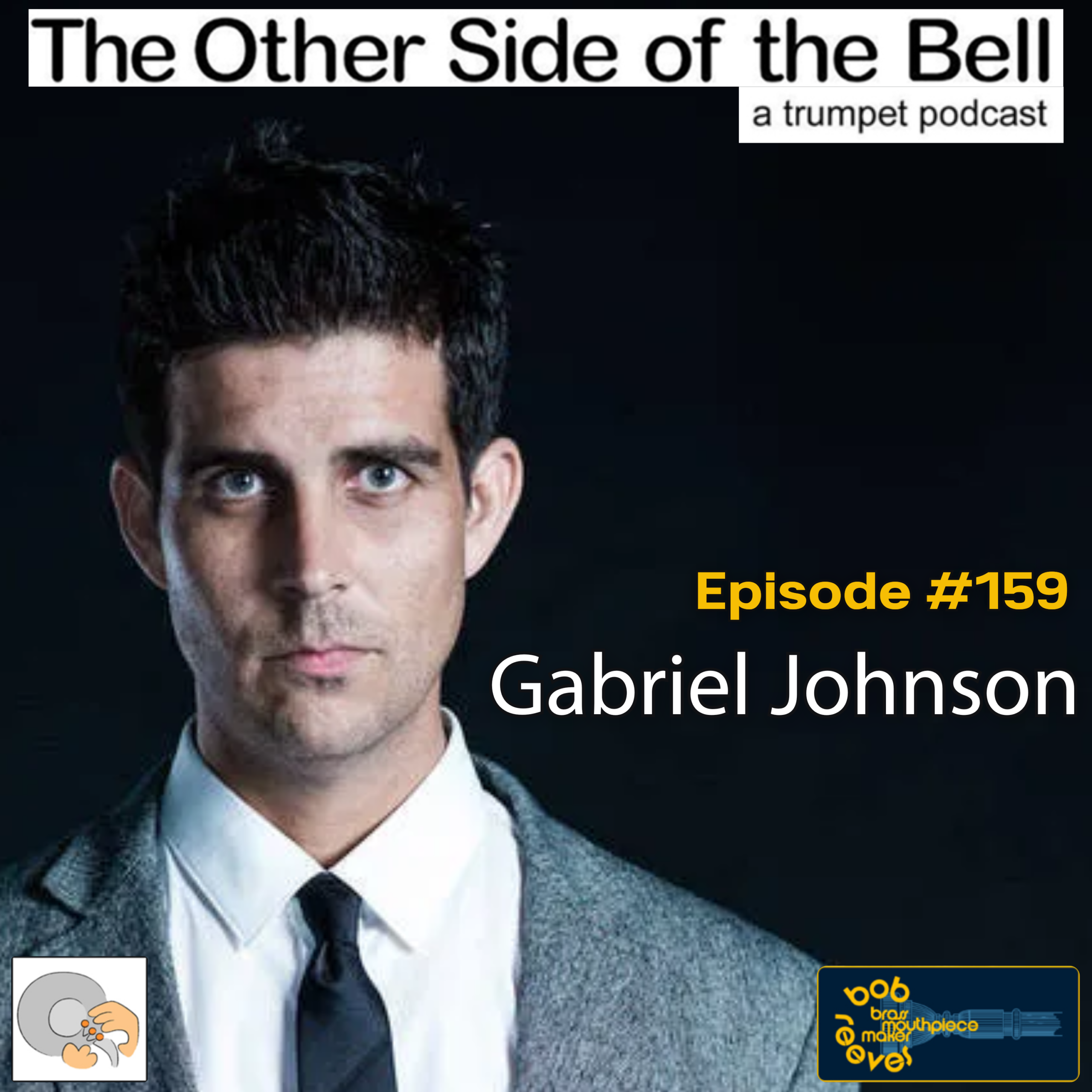
Welcome to the show notes for Episode #159 of The Other Side of the Bell – A Trumpet Podcast. This episode features trumpet composer, performer and producer Gabriel Johnson.
Gabriel Johnson went to the Monterey Jazz Festival at 9 years old – by himself – and witnessed Dizzy Gillespie and Freddie Hubbard on stage.
He went home, switched instruments to the trumpet, and the rest is history.
Gabe learned to play the trumpet by ear, playing along to Miles Davis, learning “the excitement inside the sadness.” A glimmer of hope for Gabe during a difficult childhood. Self taught until later in high school, it wasn’t until he was at the New England Conservatory when he learned that what seemed second-nature all along was in fact perfect pitch.
A chance encounter with Chris Botti on Gabe’s last night in Boston before moving to Los Angeles led to a friendship of over 20 years, and pivotal connections including meeting the manager of Blood, Sweat & Tears, who invited him to be the band’s musical director for a year. From hanging out with Clint Eastwood and Robert Redford, to learning recording techniques and producer psychology from David Foster, Gabe has built a remarkable career full of originality and spontaneity, covering soundtracks, jazz, pop and more.
With AI creeping into musicians’ livelihood, Gabriel has some pertinent advice: individual artist expression is something that can never be replicated, whether by artificial intelligence or another human. Be yourself, be creative, be original. The rest will follow.
Listen to or download the episode below:


About Gabriel Johnson

Gabriel Johnson is an American jazz trumpeter whose lyrical sound and deep musical fluency have earned praise from artists, including David Foster, Clint Eastwood, and Chris Botti.
Gabe studied at New England Conservatory and then moved to Los Angeles and built a wide ranging career as a solo artist, session musician and featured performer. Recording and performing with artists such as Gladys Knight, Steven Tyler, David Foster, Chris Botti , Andrea Bocelli, Lyle Lovett, and Burt Bacharach, he was featured by Clint Eastwood as a trumpet soloist on the film scores for Changeling and Invictus, and has released a substantial catalog of recordings on his Sunset Horn label, blending jazz tradition with cinematic electronic and modern production influences.

Gabriel Johnson episode links
- Website: www.gabrieljohnsonmusic.com
- Bandcamp: https://gabrieljohnson.bandcamp.com
- YouTube: https://www.youtube.com/user/GJTrumpet
- Apple Music: https://music.apple.com/us/artist/gabriel-johnson/336452318
- Instagram: https://www.instagram.com/gjtrumpet/?hl=en
Bob Reeves Brass Events & Appearances:
-
July 9-12, Southern Illinois University, Carbondale, Ill.
Book your trumpet alignment here:
https://trumpetmouthpiece.com/products/william-adam-trumpet-festival-valve-alignment-presale
Podcast Credits
- “A Room with a View“ – composed and performed by Howie Shear
- Podcast Host – John Snell
- Photo Credits – Courtesty gabrieljohnsonmusic.com
- Audio Engineer – Ted Cragg
Transcript
Please note, this transcript is automatically generated. It may contain spelling and other errors. If you would like to assist us in editing or translating this transcript, please let us know at info@bobreeves.com.
GABRIEL JOHNSON (opener): [00:00:00] My mom was working a job as a waitress and a bartender Friday and Saturday, you know, to make ends meet.
and so my mom at nine years old dropped me off at the Monterey Jazz Festival.
JOHN SNELL: On your own.
GABRIEL JOHNSON: On my own.
So I walk in and what do I see? I don’t see this. I see bell going up.
JOHN SNELL: Was it Dizzy?
GABRIEL JOHNSON: It was Dizzy.
JOHN SNELL: At nine years old.
GABRIEL JOHNSON: Nine years old
JOHN SNELL:
Hello, and welcome to The Other Side of the Bell, a podcast dedicated to the world of trumpet. Brought to you by Bob Reeves Brass. We want to inspire you to develop joy and confidence in your trumpet playing.
I’m your host John Snell, and joining me today is trumpeter Gabriel Johnson.
First, let’s look at our latest trumpet news.
Well, summer is quickly approaching. I hope. Uh, everyone had a wonderful [00:01:00] school year, at least here in the Northern Hemisphere. I know other places in the world, uh, you’re just in the middle of your school year. but, uh, nonetheless, uh, I know my kids are, uh, this, this is their last week of school. and I hope you’ll have a wonderful summer, whatever you’re doing, traveling.
Seeing family, seeing friends, or maybe gigging a lot of city concerts and parades and things like that are going on. we have, uh, not a whole lot of travel going on this summer. the big event, of course, is the William Adam Trumpet Festival held in Illinois, July 9th through 12th. We’ll have the links to that, uh, information.
It, uh, williamadamtrumpet.com. we’ll have the links below in the description, and valve alignments. We’re already booking up for valve alignments for that, exhibition. So the links will be below. We always sell out at Adam Fest. the valve alignments are a popular service there.
That’s, it’s the understatement of the year. Uh, so if you’re going and are interested, in getting your valves line, go ahead and pre-book. of course we’ll have lots of mouth pieces, uh, [00:02:00] over 350. Trumpet mouthpieces to choose from. And, uh, Matt Collins and myself will be there to help advise you Along the way, we’re bringing some guard bags.
We’re bringing some vin mutes, some Charlie Davis trumpets. Charlie will be there, of course. and he’ll have a great line of, uh, C trumpets, B flat trumpets. And he just made a d trumpet, which I just got my hands on and plays pretty darn good, if I may say so myself. Um.
What else will we have there?
Uh, other than the Alvin Mutes and the Charlie Davis mutes, we’re gonna bring some rum core. I have some of the limited edition dockage, mutes. the zinger mute. We have some straight mutes and some cup mutes in the dockage, which those are always cool. plus there are other, uh, range of mutes some Shires trumpets and I’ve mentioned the Charlie Davis trumpets.
So, uh, yeah, gonna be a wonderful event. Hope to see you in Carbondale, Illinois. July 9th through 12th. And that’s all the news I have. we are, uh, have confirmed our Japan trip, in September. I’ll give you the details for that next episode. [00:03:00] And, uh, lots of great horns coming in. That was one thing, uh, I wanted to mention.
I just picked up seven new horns from Boyd Hood, uh, you know, former, trumpet player, the LA Phil Harmonic, and a longtime professor at University of Southern California. Uh, Boyd is thinning out his collection and what a collection it is. we just sold a Mount Vernon seed trumpet the other day. We have another one on the website.
Uh, I think I mentioned last episode. We have a sopranino high F it’s a New York Bach, uh, very rare instrument, maybe only a handful ever made. Uh, we have a New York Bach d trumpet, same configuration that Vao famously played And probably built around the same time that, uh, VAO got his horn. so we have that up. I just picked up a couple queen on, uh, high trumpets, uh, d and a FG trumpet, which is fabulous. A rare, olds, e-flat trumpet, which plays really great. a con vintage con, I think a 60 B.
And, a gatson det, trumpet, long bell de trumpet, [00:04:00] which interestingly enough, uh, Boyd Hood and Charlie Schluter helped design back when they were living up in the northern Midwest of the US around Wisconsin. So anyway, check out the website. We have a great collection. We have some other, uh, used in vintage horns on the website.
oh, and by the way, some amazing mouthpieces, uh, as well. some Mount Vernon in New York, uh, Bach. One Cs, two Cs two and a half Cs two and three quarter C, which I don’t think I’ve ever seen before. all of those are up on, uh, the website, trumpet mouthpiece.com. So fun stuff sitting around my desk. I just try not to buy all of it myself.
so hopefully you’ll find something you, you like up there and, uh, find a happy home for it. All right. Now with that, let’s get right to my interview with Gabe Johnson.
[00:05:00]
Gabriel [00:06:00] Johnson is an American jazz trumpeter whose lyrical sound and deep musical fluency have earned praise from artists, including David Foster, Clint Eastwood, and Chris Bode.
Gabe studied at New England Conservatory and then moved to Los Angeles and built a wide ranging career as a solo artist, session musician and featured performer. Recording and performing with artists such as Gladys Knight, Steven Tyler, David Foster, Chris Bode, Andrea Bocelli, Lyle Lovet, and Burt Bach. He was featured by Clint Eastwood as a trumpet soloist on the film scores for Changeling and Invictus, and has released a substantial catalog of recordings on his sunset horn label, blending jazz tradition with cinematic electronic and modern production influences.
And now here’s my interview with Gabriel Johnson.
JOHN SNELL: Well, it’s been a long time in the making. I’m so excited to have joining me today, Gabriel Johnson. Gabe, how’s it going?
GABRIEL JOHNSON: Good. How are you?
JOHN SNELL: Doing great. You’re looking fabulous [00:07:00] for a Monday morning.
GABRIEL JOHNSON: Well, thank you. I’m doing my best.
JOHN SNELL: Uh, let’s start right from the beginning. how you, uh, came across the trumpet or did the trumpet search you out?
GABRIEL JOHNSON: Um, it’s funny, so I started on the trombone. Don’t tell anybody. When I was, when I was seven years old, they came in with a demo and I was like, I like the thing ’cause it slides and it was kind of fun. So I did that for like two years and I got so sick of it, I couldn’t stand it. Like I, I just didn’t like the sound.
It was too low. It was, you know, it just wasn’t working for me. So my parents got divorced when I was nine. so I had to go to my grandma and grandpa’s house every Friday and Saturday night for two years. And my grandmother was bedridden, uh, with uh, really severe arthritis. And [00:08:00] so basically she would make me listen to Lawrence Welk. Seven o’clock on Friday and Saturday on PBS. And you know me, John, that’s not my thing, right? So I was like, I, I think I’m gonna quit music. Right?
JOHN SNELL: Well, Lawrence Welk makes you quit music.
GABRIEL JOHNSON: Well, no, I was just like not into it. It wasn’t my style. It wasn’t cool. It didn’t have a thing. Right. So basically she saw an ad for the Monterey Jazz Festival on TV and she goes, you should have your mom take you to this. My mom was working a job as a waitress and a bartender Friday and Saturday, which is why, you know, to make ends meet.
And, and so my mom at nine years old dropped me off at the Monterey Jazz Festival.
JOHN SNELL: On your own.
GABRIEL JOHNSON: On my own.
JOHN SNELL: Just here. Go.
GABRIEL JOHNSON: Whoa. So I walk in and what do I see? [00:09:00] I don’t see this. I see bell going up.
JOHN SNELL: Was dizzy.
GABRIEL JOHNSON: It was dizzy.
JOHN SNELL: At nine years old.
GABRIEL JOHNSON: thing I saw.
JOHN SNELL: Oh my goodness. What was that like? Did it blow your mind?
GABRIEL JOHNSON: It was unbelievable, first of all, the visual part of it. But like, you know, he was, he still had some stuff going on in nine. This was 1989, September 16th. I looked it up September 16th. And then who else was playing on that Bill? Hubbert.
JOHN SNELL: No.
GABRIEL JOHNSON: Oh yeah. Oh yeah. And this, this was like eighties Freddy, which was like a lot, but like he was playing his ass off still.
1989. It was before he had chop issues and all that stuff. And so he was, I just remember it was like seeing [00:10:00] fire, right? Just like the most fire thing I’d ever seen in my life up to that point.
JOHN SNELL: Incredible. So that was it. Like that
GABRIEL JOHNSON: That was it. So I go the next day to my grandma and I go, I wanna play the trumpet instead of the trombone. So she goes, look in this drawer, there’s like a ton of a hundred dollars bills in there. She goes, take five of them and get yourself a trumpet. So I like, I was conservative, so I got like a Bundy cornet and that was that.
JOHN SNELL: Just to get yourself started.
GABRIEL JOHNSON: Yeah. Well, I didn’t know. Yeah.
JOHN SNELL: And is anyone musical in your family or was you kind of like the oddball out?
GABRIEL JOHNSON: There was nobody that was musical at all in my family. although my great aunt told me that her uncle played the trumpet to announce Poncho Villa coming into Mexican towns,
JOHN SNELL: Well, there’s [00:11:00] a connection. That’s
GABRIEL JOHNSON: bizarre thing, right? Yeah.
JOHN SNELL: There’s a connection.
GABRIEL JOHNSON: yeah.
JOHN SNELL: Yeah. Yeah. your grandmother must have seen something in you or saw some kind of passion or interest.
GABRIEL JOHNSON: no, she just didn’t want me to stop. That’s what I believe, you know, because she, she held music in the highest regard as far as like. Basically everything, right? Like she thought, she listened to music all day because she was bedridden, so she just wanted to be like hearing her grandson play music and nobody else really cared about it in the family.
So it was just me.
JOHN SNELL: She knew what that connection could, you know, that
GABRIEL JOHNSON: I guess so. Yeah. Yeah. Yeah.
JOHN SNELL: So I, I have to take a sidebar here just for a minute. And like, what, what was it like as a 9-year-old going to this festival? Did like anyone stop you or help you find your parents while you’re walking around
GABRIEL JOHNSON: no, I was, dude, I was just walking around. I’m the, it, it, I’m the same person now that I, that I was then where I just, you know, I just go,
JOHN SNELL: Just chill.
GABRIEL JOHNSON: Yeah, but it was a different time in 1989. [00:12:00] You know, it’s like you could just sort of walk around in these things. I mean, granted, I could have been abducted, right?
So that was, you know, I, I still tell my mom that. I’m like, I don’t know if you, that was a great decision or a awful decision, but for me it was great. But yeah, it was just kind of whack, you know? I was just like, okay. But you know, she was a single mom, just kind of trying to get through life and.
JOHN SNELL: Yeah, just, and then she came and picked you up at the end, like this was before cell phones and stuff. Like I
GABRIEL JOHNSON: Yeah. And then I went the next night. I went again the next night. A hundred percent. Yeah.
JOHN SNELL: I love it. I love it. Well, who, who’d a thunk
GABRIEL JOHNSON: one of the weirdest stories, even when I tell it, like my wife is always like, what in the world? Like your mom? Like, I’ve got a son who’s nine. I wouldn’t do that now.
JOHN SNELL: Yeah.
GABRIEL JOHNSON: But yeah, it was a different time.
So no cell phones, no nothing. Just meet me out front at. Literally 10 o’clock. Yeah, it was, it was crazy.
JOHN SNELL: [00:13:00] Well, what, what an experience, so you pick up your Bundy, Cort, uh, do you start learning on your own? Did you get a teacher? What did that look like?
GABRIEL JOHNSON: No, I didn’t get a teacher for many years, but what I. Did was I, I would play along with the radio, like there was a jazz station and I had a radio. And you know, like when, when you’re a kid who’s going through divorce in your family and you’re, it’s just you every single day you can find little wins. So if you can get the, like the e-flat scale halfway.
You feel better than you did in the morning when you’re dealing with a level of like sadness or being bummed out, you know? so, you know, I literally just tried to learn my major scales every day for years. So I never, but I never had a teacher. I never had a teacher until I was 16.
JOHN SNELL: Wow. So several years [00:14:00] later. So you’re playing by ear, listening to still Jazz. Is that your primary focus or were you
GABRIEL JOHNSON: it was, it was only jazz. Yeah. Yeah.
JOHN SNELL: band or anything, or were you just playing at home
GABRIEL JOHNSON: No, I was, I was playing in the band, but like, I, I wouldn’t like, you know, like the beginning books, they didn’t matter to me. It was just playing by ear, which, you know, we’ll get into later. Why I can play by ear so well. But, um, yeah, it was just, it was just hearing it and then I could do it. Hear it. Do it. That’s it.
JOHN SNELL: Did your, uh, musical taste grow at all? Were you, researching different players or was it dizzy Freddy that you started with
GABRIEL JOHNSON: Well.
JOHN SNELL: whatever was on the radio like?
GABRIEL JOHNSON: So I heard Miles on the radio when I was 11. I remember it was the, my funny Valentine thing from 64, not the early one, and I just heard him do some smears and I was like, oh my God, that’s human [00:15:00] expression. Like it was the most human thing I’d ever heard at 11. It really messed me up.
JOHN SNELL: How
GABRIEL JOHNSON: like.
JOHN SNELL: How so?
GABRIEL JOHNSON: Um, well, I was looking for humanity and feeling at that time as a kid, you know, and just, just to out of sadness. But he Miles played with the sadness that was also so exciting, right? So you can get excited inside of the sadness, right? Which sounds kind of, you know.
JOHN SNELL: No, there’s a glimmer of hope, like in all of his phrases. Yeah.
GABRIEL JOHNSON: Yeah. I mean, I, dude, I had a like, kind of messed up childhood, so, you know, like I dealt with.
Watching abuse and, you know, drug use and all that stuff, and, you know, it, it sucked. So I, you know, that Miles gave me, uh, ironically, miles gave me that glimmer of hope, you know,
JOHN SNELL: Yeah.
GABRIEL JOHNSON: of all people. Like he was the guy who set that in for me. So, Felt so human. [00:16:00] Yeah.
JOHN SNELL: 11. Incredible.
GABRIEL JOHNSON: but he died when I was 11. So I remember why there was that going on is because when he died there was like a tribute to him on the radio. So I just played along with that stuff and it really inspired me. Yeah, big time. Yeah. Just, you know, the ability to express yourself without any concern, for anything, you know, just go, just go.
JOHN SNELL: Yeah. So did that start a deep dive into the Miles catalog? I mean, were you going to the record store or the library, or was it
GABRIEL JOHNSON: At that time, it was, at that time was it was the library. Like you could, you know, you could take out like, so I got, when I was 13, I remember getting cookin work in steaming and relaxing those four records were done in two days. Do you know this?
JOHN SNELL: Yeah.
GABRIEL JOHNSON: Okay, [00:17:00] and I locked myself in a room with those for a whole summer when I was 13, and I learned every single mile solo, all like Aerogen, LIO, all that stuff, learned everything.
And then that led me into, okay, I learned, I mean, I wasn’t playing it perfect. But then it got me into Coltrane, which became like a whole other world of stuff, you know, even that period. So.
JOHN SNELL: Branched off and
GABRIEL JOHNSON: Yeah. Oh yeah.
JOHN SNELL: into that vocabulary.
GABRIEL JOHNSON: my education and why I studied with so many saxophone players later. Um, yeah, so.
JOHN SNELL: Fascinating. And were we doing any pedagogy during this time or is it just purely plain by ear and learning the vocabulary?
GABRIEL JOHNSON: I think I think about it now, which again, you know, I’m getting ahead of myself, but no, nothing, just literally learning some scales, but learning [00:18:00] everything by ear, everything.
JOHN SNELL: if, if you had to do it again, would you support that with, uh, more theory or do you think you’re better off having that kind of pure ear training approach?
GABRIEL JOHNSON: Um, well, I have perfect pitch so that can give me an advantage, but trust me, I got grounded when I was 14 for having a thi a David Baker theory book that was 90 days overdue at the Phoenix Library. So I got charged for it. So I was still studying theory. It’s not like I was like, okay, everything is, no, but like the, the trumpet pedagogy thing didn’t really come into my life until I was maybe 17 or 18, but I was already doing like, you know, the Allstate band and all that stuff.
So I didn’t really think that I needed to do that on some level, which was probably naive. but yeah, no, I wasn’t, I was, I was studying jazz theory just ’cause I [00:19:00] wanted to know chords. I wanted to know everything about chords, but like, as far as like the Arban book and all that stuff,
JOHN SNELL: Okay, so yeah.
GABRIEL JOHNSON: no, there was none of that.
JOHN SNELL: Okay. But that picked up when you got, you said you got your private and first private instruction at 16, and then
GABRIEL JOHNSON: Yeah.
JOHN SNELL: that’s when Arbin and Clark started kicking in.
GABRIEL JOHNSON: Yeah. Um, and I hated it. I couldn’t stand it. Like, did you ever really like doing that?
JOHN SNELL: And put me on the spot here, Gabe.
GABRIEL JOHNSON: a tough question here. We’re we’re, wait. Hey.
JOHN SNELL: yeah. I, I have to be in the right mood, uh, to actually enjoy it. It’s like leg day. Does anyone really enjoy leg
GABRIEL JOHNSON: course.
JOHN SNELL: Yeah.
GABRIEL JOHNSON: Well, that’s what I’m saying. So it’s like, you know, it’s like if you wanna kiss your wife, you gotta brush your teeth. It doesn’t mean that you’re gonna be an orthodontist. Right. Like, that’s what I feel about that stuff. You know, you just, you just can’t have dank breath. Like it’s just
JOHN SNELL: stuff you have to do [00:20:00] every day just
GABRIEL JOHNSON: Totally. Yeah.
JOHN SNELL: it’d be a functional human being or a trumpet player or spouse. Yeah.
GABRIEL JOHNSON: Yeah, so, so I, I, I studied with, I had a great high school teacher at Arcadia High, whose name is Dave Duarte. And I had just gotten braces and I couldn’t play at all. Like it, it was terrible, right? And I had teeth removed and all that. It was brutal. But he believed in me and within the first year, he came to my mom and said. You need to get him a real trumpet because he can get a scholarship to college. He’s got a real talent and to this day, I, you know, I text him all the time and I just say thank you. but like. I had no ability to play any of the characteristic studies or any of that stuff. Like it was, I, I couldn’t do it, but what I could do was read and hear and improvise.
and I was just texting Dave the other day. I hated marching [00:21:00] band so much that if you like, if you cu. You had to run the track the whole time. ’cause we did it on the football field and I would just walk in and just say whatever. I hated that. But second semester was jazz band, so I didn’t ever say a bad word,
JOHN SNELL: Cut your way outta marching band. I love it.
GABRIEL JOHNSON: Yeah, yeah, yeah.
JOHN SNELL: who was your first, uh, instructor? I mean, you said your band director, right?
GABRIEL JOHNSON: Well, it was, yeah, it was Dave, but he, you know, he was a saxophone player, but he taught at a, at a high school called Thunderbird High School, which was at that time the best, like, they would win all the awards of like Cal State Fullerton, Fullerton and all that stuff. But, there was a saxophone player named, named Andy Gross, who was so good.
And I studied with him as well on improvisation. And he was 19 and I was 16. And then I studied with, uh, bud Hilditch, who was the, [00:22:00] uh, instructor, you know, like the band director at, at Thunderbird. And that didn’t last very long. Because I just couldn’t deal with Arvin. So, but once Andy introduced me to the Omni book, I was like, off to the races. This I can get with, you know, it’s not, it’s not Clarks, it’s not, it’s stuff I don’t like. I was attracted to the vocabulary in a really strong way. So my. Junior year of high school, I walked around with the Omni book. My senior year of high school, I walked around with this. I don’t know if you ever saw this like this Mark Lewis, big Clifford Brown transcription
JOHN SNELL: I have that. Yeah. Yeah, I have
GABRIEL JOHNSON: Yeah. It was the complete thing, and so like I would literally like in history class, pretend I was reading the book, but I would have the Clifford Brown book [00:23:00] on top of it, like hiding it so that I could study like all that Clifford stuff.
JOHN SNELL: That’s dedication.
GABRIEL JOHNSON: Well, it was interest. I, you know, it’s, it’s fair enough to say it’s just pure interest.
JOHN SNELL: Yeah, that was where you found your connection. Amazing.
GABRIEL JOHNSON: I didn’t, I didn’t care about, you know, the Lewis and Clark Expedition. I cared about like, you know, like Clifford on Woody and you live at the beehive, right? Like that really actually mattered to me. My senior year, I also started doing a combo at Arizona State, because I was pretty good, you know, I had something going on.
and then the director of jazz studies there, Chuck Moroni, who’s a great piano player, He was friends with, you know, Fred Forney, who was teaching in Mesa Community College. And uh, one day I get home and I have a message from Fred Forney and it was almost like Darth Vader calling you to say, you have to come here.
Whatever. Or Yoda or what, [00:24:00] what Trevor went,
JOHN SNELL: Yeah.
GABRIEL JOHNSON: so, so basically. He goes, I’d like to teach you and like Fred in Arizona and Phoenix is a legend. Like, you know, he, he was the man, I mean, he still alive, but you know, he moved to Portland now, but like, he’s, he
JOHN SNELL: and just ordered oil from us.
GABRIEL JOHNSON: Oh, great. Yeah, yeah, yeah. Oh yeah.
JOHN SNELL: Thanks for your order, Fred. Appreciate it. It’s on the way.
GABRIEL JOHNSON: But like he was, he was and still is the man. And then, so I had my first lesson with him and he goes, play me what you do. And I said, I just play. And he was like, that’s not gonna cut it. And I said, okay, you’re probably right. That’s why. That’s why I’m here. So he introduced me to the stamp routine.
JOHN SNELL: Hmm.
GABRIEL JOHNSON: And I had never done anything aside from like Arban and Clarks, but I had never really done them, to be honest.
Like it was [00:25:00] kind of, I was whack about it, you know? It sucked. So once he got me into that, things started to change a little bit. like the mouthpiece buzzing, lip buzzing, all that stuff. It, it was good for that time.
JOHN SNELL: So he, he found the deficiency in your plane and thought that would, that would
GABRIEL JOHNSON: Oh, he didn’t have to find it. There was deficiencies all over the place. Yeah. Yeah. It wa it wasn’t even a, it wasn’t even a conversation. Like I wasn’t offended. I was just like, you know, I’m 18. I’ve been self-taught for basically nine years. and so, yeah, but I, you know, I did know a lot about jazz. I knew every record that was around, back in the day when you had to go to Tower Records and you’d spend like, you know, 200 bucks, for.
10 records.
JOHN SNELL: Yeah, four CDs.
GABRIEL JOHNSON: Yeah. Yeah, totally.
JOHN SNELL: so what did, what did, when you start doing the Stanford routine studying with Fred, what did that start doing to your jazz playing? Did it start opening up more expressive, uh, ways to play?[00:26:00]
GABRIEL JOHNSON: No, it gave me a foundation. No, it gave me a foundation to, to brush your teeth, to wake up in the morning and not be like, you know, I have no flexibility. I have none of that. It, it did help with that. It didn’t enhance my vocabulary at all by any means, but I think it, it, it really just made me feel more comfortable on the trumpet.
JOHN SNELL: Yeah, but you bought into it, unlike the
GABRIEL JOHNSON: Oh, I bought into it a hundred percent. Yeah. Yeah, because it was, it was something you can do for 45 minutes a day and then, you know, you can, it’s like doing pushups or you know, lifting weights or swimming or whatever, you know, like suddenly everything, you don’t have to worry about this anymore, you know?
JOHN SNELL: Finding your center. Now, are you still on the, the cornet at this time or did you get a trumpet by this
GABRIEL JOHNSON: Oh no, I, I got, I got the, I got a Bach 37, when I was 14, like I told you, with Dave Ek, [00:27:00] thanks to him. my mom took out of, you know, we were still kind of broke. It was like, you know, 1,750 bucks outta the a MI catalog. And so my mom like took out a loan and paid a hundred bucks off, a hundred bucks off for 17 months, you know, to get that done.
Yeah.
JOHN SNELL: Amazing.
GABRIEL JOHNSON: And I still have that horn that’s the horn that I do a lot of sessions on still,
JOHN SNELL: How cool. How cool. So you’re, you’re a senior. doesn’t seem like there’s any doubt that you want to go on in music, in, in terms of a career or further on in your life.
GABRIEL JOHNSON: I, I was playing a lot of jazz gigs in Scottsdale at that time. Like when I was 17. Sometimes I’d play like five nights a week at that time, you know, like there was a club called The Famous Door that I would work at Belos. I don’t know if it’s still there, but yeah, there was like a lot of places to play then so I could, I could really get experience in a way that.
[00:28:00] Sadly, I don’t know if it exists anymore for people, but yeah, so it was pretty good. up to that time I was working, I was actually making money instead of losing money. but yeah, then my mom, the day I graduated high school, got diagnosed with Ms.
JOHN SNELL: Oh geez.
GABRIEL JOHNSON: Yeah. Um, and so I hadn’t, I was, I was thinking about maybe doing the a SU route, but I ended up not doing it.
so I basically stayed home and worked for two years and just wanted to make sure that she was okay and, uh, but then an opportunity came up. because Fred Forney knew Alan Chase, the director of Jazz studies at NEC. And he said, I’ve got this kid who’s playing good, can he audition? And Alan goes, of course Alan’s from Phoenix.
[00:29:00] So basically he said, yeah, have him apply. Send in a tape. So I had, thankfully I had, three of the greatest. Phoenix players, Dom Moo, Warren Jones and Jacob Kohler play my demo and it worked out that I passed the audition phase. so then I go to my audition at NEC and I play Body and Soul and Softly is in morning sunrise.
I walk out and Alan comes out and he goes. You’re in. Like he gave me like a certificate to say, here you go. Here’s guaranteed scholarship. Here you go, you’re in. And I was like, I didn’t even know what was going on. So I, I’ll never forget this, there was like a pizzeria Uno, which is like a Chicago deep dish place around the corner.
And I put in a quarter and called my mom and uh. She lost [00:30:00] it, you know, it was lovely. Like, you know, as I’ve told you now, like my mom is not doing well, but that was one of the greatest moments of my life, you know, to just hear her cry with pride, you know? Yeah. So then I had to deal with the fact that it was gonna be fucking 12 degrees out there.
Sorry. Sorry for my,
JOHN SNELL: Oh, Boston winners. I mean, that’s a, if there’s few, few things in life you can cuss about
GABRIEL JOHNSON: Yeah. No, no kidding. Yeah.
JOHN SNELL: well, so I mean, have you ever been to, was this your first time in New England? First time to Boston?
GABRIEL JOHNSON: there. Yeah. I just knew that like Berkeley and NEC were really cool, but like NEC was not on my Bingo card. Like I had no idea. Right?
I didn’t know who was going to be teaching there, but little did I know it was gonna end up being perhaps the most influential. Experience that I could have had in my education life,
JOHN SNELL: So let’s get into it. [00:31:00] And for that, we, we get a lot of international listeners who may not be familiar with NNEC, but it’s a New England Conservatory.
GABRIEL JOHNSON: Yeah. Sorry. Yeah. Yeah.
JOHN SNELL: yeah. Uh, usually called NEC and it’s Yeah, based in Boston. Yeah, right around the corner from Symphony Hall and,
GABRIEL JOHNSON: Oh yeah.
JOHN SNELL: our, our good friends at, uh, virtuosity music.
Uh, so we know that area well. so take us to NEC, like, so who did, who did you study with and, you know, what
GABRIEL JOHNSON: Okay, so
JOHN SNELL: look like?
GABRIEL JOHNSON: I get there and I study with John McNeil. Uh, and at that time he was developing the Flexis book. with Lori Frank and he had been recovering, I don’t even know what his illness was still to this day, but he couldn’t play it with his right hand, so he was playing left-handed at that time. But, um, so it was sort of challenging in the sense of like.
He couldn’t really give me examples, but you know, it’s like when you hear it, you hear it. Um, so [00:32:00] John McNeil I studied with and then I studied with a great piano player. Named Michael Kane, who I had heard on ECM in Jack Dja Nets band, and I loved his playing. And so at NEC, you can study with two separate teachers every semester.
So you get an hour with one an hour, you know, it’s like you get two, two lessons a month basically with each teacher. But I wanted to explore like his rhythmic thing. So that was really cool because at that time there was a DeAngelo record called Voodoo that had just come out. And then Radiohead Kid a had come out and I was getting more interested in electronics as well in my mind.
And, and just seeing how the different templates work aside from just like the Quartet thing, because that, you know, it’d gotten a little stale for me. So like working with Michael taught me a lot about the rhythm of like the [00:33:00] DeAngelo record ’cause he was working with Michelle and Dega O. Do you know who that is? Yeah, so he was playing keyboards with her on the weekends in inside of teaching. So there was just something he was, I remember in a lesson he was like, listen to Pinot play on chicken grease, on the DeAngelo record. And it’s like,
I mean, that’s a terrible base impression. Like there, there’s just no tonality to it, you know? Like there’s literally zero tonality, but it just sounds so sick. So I was going, right. This reminds me of like. Jack Johnson, or, you know, a, a miles record where it’s like, dun, dun, dun, dun dun dun dun. Like, you know, all that stuff that, so there was like a, a lack of tonality that I was chasing with that.
So that led me to studying with [00:34:00] George Garone, who’s amazing. Do you know who George is?
JOHN SNELL: No.
GABRIEL JOHNSON: Oh man. He’s
JOHN SNELL: Tell us about George.
GABRIEL JOHNSON: he’s like a legend on the saxophone. He’s. As Italian of human being as you could ever encounter. Like, just unbelievable. You know, he is from, he’s from Boston, but you know, he talks like this and, you know, he goes, I got my sound from my family in olive oil, basically, you know, he is like, it’s, it’s, it’s incredible, right?
JOHN SNELL: Yeah.
GABRIEL JOHNSON: So, so he, has this concept, it’s called the. It’s, well, it’s short. It’s called the TCA, but it’s a triadic, chromatic approach. And so basically, and this is the weeds, he tells you to practice very slowly between an interval of a major third chromatically for like a month. So you go, you know, from [00:35:00] E to G Sharp, and you can’t repeat yourself though. And then you go from, and then it turns into a flat to C. So
like that sort of thing. Right? It’s very close together. And he told me that I would get it pretty quickly because knew the Miles 64 conscience so well, and I know all of Miles’s stuff like back of my hand. But that really transformed my language in the way that. I just heard chords because if you think about it between, like, it’s so, it’s a, it’s a, you’re actually in the cord, So let’s say you start D to F sharp or F sharp, A or A to C sharp, like you’re still moving around inside of those things, but it’s vague. And then he’s got the triadic thing, which is. It’s, it’s a, you know, it’s, this is [00:36:00] so in the weeds, but like, let’s say you start on DF Sharp A, you can’t repeat that inversion, so then you have to go a flat f, c sharp.
So it creates all these interesting sounds, but you have to do it really slow at first. Yeah.
JOHN SNELL: to think about. Just to think about. Yeah, so, so the idea is like limiting your choices.
GABRIEL JOHNSON: So with the chromatic part, sure, I’ll back up. Right. So there’s like a freedom inside of that that I had never been exposed to.
JOHN SNELL: Interesting freedom, even though you’re limited in choices.
GABRIEL JOHNSON: Yes. Right, but there’s a sound thing that happens. [00:37:00] Like a really, you know, it’s like you’re not worried about what the piano player is playing anymore. You’re more concerned with what they’re playing against you. So it becomes sound, not chords, which is like a miles thing. Huh?
JOHN SNELL: Yeah. So I mean, so you start adding this to your vocabulary, like, and through all of this, I mean, it seems like from when you were nine, you’re just, you’re finding your voice, growing your voice, you know, finding your way to connect to people. Was it, this seemed like a seminal moment for that.
GABRIEL JOHNSON: Yeah, I mean, I think the other thing that was a major thing is when I went to NEC and did, I did like my ear training test and Hank Isky, who was also one of my teachers, they test you on chords and I just go, oh yeah, that’s a EFL miner with like a extension on there, blah, blah, blah. First he plays a C.
What note is that? C? So. I learned then only in [00:38:00] college that I had perfect pitch.
JOHN SNELL: Really, so you, you didn’t know before then.
GABRIEL JOHNSON: I thought that if you like, you know, you see this cup, you can see the colors, and that’s what music is, right. You know what I’m saying? Like, I just thought it was like inherent. I had no idea.
JOHN SNELL: That’s fascinating.
GABRIEL JOHNSON: Yeah, I had no clue. Like nobody ever told me that I could just hear like, and so I thought it was absurd. That you couldn’t hear the note before you played it. Like, I thought life was like a piano or a box of chocolates too soon, but
JOHN SNELL: Yeah, too.
GABRIEL JOHNSON: yeah, yeah, yeah. But like, you know what I’m saying? Like, I, I just thought like, okay, you know, if, if you hear a C on the trumpet, it should just be like, ah, and that’s it.
Right. You know, there, there’s like a bunch of Charlie PO videos out who I’ve met. And like we were talking about it actually at, uh, and we’ll get into that like, but David’s like 75th birthday. We were talking about that [00:39:00] stuff where it’s like, oh, really? You didn’t know? you didn’t think that was weird?
And I was like, no. And he was like, same, you know?
JOHN SNELL: they don’t test you in kindergarten.
GABRIEL JOHNSON: Right.
JOHN SNELL: You know
your
GABRIEL JOHNSON: seminal for sure, but like the garone thing with the vocabulary part, was a big deal. And then I studied with, uh, Steve Lacey, the saxophone player. Uh, and then I studied classical composition with an amazing guy, Michael Gandolfi, who’s like now the head of the department.
But he taught me about. Well, first we started with like the, you know, Bach conventions and just hearing two voices at a time and, you know, all that stuff. So we, we later went into like Stravinsky Elliot Carter, and it helped me with my improvising in the sense of just going like, okay, well, anything’s kind of possible, you know?
JOHN SNELL: Adding, adding that classical composition approach.
GABRIEL JOHNSON: Sure. Yeah.
JOHN SNELL: so what, I mean, did you have an interest in composition as well, or was [00:40:00] that just a class you took?
GABRIEL JOHNSON: Um, no, I studied with him privately at NEC for, for two years? Yeah, every other week. I liked it at the time, but it, I knew what it was for. It was to be able to listen to a lot of different things happening at once.
JOHN SNELL: Wow.
GABRIEL JOHNSON: because when you’re, when you’re in a quartet, you can feed off the drums. Like if you listen to Miles Davis, Nefertiti, they’re all playing off of each other.
So I knew I needed to get that sort of training in my mind of just like hearing everyth everything individually and then as a whole thing. So.
JOHN SNELL: And that the composition studies helped you do that. ’cause now you’re, you’re training your ears to Yeah.
GABRIEL JOHNSON: Absolutely. Yeah. Yeah. It was totally worth it. You know, it was a lot of work, but you know.
JOHN SNELL: And I, I assume you’re in Boston, you’re, you’re [00:41:00] freelancing while at, during this time as well.
GABRIEL JOHNSON: Yeah, yeah, I’m doing that. You know, I wasn’t big on like playing, ’cause a lot of people are doing like wedding bands in the summer and I, that was not, I was like playing free jazz dude. Like honestly I was playing a lot of free shit and like just, I, wasn’t really thinking about working so much as learning because, you know, I would, I would recommend everybody if they can go to school in Boston. ’cause it’s like such a great. Learning environment. ’cause everybody’s there because they’re students for the most part. Or teachers, so that was, it was like an incredible experience, you know, to get to like study mannos with Danilo Perez. Like, that’s, that’s insanity. You know, like his level of knowledge of that is like, whew.
or Bob Moses, the drummer who was there like to get to study African drumming with him. Like it was just like everything. So yeah, I was [00:42:00] doing that. And then the story of me leaving Boston starts like this. I was on the sea train in Cleveland Circle, and if you know, you know. And it was in the winter and it was so cold. My eyes started watering and there was a tear that came down my eye and froze on my face. And I was like, I’m out.
JOHN SNELL: That’s
GABRIEL JOHNSON: out. This is not happening. No, no, no. I’m going, going, going back to Cali. Cali. Right. I, I, I really, I heard like the, you know, the, uh, the biggie smallest thing.
I was just like, I’m out.
JOHN SNELL: That’s it. That’s it?
GABRIEL JOHNSON: Yeah. So then my last night was August 19th, 2004. My flight was on the 20th. And I’m looking for something to do and I see at scholars. Chris Botti is playing and I’d been checking him out [00:43:00] for a while. I said, I’ll just go to this. He played when I Fall in Love first, and I’d never heard a sonic imprint with the trumpet that was like that ever. You know, he had his great sound guy at that time, or he was, Chris will say, it was just okay. But yeah, he had his sound guy at the time, you know, he, but like, it was just such a massive thing as far as the sound in the room.
Have you been to scholars before?
JOHN SNELL: No, I’ve never been. I’ve heard about it.
GABRIEL JOHNSON: Yeah, I think it seats about maybe 200, something like that. But he walked out and he just played. And like the sound was just so like, whoa. And I’d been coming, like I said, from so much free jazz, bebop, Ornette, all that stuff. But he walked up and he had like a look and he had like a vibe and the whole band had a vibe.
It was like Billy Killen on [00:44:00] drums, you know? It was, it was killing. And I was just like, okay. I’m gonna get your number after the show. I knew from the first tune, but it was like such a killing gig that I knew that my life would be different from there going on out. it was my last night.
In Boston. And then, you know, there’s like a guy who’s like, sort of, he was at that time sort of like famous in like the smooth jazz world more than anything else. But I was like, this is dope. Like so sick. So I, after the show he, used to sign out front, you know, and so then I was like, dude, I’m moving to la When are you out there next?
And he goes, September 16th. He’s playing at the Queen Mary. And I was like, okay, so can I get a lesson with you? And he goes, yeah, sure. So he pulled out a little piece of paper and wrote down his number and like, I didn’t know if I was [00:45:00] getting trolled, so like I literally put a coin in the, you know, in the payphone and it was his voice and I was like, okay, he’s not, he’s not full.
Like he’s not, you know what I’m saying? It’s like, you know, with, with who you think are famous, you know, they’re like, you think they might just be blowing you off? So. I moved to LA and you know, I was like a broy, right? So. On the 16th, I remember I had a hundred dollars to my name after driving across the country and I paid for the deposit with my ex-girlfriend.
like on our apartment and all that stuff, I had a hundred bucks left and I put that money in my car to get gas to go out to the Queen. Mary and I got a lesson with him and it changed like, literally changed the trajectory of my entire life. Because we did like, you know, a little 30 minute lesson, but also his manager at the time was Bobby Columbia. [00:46:00] Who was the drummer in Blood, sweat and Tears, like the original one. And he owned the name Blood, sweat and Tears.
JOHN SNELL: Hmm.
GABRIEL JOHNSON: he’s kind of still managing that in a lot of ways and I’ll, I’ll get to the next part after.
but like, you know, I just got hooked in with him and you know, he’s, like I said, my best friend for 22 years now.
JOHN SNELL: Amazing. All from you getting the nerve to go up and talk to him afterwards and ask.
GABRIEL JOHNSON: Sure. I mean, when, when I say like, he’s my best friend, like I called him when my kids were born before any family members, like honestly, like it’s, it’s that he’s like my brother, really.
JOHN SNELL: Well, I, I remember when we did the, uh, the Bill Adam tribute episode. 12, 13 years ago now. I think you were, you came up to the shop around that time and we, I was talking about the idea and he was like, I was like, and, and I barely knew you at the time,
GABRIEL JOHNSON: Yeah. Yeah.
JOHN SNELL: this guy was a customer. And, [00:47:00] and, I told you about the idea.
It’s like, oh yeah, I know about that. Chris is going. And I had, I didn’t even know Chris was going to
GABRIEL JOHNSON: Yeah.
JOHN SNELL: And that’s like, who the hell are you and why do you know if Chris is
GABRIEL JOHNSON: Oh dude, we okay. Yeah. Do you wanna get into that part of our relationship? Like how, how well we know, like all that stuff.
JOHN SNELL: well, I mean, eventually, yeah, I, I
GABRIEL JOHNSON: Okay, cool. Yeah, so, so anyway, so I, I, I have the lesson with Chris and then. I’m looking for work, right? you know, I’m doing like shitty, like singer songwriter gigs and all that stuff.
And then I get a call from, you know, an NEC alumni friend, uh, Omo, who’s like a trumpet player as you know. He is a great trumpet player,
JOHN SNELL: fomo. Yeah.
GABRIEL JOHNSON: and so he’s like, I got called for New Year’s Eve gig in Vegas, but it’s not enough money for me. Would you want to do it? And I was like, how much is it? And he was like, 600 bucks.
And I was like, I’m driving there right [00:48:00] now. I’m going, sure. I’ll take it. Right. So this is keep in mind like, dude, I had never done a top 40 gig in my life. Never. Not like horn section stuff. I’d played in, you know, I was like played lead in college and all that, but I’d never done top 40 gig, not one. So I get there and imagine I get to the dressing room for the gig. And it’s like at the Bellagio,
JOHN SNELL: Oh
my gosh.
GABRIEL JOHNSON: this, I hear this unbelievably smoking high note trumpet. And I walk in and I go, Hey, you’re playing trumpet tonight too. ’cause I thought it was like a casual, like a jazz thing, right?
JOHN SNELL: Yeah.
GABRIEL JOHNSON: And it’s this dude who’s got a bald head and he’s playing a Silver Yamaha, and he’s just killing High Gs.
Over and over again. Dan Forero.[00:49:00]
JOHN SNELL: Oh my God.
GABRIEL JOHNSON: And dude, I had never in my life played a top 40 gig, right? Like this is like, so you know, Dan had just got off the road of Phil Collins and it’s just like, I didn’t know who he was. I wasn’t hip to that scene, but he was the nicest guy in the world.
To me, he supported me, he was like, oh yeah, you don’t know about this stuff.
And I was like, not really. He was like, maybe he was doing it for himself too, like just to try to get through the
JOHN SNELL: just get through the
GABRIEL JOHNSON: I said, I got 10 years, but like, yeah, it was like, you know, I remember playing like superstition and he was just like, dude, just go down a fifth. And I was like, okay, cool. You know?
Okay, cool. I got it. Thanks. Because we had a rehearsal.
But then he supported me enough to, with that, uh, a well-known, wedding band company out here. He was like, oh yeah, I’m gonna, I’m gonna call the owner and say that you can do this. So just like, learn some stuff. [00:50:00] Huh. So I ended up doing that for. Like a year and a half, very consistently. And so then one day I get a call from Chris’s manager at the time, Bobby Columbia. And he goes, Hey, so um, have you ever been a musical director? And I was like, of what? He’s like, you know of a band? And I was like, no. He’s like, have you led a band before? And I was like, yeah, sure, I guess So he goes, so Larry Dore is gonna call you and you’re going to be the MD of Blood, sweat, and Tears.
JOHN SNELL: No
GABRIEL JOHNSON: I was like,
JOHN SNELL: No
GABRIEL JOHNSON: oh yeah. Oh yeah. Oh yeah, totally. I was 25 years old I didn’t have a computer. I had no internet. So like literally to go to like those wedding gigs that I did, I would have to go to the Kinkos to get directions because this was like pre, [00:51:00] you know, iPhone, any of that stuff.
And I was just like. Eh, I don’t even know how to work finale. You know what I mean? So, next thing I know, I’m on a plane to Kentucky.
JOHN SNELL: Incredible. Join the band.
GABRIEL JOHNSON: I joined the band and it, it was not easy at the beginning,
right? cause I was 25 and most of the guys were at least over 40. So I’m walking in as a 25-year-old kid saying, Hey, can we do this again? Can we do this again? And it, they, you know, they were not a fan of me at the beginning. it worked out for a while.
I did it for a year.
JOHN SNELL: Now, were you also playing, I mean, you’re a music director, but were you also playing trumpet in the, okay, so you were doing dual roles.
GABRIEL JOHNSON: Yeah, the loose oof thing. Yeah, I had to do both. Yeah.
Oh yeah, totally. Yeah. And then jump right in and go. Beep [00:52:00] bang Baba. Oh yeah, dude. Oh yeah. All that stuff. Yeah, so I did that for about a year and it was just becoming semi apparent to me that it wasn’t working because I felt like there was a certain level of like, who the hell is this kid thing? You know? Which is not a good feeling to have, it doesn’t make you feel good if you’re just like, not worth it to be there.
JOHN SNELL: Yeah, you’re getting paid, but if it’s not fulfilling, you know, because of your colleagues or, or, and I, my, my assumption is, you know, based on your background that, your dream gig was not to play Lou Soof solo, but to play your own solos.
GABRIEL JOHNSON: Chance. Yeah. And I, and I knew Lou, but like, you know, it, it was not my, it was not my deal. So, So I did that for about a year, and then basically at the end I got canned, [00:53:00] more or less. It just wasn’t working out, you know, it was like too much work for everybody.
JOHN SNELL: You weren’t crying when they fired you.
GABRIEL JOHNSON: Uh, I was crying because they fired me.
Yes, I was, I was like crying tears of joy, to be honest. Yeah, I was, I was, I was very happy about it, you know, it was not my gig.
JOHN SNELL: yeah.
GABRIEL JOHNSON: so anyway, yeah. So I get back to LA and I’m like looking for work and. Chris calls me on his birthday 2007, October the 12th, and he goes, I’m doing a business lunch with this guy Cameron Smith. Do you want to come to like Fred Siegel? And I was like, sure. So Cameron is like a really cool, like hype guy.
He’s been doing radio for many years and he says that he had just seen Kyle Eastwood at the Viper room the night before. And he goes, they’re doing a new film with Clint Eastwood. And Chris goes to his credit, he goes, [00:54:00] this is the guy, like he pointed to me, he goes, get him in his band and have him go and work on this. So I joined Kyle Eastwood’s band and did a bunch of stuff with him, but they were working on a documentary about, do you remember the guy who like did the Viet, the famous, like Vietnam head shooting thing? there’s a very famous picture of, of a guy being
JOHN SNELL: Oh, yeah, yeah, yeah, yeah. Okay. Yeah.
GABRIEL JOHNSON: I think it was called an Unlikely Weapon. I think the documentary was called, so.
Kyle said, do you want to come and like play on this? And I was like, sure. So Clint has two houses in Bel Air, I think. I don’t know if he does anymore, one is his main place and then the other one he bought because he didn’t want to have people on his side of the property. Right. So he just bought ’em both gangster.
JOHN SNELL: Yeah.[00:55:00]
GABRIEL JOHNSON: So in, in his, you know, in the meantime, he, he had Kyle and Michael Stevens build like their own little studio so they could score. ’cause they, they had already done, uh, Iwo Jima. Uh, before, so he said, just bring it over here. You guys can, we can start a little thing. So I was there doing that movie and I played a take my eyes were closed, and then I open ’em up and I go to sit on the couch and who’s sitting right next to me after I do that, take
JOHN SNELL: Who
GABRIEL JOHNSON: Clint.
JOHN SNELL: he was in there.
GABRIEL JOHNSON: He walked in, he came
JOHN SNELL: oh my God.
GABRIEL JOHNSON: and he goes, I used to play the trumpet. You play like a singer. And I was like, okay. And
JOHN SNELL: That’s a pretty good Clint Clint Eastwood invitation. By the way,
GABRIEL JOHNSON: yeah, well, you know, I, I, I spent a lot of time, I’ve spent some time
with him, you
JOHN SNELL: than your yeah. And [00:56:00] he’s, he is, I mean, Clint is Yeah. Trumpet player and a, and a huge jazz fan, right? Like he’s
GABRIEL JOHNSON: Oh, he loved
JOHN SNELL: Yeah.
GABRIEL JOHNSON: Yeah. Yeah. So he, he said, what are you doing tomorrow? And I was like, what do you want me to do tomorrow? He’s like, I’ve got this theme for this movie I’m working on. See what you come up with. And I was like, okay. So I came back the next day and I played the theme and it wasn’t quite working.
So I sort of varied it a little bit and. He was like, that’s nice. So then we started working for like a month together. Yeah, yeah. With Michael, Michael and Kyle and Clint. And that became the, uh, end titles to Change Ling and the opening titles and all that stuff. So it was, you know, it was really a moment in my life, you know,
JOHN SNELL: Yeah, [00:57:00] from touring with Blood, sweat, and Tears in a, in a top 40 wedding band to now scoring major films with one of the greatest actors, producers of all time,
GABRIEL JOHNSON: I didn’t score it, but I was playing
JOHN SNELL: it. Okay.
GABRIEL JOHNSON: And I messed around with the themes and all that stuff and uh, you know, it’s like jazz, you’re just kind of screwing around with the whole thing. but you know, it got nominated for a Golden Globe, you know, and that was like sort of the beginning of my relationship with Clint,
JOHN SNELL: And it, and I’m sure it put you on the map, not only with him, but then with other folks in the industry.
GABRIEL JOHNSON: Absolutely. Yeah. So I did like Invictus, uh, I played the main titles on that, but I did that at that studio up there in Bel Air as well. Uh, I did some stuff on Grand Torino that didn’t make the movie. and then I did Jersey Boys a little bit of stuff. So, but yeah, I mean, I’ll always say to myself like. The craziest moment of my life where [00:58:00] nothing bothered me anymore about fame was we went to lunch at the Hotel, Bel Air, and we get there and Robert Redford is having lunch by himself. And Clin goes, you want to join us? So I sat with them and they didn’t care about movies. They didn’t talk about themselves.
They only wanted to talk about jazz and improvising and the importance of that as an artistic thing. You know, it was just like. I was, I was 27 at that time, and I’m just going like, how can you, how can you ever be in a cooler situation than this? It’s, it’s physically impossible. Mentally impossible. You could imagine a situation.
No, wouldn’t be that cool.
JOHN SNELL: Yeah. Yeah. Your little 9-year-old self, uh, hearing Dizzy Gillespie for the first time. It’s getting interested in trumpet. And then here you [00:59:00] are, you know, not that many years later, having lunch with Clint Eastwood and Robert Redford
GABRIEL JOHNSON: The, the interesting thing too is
JOHN SNELL: and they’re interested in you. That’s the thing.
GABRIEL JOHNSON: And the, the other thing too is that like Clint was the mayor of Carmel, which is not that far from where I grew up. So it was just sort of like, You know, it’s like, it’s really absurd. yeah. Another funny one is that like I went to Sushi Roku with him, and at that time you remember Mystic
JOHN SNELL: Oh yeah.
GABRIEL JOHNSON: Yeah, so he had that car painted gray and he brought it back from Boston and he would ride around in that to be incons inconspicuous, right? Like he, he was just trying to stay. So he drove that car there and then I had to drive him home. and the paparazzi [01:00:00] came out of the street basically. And it was like on TMZ and I was just like, wait, what?
JOHN SNELL: It’s what, what world did I step into?
GABRIEL JOHNSON: What’s going on here? Yeah. But he, you know, he was, I think he’s as cool as gets in every single way, you know?
JOHN SNELL: Amazing. So, uh, what are some of the other projects, uh, you know, outside of Clint that then this, you know, started doing what I, I mean, you’re in the studios now, like, did you ever consider yourself a session player or did you, was it more of like, with the stuff you’re getting called for, was you playing jazz?
You being Gabe Johnson?
GABRIEL JOHNSON: I would say it’s been primarily me being me because like, like I was saying about like Dan, and Wayne, they’re so good at that, that, you know, it’s like Chris says about Winton, like, you’re not going to. You’re not gonna beat that. It’s just not happening, [01:01:00] right? So you gotta find your own voice in a lot of ways.
So pretty soon after that, I started doing my own records and I was touring that for a good like. Three, four years. And it was fun. You know, it was great. I had just gotten married, but my wife is cool, so it was like, just go do it. It’s fine. you know, I did like stuff that I never thought I would do.
Like I did the Dave cause cruise. I did like a four day tour with like Peter White as the opening act, which is like not on my bingo card at all, you know what I’m saying? And then I had a gig, at Tini, uh, in Beverly Hills when Dave Co opened up his club. And, uh, I did that for I think a good six months to a year.
And, then my daughter was born. And everything shifted on some level, you know, as you know, where it’s just like the time thing is a little interesting.
JOHN SNELL: Yeah.
GABRIEL JOHNSON: you know, I had [01:02:00] to sort of reset my frame on some level, like what I really wanted to do, Like how was that for you when you had kids?
JOHN SNELL: Yeah. Oh, and I, that’s why I don’t play professionally anymore. It’s for, well, one of many reasons. I mean, I didn’t have the success you had. you know, I was always at the outskirts of that. And, but yeah, just, the time commitment and the late nights and the driving and the traveling, you know, just choices,
GABRIEL JOHNSON: I think it’s, I think it’s tough for everybody unless you, unless you do it all the way and abandon everything else, then it can be like a real fucking drag,
JOHN SNELL: Yeah,
GABRIEL JOHNSON: you know?
JOHN SNELL: yeah. so you made that choice. Was it, I, I must say it was a difficult, but because you made the choice, right? You just did, so you just kinda like take less gigs or did you just kinda ramp down your bands?
GABRIEL JOHNSON: Yeah, it was, it was intentional because I knew that I wanted to be a parent in the way that my father wasn’t. You know, [01:03:00] I wanted to be around and make sure that they felt accepted and happy and all that stuff. You know, I not trying to be like cliche about it, but like,
JOHN SNELL: No, that’s a hundred percent.
GABRIEL JOHNSON: want, you just want kids to feel comfy.
You brought ’em into this world and, and so if you’re not doing it right, then you’re doing it wrong. It’s not that complicated. So, um, I started to build up my studio here and, you know, I reached out to a lot of people, and said, you know what? I can do like any TV show you want or whatever without begging, but just going like, Hey, I’m here.
I got this, I got great equipment. I invested in that whole thing. And so. Like basically from 2015 ish to 2020, I was working on a bunch of TV shows, but from 2017 to 2020, I was doing the show called The Shy on Showtime, which was cool because the composer Patrick Warren, who’s [01:04:00] great, he would just send me stuff on Fridays and go, gimme five takes. No sheet music, no nothing. Just improvise.
JOHN SNELL: So it’s like that best of both worlds. Yeah.
GABRIEL JOHNSON: dream gig, you know, be beyond all words, dream gig. I’ve worked with him with like, you know, on Katy Perry stuff and, you know, a bunch of T-Bone Burnett stuff, you know, it’s, it’s, that part’s been cool. Like I’ve, I’ve been able to maintain. My thing of being an improviser, which I didn’t think was gonna happen when I left Boston for here, I thought I was gonna have to like really compromise in a way that I didn’t want to.
And that’s for me, like I’ve never enjoyed really being in a horn section. I, I’ve never enjoyed it. I’ve never enjoyed being like, you know, in an orchestra, even though I’ve, you know, [01:05:00] Rick Baptist and Wayne. I, I’ve done that stuff, but I’ve never really enjoyed it and I, maybe I’m cutting my legs off here by saying that, but like, it’s never really been my thing.
JOHN SNELL: Yeah. Yeah.
GABRIEL JOHNSON: My thing’s always been like, can you find a way as an individual to cut through? And I think because of AI that’s becoming even more important. You know, like I send you all these, well, I’ve sent you
JOHN SNELL: You sent me a lot of stuff. The, the last, the last one was the, the orangutan driving the golf cart for four and a half minutes of, it’s an orangutan driving a golf cart.
GABRIEL JOHNSON: I, I think that’s like the, the deal with all this stuff is that the individual, you know, like, in college, Hankus Netsky was like, you gotta play along with Lady and Satin, Billie Holiday. like learn all that stuff. Learn how to express yourself in a [01:06:00] different way, because the worry that people have now, I think in, at least in the horn section world, is that they can just be recreated very simply.
JOHN SNELL: Yeah.
Yeah, and you see that all over. I mean, you see it in bands touring without a horn section. You see it in musicals where, you know, the horn section gets, you know, the instruments get, fired. The pit gets smaller and smaller and more of it’s covered, covered by synths or tracks or whatever.
can you tell a difference? Yes. But, you know, does any, does the general pain audience care at that point? No. And that’s, that’s the bottom line. You, so I, I, I’m curious because if you’ve done so much in your career, what advice can you give? ’cause you, for those, those years you were a solo artist, touring, recording, you know, so you obviously had to come up to speed on that pretty quick in terms of the.
GABRIEL JOHNSON: Well, there, there’s, there’s the next [01:07:00]
JOHN SNELL: Okay.
GABRIEL JOHNSON: which is after COVID Chris making a record. And me getting to actually work with David Foster in a real way in the studio for the first time.
JOHN SNELL: So, and that was, that was volume run, right? That was his first Blue note, his first Blue Note album.
GABRIEL JOHNSON: Yeah, and so David was producing and I was just sort of walking in there. Going like, okay, cool. I’m just gonna be part of it. Like I had been for, you know, a lot of other Chris records where I was in there with Al Schmidt and Alan Sides and like Chris would say, do you think this take is good? Blah, blah, blah.
but you know, like getting to work with David in that way was so heavy because I got to see him work in the studio as a producer. And I got to see how he worked [01:08:00] with the musicians. And his thing is he trusts everybody until.
There’s eight takes. so David in the studio basically with Whitney and like everybody he’s ever worked with, there’s a maximum of eight takes. And if you can’t get it done, then it’s not your song, Celine, Barbara, Streisand, all that. It’s just not your song. And I said, why is it 8 And he goes, Because 10 sounds big. 10 sounds big. Eight sounds. 8 sounds kind of easy, right? So I got to really deal with him in the studio on volume one, like on a real level. And he would ask me like, what do you think about this? Because I, I’d known him for quite some time, but never like in a, like there’s an amazing, [01:09:00] uh, national anthem thing that Chris did it was like a Monday night football thing for the, for.
Giants game. Yeah. So I was, there with David and Chris when they came up with it. David’s always cool because he, he asks questions in a cool way, you know, he is not going like, okay, so do you want to confirm what I think he, he’s, he’s sincere about, he really wants to know like, is this cool or is it not?
And his whole phrase is like, good is the enemy of great. Which is, you know, not a new
statement, No.
but like, but that’s his mantra in the studio where it’s like, good is the enemy of great. If it’s not great, then let’s find something. Let’s, let’s keep going. there’s a really great Netflix documentary that he did about himself.
Now he didn’t do it, but like, there’s a documentary
JOHN SNELL: him. Yeah.
GABRIEL JOHNSON: It’s so good, just as to how he thinks in the studio and all that stuff. So that was like my first chance to really sit with [01:10:00] him for a week. And, he was like so gracious towards me and I learned so much from him. Like it’s, it’s absurd, you know?
JOHN SNELL: oth, other than the eight takes, what, what other kind of things?
GABRIEL JOHNSON: this age, what he said is he likes to make people calmer rather than. Like, sort of on edge, you know? because you know, if you see the documentary, like, he’ll say like, you know, I was kind of a dick when I was younger. You know, he, he won’t be too happy with himself. And he wasn’t. But like, I think that’s the main thing.
but also he has like a grander scale vision of what a song should be. I’ll never forget this. We were doing a take of, uh, two for the road, which ended up on the record, but it was a little slow and we were sitting at the sitting, sitting at the board he turns and he goes, I’m bored. And I was like, [01:11:00] me too.
It’s too slow. And he goes, you wanna be a producer? Pick up the clicker and deal with what people say to you.
And I was like, okay. So I picked it up and, you know, keep in mind like, this is my mentor who’s in there doing this and you know, all, you know Taylor, Eigsti and Vinnie Colaiuta and like all these great players and I just had to go in and go, actually you guys we’re bored in here. And then Chris comes in and he goes, oh my God, thank God I was bored too. Like it was just on that one take, you know? But David, that’s how you become a producer. You’ve got to be real with people. And, you know, David’s Canadian and so sweet. Um, but you know, he’s, he’s also very blunt.
JOHN SNELL: Yeah, well, you have to be in the amount of money that’s on the line, and I mean, you go back into his discography, both as a player and also as a [01:12:00] producer. I mean, it’s
GABRIEL JOHNSON: Oh man. You know, he played on September, like he played piano in September. Yeah. Yeah.
JOHN SNELL: And as collaborations with, yeah, everybody, Jay Grayden and Jerry Hay and Yeah, everybody. Yeah. Yeah. Living legend.
GABRIEL JOHNSON: The best there is, in my opinion. You know, him and Bodhi and Clint and upset. You know, I’ve been very lucky in that sense. You know?
JOHN SNELL: Wow. What an honor. So, I mean, with your experience, you know, with Clint Eastwood and with Blood, sweat and Tears and knowing Chris, like what advice can you give, for someone who wants to be a, successful artist, you know, either solo or in a band, that sort of thing.
GABRIEL JOHNSON: I think you have to have the ability to get into other people’s spaces. If that makes sense. Because you can’t just walk in with your agenda that is so hardcore that you end up being [01:13:00] a tyrant. Right? Like, I’ve seen that with, with Chris and Clint and David. They’re not tyrants. What they do is they, make sure that everybody knows their agenda, but not in a rude way.
You know, it’s like calm, like, Hey, we’re gonna do this. We’re here for this. Like, There was a moment where Clint invited me to the set of Changeling and it was supposed to be like a one minute take, and it was Angelina Jolie and John Malkovich, and instead Malkovich did the entire dialogue and it was seven minutes and it stayed in the.
JOHN SNELL: he let John be himself.
GABRIEL JOHNSON: Let him be
himself. So there’s, there’s a legend about Clint where he doesn’t go. He doesn’t snap the thing, he just goes.
JOHN SNELL: Just points.
GABRIEL JOHNSON: And then at the end of the, he [01:14:00] goes.
JOHN SNELL: That’s it.
GABRIEL JOHNSON: So I think that’s the Miles Davis part of him, but that’s the Miles Davis part of David. That’s the Miles Davis part of, of Chris. You know, where it’s like you gotta let people do their stuff and find it somehow. ’cause otherwise they’re handcuffed. like you deal with it in your business where if you micromanage then it sucks.
Like everything sucks. You know? Like if you were on top of Brett, every time he is making a mouthpiece, he would just like, be like, get away from me, man. You know this, this is terrible.
JOHN SNELL: Yeah. And ev, everyone’s here because they’re brilliant at what they do, and you have to let them do be brilliant. absolutely.
GABRIEL JOHNSON: my wife sent me this recently, but it’s like, it was like a Marcus Aurelius quote where it’s like, basically be diligent with yourself and be tolerant of others. Now tolerant sounds like it could be like, okay, I’ll just let you do it. No, but like, if you [01:15:00] give them the grace to be themselves, then they can fully do it instead of freaking, you know, freaking out about stuff.
JOHN SNELL: Dropping the hammer. Yeah. Great advice. So, uh, any projects you’re currently working on or coming up in the future that you wanna let us know about?
GABRIEL JOHNSON: Yeah, we’re gonna do a Chris record in August. I, well, we’re gonna start working
JOHN SNELL: Volume two.
GABRIEL JOHNSON: and then, uh, yeah, I think volume two, it’s, we’re gonna start the framework of it, in August. And then, um, I’m still trying to map out what I want to do with my own stuff as far as like, ’cause I just don’t know if I want to travel.
JOHN SNELL: Yeah.
GABRIEL JOHNSON: I just don’t know, like.
JOHN SNELL: but you like making music, so maybe, uh, some more albums or, you know, now, now with Spotify, I mean, it’s a blessing and a curse. You can, you can drop a track whenever you want, you know?
GABRIEL JOHNSON: Put out 20 records a day if you wanted to. Yeah. So I think, output is gonna be my next focus, But I really wanna get [01:16:00] into like the producer world a lot more. because I, you know, I know so much stuff about like microphones and all that stuff and, and ways to make jazz records.
I’ve been talking for a while with this, young piano player, Brandon. Goldberg who goes to Julliard and he’s amazing. we’ve been talking about making a record for a long time, so we’ll see,
JOHN SNELL: see. We’ll keep us in the loop. now it’s time. We’ll switch gears and get, uh, get a little nerdy here. so, uh, I mean, throughout your career, like have you stuck to doing the Jimmy Stamp stuff? Has your, do you have a routine that you do or any kind of maintenance?
GABRIEL JOHNSON: Yeah, it’s been interesting recently because, you know, the Bobby Shu world that, uh, I’ve joined since 2017 has gotten me out of like this strict pedagogy world, which, you know, you and I both experienced, can be exhausting. You know, it can really suck to just go, I’ve gotta do this every day, every day, blah, [01:17:00] blah, blah.
So Bobby kind of opened me up to the idea that. You can escape that and find your own language. And your own way of working that nobody ever really told me. You know, like in the jazz world, sure. Like Garone taught me that. But like Bobby Shu with the trumpet thing, he goes, he said something to me, we had a lesson last week and he goes, so, um, do you think I’m hitting golf balls every day?
And I was like, no. And he goes, right, because I don’t play golf. So it was an analogy to, to, to like, you know, doing, Clarks every day or whatever. You know, it’s like, if that’s gonna be your thing, then okay. No thanks. so he’s really led me out of that. So the, the routine thing for me now is more like writing out exercises for myself.
I mean, I work on my sound every day, but I don’t work on [01:18:00] it in the classic way, you know, I just try to get something and I gotta be honest, you know, this new piece. It’s really made a difference. Like it, it gets me there quicker than ever. You know,
JOHN SNELL: Awesome.
GABRIEL JOHNSON: by way. Here it is, guys. Hey.
JOHN SNELL: Yeah, gorgeous.
GABRIEL JOHNSON: Yeah. Yeah. But you know, like it, I don’t know.
I don’t know like what my routine is gonna be going forward, because when you’ve gone through the conservatory route. Like, does it actually, do you have to do that every day?
JOHN SNELL: Yeah, I think it depends, right?
GABRIEL JOHNSON: I don’t know. Yeah, I don’t know.
JOHN SNELL: It depends.
GABRIEL JOHNSON: Like what do you.
JOHN SNELL: Well, I mean, I, you can listen to my interview, uh, one of, one of the more scintillating interviews on the other side of the bell. Um, well, no, but I, I, I mean, the Bobby’s analogy is perfect. Like you hit golf balls every day. I [01:19:00] mean, I, I have, I felt guilty just the other day ’cause I haven’t done my combined, you know, double, triple tongue out of the aons, in a long time.
So, you know, if I’m double tongue, I can do it. And if I’m triple tongue, I can do it. But if I have to do a. double. Then combined with a triple, I get tongue tied and I was like, well, wait a minute. When was the last time I actually had to use that? You know, so yeah, I, so I didn’t feel
guilty, you know, and there’s some people that do have to do that and they need to put that into their routine, you know?
Um, I get it. So, yeah, I, I mean the kind of the, to each their own. and I mean, you know, I’m a, uh, Mr. Adam devotee through Charlie Davis, and I’ve went through years and years and years of doing the routine. And there’s some days that we’ll all still do it ’cause I know that’s what I need. I feel like it.
but uh, there’s something to be said about, you know, it’s real easy to go into autopilot on if you have a daily routine where you’re doing the same thing seven days a week, [01:20:00] you know? And then if the brain’s not engaged, then you’re gonna play on autopilot when you act, when push comes to
GABRIEL JOHNSON: So that’s, that’s where I got to with Stamp, where it’s just like you can just go, you know, whatever, and then you’re just phoned in instead of like, as a jazz player. Delving into your own vocabulary, which is, you know, you gotta get to that as quick as possible. I
JOHN SNELL: Yeah.
GABRIEL JOHNSON: you
JOHN SNELL: then, so what does that look like for you? I mean, are you playing a few scales? Are you playing a few of like the thirds or the chromatic things?
GABRIEL JOHNSON: I do that, but I also, I’ve expanded it up to a tritone and a fifth now, so I work more inside of like, let’s say on, if we’re starting on F, I do the chromatic from F to C now. So then you have a wider range of stuff, but then you have more triads in there. [01:21:00] But I don’t blame myself if then I end up going down to To E right.
Or going up to E. So it’s, it’s like. Yeah, I, I’m just trying to like, make it more open for the trumpet than it was with like, you know, ’cause George’s thing and it was great. But like, you know, he’s dealing with the saxophone, I’m dealing with the trumpet. And the trumpet exists in what? Fourths and fifth. That’s it. Right? So a saxophone operates in different intervals when it’s open.
So I’ve just been going like, huh. So that’s why I think Miles’s vocabulary was great in that sense, but like trying to expand that. you know, I do the, the fluttering that Bobby has taught me so well, which has been great. but like, to be honest, like. I just start playing
JOHN SNELL: Just get right to the[01:22:00]
GABRIEL JOHNSON: at four six. I just start playing and, and I think you have to build your chops to what you’re playing. And, I mean, that’s pretty basic, but like you’ve, you’ve just gotta do that. Like, it doesn’t have to be like hitting golf balls,
JOHN SNELL: Yeah.
GABRIEL JOHNSON: you know, if you’re not golfing. So I, I think that’s the main thing for me, you
JOHN SNELL: Yeah, very, very practical, but also very music sound, you know, artist focused, voice focused. Yeah.
GABRIEL JOHNSON: Sure. I mean, you know, I, I wonder like if people are gonna play the avins, why don’t they start with the Avins in 10 seconds? Why don’t they just get to that instead of like, you know, having an enema and like, you know, like all that, all that trumpet shit that we’ve been taught. You know, it’s like, why not just get right to it?
JOHN SNELL: Yeah. Well, yeah, I mean, certainly it’s a matter of finding what works [01:23:00] for you. You know? I think that’s the bottom line. ’cause for some people they do need that. They, they,
GABRIEL JOHNSON: Yeah. I’ve got no answers, but you know, you’re
JOHN SNELL: yeah.
Well, this is your episode. It’s about what works for you and what your approach is. And, if it offends three quarters of the trumpet population, well, you need, you, you need a 20 minute warmup to find your center.
GABRIEL JOHNSON: Right. Totally. Yeah. Yeah. I mean it’s, it’s become less and less for me as time goes by, like, I don’t know how you feel like nowadays. Can you just like pick up the horn and just go.
JOHN SNELL: Pretty much. Yeah. And I, I agree with that as well. I think it also depends on your stage in life. ’cause yeah, I mean, definitely when I was younger I needed more time to kind of hone in where home base was pitch wise and sound wise, you know.
Um, now I’ve done it for so long. Yeah. Pretty much. I can pick up a horn and know we’re,
GABRIEL JOHNSON: Right, like you’re doing pushups, basically, you know, just to warm your body up, but yeah. Mm.
JOHN SNELL: Uh, equipment you had, [01:24:00] uh, mentioned the reeves meat mouthpiece. Thank you. That’s not what you played your whole career. yeah. You wanna talk a little bit about your mouthpieces and your horns? Uh, you’ve mentioned your, you still have your 37. what other stuff are you playing?
GABRIEL JOHNSON: Uh, I’ve got a large bore Martin right here that I got from my dear friend Chris back in the day with this beautiful Bob Reeves mouthpiece. Uh, I’ve been playing this for about. I think now it’s been nine years. Uh, I have a medium bore Martin that is, if there’s a fire and, uh, somehow I can’t find my other horn, then I’m gonna take that.
And then this new piece I got from you guys with the new rim is incredible. You know, it’s got an alignment, so I mean. For me, I was playing, yeah, an old New York Bach three with a 13 throat that I got from Chris. I wouldn’t say it [01:25:00] was a good idea to start with, but I like the sound of it, like I’m a big fan of if you can hear the G properly, if you can play the G properly and it gives you a good sound, then cool. And then you just gotta work.
So.
JOHN SNELL: That’s it. So.
GABRIEL JOHNSON: I mean, that’s my philosophy on it. Like if you like the sound of it, like I remember Jerry Hay on Facebook saying years ago, find a mouthpiece with the sound you like and then just play it. And I was like, okay, cool.
JOHN SNELL: Yeah.
GABRIEL JOHNSON: So, yeah, I my, my gear thing is not that dorky, you know, it’s just, I got that from you guys the other day and I’m like, okay, I’m
JOHN SNELL: I’m curious, what did you play before Chris gave you that, that New York three. on A three C. Yeah.
GABRIEL JOHNSON: Yeah. Brie.
JOHN SNELL: Yeah.
GABRIEL JOHNSON: Yeah.
JOHN SNELL: Amazing.
GABRIEL JOHNSON: Yeah. For years, like I, I played that, you know, when Kenny Wheeler came to NEC [01:26:00] and I had to do a double concert where I played in a Quint with him, and then I had to play lead on his stuff. Which was brutal. Oh man. Yeah.
I was like, I’ll just stay with the same mouthpiece. But yeah, it was, it was, it was terrible. So.
JOHN SNELL: But you made it, you survived to talk about it.
GABRIEL JOHNSON: I.
JOHN SNELL: Well, Gabe, we could talk for like six hours. Uh, we’re a quarter of the way there. Uh, yeah, of course, of course. I’ve, I’ve Ted, the producer that does this amazing job on that. Gabriel Johnson music.com. It’s the website, right? And you have, uh, YouTube and social media as well?
GABRIEL JOHNSON: Yeah, I do. My Instagram sucks, but you know, I’m working
JOHN SNELL: You’re getting there, getting there. Uh, but yeah, we’ll, we’ll have links to all that so folks can listen to your, uh, listen to your album, see what you’re doing. been fun having you on, as you know, it’s coming up. Uh, before I let you go, our last question, it’s always a doozy. So if you gotta leave our listeners with your best piece of advice, and it could be about [01:27:00] anything, it doesn’t have to be necessarily trumpet related, what would that be?
GABRIEL JOHNSON: Stop thinking so much. Stop thinking. Just do. That’s it.
JOHN SNELL: Yeah.
GABRIEL JOHNSON: We can get in our heads on the trumpet all day, every day, but stop thinking. Just go. As Garone said, don’t think, just go.
JOHN SNELL: Just Go or Nike, just do it.
GABRIEL JOHNSON: sure.
JOHN SNELL: Just jump in.
GABRIEL JOHNSON: it’s never been proven wrong, I don’t think in a lot of ways, you know,
JOHN SNELL: Great advice.
GABRIEL JOHNSON: think different, blah. So, yeah.
JOHN SNELL: Great advice, wonderful stories, a lot of serendipity. Gabe, it’s been been an honor having you on. Thank you for joining me today.
GABRIEL JOHNSON: Awesome dude.
Well, what a pleasure it was to interview Gabe Gabe’s been coming into the shop for years and is [01:28:00] a friend of mine and, uh, I’ve been trying to get him on the podcast literally for several years. And, uh, so as I alluded to, it was a interview, a long time in the making, and I’m so glad I finally got Gabe on, as you could tell, just from his experience and his wonderful stories and his insight into not only just trumpet playing, but into life, into the music business, um, Gabe can’t thank you enough for your time and sharing your wisdom. Gabriel Johnson music.com is his website. I highly recommend checking out his albums, and as he, uh, dropped a little secret, uh, you know, maybe later this year we can look forward to, uh, Chris Bode volume two, on Blue Note label that of course, Gabe is, uh, helping produce so.
Thank you for listening. We have some wonderful guests coming up. Chris Tyner will be our next episode. Chris is another fabulous, uh, jazz player and, uh, professor up in Bakersfield, just a little over an hour north of us here at the shop. And, he has a new album out, that you’ll wanna check out.
[01:29:00] So, uh, hit that subscribe button, hit that five star review button it. All means a lot to us. Um, I see everyone that comes in and, uh, keep sending those emails. I’ve been getting some great suggestions for podcast guests. so I’m thankful that some of your suggestions will be coming up on future episodes, so stay tuned.
Until next time, let’s go out and make some music.