Star Wars Special, with the Star Wars Orchestra Trumpet Section!

Welcome to the show notes for Episode #156 of The Other Side of the Bell – featuring a conversation with the members of the Star Wars Orchestra trumpet section: Jon Lewis, Barry Perkins, David Washburn, Daniel Rosenboom, Jim Grinta and Rob Schaer.
Joining us are Jon Lewis, Barry Perkins, David Washburn, Daniel Rosenboom, Jim Grinta and Rob Schaer, who recorded the soundtrack for Episodes 7, 8 and 9 of the Star Wars universe. The only one missing in fact was Wayne Bergeron, who has made other appearances on The Other Side of the Bell, but that comes back to the backstory of getting this live stream together:
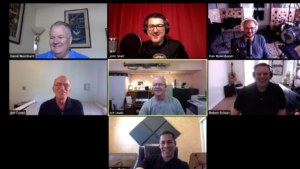
The date was May 4th, 2020. We were in the depths of Covid lockdown. John Snell thought to himself that morning, “Maybe I’ll see if my friend Jon Lewis is around and we can chat trumpet and Star Wars, and put out a little live stream.” He got a hold of Jon, who basically said, “Hold my beer (or coffee) – ” and an hour later had gathered six of the seven members of the section for a wholly spontaneous, gregarious conversation on recording techniques for orchestras, practice and warm up tips, playing for John Williams, and life during lockdown.
So as much as this episode is a celebration of a remarkable series of films, and their iconic music, it’s also a blast from the past of what life was like just a few years ago, and a chance to reflect on how things have changed since.
Listen to or download the episode below:


Links From This Episode:
Upcoming Bob Reeves Brass Mouthpieces Events
- Next Up! Concert Series: Los Angeles Brass Alliance, with special composition by Dan Rosenboom
Pasadena Presbyterian Church, May 9, 7:00 pm
-
July 9-12, Southern Illinois University, Carbondale, Ill.
Podcast Credits
- “A Room with a View“ – composed and performed by Howie Shear
- Audio Engineer – Ted Cragg
- Podcast Host – John Snell
Transcript
Please note, this transcript is automatically generated. It may contain spelling and other errors. If you would like to assist us in editing or translating this transcript, please let us know at info@bobreeves.com.
[00:00:00]
JOHN SNELL: Hello, and welcome to the other side of the Bell, a podcast dedicated to everything trumpet brought to you by Bob Reeves Brass. We’ll help you take your trumpet plane to the next level. I’m John Snell, trumpet specialist here at Bob Reeves Brass, and I’ll be your host for this episode. We have a very special bonus episode for you today.
May the Fourth be with you! Of course. Today is Star Wars Day, and we thought we’d go back into the archives, uh, way back to 2020. In fact, May 4th, 2020. If you, uh, can think back then, uh, everything was shut down, due to COVID and uh, we did a special live stream that featured almost all of the trumpets that recorded on the last three.
Star Wars films number seven, eight, and nine. so we have Jon Lewis, Barry [00:01:00] Perkins, Dave Washburn, Dan Rosenboom, Jim Grinta and Rob Schaer. So Jon, Barry, Dave and Dan were the main section. And then, Jim and Rob were extras or subs during the run. Uh, the only person missing, was Wayne Bergeron, who played on some of the cues in during those three movies.
Special note for this episode. Uh, it was recorded, as a live stream, and so there’s some technical glitches. Uh, you know, I was using more technology way above my pay grade. Uh, we had all the, uh, six or seven trumpet players all on Zoom at once, live streaming to YouTube, into Facebook. Not quite ideal circumstances.
Oh, and by the way, we were sitting all at home, uh, because of the pandemic. so also because of that there’ll be talk about that. Um, there’s a lot of talk about Star Wars and, a lot of great trumpet talk. So I think it’s gonna be fun to release this in the podcast stream for you.
And if you were there on the, on the live stream, then you’ve already heard this, uh, but it has been six [00:02:00] years, so you might wanna revisit some of the great advice and great stories. That our trumpet section has for us today. we’ll get to the Star Wars special here in a moment after a word from our sponsor and some trumpet news.
[00:03:00]
JOHN SNELL: This is a huge week for us here at Bob Reeves Brass, and I’ve been leading up, I’ve mentioned this a few times in the previous podcast, but this Saturday, May 9th, Dan Rosenboom will be premiering his brand new piece in a world like this that we commissioned. Uh, we’ve been doing a lot through the years to help support brass players in the brass community, of course, with things like this podcast and sponsoring brass groups, uh, schools, local schools, things like that.
but this is a big. Turning point for us as our first major commission. Dan wrote a piece for solo trumpet and brass [00:04:00] ensemble, and I, I’m, if you could tell, I’m excited. I just came from the dress rehearsal this morning and it is an incredible piece. Um, and. Being played incredibly by Dan, who is quite the virtuoso on trumpet, but also by the Los Angeles Brass Alliance, um, for which this piece was originally composed.
Uh, so the details, we’ll have them in the show notes and on the de in the description down below, but May 9th at 7:00 PM at the Pasadena Presbyterian Church. the concert will also be live streamed on the Los Angeles Brass Alliance. YouTube, channel. So you can go to www.labrassalliance.org, for all the details.
The concert is called Next Up 2026, and it’s their annual feature of new works. Uh, so the first half of the concert is gonna be new works by some fabulous young composers. I got to hear some of those today as well. and then the feature. Of the concert will be Dan Rosenboom’s work. There’s already a lot of interest, in [00:05:00] the US and, uh, internationally to have this work, performed. So we are so excited to have this work premiered. We hope you’ll join us either in person or on the live stream. And, but wait, there’s more. There’s gonna be more things that we’re gonna be doing with this piece and Dan’s gonna be doing with this piece in the future. Uh, so stay tuned and stay tuned for more, things that Bob Reeves is brass is gonna do for the community.
More commissions, more fun, things like this. The other thing I want to give a quick shout out, to my good friends, Bob and JD at Metropolitan Music, uh, they work in the repair shop there and they are dedicated, loyal listeners of the podcast. And, uh, shout out especially to jd, who’s a sax player, who listens to all of our podcasts and loves the stories, uh, and career advice and things that we share on this podcast.
So, um, I thank the folks in Metropolitan Music in the last episode. you know. Inside secret that was prerecorded before my visit. So once I was there and found out that they listened, uh, to the podcast, I [00:06:00] had to give them an extra special shout out. So thank you guys. that’s all the news I have today.
Let’s get right to the Star Wars trumpet section Special.
JOHN SNELL: My special guest today, joining me back on May 4th, 2020, are the trumpet section from the studio Soundtracks of Star Wars, episode seven, eight, and nine, featuring Jon Lewis, Barry Perkins, Dave Washburn, Dan Rosenboom, Jim Grinta and Rob Schae
As I mentioned early on, this was recorded over Zoom and live streamed over the internet in the early days of Zoom and live streaming. So bear with us with some of the technical difficulties that I had running the live stream. Uh, but nonetheless, the information they have is amazing and the stories of course of, uh, star Wars and John Williams.
here is our Star Wars special.
JOHN SNELL: [00:07:00] Hello, and welcome to the Bob Reeves Brass Live stream. May the fourth be with you. Happy Star Wars Day, wherever you are around the world. joining me today is the trumpet section from the Star Wars. What do you call that? The trilogy, the Last Trilogy. Um, so let’s bring those guys in. We have Jon Lewis, Barry Perkins, Dave Washburn, Dan Rosenboom, Jim Grinta and Rob Schae
Uh. Hi guys. How you doing? Can you hear me
BARRY PERKINS: okay? Hi.
JOHN SNELL: Great. Happy Monday to you. May the fourth be with you. You, and thank you all for joining us. This is so cool to have you all in one place. And I mean, first things first, um, how are you guys all doing? Let’s start with, um, kind of in the corner we have Dave, uh, Dave Washburn.
Dave, how are you doing? You hanging in there with the COVID and everything that’s going on?
DAVE WASHBURN: Yeah, we’re doing great over here. Living down in Huntington Beach. Uh, can’t go to the beach, but I can get out on my boat and enjoy the [00:08:00] water.
JOHN SNELL: Awesome. And, uh, we got Jim Gron next. Jim, how you doing?
JIM GRINTA: Yeah, I’m doing well over in, uh, Simi Valley.
We got some beaches open in Ventura County. So, uh, you know, we made a little trip to the beach last week and, uh, doing just fine.
JOHN SNELL: Get some fresh air. John Lewis, John, thanks for joining us. How are you? Doing
JON LEWIS: good. Doing good. Just mowed my lawn. Haven’t been to the beach and. You know, waiting for this thing to be done.
JOHN SNELL: Right. And Barry Perkins is next. Barry, how’s it going? Staying safe.
BARRY PERKINS: Staying safe? Uh uh. Not doing a whole lot, just, just working on the honey Do list. And, uh, they’re actually putting solar on my roof as we speak. So if you hear banging, that’s what’s, that’s what’s happening.
JOHN SNELL: Well, there we go. It’s a, and if I, we have a kid run in over here.
Uh, you know, we have school and teaching going on here. Um, who do we have next? We got Rob Shear. Rob, how’s it going? Just down the street. It’s good.
ROBERT SCHAER: Yeah. Hanging. Speaking of, uh, speaking of kids, I have two for [00:09:00] sale for anybody out there. Four and almost one. They’re made, they look beautiful in pictures, but.
Uh, yeah. Uh, take ’em. You can have ’em.
JOHN SNELL: Awesome. No more. And last but not least, we got Dan Rosen. Boom. Dan, how Dan, how you doing?
DAN ROSENBOOM: Doing pretty good. Um, just over here, uh, in my studio, working on lots of weird projects and, you know, uh, trying to stay sane, you know, as we, as we go through all of this,
JOHN SNELL: Awesome.
and lemme borrow that microphone when you’re done with this. That sounds great. Um, so, uh, man, we already have a lot of great viewers, uh, from around the world. If you’re watching this live, we have the trumpet section from the Star Wars soundtracks. We already have a, uh, John listening in from Canada.
Uh, put your questions in the comments and we will feature them live here during this q and a. to get started though, I want to ask you guys, uh, I mean, first things first, what was it like playing. On a John Williams soundtrack, I mean, you guys are all [00:10:00] pros in the studio and have done other work. Was there something special, uh, about working with John Williams and being a part of that franchise?
JON LEWIS: As you know, the first six were done in London. So when we found out that it was gonna be the last, or I guess we didn’t know the last three were gonna be done, but we knew that seven was gonna be done in Los Angeles. That was amazing. And it was just like the most, there couldn’t have been anything more exciting for us at that time.
I, my opinion, you know, we were all very excited and, and when we got the call, it wasn’t clear that it was Star Wars. What were they calling it guys? They were calling it
DAN ROSENBOOM: Firehouse.
JON LEWIS: Firehouse The Firehouse, which is a, a bar I think in London where they go to drink, you know, during the sessions and stuff. So, and then when, of course we did the trailer and that was amazing.
and you know, I, I can speak for everybody, but I know for me it was absolutely the highlight of, I’ve done about, I think 20. Somewhere, 27, 28 pictures with John and, you know, nothing comparison that What do you guys,
BARRY PERKINS: yeah, I think, I think we all had chills, uh, when all this was happening [00:11:00] because I, I know I grew up on the Star Wars, uh, franchise and, uh, just growing up listening to those, the main title and, and, uh, the Imperial March and to be playing that with John Williams was definitely a, a high point of my career anyways.
DAVE WASHBURN: Yeah, I remember the, the first session. Didn’t we just play through the main title just to warm up?
BARRY PERKINS: Yeah. Yeah.
DAVE WASHBURN: He got everybody in there. It was just, the excitement was incredible. It was just the, the whole booth was just booming with famous people and, um, it was just incredible to be a part of the sessions.
It was a dream, you know, after listening to. Marie Murphy and then get to hear this fabulous section play, and it was like, wow, this is great.
BARRY PERKINS: Yeah.
JOHN SNELL: So, so you started with the main theme, was it like a rehearsal or,
DAN ROSENBOOM: yeah, it was just to, to get in the mood, you know, I mean, he, he said, let’s, let’s kind of remember what we’re doing.
It was pretty funny.
JOHN SNELL: Now, let’s [00:12:00] be honest, any of you guys nervous on the first attack? The first attack?
JON LEWIS: You know. Yeah. I started having a, a kind of a, a regular thing before we do sessions. ’cause unlike a lot of pictures where you go in succession five days in a row or whatever, John was like, you know, Monday and then Thursday and then following Wednesday, and, and you do at the most two a week.
And so we had all these days in between. So, uh, I don’t, I don’t know if everybody else did this, but I, I would come home. Night before, a couple of nights before, and I just go in my room and I go
and just keep doing it over and over. ’cause you know, we, we did those main titles about 18 times. I mean, everything you do,
BARRY PERKINS: yeah.
JON LEWIS: 10 to 20 times. Everything you do, you know, it’s, it’s pretty brutal.
JOHN SNELL: So. So how much of the music did you get in advance, and how much of it were you just there? Sight reading it the first time.[00:13:00]
JON LEWIS: They posted everything ahead of time. Uh, that’s kind of the, not necessarily the norm, but it’s certainly more normal than it used to be back in the day. Used to always be sight reading, but you know, it’s kind of hard to practice pacing, right? You don’t know what they’re gonna do to you.
ROBERT SCHAER: Yeah.
JOHN SNELL: So we have our first question coming in from John.
how are you guys keeping in shape during this time? What best practice routines should we be using? So, yeah, we’re all sitting at home. I,
JON LEWIS: who can say they’re in shape in this room? I’m
ROBERT SCHAER: not,
JON LEWIS: Nope. Nope. There’s nothing that compares to doing the work, John, there’s
BARRY PERKINS: Right.
JON LEWIS: As much as you wanna try and stay in shape and, and there’s nothing that compares to getting in there and doing it,
DAVE WASHBURN: yeah, I’m putting in a lot of hours. But again, you don’t feel like you’re in shape right day to go.
It’s just, it’s, it is not the same as, as working, being there.
BARRY PERKINS: I think [00:14:00] the hours is just different. I mean, those of us who are playing the orchestra, uh, we would practice what, what we need to be, what we need to be prepared for that week. Uh, so that. That takes a lot of your practice time. Now we can sort of concentrate on things that we haven’t looked at in 30 years.
DAN ROSENBOOM: Yeah, solos
BARRY PERKINS: and that kind of thing.
DAN ROSENBOOM: I’d say, you know, like beyond just exercises, keeping connected with pieces of music that you like, you know, so that you’re not absolutely just working the physical part. You
JOHN SNELL: can. Can you guys give some examples of some of the things you’re doing?
ROBERT SCHAER: Yeah,
DAN ROSENBOOM: the
BARRY PERKINS: boom
ROBERT SCHAER: method, the other, the
JIM GRINTA: boom,
BARRY PERKINS: the boom method.
JOHN SNELL: Other way. Sorry, I mirrored the boom method.
Anything else other than the, everyone’s all doing the boom method. Any attitudes, any soul literature you guys are working on?
DAVE WASHBURN: I found it really cool about by, uh, Timothy Docer and it has all different levels of, of warming up and, and practicing. And each section takes about 20, 25 minutes. And I’ve been [00:15:00] giving that to my students.
And it’s, it’s, it’s very interesting ’cause it kind almost gives you the, the feeling that you are rehearsing it in in a group. It gives you a warmup, it gives you a lot of stuff in B major, which I hate, but, you know, it, it’s, it’s really good and it keeps your mind fresh. And then, uh, just have all my students working on their juries right now.
And, um, I’m just. Learning our learning all the jury pieces all over again. So that’s my,
ROBERT SCHAER: yeah, I’m, I’m a big fan of the, the Plague books, um, the Tony Plague books one through seven. Uh, I, I work through I little bits of every day. I pull a little bit out. Um, I love those, you know, beyond our normal kind of warming up things.
I’m trying to change it up every day. but I think, uh, like Barry mentioned, you know, it’s, it’s, it’s not the same, you know, it’s, uh, for me, and I don’t know about you guys with students. Uh, who are teaching too. But you know, we’re all playing in these, like, smaller rooms and you’re just not playing like you normally would.
So I have to remind myself and remind my students too, the, uh, even just [00:16:00] this morning in my lessons, like play, like you’re playing at Carnegie Hall, play like you’re playing at Disney Hall. Play like you’re playing, you know, with a full trumpet section because we’re not doing that right now. And so, yeah, I mean, you know, especially, you know, my students at Cal State Long Beach and last year they’re.
all of them are having trouble. They’re getting fatigued so quickly. ’cause they’re not pushing themselves beyond their small little space, their little room, you know? And so for me too, I mean, I don’t know about you guys, but I have to keep reminding myself to just, you know, play beyond the room, play out the door, play at the next house, across the street, those kind of things.
JON LEWIS: Yeah. I’ve been revisiting the EB method, you know, I don’t know, written. Like 1923 or something. And if you’re not familiar with it, check it out. ’cause he’s got, he was one of the first ones to write a high f in a method book in, in like an Arvin style method book, you know? But a lot of, A lot and down in the pet register too, but the Shaban books too, which are, you know.
Corner on equals 40 ball, [00:17:00] you know? And it’s brutal. It’s just brutal to play as accurately can. And, and I think we’re all doing remote recording. A bunch of us, you guys already have. I just kind of started, so get my feet wet. I’ve been trying to record like the Vern Reynolds trumpet, Quinte and some other pieces that I’ve wanted to record.
And uh, so that’s good to have that. ’cause it really puts you. You know, in the, in precision mode as best it can be.
BARRY PERKINS: Yeah, and my son’s a trumpet player. He is 14 years old, so he gets a trumpet lesson every day. Sometimes twice a day, like sometimes twice a day, well play that high C again.
JIM GRINTA: This is a good time.
Uh, this is a good time for accountability, especially for me. The other day I attended a great, uh, seminar given by John Lewis that, going over the warmups and the airflow and the airstream and the mouthpiece buzzing and all that stuff, and, uh, you know, at least. keeping that going [00:18:00] and is, uh, you know, something that, that I think we can all benefit from at this point.
And, uh, just getting into a little more head space of, uh, you know, personal, uh, issues and things that we’re working out and things that we want to make better and that kind of stuff. So, uh, that’s kind of where I’m at now and, uh, and heavily into the Clark uh, characteristics studies book at the moment.
So.
DAN ROSENBOOM: Yeah, great suggestions. I just tack on that, this is a great time to start improvising if you don’t already, and not just necessarily in like a jazz style, just learning to, to connect, uh, what you hear in your mind to the instrument so that you know it, and it translates to playing any kind of music.
Like if you’re playing classical music or you’re sitting in a section or whatever, if you can cultivate what you hear in your mind on the horn. Then you can match any section, you can play any style, you can adapt yourself to any situation and, and so it’s a nice opportunity to kind of [00:19:00] spend some time doing that.
DAVE WASHBURN: Mm. Absolutely. I want to add onto that, Dan is, is like in what John said, you know, if you, you try and play with yourself, you record a line and then you add two more lines, you know, can you play in tune with yourself after you just play a line?
DAN ROSENBOOM: Yeah.
DAVE WASHBURN: And I fight it very interesting. And it’s, it’s a lot of fun.
Even if you just do a, a easy four part harmony, harmony, uh, quartet. I’ve been playing through the Hickman. trumpet ensemble music, and it, it’s, it’s really quite fun. Yeah. Yeah.
JOHN SNELL: So I just wanna jump in real quick and welcome all the viewer viewers from around the world. Uh, let us know in the comments where you’re watching from.
Show us some love in the comments and ask all of these gentlemen questions. We have the trumpet section from the Star Wars movies celebrating. May the fourth and may the fourth be with you. So show us some love in the comments. Ask these gentlemen anything and, uh, you can hear your responses [00:20:00] live. the next question comes in about your warmup routines.
And this is, you know, there’s probably a thousand warmup routines for a thousand trumpet players, but can we just kind of go round the circle? And, uh, go through what your warmup routine is. Let’s say normally, uh, non COVID times, uh, like when you’re go showing up for a session or something. Uh, let’s start with, uh, Dave Washburn, if you would.
DAVE WASHBURN: I studied with Rob McGregor after I did my master’s and stuff.
And we came up with a, routine that involves, uh, Jimmy Stamp mostly, but it’s breathing exercises. It’s buzzing your lips to get blood flow in your chops before you go to the mouthpiece. There’s a little bit of mouthpiece and then just, you know, running through different flexibility and tongue on the trumpet.
I’m one of those that believes that a warmup shouldn’t take too long. and then after the warmup, take a little break, and then you get into calisthenic exercises that, that, that, um, help you to get through the day.
JOHN SNELL: Okay. Jim, what’s, what’s your warmup like?
JIM GRINTA: Well, my warmup, uh, I, I try to make it short, [00:21:00] but, uh, I try to make it very air, intensive so that I’m concentrating.
Just on getting the air moving and getting the vibration of the lips going. so that can be long tones, it can be simple lip slurs, expanding scales. I like to do a lot of, uh, with expanding scales and just trying to keep the focus and keep things pretty straight. From there. So that my, my warmup kind of varies in that way as far as what I play, but what I’m going for pretty much stays the same, just airflow, lift, vibration, um, ease, uh.
consistency throughout the registers and, uh, that kind of thing. So we can include scales and Clark studies and all that kind of thing, but a pretty short warmup before actually getting down to practicing or playing the gig, whatever it is. All right. Great. And
JON LEWIS: John? Um, actually the, um, the masterclass that [00:22:00] Jim was talking about, Ryan Dark, did a week of, um, trumpet.
Classes with, uh, I think he did, uh, nine of them and everybody, the focus was more or less warmups and routines and stuff. But I do, uh, some lip buzzing, some mouthpiece buzzing, and, uh, some scan stamp scales, the six chords, the, uh, three B do most of that in the car when I’m driving to work. And I have it all on MP threes with um.
With drones and everything. I think like somebody’s mentioning, you know, it’s really easy when we’re not working a lot to have your pitch center start climbing out of the roof and, uh, you know, so having a metron, having some kind of a drone or something to play with, or even playing with tracks, you know, like we’re talking about.
JIM GRINTA: Mm-hmm.
JON LEWIS: To have, keep that accountability so you don’t, just don’t go hog wild and find yourself what’s going on, you know? So, but like Jim talks about, you know, You, you know, my thing is everything before the horn and with the breathing and the support and everything and, [00:23:00] and just trying to keep the, keep enough face time.
That’s, that’s the biggest challenge for me is to, to, you know, okay, I’m gonna go practice and. Do that.
JOHN SNELL: All right, Barry, what’s your warmup like?
BARRY PERKINS: Well, I guess my warmup is, uh, kind of prepare for the day, I do start with some breathing exercises and, uh, some mouthpiece buzzing. sometimes take a melody and play it in every key, uh, it could be a stamp exercise.
these guys, especially John, is uh. I imitated my warm up a couple times, so I gotta think, I gotta think of a different melody. So, so, uh, here we go. But it’s an ongoing joke in this, in this section. Yeah. You know, so I, I sort of picked this melody I’ve been playing for years and every key and, uh, of course John’s got great ears, so.
I think the third time I did it, John plays
ROBERT SCHAER: all of our warmups back at us all the time. That’s the joke.
BARRY PERKINS: Yeah. [00:24:00] But that melody’s working for me, so I just keep doing it. Yeah. So it’s,
ROBERT SCHAER: it’s a, it’s
BARRY PERKINS: a great
ROBERT SCHAER: melody.
BARRY PERKINS: Yeah, well just, just soft low playing. I start out doing that and then, and, uh, little by little going up by half steps just to prepare for the day.
JOHN SNELL: Great. Rob, what’s your warmup like?
ROBERT SCHAER: Uh, I think similar to what everybody said, I, I think the one thing I’d add is, um, I was lucky to get to study with, uh, you know, a few descendants from the Bill Adam routine and then a few descendants of the Jimmy Stanford routine. So John Al Meeta in, uh, central Florida.
We did a lot of state of, uh, bill Adam, and so, you know, I sort of focus on those, those things conceptually. And then, uh, out here I studied with Boy Hood. Don Green and a few other people and we stayed more like, you know, Jimmy Stamp or Thibo and stuff like that we talked about with Don.
And so for me, I get bored really easily, so I change it up. I try to do something a little bit different every single day. so I might start with some, you know, lead pipe [00:25:00] buzzing. Bill, bill, Adam, just try to get a sound out. You know, I might just do some mouthpiece. Um, I might do some expanding scales, like I might do some of the schlossberg slash stamp stuff, so I’m just trying to change it up for me every day right now, especially, play really loud, play really soft, and uh, you know, just keep this whole thing, keep the train moving forward somehow.
JOHN SNELL: Great. And last but not least, Dan, Dan, what’s your warmup?
DAN ROSENBOOM: Yeah, I mean, it’s pretty similar to what a lot of these guys are doing. I would just throw in that, I like to incorporate a lot of, uh, Bens and breath attacks into the, into the warmup to get a sense of just like immediate response and, and elastic, flexibility in the chops.
typically speaking, I try to think about the warmup being fairly quick and then get into actually practicing and, and moving the air. even when I’m at work, I like to be a little bit. Into my practicing by the time we’re hitting the downbeat. So a lot of these guys have seen me do a [00:26:00] fairly extensive, uh, warmup thing, but it’s not really a warmup.
It’s more just I want to feel a little bit, a little bit worked, by the time we start. and that’s just, that’s just a personal preference thing. But um, as far as warming up, yeah, buzzing, um, breath attacks, bends, some descending arpeggios to get the sense of the air moving forward through the horn and a rich resonant sound in the low register and.
Uh, yeah, that’s pretty much it.
JON LEWIS: Dan’s a really good, example of somebody who walks, the walk and of the talk and everything. His book is, he, he plays it beautifully and, and, uh, it’s hard. An amazing book. It’s hard, and, and I hear him warm up with it, like, wow. Every day. It’s, it’s quite amazing.
JOHN SNELL: Humbling. I think it’s humbling. I,
DAN ROSENBOOM: well, it, it, I mean, just to throw the caveat out there, the book was. Intended to be, a challenge for myself and it, you know, it’s, it started as just what I was practicing to push my own technique and [00:27:00] endurance. So, it’s kind of jumping in the deep end, you know, but there’s, there’s ways that you can approach it, uh, sort of less intensively.
Talk about that another time.
JOHN SNELL: All right. Next question comes from, uh, Michael in Wichita, Kansas. What advice do you have for, Hey Michael, what advice do you have for a college aged musician interested in becoming a studio player? Anyone want to jump in on that?
JON LEWIS: Wow. I’ll start. I, I remember when I first moved to Los Angeles, I met, one of the first people I met was Yuan raci, and Yuan used to say. First he said, great. There’s always room for another trumpet player. And, and I think we’d all agree that there is, there’s a smaller pie. but um, you know, a person we used to work with famous for saying, you have more chance of being a space shuttle pilot than you do a professional trumpet player.
And I don’t agree with that. I think that everybody has an opportunity. To do things, you know, but, there are different ways to do it, [00:28:00] but I think we all did it the same way. You, you get your plank to an incredible point. You meet other players and if they like you, you get referred to other things to cover for them.
Through them, you get introduced to the contractors and, uh, and. You have to build trust in everybody you work with. And then eventually, if the leader, the, the, uh, composers or orchestrators want you, that’s another echelon. But the people that go right for the, the composers, some of ’em work, or the people that go in different ways and end up starting to take a lot of people’s work, um, you know, it doesn’t, I don’t think it ends up well in the long run, but be a good, great player, good person, and be consistent.
Anybody add to that?
DAN ROSENBOOM: I heard a, a great encapsulation from, uh, amazing woodwind studio player, Dan Higgins, and one of the things he said was, focus on being a great player and somebody that they’d want to record. You know, so like if you get your playing to the [00:29:00] level where people want to record it, then you’ll start getting asked to record it, you know?
rather than trying to think about going specifically for a recording career, it’s just like improve your general playing to the point that people want to document it.
JOHN SNELL: so how many of you guys only do recording, you guys all do live playing and freelancing and out stuff outside of the studios, right?
ROBERT SCHAER: Mm-hmm. Yeah.
JOHN SNELL: Have, so it’s, I mean, in the old days you used to have studio, you know, you had the Fox Studio, El Orchestra and the Paramount, things like that.
And now it’s all freelancing. But even then, those guys used to play live and do other stuff, the bowl and things like that. So
JON LEWIS: it’s not, things were a lot different back then in a lot of ways too. There were quotas. You couldn’t play more than this certain amount of jobs per week, you know, and the studio orchestras weren’t that long.
It wasn’t that many years. I don’t know why we’re getting a ghost in the, in the sound, but, um,
BARRY PERKINS: yeah, I hear
JON LEWIS: it echo. So we, we all play live. And I don’t think I, I don’t know about anybody else, but Ike moved out in 81. It was not my intention to be a, [00:30:00] a recording studio trumpet players because this was the place to be.
And, and, uh, you know, so I dunno about anybody else. I, because we, I, I hear more and more I wanna be a studio player. I want to be what? I said, what do you wanna do? I want to do what you do. I said, well get in line. Everybody wants to do what we do, you know?
ROBERT SCHAER: Yeah. Well, I think focusing on being a great, you know, musician, orchestral musician.
Jazz musician, commercial, you know, you have to be really well-rounded to work out here. You, you’re playing all different styles, like we’ve all done, you know, salsa bands and, and all kinds of various, uh, other, you know, things, big bands. And just be as diversified with your portfolio as you can be.
Uh, in the music world, be listening to a lot of different, um, styles of music. And, again, I had a, a great teacher who said, you know, you want to be able to say yes when the phone rings. Um, you want to be like, yes, I can do that. And not be like, oh, I hope I can do that today. You know, so it’s tough. You gotta keep a lot of plates spinning.
Yeah, I mean, it’s, it’s, it’s [00:31:00] difficult. I think, uh, everybody here feels very, very, very lucky to be doing what we’re doing. every day’s a new day, you never know if you’re gonna get to work the next day. That’s the scary part. but then again, we got to be a part of the, uh, star Wars family here.
So, yeah.
BARRY PERKINS: And I think a lot of us, a lot of us or all of us are piece our income together with different income streams.
ROBERT SCHAER: Yeah.
BARRY PERKINS: You know, a Davis principal in the chamber orchestra and John’s principal in Santa Barbara, I’m principal in Pacific Symphony and Rob is, uh, principal in Hollywood Bowl orchestra.
So we need all these streams of income to sort of make this work. I don’t think any of us are solely, uh uh. Just doing the movie recording.
ROBERT SCHAER: Yeah, we’re all teaching,
BARRY PERKINS: so hopefully, and hopefully our orchestra jobs will come back, but for now, yeah, we’re just waiting around.
ROBERT SCHAER: Yeah.
DAVE WASHBURN: Yeah. I think one thing that was hardest for me when I first started in the studios is that we never really practiced with headsets on.
I think now it might be a little bit different, but getting used to playing [00:32:00] with a click, you know, having to come from a, a different source than just being in the room, but actually wearing a headset and. Hearing it click and then being able to hear other people. And, the biggest thing for us when I started was just being a very good site reader.
Being able to read anything that they put in front of you very quickly.
JON LEWIS: Yeah.
DAVE WASHBURN: So if you do have aspirations for that, your site reading skills need to be top notch and is what everybody else said. Just being able to be in control of your instrument and, and knowing. That you can be confident in it and that it’s anything that’s thrown in front of you.
BARRY PERKINS: Yeah.
JON LEWIS: To add to that, that we’re usually reading everything down a step. ’cause we’re most, 99% of the time I’m on c trumpet. So when they throw, we’re reading everything down a step when we, when we’re sight reading it. So also in terms
JOHN SNELL: of timeline, you guys we’re all in town for a while before you started doing studio work.
Oh yeah. Correct me if I’m wrong. It’s not like an overnight thing. It’s not like paying your dues. [00:33:00]
ROBERT SCHAER: Yeah,
JOHN SNELL: for sure. Uh, let’s move on to the next question comes from Carlos. Uh, what are your opinions on mouthpiece buzzing? Uh, let’s just start with a show of hands. How many of you guys buzz your mouthpiece as part of your routine?
ROBERT SCHAER: Sometimes? Yeah.
JOHN SNELL: Yeah. So that’s all of you. Okay. Um, pros, cons. How do you, uh, integrate it into your plane?
BARRY PERKINS: I got, I got a funny story and you guys can take over, but it happened to me just last night. My son’s 14 years old, and uh, he comes up to me, he goes, dad, I can’t play soft. I, because he has to play something that’s pianism.
I can’t play soft. I said, well, let me hear it. And of course it’s just air and no, no focus. I said, well, you’ve been playing loud for the last half hour. Of course you’re not gonna be able to play soft. Your chops are spread. I said, well, do this for me, just, just a buzz, a couple notes on your mouth.
He’s just hold it with two fingers, buzz, just a few notes for me. And he did that. And then I said, now play the same passage P mode, [00:34:00] and it was perfect. So that kind of opened his eyes of the benefits of, of mouthpiece buzzing and, and how it it works in, in making everything work so efficiently. It brings everything
ROBERT SCHAER: back together.
It’s great.
BARRY PERKINS: Yeah. That was his Fri mean. He was, he was Dad. I don’t waste time buzzing my mouthpiece. I just wanna play, you know, that’s a 14 year old’s, attitude towards playing trumpet, but he found out last night pretty quickly that, uh, you can’t just pick up the horn and blow. You know, I
DAVE WASHBURN: think the biggest thing for me, mouthpiece wise is that you need to know why you’re doing it.
You just don’t do it to do it, but you need to know why you’re doing it. And when, when in the day you’re doing it. If you’re using it as a warmup, you know, for me it’s to help get blood in my chops. And what John was saying earlier about pitch, you know, if you use a drone or if you’re playing with a piano, you’re already getting a pitch sense before you get to the trumpet.
So basically you’re in control of your pitch. And when you get to the trumpet, the trumpet is not in control of it. You’re, you’re controlling where you want the pitch to be.
JON LEWIS: Yeah. you know, [00:35:00] singers can, if you’re a singer and you want, you want to go for a note, you just, you just do it.
Or if we’re talking or whatever. And, um, if a person’s familiar with playing the mouthpiece, and, and like Dave said, you’re, you’re actually in control of things. If you can buzz a high B flat or if you can buzz and intune a and the staff or whatever that training, as long as when you’re playing, you’re actually still in line and you’re not, you know, fighting the horn.
Um, if kids are having trouble playing passages, you know, you know, well do it on the mouthpiece. They’ll hear, they’ll hear response changing or whatever, or that they’re not actually playing the pitches. That’s another thing happens. ’cause you can get away with a lot when you’re on the horn. You can be buzzing something and it’s not even the right note and it’ll, the trumpet will lock it in.
But if you’re playing, um, I believe anyway, if you’re playing the mouthpiece. Alone and melodically and, and in tune and in time then, and you put that in the instrument and do the same thing. I think the results can [00:36:00] be kind of amplified.
JIM GRINTA: Alright, great advice, everybody
JOHN SNELL: and someone else want to jump in or we move on
JIM GRINTA: to the next question?
I, I think it’s, I think it’s really important what, uh, what Dave said about you. You have to know why you’re doing it, and I think that applies to, to all the warm up and, and mouthpiece buzzing and anything that you’re doing. It can’t be mindless, you know, just mindless buzzing and, and like, well, what’s this for?
And uh, I mean, John brought up the, the point, it’s like you’re, you’re trying to accomplish a certain thing by doing that. and I think that that’s important.
JOHN SNELL: Alright, thank you all for joining us. Uh, next question comes from Paris, France, and, uh, please let us know where you’re viewing from around the world.
It’s great to see, uh, everyone, so give us some love in the comments section. We’re here live with the trumpet section from the Star Wars, movie franchise and, uh, celebrating May the fourth. Uh, so the next question from, Clementine [00:37:00] in Paris, France. She’s a composer and she wants to know what’s the funniest thing that you’ve played on the trumpet.
And it can’t be the, and it can’t be the horse Winnie from, uh, okay.
BARRY PERKINS: Well.
ROBERT SCHAER: Uh,
JOHN SNELL: from a sleigh ride. Okay.
ROBERT SCHAER: Stupid horse, Winnie. Hey, John. How about the, uh, how about it too, that we had to do?
JON LEWIS: Oh, that was pretty, I don’t think that was funny. That was just kind
ROBERT SCHAER: of, that was funny. I’m, well, you know, for, uh, for it too that, you know, John and I had to, uh, uh, I think, was anybody else there?
Was it just two? I can’t remember.
JON LEWIS: It was just two
ROBERT SCHAER: Barry Wether. I,
BARRY PERKINS: I can’t remember. I don’t
ROBERT SCHAER: think so. Yeah. And anyways, so yeah, we had to do this. There’s a scene where, uh, the clown comes out of the sky towards one of the guys and he sings this song,
something like that. Well, we had to, we had to play it really poorly. Um, you know, sort of like a middle school band would play it, just like really watching outta tune. We must have done it, I don’t know, 14 or [00:38:00] 15 times and it just got worse and worse and worse to play. Uh, but we’ve had a few things like that.
Um, I think those are always the funniest for me when we’re trying to imitate, you know, an amateur, you know, younger, beginning trumpet player for some picture or scene or something like that. Those come up maybe once or twice a year. And, and those, I, it’s hard for me to get through in my laugh.
I just, I can’t
JON LEWIS: help
ROBERT SCHAER: it.
JON LEWIS: When we did, uh, the, the Johnny Depp, um, Zoro. Uh, there’s a scene. No one
ROBERT SCHAER: saw her.
JON LEWIS: Well, three people took two of my kids. but there’s a scene where they build the railroad and railroad. When they, when they came together, you know, they had this, this, uh, turn of the century band, uh, or whatever.
Even before that, they had this little Bryce band with a. The, the, uh, backfire horns and everything, and cornettes and everything, and we, we had some of the world’s best brass players there. and it was like playing so [00:39:00] badly. I mean, I was, I was crying. I was, I was, it was so funny. You’re trying to play laughing in the, it’s when you have to play something bad, that’s usually, and you usually have to have to put a qualifier, like, we wanna hear, it’s like a bad, or we wanna hear like a high school band.
Well, is that a, a good,
ROBERT SCHAER: a high school band or,
JON LEWIS: yeah.
ROBERT SCHAER: Yeah,
JON LEWIS: that’s right. Because years ago we did a, a remake of the music Man. And so, you know, you go
and you get to do that and get paid for it.
And also, I just wanna say that there were many times during the Star Wars things that Dan and I were just like. He’s like, I can’t, I can’t believe we get to do this for a living.
DAN ROSENBOOM: Yeah.
JON LEWIS: You know, we were all like that. We were just in awe. And there, I, I know it’s getting off the topic of, of funny stuff, but I really wanna say that when we, um, anytime certain composers bring out certain traits [00:40:00] in the orchestras, and John brings it way to the top of the spectrum, everybody’s, you know, it’s like when EF Hutton talks.
People listen, you know, uh, if you can remember that far back, Dan wasn’t born, but, you listen, he, he didn’t use, uh, uh, click, or, what am I trying to say? Measure, measure counters. You didn’t have that. So you had pay attention. No phones, no nothing, no, uh, distraction of the movie behind us. So everybody was completely on their game all the time.
And we, we’ve. Rarely ever seen John get upset. If I remember, we saw him get upset once we came back from a break and people were still eating at their seats. And for some reason that really, really bothered him and I’ve never heard him do this before, where he spoke to the orchestra and said, you know, please we’re, we have these breaks and when we come back, I can’t remember exactly how he said it.
pay attention, don’t eat in your spot. [00:41:00] And, uh, and that, that was really interesting. You know, the, the level that John brought to every, every single session and the very last day, uh, when they had probably annual income of maybe $30 billion in the room, you know, every executive and Steven Spielberg and, and, uh, mark Hamill.
And everybody was there. And so John just put up this thing for us just to play, and it was the entire suite. So all the, all the breaks were off, all the pressure was off, and we all got to sit there and play, what was it about a 10 minute, 11 minute suite. Yeah. Uh, and John just kind of turned around smiling, conducting, you know, he is just, this is where it all started, you know?
And, and we played that thing. And I mean, I get goosebumps just thinking about it now, that. You know, and it was full of all the themes from all the different movies, you know, so that the whole process was amazing. But that last day especially, it’s like, ah, man.
BARRY PERKINS: [00:42:00] So that last, that last day’s on YouTube, isn’t it?
JON LEWIS: There’s a good bit of it. Yeah.
BARRY PERKINS: There’s a clip. Yeah.
JOHN SNELL: Yeah, we
JON LEWIS: can, we
JOHN SNELL: can post the link to that after this so folks can see it down in the comments. Yeah.
JON LEWIS: You know, Rob sent me one today that was, I hadn’t seen that Rob. It was like a main title taken from the booth. Oh, and that’s not on other videos.
ROBERT SCHAER: Yeah.
JOHN SNELL: Yeah.
JON LEWIS: Maybe you can send that to John and he can post that too.
JOHN SNELL: Yeah, sure. We’ll make sure to include that. All, all that in. Now one of the things about John Williams, I mean, everyone knows him for his big themes and the the big battle moments and stuff, but he’s also known that even like the filler music and the background music is still has so much integrity.
Are there any particular moments for you guys recording that maybe was just behind something but was really musical or stood out to you guys?
DAN ROSENBOOM: I mean, the whole
JON LEWIS: thing. The
JOHN SNELL: whole thing. It’s like playing Beal,
JON LEWIS: right? Every soloist
JOHN SNELL: choose a moment. Yeah.
JON LEWIS: Every soloist. Wow. The whole time, you know, the, the woodwinds there were, there were horn days [00:43:00] where it was like, what were there 12 horns all the time?
It was amazing. And, and John would just, you know, bow down to the horns and there were days where he would bow down to the woodwinds and bow down to the trumpets and just, you know, He was never withholding praise, you know, and it was, I mean it was remarkable. There was a reasoning that we had some things where there, where things got a little pitchy or whatever, and still very patient with it.
And, um, Jimmy Stamp as a teacher used to be kinda like John Williams is as a conductor in that if something wasn’t going right, Jimmy would be happy to spend an hour lesson. With this one note that you’re moving to early on, and John would go over and over these, these passages that this one cue, that the, there were issues with pitch and over and over, isolate the parts and play it again and over and over.
And the orchestra’s just like, but you know, we got through it. It was, it was an amazing process.
JOHN SNELL: Now, when you guys recorded the [00:44:00] soundtrack, it was full orchestra. Mm-hmm.
JON LEWIS: Yep. Mm-hmm.
JOHN SNELL: And that’s not typically how it is nowadays, is it?
JON LEWIS: For certain guys. Yes. Other guys? No.
JOHN SNELL: Do you guys wanna talk a little bit about that?
Um, especially those that aren’t familiar with studios, like how putting the brass or multi-tracking things like that or, and if you guys have a preference being in the room with the whole orchestra or just
JON LEWIS: in second? Well, the short, the short question could be how many guys like recording in stripes?
There you go.
JOHN SNELL: There.
ROBERT SCHAER: Yeah. The issue is, you know, so everywhere else besides wherever they record London or LA or wherever they’re recording a, a motion picture. When you go to do it live, it’s a lot of these motion pictures live. You get to play your solos, you know, with a full orchestra, it feels great.
there’s a nice, you know, bed of low brass underneath you, or, or the strings sound lovely and you’re playing this beautiful thing, or, or you’re playing really loud, whatever. But often, I mean, you know, I’ve seen John do it a hundred times now, you know, we’re listening. The brass will go separate.
So striping means that the [00:45:00] strings will record and then the brass will record. Sometimes we’re all in the same room at the same time. Sometimes we don’t see the strings all week. We come in at night and we never even see them, so we don’t even know what it sounds like in the room. And so just imagine, you know, you gotta put on this little headphone under your ear.
You gotta hear a full orchestra and record a solo from this tiny little speaker that’s, you know, you’re not hearing full bass. You know, it is very trebley and it’s very, it’s hard to hear pitch and if there’s any percussion in there, stems, you know, symbol stuff, it’s covering up any kind of string fish that’s happening.
I mean, there’s a lot of issues with it. so oftentimes, like I, like I said, I’ve heard John and Dave and Barry, everybody, you know, we’ve had moments where we have to sit there and we have to record these unbelievable solos while having a pitch reference this tiny little speaker in our ear.
You know, I think that’s the worst part, at least for me.
JON LEWIS: Yeah.
ROBERT SCHAER: Um, you know, trying, you don’t know how loud I play. Do I, can I play with this big, beautiful, warm sound, or do I have to play with covered sound? You know, what, where do I play? What, what kind of sound? Great. You just, you don’t really know, unfortunately.[00:46:00]
JON LEWIS: Yeah. We actually, I think are all of us using these now? Dave, you’re, you’re not using the conductive, right?
DAVE WASHBURN: I, I, mine broke, so,
JON LEWIS: okay. I
DAVE WASHBURN: went back to the Sony over the years.
JON LEWIS: Started using these conductive bone conduction headphones because they’re really great with the click. And when you’re playing with whether one ear or two, or we generally use one.
And brass players usually keep the, the speaker most of the way off their head, so you can still hear pitch coming in, you know? Um, but with these, you don’t have to have your ears covered and you can, it’s almost like you’re pounding the, you know, the click into your head, but.
what Rob’s talking about, if you’re playing isolating a solo and you, the more signal you get in these, it just makes the hair in your ears just go and it just tickles. It’s horrible. Yeah. And or if they leave the podium mic on when we’re playing and you’re getting all the orchestra in, in these little things, it’s devastating.
So. striping is not fun. And the [00:47:00] other thing that’s difficult with the digital age, with, uh, pro tools and everything is like the, the strings and woodwinds will go from 10 to five. And then we’ll come in at seven and we’ll do in three hours what they did in six and what they got paid for six. And we get paid for three.
And with Pro Tools, it’s like, okay, go bar 14, ba ba, okay, now go 28, ba, ba, ba. You know, you just, you go boom, boom, boom, boom. You don’t even have rest. You don’t wait while the woodwinds are playing. We just get bashed generally depending, you know, like John Powell and the guys who write the really great.
Hard high. John Powell doesn’t want small horns. I mean, we don’t generally play small horns anymore anyway, but, um, when you get five guys up on high GS in a striping session, that stuff gets really crazy hard, but
DAVE WASHBURN: mm-hmm.
JON LEWIS: We’re not big fans. It’s a school that everybody wants to, many people want to do, but James Newton generally doesn’t do it.
John doesn’t do it. Randy Newman doesn’t do [00:48:00] it. anybody else not use. Striping guys.
ROBERT SCHAER: Um, sometimes various other people sometimes don’t, but, uh, but I, I mean, you gotta understand, I mean, at the end of the day for production, that to have that ability to turn brass up and down over dialogue and stuff, I mean, it’s, it’s better for production, but for us it’s just really, it’s difficult.
JOHN SNELL: Uh, real quick, uh, what if we were talking about the, the bone style, headphones. What, what’s, is there a particular brand you recommend? For those who use ’em.
JON LEWIS: I think, I think we’re all using aftershocks. These are Bluetooth. You can’t use those ’cause there’s latency. But um, I have a pair here. They’re Trek.
Trek. Um,
ROBERT SCHAER: there you go, John. I
JON LEWIS: got what we’re, these are what we’re kind of using. They’re um, they’re called Trek aftershocks. And, uh, they have their own little built-in battery on them. They’re about what they 40, 50 bucks on? Uh, yeah. And, you know, bike riding stuff, like, they’re really good for bike riding too.
’cause you don’t, you don’t lose, you know, you’re not drowning out the sound of the street, but you can still hear the [00:49:00] stuff. Um, they take a little getting used to ’em. Right guys?
ROBERT SCHAER: Yeah. But it’s nice not to have your ear covered up. Your ear is still, you can hear the whole room still when we’re playing with everybody, you know?
So.
JON LEWIS: Yeah. And it was funny ’cause you know, I came with like, well. Many people are using it. I think it’s actually expanding to the woodwinds too. They’re great. They’re just real helpful.
BARRY PERKINS: Yeah.
JOHN SNELL: All right. Well, we have time for just one or two more questions. Thank you guys all who are viewing us from around the world.
I have Spain, uh, we have France. I saw Japan in there, guys in the valley here in la That’s still exciting. Uh, since we can’t go outside our houses, you know, every, everywhere is a foreign land, uh, during these times. Uh, but we have the trumpet section from the Star Wars movies celebrating May the fourth.
may the fourth be with you. we’re kind of a technical question and this is from my buddy, uh, Joe Eva, great trumpet player. Uh, lemme see if I can find it here. Uh, what do you guys do when you’re overdubbing, in terms of your equipment? Do you switch your mouth pieces or horns to sound like other [00:50:00] players?
JON LEWIS: Uh, we have to change it to some extent so you don’t get phasing, you know? ’cause if you’re the same person playing, you’re gonna have the phasing problems, but.
ROBERT SCHAER: That’s super rare though, to be doing that. You know, we don’t often, I mean, every once in a while you get asked to record something at home and you have to record all three trumpet parts.
But at, at least for me, it’s, it’s very rare. Mm-hmm. Um, but yeah, I mean, you change equipment. I guess what I try to do is not to, uh, not to try to be too perfect. It’s actually nice to have a little bit of discrepancy and like you every, if everybody’s playing exactly in time. With, and it’s you all three trumpet parts, and it’s your articulation.
It starts to sound Cynthia again. It doesn’t sound real. So it’s better to have a little bit of, you know, widen the beat a little bit. And, and at least for me, I think it’s, I’ve, it seems to be better, but
BARRY PERKINS: Sure. Yeah.
JOHN SNELL: All right. Denmark, Denmark, checking in and Germany. Awesome. That’s getting late over there.
Um, Chad Willis [00:51:00] asks, for young players wishing to work in the recording industry, how can they prepare to work with click tracks and pre-recorded tracks, uh, heard through headphones. Is there any techniques you guys recommend.
DAN ROSENBOOM: just do it, you know? I mean, yeah, you could start by just like putting your metronome in your headphones or if you’re using a phone, you know, just like where, headphones are like one ear.
Sometimes, like before we started using the aftershocks, we would play like one ear sort of open, you know, so you could just half hear the room and ha and hear the click on the other ear. or, Play along tracks, like smart music or, you know, all sorts of other options and, and or like grab a, um, a track that, that you like off YouTube or something and see if you can like, put a click to it and then practice playing along with it.
But there’s really no technique to get used to it. You just start doing it and you adapt. You know,
JON LEWIS: for younger players, um, you know, like when I teach sometimes. [00:52:00] And if you, even if you just put a metronome and you take a pen, you try to match the,
a lot of times it’ll be, they can’t necessarily, it’s not a way of thinking that everybody does. And so I, I don’t think it’s, anybody could just walk in and record even great players. You know, you have to understand what. What the play is. You know, when you’re in an orchestra, you’re, you’re three feet behind the violas and, and you’re whatever, 18 feet away from the podium.
But when we’re, we’re spread out a lot farther and, the rooms are beautiful, like Sony and Fox are incredible rooms to play in. but you have to allow for certain things. You know, you’re, you’re, we have a mic in front of us, but we’re actually playing towards what they call the tree. Over the podium.
So you have to make sure that you’re really on top of, you can’t just not go with the click. You don’t wanna push it unless you have to. If it’s not speaking, a lot of times say, because we think we’re really right on it, and then they say it’s still [00:53:00] behind, so we have to go, we have to push like a 16th.
And so it’s a skill set that, like Dan said, you just do it. You play along with recordings and or put on a, put on a metronome when you’re playing. Pop, pop, pop, poppa and be accountable. Yeah.
DAN ROSENBOOM: One, one thing that was really jarring the first time I, or you know, the first year or so that I was doing this, was, was the delay that you hear in the room.
So, for instance, we’re often across the room from this, uh, French horn section, and so sometimes they’ll sound. Even later than they usually do. And, and sometimes it can almost be like a half second delay or something, you know? And, and so you have to kind of be able to ignore what you’re hearing, and just go with the click at the same time as he, as listening for pitch and, and interpretation.
So it’s, it is a split brain kind of feeling sometimes, you know.
BARRY PERKINS: Yeah, there’s no, no really [00:54:00] way to prepare for that either.
ROBERT SCHAER: There’s not.
DAN ROSENBOOM: Yeah, yeah,
BARRY PERKINS: yeah. It, there’s, there’s, there’s gonna be moments of adjustments once you get in there, no matter how great of a player you are. my main adjustment, ’cause I, for years I’ve just played for conductors or played live and I was so used to following a conductor and, uh, you just can’t do that in there.
it’s a reference, but you really have to be with the click. And that was, that was, there was a learning curve there.
DAVE WASHBURN: I found that working at, even at a garage band, you can record yourself, uh, with the, they have a click in there now and that you can listen to it back and see how well you are playing with a click.
And then since this is Star Wars, for me, being on fourth trumpet and having to play a lot of lines with the French horns, what Dan was talking about. And I was always asking Barry’s, am I, am I okay? Am I okay? Am I, am I with them? And it was just like, yeah, it was just at the beginning it was guesswork and then you, you hopefully figure it out [00:55:00] quickly.
JOHN SNELL: so let’s, let’s move on to the last question and then we can wrap up. and thank you to all the viewers around the world. Uh, I saw Australia, Simon from Australia, great Trump of player down there, a good friend of ours, chiming in.
Uh, but this is a great question. It comes from Pedro. About how to develop the necessary confidence and state of mind to record. so, you know, nerves and the confidence, things like that. Uh, how did you guys develop your own, kind of dealing with stage fright and that sort of thing?
BARRY PERKINS: You know, I think, uh, dealing with any kind of nerves or stage fright or anxiety, it’s all about preparation.
You just have to be prepared. I mean, you, you, you can’t sit there and practice two days outta seven and expect to go in there and do the best that you can. So, but if you’re prepared and if you’ve practiced and you’ve, you’ve, you’ve done all your mental preparation and, and your sight reading is, is up to par then, then, uh.
You know, the nerve factors is lower.
DAVE WASHBURN: I think found out with nerves for [00:56:00] me is that if you’re in control of your breeding, all your preparation is gonna be able to, to, to come out at a better level, and then you just get confidence that way. But the first thing that I found out when I got nervous is that my first breath was hardly a breath at all.
And so. I learned to, to do breathing exercises, to, to calm myself down and just make sure that, I was in control of my breathing.
JON LEWIS: You know, back in the day, um, especially with fiddle players, they were leaving, you know, Cleveland Orchestra. They were leaving major orchestras all over the world to come to Los Angeles to record.
I think by the time people get into do Reg, they get the opportunity to, like we’ve talked about what it takes to get into. Recording. It’s a lot of other venues, a lot of other experiences that put you to such a high level that I, I think people are probably a lot less likely to be nervous when you’re recording, except maybe when you’re, when you have a solo thing like that, that’s always, you know, scary.
But, uh, as far as being in a section, [00:57:00] if the more competent you are and the more you’ve earned your own trust. Your, your nerves aren’t gonna be so much of an issue. It’s usually, it’s when, when the spotlight comes on or when it’s like two minutes before the end, you have to play this, this really delicate solo.
It’s like, oh, please don’t let me screw this up. But that’s the gig. That’s the gig. And so, I mean, there are a lot of questions. There are a lot of questions that we’re certainly not answering. And hopefully John, you can just. When you wrap up, just tell people to, to contact us if they have these questions.
BARRY PERKINS: Sure,
JON LEWIS: yeah. And we can get them,
BARRY PERKINS: I think it, you know, just in general playing with these guys, with this, these trumpet players here. I mean, it’s more fun than anything else. Mm-hmm. Because I, we’re all pretty confident everybody’s coming with their A game and, uh, you know, hearing John on principle is trumpet.
Just, gives everybody else in this section confidence. So thanks man.
DAN ROSENBOOM: One thing I just piggyback on what John said was actually something you said, about earning your own trust and, uh, when I first got in there, like I knew I could play the trumpet really [00:58:00] well and I could do a lot of things, but I realized that I would get nervous for simple things and I realized.
I didn’t quite trust my own technique to the level that I needed to. So it was a real motivator to double down on fundamentals and really, you know, make sure that every time I’m coming in the room, I’m, I’ve got my fundamental game, you know, on point.
JON LEWIS: And the level of focus has to let, has to endure. Like if you’re playing in a symphony, you’re done in two hours.
If you have even rehearsal or anything like that, it’s two and a half hours. We’re there for 6, 7, 8 hours, um, a day and then maybe evening things. And you have to be the same focus from. First minute to the last minute. You can’t, you can’t lose it.
ROBERT SCHAER: Well, I’d be ready for anything too. Right. That’s the last, you know, even, you know, sometimes we get, like John said, we get to see the music early.
sometimes we don’t. But even when we do get to see it early. Oftentimes you see the orchestrator come around with a pile of music, whoa, what’s coming? What’s coming? And it’s, you know, nine times outta 10. It’s this four page brutal thing, you know? And you’ve been [00:59:00] sitting, you haven’t played for two and a half hours while they’ve been doing, you know, woodwind solos or horn solos, or just beautiful string stuff.
And you’ve just been sitting there, you know, waiting. And then you go, okay, here we go. Click, click, click, click. Good luck.
JON LEWIS: Sometimes, sometimes, sometimes we have our horns put away, right? Rob?
ROBERT SCHAER: We’re done. We may happened a few times. Yeah.
JON LEWIS: We’re gonna go back to that first queue we did. Oh no.
ROBERT SCHAER: Well you could go, you could go to lunch early.
Like you and Wayne do you know?
JON LEWIS: Story?
BARRY PERKINS: Where are those guys?
JOHN SNELL: Uh,
JON LEWIS: thank you to Dave for that. He saved our butts on that one. That’s
ROBERT SCHAER: right. Yeah.
JOHN SNELL: Uh, real quick before we wrap up here, did you guys all use sea trumpets for the the Star Wars sessions?
JON LEWIS: Yeah. I used B flat on the main title, but C for everything else.
DAN ROSENBOOM: Yeah. Yep. Sea
JOHN SNELL: Cs, sea Trooper. Does everyone use B Flats on the, uh, the main title or it was just you?
DAN ROSENBOOM: No, I, I did too.
JON LEWIS: I don’t know. Different times, different people used different, uh, one of the movies I used CI think the last. Maybe for the end credits. I don’t, I don’t [01:00:00] know. I always use seats for that.
ROBERT SCHAER: When I was there, I was usually subbing in for somebody and, and oftentimes for Dave, um, he’d be out soloing with, you know, some chamber orchestra somewhere playing some beautiful piccolo stuff.
But, um, I would often be on the fourth chair, um, with him. And I would play B flat sometimes just if I was with the horns or if it laid better, um, down low, a little meatier, I don’t know. But most of the time, c.
JON LEWIS: The, the fourth, Trump is always the solo chair for John Williams and Dave killed it. He was, yeah.
He was just nailing it. And, you know, and in some of the movies, you know, like when we did Indiana Jones, uh, and the Crystal Skull, Marissa Benedict was playing down there and, and Steven Spielberg’s like this with a video camera right next to her face, you know, he’s notorious for doing that. But you know, my first six notes with John Williams were with Hook.
Um, you know, and they were solo notes and then far and away, all the solos, all those things. You know, it’s a great spot to be, you know, but it’s a terrifying spot to be too. So
ROBERT SCHAER: yeah,
JON LEWIS: kudos to Dave for [01:01:00] doing everybody. These guys, I have to tell you, you know, never had to worry about anybody but yourself. And I knew that, uh, if I could play to the best of my ability.
Everybody’s right there beside you. You know? It’s like, it’s like the Blue Angels were crying out loud, you know, you tip and you do everything together, and, and it was, it was a brilliant experience and I, I, I personally am gonna really miss those sessions because, you know, they spanned over, what, six months guys?
DAVE WASHBURN: Mm-hmm.
JOHN SNELL: Yeah. Yeah. For
JON LEWIS: each. Yeah, each movie was a long period of time.
JOHN SNELL: Well, thank you guys so much for joining us today. We have Jon Lewis, Barry Perkins, Dave Washburn, Dan Rosenboom, Jim Grinta and Rob Schae the trumpet section, from the Star Wars. Thank you guys so much. May the fourth. Be with you. Uh, we still with you.
Thanks for having us, John. My, my son was excited. He brought me in, uh, in my, uh, [01:02:00] lightsaber. There we go. We didn’t have to use it. What would’ve thought So many trumpet players and run room. And I, uh, thank you guys so much. Great information and, uh, more questions are coming in, in the comments, so if you guys are bored and wanna pop in the comments section on this post and, uh, maybe chime in for some of the other questions we missed.
that would be great. Also, for those of you watching that didn’t catch the whole thing, this will be posted on our Facebook, forever. So you can start from the, uh, beginning and uh, watch the whole thing So much. Great information. thank you guys for joining us. I hope you’re all safe and, uh, practicing and getting back to it hopefully soon.
So thank you guys for joining us. Hopefully
DAN ROSENBOOM: for having us, John.
JOHN SNELL: A huge thank you to the trumpet section for joining me. Um, it’s amazing to think of the times we were in back in 2020, especially May when everything was still under lockdown. Um, I was recording literally from my, uh, my elementary school kids desk and, uh, and chair. And I’m six two [01:03:00] if you’ve ever seen me in person.
And I was sitting probably a foot off the ground for that hour. but enough about me. Uh, and a special thanks to Jon Lewis. it was, I, I think 9:00 AM on May 4th that day. And I was, uh, I heard that the horn, uh, I think Sarah Willis was doing a horn section, thing for Star Wars Day. And I was like, Hey, if they get to do something, why don’t I get to do something?
And, uh, I. Sent a message to Jon Lewis thinking, oh, it’d be fun to have Jon on. And, uh, again, we were all sitting at home, pretty much doing nothing, although some of those players were doing in-home studio sessions by that point. Uh, but I figured, Hey, why not? Maybe he, we could hop on a live stream. And Jon texted me back, said, that’s an amazing idea.
Give me a little bit of time. I’ll get the trumpet section. I say what? And lo and behold, uh, from between 9:00 AM and I think 10 or 10 30, by the time we went live, uh, we had all of those players on, sharing their experiences and the stories about [01:04:00] John Williams and a little bit of window, into what we were going through as musicians and as trumpet players during the COVID lockdown.
Thank you to Jon, Barry, Dave, Dan, Jim, and Rob. and thank you all for listening. Uh, hit that five star review button. Hit that like, and subscribe. Whatever you can do to feed the monster, you know, the algorithm monster. We always appreciate it. And uh, to honor the day, I’m gonna change things up a bit and may the force be with you.