Brian Shaw Trumpet Interview
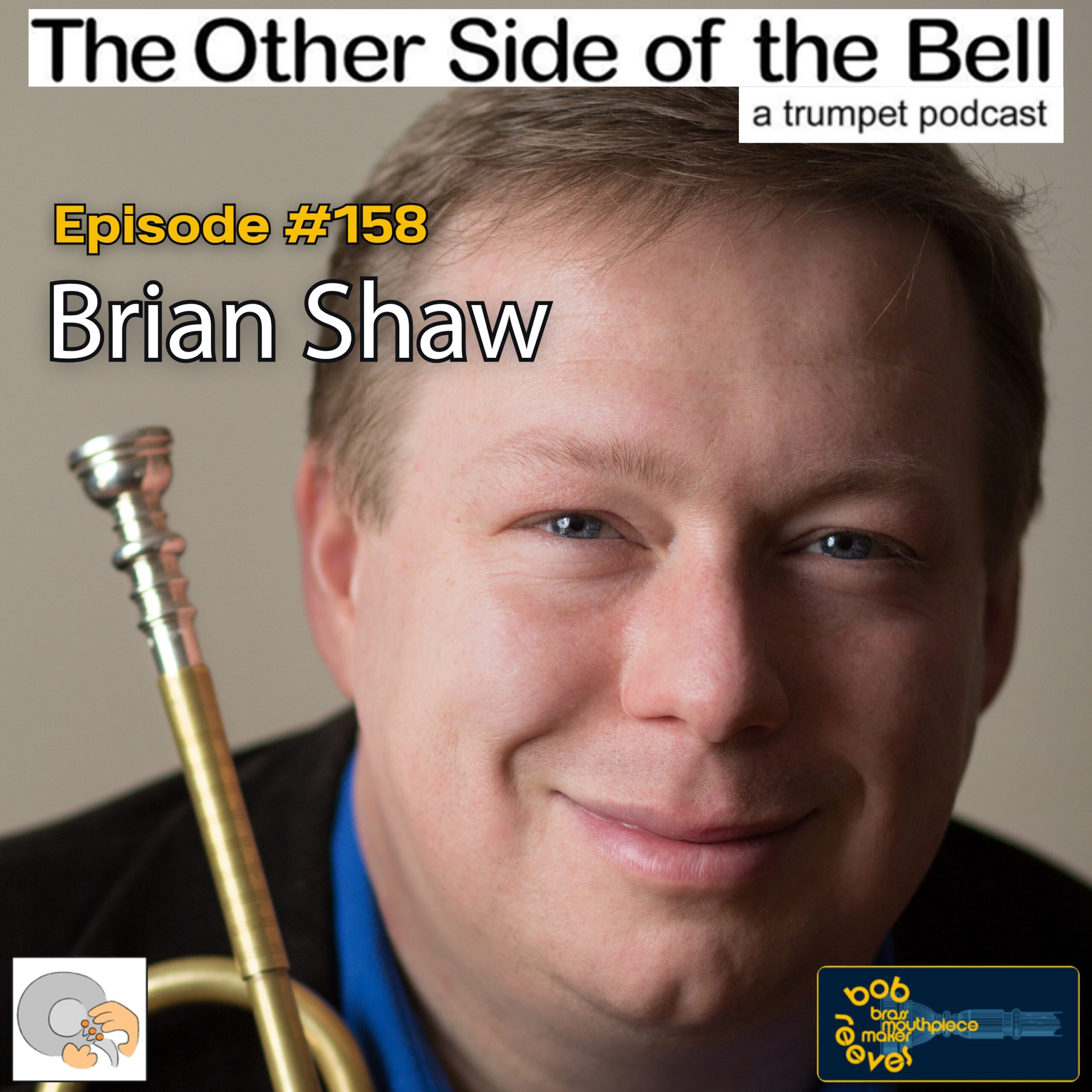
Welcome to the show notes for Episode #158 of The Other Side of the Bell – A Trumpet Podcast. This episode features historical, classical and jazz trumpeter Brian Shaw.
Whether it’s big band jazz, classical baroque, or any number of styles in between, Brian Shaw’s trumpet career is a reflection of the word, “versatility.”
Brian is the type of musician who, when having trouble deciding whether to major in classical or jazz, decided to simply do both! Hence a double major in jazz studies and classical performance, which yes, did result in him having to do two senior recitals. But Brian embraced the challenge, just as he did in finishing his doctorate in one year instead of three, so that he would have more time to pursue all the various avenues he wanted to explore.
Today, Brian pursues teaching, writing, performance, arrangement and more from his home base near Seattle, WA. And, as you’ll know from our recent “Kenny Wheeler Special,” he and Nick Smart recently collaborated on a biography of inspirational trumpeter Kenny Wheeler, Song For Someone: The Musical Life of Kenny Wheeler, which added published author to Brian’s resume as well.
Brian joins us today to talk about his early inspirations coming from a non-musical family in small town southern Illinois, to being the first in his family to attend college, taking control of your musical education, and the various stops and projects he’s pursued along his trailblazing journey.
Listen to or download the episode below:


About Brian Shaw
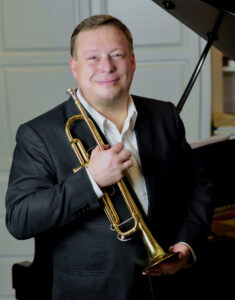
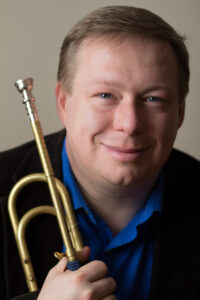
Brian Shaw is an active performer, arranger, and educator known for his versatility. He is one of the few trumpet players in the world equally comfortable in early music, orchestral, jazz, and commercial settings on modern and period instruments, and enjoys an international performing career as a modern and historical trumpet soloist. He holds principal positions with the Dallas Winds, Santa Fe Pro Musica, Spire Baroque Orchestra. He is also a regular guest instructor of Historical Trumpet at the Eastman School of Music. From 2007-2021, he was Professor of Trumpet and Jazz Studies at Louisiana State University and was Principal Trumpet of the Baton Rouge (Louisiana) Symphony from 2014-2021. Brian has also served as guest Principal Trumpet of the Oregon Symphony, Kansas City Symphony, St. Louis Symphony, and Pacific Northwest Ballet Orchestra (US).
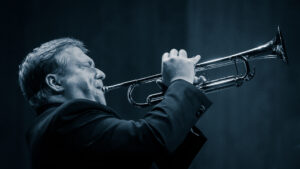
A noted Baroque trumpet player, Shaw’s 2008 recording Virtuoso Concertos for Clarino includes some of the most difficult pieces ever written for the instrument. Early Music America observed: “Shaw’s tone is beautiful, and his playing unfailingly musical… His is a voice that will make a major mark on Baroque trumpet playing.” His critically-acclaimed 2014 solo trumpet recording redshift was accompanied by the Dallas Wind Symphony and conductor Jerry Junkin. Brian has also released a collaborative album of classic recital pieces with pianist Jan Grimes called Sonatas and Fantasies: A Century of Standards for Trumpet and Piano, and has just completed another recording project called Virtuosic Versatility, outlining the history of the trumpet, from early music to modern jazz.
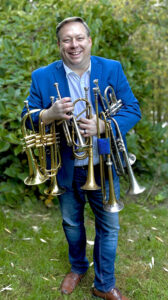
As a jazz musician, Brian plays solo and lead trumpet professionally in the Seattle area and leads a big band in Baton Rouge every December, which released a holiday-themed album titled Christmas at the Manship! in 2017. He is in demand as an arranger as well, with many scores for jazz band, brass ensemble, studio orchestra, and wind ensemble to his credit.
Brian Shaw lives near Seattle with his wife Lana, their sons Thomas and Elliot, and their dog, Ernie.
Brian Shaw episode links
Bob Reeves Brass Events & Appearances:
-
July 9-12, Southern Illinois University, Carbondale, Ill.
Book your trumpet alignment here:
https://trumpetmouthpiece.com/products/william-adam-trumpet-festival-valve-alignment-presale
Podcast Credits
- “A Room with a View“ – composed and performed by Howie Shear
- Podcast Host – John Snell
- Photo Credits – Courtesty Brian Shaw and Equinox Publishing
- Audio Engineer – Ted Cragg
Transcript
Please note, this transcript is automatically generated. It may contain spelling and other errors. If you would like to assist us in editing or translating this transcript, please let us know at info@bobreeves.com.
BRIAN SHAW (opener) [00:00:00] I think there’s comes a point at which you need to put yourself up against the top players doing what you do and just see what you need to do. What are you like under pressure? How are you going to, deal with being surrounded by people who are really, really great and probably the best people wherever they are,
JOHN SNELL: Hello, and welcome to The Other Side of the Bell, a podcast dedicated to the world of trumpet. Brought to you by Bob Reeves Brass. We want to inspire you to develop joy and confidence in your trumpet playing.
I’m your host, John Snell, and joining me today is trumpeter Brian Shaw. We’ll get to Brian’s interview here in a moment, but first, let’s take a look at our latest trumpet news.
Memorial Day weekend just passed us, which marks the unofficial opening to the summer [00:01:00] season. so whatever you’re doing this summer, or if you’re enlisting in Australia or the Southern hemisphere, your winter. Uh, but for most of our listeners, uh, we’re coming into summer, which means of course, travel, summer festivals.
JOHN SNELL: You know, around the country and around the globe, means the International Trumpet Guild Conference is happening. And, uh, real quick, up top, I just wanna mention, and we’ll mention this in the interview, but, uh, our guest today, Brian Shaw, will be performing a pretty amazing half an hour recital at, uh, ITG, this week.
So, uh. Look at your program if you’re going to ITG and listen on later into the interview. Uh, no spoilers about what his recital will be. So if you only listen to 30 seconds of this, uh, podcast, uh, go see Brian Shaw at IG happening this week as this is posted. I’m still flying from, uh, Dan Rosenbaum’s Premier a couple weeks ago with the Los Angeles Brass Alliance.
there will be some video of that, of the premier performance. Uh, they, they did a multi-cam shoot and they’re in the process of [00:02:00] doing the, the audio mix, which of course is a big deal when you have brass and uh. Percussion and a solo trumpet. Um, and that group is run by, uh, a bunch of all, all volunteers.
Uh, so we are on their timeframe, uh, but happy that they got such a high quality recording of that performance. So, uh, hopefully in the next week or two we will be able to start sharing some clips of Dan’s wonderful piece. And, uh, that piece, as I had mentioned last episode, is already getting legs. Uh, we have some interest in a few different bands in the US and internationally that want to perform that, so stay tuned you might hear a, uh, east Coast or international Premier of Dan’s work for trumpet and brass. coming up, uh, in July, that’ll be our next in-person event. On the road will be the 12th annual William Adam Trumpet Festival. I’ve mentioned a few times this year’s, uh, festival will be held at, Southern Illinois University in Carbondale, Illinois.
The dates of that are July 9th through 12th, so we will be there. We have [00:03:00] the alignment. Link up now. So make sure, if you are gonna be there and you wanna reserve an alignment, click on that link and you can, prepay and secure your slot. Adam Fest books up every single year. I have to turn folks down on the last day and I hate doing it.
I hate saying no. Uh, so if you want to get your alignment done, uh, and you will be at the William Adam Trumpet Festival. sign up early, and if you already have your horns aligned or you’re not interested, I hope to see you there. Uh, it’s always a great event. Uh, Matt Collins, our associate in Austin, Texas, will be joining us.
And, uh, there’s lots of great master classes and clinics by former students of, uh, Mr. William, Adam at Indiana University, and then, his first generation of students, uh, students of them. you know, for example, Dr. Ricky Spears is hosting this year. He’ll be doing some performances in masterclasses as well as a lot of other folks.
We’ll have a great selection of Charlie Davis, uh, trumpets at the booth. Charlie will be there himself. I think he’s doing a clinic, uh, or masterclass. He’ll have a bunch of his horns there. Uh, [00:04:00] beef flat and seed trumpets. we will have. You know, 300 and something mouthpieces. We’ll have the old vein mutes.
We’ll have some cool guard bags, some of which you can see behind me here if you’re watching this on YouTube and, uh, some other mutes. We, I have a great selection of tro core mutes, including their new, uh, cup, novo mute, uh, that we just started carrying that, uh, Chris, that Trump core mutes just designed.
wonderful. Mute. It’s kinda like the Dennis Wick Cup, but even better, more in tune and in more even blow through the register. So I have one in my collection now as well. so that’s all I have to say about William, Adam, uh, trumpet Festival.
I hope to see you there in Carbondale. Speaking of mutes, I got ahead of myself. Uh, we just got a huge shipment of old vein mutes from Sweden. we did a big production run of cup mutes. We’d been been out of cup mutes for quite a while. the stubby bop mute, uh, it’s kinda like a soloist Harmon mute, you know, comes without a stem.
for, solo playing. Uh, we have a bunch of those in different colors in stock. Now, for the cups, we have a couple different colors. We have the copper [00:05:00] cups that, uh, similar to the one that, uh, Hoka Hardenberger uses. And of course we have the chrome plated copper dizzy cup mute in stock. so check our website for those.
Uh, we have a lot of fun stuff. Um, last thing I wanna mention about, uh, the things that are happening at the shop, I think I mentioned last episode. We are, going through Boyd Hood’s collection of instruments. He’s starting to thin his herd, and by no means is he retiring from playing. Those of you know Boyd Hood, he’s a former guest on this podcast, a longtime, trumpet player in the Los Angeles, Phil Harmonic and esteemed professor at the University of Southern California.
Uh, go Trojans. Uh, he is thinning his herd of trumpets and if you know anything about Boyd, he is a huge collector of instruments. so he is, it’s kind of the ones on the, uh, the auxiliary horns that he loves, but he doesn’t really use anymore, are going up for sale and we are proud to carry them at our shop and mouthpieces.
Uh, so just for example, um, a couple of the horns we have on the website [00:06:00] right now, we have a New York. Bach, de trumpet very similar to the one Vao used. In fact, it’s uses the Vao Bell mandrel. Uh, we have a sopranino high f Bach trumpet, uh, that’s say on a, um, it’s a New York originally, a New York, high F trumpet.
Uh, the bell was replaced during the Mount Vernon era. So it’s a, uh, New York, uh, valve casing with a Mount Vernon high F Bell. fun, fun horn. In fact, Boyd said that’s the first time he played the Brandenburg was on, on that high F trumpet. we have a, uh. Uh, Mount Vernon Sea Trumpet On the website, uh, we have a bench sea trumpet that belonged to Bob Deval, longtime, uh, principal trumpet of the LA fill.
And, uh, you know, you’ll know Bob Deval from that old bench catalog when they have the fic picture of the LA fill. he’s using a B flat in that photo, but the, the sea trumpet was his main instrument in the orchestra, and we have that, went through Tom Stevens after, uh, Bob Deval before it got to Boyd Hood, and now we have possession of it.
another fun horn is a [00:07:00] Holton Sea trumpet, owned and used by Gerard Schwartz. talk about some trumpet history there. he used that funky horn, you know, back, uh, in the days before Not everyone used Bakker Yamaha in the orchestra. so we have that up for sale and some other fun things. Uh, and then, oh, by the way, mouthpieces, we probably have 25, Bach mouthpieces all from the New York and Mount Vernon eras.
and. Very sought after and rare large sizes. Um, all of the sizes we have right now are in between the Bach two and the Bach one series. So one, one C, two, two and a half C et cetera. And some fun cornet pieces as well, but a lot of great trumpet pieces. So. You know, it’s been fun. They’re all sitting on my desk right now.
I’m trying not to buy all of them myself, uh, but head, head to our website and get a piece of history. Uh, certainly a piece of LA history, but, uh, for Bach and some of these other men, the bench, some very important horns, with a wonderful provenance. All right, I’ve done enough talking today. Very excited [00:08:00] about all the toys we have here at the shop, um, as you can tell.
But I want to get to today’s special guest, Brian Shaw.
[00:09:00]
JOHN SNELL: A native of Southern Illinois. Brian Shaw is co-principal trumpet of the Dallas winds and is principal trumpet of Santa Fe Pro Musica and Spire Baroque orchestra. He is noted for his versatility, performing and recording regularly as a classical and jazz trumpeter on both modern instruments and period instruments.
He has released four recordings as a soloist, including the 2014 album Redshift with the Dallas Winds and his most recent album titled Virtuosic Versatility outlining the history of the Trumpet from early music to Modern Jazz. Brian is very active as an arranger and has just co-written a biography of jazz legend Kenny Wheeler, which was published by Equinox [00:10:00] Books in the UK in February of 2025.
As a teacher, Dr. Shaw continues as a guest instructor of Baroque Trumpet at the Eastman School of Music And leads a robust private studio. After leaving his former position as professor of Trumpet and jazz studies at Louisiana State University, which he held for 15 years, Brian is proud to be a Yamaha performing artist and lives near Seattle with his wife, their sons, and their dog, Ernie.
And now here’s my interview with Brian Shaw.
JOHN SNELL: Well, I’m having a brief deja vu here. Uh, joining me again, uh, if you listen to the Kenny Wheeler episode, a few episodes back, we are dedicating an episode this time to Brian Shaw. Brian, I’ve been looking forward to this. great to have you on here.
BRIAN SHAW: Thank you. I’ve been looking forward to it too. Thanks a lot, John.
JOHN SNELL: Yeah. Uh, so tell me about the Kenny Wheeler Brick.
No,
BRIAN SHAW: I
think we’ve covered that
JOHN SNELL: I think we covered that. but as a plug, if you, if you haven’t [00:11:00] listened to that episode, go back and listen to the Kenny Wheeler, uh, special with, uh, you and, uh, Nick Smart. It’s a fabulous episode. Um, and also one last thing before we get started. It’s Happy birthday.
Uh, I can’t think of a better way to spend, uh, you know, another trip around, uh, the sun than to talk about trumpet.
BRIAN SHAW: Absolutely. No, I, I, I think this is like a great gift, so I’m, I’m happy to have it. Happy to be here with you.
JOHN SNELL: so hold the party, hold off on the cake and, uh,
BRIAN SHAW: Yeah. no, drinks until after the podcast. That’s.
JOHN SNELL: no. Fun. let’s start from the beginning. Uh, I know you’ve, you’d mentioned before that, uh, you were kind of inspired early on by Maynard Ferguson. Was that when you picked up the trumpet or did it start before that?
BRIAN SHAW: well I started, um, I’m from southern Illinois in a very, from a very small town. Uh, we had about 5,000 people in our town, and, uh, I started like so many kids in that area do, just in fourth grade band. We started in fourth grade. A lot of schools I know start now in fifth or sixth grade, but, uh, we started [00:12:00] in fourth and it was something that, you know, I just thought it seemed like a cool thing to do.
You know, I, I wanted to, try an instrument. None of my family really plays music. Um, I was kind of an outlier in that way.
But, uh, the band director came and did this big thing with all the instruments. You know, we tried ’em out. I was really sort of initially attracted to the saxophone and then I saw one in person and I was like, that looks so complicated.
I’ll never figure that out. And then I thought, well, the trombone that has one moving part that seems pretty good, you know? And then my dad, my dad was also my school bus driver and he was like, you, you’re not gonna bring that big thing on the bus and you’re gonna like knock kids over ’cause I’m kind of naturally clumsy still. And he just knew that was not a good situation. So I thought, oh, well, you know, the trumpet only has three buttons, you know, I called ’em buttons back then, and that looked like something easy to start. So I started there and was really, really terrible. Like most kids when they start [00:13:00] out, you know, for a couple years, um, didn’t really get. Even in my little town, like I, I was at the bottom of the trumpet section, you know, and, uh, then as you mentioned, Maynard came along to Evansville, Indiana, which is only an hour from where I grew up. And that’s the biggest town, you know, anywhere in, in quite a ways, radius. So I, uh, went to hear him play.
It was funny, he was at the Musicians Union Hall in Evansville, and, uh, it was general admission, so I just got to sit right in front of Maynard because there happened to be two seats right in front, like literally right in front of him. And my friend Matt Stahl, who was much better trumpet player than me at that point, the two of us said, oh, let’s just go sit in the front. so the sixth graders, we go up and, and sit in front of Maynard, and, you know, this would’ve been during the high voltage years, you know, so it was kind of a rock band. So that was, that was cool in its own way, you know, had that fusion element to it. And just sitting in front of Maynard, I just never heard anybody do anything [00:14:00] like that. And it. Totally changed my life. ’cause I, I just became obsessed wanting to be able to do that
JOHN SNELL: Wow. How cool. And I mean, did you have any albums of his, or like did you know of him beforehand or was it just.
BRIAN SHAW: I just knew he had kind of a weird name and my band director said I should go hear him. And so we, I think he had like a van full of, you know, the, what it would’ve been the sixth grade trumpet section at that point, you know, and we all went over. and so, no, I didn’t have any recordings
and so I bought a tape, a cassette tape there at the concert.
And that was, it was Big bop No it wasn’t big bop nwo. It was, um, high voltage tube, I think. So that was it. that kind of hooked me. And uh, so I just started trying desperately to play along with it and figuring out tunes by ear
and, uh, learned a lot from just that process.
JOHN SNELL: Really just playing along with, uh, high voltage.
BRIAN SHAW: Yeah. Yeah. Trying to figure out some of those tunes. Gosh, I’m trying to remember. There was, um, oh, but Beautiful was on that[00:15:00]
album, if I rem remembering correctly. because it was a ballad and he started on Ugal Horn and it was in a range I could actually play. And so I remember figuring that out first and then trying to play some of high stuff that he did later and with varying levels of success and varying levels of fatigue and damage to my lip.
’cause my band director, his name’s Steve Bell, he’s, uh, still with us and, and, uh, I get to see him every once in a while when I go back to my hometown. But I remember, I had trumpet lessons with him a little bit, mostly in the summers. I think it was like $5 so, so cheap for a half hour. He,
he was really generous with his time, um, with me and would take me not only to hear Maynard, but other people that were playing. I remember once in high school, uh, there was a big jazz festival near Chicago called the Rolling Meadows Festival and Arturo Sandoval was supposed to play there and I’d never
heard Arturo Live and I really wanted to go to that. [00:16:00] So, um, since I was in Chicago or near Chicago, it was about a five hour drive for us.
’cause I was down at the bottom southern tip of Illinois. we decided to drive, well halfway up the road up Interstate 57, which goes pretty much straight up there. a snowstorm came through. ’cause this was in, I forget what time. It was definitely in the winter, we’re in this little Ford compact car trying to like get through the snowstorm to get to Rolling Meadows, to hear Arturo. We get all the way there. Somehow we made it and Arturo couldn’t get there
because of the storm.
JOHN SNELL: Oh, no.
BRIAN SHAW: I got to hear the University of Illinois big band, which was the band that was supposed to be there backing him up.
They all made it and it was great to hear them. And my, one of my former teachers, Tom Bergner, was leading that band. And Jeff Helgason a great champagne or band, a trumpet player who was on the road with Ray Charles for a long time. He
was in that band. So, you know, it was, you know, not much of a bad consolation prize, you [00:17:00] know, to get to hear that band.
They
were really strong back then, so it was great.
JOHN SNELL: Still got to hear a great band. Just no Arturo.
BRIAN SHAW: Just no art.
JOHN SNELL: so during your upbringing, did I, you, you mentioned, uh, Steve Bell would, uh, teach you during summers and off and on, uh, but did you ever, when at what point did you get like a full-time private instructor?
BRIAN SHAW: Not till I went to college, actually. Yeah, I didn’t really have a teacher, a non-band director, full-time trumpet teacher until I went to college. I did drive up to Eastern Illinois University every once in a while and get a lesson with Parker Melvin, who was teaching there at the time.
Julliard student of, uh, mark Goulds and, uh, student of, uh. Dr. Canaria at, uh, university of North Texas, so I would get lessons from Parker every once in a while and in the summers I would go to jazz camps and, and that was kind of where I learned a lot.
I would kind of store up information from, like I mentioned Tom Bergner and some of the other folks that were around during that time, Jeff Helga in, at Illinois. I would go to the University of Illinois and eastern Illinois for jazz camps. They were always like a week apart. So I’d have like [00:18:00] two weeks of intensive, jazz band camps, which was really good for me.
And then I’d come back and practice all the things that they had told me I couldn’t do, you know, during, during that summer. So it was, it was good for that, for sure.
Yeah.
JOHN SNELL: I mean, would, would you say, I mean, your primarily primary focus was on jazz and like Maynard kind of stuff, or
BRIAN SHAW: Yeah, I mean, I was, I was your typical sort of, you know, Maynard head high school student, you know, there’s kind of a type of, of young blonde dude that seemed to be sort of the prototypical maynard head and I definitely fit that mold. yeah, he, uh, was a huge influence on me and like I, I did learn to kind of play in that range sort of by trial and error really. And picked up some things, like I remember being in seventh grade and I got up to an E-flat above IC and thinking, okay, the, I’m figuring something out, you know? And, and that was like, I just remember that E-flat being like a big moment because I couldn’t play [00:19:00] the Hein concerto before that time, you know, ’cause of that E-flat on my B flat trumpet.
and some things started to sort of open up and I got to where I could play up to double high C, which was, kind of cool and considered a little freaky and in, or freakish, I should say, uh, in, in that, uh, time of my life. And, and so, but it helped me get to college, you know, having a good range. And, you know, they knew they could use me in the big bands at Eastern Illinois.
So that’s where I ended up going. And, got my college paid for. You know, we, we don’t come from a lot of money, so that was a big thing, you
know, be able to do that. And I was the first person in my family to go to college.
So, um, that was, yeah, it was like, how are we gonna do this? You know? And I knew my parents would always support me, but, you know, I didn’t want that burden on them.
And, and, uh, to have, uh, some skills that paid for it,
or mostly paid for was, was really good.
JOHN SNELL: Amazing. So I’m, I’m curious, you know, now looking back later in your, in your career, what was it that you figured out in terms of the [00:20:00] upper register when you were younger? have you reverse engineered what you did or what you were doing?
BRIAN SHAW: That’s such a great, I mean, I, I did it so inefficiently. It was so much pressure
for a long time. I mean, I would hate for anybody to follow that path. But the good thing about it was, is that I had that process of discovery, you know, and I was teaching myself and it was so messy in such trial and error. sometimes I’d play to the point where I just, I mean, I couldn’t make a sound anymore ’cause I loved it so much and I wanted to keep doing it, but I was doing it inefficiently and like I said, with too much pressure Over time, I think I loved it so much that I had to figure it out or I was never gonna be able to do it. And so, you know, I definitely gained some bad habits, but the skills that I gained, I think, outweighed those.
And one of the skills that I gained, I think, through doing that was just having a good ear and learning to play things, at [00:21:00] first or second hearing, you know, being able to hear something and being able to play it back.
And I remember, uh, auditioning for colleges when I was a senior in high school. And, uh, there was a satellite audition in Chicago for Berkeley College of Music. And I was really wanting to go there. That was kind of my, my top choice. And, um, I didn’t end up going there for several reasons. I got in and I got a scholarship, but during that audition, I remember it was a saxophonist and he would say, well, we’re just, we’re just, you know, I played my prepared things. And he said, we’re just gonna test your ears for a second. And so he played like, you know, pretty simple phrase and didn’t give me a starting pitch. I played it right back to him on my trumpet. He’s like, okay, interesting. Then he played something a little more complicated and I played that back and he played like sort of a Charlie Parker adjacent bebop lick, and I played that back for him and he says, do you have perfect pitch?
And I said, what’s that? I, I didn’t know what that was, and
I just thought that I had just practiced so much that my ear developed the ability to just go, [00:22:00] okay, that’s this note, that’s that note.
but I think I sort of inadvertently taught myself to have, if it’s not perfect pitch, it’s really good pitch memory.
You know? I’m not
sure the neurological differences between those two, but, you
JOHN SNELL: Yeah, yeah, yeah. I like, and I, a friend of mine who you could like lay a cat on a piano and he could tell you each note that the cat has played, how’s that for a picture? Uh, you know, but then, and then like, like for Bob Reeves, like he could hear, you know, certain notes, just a resonance and Yeah. But he didn’t have perfect pitch, but he could, yeah.
That tonal memory. cause you primarily, played by ear right? As you were growing up, you know, playing along with Maynard. And would, would you play with, along with other, or was it just strictly Maynard
BRIAN SHAW: it was maded until I went to these jazz camps actually. And, and you know, I’d, I’d, I’d be in the combo and then it would just be like we, you know, try to play a tie notes and people would say, that’s nice that you can do that. However, this is not right. You know, the, the best place for that. And then, Hey, try [00:23:00] Clifford Brown, try Louis Armstrong, try
Lee Morgan. You know, and so in Winton Marsals, I mean, Winton was a huge presence when I was growing up as a kid. You know, I remember watching the Cosby Show and, Theo.
The oldest son had a big poster of Wynton on his door, and I was like, oh, who’s that? You know, there’s this trumpet player and he’s, you know, he’s holding, you know, two instruments I’d never seen.
I think he’s holding a piccolo and, and an E flat, you know, I was like, what are those, so like getting that album where he is playing Hayden and Humel and Leopold Mozart, you know, I think that was a tape too. That was a huge influence. And then I discovered Wynton’s Jazz playing. ’cause you know, I was just in a small town, obviously way before the internet, and hardly anyone who was interested in this music, like I was.
So you just sort of stumbled on things, you know, it’s like, how obvious is it now that Wynton Marzalo was, you know, an equally great classical and jazz trumpet player? That’s like the thing that everybody
says first, or certainly at that time they [00:24:00] said first about him,
I just didn’t know.
So,
JOHN SNELL: Just kind of stumble, stumble your way through
BRIAN SHAW: Yeah. Yeah. It’s like Mr. Magoo my way through trumpet, you know? Uh,
JOHN SNELL: so you’re in, you’re in university. I mean, do you start expanding your, kind of the breadth of your, musical endeavor, so to speak? I
mean, you get into more classical plane, orchestral plane at this time.
BRIAN SHAW: totally. Yeah. And orchestra playing wasn’t quite yet my thing. I mean, Eastern Illinois didn’t, it had an orchestra, but, you know, it was, it’s a small school, so we weren’t able to do, some of the massive pieces that you can maybe at, at a school where the orchestra program is a little more thriving.
But, I did learn a lot about transposition there, which was a big deal. But more importantly than all that was, just having lessons on a regular basis with a great trumpet teacher and working on, like you said, classical stuff. Uh, and that’s where I connected a lot more with that music, and learning to play it in a more efficient way, with better technique, better articulation, for sure. better sound. just having [00:25:00] Parker work with me on centering notes and mouthpiece buzzing and all these things that I’d never really checked out before was, was huge. And, it did turn me on to some more kind of classical type playing. And so I ended up doing, much more straight ahead recitals.
There was always a little jazz at the end, you know, they would let me play something at the end. And then, uh, once I became a double major in jazz studies and classical performance, I had to do recitals in each. So I ended up having, you know, two junior recitals. Two senior recitals because of that, you know, and they were
completely different repertoire in different semesters and stuff.
And, uh.
JOHN SNELL: what drove you to be a double major? My goodness. As if,
BRIAN SHAW: I couldn’t really decide. I, I started out as a music ed major
and I respect and love public school music teachers and, they changed my life. Uh, so I have much reverence for that world and enough to know that I was not the person maybe to do that. I [00:26:00] love teaching
and I love working with students, but you know, the demands that are placed on our public school educators, that, that’s so much.
And, and I knew that like, you know, once I started taking voice methods and percussion methods at eight, eight in the morning, you know, and, uh, string methods, you know, and just sucking on all these instruments, I was like, I, I, I think I need to stick with the trumpet, you know? And Because I, I’ll, I’ll be really honest, I, I was kind of doing music ed as like I was saying, well, if I, the trumpet doesn’t work out, I’ll have this to fall back on, which is so cringey now. I hate that that even came out of my mouth ever. But
that’s, that was my thinking as a 20 something year old college student. And I had a friend, Eric Hughes, trombone player, great guy, and we were having this discussion. He was like, Brian, will you have kids someday? And I said, well, I hope to, you know, that’s something I’d like to do. And he said, would you want your kids studying with somebody who was falling back on music? And that hit me [00:27:00] really hard. And I was like, no. That’s not fair to them at all.
So I was just like, I think I’ll find another path in music. So all that’s to tell you, I left music ed as a major and ended up going into double performance. ’cause I couldn’t really decide between jazz and classical. And you know, a lot of the classes did sort of overlap.
So it was like, well, I’ll just do that. And I stayed in college for an extra year and I liked school. Like I never really wanted to leave, which is why I became a college teacher later, you know?
JOHN SNELL: That’s a, that’s amazing. So yeah, I mean, there was some overlap, but then you’re, but you’re also doing, like you said, two recitals. Two junior recitals. Two senior recitals. Incredible. It’s foreshadowing of things to come.
BRIAN SHAW: Yeah. and you know, going on from there, and I know we’re, we’re spending a lot of time on the, the upbringing and stuff, but, but one of the coolest things that happened was, in between my two senior years, I took a year off actually to tour with a musical, the national tour of [00:28:00] Anything Goes.
And it was a great experience for me.
I was the only trumpet player that had, uh, I think three reads, uh, trumpet and trombone and then, you know, piano based drums, and a second keyboardist that was, you know, playing some synth patches and fill up the horn sound a little bit. And every single night almost, we were in a different city.
There were a ton of one nighters and living on a bus and having to just perform every night for a living, you know, I’d never had to do that before. I played a lot in college, but. Totally different thing to do it as a professional, for an entire year.
And, um, one of the coolest things from that was we were in Kalamazoo, Michigan, and I went downstairs in the little motel.
We were, I think it was like a super eight or something like that. And I see all of these distinguished looking brass players that aren’t with our show, obviously sitting in the lobby of this random [00:29:00] motel in Kalamazoo, Michigan. And I look, and it’s, that’s Jim Thompson. ’cause I had, I had seen a picture of him in the ITG journal, so I knew what he looked like.
’cause he had just gotten the easement job a year or two before that. And so I walked up to him and, and he had a trumpet next to him. So it was pretty clear that that was him. And I said, excuse me, are you Mr. Thompson? Yes. Like who, like who the hell is gonna come up to me at this random hotel lobby? Right.
And I explained to him why I was there and he is like, oh well I’m doing a masterclass later, you know, at the university and, uh, we’re going out for drinks tonight, so come out, out with us, you know, like an Applebee’s or something like that. So I got to hang out with the entire Eastman brass and got to know them and Jim knew what I was doing.
I’d just done the Maurice Andre competition.
I think he found that interesting ’cause he was in the very first Maurice Andre
competition back in 79 I think it was. And so, yeah, I think he got third place. He always likes to brag that, that he beat out [00:30:00] Ho and Hardenberger ’cause Ho got seventh place that year. Um, but I think, you know, Jim was like 29 and Hoan was like 17 or something. I think there was a
little
JOHN SNELL: Who’s, counting?
BRIAN SHAW: that. He conveniently leaves out. But
Yeah.
he, he’s really funny about that actually. But anyway, just getting to know him, like such serendipity,
uh, being in the same random place at the same time, I got to know him and, and I had always thought about going to Eastman.
That’s really where I would have loved to have gone. and I knew Fred Stern, who was the head of the jazz program by that point. And, it just sort of worked out. So I, I auditioned at a couple of other places, but Eastman was really where I wanted to go. And ended up there and studied with Jim and, and, and also studied with Clay Jenkins a little bit.
I studied writing with Fred Stern and with Dave Rello and eventually Bill Dobbins. it was such a. Great place to be and an amazing time to be there. You were just talking about Dan Ro Rosenbaum, uh, you know, [00:31:00] doing, doing that big piece. Dan was there as an undergrad,
so, uh, uh, people like Steve Marks were there.
Dan Davis, Jason Price, who was a founding member of Alarm Roll Sound was there,
um, I’m gonna forget people. Matt Mead, uh, uh, gosh, Andy Cheatham, who had a long uh, teaching career. there was just some really great players around. And of course at any conservatory, you know, the glory years are always the years you were there, you
JOHN SNELL: Yeah, of course. Yeah.
BRIAN SHAW: uh, but it was an especially great time to be there and, and Jim was playing great.
And I remember at one point he went to sub for Phil Smith and the New York Philharmonic. You know, it’s like, wow, my teacher’s playing principal trouble at the New York Philharmonic. Like, how cool is that? You know?
It was, it was a great time, great experience for me.
JOHN SNELL: And it also, it kind of was sparked in Kalamazoo. It’s, that’s,
BRIAN SHAW: I think there’s a song
JOHN SNELL: the world works.
Yeah,
It’s ne next album. You can credit me on that.
BRIAN SHAW: there you go. a Thompson in Kalamazoo. [00:32:00] Yeah. That doesn’t have quite the same ring to it, but
anyway.
JOHN SNELL: so you brought up the reese andre com competition. I know you did done several other competitions.
Uh, first of all, what, what got you into those? Was that something that you were interested in doing or did your trumpet professors kind of, you know, prod you on to start doing them?
BRIAN SHAW: I mean, uh, Parker definitely encouraged me to, to do it. I, um, I don’t really know why I, I guess I just wanted to see, I think, I think there’s comes a point at which you need to put yourself up against the top players doing what you do and just see what you need to do. I mean, obviously I had a teacher that was telling me, you need to work on this and this and this, and I did, but you know. What are you like under pressure? How are you going to, deal with being surrounded by people who are really, really great and probably the best people wherever they are, you know, and assembling those people in the same place. and it was a great [00:33:00] opportunity. Maybe even like an excuse just to learn a lot of new repertoire too,
you know, and play things that, well, maybe I don’t have any business trying to play this, but I’m gonna try anyway. You know, and, and, uh, being at a small school like I was in undergrad, there were some really good trumpet players around, but at a certain point I got to where, you know, I was one of the top dogs and it’s like, okay, this is great, but I know this isn’t all there is.
JOHN SNELL: Mm-hmm.
BRIAN SHAW: I wanted to be surrounded by those, those people and check that out. Uh, I did NTC in 98, the jazz division. It might have been one of the first years they had a jazz division and played a piece by Kenny Wheeler. So that’s a full circle, uh,
JOHN SNELL: How cool.
BRIAN SHAW: Yeah. Ended up tying, I think it was me and Phil Dak actually who, who, uh, were, uh, the two finalists. And I think they tied us that we, we both, ended up, uh, tying for first place at that, which was cool. what else after that? Oh, the ITG Orchestral [00:34:00] competition, which was in Evansville, Indiana in 2000, that was great. I mean, Roger Anne was the head of the jury for that,
so to get to play orchestral excerpts for him, and, uh, gosh, that was, that was just an incredible experience that I did. Gosh, I was so green. It’s, yeah, I’m so glad I didn’t know the things I didn’t know then. ’cause I think I would’ve just been absolute, I just would’ve melted at that point, you know? Uh, yeah, that was great. Um, and then ITG solo competition in 2001 over in Manchester. that was a really fun one.
That was, um, I think I played the Teleman concerto and eth sonata for that. If I’m remembering correctly, I think you had to play two pieces. one of the great benefits of being at a school like Eastern was that you got to play and interact with faculty a lot more than I think you would at maybe a larger school. And, uh, the pianists that played for these competitions, for the classical competitions with [00:35:00] me, his name was David Hobbs and unfortunately passed away in 2007, uh, uh, cancer. But, um,
David, Went with me to Maurice, Andre twice. He went with me to uh, ITG in England. And so, like we had this benefit of being able to play together in so many different places.
He played my school recitals with me and, and he worked on the music, I think as hard, if not harder than I did in a lot of ways. And so to have a pianist that you’re playing with that you could really make music with and communicate with, my gosh, that was, that was such a gift. And now that I’m on the other side where he was and working with students, I think, you know, sometimes it’s like, well, you know, I, I probably could stay home that weekend and not go to this concert by the student or, or do this, but I think Man, David would’ve been there.
And I always think about going and being present and supporting the students, you know, ’cause it made such a difference in my life and I wanna give it back.
JOHN SNELL: Yeah. Yeah, [00:36:00] that’s, uh, such an important thing, giving back, you know? ’cause where would we be if it wasn’t for the teachers and professors and players that, He gave us a shot or was, or were there for us. Um, I’m curious for the Maurice Andre competitions, like what did your preparation look like for those, um, along with all the other stuff you’re doing, right?
Because I mean, I’m assuming you were doing some freelancing even though you’re still in school, right? And plus you’re doing school and jazz and this and that. So would you just like, forget everything else and just focus on the repertoire for the competition or what?
BRIAN SHAW: No, as I remember, these were always, well, I, I’ve got the poster up here and it was, let’s see, October. Yeah, I thought it was in late September or early October. Um, so I think I got, ’cause I remember getting a letter in the mail. That was in French, which was so cool. And saying that, you know, and I, and I spoke just enough French that I could make out that I was accepted, which was this big deal.
I remember calling my parents and being so excited about it. so I had sort of the summer [00:37:00] to really get ready. And so I spent that summer. Uh, one of the things I did was, a lot of folks who listen to this, I’m sure are familiar with the, uh, 10 week, Ray Mac program.
That, that he’s, he’s laid out, I think this has been, gosh, 20 years ago, probably more. Um, and I’m not sure what sort of set that off for him to create it, but it’s an incredible collection of bits of technique and it’s just, it’s a little bit of Clark, it’s a little bit of Schlossberg, little bit of Arvin. Just, just little tidbits of that. And they touch so many areas. A ton of Schubert too, which is great.
and one Goldman exercise and it’s laid out in 10 weeks. And so you do this for, for one week, then you go on a week two, et cetera. and I found that got me in such good shape and it had me address every, almost every aspect of technique every day. And it was laid out in such a way that you could go through it in 30, [00:38:00] 45 minutes.
’cause we don’t have a lot of time. And when we do have a lot of time, we don’t always have five hours of chops to just practice, you know?
So to be able to hit all of those aspects of technique every day for a short period of time was really great. and then I made a binder of all the repertoire for every round, and I would just very, very slowly. Practice everything, you know, doing the, um, I’d also studied with Kenny Werner at this point, at the Banff Center, who came out with a great book called Effortless Mastery. If folks
are into that. It’s kind of a classic at this point, but he was just sort of putting that out around that point. Uh, and just learning about trying to play effortlessly with full concentration and attention from the space, the sort of meditative space. so I started kind of combining meditation with practice and it. A huge help to me. the other silly thing that I tell students to do this all the time when they’re in a competition, and you know, for this [00:39:00] I knew who the jury was gonna be. Obviously Maurice Andreas listening to you. Holy cow. Right? That enough is, is frightening. But again, Roger Anne was there, and Anne would actually Andre’s interpreter during these things. So it was really kind of cool to watch the two of them talk to each other and then they would make jokes together in French that we didn’t understand.
And it was, it was pretty cool to see them interact. And then Gabrielle Casona, um, who else? Uh, Eric Obie, uh, and Oh, Reinhold f Friedrich. Oh my God.
You know, I
JOHN SNELL: Can’t forget Reinhold. Oh.
BRIAN SHAW: hey. Yeah. Can’t forget those guys, but like. Just imagining playing for all these heroes in front of you, you know? And so the silly thing that I did was I printed out pictures of all of their faces and I put them like just little pictures and I would put them on my practice stand. So I got used to being in the room with those guys [00:40:00] and I thought, this is really silly, but it’s certainly not gonna hurt. And I’m gonna get used to practicing with quote unquote Maurice Andre listening to me. You know? And so when I went in there, even though it was like, holy cow, I’m in the Paris Conservatory, I’m playing for all these legends. sort of felt like I’d done it before
JOHN SNELL: mm-hmm.
BRIAN SHAW: and that was hugely helpful. I think. what wasn’t helpful was all the other talent that was around, I mean, unbelievable, uh, people.
David Grier won it that year and I had to follow him, and he was like. I think I was in my twenties, I think I was 23 or 24, and he was like 16 or something. It was just, you know, it was just very humbling
to, to follow somebody like that. And he was French too, so, you know, big favorite, uh, of that Era. but Allison Balsam was another of the contestants, Andre Kki, who was kind of my favorite, actually. I thought he, he played [00:41:00] the best. He won second that year. But, I thought he was just incredible. just great talent walking around all over the place I made to the second round.
Uh, but I, I didn’t, I didn’t make the finals of that, but, but it was, um, just this great memory.
I’ll, I’ll never forget it, you know?
JOHN SNELL: Incredible, incredible.
and this, I, I can be kind of controversial, is, you know, how do you, you know, take something that’s an art form and turn it into a competition, but it, I mean, it sounds like there’s pros and cons to the experience, right? Like, obviously the networking, the being able to hear who you’re up against or learn from them, absorb from them, that sort of thing.
you know, what, what are your thoughts on that? Especially now that you have students that you’re, potentially sending off to these things.
BRIAN SHAW: Yeah, I mean, it’s hard because there are situations where it can feel unfair.
You know, situations where, we’ve seen, we’ve all seen this in the trumpet world where a teacher is judging their student, you know? and regardless of the ethics of that, I have problems [00:42:00] with that. But it
happens.
And so it’s part of the real world and you just, you just have to learn to accept it. at the very minimum, you’re learning a whole lot of repertoire that chances are you probably didn’t already know. So even if you go and it doesn’t turn out the way you want to, regardless of how you played At the very base, you’ve learned so much repertoire, which, which I think is really great.
Um, I was exposed to pieces like, uh, doing Ellsworth Smith in, in 2004. everybody who made it past the first round had to play exposed throat, you know, and I’m not sure if you’re aware of that piece or not, but it’s, it’s 13 pages long, or 12, it’s really long. There’s multiphonics, it’s deconstructionist, so you’re taking valve slides out while you’re playing. and you’re actually foot stumps and mixed meter while you’re playing, you know, and like I said, there’s uh, the multiphonics, you know, having to learn to deal with that. And I just had to learn all this stuff that [00:43:00] I’d never even thought about before.
And then just the endurance of playing, you know, I think it’s what, 12, 13 minute long piece. It’s a long piece to play solo trumpet, you know, there’s no
incomp in yourself. So, It really opened me up to some music that I just would’ve never chosen to play on my own. And I think it was really good for me, especially as a student.
and then I think you just have to learn to accept the results of, of however it turns out is what it is, you know? and ultimately I think the competition is with yourself anyway. You know, if you go play a competition or an audition for that matter, and you play as well as you can possibly play, and you feel like you’ve represented yourself really well, then you’ve won already. Whether they choose you or not is totally separate and out of your control.
So I always tell students to think of it that way, and then, and then you come away with it with a real evaluation of how things went, usually, regardless of the outcome, [00:44:00] whether there’s a prize or you won the audition or not.
JOHN SNELL: and you’ve left with the journey and what you’ve learned to get there. Yeah.
BRIAN SHAW: Totally. That’s what we’re doing.
JOHN SNELL: Yeah. Fascinating. so I wanna know, when did the, uh, early instruments start creeping in, uh, trumpet. Trumpet wasn’t just enough, you know?
BRIAN SHAW: well, yeah, I, I got, I got into Barot trumpet, um, kind of out of frustration and kind of out of inspiration. The inspiration was from Nicholas Eklund, because right around
the late nineties is when he came out with those lovely, lovely, amazing albums. Art of the Broke Trumpet volumes, one through, I think there’s five
of them that Ed Tar produced, and they’re with really beautifully recorded on Noos with these really terrific European orchestras.
and a lot of ’em were very small period groups. But when you hear that music played on that instrument. Something about it just comes to life. And I love piccolo trumpet, and I would never [00:45:00] speak ill of it, but playing that music on that instrument to me is not quite as rewarding as playing it on even a reproduction or a slightly compromised original instrument.
Um, part of it, and the frustration of it came from right around this time I was starting to giggle a lot more is when I was at Eastman, doing a Masters and I would get asked to play at this church, you know, with this choir. Cool. You know, and I had my piccolo trumpet and I would practice and I would be playing the part. And inevitably, no matter how well you played, you get this from the conduction, you know, it’s like,
okay, it says Forte right there, you know, it doesn’t say mezo piano, it doesn’t say pso, it says Forte. So okay, I’ll play Mezo Forte. It’s still too much. And, and it’s like, well, why, why is this not working? Well, it’s ’cause that’s not the instrument the composer had conceived of the piece and the sound of the piece using, you know, and then when you play a baroque instrument, when you play a baroque trumpet or natural trumpet, [00:46:00] the lower register has all this power and earth in it and it’s got some hard edges on it, which I really love.
And you know, if you’re playing something like Mozart Requiem, where you’re trying to wake the dead, you know, you can really, it has a lot of, you have a lot of power to it. Without destroying the orchestra,
without covering up the singers, you can play in a way that’s musically satisfying for you. That’s also contributing to the bigger musical picture. I mean, that’s a win-win to me.
and when we play piccolo, trumpet, or modern instruments in that setting, it definitely could be done. And it’s done beautifully all the time. Um. I just find it to not be very rewarding. ’cause you’re constantly having to keep everything so small that it becomes very UNT trumpet like very quickly. so that’s, that’s where that came from for me.
JOHN SNELL: so it started, it started when you were in Eastman,
BRIAN SHAW: Yeah. Yeah. and and there was also, I mean, I had the, the resources of, I mean, the great Paul o Debt, who’s one of the, the, you know, top scholars in early music and has been for decades. one of the world’s [00:47:00] most foremost Lutenists and I get to take a class from Paul, you know, he would, he would fly in from Europe on a Monday night and I’d have Tuesday morning class with him.
Then he’d get on the next plane and fly out that night or the next day. And he was just doing concerts everywhere. But to learn about historical performance practice and, and all the things that are attached to that from someone who’s really doing it at the top of their profession.
What a gift, you know, that was an incredible experience for me.
JOHN SNELL: Amazing. So you started integrating that into your arsenal then, right? I mean, that’s,
BRIAN SHAW: And also with the help of John Tson, who’s,
in my opinion, still the top baroque trumpet player in North America. I mean, John can just play anything I know there are conductors for a fact that won’t program things unless John’s there. He’s, he’s just, he’s just that good. and, to study with him, you know, I would just go down to New York every once in a while from Rochester and go to his apartment and take a lesson. Uh, and then we started gigging together, which was kind of surreal, you know, to [00:48:00] get to play next to this person is like, you know, inspiring and frightening all at the same time, you know?
JOHN SNELL: So, uh, yeah, I’m cu I’m curious, like what kind of things you would go over in your lesson. I mean, was it, uh, techniques or,
BRIAN SHAW: It was, it was technique to a point, because I didn’t know what I was doing. I mean, I kind of started over, you know, it’s a, it’s. It has a mouthpiece and a bell. But other than that, there, there is so much that’s different about the technique of playing the baral trumpet than there is the modern trumpet that I was really starting over and I, and I had kind of stumbled by this point, the internet kind of existed, and so I’d stumbled, stumbled onto some resources there.
JOHN SNELL: We’re coming out of the ice Age.
BRIAN SHAW: yeah, exactly. Yeah. Or, or back into one, depending on how you look at it. Um, but John gave me a lot of resources and, you know, turned me onto the Ed tar books, which I didn’t know anything about at all, the art of real trumpet playing. he had a lot of handouts that he would give his students at Julliard.
And so, you know, he, he gave those to me. And then, uh, I learned to [00:49:00] play some pieces, you know, like, Purcell Sonata, you know, so handle suites, some things that are sort of. Beginner baroque trumpet pieces. And then we started talking about style and nuances, shaping and, and, rhetoric and all those things that we, we tried to think about when we’re playing early music.
And I had already studied some of that with Paul, but working with John on it helped to make that more trumpet centered, you know?
JOHN SNELL: And then you get to sit next to ’em at AT at gigs and then
BRIAN SHAW: yeah. I mean, going down.
JOHN SNELL: it firsthand.
BRIAN SHAW: Yeah.
I mean, I remember one time where the section was, John, me and Caleb Hudson. You know, I mean, just like, what, what a dream. You know, and Caleb wasn’t, capital C Caleb Hudson at that point. He was, he was a, an amazing student at Julliard. But,
um, you know, to follow his career has been incredible.
JOHN SNELL: Yeah.
BRIAN SHAW: that was great. I remember one, I’m sorry about the story, but I remember one time they, they, they were, I think I was playing third. So Caleb and and John were playing first, and it was happened to be a cantata. that called for slide trumpet, and I [00:50:00] think one of them thought the other one was bringing a slide trumpet, and neither one of them did.
John is like the consummate professional. So, um, it was an off day for him, I guess. But anyway, so between the two of them, one of them put together a D trumpet. One of them put together a C trumpet, and they played this tune in hocket and they figured it out. I watched them, I was sitting there watching them figure this out on the gig, and they covered every note and it was so seamless.
You would’ve never known one of the most incredible things I’ve ever heard. And I watched them discover like, oh, you didn’t bring the slide trumpet? No, I thought you, you know,
JOHN SNELL: And then the brain starts twirling and
BRIAN SHAW: and they figured it out. It was great.
Yeah.
JOHN SNELL: Incredible. So, uh, so where did your career go after Eastman? Um,
BRIAN SHAW: Hmm.
JOHN SNELL: you freelancing enough? Did you get into teaching? You know, what did, what did that look like?
BRIAN SHAW: I taught a little bit there, in Rochester at a community music school called the Hochstein School. basically I taught Saturday mornings and anyone who wanted a Trump lesson did sign up. One of the best stories I have from this is, I [00:51:00] had this, student, he was, he was definitely an older guy. He was in his nineties
and, uh, he had worked at Kodak, you know, Kodak space in Rochester. He’d worked at Kodak his whole life as an engineer, and he played trumpet as a kid, you know, as a, you know, preteen and teenager and had given up and he’d always wished he’d gotten back into trumpet.
So he was getting back into the trumpet and, he also would swim every day ’cause he knew it was good for his lungs. And so this guy was in really good shape and he would come in for his trumpet lesson on Saturday mornings. Name’s Fred Ritter Fred would come in and we would talk and and play and you know, I like his stories as, as much as teaching him, you know, and hearing what he had to say. And, and I, and I said, so Fred, you told me that you played as a kid. Where’d you grow up? I grew up in New York City. I said, oh, okay. I said, did, did you take trumpet lessons? Then he is like, yeah, I took from this, this, this guy, I think he was in the Philharmonic and Oh really? Well, really? Yeah. It is like, well, what?
You remember his name? He said, yeah, it was Max. I said, really? I said, do you remember his last name? No. I was just a [00:52:00] kid. I don’t remember his last name. And I said, do you remember what it sounded like? He was like, I think it was kind of German had kind of a Jewish bent to it. I was like, was it Schlossberg?
He said, that’s it. And so
JOHN SNELL: No.
BRIAN SHAW: totally, you know, kind of moment where like, I’m teaching a student of Schlossberg. I mean,
talking about
JOHN SNELL: start taking lessons? Hey, do you remember any of this?
BRIAN SHAW: Exactly. Well, you know, I was a graduate student at that point, you know, and, and I’m thinking, oh my God, here’s my dissertation right here, you know? And
I said, so did he give you any exercises?
’cause I remembered about Schlossberg, you know, sort of writing prescriptions for each of his students because I thought, man, we could have unknown Schlossberg here. This would be amazing. You know, he is like, oh no, I was just a kid. I’d, you know, I’d didn’t pay any attention to him, you know?
JOHN SNELL: No,
BRIAN SHAW: like, no.
you know, ’cause I thought maybe like in his old Trump case, there was a slip of something stuck in there.
I, uh, no such luck, but
just the fact of like, you know, I mean, he was, I think he’s 13 or [00:53:00] 14 when he is studying with Schlossberg. ’cause I think Schlossberg died in like the late thirties, didn’t he?
38, 39, I think.
JOHN SNELL: Full circle. I’m
incredible though.
BRIAN SHAW: thing. Yeah.
JOHN SNELL: something. Max something or other.
BRIAN SHAW: Yeah. Yeah, right. but anyway, so after that I went to the University of Texas and did a doctorate, which was a, a great place to be. I loved being in Austin, uh, and studying with Ray Sasaki, uh, and
JOHN SNELL: that like? Raise man, raise an institution.
BRIAN SHAW: well, I mean just this living legend and a great sense of humor and so flexible in his teaching.
you know, he was so good at like, because at that point I was playing a lot and I’d have a problem on a gig or something would come up he never let us call him Mr.
Saki. It was always Ray, and I feel weird calling him Ray, but that’s what he wanted to called. And so I just say, Ray, you know, I can’t do this. I’m having trouble with this. Or like, I had a double buzz on my gig last night. You know, what’s that little bit? He is like, you know, he is like, oh, well you need to play some soft tones.
And [00:54:00] then we would just do like the craziest soft pedal. Not pedal, but like, um, just barely, you know, audible g in the staff, you know, with just like a poo attack. And, And, like, he would totally straighten me out, you know, Thompson had obviously had that ability too, but Ray was so good at not only all the technical aspects of teaching, but he helped me really get ready for being a college teacher. ’cause
he, he talked to me a lot about like, the importance of being a good colleague and about, you know, look, you need to play with the people around you. You know, don’t overlook the community that you’re in. Make sure that you’re, I said, well, what do I do about recruiting? He was like, the most important thing you could do is just communicate like. Be in touch with band directors, be in touch with students when they write you an email, write them back, you know, um, very simple things, but, you know, a lot of people don’t do that.
[00:55:00] And, he just learned so many things about teaching over the years that for me, that was, I mean, he was just the perfect teacher.
I was really lucky to have, some of the best teachers for me at the right time. Um, I, I think Ray probably would’ve been a little loose for me to have had as an undergrad because, you know, he was very responsive to everything I needed. And, and if I had had Thompson too soon, I don’t think that would’ve been good for me either. But like having those gentlemen in that sequence was, was really fortunate. I think.
JOHN SNELL: Wow. So, what came down to your decision to go to, UT Austin for your doctorate?
BRIAN SHAW: well, I, the, I mean it was Ray ’cause I knew Ray from Illinois ’cause he had been at the University of Illinois for a number
of years. Um, and, and so he, he was always sort of this trumpet guru presence when I was at Eastern, you know, and my, my doctoral or my undergrad teacher, Parker, Melvin had done his doctorate with Ray at Illinois.
So there’s definitely [00:56:00] already a connection there. And then, you know, Ray is a great jazz player and a great classical trumpet player. And those people are rare. And I wanted to go study with someone who knew what it was like to do both things on a high level. and then also I wanted to go and play in Jerry Jenkins win Ensemble ’cause he’s just the greatest. And so to get to play, under Jerry on a regular basis, which then led to me being, Called to sub with the Dallas Wind Symphony, which is now the Dallas winds. And, uh, to get to, to play under him and then, take that audition in 2007 and be a part of the group, uh, was great. I mean, there’s a, there’s a straight line from one thing to another there. Yeah.
JOHN SNELL: So any other advice other than what you just gave in your own experience, uh, to young players that are looking on to choosing schools either for undergrad or graduate work?
BRIAN SHAW: yeah. I always tell students, and I, and I think this still holds that we get [00:57:00] so wrapped up in the, I’m auditioning for them. We forget that, you know, in a way they’re auditioning for us too, and that that doesn’t mean that, you know, we take on some sort of superior mindset or anything like that, but rather, yes, you’re going to learn and take a lot from whatever school and whatever teacher you go to. You are going to give a lot to that place too. You’re gonna give four maybe more years of your life to this place. So it needs to be a place where you feel like you fit in, where you’re going to be surrounded by people that are, for me, I mean, I’m a mid-westerner, so people being nice is really important to me. And I went to a couple of schools that I will not name, and people didn’t speak to me and I was like, oh, this doesn’t feel very good. But, you know, even at Eastman, I felt welcome there and people were nice and I was like, oh, so you could be really good at what you do and you could be a nice person. That’s, that’s good to know.
So, I walked out of some [00:58:00] auditions that, you know, I didn’t play every audition great, but I, there were a couple of auditions for colleges that I walked out of and I was just like, I think I could go here, but I don’t think I want to, I don’t think this is the right fit for me. And I think students need to be a little bit more. Maybe they are now because that, that was, you know, again, 25 to 30 years ago. But I think they need to be aware of, of that side of things too. That, that, you know, the school needs to fit them as much as it, they need to be a good fit for the school.
JOHN SNELL: Yeah. great advice. It’s, yeah, a lot, a lot of people just kind of choose a school by name only or reputation and, you
know, go through all that process, get in there, and then the first day of class they’re just like, what have I done with my life? You
BRIAN SHAW: Well, yeah.
And you know, everybody’s a different fit. there are really great trumpet players that I’ve played with and for whatever reason, you know, maybe we’re not the best fit together.
And then there’s other people that you play with one time and you feel like you’ve [00:59:00] been playing with them your whole life and. You’re gonna spend an hour every week with this person, you know, they’re gonna be your closest mentor, your closest advisor. You’re gonna probably have something bad happen in your life in that four years or something difficult at least. And usually your teachers who you go talk to about it, or for me it was, you know, so it’s almost like a therapist relationship too. And you gotta have somebody you can trust and you feel comfortable around. So I think the fit is a big, big part of, of choosing a school.
I really do.
JOHN SNELL: do do the homework upfront.
BRIAN SHAW: Yeah. I mean, go, go visit people ahead of time. Go see
what they’re like when you’re not there auditioning.
If you can’t, it’s an expensive proposition.
You can’t always do that. but if you have the opportunity to, you know, I think it’s important. I think it’s important to hear them play too,
you know? and great teachers don’t have to be players and know some people, you know, get to a certain age and they want to retire from playing and they still teach great.
But I think it’s important to [01:00:00] hear somebody play, because if we’re doing this right, that’s where our soul is really shown. You know? So hear them do what they do, because that’s, that’s ultimately what you want to get from them. When I’m, when I’m playing certain things, like I hear Jim Thompson in my head and man, like having sat next to him for all those hours that I sat next to him and had him play my music. I mean, to be able to turn that on in my brain and go, okay, I’ll never sound like that, but I want to,
and I’m gonna, I’m gonna have that be my goal and to go for that sound, uh, there’s no replacing that.
JOHN SNELL: Yeah. You have that reference point. Yeah.
Yeah.
a hundred percent. so you’re, you’re in Texas. How does your, uh, career progress? I mean, you, you mentioned you were subbing into the Dallas Wind Symphony, now the Dallas winds, uh, you eventually became what, co-principal of the
group?
BRIAN SHAW: right. Yeah.
JOHN SNELL: Yeah. this was all during this time after your doctorate or
BRIAN SHAW: Yeah. Yeah. It was, it was, I, I went straight from my first two years of, of school at ut, to [01:01:00] LSU, which is where I was hired to teach. So, yeah, I was, I was basically a, b, d when I got the job at LSU and the dean told me, well, we’re gonna give you three years to finish your doctorate.
And I said, I’m gonna finish it at one. And he just laughed at me. He said, you’re not gonna be able to do that. But I did. I
JOHN SNELL: You are like, I, I double major. This is nothing.
BRIAN SHAW: yeah, I’m gonna, I’m gonna prove you wrong mostly ’cause I just wanted to get it done.
But I wrote that, that, it wasn’t really a dissertation, but it kind of ended up being a a fairly lengthy tome.
and my first year of, of teaching there too, which was, was hard. But I’m glad that I got it done. ’cause I didn’t want to hang over my head. I had known people who had kind of gone to, a teaching job, A, B, D, and they just never finished,
you know, and I was like, I just, I, I want to get that done.
So it was important. And LSU was great. I mean, I had such a good time there, so many wonderful students and colleagues that I am still in touch with and still talk to all the time. And I was there for 15 years, um, and made full professor, [01:02:00] while I was there, which was great. and then, uh, once, uh, COVID happened and I, uh, right before that I reconnected with long lost friend from Eastman, actually, who’s a singer, and she lives up here in Washington.
And we started talking and, and all of a sudden we were talking every day and then we ended up getting married. And so, you know.
JOHN SNELL: It’s crazy how that happens.
BRIAN SHAW: It’s, yeah, it’s kind of funny. And, uh, she has a son from her previous marriage, and I have a son from my previous marriage. So putting that all together was complicated
and, but we figured it out and that’s why I moved up here and I quit LSU, which was a hard decision to make, leaving tenure and leaving full professor and all that.
But, you know, but I have a full life now. I’m, I’m married and happy and we’ve got, you know, two kids and a dog and, and, uh, it’s a nice life to live up here,
JOHN SNELL: And the Pacific Northwest isn’t too shabby.
BRIAN SHAW: it is not, it’s,
It’s,
a lovely place to live. Unfortunately, everyone else wants to live here too, so it’s an expensive place to live. But, [01:03:00] uh,
yeah, I just put a hundred dollars worth of gas in my car
day, so Yeah.
It’s, you know, but you live in LA so you
know what it’s like.
JOHN SNELL: and meanwhile, all the European listeners are going, oh, that’s it.
BRIAN SHAW: Yeah, yeah. Oh, that’s all. Yeah.
JOHN SNELL: You know what we paid per liter.
BRIAN SHAW: Yeah, well, exactly. yeah.
I, I, I shouldn’t say that. Yeah.
JOHN SNELL: Uh, but it’s true. Everything’s getting more expensive. Uh, well, so I’m curious at your time at LSU, I mean, being so close to New Orleans, um, you know, and your, love for jazz. I mean, did you, that, uh, kind of integrate, into your plane, into your experience?
BRIAN SHAW: Yeah, I mean, I, there was so much about early jazz, and not even just early jazz, but New Orleans traditions that are, modern traditions that sort of exist or come very centrally out of there. I learned a lot about Mardi Gras on the, the, the famous tunes that people play during that time and about the traditions that go with that.
I mean, I was just so green with that stuff. I didn’t know know much about it at all. And being able to walk around, where Buddy Bolden and [01:04:00] King Oliver and Louis Armstrong and, you know, uh, jelly Roll Morton walked, you know, on the same streets. Some, some of their houses are still. Buddy Bolton’s house still somehow is standing. and to be able to just go there and say, okay, this is where he sat on his front step and, you know, played his cornet and called all the kids from the neighborhood in and, and I mean, there’s the step. It’s right there. You can just walk up to it and sit there, you know, it’s music in, in Louisiana. I think the thing as a, non Louisianan that I noticed the most was that it is so integrated in the culture in a way that just isn’t the case in so many other places I’ve lived. You know, music is just, it’s not taken as this extra thing. It’s, it’s fundamental and I love that about that culture.
JOHN SNELL: Mm-hmm. And you still go back there, right?
BRIAN SHAW: Yeah. Yeah.
I have a big band down in Baton Rouge, um, full of friends and former LSU colleagues. And [01:05:00] former students now, actually, which is really cool. And I front the big band and you know, we do Maynard’s Christmas for Moderns and we do, you know, I do my very pale comparison of, of Wayne’s Oh Holy Night, you know, and all that.
But we have an audience who loves this stuff and singers that sing with us and, and you know, they come back year after year and I, it’s become part of their holiday tradition, so I love it.
Yeah,
JOHN SNELL: How cool. How cool. Um, I wanna spend some time talking about your recordings.
Um, and let’s, let’s kind of front load, let’s start with the newest first, which was, um, Virtuo versatility. I’ve been practicing that all
BRIAN SHAW: Yeah. I can’t say it either. I should, I should have named it
JOHN SNELL: Virtuosity, virtuous vir,
the versatility,
BRIAN SHAW: I clearly have no PR person. They
would’ve, they would’ve
told me never to do
JOHN SNELL: as hard as it is, it is to say that the, the plane on there and the, the spectrum, the broad spectrum of, of music is incredible.
you know, starting with, you know, the A blossom, you know, which has certainly been [01:06:00] recorded and people know it from, what is it? CBS morning or a b, c morning,
BRIAN SHAW: Yeah. CBS Sunday morning. yeah.
Witten’s the player on that right now.
JOHN SNELL: Yeah. starting with that up into Buddy Bolden and Jazz and Kenny Wheeler and little bit of everything. like I opened with this when we logged on, like, are you crazy?
Like what drove, why would you
BRIAN SHAW: a dangerous
JOHN SNELL: through that? Yeah.
BRIAN SHAW: Uh, you know, I was interviewing for a college job one time and they asked me, so, so what’s your specialty? You know, you do all these things. and I was like, well, I think versatility is my specialty. Like being able to do a lot of different things and trying to do it as well as I can.
I’m, I’m not the greatest at any of it. but I try to put together a lot of different things. and so I just wanted to show that in a single. Recording, you know, ’cause I have recordings that do different things, but they’re all sort of, of that genre, which makes sense. But, for this I was just like, yeah, I’m gonna just try to do as many different kinds of things as I can, you [01:07:00] know, and just have that in a single album, you know, because I think about, you know, I’m getting older now.
Uh, you mentioned today’s my birthday. I am 49, which is not that old, but it’s not that young either.
And, and, and I’m thinking about like, okay, when I’m gone, what am I gonna leave behind? I’ll leave behind my kids, you know, my family and, and uh, and that’ll be obviously a great testament to having been alive.
And I’m not planning on going anywhere, by the way.
JOHN SNELL: I was, I was gonna say, you say, not that, you know, you’re not that young either. I was like, ask Doc Severson, you know, who’s twice, twice your age
and still going, you
know,
BRIAN SHAW: that.
JOHN SNELL: yeah.
You’re just getting going. Brian,
BRIAN SHAW: That’s too high of a bar to, to even think about being like doc in anyway.
But, um, but you know, just, just thinking about like, okay, what, you know, when we’re gone, what do we leave behind? You
know? And, and like, I think recordings are, are what, you know, survives and, and books and things like that.
So it’s like, well I just want to document these things [01:08:00] that I can do that I love to do. And so, and I thought having it all on one album made a statement. I don’t, maybe it’s that I’m nuts, but,
JOHN SNELL: In a good way.
BRIAN SHAW: yeah. Well, we hope so. so, so yeah, that’s kind of where that came from.
JOHN SNELL: Amazing. I, you know, I was listening through the, the Debussy. Debussy, sorry, the Snx. Like, that’s incr. Well, it’s all incredible.
Um, I’m, I’m, not a very good articulate music critic. I have few words and the listeners know. I know. Wow. I know. Amazing and incredible are my three adjectives.
Um, but, but that, uh, the searings, like just the way you’re, like, the trumpet just soars. What, what, first of all, you said you used, uh, did that on c trumpet.
BRIAN SHAW: Yeah.
JOHN SNELL: But like, it doesn’t have that. That punch or you know, like you’re describing using period instruments, you know, sometimes almost sound like a flute.
Right. Like that it was written
BRIAN SHAW: it’s a flute piece. Yeah.
So I, I was trying to go for that [01:09:00] sound. I mean, yeah. And it’s, I try to go for versatility, not just of, repertoire, but also of color,
you know, that we can make on the instrument and, and yeah, the flute obviously has wonderful articulation, but it’s different than the trumpet. And so I just wanted to try to copy that a little bit and to, you know. I’m sure flute players are, would, if they even would know about this, are already rolling their eyes at a silly trumpet player playing, you know, one of their tip top pieces. You know, I
actually gave the recording to a flute player friend of mine, and he was, he was telling about, I, it’s really hard for me to listen to that.
And I was like, oh, I know. I’m sorry. It’s a trumpet, you know? He was like, no, that’s not what I mean. He says, we have so much baggage with this piece, you know, it’s like us with hiding or something, you know, there’s this way to play it. Or there was a person plays it that way that, you know, he, he says, it’s hard for me to hear it in a different interpretation. And I thought that was super interesting, that that was his reaction. I mean, I think he liked it, but I think he found it kind of puzzling.[01:10:00]
JOHN SNELL: Yeah. It’s like, well, that’s not the way it’s, that’s not the way
it’s it’s been played.
BRIAN SHAW: Ood played. it, you know? So,
JOHN SNELL: so,
just from a, like a technique standpoint, like how do you get up there in that tessitura with that kind of control and sound, you know, being able to manipulate the colors of the sound like that without just, it’s, I’m, it’s, I’m dumbfounded.
BRIAN SHAW: I, I mean, I think it’s mostly, I, I, I don’t know if I can exactly describe it, but it feels like a lot of compression,
and finding, finding a space where you’ve got really good. the read is vibrating in a, in a very comfortable way, you know, so you’re not having to push anything where you’re just able to just, just to sort of place those things with a very small aperture.
You know? I mean, a lot of the stuff that I did with Thompson, you know, uh, those crescendos and Diminuendo that are in, uh, exercise too from the buzzing book actually, even though they’re low register exercises, really help with that.
JOHN SNELL: interesting. With the upper register.
and then, so [01:11:00] talking about interpretation, the, uh, the, the hindemith, I wished I had that recording when I tried to get through the hindemith in college. Like it was so refreshing. and you talk a little bit about it in the liner notes. Can you just take us through, what went into that interpretation and, and deciding to just put it down the way you wanted to play it?
BRIAN SHAW: yeah. I mean, it’s obviously a piece almost everyone has played and everyone has opinions about it. I have a special link. I keep talking about Thompson, but obviously he’s really important to me. his teacher was Roger Anne, and Anne was the person who read it with Hinde Myth, backstage at Tanglewood back in 1939 or 1940. And, the pianist that’s on this album, I definitely should not, forget to say his name. Willis Delony,
uh, great faculty member at LS u’s, been there for about 25 years, and, an incredible pianist who also likes to play jazz and classical music. is why we were able to do this album together.
That’s, that’s one of the reasons I wanted to record it with Willis. but Mima is something we played on my first faculty recital at [01:12:00] LSU and we just performed it a few weeks ago when I did a recital at Dunthy, university of Oregon. really good music. I think when you approach it at different stages of your life means different things it could be like a prism where you shift it slightly and suddenly, even though it’s the same thing, it looks entirely different. And so once you’ve lived a little bit of life, you know, these pieces kind of strike you differently and. I’m old enough to feel like I’m gonna play things the way I wanna play ’em. I’m not gonna worry about how someone else thinks I should play. If they wanna record it, they can. They’re welcome to make their own recording of it, you know? as we get closer to this world of ai that’s, you know, taking, you know, we can talk about that all day, but
like that, you know, everybody’s worried about this thing, and I certainly have worries about it too, but I think instead of trying to be perfect, which we’ll never be able to do,
why don’t we become more and more human? [01:13:00] Why don’t we do the things we really wanna do, but we’re maybe a little bit afraid of someone else criticizing, you know? and so, yeah, I, I have strong feelings about how that piece goes. And it’s gonna be different than the way you’re gonna play it.
It should be right. it should be different than the way anybody plays it, hopefully.
And so, Willis and I have sort of a, you know, kind of a. Symbiotic copacetic relationship to this piece. He plays it great. I mean, a pianist that wants to play hindemith with you, I mean, you know, absolutely. Sign me up. You know,
so I mean, those, those are all reasons I wanted to document it. And I, and I just thought, yeah, let’s just play it the way we think it goes.
JOHN SNELL: Um, that’s so cool. That’s so cool. And then to k kind of talk a little bit about the jazz, uh, that you end with. You have a buddy Bolden beast, you, Clifford Brown, Kenny Wheeler. And then, uh, who’s the last one? Um, the,
BRIAN SHAW: Fred Hirsch. um, but that’s also sort of a tribute to Kenny because he wrote that song for
Kenny.
JOHN SNELL: for Kenny?
BRIAN SHAW: Yeah. Yeah.
So, so that one’s called Up in the Air. [01:14:00] Yeah, that, and that’s with, um, bill Grimes playing bass, who plays bass on the Joyce Spring too, that we do Clifford Brown Tune. And then, uh. Brad Walker, who’s a great New Orleans based tenor saxophonist, who was one of our students. Somehow at LSU, we were able to have him as a student. he was on the road with Sturgill Simpson and, uh, the great, kind of outlaw country artist. And gosh, I saw, I saw Brad playing a solo on the Grammys one year with Sturgill, you know, I mean, he, he’s, he’s, been on every light late night show, SNL Colbert, you know, Kimmel, all, all those late night shows.
And so we’re super proud of, of Brad and having been a little part of his life.
JOHN SNELL: Yeah, but what, what fun, like to just kind of span from the, a blossom up through, you know, more modern classical and then do similar for, for jazz, starting with way back with Buddy Bolden and,
uh, into more modern that’s
BRIAN SHAW: The one piece on that album that, I hope if anybody wants to check it out, would check out, is a piece called
Cy. [01:15:00] Um, and that was written as a violin solo for Hillary Hahn. It’s by Max Richter, an incredible minimalist composer. I heard them playing it on a Prairie Home Companion driving. This would’ve been like, gosh, probably almost 10 years ago now. I had it on the car and I had to pull over ’cause it was such a beautiful piece of music and I was like, I think that’ll work on trumpet.
So I have to play it on B flat. No, I played it on C and Piccolo, but, um, ’cause it’s, it’s pretty rangey, you know, but I, I just think it’s a gorgeous piece. Um, so I, I’m hoping that that’s, that’s something that people might check out. ’cause that,
that one’s probably the most meaningful to me because.
JOHN SNELL: Yeah. It was gorgeous. That’s, and that, yeah, that was the one on there that, I’d had never heard before, was
BRIAN SHAW: Yeah, I think it might be. I I think it’s the only time it’s been recorded on trumpet as far as I know, so, yeah.
JOHN SNELL: amazing, yeah. So yeah, check out that album to those listening. and where can folks get it through, through your website or online?
BRIAN SHAW: Brian Shaw music.com. Yeah,
that’d be great. Yeah.
JOHN SNELL: have the links to all that.
Um, and I do want to, uh, uh, the [01:16:00] concertos for Clarino
virtuosic, uh, same thing, like we, you couldn’t have chosen, you know, kind of the basics.
You had to what, like what was, uh, I can’t pronounce the, the last one on there. That’s like, basically unplayable, right? It’s like only one other person has recorded
BRIAN SHAW: Oh, the, the Rele or The,
Richter or, yeah, Uhhuh.
JOHN SNELL: the re ple,
BRIAN SHAW: yeah.
Repel is, yeah. And he was a pretty well known music theorist, I think
in the, like 1750s and sixties. Yeah, that one is, is pretty crazy. I think, um, if I’m remembering right, I think Kevin Eisen Smith did his doctoral dissertation on that piece,
uh, because he helped me, with the history about it.
’cause he, he had done a lot of original research on it. But yeah, it’s for concertos on that, it’s uh, the starts with, um, I call it anonymous because I’m not sure that the composer’s been settled on, but, uh, hocon calls it the Stomachs concerto that was on one of his early albums. And that one is crazy just in the endurance that it takes to play it.
’cause it’s just [01:17:00] bouncing up to high Cs on d Barot trumpet all the time. And that one, I find, uh, I think that one’s one of the hardest in some ways, even though it’s not quite as high as the other ones. and then, what’s the other one,
Michael, Heen.
JOHN SNELL: Michael
BRIAN SHAW: Michael Heden, uh, concert and d um, with, with the World Record, high note in it. Um, and, uh, then
the Richter.
JOHN SNELL: think the EFL and Hayden is bad, you don’t know yet.
the Michael Hayden is coming.
BRIAN SHAW: because we recorded that album in a church in New York, uh, and this is all New York period instruments. It’s back in 2008. New York P period instrumentalists, great players, uh, people that teach at Julliard and, and like are the top, you know, uh, string players in New York on early instruments.
And, uh, I was so lucky to get to play with them. John Tson actually contracted the orchestra for me. cause I had, I was just goofing around on Baroque trumpet and started playing some high stuff. One day I was just sitting in my living room and I was just recording on my [01:18:00] phone. I recorded the ick and the first movement of the Richter, and I got a really good take of it.
And I as kind of a joke, I sent it to John and he was like, you should record these pieces, which, that led me to this thought. And so I just started at LSU and I got a recording grant to, to help pay for the album. But we were in New York at this church I was telling you about, and it’s, if you’ve seen Ghostbusters,
it’s the Stay Puff Marshmallow church that the, that the Stay Puff Marshmallow man crushes at the end,
JOHN SNELL: Oh, how cool.
BRIAN SHAW: so yeah, the subway line ran right under that church. And so every five minutes we’d have to stop. And so trying to get that written hygiene to come out in a satisfactory take in tune with trains running under the church every five minutes was a challenge for sure. I’ll tell you,
JOHN SNELL: Wow. So how, how long did it take you to record the album?
BRIAN SHAW: we did it in Four Days.
We did a, we did a rehearsal the first day and then three actual days of recording. Yeah. [01:19:00] Yeah. And
it was under pressure, you know, and I, you know, I had to really pace myself well because we were doing like five hour recording days,
you know, and uh, John was producing and as soon as we got something, you know, he is like, okay, you’ve got that.
I was like, no, I want a better way. He is like, we’ll come back to it.
JOHN SNELL: yeah, pace, pace yourself, get
BRIAN SHAW: yourself, because we’ve only got limited amount of time there.
JOHN SNELL: but absolutely remarkable. And what, what instruments were you using on that?
BRIAN SHAW: It was just Baroque trumpet in
d um, at a four 15, three hole Edgar Baroque trumpet. Yeah.
JOHN SNELL: Edgar. It was an Edgar. And so same, same horn on all of it. The whole piece. I
BRIAN SHAW: yeah. Every, every piece is in Indeed.
There. There’s not a whole lot of key variation on the apple.
JOHN SNELL: so speaking of, uh, speaking of instruments, I, I, I wanna make sure we get to this, ’cause it, it’ll probably take a long time. Like, can you go through your arsenal? Like what are, what are your horns?
BRIAN SHAW: Yeah. Uh, my home base is a B flat, uh, la Yamaha, the Wayne Bergeron model, the first one that they put out. I still love that horn. It has been [01:20:00] battle tested and battle approved. So, I like that horn a lot. Um, my c is the, uh, gen three Yamaha, um, NYS, horn, which is great. I’ve had so many players here in town play that horn and say, if you ever sell it, I’d, I’d like a chance at that one.
So I’m never given that one up. Um, my piccolo is, uh, the YTR, I think it’s 90. You’re gonna know these numbers better than I do. I’m embarrassed. Uh, is it 94 45? Is that.
JOHN SNELL: I think so.
BRIAN SHAW: four valve long model.
Yeah.
Uh, apologize to Yamaha for not being good with the numbers.
JOHN SNELL: Well it’s, it’s their fault. Fault for their model numbers.
BRIAN SHAW: I’m not gonna say a word about that.
JOHN SNELL: No, no, that’s fine. Great horns. But 8 3, 8 3 4 5 9 4 4 5 9. Three four. Like
BRIAN SHAW: yeah, it doesn’t exactly roll off the tongue. That
JOHN SNELL: but it plays well. That’s what matters.
BRIAN SHAW: I love it. Yeah. Yeah.
Um, and then my Baroque trumpets are, are both Eggers. I have two. One is just an older model and one’s a newer one that with conical [01:21:00] crooks that, freedom on Emma re resigned, which I really like that horn.
and my keyed trumpet is made by Christian Bosque, uh, a Italian maker. Um, he makes a lot of instruments for Gabrielle Casona, and I think Casona is one of the greatest trumpet players on the planet, and especially a great key trumpet player. I mean, I don’t know anybody that can play key Trump like him.
And so I asked him what he played and. I say, if it’s good enough for him, it’s certainly good enough for me.
JOHN SNELL: You got it. Gotta get one. And you used that on the, the Hummel on
your recording, right? The, in E not in the easier e-flat that we all used. Most of us
BRIAN SHAW: on Keith Trumpet, it really doesn’t matter that
much.
JOHN SNELL: It’s all, it’s all keys. But
BRIAN SHAW: it’s all painful. Yeah.
JOHN SNELL: anything else fun in the collection?
BRIAN SHAW: Hmm. Oh, I have an old queen on Frugal Horn. I’ve got ’em all sitting right here.
Um, old Queen on UG Glory. I’ve got, um, and I think it’s from the sixties. Um, and it plays great too. Um, let’s see, I’ve got a bunch of old cornets varying types. [01:22:00] I’ve got an f Baroque trumpet that I use for Brandenburg when I have that.
And, and that’s, that’s pretty much it. I don’t have, honestly, I don’t have a rotary, I don’t have an E-flat, which is
a little bit embarrassing, but I just, I don’t need them that much. And so I just,
I don’t have one yet, and I’ve spent a lot of my money on, on old trumpet, so.
Yeah.
JOHN SNELL: they’re fun. Um, and then, uh, what about mouthpiece wise?
BRIAN SHAW: Hmm. kind of home base there is still, I’ve played this for like 25 years, a war Burton three MD with a nine
star back boar. That seems to cover a big percentage of what I play. I just got a Steve Patrick commercial mouthpiece
that I’m trying out right now. Um, but I haven’t had it long enough to have any honest reactions to it. But, so far it feels really good. I just haven’t tried it in, uh, I keep saying in battle, but context, I should say.
Uh, let’s see. Oh, and my favorite new mouthpiece that I’ve been using a lot, especially if I’m [01:23:00] playing an inner part or lower part, is the Tom Hootin Yamaha.
Actually. I think it’s really, really good.
JOHN SNELL: That’s a cool piece.
BRIAN SHAW: and, uh, and I can get around on it pretty well. It’s just pretty big.
And so, you know, the, the upper register for me is a little small.
JOHN SNELL: So, so that the war burden that you use, is that, I mean, would you use that if you’re playing in big band or orchestra or anything is
BRIAN SHAW: You know, it’s funny, I’m in this weird transition right now. I mean, I dunno, you can see my lips are kind of not small, and so I feel like I need something big even when I’m playing
high. Um, and so that war Burton, I just did a gig where I was playing some doc ever and sent and a little bit of Maynard stuff, with, my undergrad jazz band.
Actually, they brought me back to be a guest solos with them. It’s just a couple weeks ago, and I used that to play the high stuff on and it, and it came out well. So, you know, I think having, having bigger lips, I, it’s hard for me to play small equipment. I’m [01:24:00] sure Bobby Schu could probably help me with that a lot. But in, in the absence of time
and the resources to get to Bobby right now, I’m just gonna use that. So,
JOHN SNELL: Well, and if it ain’t broke, you know, if
BRIAN SHAW: Yeah.
it, it kind of works. I mean, for piccolo I use a smaller thing. Uh, it’s another war burden for EMC with a a nine back bo and that seems to work pretty well on my, my Yamaha piccolo. So,
JOHN SNELL: great. yeah.
And that didn’t take as long as I thought.
BRIAN SHAW: I’m sorry. I’m not much of a gearhead, so
yeah. I
JOHN SNELL: no,
which is funny. You just cover so many horns. so then I’m also cur about, curious about your routine. Um, you know, do you try to hit all of the horns on a regular basis or does it depend on what your plane is?
BRIAN SHAW: Yeah, you know, it’s, it’s kind of impossible to do that if I’m playing, you know,
if I’m working, like tonight I’ve got a performance of Jesus Christ superstar and, you know, it’s got some high stuff in it and I try not to, to play too much. but, generally I’ll do buzzing, uh, Jim Thompson’s buzzing book, uh, usually one through four, number six and number nine.
That gets me feeling [01:25:00] pretty good. So that’s sound and just general warmup. I might intersperse that with some chitz vc, you know, going up into the high sea or so, and down into the pedals with that. and then, uh, that mace routine, I still
do it quite a bit because it checks a ton of boxes. and especially if I’m in a hurry, and need to get to playing pretty quickly, I can feel really good pretty quickly. Just doing buzzing and that, you know, but if, if I’m really working on some stuff, one of the new things I’ve added, is, Joey Cartel’s fives. I don’t know if you’ve ever seen that or not, but it’s, it’s on his, his YouTube page and he’s just basically blowing through the overtone series, starting on F sharp, and then you go through all seven valve combinations.
Then you start over on F sharp and the staff go through all the seven and you just play five notes
up and down. And then you go up, to the top of the staff f sharp on top of the staff, go up and do that. And then you do that one again, only [01:26:00] adding the root at the end. Just look up Joey Hartel fives on
YouTube,
JOHN SNELL: he’s got it up there.
BRIAN SHAW: what it’s, um, I can’t really explain it and do it justice, but man, it’s really helped open up some upper register and there’s, I’ll tell tales on myself.
Why not? Um, I have a crack in my upper register between high A, a above high C and double
C like. B flat and B are almost nonexistent. And it’s, so sometimes I have to play those notes. I’ve gotta figure out how to do it. And Joey’s thing actually really helped me iron out that register.
So if anybody’s having the same problem or you have like a little break in your high range, that might be worth thinking about.
It
really, it really has
JOHN SNELL: that’s fairly common. You know, we’ve had a lot of folks on here, you know, I know the, like the sea wind horn guys, Jerry Hay, and Gary and Chuck, you know, they all had, breaks or, you know, certain notes that they knew other guys in the section were solid on. And they would just, depending on what the note [01:27:00] was, I would say, okay, Chuck, you got this one, or Jerry, you got this one.
BRIAN SHAW: Yeah.
JOHN SNELL: and of course, come to shr, they, they could all play whatever note they wanted, but you know,
BRIAN SHAW: totally. But if some, if it’s easy for somebody, why not do that?
JOHN SNELL: It’s just, yeah, just that ’cause of Yeah, the way we play and our natural physical structure that’s a certain frequency may not just pop out. So, so that’s interesting. I, I have to look up the, and Joey’s supposed to be on the podcast hopefully this summer, so
I can, uh, we can talk more about
BRIAN SHAW: Yeah. I’d, I’d, I’d really like to hear what he has to say about it. ’cause, ’cause the videos, he’s just playing ’em, you know, it’s just like,
and you know, I was like, this is great. So I totally,
um, love to steal things.
JOHN SNELL: Right. Um, and then, uh, if people are listening to this podcast in order, and they’re, they’re current and they know you were just on talking about the, uh, your Kenny Wheeler book, but in case someone’s c coming across this episode way in the future, will you talk a little bit, just a brief flu about the Kenny Wheeler book that you and, um, and Nick
BRIAN SHAW: Yeah, absolutely. Um, it was labor of love. We worked for 10 years on this, did [01:28:00] over 130 interviews and, uh, Kenny was a really important person to both of us. Not maybe a household name even in the trumpet world, but someone who. Was there and dealt with so many things in his life. Uh, kind of a, a difficult childhood, and then chronic nerves and, learned to find his own voice through kind of bumping around in the dark and stumbling onto Booker Little and, and, you know, uh, the free jazz scene.
I think it’s a story about someone who found their community and someone who was able to make a life in music, from very unlikely roots in a lot of ways. so it’s something we’re really proud of. And, and it was something, like I said, was labor of love, mostly out of our love for Kenny, because he was such a generous musician and teacher to both of us.
and his music is incredible. I mean, I, before he died, I wrote him a letter and I said, Kenny, I think your music is right up there with Stravinsky and Bach. I, it’s that beautifully constructed and we’ll always [01:29:00] have that, you know, so. if you don’t know his music, check out an album called New High, spelled GNU High and his big band album called Music for Large and Small Ensembles.
Those two, if those don’t hook you, I can’t help you.
JOHN SNELL: He can’t help. and your co-author, Nick Smart, will hopefully in the future. Uh, we, we have a few dates scheduled this summer. He’s traveling all over the world, but
BRIAN SHAW: yeah. he’s a busy guy.
JOHN SNELL: de dedicated episode as well. Um,
BRIAN SHAW: Yeah. Nick’s great, great trouble player And
such a great jazz dropper player. Yeah.
JOHN SNELL: that, that was a really fun conversation. I really enjoyed that.
So if you’re listening to this now, uh, go back a few episodes, in the timeline and look at our Kenny Wheeler special. talking about
Kenny and his
BRIAN SHAW: there’s a lot to say. You lived a long time, so
it’s a
JOHN SNELL: a wonderful, wonderful, conversation. any, uh, projects in the pipeline that you want to talk about and anything coming up?
BRIAN SHAW: I mean, the thing that, your listeners might be most interested in is I’m giving a half recital at ITG,
uh, in a couple weeks. so I think this episode will probably come out before then. Hopefully
JOHN SNELL: [01:30:00] Hopefully, yeah. I think this is,
uh, may, maybe, maybe the week of,
so it may be very topical.
BRIAN SHAW: Yeah. So on, on Friday of ITG, uh, I think that’s the 29th, if I’m remembering correctly.
at two 30 in Christchurch, I’m splitting a recital. and it’s with a pianist named, uh, Paul Johnston and great jazz pianist on the faculty at Eastern Illinois. And he’s been my friend for a long time. this sort of came up a little bit last minute, I think somebody dropped out. So I was given this opportunity to play and, I was like, well, what am I gonna do with a half hour?
And I thought, you know, I’ve been really attracted to trumpet in film and, and movies lately. So we’re gonna do a whole program and it’s very, very tight. 30 minutes of. We’re gonna do eight tunes, but they’re gonna go seamlessly about two minutes or three minutes each into one another. And so we’re doing the classical things that people would know are with Mouse toward none from Lincoln. And, you know, since this year is dedicated to Ryan, Anthony, and Cancer Blows is the theme, especially the opening of [01:31:00] ITG. I’m going to give my humble attempt at Gabriel Zobo, which was one of Ryan’s signature tunes, and I’ll never be able to play it as well as Ryan, but hopefully he would’ve liked the attempt anyway. Um, and, uh, smile from Charlie Chaplin’s modern times. Uh, the shadow of Your Smile from the Sandpiper. oh, the music from Chinatown, the iconic Yuan RACI
solo. Uh, I’m working on.
transcribing that for piano and trumpet right now, and some of Miles Davis’s music, from, elevator to the Gallows, which he recorded. Live watching the film and improvising along to the film. So it’s kind of a, a, an iconic thing in our, jazz repertoire that I, I just didn’t know this music very well and it’s, it’s incredible and it’s sort of right before kind of blue came out, so you can hear
some of that influence
JOHN SNELL: Ooh. What
BRIAN SHAW: yeah, so I, I just wanted to put together again, a program that I can play that, I feel like maybe no one else will do. Maybe there’s a reason for that.
JOHN SNELL: I was gonna say, I’m sensing a [01:32:00] trend here. Let’s see. You got, you have a 30 minute half recital. It’s gonna be 29 and a half minutes of playing and just as many styles, right?
BRIAN SHAW: I, I wanted to do a lot of different
stuff. Yeah. Yeah. I,
you know, you gotta do what you can do, you
JOHN SNELL: What an inspiration. I love it. I wish I could have been there for that. So, yeah, I, this, I just checked the calendar, so this will post on the 27th on Wednesday.
Um, so, and then your, your recitals on the 29th. So,
um, yeah, people, uh, will learn about it and hopefully show up. beyond that, any, uh, any other albums or books or
anything fun you can share or,
BRIAN SHAW: I have to have surgery this summer in August. Um, I have a hiatal hernia, so you all be careful,
uh, don’t hurt yourself. Comes from being a little overweight and from playing the trumpet and those two things together, uh, my, uh, specialist told me we’re a recipe for hernia. So here I am. and so I’m gonna have to take six weeks off of playing.
Uh, starting right at the end of July. I’m doing Carmel Bach [01:33:00] Festival, uh, for the month of July, which is great. playing Beethoven six and Cantata two 14 of Bach and, uh, Purcell’s, uh, music for the funeral, queen Mary. But then after that, gotta have surgery. So the reason I’m telling you this is that I need a project and so it’s gonna be a writing project and I’m hoping to write an entire big band album during that time. So
that’s, that’s, that’s my goal. And
then when I’m well enough to start playing it, I’ll start recording the trumpet parts and get my friends who might owe me favors that play saxophone and rhythm section instruments and trombone to, to record the rest of the album. And we’ll see what we come up with.
JOHN SNELL: Well, what fun, what a way to Yeah, fill up the time and you’ll have to keep us in the loop to, first of all, uh, you know, here’s to a speedy recovery and get back playing. And, uh, yeah, we will look forward to a great big band album on the flip side.
BRIAN SHAW: Yeah. I hope So,
Hope it, hope it, hope it works out. Yeah.
That’s the goal anyway. So now that I’ve said it out [01:34:00] loud, I have to do it
JOHN SNELL: Yep. The internet knows about it. So now you’re committed, now you’ve, yeah.
You have, you have a million, uh, accountability partners now that are gonna hold you to it. So, well Brian, absolute pleasure to have you on, uh, as a, as a follow up and get to talk about your life. Brian Shaw music, uh, dot com is the website. Um, any other places where, uh, folks can find you, or should they just head to the website?
BRIAN SHAW: That’s the best place. Um, our
book is available from our publisher Equinox books,
in the uk and you can get it from other, you know, rainforest themed distribution sites as well.
So, that’s all there.
Yeah.
JOHN SNELL: Awesome. We’ll have links to those and, you know, what’s coming up next. Um, if you could leave our listeners, uh, with your best piece of advice,
could be about anything, could be about life, music, trumpet, or none of the above. Uh, what would your best piece of advice be?
BRIAN SHAW: one, I had already said, I thought about this a little bit and that’s, you know, with, with the coming AI revolution, I think we need to embrace our humanity [01:35:00] and so many. So many people have started to kind of sound the same whether you’re a jazz player or whether you’re in an orchestra. And you know, 50 years ago it used to be we could tell all these different orchestras apart and now there’s a homogenization that’s happened. And I think the more we embrace our humanity and our individuality as musicians, the more we’re going to be able to counter the opposite of that that, is being taken away from us electronically. But the bigger piece of advice I would say is show up to things, um, that seems. Maybe a little boy, simplistic, but for me, in my life, every time I’ve shown up to something, something good has come out of it and you can’t always predict it. I went to a jazz piano workshop when I was a student at Eastern Illinois University and they happened to play a Kenny Wheeler album who I’d never heard of.
And it completely changed my life just by showing up [01:36:00] to that one thing, showing up to that, uh, hotel in, in
Michigan. And not, not, just showing up physically, but just having the courage to grow up to Jim Thompson and say, hi, I’m a trumpet player too. You know, I admire your playing. And, I think there’s a lot of value in just showing up.
JOHN SNELL: Yeah. Wonderful advice, wonderful conversation. And it was great. I got to meet you at the Washington State, uh, trumpet Guild. Uh, shout out to Ansgar and Zacharia up there, and all the folks who put that together. that was a fun hang and, uh, unfortunately I missed your great recital, but, uh, I get to have a great conversation with you instead.
So, uh, absolute honor having you on, uh, Brian and happy birthday.
BRIAN SHAW: Thank you. It’s been a real pleasure, John.
Thank you.
JOHN SNELL: time for the party.
BRIAN SHAW: That’s right.
JOHN SNELL: Well, what a wonderful conversation that was with Brian. A huge thank you to Brian. He had just finished teaching a trumpet lesson and was we, we recorded literally on his birthday and uh, he was so sweet ’cause he said, well, this is a birthday present to get to be on the podcast. [01:37:00] So, you know, to spend a hour and a couple hours of your, uh, birthday, uh, to talk about trumpet and there’s so many great stories.
as I said on the podcast, happy birthday, Brian, and happy belated birthday now. and, uh, we should all be so lucky, uh, to talk about trumpet on our birthday. Be sure to check out Brian’s website, Brian Shaw music.com. Um, follow his different, uh, social media, YouTube and stuff. We’ll have links to all of those.
And as we had mentioned, you know, he was just on, uh, the podcast with Nick Smart a few episodes ago, doing the deep dive, to sound cliche on, uh, Kenny Wheeler and the B biography they wrote. So if you haven’t listened to that episode, go back a few in Spotify or YouTube and find the Kenny Wheeler special, because that was a fabulous conversation as well.
In fact, uh, I mean both of the gentlemen on that, on the Kenny Wheeler special, Brian and Nick Smart. Are such fabulous trumpet players and they’re, you know, I, that, that episode was so difficult ’cause we were supposed to talk about Kenny Wheeler and the [01:38:00] biography the whole time. And I really wanted to talk with Brian and Nick about their own lives.
So, um, I’m really glad to do this follow up episode with Brian and Nick. Uh. Just, uh, update. Nick is traveling all over the world this summer, but he is committed to doing his own interview as well, so stay tuned for that. probably later this summer if everything lines up. but, great to talk to Brian.
So much great advice in there. And, by all means, listen, uh, check out his different albums because, uh, the, the plane is incredible. we’re talking about his ITG recital. I mean, he does everything to the, you know, nth degree. Um, can’t just record one difficult piece, you know, you have to record all of them on the album, or can’t just do like a, a few different, uh, Eras of trumpet and styles of trumpet. He’s gotta go from the whole mix on his, uh, virtuosic, uh, versatility album, uh, the Baroque Trumpet album. I mean, the pieces on there are incredible. so check them out. Uh, very inspiring. crazy, in a good way [01:39:00] was what I meant. Um, and, uh, I hope you got a chance to see, Brian’s recital at ITG.
Uh, ’cause again, as he said, 30 minute recital. He’s got 29 and a half minutes of music, to give everyone, um, who shows up, more than what they paid for. So anyway, that’s enough for today. Huge. Thank you, Brian. Thank you for listening. We have some great guests coming up. Chris Tyner, uh, who’s a fabulous, jazz player out here in Southern California.
And professor, uh, we have Gabe Johnson coming up, who’s another exciting, jazz player and producer. some other folks that are in the wings that I don’t want to announce yet, but, uh, once they’re confirmed, I will be happy to announce. So, hit that subscribe button. Hit that five star review button. I’m getting more comments, so all of my harping at the end of these episodes is working.
So thank you. you know, we’re getting more, uh, comments on YouTube. We’re getting more reviews and it’s starting to add up because our views are going up. So I appreciate that from the bottom of my heart. [01:40:00] Until next time, let’s go out and make some music.