Thomas Gansch Trumpet Interview
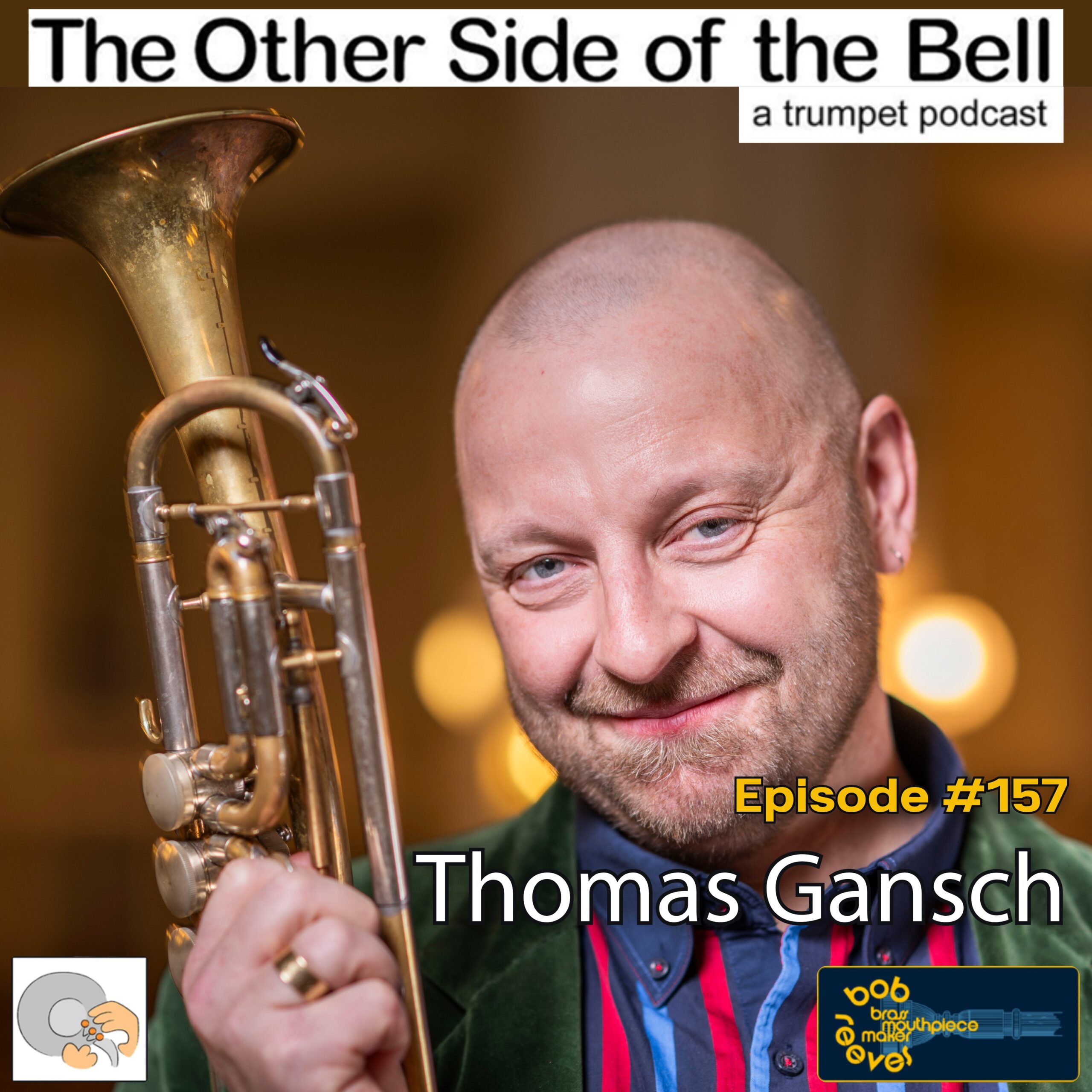
Welcome to the show notes for Episode #157 of The Other Side of the Bell – A Trumpet Podcast. This episode features performer, composer and designer Thomas Gansch,
From his groundbreaking Mnozil Brass to his original take on a rotary valve trumpet, the “Gansch Horn,” Thomas Gansch has made an indelible impact on professional music.
Thomas joins us today to share his musical journey from a young boy, surrounded by instruments in a musician’s family, to becoming a prominent trumpet player in Austria and beyond.
He opens up quite honestly about his struggles with classical music education, and family expectations, before eventually making his transition towards jazz, which he embraced as part of his wide-range of musical interests.
Growing up as the son of renowned Austrian composer Johann Gansch, and as the much younger brother of Hans Gansch, a prominent trumpet soloist and professor himself (and principal trumpeter of the Vienna Philharmonic), there was a lot of push and pull as both brothers sought their own place of identity, creativity and freedom to pursue their musical dreams.
It was through humor and originality that Thomas truly found his wings, particularly with the Mnozil Brass septet, considered the “Monty Python of the musical world.” Going strong since 1992, Mnozil forms just part of Thomas’ busy schedule that comprises all sorts of musical styles and groups.
And he gives us a tour of the original Gansch Horn, a rotary trumpet that can be played with one hand, which gives it its distinctive arced bell shape. Thomas worked directly with the noted Austrian manufacturer Schagerl in the early 2000’s to create the horn that has become his identity.
From practice routines to juggling gigs, jamming with Wynton Marsalis and Jerry Hey to looking after your body and mind, this is a wonderful conversation of breadth and inspiration!
Listen to or download the episode below:


About Thomas Gansch
Thomas Gansch, born in 1975, has always successfully eluded any categorisation.
Whether in the formation “Mnozil Brass”, which he co-founded and with which he has been performing around the world for thirty years, in the legendary “Vienna Art Orchestra”, as a soloist with a large orchestra or as part of a family theatrical ensemble with his wife Theresia and the joint programme “Doppelgansch”, whether as a composer, arranger, compere, pop singer, big band leader or brass band conductor, the native of Lower Austria does not allow himself to be confined to any musical genre.
He likes to summarise all varieties of his art under the term “music” that “either touches him or doesn’t touch him” in order to put all prejudices to one side and to give listeners an intuitive approach to listening.
Various projects have taken Gansch to over 45 countries and his first musical experiences in the brass band of his father Johann Gansch S. (1925 – 1998), which he – in the spirit of the gifted improviser – always integrates directly into his work.
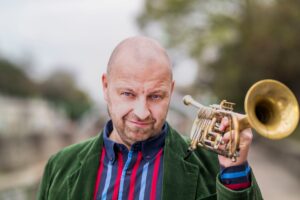
Today, Gansch draws on his wealth of artistic experience and also brings his engaging personality to every project, from symphony orchestras to chamber music ensembles, from jazz to new music, from pop acts to musical theatre and comedy programmes, into his performances.
There are no hierarchies in his understanding of art, and so he manages to inspire and “pick up” the audience again and again.
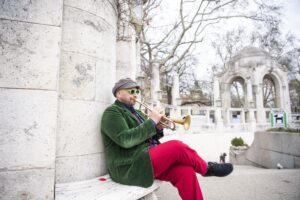
Thomas Gansch episode links
- Mnozil Brass: https://mnozilbrass.at/en
- YouTube: @ThomasGanschOFFICIAL
- Instagram: @thomasgansch
- Facebook: @thomasganschofficial
Bob Reeves Brass Events & Appearances:
- Next Up! Concert Series: Watch the live streamed premier of Dan Rosenboom’s special composition, “In a World Like This,” with the Los Angeles Brass Alliance: https://www.youtube.com/watch?v=2xfR6Gwtyw4
And stay tuned for the fully HD version coming soon! -
July 9-12, Southern Illinois University, Carbondale, Ill.
Podcast Credits
- “A Room with a View“ – composed and performed by Howie Shear
- Podcast Host – John Snell
- Photo Credits – ©Daniela Matejschek
- Audio Engineer – Ted Cragg
Transcript
Please note, this transcript is automatically generated. It may contain spelling and other errors. If you would like to assist us in editing or translating this transcript, please let us know at info@bobreeves.com.
JOHN SNELL: Hello, and welcome to the other side of the Bell, a podcast dedicated to everything trumpet brought to you by Bob Reeves Brass. We’ll help you take your trumpet plane to the next level. I’m John Snell, trumpet specialist here at Bob Reeves Brass, and I’ll be your host for this episode. Joining me today is Trumpeter Thomas Gansch.
We’ll get to Thomas’ interview here in a moment after a word from our sponsor and some trumpet news.
[00:01:00]
JOHN SNELL: Last Saturday night was a very special night for us here at [00:02:00] Bob Reeves Brass. We had the privilege of hearing Dan Rosenboom’s premiere of his new work, “In a World Like This,” Rhapsody for solo trumpet, brass and percussion that we commissioned and was performed by the Los Angeles Brass Alliance here in Los Angeles under the baton of event, like a guard.
Dan had an amazing. Amazing performance. The piece is an incredible, uh, we’re absolutely speechless. it’s not only just a new work that’s out there for the repertoire, but, uh, something even deeper than that. there was moments of fire, moments of reflection, and, uh, unmistakably, uh, Dan Rosenboom’s language.
His virtuosity is incredible. Not just the technique, but the way that it’s always tied, to some emotion, something deeper, and there’s a lot to dig into in his new work. So, uh, we’re absolutely thrilled beyond belief, to be able to be a part of making this new work happen. And this is just the first we’re gonna hear of this piece. The premier was just the first step in a much bigger [00:03:00] world. we already have interest or Dan has interest in, uh, Europe and in Japan and lots of other places that want to perform this piece. And maybe in different configurations. So, uh, stay tuned.
If you want to hear the full performance, I should mention it was a wonderful concert, all of new composers. you can go to the La Brass Alliances YouTube channel and rewatch the live stream. And, uh, they did record it, and videotaped it multi-cam shoot, and We are working on getting a higher quality version of the video that we can play clips of on our social media and on our YouTube channel. So stay tuned for that. It’s an all volunteer group and all of the audio and video folks for L La Brass Alliance are all volunteers. but they, uh, they will get that to us and, uh, hopefully in the future episode.
I’ll be able to be, share some of the, uh, performance from Saturday night. So again, a huge congratulations to Dan and everyone at the La Brass Alliance. Coming up in July, as I’ve mentioned, is the William Adam Trumpet [00:04:00] Festival in Carbondale, Illinois. we don’t have the alignment link up. I’ve already had a few folks, uh, ask about that.
Uh, we’re getting a little, we’re a little too far away. from that, it’s the, uh, July 9th to 12th, after the 4th of July holiday here in the us. Uh, I’ll probably post the alignment link in, uh, early June. So probably by the next episode, uh, you can hold me to this. I’ll have the alignment link posted for that so you can pre-book your valve alignment.
I hope you’ll have a chance to in your summer plans to make it out to the William Adam Trumpet Festival. It’s always a wonderful event and a highlight for us each year. Last piece of news I have, I just got a word from Sweden that the next batch of Ullvén mutes are arriving soon. They’ve been shipped and, uh, we’ve been out of dizzy cup mutes and dizzy bop mutes for a while.
And the ever popular stubby Harmon mute, from Vin will be showing up to the shop. So if you’re interested in one of those and you’ve been waiting for that out of stock banner on our [00:05:00] website to disappear, uh, keep checking because they should be here. Any day. the other thing I wanna mention is we just got a huge shipment of Trum core mutes.
Chris out there has got some wonderful designs. obviously if the traditional mutes, his new, uh, cup, mutes the cup, new VO is incredible. Uh, we have one left of the huge batch that we got, and that may be gone by the time I post this. Who knows? Uh, but we’ll certainly have some more coming in. Uh, we got some of the cooldage.
Harmon mutes, the zinger, Harmon mutes cups, and straits with the cool designs and things on them. So if you’re interested in one of those mutes, those are hard to come by. So if you’re interested, we only have one of each design. so we have those on the website as well. Uh, we also have a. Great collection of used instruments right now that we have, including Boyd Hood’s.
he’s been a former guest on the podcast. Uh, he is starting to sell off some of his prized collection of instruments. So we have, a Burbank binge, uh, that belonged to as a sea trumpet that belonged to Bob [00:06:00] Deval. former principal trumpet of the LA Phil that then got passed on to Tom Stevens and then, uh, through Tom Stevens, ended up with Boyd Hood.
We have that excellent condition. I’m an old binge nut, so I’m, I don’t know, I might keep that horn. Uh, we have that on the website. we have a Holton c trumpet that belonged to Gerard Schwartz. Talk about trumpet royalty. Uh, it was, it’s a funky, not a lot of folks used, uh, used Holton horn’s, uh, sea trumpets.
At least, at least. Uh, now. But back in the early days, uh, Holton c Trumpet was used by a lot of players, including Bud Seth for a time. and, uh, was apparently one of Gerard uh, Schwartz’s. Favorite horns. Uh, so we have that up on the website. We have some Mount Vernon and New York Box, uh, two C trumpets, a high F trumpet and a D trumpet, a New York D trumpet.
So you can find those at trumpet mouthpiece. Dot com among the other great used instruments we have. So yeah, I can’t actually get to my desk right now. We have a pile of instruments, so if [00:07:00] you’re in the market for a great vintage horn, especially one with a orchestral classical providence, check out the website.
It’s all the news I have for today. I’m really excited to get to my conversation with Thomas Gansch.
JOHN SNELL: Thomas Gansch is one of the most recognizable and versatile trumpet players in Europe today. Born in Austria. He began studying trumpet with his father before moving to Vienna at just 15 years old to attend the University of Music and Performing Arts. While there, he co-founded the internationally acclaimed brass Ensemble, Mnozil Brass.
In 1992, after stepping away from classical studies to pursue jazz full-time, Thomas spent nearly a decade with the legendary Vienna art orchestra, an experience he still describes as his true musical education alongside performances in nearly 50 countries. He’s collaborated with artists including Patty Smith, Bob Meyer, Wynton Marselis, and the Jerry Hay [00:08:00] horns.
Whether performing, composing, or completely stealing the show with his sense of humor, Thomas brings a rare combination of virtuosity, creativity and personality to everything he does. And now, without further ado, here’s my interview with Thomas Gansch.
JOHN SNELL: I’m so honored to have joining me today, all the way from Austria Thomas Gansch. Thomas, how you doing?
THOMAS GANSCH: good. How are you? Thanks for having me.
JOHN SNELL: Oh, My absolute honor. Uh, it’s late here and early there. So we’re both going to fire it up, uh, talking about trumpet. So let’s start right from the beginning. how did you start, uh, with the trumpet? How did it find you?
THOMAS GANSCH: Uh, well, uh, the trumpet was there before me actually, because I’m, uh, out of a musician’s family and the local wind band was rehearsing in our house at my father was a conductor, and there is not a moment in my life I could recall where there wasn’t a trumpet or at least a mouthpieces in my [00:09:00] face. Uh, so I, I was like running around in between the music stands and the, the instruments and was like doing little.
So I, I always knew how to produce a, a sound. My father made me a little, a little post horn with no valves. That, that, this was my first, uh, trumpet, so to speak.
JOHN SNELL: And, and why trumpet of all the wind instruments was that, did, did your father play that as well or was it
THOMAS GANSCH: And my father played, uh, mostly trumpet and clarinet and also of course flugelhorn and saxophone. But, Uh, he had me very late in his life, so I only saw him play the clarinet because he had like the, uh, uh, false teeth. He couldn’t play the trumpet anymore. but he used to be a trumpet player and he played in a lot of like, uh, dance bands in the, in the fifties and sixties.
And my, my elder half brother, who is like, uh, 22 [00:10:00] years, 23 years older than me, he already was an orchestra trumpet player. so everybody decided that I would do the same before I was there. So I had no real choice. Uh, so the trumpet was, was my, my, my cross to bury that.
JOHN SNELL: Uh, so, and, and that you said just as early as you can remember. do you remember starting, did you take lessons or did you just play, learn on your own? What did that look like?
THOMAS GANSCH: no, no, no. I had to do lessons with my father, which was terrible. Uh, because after every lesson I was like running, crying to my mommy.
JOHN SNELL: Uhhuh.
THOMAS GANSCH: because he was very, uh, strict he, he would always sit behind you and, and compose. He would always write his marches and podcasts and watches.
And you thought you had the impression that he was not, uh, listening. So you made a little mistake and you tried to get through, [00:11:00] and all of a sudden you heard like. Again. So there was a, a very, a very warm kind of, uh, education. So, uh, I was very frustrated because there was no way out, uh, there was no way of getting around the, the practicing.
And of course, in a certain time in my life I did not, uh, want to practice like, uh, all the other kids. So that was a tough time. But, uh, actually I’m, I’m pretty happy it turned out like it did. So he taught me till I was like 15 and then he sent me to Vienna and I studied classical music for a while.
JOHN SNELL: Really? So was that your early inspirations, orchestral and classical music, or were you into jazz at a, at a young age?
THOMAS GANSCH: Um, I was, first, I was raised, uh, my parents, my father was only listening to. brass and wind music [00:12:00] from the then called Czechoslovakia, And they had the, the, a military band called the Central Orchestra, the central band of the, of the Army. And they, are for me the, the greatest, uh, wind band there is.
It’s like, it’s like the Count basic band for, for traditional music, you know.
Uh, and this is a very big influence on one side and on the other side. My mom was listening to popular songs on the radio, like from the fifties and sixties. And this is also a big influence. And actually my first contact with music outside of these realms was probably.
When I heard Queen, uh, the Band Queen at the, at my cousin’s house, uh, this completely shook me up. So I went home and I, I stole money from my parents and I bought Queen records. [00:13:00] Uh, this was a, a pretty big change. And, uh, the, the next really big game changer came when I was 13 or 12, I think 13. I saw Dizzy Gillespie on television.
And, uh, I saw this concert, uh, with the United Nations Orchestra, where, where Arturo was playing and Claudio Roditi was playing in the band. And this. Changed my life because I saw Dizzy. It was not only about the playing, it was about his appearance and the way he, he was with his musicians and the, happiness, the joy and the humor of it, and the, and the very, very, uh, tight, great band and great music.
And I knew that’s what I wanna do.
JOHN SNELL: At that moment, 13, 12, 13 years old.
THOMAS GANSCH: Yeah. 13, probably.
JOHN SNELL: were planted. Amazing.
Wow. so, so you go to Vienna to study classical music. Uh, who is your professor there? Or did you have, uh, [00:14:00] your private instructor?
THOMAS GANSCH: back then on the university, there were three professors for trumpet. I was, put into the class of, uh, professor Berger. He was a first trumpet player with the Vienna Philharmonic. And my brother kind of put me there because he was also a trumpet player at the Vienna Philharmonic. And two of his colleagues were teaching at the university, and he put me to the, uh, from his view, milder one.
and well, that didn’t work out at all. So my first three years of studying, actually it’s the most important time because I learned everything that I did not want for my life. because after those three years I couldn’t play anymore. And, uh, everything was destroyed because I really had to fight the fact that, uh, everybody saw me as the little brother of Hans k and they all expected of me, they all of expected of me to become the next Philharmonic player.
And of course, I failed [00:15:00] massively.
So I, I did some auditions and I really, I was always like on, on last place and it was terrible. on one hand I learned, uh, a great, I had a great school of rhythm with my first professor. and the repertoire, I guess I, I, I learned to know all the repertoire.
But on the other hand, uh, he was not really strong, in solving problems. If you were strong, he was a great teacher. If you had like weaknesses, it was not so, after three years, I really couldn’t play anymore, and. Everybody thought it was my fault, uh, which of course it was. But, uh, nobody tells, nobody tells you when you’re 15 that you have to think for yourself, uh, when a, a professor talks to you.
So I made a, a decision that nobody had ever done before. So I changed to the other class of his coherent, uh, uh, professor Hola, [00:16:00] which they both were in the same orchestra, both used to be first Trump players, and of course they hated each other. So, and, to my surprise, uh, professor Hola, he was really nice to me.
Partly because he, I guess he, he, he liked the fact that, his concurrence didn’t make me work, you know? So he treated me really nice and he helped me to. To understand certain things that I didn’t, I, I had not known before. For example, I went to him and I said, uh, please, can I join your class?
And he said, play something. The only thing I I could play anymore was Don Pasquale, because it’s not high and it’s, it’s just a melody. And my first teacher had taught me to play Dom Pasquale very, strict rhythmically. And I started to play the Dom Pasquale as I learned it.[00:17:00]
And he stopped me immediately. And he said like, what, what are you doing? It’s, it’s a melody. You’re the soloist, and the conductor has to wait for you. And for the first time I recognized, oh, I’m, I’m allowed to make music in an orchestra. I did not know. So that was a, a great surprise. So for the next three years, I learned to.
allow myself to make music and, pull myself out of the mud, by thinking. So I did not only do what my professor said, but I also started to work, uh, like with, uh, the, the schools of Ellen ti for example. They helped me a lot and I, I started to have much more conversations with other players and try different things.
So over the course of the next three years, I, I really got a, a, a good player and I was, in the end of those three years, I was 21 and I did, uh, my last audition. And at that audition I was really good. I did not win it, but I was [00:18:00] really good and I knew for myself, okay, now I know what I have to do to make this happen, to be an orchestra player.
Uh, but now I’m 21 and I wanna really try out something else. Because my love was, was for jazz music. So I went away and never came back because, when I started play jazz, I became within three months, I was Thomas k and not the little brother of Hans K. So I really put all that trauma behind me and went on to only do things that I thought of, of myself.
So,
JOHN SNELL: you found your identity
at 21. Incredible.
THOMAS GANSCH: no, I, I found at least I, I found my way. I found my way. I didn’t fight my identity that, that early. But, the way is the goal, as we say, you know.
JOHN SNELL: yeah, yeah. So, I’m, I’m curious in, during this time, did you have any, uh, a relationship with your, with your brother, with Hans, or did he, guide you or help you along with your playing or your career?[00:19:00]
THOMAS GANSCH: Uh, it’s a, it’s very long and, uh, interesting relationship, uh, because he our father was born in 1925, so when I was born, my father was 50 and my brother was already 23 or almost 23. So actually my brother was the, the big father figure. And I was always, I always looked up to him. And on the other hand, he’s one of the greatest Trumpers players that I have ever heard in my life.
And actually, nobody plays more beautiful, in my opinion, like in a very humble way.
And for, for orchestra lead players, he’s in my forever top three players, you know, so. he’s a, he’s a, a larger than life figure for me, so it is a, a, um, he’s always in my head. And, uh, I always tried to, uh, make him [00:20:00] proud, which didn’t work for a long time.
And I saw, his disappointment when I, I failed at auditions and that was a, a, a quite a, interesting road. And he didn’t fully believe in what I did for some time. And then there was a moment when he started to recognize that I, I am doing what he never dared to do, but actually wanted to do.
JOHN SNELL: Interesting.
THOMAS GANSCH: we came, we came around a very, very long way.
And today he’s really proud and, and happy and, and, unfortunately, he, he does not play the trumpet anymore, but a couple of years ago. I had him in a band that I, uh, uh, founded and we went on tour together, and that was really, beautiful because it was the first time ever I think that I saw him be happy because he, he was always the best at playing, but he never seemed to be happy with his job.
So I’m [00:21:00] really, proud to have made him happy with music.
JOHN SNELL: You got to find joy together. Oh, that’s amazing. What a, what a beautiful story and great that everything could kind of come full circle.
so during this time when you were, uh, you know, in your youth, I know you were doing auditions, you’re studying from classical players, were you studying jazz at on the side or were you listening?
THOMAS GANSCH: Uh, I was listening a lot. I was listening a lot to jazz. I was, uh, uh, going into a lot of, uh, concerts to jazz clubs. Uh, but mostly I played, uh, on aol, uh, CDs, MI minus one CDs. You know, I, I tried to learn standards, but the interesting thing is, I reached a point where, uh, because you listen, that’s how you do it.
You listen, you, you. You play what you heard, uh, you transcribe, you, you find your way into the language. And at a certain point, I sat at home in my kitchen. I remember that playing some Buol cd. And I [00:22:00] thought, wow, I’m really good. Woo. So, uh, I started to meet with a bass player, uh, also a classical player, AK Smitt, who I still play together with today.
He’s, he, he used to be bass player in Vienna Philharmonic as well. And we met and, and then we, we played together jazz, and we treated it like classical music. And then we went to the first session together, and both of us, we felt exactly like the classical recital. we started shaking and it was really terrifying.
And then I recognized a very important thing. I stood on stage, And nothing was there anymore. Nothing of that feeling in the kitchen that I, I was good in any way. There was nothing. It was, it was shit. And I had to live with it. And that was a very important lesson in learning to play jazz because when you play classical music, you just learn what is written on the page, and then you perform it as good as it gets on the [00:23:00] day.
Sometimes it might be great, sometimes it might be bad, but it’s still always what has been written before. But when you play jazz, you have to come up with something
out of within. And therefore you have to accept the concept of failing. And you have to accept yourself as the, the, the creator. And if you don’t, succeed, it’s not failing, although you might feel it is, it’s just part of the game.
This was a very, very important lesson.
JOHN SNELL: You, you figured that out, that, that, that first, time showing up, or was that something that came over the course of time?
THOMAS GANSCH: N no, no. The first time showing up for the session. I did not figure that out. I just, uh, I was confronted with the fact, uh, the hard way, you know, it, it felt like being on stage naked all of a sudden, and like freezing. And that was terrible and terrifying. But, on the other hand, somehow we worked through and [00:24:00] then all of a sudden, old people came to us and talked to us and accepted us into the jazz world,
JOHN SNELL: Mm-hmm.
THOMAS GANSCH: nevertheless.
So, we showed up, we put ourselves out there, and then it, it could start, but the process was not, easy, you know?
JOHN SNELL: It. Yeah. And that, yeah. I mean, half of it is just showing up, which, which you guys did, so, you continued to do sessions and
um
THOMAS GANSCH: And, and, and then I got together a lot with musicians and we met and we rehearsed and we worked on stuff and we performed little, little gigs. I played so much in so many different ensembles and bands and, I learned so many different styles of music in, in, in those years, to pick something out.
Uh, it’s impossible because the, the variety is so, so large. but one band was pretty, uh, important. It was called The Salon Orchestra Alhambra. That was a band where we only played music from the 1920s [00:25:00] and thirties. And we, we wore like the suits and we, we tried really to sound like these old, especially German bands who played swing music in their very own way.
And we perfected like the phrasing. To a point where we still can play today together. We, we put the suits on, we play without rehears, and it, it’s, it’s tight
and, uh, it’s, yeah, that, but this band was like a typical student time band. We, we, we rehearsed a lot and we never made any money, but everybody was really in for the experience.
JOHN SNELL: Yeah. And, and I’m sure you learned that process of putting a, putting a band together, the, the
rehearsal.
THOMAS GANSCH: Oh yes. My but, but my real, my real education, uh, as a jazz musician came when I was, uh, called into the Vienna Art Orchestra, which was a European jazz ensemble slash big [00:26:00] band. With, at my time, 17. Very, very individual genius players with whom I was touring a lot, hanging a lot, traveling a lot, playing a lot, talking to a lot, partying a lot.
And I learned so much that was like my university because I played in this band from 99 to 2006 and we toured the world. And, uh, this is actually my jazz education
JOHN SNELL: Hmm.
THOMAS GANSCH: to, to, to, to learn from everybody every day and get, take everything that I like from everybody and steal ideas.
JOHN SNELL: Borrow. Borrow ideas.
THOMAS GANSCH: Uh, re rework them into
JOHN SNELL: We were be
THOMAS GANSCH: No, no. I,
JOHN SNELL: other people’s.
THOMAS GANSCH: it’s just, learning. It’s like learning a language. That’s all. It’s, and, and once you have enough words together, you can communicate freely. And that’s what it is, I guess. Because what we do now is also improvised. So it is [00:27:00] like just, you know, I don’t know what you’re going to ask and I don’t know what I’m going to answer.
I just start moving my lips and Yeah. See something comes out.
JOHN SNELL: something comes out, hopefully it makes sense and if not, we’ll move on. Right. It’s story of my
life.
THOMAS GANSCH: Right,
JOHN SNELL: so I’m curious who your, uh, I mean you had mentioned Dizzy Gillespie, you know, hearing Queen for the first time. Uh, who were your other inspirations? during this time?
THOMAS GANSCH: Oh, tons of inspirations. Uh, when I was young, I used to have, like, used to deep dive into certain players. I remember there was a time I was only listening to, uh, Freddie Hubbard, and then, uh, there was a time I was only listening to Don Ellis for, for like a couple of months. And so I, I had that time with many players.
I would say that the, the greatest influences on me as a trumpet player would be Clark Terry, Freddie Hub, Freddie Hait, uh, [00:28:00] Lee Morgan. Of course, Winton. Winton is the, the major influence, uh, over the course of my life, I would say, because he’s the, the, the best trumpet player that I ever heard because he can do anything.
And he’s also a, um, a great inspiration, uh, as an intellectual and as a composer and, and as a human being. So, uh, and then of course, Chuck Finley, the Breer Brothers, is one of my favorite bands of all time. And Jerry Hay Horns, man, shout out to LA uh, if you, if you like good music, you hear the cherry hay horns.
That’s like a, a, a rule of my life, you know?
JOHN SNELL: Yeah. And you got to play with him not to jump ahead in your life, but you never know how things are gonna end up and you
ended up in a, in a Jerry Hay session, right?
THOMAS GANSCH: Well, I worked my way into it.
JOHN SNELL: How, I gotta know how did that, how did that come about?
THOMAS GANSCH: Jerry invited me [00:29:00] to, to come to the studio, and listen to the, to the process. They were recording something for NBC, I think it was, uh, the wiz, the, the tv version
with all new arrangements and, and new, uh, horn section stuff. And the section was, uh, Chuck, Gary, grant, uh, and Wayne
and I listened to them for a day.
I was there for a second day. And at the end of the day, I just went up to Jerry and say, man, I’m, I’m here that I, I wanna play. So he wrote me a fourth part overnight. So for the next session, he brought a bunch of music and said, yeah, now we have a fourth trouble we play. And then I played, I think we recorded two pieces.
Uh, and then we saw the people behind the glass getting nervous because there were some, uh, executives. And then I had [00:30:00] to, I had to stop recording because it was not, uh, I think it was not allowed for me to be there or something. I don’t
JOHN SNELL: sure like union rules or something like
THOMAS GANSCH: so it was some rules,
but I, but I, had, you know, I, I had the greatest time because it was like, because in my, in my life and in, how I look up to certain people, recording the, those songs with, with this section was like my, my Mount Everest.
You
know, experience in trouble playing. And, and the other is, is that I’ve worked with Winton for a couple of times. Those are my two most, uh, uh, treasured, moments in my career.
JOHN SNELL: how cool. Well, so then I, I, since you brought that up, I have to ask, uh, and then we’ll get back to your timeline here. So what, how, when did you work with, uh, Wynton?
THOMAS GANSCH: Uh, we worked together four times, I think, that’s a really, a really big story because the first time, I’m, I am always playing, so I’m almost never there when they came to Vienna, so in [00:31:00] 2018, they came for three days and I was free. And I thought, wow, I’ve, I’ve never met Winton, so I’m going to go there and try to maybe say hello and talk to him and maybe I could even get like a, a selfie or something.
So. Uh, matter of the fact I was free for a couple of days, which I’m normally not. So what did I do? First of all, I did all my practicing, like three hours heavy practicing. Then I started to play on a, on a valve trombone for another 40 minutes or something, till nothing was left anymore. And then I thought, okay, I know, I know they have soundcheck now.
I go to the venue, I, I go into the venue and the trumpet player see me, like Kenny sees me and he and Winton comes in and he points at me, and Winton gets up, comes to me and says, Hey, hello. It’s, it’s really nice to meet you. I’m, I’m a fan. And I was, I [00:32:00] was like, oh, wow. Very. And then I, I, he said, maybe it would, it would be really nice if you could like, sit in tonight.
And I just heard, I just heard myself say, yeah, of course. But I couldn’t feel my knees anymore because I was so shaking so much. So that night they had me on and, uh, they presented me with some music I have never seen. And, uh, it just told me, yeah, the, the band plays till here. Then there’s a break, and then you go.
And really, from all that practicing and playing the trombone, I couldn’t play anymore. It was really bad. I,
I was destroyed because I, I had not thought that I would play that night. So I, I was really not doing well, and the whole band was checking me out. It was a, a very bad feeling. And then I was kind of, after the show, I was like, yeah.
So I was half, half happy because it was a live dream [00:33:00] of playing with Whitten one time, but we didn’t play together. He was sitting in the band and they checked me out and I, I failed terribly, like in my first session. and then I was like, kind of really disappointed and we, we were at the bar, and then I sat at a point, yeah, well, I have to leave now.
I have to go. And then went and took, uh, grabbed me at my arm and said, why don’t you come back tomorrow? And we play something, you know, like Stardust. And I was like, okay, because Stardust is like my favorite song and I can play it in and out when I wake up in the morning. So the next night they played a completely different program.
And as an encore, he took me out with him and the rhythm section, and then we played start, and that was like magic. So people were crying and it was so, it was unbelievable. I, I played to him and he was like, ah, yeah, yeah, yeah. And then, and then he
JOHN SNELL: him going. If you can get
THOMAS GANSCH: yeah,
it, it was, it, it was unbelievable. [00:34:00] It was like, uh, the moment I will never forget in my life.
And then two years later they had me back. When they came back, they had me featured big time. I played like four or five solos and then there was the pandemic. But they, uh. Came again. And I did, uh, a narration for the Jazz for Young People program. He trusted me with that, although it didn’t work at all, at the soundcheck, uh, uh, or at the rehearsal.
I said, okay, no. He, he came back to me and said, okay, should me, should we do it with a translator? With the interpreter? And I said, no, no, I know now what to do, trust me. And he said, all right. And then the next day he came back like a minute before showtime.
So that’s the level of trust. And I, meanwhile, I had everything.
I translated everything because I had understand, stood the concept of what I had to do. And I did it in German, gave all the right cues and it worked. So they were [00:35:00] really happy
JOHN SNELL: Wow.
THOMAS GANSCH: that was also a very interesting experience. And last year, that was the last time. he asked me a, a year before, what would you like to do?
Would you like to write something? I said, yes, of course. And, uh, then I, I wrote them, uh, a piece and we performed it together. That was the last time, last year. I think it’s, it’s gonna be the last time because he’s leaving. But, um, uh, it was a fantastic, journey and experience and I, that’s very precious to me.
JOHN SNELL: And it, it started with sitting in, after practicing for four hours
and
THOMAS GANSCH: started, it, it started with failing,
JOHN SNELL: Yeah.
THOMAS GANSCH: and, uh,
JOHN SNELL: And,
THOMAS GANSCH: that’s like, it
JOHN SNELL: and it grew from there. Oh, what a a great experience and lesson in, you know, persevering. Just even if the first time, uh, it was a failure, doesn’t, doesn’t mean that’s the end of the story.
THOMAS GANSCH: you know, this month,
this month is miles 100th [00:36:00] birthday. And, uh, the greatest thing about Miles Davis is whenever there’s a mistake, it’s something new happens. You know,
I didn’t mention him before, but of course it’s a big influence. I, I even got a tattoo of him. Uh, um, but the, the level of trust in, in other musicians, and, the way he creates in the moment, beautiful stuff.
And, and the fact that it’s most interesting when what he, what he tries to do goes wrong and what happens next. So this is a universal, uh, lesson.
JOHN SNELL: Moving on. Yeah. Um, so you’re, you’re still in your youth, you know, in your twenties and you, are you living in Vienna still, or,
THOMAS GANSCH: No, no, I grew up, uh, on the countryside in, in a little town called milk until I was 15. Then I moved to Vienna, uh, where I am living since, since
JOHN SNELL: So you were in Vienna when you were doing the, like the, the, the swing band and, uh, working around town. Were you doing any other [00:37:00] jobs or were you making a living? just on performing?
THOMAS GANSCH: you, you first, when you, when you study Trump, you pretty soon start gigging,
but mostly for the, for the first, uh, six years, I did a lot of classical gigging. So I played in every orchestra I, I substituted in the opera and then radio, symphony, whatever. And back then, every Sunday there would be some church where you would play like a heightened mess or, or a Mozart or something, or even Brams.
So. you learn a lot of repertoire. And then Vienna is a very tourist place, even back then. It’s much worse now. But back, back then there was like waltz orchestras everywhere, so you could gig all around town. but actually my favorite gig was in the, during the studies there, there was one class called the PO Art Orchestra that was the orchestra for the conducting students.
And there you would get to play the real, [00:38:00] the real stuff, because sometimes they would put on Petruska or they would put on the, uh, uh, Don Huo or something like that. And you had like, for example, ki uh, uh, Petranko, the chief conductor of Berlin Philharmonic. He used to be in that class like every week.
So you worked sometimes with really great people and you learned together, which was quite fun.
JOHN SNELL: So it says you’re doing a lot of different playing. Um, so I’m sure you’ve told the story, a million times now. So we’ll do 1,000,001. how did the NOL brass, uh, get formed?
THOMAS GANSCH: Very easy, uh, thirst was the, the, the large component of that because, uh, we all, uh, were doing living the classical life, meaning we went into the university in the morning at seven and got out of the university, uh, at evening at eight or nine, and then we would [00:39:00] go to the pub and uh, the pub on the other side of the street was called.
And there we, had once a month there was like a, a traditional folk music, uh, jam session. Uh, and we started to play there together because all the. Other players. We all came from the countryside and everybody from the countryside started out playing in a, in a country wind band, it like a Uma band, you know?
And so we had a, a string of songs that we all could play because all the Uma bands have certain standards. And on this basis, we started to play together. And then we widened the repertoire because we saw, only playing in the pub. The better we would entertain the crowd, the more we would get to drink, which is, uh, until today our business model actually.
So it’s a very simple thing, uh, but, [00:40:00] uh, it’s very complicated how it, you cannot, Uh, uh, uh, try to, to put something like that together, it has to happen. It was, the universe liked us to do this, so it happened. Uh, yeah. And then, uh, everything, everything, uh, I mean, I, not till I, I, it’s started when I was 16, you know, so I really grew up in this band and we, for the first five years, we never played on the stage.
We, played everything else. We played weddings, funerals, we played in jail. Even we played, uh, uh, on some, Like, uh, farm equipment, uh, faires, or some markets, but always very long gigs. Like they would hire us to play for like seven, eight hours, like with a lot of, with a lot of breaks. But we, we built a, a very, very large repertoire of songs and routines.
[00:41:00] And I remember one time we, we had to play in a beer tent, and that was like, we were driving to the gig and we came over the hill and I saw the beer tent and I asked, oh my God, how long do we have to play? Because there we had to play on the stage and they said, oh, well, like four hours. And I was getting nervous, like, oh my God, how much songs do we have?
And then we arrived and I made a list of songs we could play and I, I came to like 74 songs within, uh. Like 10 minutes. So we had, we had a, a large repertoire and after five years we started to go on stage and then built up from there. It was a very slow burn. And, uh, after 10 years, we all, uh, made it our main job
JOHN SNELL: 10 years of playing together
THOMAS GANSCH: in different, in the first, the first couple of years in different lineups, but mostly with five people, two trumpets, two trombones, tuba.
And in 96, we had two more people join. So we had a third trumpet [00:42:00] and of a third trombones, uh, slash base trumpet. Because Leon had, uh, we, we just now have flagged our, our 30th anniversary with Leonhard.
He joined the band. this changed the, the game completely because he brought very new, uh, thinking to the whole thing.
JOHN SNELL: Yeah. Yeah. that’s incredible. So would it, the, who would you do the arrangements or were the, or the come up with the pieces, or was it everyone in the group would write for the group?
THOMAS GANSCH: Mostly Leonhard, myself and Gerhard, Gerhard Fi is another trombone player. We mostly do the writing still today.
but not, not everybody is, is interested in, in, in writing so much, but for us it’s, it’s, it’s a great opportunity to learn by doing
JOHN SNELL: Yeah. So how, how early did you, uh, incorporate Bohemian Rhapsody since Queen had
such an influence on you?
THOMAS GANSCH: Uh, I, the band was quite resistant [00:43:00] for a while. Uh, the tuba player just didn’t want to do it because he thought it doesn’t work. And, but in, in, I think in 2001, we did it for the first time, but, uh, I, I had to work it in for quite a long time. But then of course, uh, it, uh, it became a, a big, boost,
JOHN SNELL: Yeah. It’s like
your signature now almost, right? You have
THOMAS GANSCH: ah, yeah, that’s long ago.
Anyway, there’s this old version on YouTube that blew up, which is not that great, but, uh, but it, it got us out there, and so people knew about us all of a sudden. So YouTube, uh, in the beginning was a, was a big factor of making us known to the world. YouTube made the world smaller, so to say, because,
JOHN SNELL: And many, yeah.
many. re many. It, yeah, you could get lost on there, but it also gave exposure to groups all around and performers all around the world to a lot
of more eyeballs and, and ears. so you said, so it was about 10 years from when the group started at the bar to when, you [00:44:00] made the decision to quit your other, you know, jobs and focus primarily on no-till. was it a difficult decision for everyone? You know, I mean, that’s, it had
have been risky, right? Mm-hmm.
THOMAS GANSCH: is risky. You know? I was always a freelance player, so I never saw. I never saw it that way. I never played, uh, to, to be secure. Uh, I always play it because I have to play because that’s the only thing that makes sense, uh, is, or the only things that make sense in, in my life are music, humor and, and family.
That’s the only thing that matter, that I understand. Everything else is a mystery to me. but for other people, like the UBA player, uh, uh, Wilfred, he, he, he canceled an orchestra job, you know, also Roman, the, the, the trumpet player who came in 22 years ago now, he also canceled an orchestra job. So the, that were [00:45:00] pretty big decisions because it seems to be very secure if you have a job like that.
JOHN SNELL: Mm-hmm.
THOMAS GANSCH: But it, as I learned over the course of my life, those are such completely different mindsets of, of freelance mentality. And, uh, being in a state, founded orchestra, it’s a completely different mindset because, uh, you know, we never canceled freelance and they, they, they never canceled. Yeah.
You, you’re half dead still on stage doing your job. And, uh, while other players, they have like a sniffle in the morning and they call, oh, well I’m, I’m sick today. And that’s a completely different mindset. And of course, sometimes I would prefer not to play when, when I’m not feeling well. But on the other hand, that’s what I want to do, so.
JOHN SNELL: yeah. So, so you guys now are the, the group, you’ve, you’ve, uh, given up your other [00:46:00] obligations. what did the group look like at that point? What, did you have management, were you putting together like more, a more polished show than what you were doing at the bar 10 years earlier?
THOMAS GANSCH: The bag was pretty wild until 2001. Then, uh, an actor is his name. He, he saw us perform somewhere and he came to us and he said, what you do is fantastic, and I, I wanna work with you. And then we created a show with him. And until then, everybody was doing like a joke at the same time. For example, it was like really wild and unorganized.
And he brought some structure to it and he said, no, no, you pause, you do this. That’s great. And, and then he asked like, could you, could you maybe play the, the, classical theme, like, uh, Hoffman’s Tales, uh, the, the, the, could you play that like a Hawaii guitar? And we would do that. And he was [00:47:00] fascinated with the fact that we would just dry out things.
And so we, we created together some very, Funny and sometimes stupid and sometimes istic, uh, routines and shows. And we, we’d learned our way of putting shows together back then. We, we bring music that we like and then we try to string it together and have like a, a little story told later. We did some, uh, serious theater works with him with a lot of, uh, lyrics and texts to remember and add choreography.
So everything came in. But that was so much work. I don’t like to work so much. Um, and, and now we always get one person that we work with. the last time now, uh, with a, a dancer Sharon Booth. She’s a ballet dancer and she worked with us, a lot of choreography for our current show, but we always [00:48:00] work with somebody because it’s important to have eyes and ears from the outside.
JOHN SNELL: mm-hmm. Amazing. And yeah, I mean, you guys do so many different things. Well, you, I mean, the music obviously is at a, just an extraordinarily high level, but, uh, yeah, the, the, your, the stage presence, the comedy, the, the motions, things like that. when you’re working up a new show, how much time is dedicated to those?
Let’s say you, uh, what was the last show you guys did?
THOMAS GANSCH: Strauss is the current show. It is the freshest memory, and it’s also quite, uh, uh, painful because Straus, there are parts in the Straus programs that are so complex that it, it was really hard to get it into the heads.
You have to understand that what we do is it has many layers.
So first you have to remember your. Your lines, your notes, you know, your, your parts. [00:49:00] Then you have to remember, all the breaks. For example, when you play complex stuff, you need to remember three bars, rest, seven bars, rest. You need to know that. ’cause otherwise it will fall apart in performance.
When something, something, uh, goes wrong, everything is messed up. So, then you have to learn everybody else’s parts over time to, to really make it happen. That you, that it works like this, you know?
And, and then you have to work. Long enough until everybody feels secure and then the show is great. So usually what we do, we will have a, a very bumpy premier and then it will get better over the course of like 10 shows.
And this time it was really spread out to, uh, due to uh, uh, dates, uh, that were pre-organized. [00:50:00] So we had like a premier in summer and then we had a pause of like. Two, two and a half months till we played it again. So that set us back big time. So this time it really started to run this year in January with something that we started to play last July.
But now, uh, since, since the, since the middle of of January, we are in the sweet spot where everything is clear, everything works, and it’s easy and we like it and it’s working. But it took pretty long.
JOHN SNELL: how long before the premier did you start with the show concept and then the, the work that goes into that before
THOMAS GANSCH: No, well, usually it’s like, two years before a premier. We should know that we have a new show planned one and a half years before we need a title. Because the management has to sell it. Uh, and then probably they like to have a, a, a press jacket, uh, with [00:51:00] photos and some, some meaningful text, which you have to pull out of your something.
Uh, yeah. Uh, um, and then usually, uh, the composers start collecting stuff and then bringing it to the band, maybe a year before rehearsal for a first read through. This could be something, this could be something. Then we will record it very badly on the run through. So everybody who needs to learn it with recordings can learn it with recordings.
And then we meet over the course of maybe three months, as many times as possible for rehearsals. And the, the, the hot phase used to be like one month. Before the premier, probably seven, eight hours a day for like four days a week to get the, all the stuff working together because it’s, it’s, it’s a lot.[00:52:00]
JOHN SNELL: Wow.
Wow.
THOMAS GANSCH: But then, but, but once we do it, we usually do not rehearse anymore.
Uh, the Strauss is the exception. We, because we had to do a lot of rehearsing until, recently.
JOHN SNELL: And that, and that break, that extra break, it’s almost like you had to relearn it. And, and meanwhile, during that whole process, you’re performing other shows, right? You’re pre
THOMAS GANSCH: Yeah.
I, I’m, uh, yeah. The, there is the, the, the, the problem, uh, that you still need to earn money to, um, uh, make life happening. We have, by the way, we are seven people and we have 20 kids, so there’s a lot of, uh, there’s a lot of, uh, money to be made.
JOHN SNELL: A lot of mouths to feed and shoes, kids grow outta
shoes.
THOMAS GANSCH: All men. All men,
they do, they do, uh, not only shoes, unfortunately.
They grow out of everything. Yes. Uh,
But this is why we, we try to have it like that because most, most people in the bed, they, they are, are [00:53:00] teachers. and most of them teach Monday, Tuesday. So we will rehearse, Wednesday to Friday and then play a gig Saturday, Sunday. So this would be a, a good rehearsal space thing, or even play a half a rehearsal on Friday and then a gig on Friday.
So we, we are able to make the dough we need.
JOHN SNELL: blood, sweat and tears
THOMAS GANSCH: Oh yes. Also a big influence. Blood,
JOHN SNELL: Another big influence. But that’s also a
great name, a appropriate
THOMAS GANSCH: actually, oh yes, like Earth, wind, and Fire. But,
uh, the, the the, the tuba solo of Blood, sweat and Tears gave me the job in the orchestra because the, the conduct of the orchestra saw me singing along with the tuba solo. And he watched the whole thing.
And then he, the, the whole scene and then he came over and said, do you wanna play in Thena orchestra? I said, oh, yes.
JOHN SNELL: ’cause you, you, could sing the UBA
solo that’s
THOMAS GANSCH: now, he knew I was a trumpet player and he had heard of me and he saw me [00:54:00] briefly, but there, when he saw me sing along the whole tuba solo, he asked me if I wanted to join the band, which, uh, is also a, a, a big level of, of trust that I appreciate.
JOHN SNELL: You never know where your next gig’s coming from.
THOMAS GANSCH: No,
JOHN SNELL: So, with that schedule, with the touring, the performing, the rehearsing, for you personally, what does your playing look like, your routine? Do you have a regular routine that you do
to stay in shape or are you just playing so much?
Like what does that
look like?
THOMAS GANSCH: no, I, I, usually I practice for three hours. That’s my, my daily routine, but not when I play a show. It depends on the show. Yeah. But, uh, usually my, my routine is three hours and it, uh, it’s put together from different aspects, so there’s like 40 minutes warmup routine that I always use to, to get the system together, so I do it.
Mm. If I have a [00:55:00] bad day or a good day, I don’t think about this before I have done this routine because at the end of the routine, on a bad day, I’m sure it, I will make it somehow. Uh, it’s just to put everything on track. Then I do a bunch of technical stuff that I put together for myself. It’s like a mixture of, of Clark, but, but with slight modifications or stuff I came up for myself, something where everything that I would need technically is in that, block.
And in the end then I would work on whatever I, I, I have to do like new stuff, read stuff. I don’t know. And in the end, I always would do half an hour long notes, which means the, it’s the equivalent of, weightlifting, you know, it’s like standing there, uh, putting weights in your arms and don’t let the arms go down.
That’s, that’s what it is. But it gives me the, the, the [00:56:00] confidence that I’m strong enough. Even on a bad day, I can rely on my,
on my muscles. You know, it, I train them. It’s fine. I, I have to do that. I am not one of these guys who can like, put the drop away for two weeks and then play a gig and be great. I cannot do that.
I meant I can, I could be great for like two minutes, for sure, but, but not, but not the, the, the line of work I do, uh, uh, uh, for that, I, I need to be in shape always, and I mostly, I need to be in shape for, for here, because if I’m in shape, I know I did the work, I put in the work, then I can stay calm. On a bad day and rely on my experiences, you know?
JOHN SNELL: You have that confidence. Yeah. I, I, I wanna spend a moment, if you would, I’m curious about your 40 minute warmup that no matter what shape you’re in, you end up after that being ready to go. Like, what’s in that warmup that you do?
THOMAS GANSCH: a part of it is Spalding, I, [00:57:00] I start with just first, I, I do some, just some notes like be, you know, try to find the sound, try to make the air flow, try to get a big sound, and then it gets more flexible. And then I start doing, uh, the lip flexibilities of Spalding. It’s like, uh,
we, we, we, we, we, we, we, we, we, we, we, we, we, we, we, we, we, you, you, you, you, you, you, you, you, you, you, you and I do that. For first all the way up from the, from G and Octave down. And then I do it in octaves from the, from the, uh, low G
JOHN SNELL: Mm-hmm.
THOMAS GANSCH: up to as, as far as it goes.
Even, in registers where I can’t play anymore.
But I just try to get the right feeling of letting the air flow and in the end it will come out, you know? But without [00:58:00] pressure, I just try to set up my, system because when I play the trumpet and, and everything works, it kind of feels like an injection, you know? Uh, this, this being the, the, the, the muscles in the stomach pushing the diaphragm up and putting the air.
Through the needle, you know, this is how it feels. So if that feels right, I have that steady airflow and the support from down, I can mostly play with my, my vocals, you know, like whistling. So it pretty much feels the same when I play the trumpet, uh, as if I am
and so on and so forth. You know? So, and if I, if I have everything, put together right, then this works, and I feel I, I feel ready to [00:59:00] go.
JOHN SNELL: so you, you have your, you have that routine and it gets you from zero to however fast you need to go that day, basically.
THOMAS GANSCH: No,
I will do that right now. After the interview, I will start doing my warmup because when I, and tonight I have a heavy gig, so if I did the warmup this morning, I will be cool for the whole day and I will, will not touch the drop anymore because
when I, when I set my system up, then I know it’s gonna work tonight.
Fine.
JOHN SNELL: You’re, you’re, you’re in that place. Was ever, ever a time where, uh, you were on the road or demanding tour or something where you ran into a chop problem or crisis? Something like that?
THOMAS GANSCH: Yes. All, all
the time. Just the day, the, the two days before yesterday, I had just bad days because the nights prior to that I played, uh, uh, miles Davis, kill Evans music, like a passed off. Which means you play like for [01:00:00] two hours, mostly long notes, which is hard. It is hard to do in front of a pigpen.
And then with the Harmon mute in, you know, all those sketches of Spain, uh, miles ahead and porgy and be, and all of it is pretty high. and it’s long. You need to make a great sound for long periods of time. So classical trumpet players always, uh, were bitching about miles being not the great trumpet player.
I suggest they all would try to play that stuff. It’s really hard. So after doing that in a concert and doing it, uh, excessively, I really felt the, the toll for, for two nights it was really hard to get set up. For now, I’m playing with a brass tree where I have to play a lot of lule horn. I had big problems to readjust for two days, But, uh, you, you, you solve your problems on the fly since yesterday. It works again.
JOHN SNELL: And you get through it. You get through it,
and, [01:01:00]
THOMAS GANSCH: You somehow get through it.
JOHN SNELL: Yeah. And having that consistent routine, I’m sure, yeah. Gives you, uh, kind of a foundation, to, especially with all the
different types of playing. Yeah.
THOMAS GANSCH: actually, it’s mostly about the right feeling. the longer I, I do it, I, I I learn more and more that it’s about getting the right feeling. How? If it feels right, it is right. Uh, may, maybe to explain what I mean. when I was younger, I, I used to cut my lips a lot because you would play in a, in a great hole where everything sounds great one night and the next night in a very, very dry, bad hole.
And you would try to make it sound as the night before so hard that in the end you would like. cut your lips open by playing. And in order to avoid that, I had to learn to trust the feeling. So when I play in a bad hole, I just, no, no, stay [01:02:00] behind. Trust your feeling. Look, you know, it’s just, it’s just about getting the right mindset and the, and the right, posture and, and recall.
The feeling, do not always trust in what you, you are directly hearing Makes it easier.
JOHN SNELL: Fascinating. you know, you’ve had a long storied, uh, relationship with Sha Girl.
Um, I’d love to talk about your equipment and the
development of the Goch Horn and
all the other fun instruments that you play from Sha Girl. Can you tell us how that got started?
THOMAS GANSCH: Yeah. First of all, the family of, uh, my family and c Cha’s family have been, uh, intertwined for many generations. My father and the father of Carl Chaga, they played together in a band in the forties and fifties.
JOHN SNELL: Oh, really?
Wow.
THOMAS GANSCH: Yes. Yes. The, they called, they were called de turn the sounding Seven, and it was like a dance, band.
[01:03:00] And, so Carl Shal and my brother, they started to, uh, work together more closely, especially Carl’s brother Robert. He’s the, the inventor. He’s the creator of instruments.
And even I, when I was 15 or 14. You know, at, there’s a, a school program where you have to work somewhere for a week. So I, of course, chose Chale, so I worked there and I, I learned how to put apart my horn and clean it.
It’s very, very valuable week. Um, I used to play rotary trumpets for many years, and I prefer the way I, I can handle them. I love the valves. They have a short, uh, way and they never get stuck. because on the, on the, on the perina, the pistons, uh, some, if you would push like this, they would sometimes stuck.
You always had to be really exact, which I don’t like because I’m lazy. [01:04:00] Um, so, uh. The only problem with the rotaries is you have to hold them with two hands, and it’s really hard to like change mutes or, turn the page. And also, I’m a down streamer, so whenever I had to play above the music stand, I had to take a very un unnatural position.
So I, I said to shal, I, I need a rotary that I can hold with one hand. And. This had been done before, but uh, we wanted to do it differently. And Robert, the creator, was actually the one who said, listen, Thomas the trumpet is your tool, and you have to, it has to be in your hand like a tool. And this is like the, the, the magic of Robert because he, what we created together, with his mindset.
I, I can take my trumpet into my hand, like my other hand. It is absolutely perfect, you know, and I’m completely [01:05:00] free with the other side. So this was for me, the perfect, uh, I can show you for a moment because I got it here. You know, this is the gun horn, and.
JOHN SNELL: There it is.
THOMAS GANSCH: That’s how it’s in my head and I am completely free. And it’s very well balanced. And the reason the bell goes up is if we would’ve made the bell go, uh, around the valves, it would’ve been that big, you know?
And
JOHN SNELL: Mm-hmm.
THOMAS GANSCH: so we brought it up here, which is great for me as a down streamer because it takes me a, a few, takes me up a few notches, you know?
And it’s, uh,
the, the, rotary valves usually, usually you would hold it like that and you would have to push like that. But the valves, you would have to push from this [01:06:00] angle, but. Here, you push it from this side, which also gives it another feel. It feels even faster. And it’s, it’s a great, it’s a great thing.
It’s, it’s, for me, it’s exactly the right thing. Um, and I love it. It’s a, it’s a great thing.
JOHN SNELL: So when, when, when was that developed? How long ago?
THOMAS GANSCH: Uh, we developed it in 2001 and it has been, the first one was ready into 2002, and then they started building it and, and now it’s, it’s sold all over. So
people, people seem to appreciate this, uh, invention and I, I appreciate that. They do.
JOHN SNELL: yeah. And Showgirls been known for making all kinds of other cool horns and interesting designs.
THOMAS GANSCH: Yeah. Well, because Rob, Robert is, Robert is not interested in doing the same all over. He’s like a musician. He’s, he wants to create new stuff, so.
JOHN SNELL: Yeah. And there’s, there’s thousands of [01:07:00] trumpets out there that all look the same, you know, may play a little different. So, yeah. You gotta think out of the box a little bit. Um, what, what, so were you using just a, a regular, rotary before that? Uh, was it a
shot girl
THOMAS GANSCH: yeah. And, uh, yeah. Now before from the beginning, I started to play on a Yamaha CoreNet when I was little
JOHN SNELL: mm-hmm.
THOMAS GANSCH: after my little horn that had my first reel instrument was a Yamaha CoreNet. Then I got a Lena Trumpet from my brother.
Lena is an Austrian company. They, they, all the philharmonic players used to play lechner.
And then in the, in the late nineties, I had my first struggle B flat. And since then I never changed actually.
JOHN SNELL: Yeah.
THOMAS GANSCH: The only thing is one time I bought, uh, an old, uh, Selma, K modified in New York. This is another horn I really like, which I had my bell. I had, I had, uh, the bell size of my gunshot is taken from that Selma, because usually the bells are bigger.
But yes, I, I wanted to [01:08:00] have it like that because, uh,
I
love the Oh yes. And they’re beautiful.
JOHN SNELL: Yeah.
THOMAS GANSCH: love all the
instruments. Mm-hmm.
JOHN SNELL: and then the other, I, I, I know what the answer is to this ’cause of your social media, but your, uh, your mouthpiece. tell us about your mouthpiece that you’ve used.
THOMAS GANSCH: My mouthpiece and I, we are celebrating 30 years of togetherness this year. This is a Bach three B megaton, and this is how it looks. You can see how. Messed up. It is, it feels like a, a, a tire you would use in winter when there’s ice on the road, you know? And I never had it replayed or anything. This was new when I bought it.
And many, many, many, many, Hector liters or gallons of beer and wine ran through this mouthpiece. Not only, but also, and it was there with me for every single gig I did. And [01:09:00] I am not planning on, on, on letting it go, but I have a second identical one. Somebody sent it to me who bought it in the same year.
And, uh, so I, in case this falls apart completely, I will switch together. But I tried and I’m, you know, I’m a very, um, I don’t wanna cheat on it, you know, so I, I, I, I try to stick with it.
JOHN SNELL: Very loyal, very loyal,
a amazing, and that’s gotta, you and, uh, Chuck Finley have to have the record for playing a mouthpiece the longest, either, you know, not losing it or not switching as trumpet players tend to do. So That’s incredible.
THOMAS GANSCH: That’s, uh, I’m honored, I’m honored to, to be mentioned in the same sentence with Chuck,
who, uh, is,
who is one of the greatest guys in the whole business. And,
JOHN SNELL: yeah,
THOMAS GANSCH: he once adopted me in a bar in Zurich, which was very great.[01:10:00]
JOHN SNELL: he out there with, uh, who was it? Um, vest, uh, uh, who’s the German band he used to play with the German singer
And like Conductor
THOMAS GANSCH: was, he was, he was playing with James last, uh,
JOHN SNELL: James last. Yeah.
I’m thinking of Johnny Best, the trumpet player, but yeah, James
last, yeah, he
THOMAS GANSCH: no, James last, I think James last, James last, uh, would be the, the, the best gig you could ever have, I think because James last was such a nice guy to his musicians. He, he invited them to everything and he, he just loved, being with his musicians.
So he, it, it must have been a great gig.
And
he played, of course, there was the Derek Watkins, and, and, and Bob Coen. That’s when I met them for the first time. They were the trumpet players. So pretty, pretty good section I’d say.
JOHN SNELL: great section and a great hang too. All of them.
What fun.
THOMAS GANSCH: my God.
JOHN SNELL: so it wa it’s been wonderful, uh, talking to you today, Thomas. a lot of great stories. I mean, we could talk all day. Uh, it’s way past my bedtime,
Uh.
THOMAS GANSCH: Uh.
JOHN SNELL: know, and, [01:11:00] you gotta get to your practicing. Uh, but before, before,
we split way, so, what do you have coming up?
What projects do you have in the pipe pipeline? Uh, I know you just, the Straus show is the newest show, and
that’ll
probably be running for a while.
THOMAS GANSCH: I have, I have so many projects because I have many bands that I came up with. So at one point I stopped playing in other others people projects, and I came up with my own. So I do basically something else every week, something different, but always things that I, I like. So that’s a, uh, at the moment I’m touring with a trio.
Then there’s a, a next couple of days it’s nozzle, brass. Then I’m doing a project, uh, with a string quartet and, uh, a bass player and somebody who plays hand pants and somebody who plays different kinds of, uh, accordions. Uh, choir. So it’s really out there, different stuff. And my, actually, my favorite project is the, the super group.
I put [01:12:00]
JOHN SNELL: The super group. Well, yeah.
THOMAS GANSCH: yeah.
Yeah, I put together a from
all, ah, yeah. You
know Shiko,
right? That’s, yeah.
yeah. That’s, that’s my favorite group because it’s a, large ensemble and I love to tour with large ensembles because it’s the greatest fun. And we play all the music that my father loved and, which I love because my father loved it.
And this is a very special, uh, hang always. And, uh, yeah, these are the, the most interesting projects. I guess
JOHN SNELL: you’re, you’re, you’re staying busy is the understatement of the day.
THOMAS GANSCH: they call me, they call me Busy Gillespie.
JOHN SNELL: I’m busy, Gillespie. I love it. Uh, well, and then I know you’re, on the social media, folks can find you there and um, we’ll have all your websites and stuff so people can see when you’re on either tour with your groups or with a no seal brass. Tom, absolute pleasure having you on. Uh, can’t wait till next time I see you.
Uh, I think I saw [01:13:00] you in Camarillo or something was the last time, but, uh, I’d love to see you in Europe sometime, hear one of your groups, so we’ll have to
THOMAS GANSCH: I hope, uh, I hope to meet you in person soon and, uh, thank you very much for having me.
And please say hello to all the cats in la.
JOHN SNELL: Certainly will do. Uh, before I let you go, if I can ask you one last question, if you could leave us with your best piece of advice, and it could be about anything, what would your advice be to our listeners?
THOMAS GANSCH: Uh, besides the obvious that you have to practice every day is, uh, that you always should listen to your body, learn to listen to your body, because if you’re doing something and it doesn’t feel right, then it’s probably not right. So. I know a lot of people, they, they, they would practice and they would come and show up with blue lips and say, you know, when it hurts, when I practice, what should I do?
And I tell them, well, stop. So it’s, uh, sometimes [01:14:00] the, your body tells you very obvious, uh, uh, things and you should listen to them.
JOHN SNELL: Absolute wonderful advice, wonderful stories today. Thank you so much, Thomas. Okay.
THOMAS GANSCH: you very much.
Speaker: I can’t thank Thomas enough for his time. if you saw, if you’re watching this video on YouTube, you can see I wasn’t in my normal location. I was at home. In fact, I was, uh, mother’s Day here in the US when we did that interview late at night. I was burning the midnight oil. Uh, and likewise, Thomas was up.
Very early in Austria to get, uh, this interview done and As a testament to Thomas’ work ethic and, uh, his standing by his word, he wanted to do the interview and he said, John, I’m really busy. We’re touring and he’s working on his, as you heard, seven or eight different projects at once.
He said his only free time is early in the morning, uh, before he normally wakes up. So to be able to get up, have his coffee, and to [01:15:00] share those stories, on an already busy schedule. Um. You know, I’m beyond grateful for his time. And, uh, do yourself a favor. If, uh, the NOL brass is in town, or any one of his super group, or his trio or one of his other groups, please go check them out.
I was fortunate enough to hear the, uh, NOL brass out here. I think it was a year, year and a half ago, and I, the YouTube videos that are out there that have gone viral don’t even begin to encapsulate. The performance and the multiple layers of musicality and humor and physical comedy and movement and stuff that they put into their shows.
it’s, uh, otherworldly for lack of better description. and, uh, I can’t wait to, to see the newest show, uh, Strauss and uh, anything else they come up with in the future. So once again, thank you to Thomas. Of course, if you, uh, wanna learn more about the Noil brass, you can go to nosl [01:16:00] brass.at, and that’s M-N-O-Z-I-L-B-R-A-S s.at for Austria. And we’ll have the links down in the show notes or in the description of this podcast if you want to click on it. And, uh, they have a YouTube channel and Thomas has a YouTube channel.
So check out what they’re doing. We have a lot of great guests lined up, so hit that subscribe button, hit that five star review button, and until next time, let’s go out and make some music.