Callum Au Trombone Interview
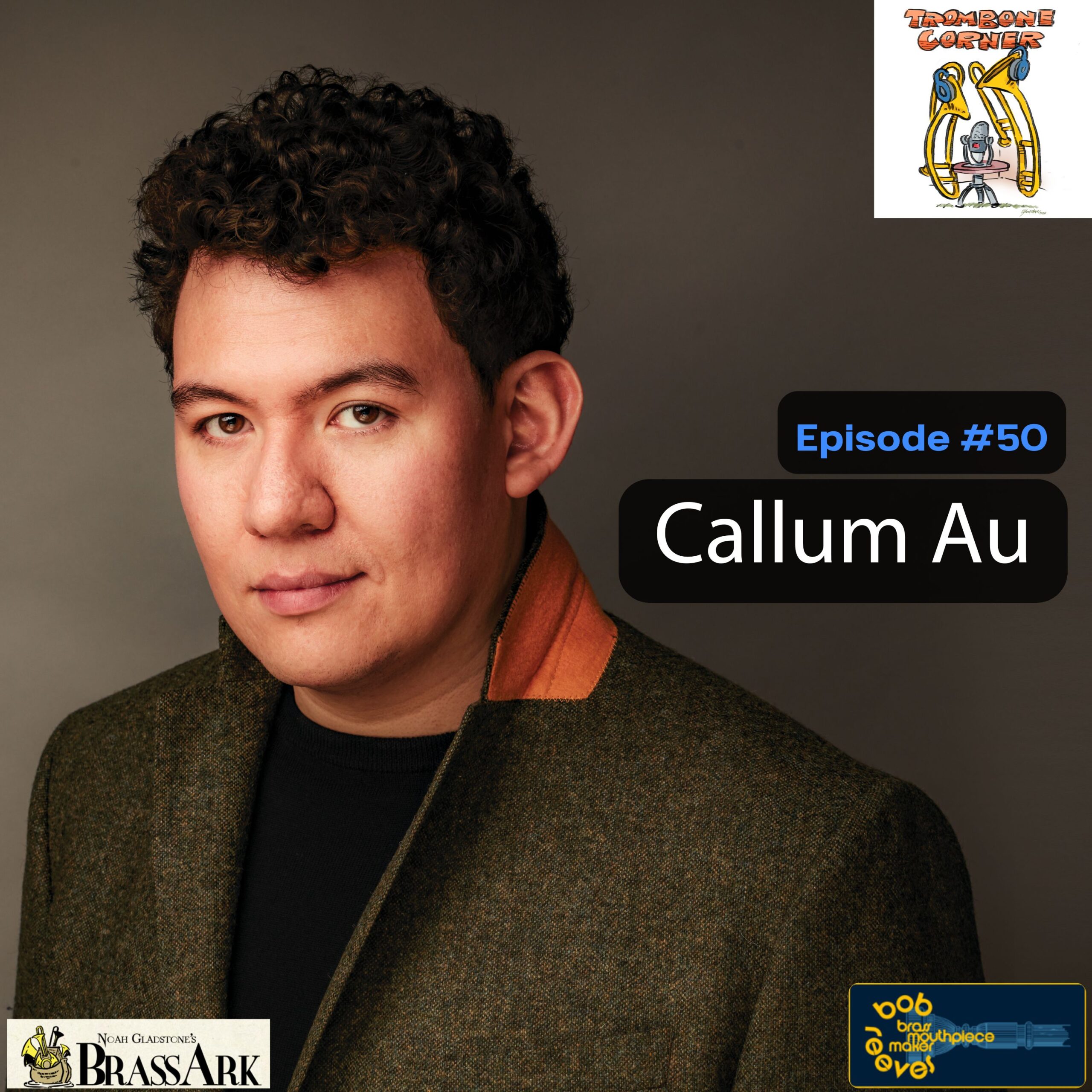
Welcome to the show notes for Episode #50 of the Trombone Corner podcast. This episode features British trombonist, composer and arranger Callum Au.
It was an accident of school band placement that has led to a brilliant musical career, and brought Callum Au to our stages and speakers. Because he could reach the sixth position when other kids couldn’t, Callum’s music teacher suggested the trombone, and the rest is history.
The National Youth Jazz Orchestra gave Callum a practical education in arranging, writing around 120 charts, hearing them played immediately, and learning what worked in real time. Callum credits much of his growth not just to formal lessons, but to sitting next to experienced players like Jon Stokes and Andy Flaxman and learning from their sound, phrasing, etiquette, and professionalism. Indeed, you’ll never guess what he studied for his university degree!
Today, Callum is a leader and inspiration himself, collaborating with international artists on Grammy-winning albums, and writing and recording his own material, including the stunning new release, Sing Seven Seas.
Our conversation today also unlocks the secret of arranging and transcribing: the surest path to a sustainable, successful and influential career.
And check out the latest episode of The Other Side of the Bell, featuring trumpeter James Davison, a frequent collaborator with Callum Au.


About Callum Au
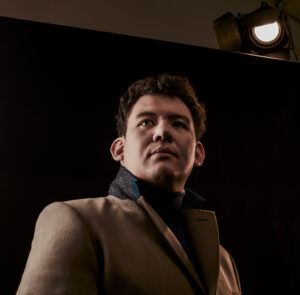
Callum Au is a British composer, arranger, orchestrator, and trombonist. He writes music across a wide range of genres, with a particular passion for big band and large jazz ensemble music. He is highly regarded for his stylistic awareness and versatility, and has worked with some of the world’s biggest artists.
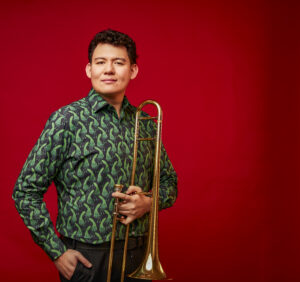
Over the past fifteen years, Callum has established himself as one of the busiest arrangers in the world. He has had the privilege of writing music for many international artists including Quincy Jones, Jamie Cullum and RAYE, and ensembles including the Royal Philharmonic Orchestra, the WDR Funkhaus Orchestra, and the Danish Radio Big Band. In 2021 he arranged two songs for Michael Bublé’s Grammy winning album ‘Higher’. More recently, he contributed four arrangements to Dua Lipa’s ‘Live from the Royal Albert Hall’ and wrote the vast majority of the critically acclaimed 2024 BBC Concert Orchestra Disco Prom.
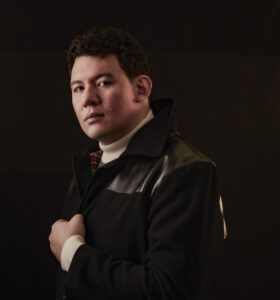
Callum is also active as a composer, with his flair for arresting melodies and lush complex harmony proving popular with audiences and musicians alike. Recent commissions include works for Inner City Brass, the BBC Scottish Symphony Orchestra, and Bone a-fide Trombone Quartet, and groups as diverse as the BBC Concert Orchestra and the SWR Big Band have performed his original music.
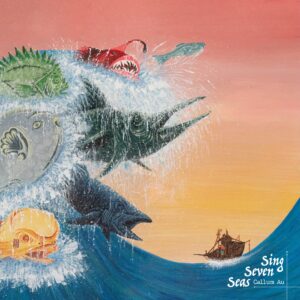
Callum’s latest release is Sing Seven Seas, a product of an audacious seven‑day recording marathon, where Callum united more than eighty extraordinary artists to create a vibrant double album. The album was released on June 1st, 2026, and showcases four years of original writing crafted specifically for these musicians and the remarkable things they can do, capturing the energy, colour, and imagination that define Callum’s musical world.
Callum Au episode links
- https://callumaumusic.com/
- Sing Seven Seas, the album: https://callumaumusic.com/s7s/
- Swipe Right! from Sing Seven Seas: https://www.youtube.com/watch?v=ZycetABQze0
- YouTube @callumaumusic
- Instagram @callumau
- Facebook @callumaumusic
Bob Reeves Brass Events and Appearances:
- Joy Brass, September 17-24, Tokyo Japan
http://joybrass.com
email to sign up: tp@joybrass.co.jp - Virtuosity Music, October 9-10, Boston, MA
- Greg Black Mouthpieces, November 6-7, Mount Holly, NC
- NCMEA Conference, November 8-9, Winston-Salem, NC
Podcast Credits
- Theme Music: The Trombone Choir Arrangements of Jay Friedman, Vol. 1
- Audio Engineer – Ted Cragg
- Photo Credits – Kenny McCracken
- Podcast Hosts – Noah Gladstone & John Snell
Transcript
Please note, this transcript is automatically generated. It may contain spelling and other errors. If you would like to assist us in editing or translating this transcript, please let us know at info@bobreeves.com.
[00:00:00]
CALLUM AU: I almost think that the main job of an arranger, well, one of the main jobs, there’s two main jobs, but one of the main jobs is to make sure that the musicians are delighted when they play your parts.
JOHN SNELL: Mmhmm.
JOHN SNELL: Hello, and welcome to the Trombone Corner Podcast, where we feature interviews with trombonists from all over the globe. It’s great to have you join us as we talk all things trombone, brought to you by the Brass Ark and Bob Reeves Brass. I’m John Snell from Bob Reeves Brass, and joining me as always is my trusty co-host, Noah Gladstone.
Noah, you’re looking fabulous today.
NOAH GLADSTONE: John, how are you doing?
JOHN SNELL: Great, and you’re in, you’re in a new location too. This is, how
NOAH GLADSTONE: I am, I, I am. I finally finished my teaching studio at my house and, uh, it’s nice and quiet, so I’m doing this podcast for my lovely new room.
JOHN SNELL: Well, it sounds as good as it looks, so bravo.
NOAH GLADSTONE: I, I hope so.[00:01:00]
JOHN SNELL: Well, speaking of bravo, I’m very excited about today’s guest, Callum Au.
NOAH GLADSTONE: It’s very exciting to have him here. He’s one of the most, uh, exciting rising stars, already risen stars, I should say, in the trombone world. a, a killer player, wonderful human being, and super insightful. Uh, I am so excited to share this interview with you all today.
JOHN SNELL: Yeah, we’ll get right to Callum’s interview, and he’ll be talking about his latest album, Sing Seven Sees, after a word from our sponsors and some Trombone News.
JOHN SNELL: If you’re a trombone player, you already know that the right equipment is rarely just a matter of picking something off a shelf.
NOAH GLADSTONE: That’s right, John. That’s why we decided to develop the Reeves Brass Arc mouthpieces. We wanted to make trombone mouse pieces that feel really great to play, sound terrific, and actually work with the way trombone players put their equipment together. And I wanted to draw from some of the best historical examples in my personal museum collection.
These are all made right at your shop up in Valencia, California.
JOHN SNELL: [00:02:00] And besides these fabulous mouthpieces here at Bob Reaves Brass, you’ll also find other great things for trombonists, including Shire’s trombones, Wolvane Mutes, and the ever popular guard bags.
NOAH GLADSTONE: At the Brass Ark, we specialize in exceptional instruments, both new and used, exclusive new models from Miles O’Malley in Chicago, Marcus Leichter, Stevens Brass by Steve Shires, Edgar Historical Brass Instruments among other S tier makers, along with one of the largest curated selections of vintage and unusual instruments that you’re not gonna find in most shops.
If you’ve got a special trombone or trumpet or something else sitting in your closet and you’re ready to find it a new home, I can help with that too through my consignment services.
JOHN SNELL: Bob Reeves Brass and the Brass Ark, where generations of craft meet today’s artists.
JOHN SNELL: Well, after 50 ad reads, Noah, um, I think we’ve gotten either better or worse. I don’t know.
NOAH GLADSTONE: Uh, I mean, it’s nice to mix it up from time to time, I think, but I hope y’all [00:03:00] enjoyed that lovely ad read.
JOHN SNELL: the, the, the, the ni – the nice part about The Trombone Corner is we’re the only ad. It’s. People, if people don’t know Bob Reaves and the Brass Ark by this point you know?
NOAH GLADSTONE: I think it’s just an opportunity to be silly. So here we go. Enjoy our, our, our ad and now y’all know what we do if you didn’t know already.
JOHN SNELL: Well, and, and it is exciting because the reason why we had to do a new ad read is because the Trombone Corner is gonna be on YouTube now. So, for those of you who’ve listened, we, we. There’s been a few episodes that I’ve uploaded in the past, but they’ve usually just been, like, the waveforms, um, other than, of course, our holiday special.
Uh, we can’t forget about that. That one,
NOAH GLADSTONE: a, that is a special
JOHN SNELL: that was a special episode that was on, uh, we uploaded that to YouTube. But from here on out, uh, all of these episodes, you’ll still be able, don’t worry, you’ll still be able to listen to these on Apple Podcasts and Spotify and Amazon Music and wherever else you listen to podcasts.
However, if you wanna see us, and see our guests and, uh, have our lively conversations, um, and how [00:04:00] much Noah glows when we get to the equipment part of the conversation, um, you can go to the Bob Reaves Brass YouTube channel and watch the episode there. So because of that, we had to come up with a, an ad read.
So, uh, long story short, we’re really excited to have, the Trombone Corner up, for all of those eyeballs to see on YouTube. that’s about all I have. There’s, it’s been. I’m just trying not to. I’m just trying not to sweat here at the shop.
NOAH GLADSTONE: It’s pretty exciting. It has been warm out here in California. there’s like a week or two out of the year that, uh, we get really nasty hot weather and this happens to be one of those weeks. So, we’ll spare you, John, and, uh, and wrap this up pretty quickly. But, uh, no, no real news other than, uh, we have a new ad read and we’re on YouTube, so that’s pretty darn exciting, I
JOHN SNELL: And you have instruments coming through, and we have Chire’s trombones coming through.
NOAH GLADSTONE: on the website, check that stuff out,
JOHN SNELL: I do wanna mention, um, I’ll be going to Japan in, uh, just a few weeks here. So, uh, we’ve been out of a lot of those Japanese practice mutes, the okura mutes, which are really popular, and the [00:05:00] Yupon, mutes for the, the Cups, the Straits, the Solo tones are really popular for, um, ute trombonists out there.
I think the Yupon Solo tone mute is, like, the mute to play if you’re playing Chicago. I think, I think we. Everyone who’s played that show has bought a Yupon mute because it’s the best sounding one. we’ve been out of stock of those for over a year because of, you know, international, uh, shipping issues and tariff issues.
so since I’ll be in Japan, in a few weeks, I will be bringing a suitcase ba – of mutes back with me. there won’t be many, especially for the trombone mutes, because there’s only so many I can fit my luggage. So if you’ve been in the market for one of those, yeah, uh, end of, end of September, check the website, because once they’re gone, they’re gone until, uh, the next time I go to Japan.
So
NOAH GLADSTONE: Maybe you’ll take, maybe you’ll take me next time in Japan.
JOHN SNELL: Open invitation. You’re always welcome. The Korean barbecue is waiting for
NOAH GLADSTONE: Oh, a Japanese barbecue, right? Korean barbecue, Japanese barbecue.
JOHN SNELL: So,
NOAH GLADSTONE: right, let’s get onto it.
JOHN SNELL: yeah, let’s get right to our [00:06:00] guest, Callum Au.
Callum Au is a British trombonist, composer, arranger, and musical director whose work spans jazz, orchestral music, film, and pop music. His arrangements have been performed and recorded by artists, including Quincy Jones, Michael Boublet, Ray, Dua Lipa, and Jamie Cullum, as well as ensembles such as the Royal Philharmonic Orchestra and the BBC Concert Orchestra.
A longtime member of the Ronnie Scott’s Jazz Orchestra, Callum is also an accomplished band leader and composer. Most recently, he released volume one of Sing Seven Sees, an ambitious project featuring more than 80 musicians and showcasing his original music, arranging and trombone playing. Please welcome to the Trombone Corner, Callum Au.
JOHN SNELL: All right. I’m so excited with today’s guest joining us from all the way across the pond. Callum Au. Callum, how you doing?
CALLUM AU: I’m good, thank you. It’s lovely to be here.
JOHN SNELL: excited to talk trombone and who [00:07:00] knows what we can get into today? Uh, but of course, joining me today is the, uh, ever handsome Noah Gladstone.
NOAH GLADSTONE: shucks. Thanks, John. Good to see you.
JOHN SNELL: looking fabulous. with the, uh, pleasantries out of the way, let’s get started and talk about the trombone. And Callum, I, I wanna know, uh, how did you get started? Did the trombone search you out or did you find out, find the trombone sitting in a corner somewhere?.
CALLUM AU: You know what? It did sort of search me out because I wouldn’t have known what one was. my school music teacher, when I was maybe about eight, uh, uh, they were kind of dishing out the brass instruments at the primary school, um, which I guess is like your elementary school. And I was a big kid. still am a big kid, but I was a, certainly a big kid then.
Um, and I was the only kid in the class that could reach the sixth position, um, to play the, to play the B flat major scale. So it was j – given to me almost by default, you know, you’re the one with the long arms, you’re the one who’s playing the trombone. I [00:08:00] was already playing the piano at that point.
I mean, I kind of, I had a bit of a hate-hate relationship with the piano growing up. I, I found it incredibly difficult and not very rewarding because it was, it was just so, um, I’m not very coordinated. And, I could see and hear other people doing it and sounding much better than me and I could never get there.
But that really took to the trombone because I guess had the kind of musical intelligence, if you like, but not the technical or, um, th- that sort of, uh, low level dexterity that you need for a, for a slightly more complicated instrument. So it was perfect for me, really.
NOAH GLADSTONE: It is kind of the perfect instrument. I mean, you know, as I like to say, uh, so often,
JOHN SNELL: as designed.
NOAH GLADSTONE: designed, perfect as designed, exactly.
JOHN SNELL: No modifications. You didn’t have to try keys or anything like
NOAH GLADSTONE: No keys. We don’t need any keys. Keys are overrated anyway.
JOHN SNELL: That’s, um, and that’s the, uh, Noah Gladstone drinking game, by the way. Whenever, uh, Noah brings that up, [00:09:00] whether it be in a masterclass or interview, everyone has to take a shot of, shot or a sip of tea or, yeah, a sip of, uh, ginger tea.
CALLUM AU: Nice.
JOHN SNELL: I’m gonna get that on a t-shirt for you, Noah.
NOAH GLADSTONE: The trombone was perfect as- as designed. That’s
right.
JOHN SNELL: so Kyle, I mean, you must have been like a, a band director’s dream being able to reach six position.
You, you said it was like at eight years old? I
CALLUM AU: Yeah, I was about eight. Yeah, I was a really big kid, but I had a great first teacher, um, whose name was Terry Rene. he’d started out as the, um, solo trumpet player with the Sid Lawrence Orchestra. over there, you might not have heard of Sid Lawrence Orchestra, but they were basically one of the big British dance bands.
They were kind of like, um, Arty Shaw or Benny Goodman or Glen Miller or something like that. But, um, but they carried on. They kept touring, much, much later than all those groups did. So there was a swing era of bands that just kept going on and on and on. And Terry had, was the, [00:10:00] kind of Harry James-ish trumpet soloist with that band.
He retired to Blackpool, which is the town in the north of England where I grew up. And started to kind of keep a bit of pocket money rolling in, started teaching children brass at my school, which was, um, I guess a bit of a step down for him. But, um, he, he was an amazing teacher for me. And, and he, he kind of started the love of big band music in me because he, he had all that experience on the roads with a professional, um, touring band.
And he introduced me to all of those people I just mentioned, you know, to Benny Goodman, Blen Miller, uh, Harry James, Artie Shaw, Tommy Dorsey, all of those people. The first contact I s – I suppose I had with them was through Terry’s record collection and, um, him pointing me in the right direction in the CD shop.
JOHN SNELL: What fun. so you got an interest in big band and in jazz. Um, and l – so what were the things he was, [00:11:00] working with you on, uh, you know, kind of like the general trombone studies or.
CALLUM AU: Yeah, I mean, he was, he was always quite, he was very strict with the chops side of things. Um, and he was very strict with, kind of. He, he was a Yorkshireman. And, um, he still is a Yorkshireman. He’ still around. He’s n – he’s 90 this year, I think. Um, which is impressive. If I, if I make it to 90, I’ll be a happy man.
But, He was, he was very on top of the technique side of things. And, you know, if, if you were sort of slouching a bit or holding it not in the right place, he’d be like, “No, stop. Take it off. Put it in the right place. Start again.” So, which I think is actually, you can be completely derailed as a brass player, if early on, somebody who doesn’t quite know how to set you up, sets you up wrong up here.
It’s, and you can, you can [00:12:00] have all the musicianship in the world. And if the sort of early stage muscle development isn’t right, you have to take seven steps forward, but seven steps backwards to take one step forward again. So I was really fortunate to get all that stuff kind of inside my head early on.
we played through the Auburn book, at the sort of start. That was kind of the initial studies. he was very big on the lip flexibility type studies as well. Um, you know, all of these kind of
those sorts of things without any tongue, which, um, has set me up in good stead, I think, as well. I know s- some people just start tonguing things straight away. I don’t think I even knew to do that until sort of four, four or five weeks in. It was all breath attacks to start off.
JOHN SNELL: So it sounds like you got a real solid foundation and took that into school and probably made [00:13:00] your band records even happier.
CALLUM AU: Mm-hmm.
JOHN SNELL: ho- how did you progress then, uh, through school? Uh, I mean, did you, uh, know you wanted to be a musician or in the musical field right away, or is it
CALLUM AU: No, not, not at all. I mean, I’ve always been fairly kind of realistic about the state of what the industry looks like. And to, to, I didn’t know, you know, I didn’t know one way or the other whether I would be able to be a musician. Because, I know how the business is, and I know what, I know that it’s tough, and I know that, like, s – it seems to be getting smaller and harder every year, which is a bit of a downer thing to say.
It’s not supposed to be. And, and, you know, I’m having a great time. But, I know that it’s not, it’s not a dead set. So I was always doing other things as well, all the way through school and university. I never studied music formally. I never studied at a conservator or, or a university or a music [00:14:00] college or anything like that.
I actually kind of got my, my early training was through a big band in Britain called the National Youth Jazz Orchestra. Now, this band rehearsed in London on a, uh, on a Saturday morning. And the way it worked was anyone could turn up. It was unauditioned. You would, you could s – you thought you were able to hang, you could turn up, and you would, stand.
In fact, everyone stood up as well. The saxes all sat down, but ev – all the brass stood up. And you’d stand in the section wherever you thought you should stand. Um, and then you’d play for the rehearsal. And if you were, deemed at the rehearsal to be, like, of a standard that they were happy with, and the they is actually generally the other people in the band.
Um, because the, the guy in charge was basically just curating. He wasn’t really, directing anything. he just kinda let the thing run itself. In fact, he’d quite often disappear, [00:15:00] disappeared during the band rehearsals, go to the market, and come back four hours later, and so – and one of the saxors would take the rehearsal.
and, yeah, the, if you were deemed at the level where you could hang, you were told that you could write your name in the gig book. And the gig book would, you- you’d be able to write down when you were available, and then you might go and do some of the gigs. So anyway, I did that band. I started dipping in about 2005, that subbing for Americans.
Um, and I was, I was in the band sort of, um, on the regular books as the, as the person with the first refusal by the time I was about 18, um, which would’ve been 2008. And then I stayed with them till 2012. the amazing thing about that model, were two amazing things. The first amazing thing is they never rehearsed anything.
the program was a totally different program on every show and had bore absolutely no relation whatsoever to whatever you did in the rehearsal. [00:16:00] and this is good because, it forces you to learn to be quick and to learn to think on your feet and to learn to adapt to new material as soon as it’s presented and not, like, with a week and a half to rehearse it, which is unrealistic unless you, happen to be lucky enough to be in Germany or, uh, in the Jazz at Lincoln Center Orchestra.
the other thing that was amazing was the guy who run it, his name was Bill Ashton. he was always commissioning new music from the players in the band. and it was either songs that he’d written, um, because he wrote songs for the singers to sing, or it was, like, random titles based on a pun based around somebody’s name.
like, I remember there was a sax player called Lucas Dodd. The common way to s – the common English surname is Dodds, not Dodd. So he decided it was hilarious to have a tune called The Singular Mr. Dodd. which is not particularly hilarious, but what it was, [00:17:00] was a commission, which went to me, and I wrote, um, about 120 charts for the band while I was in it.
Um,
JOHN SNELL: You said 120?
CALLUM AU: 120 over the t – over the time I was in the band, which actually is an amazing start. You know, it, it was, um, it let me hear a big band play the music, play new music every week that I brought something in that I’d written. It let me very quickly, comparatively quickly, figure out what worked, what didn’t work, what people liked, what made people hate you.
what people would request to play on the gigs, and what people would say, “I never want to play that again in my life.” Um
JOHN SNELL: So, so it’s like you had your own sandbox,
CALLUM AU: basically, yeah.
JOHN SNELL: incredible.
CALLUM AU: and it was a, it, it was a wonderful thing while it was doing that. totally anarchic, totally chaotic. And I think that there was certainly a l – there was certainly an element of kind of sink or swim.
You know, if you turned up thinking you were the bee’s knees and you kind of [00:18:00] weren’t, you might get a nasty shock. Um
JOHN SNELL: Well, I was, I was gonna say, when you first started t – uh, talking about how the band ran, I, I mean, I, like, hundred trumpet jokes just kinda came to my mind about, yeah, you got 20 trumpet players all showing up s- standing in the first spot because they
NOAH GLADSTONE: hey, save that for another podcast.
CALLUM AU: Oh,
JOHN SNELL: sorry, Well, yeah, we can all, we can, but we see, we can joke about trumpets here on this one.
It’s, it’s too serious on that other podcast.
NOAH GLADSTONE: Yeah, they’ll actually tell you how good they are and, uh, and why they deserve to be there.
CALLUM AU: I, I, I remember, I remember a certain Louis Dowdswell coming to the National Youth Jazz Orchestra for the first time, and, and exactly what he was like. the.
JOHN SNELL: Yeah.
CALLUM AU: He was, he was the most. He was basically the cockiest little 15-year-old you can possibly imagine. and he was, he was sitting on, like, third or fourth trumpet to begin with.
so nobody heard a note that he played, but he was acting like this, you know? Um, one step higher than God on the [00:19:00] on the ladder. And anyway, we did a show, um, in Birmingham with Guy Barker, who’s a great British trumpet player. The lead player got taken ill. and then the next three lead player depths were all unavailable.
So Louie came in as the, as the 15-year-old played lead. The first note of the whole, suite that Guy had written for the band was a double A, and Louie played like Louie. And suddenly, we realized why
JOHN SNELL: Oh.
CALLUM AU: he was acting quite like he was.
JOHN SNELL: oh. Wow, that’s 15 years old. Incredible. Yeah.
CALLUM AU: it, it was, it was almo – it, the high stuff at least was, was basically fully formed at that point.
It was kind of amazing. Yeah.
NOAH GLADSTONE: Yeah.
JOHN SNELL: Amazing. well, what else, when you got, uh, joined the, the jazz orchestra, like, did, did you have an interest in arranging and composing by that point? Or did you just kinda say, “Sure, I’ll do it,” you know?
CALLUM AU: It was more the, it was more, “Sure, I’ll do [00:20:00] it,” than, than having a pre-existing interest. I’d done a few little bits for, like, for, like, a, uh, A level, and which is kind of high school exams and things like that. But I hadn’t written anything on a large scale, and certainly not at, at volume before doing that band.
That was the first time I, uh, really got into it.
JOHN SNELL: Wow. So that, really kinda changed the trajectory of your career, it seems
CALLUM AU: Completely. Yeah. I wouldn’t be a professional musician of any sort if it wasn’t for the National Youth Chance Orchestra.
JOHN SNELL: Amazing. And what did your trombone plane look like? Uh, were you still studying with, with Terry or had you moved on?
CALLUM AU: I stopped studying with Terry when I was, um, when I came to university, because it was a long commute up to Blackpool.
Um, I basically took private lessons with, with anyone who would take me over the course of that time. I had some lessons with Mark Nightingale, who is, uh, an [00:21:00] amazing British trombonist who you guys.
B – trombonists have probably heard of, but, like, the broader American music scene may not have heard of Mark, but if you haven’t, you’re him for a treat. he’s utterly incredible. I had, uh, lessons with Trevor Meyers and Gordon Campbell, and a, a few other people as well, sort of just on and off. But those were great, but they weren’t where I actually learned the most stuff that I learned.
The times that I learned the most stuff, I can pinpoint them almost exactly. The first bit was the first year or so that I was in the National Youth Jazz Orchestra. And this is because of a trombone player called John Stokes who sat on lead when I joined the band and was sitting on third or fourth or whatever it was at that point.
it must have been third because I was sat next to him. John’s a phenomenal player. He’s on the, the album, and he, he still works about town, and he’s, he’s really, really great. But he was really, really great [00:22:00] relative to anything that I’d heard at that point. He’s about 10 years older than me, I think.
and just by sitting next to him and copying him, I sort of learned for the first time what roughly it’s supposed to sound like. And then the next time I did that was when I joined the Ronnie Scott’s Jazz Orchestra, which I joined basically as soon as I finished with, university and moved to London.
I was blessed with, a string of other people’s bad luck. Um because first of all, their, second trombonist went on tour for a year with, with the band Blur, which I suppose isn’t exactly bad luck. But then their lead trombone broke his collarbone, um, and, and had to take a year out. And then their third trombone, um, e- ended up, um, I think he went deaf, actually, and had to stop playing.
And then, and the bass trombone, I, I did [00:23:00] bass trombone for a bit as well. But I did, I did every chair in the band over, over a little while. But in that first year, when I was mostly playing second, exactly the same thing that had happened with John Stokes prior happened with their lead trombone player, who’s a man called Andy Flaxman.
Um, another amazing British trombone player. But at that point in my life, he was the only real professional trombone player who I’d sat next to, by which I mean, you know, working, proper, um, lead trombone who has had years of experience in the business and knows not just how to play the instrument, but how to conduct oneself, rehearse a etiquette, how to mark up one’s parts, how to turn up, how to, you know, behave well and do all the, the, the, the easy bit, I guess.
But it’s only the easy bit if someone’s shown you by example. And Andy was a wonderful player, and I learned a lot from sitting under him about the playing as well, but both playing and kind of [00:24:00] behavior and etiquette, th- that was a massive level up. So actually, the people I would credit the most as, as far as tuition goes, are John and Andy, which is, which is funny because neither of them ever given me a lesson. Not, not officially.
JOHN SNELL: Uh, that’s, uh, fascinating though. Yeah. I mean, it just goes to show that, you know, like, success leaves clues and that, you know, you’d. Yeah. I mean, it hap – I, I, I was suppose having your, your kind of formal training at a young age, setting up your fundamentals, gave you a foundation that then you could just fill in the blanks with who
CALLUM AU: Yeah. And, and I’ve got. I learn best in a very practical way. if I read about something and I don’t then go and do it, I’ll probably forget what I’ve just been reading about within a week. But if I kind of put it into practice and actually solve the puzzle or do whatever it is that I’m doing, I will be able to internalize that.
As people’s brains work differently, some people [00:25:00] will be able to internalize things just by reading them. Some people are really visual. Some people need to do it. And I’m someone who needs to do it to be able to do it.
JOHN SNELL: Yeah. Yeah. Fascinating.
NOAH GLADSTONE: It’s interesting, that’s kind of how the, the Hollywood stuff. I mean, I think London and Hollywood are always obviously kind of hand-in-hand as far as the scenes go, especially with commercial music and, and studio work. and I think a lot of the processes is very similar as far as showing up on a job and learning from, you know, the veterans that are there and have done it and navigated.
How do you talk to the contractor? How do you have intersectional conversations, mark up the music, especially when you’re sight reading on the job. maybe that’s almost more important than how you play sometimes because everybody can play, uh, when you’re at that level. And I think, I think, you know, being aware, self-aware of, of how you fit in, uh, to that kind of, uh, sausage machine in a sense is, is super important and [00:26:00] not discussed enough.
I mean, a lot of people go to school and they’re like, “Well, I, I’m gonna play everything and I can do all this stuff.” And then they get there and they’re actually, the door opens and they have that opportunity and they don’t understand why they don’t get called back sometimes. And I, I, I think a lot of it is, you know, we always joke, like, “Keep your mouth shut and your eyes open.”
It kind of is like that. I mean, granted, you know, you have to have, I think, advocates on your side and it sounds like you did. And, and that’s super important, but they need to also wanna be your advocates. And I think showing up and, and, and playing well and, just that social interaction of the way that a gig works and flows, whether it’s a, a casual or a studio call or an orchestra date or whatever, there’s different expectations, um, for all of those kinds of, of, of jobs and how you’re supposed to behave and who you’re working with.
And also understanding who you’re working with. If you’re working with a, you know, a, a hard-nosed trumpet player you know? Uh, you gotta know how you, how you fit in, how you fit into that, you know? [00:27:00] Or you might be the, the jovial tuba player that’s running the job and then, you know, it’s a different vibe.
So I think, I think vibes are, vibes are very important and, and being on the same. So it’s, it’s interesting to hear you say that just because, I totally agree. And, and I think
CALLUM AU: think
NOAH GLADSTONE: that’s kinda how it works, at least in, in our worlds where we are, where you are in, in, in England and where we are in LA, very similar scenes, I think.
CALLUM AU: Mm-hmm. Yeah. It, it’s, it’s very much, studio first jazz later type thing for a lot of us. Um, you know, we’re all pretty versatile in what we will, will and do play because we have to be. if you’re going to be the sort of person who says, you know, “I only want to play small group jazz.”
Well, great, good for you. But you’re not going to get called for any of the work that’s going to pay your bills. Because the work that’s going to pay your bills needs you to be able to play in a, in a certain way. [00:28:00] it’s all about, it’s It’s all about the sound and the time at that point. And it’s very little about the, Lydia and Alter’s harmonic major or whatever.
Um, I just made that up, but I might, I’m sure it exists.
JOHN SNELL: Sounds cool.
CALLUM AU: yeah.
NOAH GLADSTONE: Fooled me. Yeah.
CALLUM AU: But yeah, I, mean, that’s the, that, that, that’s the bottom line. I, is I, I think it’s having a concept of sound production and what you, what you want to sound like and how you’re going to vary your sound between.
You’re going to vary your sound depending on what it is that you’re playing, is basically the most important thing for, certainly for the sort of work that I do, and for the sort of work that most people in my kind of sphere do. Because you get people who can. I mean, Andy Wood is a perfect example of this.
Andy is probably the busiest London studio trombonist and for good reason. he’s another one I’ve learned a huge amount by sitting next to over the [00:29:00] years. Um, e- every, every, every f – every session is a w – is a lesson
NOAH GLADSTONE: It’s a masterclass with Andy, for
CALLUM AU: yeah, and it’s, and it’s totally, it’s, you’re not, you’re even getting paid to be there.
I mean, it’s like, it’s like the, the ideal day at work for, it’s a Busman’s holiday. But, Andy can play beautiful, sweet, sort of Erby Green style or Dick Nash style high trombone sewers. He can play, you know, the rowdiest, gospel band type stuff. Uh, he can play immaculate modern lead trombone.
Um, he can play, uh, great bass trombone, both swinging and in a kind of more orchestral setting. He plays, he quite often goes and sits in orchestras on principle. Um, so moonlights as a, as an orchestral principal trombone. He can do absolutely anything. And it’s all because, and he does most of it on a, on a bark six as well.
which is astonishing. And it’s all because he knows really deeply in his [00:30:00] head how he wants himself to sound. And then that’s what he is aiming for. I think it’s easy to not exactly have a concept of that. And then you, you’re a bit sort of lost.
NOAH GLADSTONE: I keep trying to get Andy to come on the Trombone Corner and he says, “Oh, I have nothing to say.” I’m like, “Come on. Come
CALLUM AU: so m – he’s got so
NOAH GLADSTONE: on, Andy. All right. I’m gonna call, we’re gonna call Andy out
CALLUM AU: Yeah, you’ve got to.
JOHN SNELL: It’s on the
NOAH GLADSTONE: you need to come on the Trombone Corner.” Uh, it’s the same thing, like, wh- when I, you know, got, when I started working in the studios and, and got to sit next to Alan Kaplan or, you know, or Alex Isles, it’s like, you know, or Bill Booth or any of these guys that have, have, have been playing for such a long time and just have seen everything.
And you just know there’s, a level of trust that you just, whatever’s going to pop up on the music stand is going to be fine. even if it’s the hardest thing you’ve ever seen, you have someone like that sitting next to you, you know it’s gonna be fine, because they’re gonna just sherpa you through it.
And I think that’s the learning bit. You know, you sit there and you watch and you watch how they [00:31:00] interact with the podium and with the booth and with the microphones and how they’re adjusting their sound, because there’s not enough time to futz around. It has to be right. And, uh, I think that’s really the, the, the true mark of, of that style of playing.
It’s very special. And, uh, you know, when you get to experience it and sit next to someone like that, it, it, it definitely does change, change you. If you’re aware, it means I’m sure there’s plenty of people that I’m sure are unaware of that as well. But, you know, if you’re, if you’re open to it and you’re, you are a, a musician and as, as great musicians we have ears and we listen to our colleagues and you learn from your colleagues, that’s kind of what it’s all about.
CALLUM AU: I think it’s extra important for trombone players to, to listen because we’re almost never the center of attention. like, we might think we are and we might enjoy being the center of attention in the kind of, rare bits where we get to play the tune. But, actually, in reality, in a big band context, if I’m [00:32:00] playing lead trombone, I’m not really playing lead trombone, like, 70% of the time.
I’m probably playing fifth trumpet. In what, in, in terms of what my actual role in the ensemble is. That, that lead trombone part ceases to be lead trombone as soon as I’m following someone who’s higher up in the, in the kind of phrasing pecking order than me, which, naturally is every trumpet player on the planet.
And sometimes the saxes as well. And, um, you know, it could even be the, keyboards or, or guitars or something. but yeah, I’ve found that, all those 20 trumpet players, um, with the, with the great big egos, that suits trumpet players because they often, more often than not, do have to be that lead voice.
Trombones generally are not, we’re not so often the lead voice, so we have, we have to be content and happy. not just content. We have to be delighted with listening and supporting, because that’s actually our role most of the, most of the time.
NOAH GLADSTONE: We’re construction workers. We should actually have hard [00:33:00] hats on, I think, when we go to work,
CALLUM AU: we do.
NOAH GLADSTONE: sometimes we do.
JOHN SNELL: sometimes you do. Uh, so Colum, I wanna, I wanna get back to your career trajectory a little bit, because, I mean, you had mentioned earlier, so you, you, you, you went to university, but you, you weren’t getting a music degree. Is that
CALLUM AU: No, I didn’t. I got, I got a, a classics degree, which is, um, uh, Latin Greek history and philosophy in England. which is, uh, I, I’ve never used any of it. Um, but it feels like, or at least at the time, it felt like it was a nice thing to have. It didn’t cost me very much, um, in terms of, in terms of effort, time, or money, um, at the time, because we, this is different now.
But when I went to university, the tuition fees were heavily subsidized by the government. so nowadays, it’s very expensive to go to university just like it is in states. But when I was 18, the tuition fees were [00:34:00] only a couple of thousand pounds a year or something. And it was a, it was a token contribution to, to stop people from wasting time.
so it didn’t cost me anything really to do it. so Um, I kind of optimized for passing the exams and spent all my time, all my actual productive time arranging big band tunes for Nigel or, um, practicing the dromone or going out and playing gigs and things like that.
JOHN SNELL: Interesting. So that was a calculated decision to
CALLUM AU: Yeah, pretty much. I mean.
JOHN SNELL: choose a degree that. Did you have, I mean, did you have an interest in the classics
CALLUM AU: Yeah, I do. I, I, I’m, I’m always, I’m, I’m certainly the history and the philosophy bits. I was, uh, I was interested in that to the point that I could. I’d read enough about it as a kid to kind of coast along a bit as well. and, you know, if I’d done anything like maths or physics or anything where there’s actual sort of detailed, hard, um, intellectual stuff [00:35:00] involved, it would’ve, it would’ve consumed all my time.
So I wouldn’t have been able to do the whole, the, both things at once.
JOHN SNELL: So, so the decision was to get a degree kind of just as in case,
uh, like as a backup.
CALLUM AU: pretty much. And, you know, uh, the, the one I got, I mean, I was at the same college as the former British Prime Minister Boris Johnson. And my, tutor told me that I was the second laziest student he’d ever had.
JOHN SNELL: You
CALLUM AU: um, seriously I took what those particular studies.
But I was,
NOAH GLADSTONE: sure you don’t want to go into politics?
CALLUM AU: Yeah, I’m absolutely positive I don’t want to go into politics. Um. Yeah, no, certainly not given how he turned out. But, I, I was just sort of doing it on the side to have the, to have the documentation so that if something didn’t work out. And, you know, it might still not work out.
I, I could easily, fall and knock all my teeth out, and then that’s bye-bye trombone playing. Um, [00:36:00] and it wouldn’t be bye by arranging, which is good, but, um, like, I could lose my hearing or something. And that’s, that’s something that definitely happens to a lot of people. And then that probably would be bye-bye arranging nowadays with the, with the requirements for demos and things.
And once that happens, you know, I will still be able to kind of wave this stupid bit of paper around and say, “Look, here’s a credential. Hire me.” which is something I’m kind of grateful for, to have that in the back pocket.
JOHN SNELL: Yeah. I, I’m, I’m curious, like, looking back, do you ever wish you had majored in music and had that experience?.
CALLUM AU: No. I’m really glad I didn’t. because one of the things that it made me do was create my own opportunities and force myself into self-motivation. I think that music’s a terrible thing to go into if you’re not self-motivated. Because if you’re motivated by anything else other than [00:37:00] the fact that you basically can’t stop doing it because you love it so much, you seriously should go and do something else because you’ll make more money.
you’ve gotta be pretty smart to understand how to be a musician, both socially and just in terms of what you need to understand to know what is going on on the page and around you in the orchestra and stuff. so anyone in music, I’m pretty sure 97% of them could make more money doing something else.
So if they aren’t doing it because they love it, go and do something else. I re – I really do believe that.
JOHN SNELL: Absolutely. And it, as you and Noah were talking about earlier, also that self-awareness, you know, like, you have to be aware of everything around you and the group and the music, but also that, you know,
CALLUM AU: 100%.
JOHN SNELL: uh, yeah, I think of
NOAH GLADSTONE: and your finances and, you know, your, your business and yeah, you’re running your own business. it’s hard enough to run a business, but like, you know, when it’s your own business, it’s, it’s even more complicated because, uh, you are your agent [00:38:00] and talent and everything all
JOHN SNELL: Marketing department and, yeah.
NOAH GLADSTONE: yeah, website master
CALLUM AU: Accountant.
NOAH GLADSTONE: all of it, all of it, you
JOHN SNELL: Yeah. Yeah. So, uh, you joined the Ronnie Scott’s big band. We, were you doing, um, writing for them as well, once you joined?.
CALLUM AU: yes, but not like the, the, the Ronnie Sorts Big Band, um, doesn’t do. It’s not like the Village Vanguard bands where they play loads and loads of original stuff. It’s more we do gigs, sort of backing singers and, theater shows and things like that. Um, so it’s often a bit more of a repetitory band.
But I did, I have written quite a bit for them over the years when they’ve, when they’ve been in need. I s- started arranging. I d – I, I honestly couldn’t tell you how I built up my arranging portfolio, except, the only thing I could say is it happened very [00:39:00] slowly, um, one block at a time.
I’ve never sent a CV out to an orchestra or anything like that. I’ve never said, “I’m an arranger. Here’s what I do. Um, hire me.” what I have done is I’ve often been called first as a trombonist and then asked to do some arranging as well for the project.
and what that does is puts your name on the top of a page in front of a lot of musicians. All those musicians will have their own contacts in different ensembles and things. And, if they like what you are, what they play, next time somebody says to them, “I need some arranging. I need some writing for, for something or other.”
They’ll think, or they might think, “Oh, I know. I played this stuff the other day. That felt great. Why didn’t you ask this guy?” I think there’s a lot to be gained by doing it that way. Um, I almost think that the main job of an [00:40:00] arranger, well, uh, one of the main jobs, there’s two main jobs, but one of the main jobs is to make sure that the musicians are delighted when they play your parts.
JOHN SNELL: Hm.
CALLUM AU: actually, the most, the most like – the most kind of common way that certainly early on, I would get more work, more arranging work coming my way, is from someone who’d played my stuff having recommended me to their management, their orchestral management, or their kind of, uh, their friends who were singers or, or anything like that.
That’s how I, that’s how I kind of built up the portfolio slowly.
JOHN SNELL: ground up, basically.
CALLUM AU: Yeah, really.
JOHN SNELL: that’s, that’s interesting. And, and there’s a parallel there, I think, you know, because you were working as a trombonist and getting called for sessions. Uh, but having that second skillset, it reminds me of, like, Jerry Hay out here, who, you know, without his arranging and composing, would’ve had a fantastic career as a session, as a se – yeah, as a session trumpet player, [00:41:00] but because he c- could bring that extra skillset, turned him into the superstar, you know, the, in the career that he had.
NOAH GLADSTONE: And his arrangements definitely delight lots of people.
CALLUM AU: Oh, absolutely. I mean,
NOAH GLADSTONE: They are the, I don’t know if you’ve seen, uh, his book, Callum, but you should definitely check out Jerry’s Snoop book is pretty amazing.
JOHN SNELL: you
got it. Yeah.
NOAH GLADSTONE: Look at
CALLUM AU: you go. There’s a plug.
I’ll put that back later.
JOHN SNELL: I, I, I don’t know. I think I, well, Chuck and Bill Reichenbach and, and Gary might have some words for some of those, some of those parts that he wrote. I don’t know if delight is necessarily the right word. Um, but, uh, you know, definitely some stuff you could s – uh,
NOAH GLADSTONE: They’re a delight to listen to.
JOHN SNELL: delight to listen to. Oh, 100%. And, and they are, you know,
NOAH GLADSTONE: They’re fun to play.
JOHN SNELL: for the, what,
NOAH GLADSTONE: I’m sure that, I’m sure those guys had a lot of fun. They, we know they had a lot of fun.
JOHN SNELL: Yeah. And, uh, yeah. Well, they were because, you know, what, three of the four people on the planet that could play those things.
CALLUM AU: Yes.
JOHN SNELL: so as, I mean, you’ve already written and arranged for some, [00:42:00] some great groups already. Was there, was there a point in your kind of organic growth that you just, like, reached another level and said, “Oh, I didn’t expect this artist to call or this group to call?”
CALLUM AU: Um, a pretty big one early on was the, when they did the Quincy Jones, 85th birthday celebrations, I got a call from Jules Buckley. Um, I don’t know if you know Jules. He’s
NOAH GLADSTONE: know him very well.
CALLUM AU: Jules is great. He’s a conductor and, um, an arranger himself. and he was curating this show, which was put on by the BBC at the proms.
Um, and what he asked me to do was, um, partly transcribe and partly arrange, um, the tunes from, it was the Ella Fitzgerald Count Basie album that Quincy Jones scored. and [00:43:00] what I had to do was transcribe what was there because they’d lost the parts, apparently. I, I don’t know how that happens, but I, I know, I know that it happens.
Now, it doesn’t happen so much nowadays with digital parts, but it happened a lot back then. so I had to reconstruct all the parts, but then I had to write, because the, they somehow, despite Quincy Jones being, sort of having his fingers in the pies of almost all popular music from the last 75 years, um, they didn’t have enough material for the concert.
So I had to write an extra two minutes in each one of these charts, but stay in the same sort of style. And Jules called me for this because, he’d heard from another arranger who was also working on the gig that I was a big band guy. I sort of had a interest and a specialism in that kind of field. that was a kind of early example of something that made me think, “Oh, wow, this is, you know, because you can’t, you don’t get higher up in the music [00:44:00] business than Quincy, or at least you didn’t at that point.”
Um, and it was quite a, it was quite an accolade at that point in, in time.
JOHN SNELL: What, what an experience. So did that, elevate your kind of position? Uh, start, you said it was a very slow process, uh, you know,
CALLUM AU: N- no, I don’t think, I don’t think so. I don’t think any one. I can’t, I can’t put my finger on any one project that elevated my position. Everything I’ve done has just been step by step by step by step. It’s all, there’s not, there’s never been, like, do one thing that’s gone massive and then loads of calls came in.
It’s always just been little by little liter – i- incremental improvement.
JOHN SNELL: One, one project after another. Uh, and meanwhile, you’re working as a session trombonist and freelancing as well. I mean, is there a point where you had to start turning down trombone work, uh, because of your other obligations? Or is it kind of gone hand in hand?.
CALLUM AU: a bit. I mean, what I tend to do nowadays with the trombone, I, I’ve stopped playing on [00:45:00] the West End. Uh, in fact, I stopped doing that quite a long time ago, in the theater gigs, which is a – which are what a lot of the, players do to just keep their diary full and keep their bank account balance healthy.
I guess I, I arrange instead. Um, I’ve stopped doing anything that’s too far away, and it’s not because I don’t want to do it, but it’s because the travel time is very costly in, in terms of, what I could be doing at home. And I think the, I’ve got two little kids. Um, they’re four and two.
Uh, and actually the main thing that I do with my time, um, nowadays is, is be with the family. That’s what I spend more time than anything else doing. And you can’t, and it’s lovely, and I, I wouldn’t change it for the world. But at the same time, it really does make you question whether it’s worth driving four and a half hours up to Manchester to do a big band show.
Um, as, as fun as that might be. So generally, I will, nowadays, [00:46:00] the trombone work I will take on are the stu – is the stuff in the studios just because I, I love the discipline and I find it, I find it to be invigorating. Plus any big band gig that’s within reasonable commuting distance. I’ll kind of, I’ll kind of do that at almost any fee.
I don’t, I don’t really care what they’re gonna pay me because it’s just, it’s sort of food for the soul, really, playing big band music.
JOHN SNELL: That, that’s where you find your joy. Oh, well, how cool. And yeah, so yeah, having a family certainly readjust your priorities pretty quickly. I wanna talk, uh, I mean, we’ve done some amazing things in your career, but I wanna make sure we spend time talking about your latest album. Uh, Sing Seven Sea’s double album, sorry.
Uh, um, I mean, there is so much in there. Um, first of all, if you d – uh, bring us up to speed with the concept of the album and, what, you know, what made you decide, “I wanna do not only just my own album, but a double album of that epic scope.”
CALLUM AU: Well, the kind, the, the, there’s a sort of, there’s a philosophical and a practical answer. I’ll give you the practical answer [00:47:00] first because it’s quick. Um, the practical answer is I had, two big band albums to make for clients this, this last summer. L – August 2025. And, because of how we were doing that, uh, I was able to get the space and the studio for, a week and a bit, uh, for almost the same price that it would cost me to get the studio for, just to do those two albums.
So I though, you know what? This is the time to do this. opportunities like this don’t just come along every day, so you’ve got to, you’ve got to, you know, seize the day and all that. the philosophical answer, the album’s a bit of a kind of, I really do think music is, it’s incredibly collaborative.
And I’ve got a bunch of incredible collaborators in, in the London scene. we’ve got such an incredible pool of talent here. And I sort of wanted to write stuff [00:48:00] for them to play, really. That’s all, that’s all it was, that’s all it was really about. we, we spend loads of time working together, playing all sorts of music, and which we all really enjoy.
And I wanted to throw my hat in the ring, I guess.
JOHN SNELL: so cor- correct me if I’m wrong. So you booked the studio for a week doing other projects and then decided to do your own as well? Or did I
CALLUM AU: Yeah. Yeah. So, so we had nine days. Um, and over the course of that nine days, we did this double album plus two other full album projects. Um, and I’d say that out of that nine days, um, maybe three were spent on the other album projects and, and the rest was on my thing.
JOHN SNELL: That’s incredible. Um, so the, the charts then, I mean, were those, charts you had already written or did you know you had that studio time and just
CALLUM AU: Well, I found that, I found out I had the studio time in M- [00:49:00] March, April. I then had April, May, June, June, four months-ish to write some stuff. Um I, uh, about six of the tunes on the record are stuff that I had in my library that I just never recorded and I wanted to record. Um, and then nine of them are brand new for the record.
Um, and they were written, uh, uh, between other jobs in that four-month period. and then there’s one that was literally written the day before the string session. And that’s the, the tune Stardust. And the reason I did that is because I saw the schedule and I, and I was looking at the looking at the suitcase with the music in.
And I thought, ” I’m gonna be wasting a load of money here. I’m gonna be paying these string players, and they’re not great enough for them to play.” So I just quickly rattled off an arrangement at the Stardust that I could play myself for the people in the room. I mean, I might have normally done that sort of thing with a [00:50:00] jazz rhythm section.
with, you know, um, uh, d- drums and piano. And, but we, we had the, the rhythm section was the bassist, the, the, the orchestral bassist who is actually also a very good jazz bassist. So we were lucky there. Um, and the heart player. We did it there and then in the last half hour of that session.
but that, that’s why that one exists.
JOHN SNELL: I l – I love it. I love it. Uh, I mean, I, I, I’m surprised, but I shouldn’t be considering, you know, how many charts you did for the, you know, national jazz orchestra, youth jazz orchestra when you were, uh, younger. Um.
CALLUM AU: I, I s – it’s slightly cheating because the, the, the solo part is a routine that I’ve worked out for myself for when I do quartet gigs. So every note that I play there, I, I already knew what those notes were going to be. so that part, I didn’t even write it out. That just happens, and it happens that way, um, when I play start test.
Um, so fitting strings around that’s much easier once you’ve got [00:51:00] the top line. It, it’s much, much quicker.
JOHN SNELL: I, I, I think the theme for this episode is that you’re the most practical trombonist on the planet.
CALLUM AU: Yeah, perhaps.
JOHN SNELL: in terms of how you get, you’re getting your university degree and running a session or booking a session. well, and, and so talk about the marketing side of things, because I, you know, I, honestly, I, I, you weren’t on my radar, um, six months ago.
and I, your, uh, behind the scenes videos started popping up on my social media for the album. and, you know, in terms of big band, numbers, like, went viral, you know? Um, so was that part of the strategy and, you know, the filming and all of that?
CALLUM AU: A bit. I mean, I think nowadays, people don’t listen to music until they’ve watched it, which is terribly sad, but it’s sort of true. so I decided to get everything filmed at the start. and we’ve been, we’re, we’re kind of slowly but surely releasing all the tracks [00:52:00] from the album, over the course of the next year or something.
There’s, we’ve kind of got a schedule where we’re dropping about one a month. and I’m not someone who engages much with social media. I’ve got someone who runs my social media accounts for me because I, I find it, I find it’s a bit stressful. Um, there’s, you can, you can really get, you can get down about a negative comment.
You can get, um, because you’re always get – you’re always gonna get negative comments. You can’t help it. Like someone’s go – someone is gonna see something. If, if, if however many thousand people see it, someone’s not gonna like it. And someone out of those someones is gonna say, “Well, I don’t like that bit in Bar 37.
You should’ve played an A flap. You played an A natural.” And it’s like, okay, fair enough, mate. But, um, you know maybe, maybe I should’ve. But, um, like, you can, you, you can easily get inside your heads with all that stuff. And I, I find it’s best to stay one step removed. So somebody does my [00:53:00] social media for me.
Um, it does a g – really great job. and I think she’s delighted that we’ve got kind of basically endless content for the next 10 years now.
JOHN SNELL: Absolutely. And, uh, will you talk a little bit about some of the players you have on there? Um, because, I mean, you got, uh, A-listers up and down the sections.
CALLUM AU: Mm-hmm. Yeah. Um, the. We’ll talk about the boring one first because this, uh, beca – well, it’s not, I’m, I’m being silly, but obviously the saxophones are the boring section. Um, the saxophones are led by, um, Simon Marsh, who is a phenomenal British, um, sax player. He was actually in the National Youth Jazz Orchestra with me.
and he similarly started on the Bariton and went up through, did, played every chair, ended up on Lead Alto. he’s the real deal. He’s kind of. You guys have got Dan Higgins over there. And I think Simon’s probably the closest thing we’ve got to someone like Dan. He doesn’t play the double reads yet, [00:54:00] but I, I, I mean, that’s the only that’s the only knock against him.
Um, yeah, everything else is, it’s stunning, you know, the flute’s stunning, the clarinet’s stunning. The alto sax playing is just, he, he, and he, and he has that sound concept as well. So he will happily switch between these different sound worlds in his head. He does this thing where, unlike a lot of sax players I know, he phrases with the brass.
And by which I mean, brass players aim for the end of the phrase. We’re going like one, two, one, two, three. And you’re aiming for that da-da-da. You’re aiming for that one because that’s the natural way to play it if you’re articulating the notes with your tongue. You, you want to hit that one as the, as the kind of hardest note.
Saxes have to work to do that. That’s not how they want to play it. They kind of want to go and, like, sort of throw away that end of the phrase. And a lot of the time, you’ll see [00:55:00] sax stems, and they’ll come back. And rather than going towards that last note, they come away from it. It’s backwards. Because obviously, we’re, we’re playing to the trumpets.
at least in the trumpety bits, which is most of big band music, we’re
JOHN SNELL: Obviously. Obviously. That’s, that’s it. We can end the interview there.That’s it. We’ve said all we needed to say.
CALLUM AU: But Simon’s amazing.
JOHN SNELL: sorry, Noah.
CALLUM AU: but then, you know, we’ve got, um, in the trumpets, I’ve got, I’ve got f – the nine trumpet players in total, because there’s so many great players that I wanted to play different things and play different solos and stuff that I just got them in over different days and had different sections at different times.
the people who play most of the lead trumpet, um, is Tom Walsh, who is, um, he’s kind of Jerry Hay’s protege at this point. He’s, he’s a marvelous lead trumpet player. And, [00:56:00] he runs this, um, thing called the Horn House, which i- i- if you, if you listen to it, it’s like, it’s kind of like Jerry Hay on, on, on finest Colombian Coke.
It’s like the best possible horn stuff ever. It’s just, it’s, it’s awesome. Um, and then, uh, Tom Reese Roberts was the other major kind of lead trumpet. And he is the most common principal trumpet in the studio orchestra things nowadays. Now that we’ve lost Derek, uh, Tom kind of took over Derek’s, um, position as the, as the first core principal trumpet.
And he’s, I mean, you’re, you, you’re literally comparing Picasso and Dali if you’re comparing the two of them. It’s not a, it’s not a competition. But, I guess Tom Walsh is more of a kind of conventional big band lead player. And Tom Reese is more of a, he’s like a studio orchestra type, broader sound, [00:57:00] more kind of expansive.
Um, that sort of thing. Uh, I mean, they’re both, they’re, they’re both ridiculous. Um, and then in the trombones, which is the most, uh, important section, of course. Um, we had Andy Wood on every day. Sometimes he played lead, sometimes he played bass. Um, sometimes he played random tubers and things like that.
Um we had me. I played, um, I played first on all of the, well, on a lot of the kind of swing stuff, because that’s the stuff I love. That’s where I want to be playing, um, in an ideal world. Mark Nightingale was al – was in the section a lot of the time. and some people who you might not have heard of. Um, so the most, frequent bass trombonist was Barry Clements.
Um, Barry is, probably the busiest studio bass trombonist in Britain nowadays. Um, he kind of has, [00:58:00] he’s started doing all that stuff in the last sort of five, 10 years. He’s got a really lovely, warm sound, and he, he does the, he, he, he does the thing. This is my favorite thing about a bass trombonist.
I like them to be invisible until they’re not. Um, and when they’re, when they’re playing in the section, I like them to just sound like a tenor trombone. Sound like a small ball tenor trombone and sit tidally under the, under the big band trombones. And then as soon as he’s got, you know, something bass tromboni to play, I want it to sound like a house side.
And Barry is so good at doing that. Um, yeah.
JOHN SNELL: The, the money notes.
CALLUM AU: Yeah, exactly.
JOHN SNELL: Yeah.
CALLUM AU: So then we had Matt Lewis, who’s the principal of the BBC Concert Orchestra on some of the more kind of straight stuff. We had John Stokes as well that I told you about before. Uh, Robbie Harvey, who’s a, another wonderful British jazz trombonist, and, and Daniel Hiram as well.
Daniel’s a, [00:59:00] a, he’s great. He is, uh, 25, I think, 24 or 25. And I met him at Nigel when he was 12. Um no, I was, I was, um, about 22 or 23 at the time. And he came along as a 12-year-old kid, um, with long arms again, um, and playing the trombone. And he used to play down like that and point it, point the slide down at the floor.
And, and, and like, you know, he was, he was a lovely kid and, you know, didn’t hear from him for seven or eight years. And then one day he turns up on a Ronnie Scott’s Jazz Orchestra gig and I say, “Oh, hey, Dan, how are you doing? I haven’t seen you for about eight years.” And, you know, then he plays and it’s, it’s like, you know, just next level type stuff.
JOHN SNELL: Wow, cool. What a, so you, yeah, a ba – big band f- full of A-listers and, uh, I, I mean, what was it like. Well, I mean, you spent your whole career playing trombone on stuff you arranged for, but now having this, you know, epic double album, having to do kind of double, triple duty, sitting in the [01:00:00] section, you know, running the session, making sure everything’s going well, like, you know, how did you cope during that week?
CALLUM AU: Um, with a lot of spreadsheets and a lot of coffee, um, that helps. I had a fantastic, um, Engineer and kind of producer called Chris Traves, who’s another trombone player, um, like all the best people, of course. And, and he, um,
NOAH GLADSTONE: We run. See, one day they’ll all realize that trombone players run everything actually because we have, we have so much time to think about it and observe. We’re, we’re very good observers. So.
CALLUM AU: But Chris was, um, Chris was basically running, running the control room.
he’s got an expert ear for the, for the style and knows what to listen out for and what you’re not gonna let slide and what you need to do again and so forth. But he’s also, he’s really good at keeping the morale up. And I actually think that’s kind of almost more important than, [01:01:00] than the technical stuff, because it goes without saying that a good engineer knows where to put a microphone and knows how to run Pro Tools.
But, Chris can chiver you along at 4:30 PM when you’re all exhausted and you’ve still got half a chart to get down. And, and Chris will make you all feel good about yourselves and get you to the end of the day in one piece. And that, and, and like hi- his, his sort of subtle timekeeping hints were, were a good help as well.
Yeah. A subtle timekeeping hint can range from, um, “I think that was okay. We should probably move on to the next bit.” To, “If you don’t move on now, we’re going to run out of time and we’ll have to not do this one.” So, um, you know.
JOHN SNELL: Get it in gear. Now, uh, so, I mean, part of the album has been released, right? You were saying on, um, on streaming, you can get the, the double, full, the double album on traditional means, meaning like, what, vinyl, CD, et cetera, or digital download?
CALLUM AU: the double album is currently [01:02:00] available in vinyl and CD, and, uh, digital download at Bandcamp. The vinyl and CD should be on Amazon and they’re also on my site if you are in. I- it, it’s probably better to. I, I’m, I’m doing myself out of business here, but it is probably better to get it from Amazon if you are not in Britain because, um, the postage that I have to charge in order to post it as a private person is far more than you will end up paying if you get it on Amazon.
So, you know, um, uh, take that, take that however you want to take it. Um,
NOAH GLADSTONE: Jeff Bezos thanks you for
CALLUM AU: yes. Well, indeed. Um but, um, uh, the streaming, uh, volume one, which is the first half, is released now. And you can hear it on Spotify and all of the other ones. Uh, Volume two, uh, is coming out, mm, sometime, sometime later, probably early 2027.[01:03:00]
Maybe February, March 2027 at this point. and the reason I’ve done that is to, the release model for streaming, the way they want you to do it in order to kind of get the most engagement is to do one track every month. and that’s a terrible model if you want to actually sell anything, because you can’t just re – you can’t release singles and expect people to buy a single every month.
So you have to have it as an album, but if you’ve released, every track from the album before you release the album, then why would anyone buy the album? So, I’m kind of trying a hybrid approach where, um, you can hear some of it now and some of it much later. And hopefully it works.
NOAH GLADSTONE: Or all of it now if you wanna get the
CALLUM AU: Yeah. Or, or all of it now, if you wanna get the physical.
Yeah.
NOAH GLADSTONE: So go get the, uh, the full album.
JOHN SNELL: Yeah. Uh, so before I toss it over to Noah for, I know he’s been itching to talk about equipment. any, uh, uh, and I know you just released, you know, it’s like having another kid. [01:04:00] Uh, not quite. Uh little differences. Um, I, any other projects in the pipeline, um, now that Seeing Seven Seas has been out?
CALLUM AU: I’m working on an album at the moment for an American singer called Ryan Peter Murphy. who’s great. He’s, you won’t, you probably won’t have heard of him yet, but you will. Um, he’s, uh, a s – a sort of big band swing singer, um, cruna type. Um, he’s written a load of original songs and we’re recording that partly in London.
partly somewhere in Eastern Europe and then I’ve got a project with the SWR Big Band in Germany, um, which is. I mean, I know nothing about this. So, um, I mean, I, I feel slightly out of my depth, but it’s anime music. Um, it, I d – I, I’m a bit too old to know stuff about anime music, but they’ve got, they’re doing anime music for big band.
Um, and I’m gonna be, I’m gonna be moving on to that when I’ve finished with the, Brian Peter [01:05:00] Murphy stuff. So, I mean, it’s, it’s all pretty cool. It’s all, it’s all quite heavily big band and jazz influenced from what I’ve heard already. So I’m not, I’m not gonna have to be reinventing the wheel or anything.
It’s all, a lot of it is just, a lot of it will just translate perfectly without any changes, which is, you know, the only anime I’ve ever, I’ve ever watched is Pokemon when I was little. Uh, so I know, I know Pokemon, but that’s, that’s.
JOHN SNELL: was gonna say, if you need a consultant, Noah and I have, uh, both have teenagers, I’m sure
CALLUM AU: there you go.
JOHN SNELL: yeah, that can help you, uh, help you, uh, consult with you on which, uh, anime.
CALLUM AU: Well, I, I mentioned Pokemon to the, um, to the, like, uh, the kind of Gen Z producers of this, um, concert, and they were like, ” Oh, that, yeah, well, that, that’s a bit, that’s a bit retro nowadays. That’s a bit vintage.” And I’m like, “All right, fine. Fine.
NOAH GLADSTONE: you’re dating yourself, yes.
JOHN SNELL: yep.
CALLUM AU: 90s kid.”
JOHN SNELL: Uh, well, that all sounds fascinating. So yeah, I have to keep us in the loop of, [01:06:00] uh, when those are coming out. Uh, Noah, you wanna take it away there?
NOAH GLADSTONE: Well, I see a nice, uh, Kohl’s 4038 there, so, uh, that’s a nice microphone choice for the trombone.
CALLUM AU: Mm-hmm.
NOAH GLADSTONE: I guess you probably record yourself at home a lot, so.
CALLUM AU: I do, and that’s the, that’s the mic I use for everything open. and I’ll use it for most muted stuff as well. But for Plunger and Pixie, I use a U87.
NOAH GLADSTONE: Mm, classic.
CALLUM AU: which is just because it gets a bit more detail on the upper end. The, the 4C38 takes a lot of that harsh upper end of the trombone out, which you most of the time like.
But with the Plunger and Pixie, you really want to hear it. It’s
NOAH GLADSTONE: 87 is a very bright microphone, so, um, that makes a lot of sense. 170s also work really well for that. Uh, but, uh, what, uh, what instruments are you playing these days? I see them sitting on your trombone stands behind you, but what, what are you, what are you on these days?
CALLUM AU: Well, I, I’m a Yamaha artist. Um, and the main horn I play [01:07:00] is the, is the, um, n – 897. the, uh, Andy Martin model. Um, it’s the smaller of the two jazz horns that they make. I love it. Uh, it, it’s just so easy to play, but unlike a lot of small horns that I’ve played, down the bottom, it doesn’t die. I, I can play a low-e, and it doesn’t sound like a fog horn. Like, I can make it, I can play a loe and make the note sound like a note. Just that’s, um, and, and that’s more than I can say for, um, you know, my King 2B that I used to play, which I love dearly, but it’s, it’s just not as kind of conventional, I suppose, a trombone.
the large bore I play, I play the Yamaha, the, the 822 large bore. I play the Yamaha 835 bass. Um, the bass I play, um, almost entirely in, at home or in studio. I [01:08:00] almost never play the bass on a live show. Um, I’m not a bass hormone player as my first instrument. and while I can get around it, obviously, because, you know, it’s, it’s fairly similar.
I don’t have that kind of power in the. It, it, I do. I was talking about the invisible combination with the power. I do the invisible bit very well. But the power would be a little bit lacking in a live setting. So, um, I don’t, I don’t do it for that. and then, um, I’ve got this thing, which is just fascinating.
I love this. This is called Con 90G. Um,
NOAH GLADSTONE: I love the 90G.
CALLUM AU: it’s like a, it’s like a large bore valve trombone in the shape of a baritone
NOAH GLADSTONE: Yeah. It’s an 8-H bell grafted on. They made ’em for the Ohio State marching band, actually.
CALLUM AU: You can even see there where the, where the screw
NOAH GLADSTONE: they solder, but they solder it full, so you
CALLUM AU: Yeah. Yeah, you can’t take [01:09:00] it off,
NOAH GLADSTONE: it’s hilarious. I, I love mine. I actually use mine a lot in, in, uh, Octoberfest polka bands because it’s so easy to project on. Um, but it’s a very cool trombone. Uh, they’re fairly rare these days,
CALLUM AU: Yeah, I’ve, I’ve never, I’ve never seen another one. I found it in a charity shop in the lake district.
NOAH GLADSTONE: Fantastic.
CALLUM AU: Yeah.
NOAH GLADSTONE: Yeah. I mean, they made them for Ohio State Marching Band. That’s what they were originally designed for. So,
CALLUM AU: I don’t know how it got here. I d – I don’t,
NOAH GLADSTONE: they, you know. Well, it’s an eight. I mean, cons were big in, in England for a long time because of Dennis Wick. So, you know, maybe someone ordered them, but they’re very rare. I, I hardly ever see them for sale anymore.
And, and they’re just fun to play. It’s like the most fun valve trombone ever made.
It’s I love it. That’s awesome.
CALLUM AU: and I’ve got all sorts of fun toys in the, in the corner, um, which come out occasionally, but n- none of them are quite. The, the, the, those four that I just mentioned are the four that [01:10:00] I play, um, regularly.
NOAH GLADSTONE: I love that. You, and you record on the trombonium too sometimes.
CALLUM AU: Um, I don’t have a trombonium.
NOAH GLADSTONE: Well, the, the, the con 90.
CALLUM AU: that, yeah, I guess it is sort of a trombonium, isn’t it? The, the, the, the, the tromonium with the four pointing bell as well in the. I saw one of those on eBay
NOAH GLADSTONE: a king, but I, I would call that a trombonium. It is in, in the shape of a ephonium-ish.
CALLUM AU: You see, what I like to call it is a tena chimbaso.
NOAH GLADSTONE: Okay, it
CALLUM AU: I uh, I call, I like to call it a tennis imbasso because, um, for some reason, if you double chimbasso, it’s a plus 100% uplift.
NOAH GLADSTONE: You know, I love that. I’m gonna, I’m gonna just start throwing it in my trunk and just bring it to sessions. You know, that’s, so the chimba – funny story about that. the chimbaso, as we know it now, of course, is not the original Chimbaso of Verde’s, of Verde’s time. Um, and Tommy Johnson is the guy that’s responsible for getting that into the studios because he had, Larry Minnich or Rob Stewart, one of those LA guys, put together [01:11:00] this Chimbaso.
I think it was actually Rob, put together this Chimbaso for Mirophone parts, meaning the, the actual thing that we see with the bell over the shoulder and the valves and the, and the turn. and he brought it and he would just set it on the stand at sessions and people would come by and be like, “What is that contraption?”
“Oh, well, this is the chimbasa. “Well, you gotta play it on my next cue. Oh, of course. Double. Right? So that’s, that’s how that got started in the studio scene. It’s Tommy Johnson and his contraption that he made. And of course then everyone started copying it and now there, you can’t get away from them. So,
CALLUM AU: Cle – the clever. That’s a clever guy.
NOAH GLADSTONE: he, uh, he was talk about, uh, running your own business.
Uh, he, he made more money than just about anybody, maybe him and Vince Derosa. Um, so, you know, kudos to those old guys, uh, carving the path. But
CALLUM AU: I’d, I’d love a chimbasso, but it’s. I can’t quite justify it. I,
NOAH GLADSTONE: I have one at the shop right now. I’ll, uh, I’ll say, that might be fun up your alley. I’ll, I’ll, uh, I’ll send you a picture when it’s done. It’s getting, it’s [01:12:00] getting fixed up right now. It’s a, it’s a small board, Jimbaso. So, yeah.
CALLUM AU: be, that’d be ideal.
NOAH GLADSTONE: Yeah.
CALLUM AU: never play it, but I’d want one anyway, just to, just to have.
NOAH GLADSTONE: just because you could stick it on the stand and then, you know, hey, it’s a double.
JOHN SNELL: That’s, that’s gonna be our next podcast.
CALLUM AU: Hmm.
NOAH GLADSTONE: How to maximize your
pay
JOHN SNELL: no, that’s gonna be the title. It’s gonna be the name of the podcast. Hey, it’s a double.
NOAH GLADSTONE: hey, it’s a double.
JOHN SNELL: Stories from the studios. Um, uh, real quick, uh, uh, Callum, what about Mouthpiece? Uh, what mouthpieces, uh, do you use and.
CALLUM AU: I’ve, I’ve switched recently as, actually, uh, to Greg Black 12C, um, forever. And I mean, literally since I started playing the trombone, I was on a Bark Mount Vernon 12C. and recently, I’ve been finding it just to be slightly too small. And I don’t know why. I don’t know if I’ve got larger or, um, if my face has changed shape.
Or, or maybe, you know, you get that phrase long in the tooth, which means old. And maybe your teeth get bigger as you get older. I don’t know. [01:13:00] But I just, just like in the last six months or something, it, it’s not felt like it used to feel. It’s felt like it’s too tight. I’m not gonna get my face in. So I, I got the ne – the, the thing that I could find that was just bigger, but hardly bigger at all.
and it’s working great. Um, I mean, I’ve got, I’ve got the old, uh, the old silk spool
NOAH GLADSTONE: you go. there it is.
CALLUM AU: of the, hundreds of the things because I’ve, I always just. If something’s not quite right, I’ll just, I’ll just swap. But, I’m fairly conventional across the board. 12C on the small board.
5G on the large and, and a one and a half on the base is, is sort of the standard. That, that’s what I would do a- a- as the first option. And then if something looks unusually low, unusually high, or, unusually off the stave, then maybe I’ll swap to something.
JOHN SNELL: Fascinating. Thank you for sharing. And, uh, so we got [01:14:00] columnowmusic.com is your website. Uh, social media, you do, I know you do Instagram. Any other ones
CALLUM AU: Kalamao on Instagram. Um, Calamow Music on Facebook, which is actually exactly the same as Instagram. Um, they’re, they’re, they’re the same people, just with a different skin. Um, a bit like a, a, a werewolf or something. Um, uh, I don’t actively do any of the others. I believe that I have a TikTok page.
Um, I’ve never seen it. Um I’m told that there’s a TikTok page somewhere, but I don’t know what the handle is. I used to have a Twitter. I no longer have a Twitter. Uh, well, I do, but I don’t, I haven’t posted on it. Uh, I don’t see the point. It doesn’t really gain me anything. So it’s just Instagram, really.
JOHN SNELL: But people wanna know when you drink your tea. Come on.
D with Twitter. How, how can we live without knowing when Callum is at his first appetite during the day? so we’ll make sure we have links to all of those and, uh, to band camp and where folks can, uh, get to the album. Um, [01:15:00] absolute honor having you on and thank you so
much f- for your time.
CALLUM AU: it. It’s been a real pleasure to talk.
JOHN SNELL: s – especially with, yeah, all the work you’re doing and the, and the kids running
CALLUM AU: Oh, God. I mean, I’ll, I’ll talk about, I’ll talk about trombones and mouthpieces for hours at any point.
JOHN SNELL: Well, you’re welcome. Open door. Well, we’re gonna, we’ll, we’ll have it, uh, with our second annual holiday episode coming up. We’ll probably record in November,
NOAH GLADSTONE: get you to make a cameo and have some eggnog – have some eggnog with us.
JOHN SNELL: so, uh, before we wrap up though, uh, Callum, if you could leave our audience, uh, with your best piece of advice. And it could be about anything, doesn’t necessarily have to be about trombone or jazz.
Uh, what would that be?.
CALLUM AU: Okay, this is, um, this is a good one, and it, and it only really applies to students, but I guess that’s more the people who maybe are in need of advice. Make use of your early 20s. by which I mean, when I was 20, the only thing I did was play [01:16:00] the small board jazz trombone and lead trombone.
And then I kind of taught myself to do all the other stuff during that time when I had the eight hours in a day without gigs, without children, without, um, mortgages and cars and, and, um, kitchens to pay off. Um, and, another good way to phrase this would be make sure you’re ready. Make sure you prepare yourself as best as you can such that you’re ready to say yes when the opportunity comes along. because if I hadn’t practiced the bass trombone and learned to play it properly when I was 20 f – 22, 23, I didn’t actually play it on a film session until I was in my 30s.
Um, but sort of kept it going and, and learned to do it. And had I not done that then and someone had said, “Can you come and do it as a 30-year-old?” You’d probably have said yes anyway and then magniated myself because you’d pick up the thing and it’s like, “Oh, what, what, what does this button do again?”
Um,[01:17:00]
JOHN SNELL: Yeah.
CALLUM AU: and, you know, you have so much time. You’re so time-rich as a 20-year-old relative to how you’ll be when you’ve got two little kiddies running about and you don’t actually realize it. So you can. I, I mean, I’m, I could’ve done even more with my, with my time. And I know and I’m kicking myself now for, for not learning to do certain things that now I know I never will.
So there you go. That’s, that’s it.
JOHN SNELL: Great advice. Yeah, I think we’re, we all kick ourselves a little bit, you know? But hindsight is twenty twenty. So, absolutely great advice. Wonderful hearing your stories and, uh, can’t wait to see, where your career goes next, Callum.
CALLUM AU: Yeah. Oh, thank you so much for having me. It’s been a pleasure.
JOHN SNELL: It’s been our honor.
JOHN SNELL: Well, Noah. What a treat.
NOAH GLADSTONE: What a treat.
JOHN SNELL: Yeah.
NOAH GLADSTONE: What a treat. guy’s a genius. What can we say? He’s, he, he’s successful for all the right reasons and, and, uh, it’s just great to hear his stories and how he kind of came up through the [01:18:00] ranks and, you know, figured out his path.
JOHN SNELL: Yeah. And, uh, well, and you, you do this, but talking about his album where he, like, was in charge of the session, contracted everybody, wrote all the music, and was playing, you know, like, just one of those things is enough. That’s a lot of hats to wear. I don’t think people understand how hard it is to, you know, especially on the playing side of things when you have a million other things that you have to focus on to make sure the session goes real.
NOAH GLADSTONE: yeah. It’s a, it’s a lot of, uh, plate spinning, I like to call it. So, it’s, it’s not for everybody, it’s not for the faint of heart, but, uh, you know, trombone players, for some reason, seem to be able to multitask very well. Uh, I, it’s something I’ve noticed that. I think it’s because we sit around so much and just stare at each other that, you know, what else can we do?
Right? We’re playing whole notes and counting risks, like, what else can I do? So, I don’t know, I think it’s just in our nature to, to be, uh, industrious folks.
JOHN SNELL: [01:19:00] Of course. I,
NOAH GLADSTONE: Of course.
JOHN SNELL: knew you, I knew you’d have a, a, a spin on that as, that’s why I brought it up. Uh, so by all means, check out Sing Seven Seas. We’ll have the links below. and there is a little bit of crossover here. We just had, um, James Davison, who was one of the fabulous jazz trumpet players, in the section on that album.
He was just on the other side of the bell, uh, another fabulous, uh, uh, interview from a great UK artist. so if you wanna hear more about the recording that album and more from, uh, you know, British jazz greats, you know, hop over to the trumpet side of the podcast world. but, uh, other than that, you know, now that we’re on YouTube, I can make my teenager happy and say, “Smash that like button and hit subscribe.”
Uh, now that we’re on there, uh, leave us a
NOAH GLADSTONE: Oh, no.
JOHN SNELL: No, no, no, no. Is
NOAH GLADSTONE: No. Oh, oh, no. Oh, no. Oh, no.
JOHN SNELL: Was that cringe? Was
NOAH GLADSTONE: As the kids say, that was pretty cringe. Yeah. Yeah. But it’s okay. You, you exude cringe. You’re the king of cringe
JOHN SNELL: I’m trying. I’m trying. I’m trying.
NOAH GLADSTONE: know. It’s, it’s a good [01:20:00] brand.
JOHN SNELL: Well, be sure to leave us a five-star review despite my cringiness. but by all means, please, please hit that like button.
Leave us a comment. It helps us remain, visible and even find players out there that haven’t heard of the Trombone Corner yet. And in the future, look for these episodes still in, on the podcast if you’re, uh, safe with the audio version. but, feel free to find us on YouTube at the Bob Reeves Brass Channel.
That’s all I have. Till next time?
NOAH GLADSTONE: Uh, you know, I mean all that cringe with love, of course.
JOHN SNELL: Of course.
NOAH GLADSTONE: O- of course, of course, of course. Well, until next time, John, keep on sliding, will you?
JOHN SNELL: I will.