James Davison Trumpet Interview
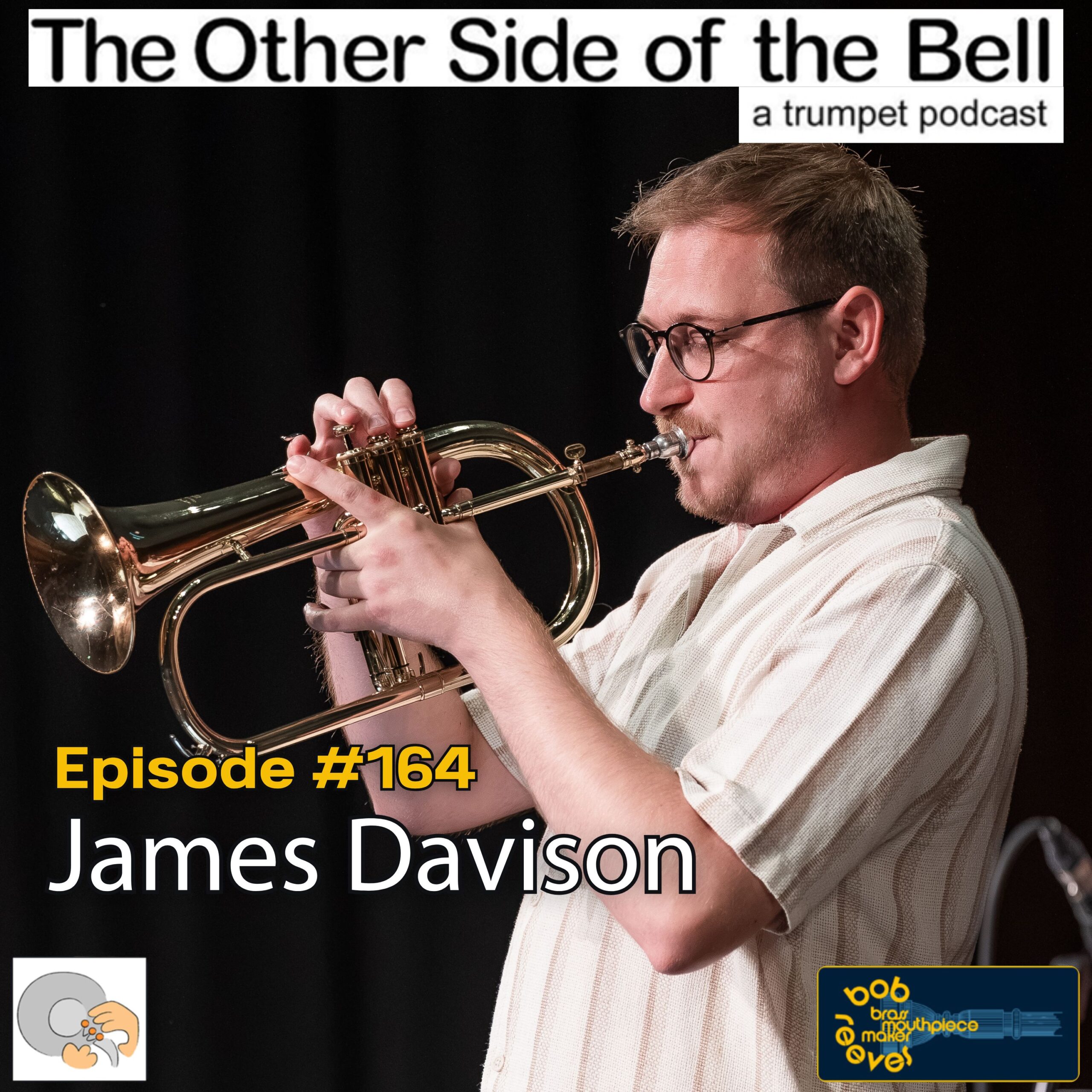
Welcome to the show notes for Episode #164 of The Other Side of the Bell – A Trumpet Podcast. This episode features trumpet performer, band leader and recording artist James Davison.
James Davison had a misconception that trumpeters should only have one mouthpiece, that any professional should be able to do everything with only one, and if you used more you were “cheating.”
It was Chris Deacon in fact who finally asked him one day, in a moment of struggle, “ Why don’t you just try a slightly narrower mouthpiece?”
From there, a whole new world opened up.
Jim was already well on a path to building a career in music, having become enraptured by the trumpet and cornet as a child, playing Dixieland jazz with his father and learning to play by ear, and then studying at the Guildhall School of Music and Drama and the Royal Academy of Music.
But sometimes, we just need a little kick, a new perspective from an outside source, to shift our understanding and mindset.
Since that crossroads, Jim has gone on to become a regular player in the British music scene, from musicals and big bands to studio sessions film soundtracks. Earlier this year, Jim released his long-awaited trumpet & bass collaboration with Misha Mullov-Abbado, “Moon Beans,” a mix of original compositions and collaborative arrangements. And he features on Callum Au’s ambitious new recording of original music, “Sing Seven Seas.”
“If you sing down the horn and you make people smile, and there’s a connection for the audience with your playing, then I think that’s the only thing that really matters.” – James Davison
In fact, Callum Au is also this month’s feature interview on The Trombone Corner podcast, so after you’ve heard Jim’s story, head over to the Corner and hear from Callum as well!
Listen to or download the episode below:


About James Davison
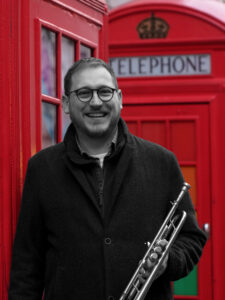
James Davison is a freelance Trumpet and Flugelhorn player in high-demand in London’s Classical and Jazz scenes.
Having graduated from the Guildhall School of Music and Drama (2014) and the Royal Academy of Music (2016), James is often found playing in Big Bands such as the BBC Big Band, Ronnie Scott’s Jazz Orchestra, the Callum Au Big Band, the Kings Place Jazz Orchestra, the Scottish National Jazz Orchestra, the Danish Radio Big Band, Pete Long’s Echoes of Ellington, the Jakob Helling Concert Big Band and the Patchwork Jazz Orchestra.
James also works regularly in London’s iconic recording studios, including Abbey Road, Angel Studios and Air Studios, for Pop, TV and Film sessions.
As well as being a side-man in bands such as the Mark Nightingale & Alan Barnes Sextet and the Misha Mullov-Abbado Group, James is also a bandleader in his own right co-leading groups with both the saxophone and clarinetist Duncan Hemstock, as well as the Grammy-nominated arranger and trombone player Callum Au in their band “Quintet-a-tete”, alongside his own quartet.

James’ classical and orchestral career highlights include performances with the London Symphony Orchestra, the BBC Concert Orchestra, the Royal Philharmonic Orchestra, the Philharmonia, the Halle, English National Opera, John Wilson’s Sinfonia of London and he is also a member of the world renowned brass ensemble London Brass, which he joined in 2024.
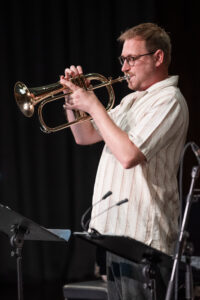
James Davison episode links
- Moon Beans, the album https://mishamullov-abbado.bandcamp.com/album/moon-beans
- Sing Seven Seas, Callum Au https://callumaumusic.com/s7s/
- Swipe Right! from Sing Seven Seas by Callum Au https://www.youtube.com/watch?v=ZycetABQze0
- The London Brass https://www.londonbrass.net/styled/page-5/
- Instagram https://www.instagram.com/jimjimdavison/
Bob Reeves Brass Events & Appearances
- Joy Brass, September 17-24, Tokyo Japan
http://joybrass.com
email to sign up: tp@joybrass.co.jp - Virtuosity Music, October 9-10, Boston, MA
- Greg Black Mouthpieces, November 6-7, Mount Holly, NC
- NCMEA Conference, November 8-9, Winston-Salem, NC
Podcast Credits
- “A Room with a View“ – composed and performed by Howie Shear
- Podcast Host – John Snell
- Photo Credits – Guido Baroncelli & James Davison
- Audio Engineer – Ted Cragg
Transcript
Please note, this transcript is automatically generated. It may contain spelling and other errors. If you would like to assist us in editing or translating this transcript, please let us know at info@bobreeves.com.
[00:00:00]
JAMES DAVISON: I do remember actually some friends of mine would refer to gigs as work.
I’d say, like, um, I’m just going to work. And I though, oh, that’s so stupid. It’s not work. a gig, you know? And then, like, slowly, I, I don’t know, over some years, it changed. And it’s like, it is work. You know, it’s a job this is how we make money, you know, and how we pay the bills and it is a job. I, I feel very blessed and lucky I get to do a lot of different things that they don’t really feel like work to me, to be honest.
JOHN SNELL: Hello, and welcome to The Other Side of the Bell, a podcast dedicated to everything trumpet brought to you by Bob Reeves Brass. We want to inspire you to develop joy and confidence in your trumpet playing. I’m your host, John Snell, and joining me today is trumpeter James Davison.
JOHN SNELL: Well, summer is rolling along here in Southern California. We’re [00:01:00] in, I don’t know, the second or third week of a heat wave. It’s been over 100 degrees, I think every day for the last couple of weeks and there’s, it’s not letting up. Uh, I think we’re supposed to be in the high hundreds, maybe reach 110 this week here at the shop.
So if you call the shop and we sound a little tired or worn out, maybe that’s why. but getting to trumpet. Uh, we got a lot of things coming up. I’m a few weeks away from my trip to Joy Brass. the dates for that are September 17th to the 24th. I will be in Tokyo the entire time. so if you want a valve alignment or a consultation, please call or email joybrass.
We’ll have their website and their information down below in the description. they are in Kamata, uh, over by Hyundai Airport. so one, on the outskirts of Tokyo and, uh, love going there. Can’t wait to see my good friends there. Uh, I know, uh, actually one of my friends, uh, Hikitasan, was on tour of, uh, the US and, uh, playing.
He’s a great jazz trumpet [00:02:00] player, and he visited, uh, the shop last week and got to meet Dan Rosenbaum. Uh, Dan was in the shop, uh, working on a, a new version of his mouthpiece, uh, yet to be released. And so we had a great time, ordered some Thai food, talked shop, talked about the trumpet, tried some mutes.
Uh, we had a great time. But, uh, Hi- Hikey Tassan will be at, uh, Joy Brass. I think I’m aligning one of his cornets this time. So, hope to see you there again. The date for that, September 17th to 24th. the next trip will be Virtuosity Music in Boston. I don’t have the link for that yet. but if you wanna get on the waiting list, uh, feel free to contact, Virtuosity, either through their Facebook or Instagram or give them a call.
they normally have a, a sign up link, so once we get that, we will share that with you all. I always sell out there. Obviously, Boston’s a popular place with all the schools around. Uh, the dates for that again, October 9th and 10th. and then f- following that in November, we will be at Great Black Mouthpieces for the NCMEA Convention, November 6th [00:03:00] through 9th.
we’ll probably have more information on that when I get back from Japan. Just trying to get through the Japanese trip. a lot of great things going on. Uh, got, just got another, uh, I think four or five instruments in on consignment, some box, some New York box, some Mount Vernon box, some early Elkhart box, uh, Vindebona, some 43s, um, some cool medium bores.
So if you’re interested in a cool box Stradivarius horn, check the website. Uh, if I’ve mentioned before, we also have, um, Boyd Hood’s collection that he’s slowly uh, weeding, out some of his horns. Um, so I have some very interesting queen on, F&G horns. I have a cool long bell Getzen D trumpet. So lots of things, as well as mouthpieces, and cool used Mount Vernon and New York mouthpieces, all on the website.
because I’m going to Japan, I will be restocking on some of the Japanese mutes that I haven’t been able to get for the last year for a whole variety of reasons. Uh, so if you’re in the market for a, uh, uh, Yupon or Okura mute, [00:04:00] Okura makes wonderful practice mutes, for trumpet trombone horn, and, uh, Yupon makes a variety of straight, cup and, uh, solo tone mutes for trumpet.
They also have a great practice mute as well, but I, I enjoy using that one. Uh, I will be stocking up whatever I can fit in my suitcases coming home, in just a few weeks. So towards the end of, uh, September, check the website if you’ve been looking for those mutes, because they’ve been out of stock for pretty much a year now at this point.
So, and I’m, only so much I can carry. So, uh, keep an eye out for those. Uh, the olden mutes are running, uh, moving along. We just get a, getting a shipment of Dizzy bot mutes, uh, here in the next few weeks that we’ve been out of stock of, and the Bobby Chu Solois mutes are coming along as well. Hope to have the first batch up on the website, by the end of the year.
So I’ll keep you up to date on that. And of course, mouthpieces. You know, everyone knows us for the mouthpieces, so I, I don’t talk about it much, but, uh, thank you. We’ve got a lot of great new customers who’ve been ordering Reeves mouthpieces. A lot of cool custom, uh, stuff we’ve been [00:05:00] doing. In fact, Brett’s, in the midst of working on a Sterling Silver custom rim, uh, for a client.
So I’m s – whenever we do silver, I always put a video up, so make sure to check out our social media, to watch Brett hand-carving. Uh, now a several hundred dollar piece of silver. So not for the fainthearted. That’s all the news for today. Let’s get right to my interview with James Davison.
[00:06:00]
JOHN SNELL: James Davidson is one of London’s most in-demand trumpet and flugalhorn players, equally at home in jazz, orchestral music, and the recording studio. His credits include the BBC Big Band, Ronnie Scott’s Jazz Orchestra, the Scottish National Jazz Orchestra, the Danish Radio Big Band, London Symphony Orchestra, the Royal Philharmonic Orchestra, and Phil Harmonia.
And in 2024, he joined the renowned brass ensemble London brass. [00:07:00] As a band leader, James recently released Moonbeams, an intimate trumpet and bass duo album with longtime collaborator Misha Mullov-Abado, reflecting a musical partnership spanning nearly two decades. He can also be heard on Callum Au’s ambitious 2026 release, Sing Seven Seas, recorded with an orchestra of more than 80 musicians and featuring many of the leading names in British jazz.
Please welcome to the other side of the bell, James Davison.
JOHN SNELL: I am so honored to have joining me across the pond today, trumpeter James Davison. Jim, how you doing?
JAMES DAVISON: Good, thanks. Good, thanks for having me on.
JOHN SNELL: how’s, uh, it’s, uh, pretty toasty over here in LA. I know Europe has been getting some weather. Are you guys,
uh, sweating over there as well?
JAMES DAVISON: It’s pretty hot. It’s been a bit less hot today, but yeah, it’s, it’s pretty hot. Yeah. We had, we haven’t had rain for, for weeks.
JOHN SNELL: Which is, uh, un- unusual for your neck of the
woods.
JAMES DAVISON: unusual and not so great for the, uh, for the [00:08:00] vegetables growing in the, in the, in my garden.
JOHN SNELL: So just for, for the folks that are watching this on YouTube, like, I’m already, like, sweating up here in the shop. So, you know, we’re, we’re gonna, we’re gonna punch this out. Um, but we’re here to talk about trumpet and I wanna, uh, talk about how you got started. Let’s, let’s start right from the beginning.
you search out the trumpet or did it kind of fall on your lap?
How did that happen?
JAMES DAVISON: so my dad plays a trombone and, uh, I, uh, from a very young age, I’ve, I was listening to him practice in the house, you know, doing warmups and practicing his solos over various different things. And, so it’s kind of in, in my, in my head, I guess, a bit, the, the bra sound. I think when I was younger, I wanted to play the drums for a bit, then I wanted to play the violin for a bit, and my parents kind of, uh, guided me away from, from both of those things.
And it was about, when I was about seven or eight years old, I remember going watching a big band gig that my dad was playing in. And I just saw the trumpets stood at the back. [00:09:00] And, uh, they were stood up and having loads of fun and playing really loud and really high. And I just reme – I, I remember it vividly, actually.
I just remember sitting there thinking, “I wanna do that. You know, that’s, that’s what I wanna do.” And yeah, so I think, yeah, it was about eight. I got a cornet from my primary school. And, uh, yeah, it’s, it went from there, really. I just kind of took to it. And, uh, I was, I, I was obsessed with it, to be honest.
I, I was, as soon as I got it, in the car on the way home, I got it out of the case and started to play it. And my mom was like, “No, you just don’t, you can’t play it while we’re driving, you know.” And,
JOHN SNELL: Like in the car.
JAMES DAVISON: in the car, yeah. Like straight away, you know. And yeah, just before school, after school, just whatever.
I was just, I just couldn’t stop playing. I just absolutely loved it. Yeah.
JOHN SNELL: Wow. So it was an instant, uh, so what, do you know which big band it was at, when you
JAMES DAVISON: It was the 78 RPM big band, a big band based in Cambridgeshire. Yeah. They were great. They were, I, they kind of still exist, but they’re not [00:10:00] really gigging anymore. But they were sort of the soundtrack to my, uh, my childhood, really, along with, you know, lots of other big bands. But yeah, I saw them lots live.
JOHN SNELL: was your father, was he a, consider a professional trombone player or was it something
JAMES DAVISON: No. No, no, no. He’s, he’s not professional, but, uh, but very good. Just very good, uh, amateur and, um, or semi-pro, as he’d say. Yeah, he’s, he’s still about. He still plays. he plays more bass trombone now, actually, in the orchestras in Cambridge. And he’s in a brass ensemble called Prime Brass that’s based in Cambridge.
And in fact, they, they were a massive, inspiration, influence on me as well when I was, uh, growing up around there. But yeah, he still plays. And, my mom plays a saxophone in the clarinet, more the clarinet now, to be honest. And my granddad plays the banjo, and my auntie and uncle are very musical. It’s Chris – it’s quite a musical family, really.
So it’s, maybe it was inevitable. I don’t know.
JOHN SNELL: So Christmas dinners, you have a band together and you
JAMES DAVISON: We do, actually. Yeah, yeah. Yeah, yeah. Christmas, yeah. Me, my dad, and my granddad, we all play [00:11:00] some proud, uh, you know, Christmas tunes. And we, we’ve managed to rope in my, my niece, who’s only seven, to come and play a little bit of, like, tambourine or something, you know?.
JOHN SNELL: passing it on to the next generation. I
love it.
JAMES DAVISON: hopefully, yeah.
JOHN SNELL: so, so did your father help you out, um, to get going or did you get, uh, did you
just learn in school?
JAMES DAVISON: Yeah, he, well, there, yeah, he’s never taught, music or trombones. So I think both my, my mom did, but I think they were both quite keen for me to have a, a separate trumpet teacher, you know, not, not one of them. But no, he, he taught me loads, actually.
We, we would just sort of play together at home. He’d, he’d teach me tunes, like, the Bass and Street Blues, for example, he’d, he’d, you know, a classic call and response kind of tune. So it’s quite good for, for learning. So he’d play the first bit and I’d copy it and then the next bit and I’d copy it.
And, and it’s like, loads of tunes like that. Bass Street Blues, all of me, uh, Ain’t Misbehaving. All those kind of old, more, like, traddy [00:12:00] tunes, Dixieland stuff. He taught me loads and loads of that. but not in a lesson way, just in a, we were just having a play sort of thing, you
JOHN SNELL: Yeah, playing music
together. Uh, so which I, I suppose had to been wonderful for your ear because you’re listening and,
would he give you the music for those or would he
teach you the tunes just playing and you’d have
to mimic?
JAMES DAVISON: Just playing by ear, yeah. And I, I think back now, and I’m so grateful for that actually. And I think that’s a really important thing for young people to do when they’re learning, because I noticed it when I got to music college that quite a few of my friends were amazing pl – like, much better players than me, like, trombone players, tuba players, whatever, French horn.
but they couldn’t play without any music. If there was no music in front of them, they, they would, they’d just freeze up, you know, and I sort of, yeah, I realized, like, learning in that way, not, not being restricted to having the sheet music in front of you was actually really helpful. And it’s been very beneficial, I think, in general.
JOHN SNELL: [00:13:00] Yeah, and it started at eight years old. That’s
JAMES DAVISON: Eight years old, yeah.
JOHN SNELL: and, and I, I mean, when you’re in, in the, the UK, did you grow up, uh, playing in the brass bands as well or was it primarily your school?
JAMES DAVISON: No, yeah, no, I didn’t, I didn’t do the brass mount thing. not growing up. Not like a lot of my friends and colleagues who really did it.That was their whole thing. No, it was more, for me, it was a little bit of school and then it was a lot out of school. So my dad played in some local big bands and this brass ensemble that I already mentioned.
And and also there was some, there was. Well, I, I grew up near Cambridge and there’s some really amazing, youth music stuff in Cambridge. So there was a thing. I don’t know whether it still exists. It probably still does, but there was a program called Holiday Orchestra. And it was every single school holiday.
So every half term and the, like, a week of the, for the half term. and a week. Or maybe it was two weeks in the summer. I can’t remember exactly. I was so young. But, so all of my holidays were taken up doing that. And, I remember it was a Thursday night. We would do [00:14:00] a, me and dad would go to Peterboro and do a big band rehearsal.
the guy who used, who, who ran that band has just turned 100, actually. I saw him recently. He came to a gig of mine. Yeah, he’s, he’s 100 now. Yeah, that was
JOHN SNELL: who is that?
JAMES DAVISON: He’s called Peter Brows.
JOHN SNELL: Peter Brown.
Browse?
JAMES DAVISON: He, I think he was a trombone player, actually, but yeah. Yeah. Peter Brows, yeah.
JOHN SNELL: Wow. Well, shout out to Peter. Amazing. Hundred
years old
JAMES DAVISON: Brows, yeah.
Yeah, uh, the Soak Big Band, it was called. Anyway, yeah, so no, not the Brass Band tradition. It was big bands and brass ensembles for me, really, and orchestras.
JOHN SNELL: Mm-hmm. And, at this point, were you listening to any, you know, jazz artists or was it primarily big band stuff that you were
JAMES DAVISON: Yeah, I, back then I w – I think the first person I really got into was James Morrison. I was really obsessed with James Morrison. He had that album out Scream Machine, you know, that
JOHN SNELL: Yeah. Oh yeah. I know that one.
JAMES DAVISON: Yeah. So I, you know, that, that just seemed, like, totally [00:15:00] beyond, like, it, it was just amazing. It just blew my mind, really, that the trumpet could play like that.
And then the fact that he played trombone and euphonium and every – and all of the instruments as well was, like, really amazing. And We went to see him. He came over to the Wig and Jazz Festival a few times. And my dad took me up there. Bless him. and yeah, we, we saw some masterclasses and it was his classic thing of, like, not having to warm up, just pick the trumpet up straight away and just do something amazing, you know.
So he, he was a big, big influence when I was much younger. Yeah. And then, uh, also Chet Bak – I listed to loads of Chet Baker. Loved Chet’s, like, the, the sound and the melodic, just beautiful melodic playing, you know? I, I just, yeah, I loved that. Quite different. Quite different from James. Um, but to be honest, it was mainly big bands.
It was Bob Florence, um, Count Basie, obviously, in Eddington. But loads of Bob Florence, loads of Terry Gibbs Dream [00:16:00] Bands. the, and the Fat Band, the, Gordon Goodman’s Fat Band. Th- that album came out when I was quite young. So it was just sort of perfect for me, really. The, it’s very inspirational, you know, the, is it Swinging for the Fences, I think it’s called that, that first came out?
With, um, Count Bubba and, and Sing Sang Song and all that, you know? Or Sing Sang Sang, anyway.
JOHN SNELL: sings it, yeah. Don’t worry. It’s, it’s only going out on the internet. They’ll
JAMES DAVISON: Yeah.
JOHN SNELL: I’ll get the angry email.
JAMES DAVISON: Nobody’s heard of the Fat Band though, right? Like, no, no one.
JOHN SNELL: no one. No.
JAMES DAVISON: Yeah, I, I remember going to gigs with my dad actually and we, we’d plan out our dream big bands, like, who would be in our dream big band, you know, whilst listening to Terry Gibbs or whatever. And, uh, yeah, it’s, yeah, it’s great.
JOHN SNELL: that’s, that’s really cool. I, I, you know, I did that kind of thing in college, but the, I think like growing up for me it was like baseball, like
picking up
JAMES DAVISON: Oh, okay.
JOHN SNELL: star baseball team and who’d you want on each. But yeah, doing that for a big band or an orchestra, that would be pretty cool.
JAMES DAVISON: Yeah, yeah, yeah, yeah.
JOHN SNELL: I might do that with [00:17:00] my trumpet section. Uh, that’s, yeah, I like
JAMES DAVISON: Be nerdy, maybe, you know. I was a kid.
JOHN SNELL: yeah. so as you’re developing, did your dad kind of bring you along to gigs and things to start sitting
in or did you really? Yeah,
JAMES DAVISON: yeah, yeah, little pub gigs, and in fact, actually, one of the big bands he played in, I think I was, uh, I think I was 12 or 13, and the band had Don Lusher as a guest, uh, the, the, you know, amazing British trombone player. And I went out, I, I was t – lit – really little boy, you know?
And, uh, I went out the front and did a little solo with him. And I think, unfortunately, at the time, he was, he had Alzheimer’s quite bad. And, uh, I think he sort of didn’t really know where he was and people were having to help him on and off stage. But he played amazingly. It was, it was, it was unbelievable, really.
He was kind of co- cognitively, he wasn’t there so much anymore, but as soon as he played, it was like he was the same as ever. So that, [00:18:00] that, I didn’t really know who he was at the time, really. I, I very much took it for granted. But, yeah, that was all just my dad taking me along to things he was doing.
And, yeah, I’m very grateful for, for that. Yeah.
JOHN SNELL: Well, yeah, what an incredible ex – and it also shows the power of music and, you know, the pathways in the brain that,
you know, music can reach. Yeah. Oh, that, yeah, incredible. so I, I mean, it might be too early to, in your, you know, upbringing to think about this stuff, but I mean, it sounds like you were so obsessed as you said about Cornett and, and Trumpet.
you know, were you thinking about doing this as a career or was it just something that you just, I love this thing, you know, had you ta- taken it to that step yet?
JAMES DAVISON: certainly when I got to, like, secondary school and GCSEs and A levels and yeah, I definitely was thinking I wanna, I wanna go see. Well, I, when I was 13, my trumpet teacher at the time said to my parents, “You should really consider, for James to audition to one of the colleges, the junior departments.
Um, [00:19:00] I don’t know whether you guys have this over in the States, but the Royal College, the Royal Academy, Guild, all these colleges in on Trinity, they all have junior Saturday, Saturday, um, colleges. So kids under 18 can go there on a Saturday, and it’s like a, a sort of, I don’t know, I guess a little stepping stone, little taster for what music college might be like or whatever.
And, uh, so yeah, I, I, I auditioned for the. Well, I auditioned for the Academy Jazz course and never heard back from them, funnily enough. I just literally never heard back from them. But I think it worked out well because I, I then applied to the Royal, Royal College of Music and the junior department and got in.
So I went there every Saturday from when I was 13 all the way up to 18. And from then on, it was like, okay, I wanna do this seriously, I think. Because, some of my best friends today still I met there, actually. And I st- still work with [00:20:00] them, play with them a lot.
it was just amazing. My school wasn’t ama – my secondary school didn’t really have the best music department, to be honest. And when I went there, I remember walking into the main concert hall of the Royal College of Music and the Symphony Orchestra. Bearing in mind, they’re all, like, 18 and younger.
Some of them are, like, 12, 13, 14 year old, years old. They were playing, um, Procofief, Romeo and Juliet, the, you know, the famous bit. And, uh, it was just, I, I couldn’t, I’d never heard anything like it. It was absolutely unbelievable. And they were all, like, my age. And it was like, “Oh my God, this is amazing.” I, and from then on, it was like, right, this is what I’m doing, you know?
And also, when I realized, to get into music college, you only needed to get two E’s. You didn’t need to get straight A’s or anything like that. You just needed to basically pass the audition. I though, great, I’m definitely doing that.
JOHN SNELL: That’s my, that’s my avenue.
JAMES DAVISON: Yeah.
JOHN SNELL: so there wasn’t any other like career splits. You were thinking of
going one direction or the [00:21:00] other. It seemed pretty, you’re dead set at that point.
JAMES DAVISON: I was dead set. Yeah. I, yeah.
JOHN SNELL: and,
and
JAMES DAVISON: not any good at anything else.
JOHN SNELL: And that, you know, sometimes it makes the decision easier, you know.
Um, so you were joining, it was in the Royal College, and this is
like, I always get confused of the Royal Academy and the
JAMES DAVISON: I know, yeah.
JOHN SNELL: you know, so many
Royals out there in the UK. Yeah. where did you end up going for, um, for university then?
JAMES DAVISON: Yeah, so I went to the Guild for my, the Gil Tool School of Music and Drama for my undergrad. And I did the classical course there. So that’s a four-year course. And it was amazing. It was so great. It’s. the thing that Gil Tool has over the other colleges is that they have the acting course and the, we call them techies, but the, the technical theater course, you know, lighting, staging, stage management, blah, blah, blah.
and it also has a, the, the halls of residence is very close to the school itself, which is right next to the Barbican, uh, [00:22:00] in, in, you know, the city of London. the halls are, are, are sort of right around the corner, and there’s this am- amazing courtyard and everyone is in the same halls.
And in the basement of the halls is the bar. And they, they had, certainly when I was in first year, they had loads of gigs going on. And it was just a great place to be, but everyone was there. like, the Royal Academy, the Royal College, all of the halls are split up between different places. They’re not all together.
So as a result, the Guild Tour is just very sociable. And it, when I went to the different open days, I sort of got a real vibe from the Guild Tour, like, “This is fun. This is gonna be a fun place, you know.” And also Phil Cobb had just finished there, was finishing up there. Um, Alex Maynard and Chris Evans.
There was some, like, amazing trumpet players that come through and I just though, right, yeah, I wanna go there. And yeah, I’m really glad I did. And I’m really glad I did the classical course because I learned loads and it, it got my, you know, trumpet playing technique and, facility and all [00:23:00] that. Uh, it really pushed me with that.
but then at the end of it, the, it was always, it was always the talk of people doing post-grads or not. And I sort of though, I don’t really wanna do any more of the classical course. I, was playing in some friends’ jazz bands at the time that were all at the Royal Academy of Music doing the post-grad jazz course, or they had just done the post-grad jazz course.
And so I just though, I, I thought, “I’m gonna go and give that a go. I’ll, I’ll, I’ll audition, see if I get in first.” which I did. so then I went and did, yeah, did the jazz course from the academy straight after the Guild Tool. that was a two-year course. I did six years, in total of music college.
And that felt like too much by the end.
JOHN SNELL: That, that,
that is, especially back to back,
JAMES DAVISON: Yeah, exactly. Yeah.
JOHN SNELL: so, and I’m curious about your decision, and we’ll get to the Royal Academy. uh, I’m curious about your decision to go the classical route for your undergrad.
Were you looking at any jazz programs or
JAMES DAVISON: Not really, no. I, So from, uh, probably from, like, [00:24:00] about six – 15 or 16, I was doing lots of local youth orchestra stuff. This thing I mentioned earlier, holiday orchestra. I mean, that, that was amazing, actually. I think age 11, we d – I was in the orchestra when they did the right spring. And the orchestra was loads of, uh, it was kids, but it was lots of the, the local, peripatetic teachers in, in Cambridge that came and sort of boosted up the orchestra.
So it sounded better than just a load of kids doing it. But nevertheless, I was 11 and I was playing first trumpet in the right spring, you know, and it was like, it was unbelievable and amazing. And my dad was qu – my dad was quite keen for me to do the classical thing, I think. And so I did, I did lots of youth orchestras, different Cambridge and Peterburg Youth Orchestras.
I then went on to the, the National Youth Orchestra, the NYO. I did that my, in my last two years of school, so the sixth form years. And, Jason Evans, who is a principal trumpet in the Philimonia and an [00:25:00] amazing trumpet player over here in London. he was in the same year as me. And he was there. And I was, I, that, that was an amazing.
Uh, and also loads of other, amazing players, by the way. But Jason’s particularly sort of really, um, inspired me and, and it made me wanna try and be an orchestral trumpet player, basically. The, I’d al – I was always doing jazz. I was always playing jazz, but it, it felt like, uh, it felt like this thing that was kinda just a bit of fun.
And the, a proper job would be to get an orch – an orchestral job, you know, and, and do the classical thing. So that’s, that’s why I, I did it. And, and it was good. I, I, I’m glad I did, but as, as soon as I went to the jazz course at the academy, or more, as soon as I started doing some gigs with, uh, the jazz musicians in London, I, I quickly realized that’s for me more than the orchestral thing.
JOHN SNELL: that’s, that’s where your heart is.
It sounds like your heart and soul.
Uh, no pun intended. Um, but the classical side of things seems like it made you the versatile player [00:26:00] that you are today as well,
JAMES DAVISON: It he – it helps a lot. It really helps a lot. Yeah.
JOHN SNELL: Yeah.
it seems silly at this day and age, like, asking those kind of questions as if, like, as you’re growing up as a musician, you have to choose one path or the other. You know, with the music scene the way it is today, you know, it’s like, you’re an orchestra musician or you’re a jazz musician and there’s, like, no crossover, you can’t do both, or you can’t integrate all those skills. And,
you know, some of us end up in completely other careers that, you know, have nothing to do with jazz or,
you
JAMES DAVISON: yeah.
JOHN SNELL: in a symphony. so, uh, you know, we’ll see where ma – music education. I’ll leave that for another podcast.
But, you
JAMES DAVISON: I think that’s it. I remember someone saying to me, actually, at, at some point, you’re gonna have to choose. And, uh, I remember thinking, well, Winton. Winton did ch – well, Winton kinda did choose, right? Because he’s kind of done jazz. But, but he, all of those recordings of him playing the Hyden and, and all the other things, like, it’s, uh, amazing, right?
It’s like, he, he does both. Why can’t I do both?
JOHN SNELL: Yeah. Yeah, [00:27:00] exactly.
JAMES DAVISON: I wish I could do it as well as him, but, you know.
JOHN SNELL: well, yeah. J- j – get in line
with me and everyone else,
right? yes, I’m curious, uh, who did you study with when you were in, Guild Hall?
JAMES DAVISON: The guiltal. Um, so my main teacher was Paul Benniston, who’s the principal trumpet of the LPO, the London Philharmonic Orchestra. I also had Ann McEnany, who’s also in the, uh, LPO. And Steve Keevey was the natural trumpet teacher. I had loads of, loads of teachers actually at Gil Tool. They, they were kind of the, uh.
Oh, and Paul Kosh as well. I don’t think I had any one-to-one lessons with Paul Kosh, but he was sort of, he was like the trumpet, dad of the, of the college. He, he looked after everyone and he took the trumpet, the weekly trumpet classes, which is called Trumpet Club at Gil, which I always found quite funny.
Uh, the T- Tuesday Night Trumpet Club.
JOHN SNELL: The trumpet club.
JAMES DAVISON: yeah. And, uh, so yeah, it sort of them, for the classical side of things to start with. And then I did second study [00:28:00] jazz on a sort of as a little side pathway. And I had Noel Langley and Robbie Robson as my teachers for the jazz thing. But then in my fourth year, Paul Kosh left and three different teachers replaced him.
so all of a sudden there was also in the faculty, uh, Willow Sullivan, Paul Mays, and Chris Deacon. And I think only Will still teaches there, but, but Chris Deacon was particularly helpful for me. He, uh, really sort of changed my, my life, actually. Um,
JOHN SNELL: how
JAMES DAVISON: he – Well, well, I, was getting a bit dishearted and bit, uh, I felt like I wasn’t good enough at the, all the orchestral stuff.
And I saw quite a lot of my lessons were kind of like, “No, that’s wrong. No, you, no, it’s not like that. No, you didn’t. No, not that, not that.” You know? And I just though, ” Oh, God, like, maybe I’m just not very [00:29:00] good.” And then Chris Deakin came along and he quite simply just sort of, like, built me up. He just gave me some encouraging words and he, you know, he said, “That sounds great.”
Or, uh, yeah, you know, well done. It just, it seems, looking back, it seems mad. It’s very basic, really. But he was encouraging. And he also was the first person to suggest that I try a slightly smaller mouthpiece. Here we go. We’re gonna get nerdy now. But the
JOHN SNELL: All right. Well, now we’re getting into my area.
JAMES DAVISON: I don’t know what it’s like over there, but there was, maybe still is, this thing in the UK of, like, apparently Morris Murphy only ever played one mouth.
I don’t know whether this is true or not, but, like, if you can just play one mouthpiece for everything, then, then you’re good. And if, if you have to swap, then you’re, you know, then you’re cheating. Uh, may- maybe this is not what I was told, but it’s certainly what I kind of had in my head anyway, for, for whatever reason.
So I was just struggling away, not really being able to play high. And Chris [00:30:00] Deacon said, “Why don’t you just try a slightly narrower mouthpiece?” And it was, like, just life-changing. All of a sudden, I could play high notes. And then, so then I, I, since then, I’ve actually, I’ve just gone narrower and narrower and narrower.
and could slowly play slightly higher and slightly higher with each, you know, diameter change. And also, Chris gave me my first professional gig. he was meant to be doing off-stage with the LSO for, I can’t remember what the program was now. And he couldn’t do it last minute for some reason.
And knowing that I was at the Guild Tour, literally next door, he said, “Jim, can you do this gig? You need, you need to get tails and, uh, be at the barbacon for whatever, you know? And so I, I, um, I went and spent 150 quid or something on a pair of tails, which, which seemed like really loads of money at the time.
And then went to do this rehearsal and, and then the concert and found out actually we didn’t need the tails because offstage was offstage, not slightly onstage. [00:31:00] Uh, and then by the time I got to wear those tails again, they didn’t fit me. So
JOHN SNELL: Oh, no.
I was gonna say, at least you have, you’re prepared for the
JAMES DAVISON: Yeah, no, I don’t have them anymore.
JOHN SNELL: Uh, well, what, I mean, what a, what an influence, especially at a relatively young age, you know. You said that was your fourth year at,
JAMES DAVISON: That was in my fourth year. Yeah. Yeah.
JOHN SNELL: So, I mean, yeah, and at a turning point where you’re considering what to do, you know, come graduation in a few months or less than a year.
really amazing. It’s what a little encouragement can do, right?
You
JAMES DAVISON: Right? Yeah. I, I really, don’t teach very much, but I’ve done a little bit of teaching recently and I’m, I’m really trying to do that. Be, be encouraging, because I just think it’s, like, it’s. Uh, maybe everyone’s different, right? Like, maybe I need the ego boost more than others, but it, but having encouragement really made a difference for me, you know?
So – Yeah.
JOHN SNELL: I mean, we all need a swift kick to the behind every now and then when we’re not doing
our stuff, but yeah, I agree. Like [00:32:00] we need to, need to feel good about ourselves moving
forward and encouragement. so now we, you, you, uh, you realize that maybe orchestral stuff isn’t where your, your heart and soul is. what was the decision to go to the Royal Academy and why jazz?
JAMES DAVISON: Yeah, I mean, I, I just, I remember turning up for lessons and, and playing orchestral upsets and, and whoever it was teaching me was saying it, “Have you, have you listened to this?” You know, “Have, have you actually listened to it?” ‘Cause it was clearly obvious that I hadn’t, right? The way I was playing it, whatever.
And no, no, I haven’t listened to it. And, okay, you need to go and listen. I said, “Okay, right. Go away. Listen to this symphony.” And I’d just get bored. I just would switch off and find myself putting on, you know, the, the Terry Gibbs dream band or, or the Basie band. And I ju – I sort of, it, I was, my heart was never in it.
It, it, and still now, I, I love going to see my friends in different orchestral concerts. And, and it’s fun because I, I know some of the players now and it’s [00:33:00] fun to see them. But if I’m honest, it doesn’t excite me and it doesn’t keep my attention as much as, a small band or a big band or or jazz, basically.
So, I, I guess I just realized that and, and doing the course at the academy really hit that home. And I was, I was super lucky that when I was there, the, the trumpet section in the big band was Louis, Louis Dowswell, James Coppas, myself. And at, at the time, uh, at the start, there was a, a, a young guy, he was only in first year at the time, uh, called Jake Labatsy, who was unbelievable, like, uh, ridiculously good.
And I don’t think he plays anymore, unfortunately. But, in the second year of my post-grads, Tom Gardner joined, Simon Gardner’s son. And so that was the trumpet section when I was there, you know, in the, in the big band. So it was just, it was, it was amazing. I just learned so much fro- from them, you know, as well as all the different teachers.
And I, I was getting lessons with, like, not just trumpet players, [00:34:00] but, uh, Gareth LeCrane, Flute, and Ian Balames, tennis sax player, and, uh, just loads of different amazing jazz musicians, basically. And it was just very, very, I just fell in love with it. I just though, yeah, this, this is it. I’m doing this, you know?
JOHN SNELL: What fun? What a section.
JAMES DAVISON: Yeah, right?
JOHN SNELL: what a
JAMES DAVISON: doing it, we had a lesson, a sort of joint lesson with Simon Gardner, uh, that went on for about four hours. And it was, yeah, Louis, Kopus, me, Tom. Uh, to start with, I think Cy, Tom wasn’t there to start with, so Cy was playing in the section and we just, all four of us, Cy put on, uh, just a metronome through the speakers and he brought along a load of big band charts.
And we just played, we took turns playing each part. So we’d play a chart, play it with a, with a click on, you know, on two and four. and then swap round, next chart, we all s – go along a seat. So we all got to play league, we all got to play second week, you know, and we just did that for hours and hours and hours.
And it was amazing. It was
JOHN SNELL: Wow. What an experience.
Did you record those? I mean, I’d love to hear [00:35:00]
JAMES DAVISON: I know, yeah, that would’ve been good. No, this is before Louie was, uh, s – you know, a- as much, uh, I’m sure now he, Louie would’ve been recording for
JOHN SNELL: He would have had, yeah, he, it would have been up on YouTube and, uh, Instagram. Uh, but yeah, I know, I talk about, you know, starting relationships with your colleagues. Uh, I mean, I assume you guys play with each other now all the time on different projects and
things. in fact, uh, I probably, well, depending on the timing, probably, a lot of you guys were already starting to work in London at this point.
Is that correct?
JAMES DAVISON: yeah, they were doing a bit more than me. And, I just missed, uh, Tom Walsh at the academy because he, he’s a year older. So by the time I started my postgrad, he’d already left. But, um, yeah, c- certainly them guys were doing lots of stuff and, but it, but it was, I think it was because of being at the academy that I met people like Tom, for example, or, uh, George Hogg, also an incredible trumpet player over here.
and other guys [00:36:00] that were mo – ve- very much more like jazz players, lead players, whatever. And because before, I, I remember when I was at the Guild Tour being on the classical course, if ever I met any of these people, I was like, th- they saw me as a classical player. And it was kinda like, uh, you know, he’s just a classical guy.
And as soon as I was at the academy, everyone’s opinion changed with me and they were all calling me, you know, it was funny noticing that difference actually. It was,
yeah.
JOHN SNELL: Yeah, that’s, that’s, that’s one of those narratives that maybe one episode at a time we can start changing you
know, labeling, labeling who we are. We’re, we’re artists, you know, we’re musicians and we’re not one style. We’re not one idiom, you know?
JAMES DAVISON: Big time. Yeah, I think there should be more crossover in the, generally at the, the colleges, you know, it’s, it’s, it’s mad that there’s not really, but yeah. whatever. So, and I’m, I’m curious where you’re solo playing, what direction it went, like who your influences were in terms of your own individual soloing.
Yeah, okay. Well, I mean, there was a, [00:37:00] a qu – a sort of clear shift for me. And I, I, I was listening to lots of Freddy Hubbard and Clifford Brown and, uh, Winton, loads of Winton obsessed with Winton, like, m- mainly because he’d come from the classical thing and then he was doing all the jazz stuff. And, like, I just love his playing.
Like, just, actually, I remember, um, when I was still at the Guild Tour, we did a, I, I pl – I played in the big band a little bit at Guild, even though I was on the classical course, uh, because they needed extra players or whatever. And there was a, there was a project that we did, Winton came along, basically.
Winton was in town because he was playing with the Lincoln Center at the Barbican. And he came to the gig and, and that was amazing for all of us, you know. And then after the gig, we all went to Ronnie, uh, to Ronnie Scott’s. Uh, back then there were, every Monday and Tuesday night, it was the late, late set.
There was a gig and then there was a jam session afterwards and everyone went all the time. Unfortunately, it’s changed and they don’t have that anymore. But anyway, [00:38:00] that’s a conversation for another time. But this particular night, we’re all going to the jam session and we heard Winton’s coming to the jam session and it was like, “Oh my God.”
And the guy hosting the session was a sax player, and he was playing loads of notes and it was all very, like, you know, hard, like, jazz, like, and Winton turned up and a- after a little while of him being there, the, the host invited Winton up, and Winton just went and played all of me, like, really, uh, medium tempo, just, and played sup – Anyway, I just love that.
I just love that it’s not, like all the time, you know? It’s just, it’s music, and it’s melody, and yeah, so anyway, obsessed with Winton. But then someone told me about Clark Terry, and I’d never heard of Clark Terry. I’d never heard any of his playing. I, I, I just, I, I didn’t know who he was. And I heard some Clark Terry, Bob Brookmeyer, quintet recordings.
I, I can’t, [00:39:00] I don’t know what it was, but ma- maybe Tata Tat or, um, Straight Note Chaser or something. And it just blew my mind. it’s never been the same since, since I first heard Clark Terry do all that incredible sort of technical, like, agile, amazing trumpet playing with it, and clearly, like, an amazing technique.
Like, he can play high, he c – he sounds amazing. He’s all o – like, it, I just was like, “I have to do this now.” And I just got completely obsessed with Clark. And, and he’s all I listened to for, like, maybe three years. I only listened to Clark Terry. Sounds, sounds crazy, isn’t it? But, I just tried really hard to try and play a bit like him, you know, just try to do what he could do.
and it was around this kind of the time I, then left the academy, and at gigs, I would put in a few little Clark Terry licks. And Pete Long, who’s [00:40:00] a, uh, an incredible, incredible band leader and saxophone clari – all of the Woodwinds, play. He, he runs the Ronnie Scott’s big bands over here in London.
I was on a gig with him, and he, he sort of heard me do a, I don’t know, like, a you know, little Clark Terry thing. And he was like, “Oh, Clark Terry.” And he was running a, a Ellington band at the time. So then got me to go and do that Ellington band. And it was sort of an excuse for me to be Clark Terry, basically.
He was like, “I want you to, like, this, this tune is, like, a feature that Clark did. Play like Clark Terry.” And all through college, there’s the thing of, like, you know, d- don’t copy other people. You gotta find your own voice. Like, don’t, don’t just be a mimic or whatever. And that’s, uh, of course, yeah, sure. But this was a really cool opportunity for me to forget about all of that and actually just try and play, like, Clark Terry.
And Louie was in the same band doing the Kat Anderson thing. He was, like, the [00:41:00] perfect Cat Anderson, you know? Uh, and, uh, yeah, and, and a, a guy called Colin Skinner, who lives over here, does an amazing Johnny Hodges kind of impersonation, I guess.
JOHN SNELL: What fun.
What.
JAMES DAVISON: Clark Terry and Freddy Hubbard and Winton, I think, are the, my main, the, the people I always come back to and listen to the most and try to play a bit like, basically.
JOHN SNELL: Yeah. Wow. And, but it goes to show like following your passion. Uh, I mean, obviously there’s some serendipity involved and some chants, but the fact that you were so obsessed with Clark and
we’re trying to integrate that into your plane led to an opportunity, which then I’m sure led to other opportunities down the road, you know?
JAMES DAVISON: It did, it did. I mean, yeah, literally, in Pete’s band, Callum Al, Calum Al was, uh, it has been in it for ages. He was in it. I, I didn’t know Callum. I, we, didn’t cross over with Nigel. Uh, do you know Nijo? Have we, have you heard of Nigel? It’s the, it’s the National Youth Jazz Orchestra. It’s a massive thing
in.
JOHN SNELL: Yeah, yeah, yeah.
Yeah.
we talked [00:42:00] about it.
It’s
JAMES DAVISON: of the players did it. Or e- everyone came through it. You know, the, the, the sad thing now is that it’s, it’s changed quite a lot, and there’s not. They’ve got rid of the weekly big band rehearsal, which is what everyone used to do, and kind of made us all good at sight reading and big bat playing.
They don’t do it anymore, which is a crime, if, if, if you ask me. But anyway, I didn’t know Callum before doing Pete Long’s band. And he just came up to me one day, and just said, “We should do a Clark Terry Bob Brickmeyer thing.” and, and, and so we did. And, and, and we do that loads now.
And we’ve written loads of music together, actually, in, in that style. And, and, I’ve done Callum’s band since. And yeah, it’s very much one thing led to another kind of thing, you know?
JOHN SNELL: Incredible.
JAMES DAVISON: thanks thanks to Clark Perry.
JOHN SNELL: Yeah. And, and a great outlet for your passion for, for Clark, you know, to be able to, you know, to not recreate that album and, or that duo, but, you know, have your own and be able to do
your own
things. Uh, it’s very inspiring.
JAMES DAVISON: before I knew about [00:43:00] Clark, I was really into, like, the, the older thing, Louis Armstrong and, uh, some of the British guys that had that kind of trad revival, like, Alex Welsh and, um, uh, yeah, particularly Alex Welsh, actually. And, there’s a really cool scene in London of that earlier jazz thing.
And there’s a saxophone player called You and Bleach. Well, I mean, he plays saxophone clari – all of the saxophones, all the clarinets. He, he plays piano. He can, he can play clarinet and piano at the same time. He plays two clarinets and pianos. It, it’s like, he’s a f – he’s amazing. But, um, he had this really cool weekly gig in Lime House, at a place called the Jamboree, which is now moved.
But it was a really cool underground sort of, like, real vibe-y place. And I, I was doing quite a lot of those gigs, trying to do the Louis Armstrong thing. And that was maybe still when I was at Gilto, actually, my doing classical stuff in the day. And then at night, I’d go and try and play that Louis- Louis Armstrong and, you know, that, that kind of vibe.
And then I heard Clark, [00:44:00] and then that’s when everything changed. And I, and I’ve sort of since. I’d love to do more of the early stuff now, because I used to do it so much and it’s, it’s sort of changed for me now. I don’t seem to do so much of that anymore. but yeah, they’re all great.
JOHN SNELL: yeah, and that, skillset is still in your bag of tricks, right? So, you know, you
JAMES DAVISON: I hope so, yeah.
JOHN SNELL: I hope so. Maybe, uh, bone up a little bit on the, on the Louis Armstrong. I’m curious about, it already sounds like you’re starting to work, getting, freelancing and stuff. What did that transition from getting your, uh, your degree from Royal Academy to. Hey, I’m actually a professional musician now. what did that transition look like? ‘Cause it, you know, everyone’s script is different, right?
JAMES DAVISON: Yeah. Oh, God. And, it all just sort of started happening. I just started doing more and more things. And, I do remember actually some friends of mine would refer to gigs as work.
I’d say, like, um, I’m just going to work. And I though, oh, that’s so, that’s so stupid. It’s not work. a gig, you [00:45:00] know? And then, like, slowly, I, I don’t know, over some years, all of a sudden, it’s, it changed. And it’s like, uh, it is work. You know, it’s, it’s a job we, this is how we make money, you know, and how we pay the bills and whatever.
And it’s like, yeah, it’s, it is a job. yeah, I don’t know. It did sort of happen, really. But I, I feel lucky that I, I have quite a, a varied musical career, I guess. I’m, I’m doing lots of different things. So a lot of things I do. Like, uh, two days ago, I did a, a gig in a pub w – and it’s probably 40 people there, 30 people, 40 people.
it was, uh, fantastic drummer, Matt Skelton, who’s over here at his quintet doing all the Shelly Mann, uh, music. And it was, yeah, just, like, hardly anyone there, but it was amazing. It was just, it was so good. It was so much fun. And it was, uh, everyone was so relaxed and great. And that’s not work.
You know, we got paid, but [00:46:00] it was just a really fun gig. And I, I feel very blessed and lucky I get to do a lot of different things that, that they don’t really feel like work to me, to be honest. So, sorry, that doesn’t really answer your question, does it?
JOHN SNELL: it does, it does. So I mean I got the sense that it wasn’t, you know, you didn’t graduate and then, you know, people are knocking down your door with high paying gigs. It was a, it was a grind.
JAMES DAVISON: No, no, no, no. Gradual thing. Yeah. Very much a gradual thing. And, yeah, and like you said before, one thing leads to another and all of a sudden you’re doing that and you’re doing that. And I, I guess maybe I re – I remember starting to dap on the west ends, for the musicals, you know, for shows there. And that felt a bit like, “Oh, okay.
I’m, I’ve, I’ve, I’m one of these guys now.” I, I’m not sure if I maybe f – would’ve felt like a professional, but it, it definitely felt like a step up doing those gigs,
JOHN SNELL: And then eventually you started holding a seat in on the shows, right?
JAMES DAVISON: Yeah, I’ve, well, yeah, I mean, not loads, to be honest, but yeah, I’ had a couple, I was, I was really lucky. A couple years ago, I did a show, uh, Kiss [00:47:00] Me Kate at the Barbican. And the other trumpet player was John Barkley, who has been a hero of mine ever since I first heard Land of Brass, basically. And, and so that was really amazing to sit next to him every day and hang out with him, you know?
And, yeah, he was great. But by the end of that run of the sh. It was only a short run. It was like a three-month run of a show. And just near the end, I got tonsillitis and the, and the infection moved from my throat into my ear. And I ended up getting a burst eardrum. And I had, so I was, yeah, I, I couldn’t do the end of the show and I, I couldn’t play for three months.
I was off for three months. And John, bless him, he rang me almost every day just to check, check up on me, just see if I was all right. And yeah, we, we sort of, like, we, yeah, we became quite close over that sort of time. And it was, it, that was just amazing for me because was like a hero, you know? And all the stories of him years and years and years playing with Derek Watkins and all the, all the stuff he did, all the films he was on and [00:48:00] the tours and the, you know, it was so cool to, to do that with him.
JOHN SNELL: amazing musicians that do those and it is,
it is stable. The, the
JAMES DAVISON: That’s it. It’s paid really well. Yeah.
JOHN SNELL: uh, but so outside of the shows, I mean, you do a fair amount of studio work, you have your own groups. I mean, what is your, what does your week look like? Is every week different depending on…
JAMES DAVISON: Yeah, every, every week is different. Yeah, yeah. some weeks there’s not loads going on and then I’m, oh, it’s a bit worrying. You know, January is often a bit like that. January’s always like that, actually.
JOHN SNELL: Yeah.
JAMES DAVISON: but, even though everyone’s talking about how there’s no work and there’s no gigs and whatever, it, I mean, there’s a fair amount of big band gigs going around.
I, I, most of my gigs probably are big band gigs, actually. And then, yeah, I play in a handful of different, small bands. So, yeah. Scattered in with, with the small band gigs and studio stuff and a few show deps and, some orchestral stuff. I st – I still do some orchestral things. I’m actually going on tour, um, with the LSOd.
I’m doing a bit of, uh, off-stage [00:49:00] trumpet in Marla two.
JOHN SNELL: Do you need tales?.
JAMES DAVISON: I hope not.
JOHN SNELL: Find out. Find
out first before you go buy a pair.
JAMES DAVISON: No, luckily, they’ve changed
JOHN SNELL: a s.
JAMES DAVISON: their costume. But no, it’s, yeah, that’s, that’s gonna be fun. It’s a little, uh, bit of Slovenia at the beginning of September and then, uh, Japan at the end of September, which will be really great.
But, uh, yeah, a little bit of orchestral stuff. And, but also, I, I’m in London Brass now. I, I mentioned it earlier, you know, hearing them and, uh, being really obsessed with the brass ensemble playing in general. The London brass, German brass, uh, Canadian brass. Menozle brass, of course. I, I really, really, uh, still just think they’re absolutely incredible.
so, yeah, and, and now, now I, I sort of took over from John, basically, in, in, uh, London Brass. And we, we’ve just been to Germany, just literally a couple of days ago. And there’s a, a big London [00:50:00] gig in October, the 16th of October at King’s Place in London. There’s a wi – the group is 40 years old this year, so it’s the 40th anniversary concert, yeah, for London Brass.
And, and the group have commissioned Vince Mendoza to write a piece, actually. as well as a, a, uh, uh, an amazing composer who’s f- from the UK called Danny Howard. She’s, she’s writing a piece for us as well. And, uh, so that’s gonna be really fun. And that’s what keeps my classical chops in anyway.
The, the, the London brass gigs. I, I have to practice for that.
JOHN SNELL: keeps everything going.
Uh, I love it. Well, and that, that makes me feel really old because I, I remember when my dad got the first London Brass album and
I was in elementary school and it’s like, yeah, that was 40 years
ago.
JAMES DAVISON: yeah, yeah, yeah. And of course, before that, it was Philip Jones, you know, the
JOHN SNELL: yeah. Oh, yeah.
JAMES DAVISON: Phillip Jones, it, it became London Brass, you know? It’s like, so the, the, the history is, is rich,
JOHN SNELL: Yeah. Uh, uh, Phillip Jones, uh, I have, I have some great Phillip Jones stories because he and my dad were kind of pen pals [00:51:00] and, uh,
through the years. Yeah.
Um, so yeah, I grew up listening to Phillip Jones and then later, yeah, London Brass and
German brass and, but, uh, that’s, cool that they’re still going on and you get to be a part of it.
I’ll, I’ll see if I get over and hear a concert one of these days.
JAMES DAVISON: Yeah, I do. Yeah, yeah. You’re probably more likely to find us in Germany or, or somewhere, not London, actually, to be honest, but.
JOHN SNELL: that’s fine. Anywhere that’s not LA, I’m happy to go to. the food and the beer are better, uh, or the, uh, the drinks. Uh, we’ll keep it, uh, uh, you know, all ages. Um, I do wanna talk about, because, uh, you’d mentioned Calum Au earlier and, um, quick shout out.
Uh, we just interviewed Callum on the Trombone Corner. So all you trumpet players listening, you might wanna jump ship and listen to the Trombone Corner because that’s a fabulous interview that’ll be posted, sometime this, August. you were on his, uh, most recent, uh, uh, album,
uh, Sing Seven Seas, if I got that right.
JAMES DAVISON: Sing Seven Seas. Yeah, I think so.
JOHN SNELL: I’ve, all I’ve been just thinking about this whole time was Sing, Sang, Sung from Gordon
JAMES DAVISON: Yeah. [00:52:00]
JOHN SNELL: It’s my, my brain’s like, “Okay, come on, get this right.” tell us about, recording that. And, uh, I mean, that was, like, as far as big band stuff, like, you guys went
viral with your little, you know, Instagram and TikTok videos of your sectionals, solies and things.
Like,
really amazing. So talk to us about that. Tell us about the album and the recording process and all that.
JAMES DAVISON: Yeah, that, it was an amazing week. He, he actually well, we recorded four albums in one week, in, in seven days. there was two of Callum’s that w- which is the, the Sing Seven Seas thing. It’s, it’s a, a two-part
JOHN SNELL: It’s a double album,
JAMES DAVISON: The, the first part’s out already and the, second part’s coming out. I don’t know when, actually, but, and then there was another album for a singer that.
Callum had done all the arrangements. And then, uh, and maybe the first day or the second day was, uh, Ian McKenzie’s, uh, big band album. He’s a singer based in London who’s amazing. He’s great. Fantastic singer. And again, Callum had done all the arrangements. So it was, so Callum [00:53:00] led the whole, e- every day, and it was all of his charts.
But the first two, there was these different singers, and then the, the rest of the time, it was for his stuff. And it was amazing. It, it was, it was sort of, it was mental, to be honest. It was like, I, I, I did, I did six of the seven days. the, the seventh day was just Woodwinds, I think. And, uh, maybe there was a strings day as well.
But, so I, I, I did all of the days, basically, of the big band. And there was different sections, different people coming in and out. everyone was amazing. And it was all these great charts that Callum’s written. And it was, it was great to see Callum in that environment, actually, because he, I think he’s, he was in his element, uh,
JOHN SNELL: Mm-hmm.
JAMES DAVISON: leading it and just knowing.
I remember one, of the Barry Sax players, Gemma Moore, she was, um, she had a question at, at one point, like, “Oh, Callum, Bar 66. Is, should it be a B flat or a B natural?” And, and Callum, sitting on Lead Trombone, like, playing Lee Trombone, said, “Yeah, [00:54:00] yeah, uh, it’s a B flat.” Like, he didn’t e – he didn’t need to get his score out.
He just knew, like, “What?” But also, he was doing less of conducting, and he was, he was just leading everything. And, and it was really inspiring, actually, to see him in that, in, in, in his element in that way. It was great. It was all really slick. We didn’t do anything anymore than we needed to.
And I think that made us all have to up our game a bit because it was like, we don’t have days and days and days to do this. We don’t have unlimited takes. We need to get this done. some of the music’s really hard. And, uh, I think everyone just rose to the occasion because, you know, it’s that thing of when you play with kids or amateurs, you sort of start playing really badly again.
And, and, and the opposite applies. You know, when everyone is better than you, you just play better. you just play your best when everyone else is incredible. So it was very much a case of that, and it was a really fun week. I’ve only just started seeing some of the thing that [00:55:00] his, um, the jazz AI, he, that, that he put an animation to.
We, uh, we didn’t realize. He, he sort of half mentioned that there’ll be an animation, but we didn’t know anything about that. And, um, I f – I watched it the other day and found it quite funny that for anyone that hasn’t seen it, it’s, it’s, uh, the story of the Sourcers Apprentice that kind of put to a big band and it’s all about.
I, I won’t go into it too much, but
JOHN SNELL: Yeah. Well, we’ll wait, we’ll, we’ll link to it so folks can, uh,
JAMES DAVISON: yeah.
But there are three cha – main characters in the story, and those characters are played by the trombone, the s – tennis saxophone, and the flugal. And I played the flugal part. And the, the sort of narrative of the story is how the trumpet player is, is not very good.
And he’s, like, hasn’t got the, the horn out of the case for, for years. And it’s like, I didn’t know that at the time. So when we’re doing a take, I’m like, I’m trying to play my best stuff, you know? And, and then I listen to it, watch the thing back and listen to [00:56:00] it back and it’s like I play something.
And then the, the narration’s like, “Yeah, as you can tell, he’s not very good.” Like, “Oh, no.”
JOHN SNELL: So, so you had no idea? He didn’t tell you that’s what he
was.
JAMES DAVISON: sort of said at one point, he said, like, don’t play too good, like, play quite badly. But obviously, like, you know, we’re, I’m, I don’t wanna sound bad on the album, so I was trying to play my best. I wonder whether, had he really explained, I, I could have played really badly on purpose and maybe it would’ve worked a bit better, but then people listening to it would’ve just thought, “What?
What’s this?” You know, like I don’t know. It works with the visuals. I don’t know. Maybe it’s something Callum can explore in the future. If he’s gonna go down that avenue of putting animation to his big bad music, then maybe, you know, we can explore with playing badly or whatever on
JOHN SNELL: one step
at a time. Well, I mean, that’s, you know, all of the cartoons and animated films, uh, that were recorded out here in LA, I mean, that was, the studio players were great at doing those, like, the sound effects and sounding
like a, you know, [00:57:00] elementary band or, you know, yeah. It was a whole skill in and of itself.
JAMES DAVISON: Absolutely. And I think that would be really fun. I, I, I kind of wish he’d said that more, because that could’ve been really fun to really lean into that, like, you know. But yeah, anyway. It was, it was a great week. It was a great week.
JOHN SNELL: yeah. We’ll have the link so folks can check that out as well as for the album. Um, I do have to know though, because I’ve seen those, like, the solely sections of, I forgot what tunes, where, um, he posted, you know, like, the trombone section or the interplay of the trumpets and the,
like, did you guys get those parts in advance?
JAMES DAVISON: no.
No, No, we were reading it on the day. Yeah. I remember that.
JOHN SNELL: holy cow.
JAMES DAVISON: Well, you know, this goes back to the Nigel thing. I was, there’s a real sort of tradition in London of, like, people being really good at sight reading. And it’s because of Nigel, because the way that that band worked, even when I was in it, but very much before I was in it, when Bill Ashton was running the band, it was, he would apparently just call tunes on gigs and most of the band would sight read.
And that [00:58:00] became normal. The pad was hu – it was massive, you know, there’s hundreds of charts in the pads, and each gig you’d play different things. And even when I was in the band, that was, the tradition was still there. It was like, on a gig, you might be sight reading a chart. And it’s a gig, so you need to get it right.
And the more you do that, the better you get at it, right? It’s just, it’s, you know, it’s kind of as simple as that. And I think there’s more of a tradition in Europe and maybe in the States, I don’t know, of, of spending, like, a, a week rehearsal for one gig at, at the end of that week. And, and we don’t do it like that.
And in fact, I, A friend of mine is, the lead trumpet player in the Danish radio big band. He’s called Dave Rules.
JOHN SNELL: Mm-hmm. Oh yeah, Dave. Yeah, yeah.
JAMES DAVISON: Yeah, Dave, you should get him on this. Yeah, he’s, uh, he’s great. And, uh, they didn’t have a second trumpet at the time, so he was getting some of his mates around Europe to go and fill in, basically, like a f – project at a time.
So I did a couple of those. And I remember d – these, this Tuesday to Saturday, maybe, 10 till two every day. And then the concert, the one concert was at the end of the week. [00:59:00] And first rehearsal, I played really well. And then every rehearsal, I got worse and worse and worse.
And come to the concert, I was making all these stupid mistakes because we’re just not used to that over here. We’re used to just doing it, just seeing the, seeing the music and, and playing it. Callum’s week wouldn’t have worked without players that are used to that kind of thing because it was, it was intense That, that solid, I think it is the Jazz AI at the end. He’s just put a thing up recently online, actually. You can play along with it. I remember seeing it, you know, just before we were doing the take, we were all sort of practicing it a bit, because we’re like, “Oh my God. Oh, this looks really hard,” you know?
to be fair, it took a few takes. We didn’t all nail it straight away, like, far from it, you know? But, by the fourth, fifth take, pretty much, it was done. You know, it’s, it is very impressive how good. I mean, Tom Walsh, uh, uh, bring up Tom again. He, he was playing lead, for most of that week.
And, uh, he’s my favorite. He’s, he’s an amazing lead trumpet player. Juul trumpet musician, really, but specifically trumpet. [01:00:00] I remember he actually did just play it right first time. But he, he just nailed it. It was
unbelievable. Yes. It’s crazy.
JOHN SNELL: speaking of folks, I need to get on here. uh, need to get, uh, need to get Tom on here.
Uh, long overdue. I, you have your own album out. you released
a duo album, uh, Moon Beans with
JAMES DAVISON: Moon beams. Everyone pr – says moon beams because, you know, polka dots are moon beams and it would make my. Yeah, I, I don’t know why we called it that
JOHN SNELL: I love it though. I love it. It’s quirky.
so tell us about that. It was, uh, it was your good friend Misha, right?
JAMES DAVISON: Yeah. My good friend, my dear friend, Misha, yeah, he’s, uh, uh, Inspirational musician first met him at the Junior World College of Music, uh, when I was 13 and he was 14 or 15.
And he was playing French Horn. He was a French horn player then. He, not a bass player. He, he wasn’t playing the bass at all. He also was a very accomplished piano player. I remember doing the Hyden trumpet, n- not the whole concerto, but one of the movements, in a recital And he [01:01:00] accompanied me on piano. And, uh, yeah, known him, known him for years. he went to Cambridge University to study music. And then while he was there, I think this is right. While he was there, he started playing the electric bass. And then he auditioned.
He was one of the people that, what I said earlier, friends of mine were doing the post-grad at the academy on the jazz course. He was one of those people. He auditioned on electric bass having never played double bass before and got in because they could see his potential and learned double bass whilst at the Academy.
Uh, it’s, it’s ridiculous, really, and amazing. And yeah, he, he’s a, he’s a, he’s a talent. but yeah, we lived together a few years ago in his house in Brixton. And it, I, I heard the album, think it’s called I Concentrate on You, and it’s Lee Konit and Red Mitchell. Uh, so Saxon Bass duo album.
And, uh, I loved it. I just, I still love it. It’s, it’s so good. And, uh, around that kind of time of listening to [01:02:00] that a lot, I saw that Thomas Ganch was doing a duo with the bass pla – I think he’s a bass player from the Vienna Phil. And I thought that was really cool. And I though, “Oh, we should do this, Mitch, you know, we sh-” and we were living together, like I said.
So, just for fun, we were playing duo. Didn’t do any gigs. We were just playing for fun. And then a, a gig came about, I can’t remember how or why, but there was a gig. All of a sudden, we had a gig. So we were like, “Oh, okay. We need to work out what we’re gonna play.” Came up with a few arrangements.
And, and then, oh yeah, that was it. Then he, um, he was the BBC Radio three young generation artist at the time, which was, is like a, uh, basically what it meant for him was that he could, he had a certain amount of, recording opportunities at Made Avail Studios, and he could just do what he wanted, basically.
I think he had maybe five over the year or something like that. And for the first one, he was like, “Why don’t we do Duo?” So we went to Made Avail, and we played, like, [01:03:00] three or four Duo things, and they put it out on the radio. And, and that was it, really. And didn’t think much more about it. And then a couple of more gigs came along and then, and then we just thought, “We should record this.
You know, we should, we should do it.” And, uh, and yeah, we did. We, we made the album and, just to have something to put out there, really. And, uh, certainly, it certainly wasn’t a money-making venture. Let’s put it that way.
JOHN SNELL: Oh, what did they say? Uh, I think it was Wayne Bergeron who said, uh, yeah, the albums now are the modern day business card, right? You
JAMES DAVISON: Yeah. Yeah. There you go. Yeah, yeah, exactly. Yeah.
he has his own band and has a few albums out under his name, of, of which I’m in. And, and, and there’s a couple of other albums that I’ve been on as a side man, you know, and this was the first thing for me to, that I could put out there that’s, like, my own, my own thing.
You know, it’s, it’s pretty exposed, it just being trumpet and bass. So it’s, it’s been nice for me to be able to be like, you know, this, this is, this is how I was playing then. And it’s a documentation of that. [01:04:00] And, and, uh, yeah. Yeah.
JOHN SNELL: and it’s now, now getting to know you after listening to it, you know, I can hear the 8-year-old you playing along with your dad, you know, the call and response and the, um, you know, especially the, the Trad Jazz and stuff you were starting off with, you know, at a very young age. Like you can
hear that in there.
I, it’s a delightful album for folks listening. Check it out. We’ll have the links to it. and I, I, I hate to ruin the, kind of the surprise, but, you know, we’re listening along and, you know, some standards and a few originals, but all kind of in the same vein. And then we get to, uh, the Beatles tune.
You know, Maxwell’s Silver Hammer
and it’s like this, I mean, it’s still a duo, you know, it’s not like a whole color change, but what you do, that treatment of that tune is really, really cool, especially at that point in the album, you know? was that
intentional or was that kind of.
JAMES DAVISON: Yeah, We, well, we, we, we, when we first started playing, we just played Beatles tunes and trad tunes. That, when we were just living together, there were no gigs. It was just for fun. We just tried to play, yeah, some trad tunes [01:05:00] and some Beatles tunes. because we love the Beatles and, and, yeah.
And Maxwell Silverhammer kind of worked the best. And Misha actually had the, the cool idea of, each section modulates. So it, I think it goes through six keys that I think, and we do it in, in the version that we do. And also, I, I put a different mute in for each section as well. yeah, it was just, it’s just fun.
We, we, we’ve done a couple of gigs since and people have requested it and it’s like, oh, I can’t remember how it goes because we did it for albums. It’s quite, quite difficult actually, like, changing key each time, you know. But,
JOHN SNELL: Yeah. And
JAMES DAVISON: we’ve, we’ve
JOHN SNELL: you have to bring so many mutes.
JAMES DAVISON: Yeah, well, exactly. Yeah, yeah, yeah. we are doing a duo gig, um, at the end of next week, actually, in a, in a little music festival in Shropshire in, in England.
a friend of mine and her parents organize it, and it, it’s, they’ve done it for however many years. And it’s, they, it’s just duos that they do. And I think we’re gonna be their first, jazz thing.
JOHN SNELL: Ah.
JAMES DAVISON: they never had jazz at the festival, basically. So, so I think [01:06:00] maybe we’re gonna have a rehearsal some point next week before it.
So I think I might, I’ll have to, um, remind myself of, of that arrangement of Maxel Silverhammer, because I think that will probably go down well.
JOHN SNELL: It, it, yeah. Yeah. That’s, also another argument for not listening to albums on, uh, you know, on Shuffle and actually listening to an album the way it was intended.
Another.
JAMES DAVISON: that, that’s another reason we did the vinyl thing, actually, because we, we both really love vinyl. And, you know, we though, “Oh, no, nobody buys CDs anymore. And we know we’re not gonna sell all the vinyls, but we want to have, uh, the album on vinyl because we love it.” And I wanted to be able to give my granddad a copy on vinyl because he’s, he’s massively into vinyl.
And, so that was a real consideration of, like, what, which track goes where. And, you know, what’s the end of this before you turn it and then the second side and all that, all that. it was fun to work that out, uh, you know, how, how we wanted to do that for the album.
And, yeah, I like that. I, I like the listening to an album as a whole rather than just, you know, flicking through and track by [01:07:00] track.
Uh, yeah.
JOHN SNELL: And keep that art form alive.
We don’t wanna lose that.
JAMES DAVISON: Absolutely. Yeah. Yeah, yeah, yeah.
JOHN SNELL: I do wanna get to the trumpet a little bit. Um, do you have like a daily routine, a maintenance routine? What does your practice look like?
JAMES DAVISON: No, I don’t, I don’t. someone said to me a while ago, uh, years ago, actually, that, um, one day you’ll, you’ll be late for something, but, you know, the train will get canceled or the bus will break down or whatever. But it might not be your fault, but you’re gonna be late. At some point, it’s gonna happen.
And if you need a 20-minute, 30-minute warmup before you can play, then you’re. Can we swear on this? No, I won’t swear. Uh
JOHN SNELL: Yeah. Yeah, yeah. It’s fine. Yeah.
JAMES DAVISON: You know, you’re, you’re screwed if, if you turn up late and you need 20 minutes before you can play. So this person advised me to, come up with a warmup that doesn’t require any time at all.
And, that kind of, resonated with me for some reason. I, I, I liked that. So I, I, no, I mean, I, I, I [01:08:00] like playing a middle G and then a low G, really quite loud to get the air moving. if I’m at home and I’m practicing, I’ll do some tonguing, I’ll do some. My fingers get, get sloppy real quick.
Uh, they, they get so bad, so I need to keep trying to, just chromatics or something, you know, just to try and get them going again. But, no, I don’t really have a routine. I don’t have a daily thing. I, if I’m working a lot, then, then it, then it all stays i- in shape, really. And if I’m not, then I s – then it’s slightly, I, I, I might come a cropper, as it were.
But, um, but I’ve never been very good at the pra – the practicing thing and the kind of do – well, no. I’ve been good at practicing, but I mean, like, the, the routine and having, doing the same thing each time, I’m, that’s not really being part of my. Oh, my, my mom used to go mental. I used to go drive her crazy because she would be somewhere in the house and I’d be practicing and she’d [01:09:00] sort of know what I was meant to be doing.
And I would play it, I don’t know, the Aratunian or something. I’d play it. And then I’d just go off on a tangent and start improvising. And she’d go, “James, you gotta get,” you know, but, uh, I think I, I, I’m not very good at, I, I just, I just like to play. I just
play,
JOHN SNELL: Yeah. And it, and it sounds like you do routine things as needed, maintenance things as needed, depending
on the situation. Not, I
I have to tick these box every single day, otherwise I’m not a good trumpet player, not that sort of thing.
JAMES DAVISON: Yeah, definitely not that. I, I still, yeah, Try and play high. Do tangy, do some, you know, and, and then just play me – just get on with the music, I, I try not to get too bogged down with thinking about where my tongue is or, or, you know, I’m, I just try to sing, basically, you know.
I went through a bit of a mouthpiece thing a while ago, trying different mouthpieces, and, and it just messed me up a bit, really. I, it, it works better for me if I don’t think about it too much,
JOHN SNELL: Mm-hmm. Yeah. Yeah. and speaking about [01:10:00] mouthpieces, uh, equipment, what’s your, what horns do you use? Uh, what mouthpieces have you settled on or gone
back to? Whatever this case may be.
JAMES DAVISON: I, um, I played GR, mouthpieces. Now, uh, I think Louis, actually. Louie or, yeah, I think it was Louis first, uh, showed me them. I used to play Warberton and a big one, a 3MD. Then it got a little bit smaller to the 4MD, what I was saying earlier, Christikan recommended 4MD. And then when I went to the Academy, Louis, maybe Copas as well, had, had a GR, and I tried that, and it was like, “Oh, this, there’s a shop in London, actually, that sells them.”
And I remember a few of us went there and I, I tried loads of them and just, um. Actually, I, I, I remember th- this, a really good pi – uh, bit of advice that Noel Langley gave me when I said, “Oh, I’m, I’m, I’m gonna go and try out a load of new mouthpieces tomorrow, whatever. do you have any advice of, you know, what, what I should look for?”
And he said, “Find one that feels [01:11:00] comfortable and that you can play high on easily.” ‘Cause I, I was going to find a, a lead mouthpiece. It was part – specifically for a mouthpiece that would help me with, in the high register. He said, if you can play high comfortably and easily, then get that one and stick with it.
Even if the middle register and the lower register sound crap and they’re all rough or whatever and thin, fine, it, that will come. You’ll, you’ll learn how to open it out.” And I took that advice and it really worked. I, I bought this mouthpiece. I could play up to a double A or, you know, I was like, “What, what?”
Like added a fourth onto my register. I was like, “This has never happened before. It’s amazing.” But a middle G down to a C and below sounded horrible.
but I, I took his advice and, and I bought it. And yeah, after a while, I just managed, I learned how to play lower on it. And, and now I, I use this, a GR64ES.
So it’s, like, really quite small and, and shallow. And, um, I’ve just learned how to open it up [01:12:00] a bit, I guess. even in London Brass, actually, in London Brass, I’m, I pl – I play the jazzy high note stuff when it’s required, but all the rest of the time, you know, I’m playing fourth trumpet and, uh, low notes, you know, and, I’ve just sort of, I’ve just got used to m- making it work, basically.
so yeah, GR for trumpet, GR for flu – same thing for Flugals, like, the, the 64 GR, mouthpiece. I’m, I’m not a, I’m not a mouthpiece geek. I don’t, I don’t know, I don’t know much about them. I just know that this one worked for me.
JOHN SNELL: know that it works and that’s all it counts. What about,
what horns? What, what, what are your main axes?
JAMES DAVISON: so I just recently got a bark, actually. I played the Smith Watkins for, for ages.
Uh, well, I played a Bark for Ages, and that album, the, the duo album is, on my old bark, 43, uh, Reverse Lead Pipe, which I got when I was about 10 or something. And, uh, played that forever. Then I, I got Smith Watkins and played that all through kind of college and after college when I first started, like, doing professional stuff, I [01:13:00] guess.
S – on the Smith, and that was great. But quite recently, I’ve found this bark. Uh, a friend of mine was selling it and, and I tried it and it’s, it’s, it’s a good one. You know that thing with barks? Like some of them are good, some of them aren’t so good, and, and this one’s a good one. So, yeah, it’s a 37, normal lead pipe, like, not reverse lead pipe.
W – I don’t, what do you call that? Standard?
Standard lead pipe, yeah. And yeah, I love it. It’s great. And then my flugel is, uh, a Bobby shoe, Yamaha Bobby Shoe. And I’ve got a Bark Picolo as well, which acts just, just down there. Lovely, lovely leather case. And that’s great. I used to have a Shilky piccolo that I played at Giltel at, a college, which was really good.
And I swapped it for a bark, a few years ago. Yeah, so cut, so Bark, basically. I’d love a Bark Flugel, actually. I, I really would. If anyone from Bark is listening, can you, can I please have… No, I, I really like the Bark Flugels. I think they’re amazing. And, um, a couple of my friends have, have got one [01:14:00] and, and I’m, I’m jealous of them.
But, uh, the Bobby shoe’s great. The Bobby shoe’s
JOHN SNELL: Yeah. It’s a workhorse. It’s a workhorse
flugalhorn. So, well, thank you. I always forget to ask that question and, uh, I always get angry emails, uh, that, you know, because people are always curious. yeah, the time has flunk – Oh, uh, you’ll have to listen to my episode. I
JAMES DAVISON: Okay. All right. Yeah,
JOHN SNELL: a few, few, uh, six, well, it’s been a while, uh, Vinny from Nashville actually interviewed me.
But, uh, for those of you who haven’t heard that and don’t wanna listen to that, uh, marathon of an interview, I use a 40S f- for my lead plane with our 19 back bore and, uh, Charlie Davis, um, CD, which is his signature bell, which is like a, a, a 37 on steroids with a standard lead pipe. Vanlar Flugelhorn.
I now own two Vanlar Flugalhorns.
Um, my wife doesn’t know this. Actually, she does. She, I have a beautiful rose gold, uh, R2 Van Lar that, um, was practically given to me by Huge, many years ago before he passed. And then I
just picked up a gold plated, uh, [01:15:00] Fresu, ojum fresu, which has been my bucket list flugel horn, that I’m gonna retire with.
Um,
so thanks to Josh Landress who sourced that one for me. So, plus a whole collection in the back of the shop that I’m gonna show at some point. But those are the ones that I play. but thank you
for asking, Jim. I appreciate it.
JAMES DAVISON: Yeah, no worries. I, I really wanna get my hands on one of those Clark Terry flugehorns, you know,
with the, the diamond that sits. Yeah, I’d love to, I’d love to try one of them, but.
JOHN SNELL: Yeah. Yeah. We’ll ask, uh, Trent Austin or Josh could probably find one for you, I’m sure.
JAMES DAVISON: they, there was one, one came up on eBay a little while ago, actually, but I, I just didn’t have any money, so.
JOHN SNELL: Yeah. That, that’s always the problem.
Timing. Just everything. Speaking of which, uh, time has flown by. It’s been absolute honor and pleasure getting to talk to you. Jim, before I let you go though, um, our last question, which is always a doozy, if you could leave our listeners with your best piece of advice, and it could be about anything.
JAMES DAVISON: no.
JOHN SNELL: what would that be?
JAMES DAVISON: Oh, God. Um, uh, okay. Oh, you put me on the [01:16:00] spot here.
JOHN SNELL: Have, uh, you and 160 other trouble players. It’s, it’s, this is my favorite part, just to watch people squirm at the end.
But I get,
we’ve, we’ve got a wealth of wonderful advice, you know.
JAMES DAVISON: Well, um, I mean, the Clark Terry keep on keeping on just springs to mind, you know? But I think my advice, um, would be to keep listening and, and try and sing down the horn. I, I think too many people get caught up with the technicalities of it all and, “Oh, my chop’s this and I can’t play this high note or I c – you know, I, I think, uh, nobody cares if you can play a, a double C or not.
Like, if you, if you sing down the horn and, and you make people smile and there’s a connection for, for the audience with your playing, then that, I think that’s really the only thing that really matters. So I guess, keep listening and keep singing.
JOHN SNELL: Mm-hmm.
Yeah. 100%. And keep on keeping on.
JAMES DAVISON: Keep
JOHN SNELL: I love it. Great, great advice. Thank you, Jim. It’s been an absolute pleasure having on. Can’t wait to meet
JAMES DAVISON: Oh, also, also, also, [01:17:00] actually, I,
JOHN SNELL: Wa
JAMES DAVISON: notes are good.
Split notes
are good. Split notes are good. Don’t worry about splitting notes. Split notes are good.
That’s my advice. Split notes
JOHN SNELL: let’s put, let’s put that on a t-shirt.
That’ll, uh, t-shirt and a bumper sticker.
Love it. Thank you so much, Jim. It’s been a fabulous, talking to you today.
JAMES DAVISON: Thank you very much. Thanks for having me.
Speaker 3: Well, a huge thank you to Jim for spending so much time sharing his stories. I was sweating bullets here in the shop, still waiting to get that air conditioning fix here in the front room. but more importantly, uh, James is, you know, really busy over the summer playing with all the different groups and his own projects that he’s doing.
And so to be able to fit in, you know, being nine hours ahead of us, uh, during the summer, it’s difficult to find a time, uh, because he’s out playing, you know, basically seven nights a week, if not doing, uh, shows on, uh, you know, musicals or his own groups or, playing with Ronnie Scott’s, et cetera. So, uh, really meant a lot that, uh, Jim was able to set aside the time to, uh, be on the show.
I just talked to Jim and he’s, he’s [01:18:00] in the midst of putting up his website. but we’ll have, uh, links down below to where you can check out his album, Moon Beings. And of course, Callum Ow’s, Sing 7Cs album, double album, which some of it is out now. so we’ll have links to all of that below, as well as, um, Jim’s, uh, social media where you can follow him and keep track of what he’s doing and where he’s gonna be.
Uh, I have some wonderful guests coming up. I would be remiss if I didn’t remind you to hit that five-star review button, hit that, thumbs up. If you’re on YouTube, hit that subscribe and notification button. And most importantly, leave us a comment if you can. even if it’s just that you like the episode or if you wanna chime in with your experience, all of that stuff, it really is working.
I’ve been harping on this for several episodes, and, you just see our engagement go up, and you see more people that have never heard of the podcast, uh, start viewing. And next thing you know, they have 160 episodes to go back and listen to. So it does mean a lot. It’s a little thing that you can do for us.
and on that note, if you ever wanna go [01:19:00] over to Google and give Bob Reeves Brass a review, we would always appreciate that as well, because, um, you know, this is a labor of love for us. And, uh, you know, we wanna give back to the community by providing this podcast, of course, the Trombone Corner podcast.
And we also have the Horn Signal podcast that, uh, we don’t get paid to do. It’s just out of the love and goodness of our heart. So if you wanna give back a little ways, and you’re not interested in getting a mouthpiece or an alignment or any of that stuff, that’s fine. just a kind review goes a long way.
so that being said, let’s go out and make some music.