
Liva Strazdina Trumpet Interview

Welcome to the show notes for Episode #163 of The Other Side of the Bell – A Trumpet Podcast. This episode features trumpet performer, composer and recording artist Liva Strazdina.
Liva Strazdina made the decision to pursue post-secondary studies in jazz music, and had been accepted to the Carl Maria von Weber Dresden University of Music, but there remained one crucial thing that she had to tackle first:
Changing her embouchure.
She had heard the suggestions before, the recommendations to do something about it before it got worse and created excessive fatigue. But the time had come.
Liva was guided by the acclaimed yet demanding instructor Malte Burba, showing her breathing and muscle-building techniques that embraced the full body, not just the lips, mouth and lungs. Which led to Liva spending a solid three months practicing with only a mouthpiece, while her new classmates were progressing with her studies. Undoubtedly a test of perseverance and commitment!
Liva compares her training to that of an athlete, who must see the bigger picture and the ultimate trajectory, particularly during the repetitive and even painful days of practice and repetition.
Fortunately for her, and all of us, her commitment has led to a burgeoning career in jazz music, and the debut of her first album, Unbalanced, featuring a mixture of original compositions and interpretations. Listen in for a thoughtful conversation, and a thoughtful album, about trumpet, creativity, resilience, and building a life in music.
Listen to or download the episode below:


About Liva Strazdina
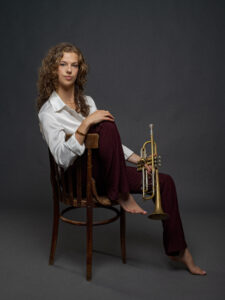
Līva Strazdiņa, born in 1997 in Berlin with Latvian roots, combines depth, expression and a clear personal tone in her music. After studying jazz trumpet as her main instrument at the
Carl Maria von Weber University of Music in Dresden, with teachers including Sebastian Studnitzky, Malte Burba, Simon Harrer and Till Brönner, she developed a distinctive musical language marked by intense melodic writing and a fine balance between energy and intimacy.

As a trumpeter and flugelhornist, she chooses her instrument deliberately based on mood and tone color. Alongside numerous ensemble projects, big band experience, awards and tours including the Berlin Youth Jazz Orchestra, studio recordings with LaJJazzO and tours with the indie band BEACHPEOPLE, Līva is also active as a composer. Her music reflects not only influences from jazz greats such as Miles Davis and Freddie Hubbard, but also singer songwriters like Billy Joel and pop icons like Pink Floyd and Eminem.

With her debut album, Līva shares her innermost thoughts and feelings. The album invites listeners to immerse themselves in these emotions and reflect on their own emotional world.

Liva Strazdina episode links
Bob Reeves Brass Events & Appearances
- Joy Brass, September 17-24, Tokyo Japan
http://joybrass.com
email to sign up: tp@joybrass.co.jp - Virtuosity Music, October 9-10, Boston, MA
- Greg Black Mouthpieces, November 6-7, Mount Holly, NC
- NCMEA Conference, November 8-9, Winston-Salem, NC
Podcast Credits
- “A Room with a View“ – composed and performed by Howie Shear
- Podcast Host – John Snell
- Photo Credits – Aigars Hibneris
- Audio Engineer – Ted Cragg
Transcript
Please note, this transcript is automatically generated. It may contain spelling and other errors. If you would like to assist us in editing or translating this transcript, please let us know at info@bobreeves.com.
JOHN SNELL: [00:00:00] But basically starting over to retrain your embouchure, correct?
LIVA STRAZDINA: I rolled my lips inside put the mouthpiece on my lips to remember the new embouchure so I would just give some air and see if a tone comes out. And sometimes there came a note, or sometimes not. And I ended up three months doing this. Also, I had to learn circular breathing for this to really remember the setting.
JOHN SNELL: Wow.
So three months of doing this while you’re
LIVA STRAZDINA: Three month. Yeah, while studying,
JOHN SNELL: Hello, and welcome to The Other Side of the Bell, a podcast dedicated to everything trumpet, brought to you by Bob Reeves Brass. We want to inspire you to develop joy and confidence in your trumpet plane. I’m your host, John Snell, and joining me [00:01:00] today is trumpeter Liva Strazdina.
JOHN SNELL: But first, some trumpet news.
JOHN SNELL: Well, as they say, we are in the dog days of summer. We’ve been part of a, a three or four-week heat wave here in Los Angeles. Uh, I think we got up to 116, 118 degrees Fahrenheit, which for everyone outside of the US is, what, I think 46 or 47 degrees Celsius. so it’s been, uh, it’s been fun out here. Our, our, thankful for air conditioning, but, uh, it’s been having a difficult time keeping up.
Uh, quick shout-out, congratulations to the Blue Coats who just, uh, completed their successful 2026 DCI run by winning the championships in, uh, Indianapolis this last weekend. And also a huge shout-out to the rest of the Cores. I was watching finals, uh, from my phone last weekend. and, uh, all of the cores that were participating, sounded wonderful.
Uh, one of these days, I’m gonna make it to DCI Finals, It’s a bucket list to hear all of those top cores [00:02:00] live. but again, shout out to all those, uh, the, the folks that were working hard this summer and putting on, uh, incredible, incredible shows. doing some travel. Uh, I got, uh, Japan coming up, September 17th to 24th.
Uh, that’s just here in a few weeks. I’ll be a joy brass in Tokyo. We already have folks signing up for valve alignments, so if you’re around, uh, Japan and can either, be a joy brass in Tokyo in person or send them your horn, I will be able to do valve alignments. we’ll also have some oven mutes.
I’ll have probably a few hundred trumpet mouthpieces besides their normal stock, uh, and some Charlie Davis trumpet. So great, chance if you’re in Japan to, meet with me, get your horn aligned, have a private consultation, or just hang out and share some stories. Uh, it’s gonna be a great trip.
after that, we’ll be in, uh, Virtuosity Music in Boston, October 9th and 10th. we don’t have the sign-up link for that yet, but it is coming. So, uh, soon as we have it available, you can start signing up for appointments. [00:03:00] Boston always shows up and always sells out, so that’s one of those events that you’ll want to, uh, sign up for an alignment as soon as the link comes out.
Again, that’s October 9th and 10th. And further on down the road, our annual trip to visit our good friends at Greg Black Mouthpieces in Mount Holly, North Carolina. Uh, we will be there November 6th and 7th, and then heading up to Winston-Salem, for the 8th and 9th, uh, for the NCMEA, annual conference.
So that’s my travel. I’m, uh, enjoying the last few weeks here at home. I’ve been coaching band camp at, uh, my son’s high school. It’s been, uh, I’ve been retired teaching for 10 years, so it’s kinda cool to get back and working with, uh, working with the kids. doesn’t hurt that it’s also a state championship band.
So they are, uh, I’m learning from them as much as they’re learning from me. Uh, it’s been a wonderful experience. so another shout-out to all the folks either heading back to band camp or coaching band camp or the band directors out there that are getting ready for a fabulous fall season, at least here in the [00:04:00] US.
also one last note, uh, it was my birthday last weekend, and a lot of you reached out to the shop to wish me a happy birthday. It was so meaningful. Uh, so thank you from the bottom of my heart. another year around the sun and looking forward to all the great things that are gonna happen, this year.
So with that, I’m really excited about today’s guest. Um, I found out about Liva on, social media and, uh, s – just fell in love with her playing. just such a gorgeous sound and her jazz plane is so tasteful. I reached out to her and come to find out, she’s just getting ready to release an album, which is now out, uh, Unspoken, and, uh, had a conversation f – with her.
So by all means, please check out, uh, Liva’s, album Unspoken, and you’re gonna learn a lot from this interview. So without further ado, here’s my interview with Liva Strazdina.
[00:05:00]
JOHN SNELL: Liva Strazdina was born in Berlin with Latvian [00:06:00] roots, and combines her depth of expression and clear personal tone in her music. After studying jazz trumpet as her main instrument at the Carl Maria Von Vaber University of Music in Dresden, with teachers including Sebastian Studnisky, Molte Burba, Simon Herr, and Till Bronner, She developed a distinctive musical language marked by intense melodic writing and a fine balance between energy and intimacy.
As a trumpeter and flugal horness, she chooses her instrument deliberately based on mood and tone color. Alongside numerous ensemble projects, big band experience, awards, and tours, including the Berlin Youth Jazz Orchestra, studio recordings with LAJ Jazzo, and tours with the indie band Beach People, Liva is also active as a composer.
Her music reflects not only influences from jazz greats such as Miles Davis and Freddy Hubbard, but also singer-songwriters like Billy Joel and pop icons like Pink Floyd and Eminem. With her debut album, [00:07:00] Unspoken, Liva shares her innermost thoughts and feelings, and invites listeners to immerse themselves in these emotions and reflect on their own emotional world.
Now, here’s my interview with Liva Strazdina.
JOHN SNELL: Well, I’m so honored to have joining me from, all the way from Berlin, the other side of the planet, Liva Strazdina. Liva, how are you doing today?
LIVA STRAZDINA: Hi, John. Thank you. Thanks for having me. I’m good. Really good. I’m in a good mood.
JOHN SNELL: Well, good. And, uh, it’s always good to be in a good mood talking about trumpet and jazz and your new album, uh, Unspoken, uh, which we’ll get into. but I wanna start right from the beginning.
how did you start on Trumpet? I mean, let me just back up a sec. You started on piano, right? Was your first instrument?
LIVA STRAZDINA: Yeah, yeah. As usually that was my first instrument. But the trumpet, um, yeah, that’s, that’s fun because, uh, at the seventh grade in school, they offered a brass [00:08:00] class. And I though, wow, that sounds interesting. I, I should go there. And I, I didn’t know what, what I can expect there. So I went there.
There was many bras instruments like tuba, trombone or trumpet. And I just pick up the trumpet and the teacher said we can change later. So I wanted to try the trombone. And then he said, “No, just stick with the trumpet.”. And so I did.
JOHN SNELL: S- so trumpet kind of found you out. So, uh, did, did you have
any, um, musical family members or anything? Any influence from there
LIVA STRAZDINA: They, um, no, they’re not professional musicians, but my parents both are really into music. My, both of them, play, instruments. My father is a multi-instruments, uh, mentalist, you could say. He plays the [00:09:00] piano and the violin, the sex also. Uh, he could do a lot. And my mother’s also into music a lot.
She’s playing piano and singing. Yeah.
JOHN SNELL: so you were su- surrounded by music growing up.
It’s fair to
LIVA STRAZDINA: Definitely. With classical, but also with a bit of jazz music, I would say.
Yeah.
JOHN SNELL: what was it like starting on the trumpet? Was it an instant love or was it a thing you just kind of did as a, in school for fun?
LIVA STRAZDINA: Yeah, it was more a fun thing. It wasn’t that I fell in love with the trumpet, uh, as I pick up. But I enjoyed playing that was. Yeah, we had two classical orchestras in school. So I would play for the younger ones, the first one. And classical music like Beethoven, all the stuff, and Tchaikovsky, and we had a lot of projects.
but it wasn’t that I, [00:10:00] that I knew I would be a trumpeter or something like that.
JOHN SNELL: Oh, now, was there a point where that changed?
LIVA STRAZDINA: Mm, so the first change, I think, was when I get into jazz, because my teacher, my piano teacher, he gave me a record of Miles Davis, Something Else. And that blew my mind, the Autumn Lees recording, and I listened to that a lot. I loved how he played the notes, how, yeah, it was a, uh, it, it moved me deeply. And he has some.
Yeah, it wasn’t always the notes he would play, but the, uh, how he played it. And that was so fascinating for me that I fell in love with jazz. And yeah, then I, I, I went to jazz, uh, big bands. And [00:11:00] I think, yeah, the, the jazz catched me.
JOHN SNELL: And, uh, how old were you at this point? age?
LIVA STRAZDINA: I started playing the trumpet, then I was 13, and I think after playing the. I, I took private lessons after the bras class because I, uh, it, I enjoyed it. So afterwards, I think three more years or two more years, ab – around 15, I think. 15, 16,
I, I joined a big band.
JOHN SNELL: joined the big band and, uh, d – so did, did that lead to further, uh, you know, once you heard Autumn leaves, did you start listening to more Miles Davis? Did you start exploring more jazz?
LIVA STRAZDINA: Yeah. Yeah, definitely. So the big band was a big change because my, my mother forced me a bit to do it. There was a newspaper ad and she said, “Oh, they’re looking for brass instruments or also wind instruments. Uh, you should call.” [00:12:00] And back then I was a bit shy, so I, I didn’t want to call there. But she forced me, pushed me, and then, yeah, I really enjoyed it playing there.
So, my teacher, then he was a really traditional jazz player, and he would gave me recordings. And we listened a lot of music together, played, and yeah, that was the beginning.
JOHN SNELL: Planting the seeds of, of your, your jazz career. What, uh, I was gonna say, who else were you listening to and what was your jazz study’s look like? Was it doing transcriptions? Was it, learning scales and patterns, things like that?
LIVA STRAZDINA: mostly transcriptions at the beginning. a lot of listening. Um, as I said, we, we listened, uh, also to not just recordings, but we went to a lot of concerts, like, and jam sessions. [00:13:00] I would learn, a repertoire and learn the standards. So he showed me a lot of these, classical things you, you just do, uh, the basics.
And also some lakes, uh, but that, that would came later, I think, while my studies. Because we have, uh, in Berlin, there’s a pre-college program you could do before the studies.
JOHN SNELL: Mm-hmm.
LIVA STRAZDINA: And that was one thing that my teacher also said, “You, you should do this, and you should apply for jazz studies.” So now I’m a bla – later.
But, uh, without his advice, I wasn’t sure if I, I, if I want to do it. Yeah.
LIVA STRAZDINA: i, I just thought maybe, I want to study sports and nutrition. That was also my interest. But my teacher said, “You should apply for the jet studies [00:14:00] because it’s harder to get into if you’re older than, yeah, by, by a certain age.
So I thought, okay, he’s right. Maybe I should try. And yeah, then, then I did a test run before I would, apply for real. And, um, that was in Austria. And also in Latvia because my mother’s from Latvia. So that was the test run. And then I ended up in Dresden.
JOHN SNELL: so the, by test mon – run, you mean the, like, just tried out do being a music major someplace?
LIVA STRAZDINA: Yeah. I did the pre-college program in, in Berlin and learned yeah, the basics about dress and ear training. We did piano lessons, big band.
And the test run was for me to, yeah, to know what I have to expect in a audition and to be more secure, I [00:15:00] think.
Yeah.
JOHN SNELL: why did you choose, uh, Dresden?
LIVA STRAZDINA: Yeah, somehow it chose me because I also had another opportunity to stay in Berlin. But one teacher said, “You should go to Drayston because of your amber shirt. You should change it.” I had this topic before. I knew that it was a bit weird because I was setting my mouthpiece, like, right into the red of the lips.
So, like, playing here. And that was really exhausting sometimes. so Andreson is a guy called Malt Boba, and he has his own technique. I, I’m not sure if you heard about him or not in the US.
JOHN SNELL: Yeah, so, I mean, I, I, I’m familiar with Malta, but maybe many of our listeners may not be. but,
uh, take us through your experience with him.
LIVA STRAZDINA: So [00:16:00] Maltboba, he has his own method. yeah, basically, his philosophy is that the, um, body finds its, uh, easiest way, and that’s subconsciously. So, it’s about training and practice the balance and your body. Uh, and to be aware of it, because we as brass players, we have some other issues than the wind instruments or piano players.
for example, they have a generator. They sh – just put a finger on the piano, and a sound would come out and on the string as well. But we have to produce our sound and the tone from ourselves. So, the airflow is, is the meanf – uh, meaningful thing and the lips for producing a sound.
[00:17:00] So we trained and practiced the body without the trumpet, like some athletes, do when their training a skill they want to learn. When they practice, maybe they do some exercises, um, that are, yeah, specific and having to do anything with the skill in the end or a little. So we would practice breathing and some exercises with the tongue, in front of a mirror.
And that’s fun because, yeah, it, it doesn’t have to do anything with a trumpet. And people who, don’t know you and, doesn’t know that you’re playing the trumpet, they think you’re crazy because you’re making weird noises in front of a mirror. And yeah, that’s, that’s,
JOHN SNELL: Were, were you doing any plane or was it completely those [00:18:00] isometric exercises, the breathing and
LIVA STRAZDINA: no, it w – of course, of course, we, uh, played and other technical exercises, but that was in addition. So I think, uh, back then, it was about one, one and a half hour I did of these, or maybe one and a half to two hours of practicing these, uh, things. But together with some trumpet, uh, exercises. It wasn’t just the mirror thing,
but also breath attacks and stuff like this.
JOHN SNELL: But basically starting over to re- retrain your ambouchure, correct?
LIVA STRAZDINA: Um, yeah, that was, that was also, uh, another thing. Yeah. Ambersure, that was then in 2019, I changed it with him because he has his method how to do it. And I would just play, I, I, uh, rolled my lips inside and put the [00:19:00] mouthpiece on my lips to remember the new ambersure and the new setting.
So I would just play or just give some air and see if a tone comes out. And sometimes they came a note or sometimes not. And I ended up there three months doing this. Also, I had to learn cycler breathing for this to really, uh, remember the setting.
JOHN SNELL: Wow.
So three months of doing this while you’re
LIVA STRAZDINA: Three month. Yeah, while studying, while all the other trumpeters would play tunes and go at jam sessions and,
JOHN SNELL: The, uh, that’s
incredible. Ugh, yeah. And I, and I’m looking back, like, you know, especially at my age, like, three months doesn’t seem like a lot of time, but, if you’re in your, you know, what, early 20s, late teens, [00:20:00] and, yeah, everyone else around you is on this progression,
uh, and you’re, seems like you’re taking so many steps back for that.
Three months seems like an eternity.
LIVA STRAZDINA: Yeah. Yeah. It was horrible.
JOHN SNELL: yeah. But the perseverance to, to go through that, is really incredible. And now, I mean, you have a background in, in athletics as well, so did that help, you know, the, the mindset and connecting the mind to the body? Did, did that help that process at all?
LIVA STRAZDINA: Yeah, that, that helped a bit to know you, you just, or you, you, I would just see on, and do the exercises and think, “Just do it and it will be good. It will be everything fine. And other people al – uh, also, got through this. And you just have to do it. And that’s a bit the mindset in sports. Someho – sometimes you, you have a lack of motivation, and you know it will be better.
It’s good for [00:21:00] you. You just do your workout. Yeah.
JOHN SNELL: Yeah. Uh, uh, did Nike make a, a, a multi-billion dollar empire off
of that, right? Just
just do it. Uh, but it’s, it’s, it’s right. Yeah, you have to
trust the process, no matter how frustrating it may seem. so you made it out the other side. what
did your progress then look like that, you know? Um, did you start developing your career in terms of freelancing or starting to, form your own bands or things like that?
What did that look like?
LIVA STRAZDINA: when I started playing again, there was a year, I think. It took me a year. And then there was an addition I wanted to play, but I couldn’t because it was closely to, the ambership change, and I couldn’t play it.
So then after, after a while, I could play gigs again. And I just studied. It was in the [00:22:00] beginning of my, my, my studies. But afterwards, I think I played most of sessions, uh, during my studies. And then I started composing, but I never pl- played, like, my, with my own band I just played gigs when I was, uh, asked for.
so there was no, big, big step afterwards. But it would come step by step. Yeah.
JOHN SNELL: Just kind of organically grows, networking, starting getting more calls. yeah, it, so, uh, interesting you brought up the, the composition. So was that just something you woke up one morning, decided you wanted to start doing, or was there an inspiration for that?
LIVA STRAZDINA: Um, I think, yeah, it was more the waking up in the morning and have, have some ideas in mind. there was no direct inspiration. I, [00:23:00] uh, used to play sometimes on the piano, just improvising. And at one point, a friend of me, she said, ” just write it down or record it,” because she did some composing at this time.
And I started recording every idea I had with my phone. and yeah, just gathering some things. But that was just the beginning of it. And no craft or something I learned until then.
JOHN SNELL: Mm-hmm.
LIVA STRAZDINA: But, yeah, until now, I, I just had maybe one composition class, but, but, uh, yeah, not really the craft for it.
JOHN SNELL: you started composing for your, other groups or just your own playing?
LIVA STRAZDINA: Just, just my own playing. Yeah. I, I recorded just, uh, some ideas. or not just melodies, ma – more some chords. And I would see, [00:24:00] “Okay, that sounds nice. Maybe I can put a melody over it.” After a while, I started to, to try these ideas with a band. But before, before then, I just composed for myself.
JOHN SNELL: All for yourself. Uh, uh, did you find that, that, that the composition process, like you said, like improvising at the piano or hearing chords and then, you know, starting to hear melodies over that, did, did you find that that helped your improvisation, when you were out playing in other groups?
LIVA STRAZDINA: Mm. maybe subconsciously, uh, always some, some motive or motif comes to your mind. You, you just take it and then improvise with it. I think, yeah, maybe, maybe yes. But now I remembered, of course, it an influence on my, ambusher changing because I, I had to m – take many breaks to, to deal with it because I was just blowing [00:25:00] the air, through the horn four hours
JOHN SNELL: Mm-hmm.
LIVA STRAZDINA: a day.
And then I though, “Okay, you, you have to take some breaks.” And during these breaks, I thought, okay, some musical, uh, stuff would be nice to play. And, uh, then I just, uh, sat down on the piano and improvise for a while.
JOHN SNELL: Fascinating. Uh, so where did your, uh, career go then after, um, well, uh, so did you stay with Malta your entire time at Dresden or did you have any other teachers?
LIVA STRAZDINA: Of course, I had other teachers. Yeah, it was m – um, split into the technique and the musical teacher. So in the beginning, I had, uh, lessons with, uh, Sebastian Stutnitsky. Um, and later on, we could choose some other, teachers as well. So I studied with a saxophone teacher and also a bass and trombone [00:26:00] player.
Uh, I enjoyed that. And later on, I was really excited because Till Brönner would come back to the university and teach. So I studied with Till Brönner as well the last two or three years.
JOHN SNELL: Wow. So, through all those teachers, where did they take your, your jazz playing? How did it develop
LIVA STRAZDINA: Mm. Yeah, they had really different concepts. my first teacher, the, um, Sebastian Chudnitsky, he had a concept of practicing and learning, especially melodies, I think. He was really into, playing every jazz standard in all the keys. And So, yeah, that’s, uh, I think that’s nothing new, but of course it helped me a lot.
just playing the, the, all the centers and read 12 keys and, [00:27:00] uh, a lot of ear training. He had some patterns we would, practice. sometimes we, we would, practice or we would look after my compositions and, find something together.
He showed me a lot of composition, um, work he did, and yeah, give me some, some tips and advice. How, how can I deal with it?
JOHN SNELL: so learning from different insurance. We’ve had a few, of our previous guests, uh, Gabe Johnson and CJ also when they, during their study, studied
with non-trumpet players. And, I’m curious what your takeaways were, studying with other instruments.
LIVA STRAZDINA: Hmm. Yeah, with the bass player, a lot of rhythmic, of course, rhythmical things. Um, I can remember a lesson. He would, give me a specific exercise to always play, [00:28:00] uh, not rhythmical, but it was always play the shop 11 or something. Uh, always play the ninth. And we would do it on all the things, bar after bar every time and again and again.
And that helped me a lot to land on the right note and to, find the guidelines well. So, yeah, that w- was what I did with the bass player, what I remember now, b- because it’s a bit, bit, uh, yeah, longer ago. yeah. but it helped me a lot to have some different influences.
JOHN SNELL: Mm-hmm. And then, uh, studying with Till, what was – what was that like?
LIVA STRAZDINA: Yeah. Uh, uh, one thing I want to mention, because the, the trombone player I, I study with, he had a huge influence because he had really a concept and he would hear and, [00:29:00] and listen to you, what you’re playing. And directly, he would, had an idea for an exercise or we should do this. I think you struggle at the time with timing or with, uh, with technique.
And that was really, really helpful. And later on in the end with my compositions as well, he, he was a all-rounder. He, uh
yeah. He, he’s really incredible. yeah, he could teach you everything, like, from big band and your training piano. Yeah, that was amazing.
JOHN SNELL: wonderful. And, um, was it so then after him that you studied with- with Till or somewhere in that mix there?
LIVA STRAZDINA: Yeah. Yeah. A mix, I, I think, um, both at the time. And with Til, we did mostly transcription. yeah, just transcription. [00:30:00] Uh, or that’s ma- maybe too basic, but, uh, the first, lesson we had, we played a blues, and then we did some ear training, just you, but, uh, he could, get to know you a bit and, do some ear training.
He played some chords and you. Yeah, I just improvised a bit. So that was my very first lesson with him.
JOHN SNELL: Mm-hmm. And I’m- I’m curious, like, uh, the transcriptions, what – was it a range of styles and artists, or were
you going, starting to narrow in on where your kind of your own musical voice was going at this point?
LIVA STRAZDINA: Mm, the f – very first trans – uh, transcription, everybody, every student has to transcribe was Kenny Dorm, um,
JOHN SNELL: Well,
LIVA STRAZDINA: Katie’s Blues.
Uh, so there was live set, you could choose the first or second set [00:31:00] or both if you want to do. And everybody was playing the, the same league at the time,
uh, because everybody was transcribing the solo.
and later on, it was, yeah, stuff that I, I wanted to, to transcribe. I, I had some transcriptions, Freddy Hubbard. Um, also, yeah, I did on my own, of course, before, um, Myles Davis, but also I loved Dexter Gordon.
JOHN SNELL: Hmm.
LIVA STRAZDINA: I, I also made some transcriptions. Yeah, so in musical way, mostly we, we did, uh, transcription and how could you play a chord? Just when you have a two five, you just would play just one chord and make it easier. And, also technique-wise, I, I had a lot of [00:32:00] questions. But the interesting thing in the end, I think studying with Till was that I could ask him a lot of beside music, music things,
like, more about the business.
And, yeah, being a musician. Because during my studies, nobody said, like, uh, or it was hard to, uh, had an ima- imagination of what will come. So he was one of the guys who said, “Yeah, you really wanna do this. You wanna be a jazz trumpeter? or maybe you just have something else you could have, uh, in the backhand, like, doing, uh, another job or something,
um, just to, to be financial secure.”
Um, or yeah, he at least give, uh, gave this [00:33:00] advice.
JOHN SNELL: That- that’s amazing, and, uh, to have that kind of mentorship, because I- I- I know for me, like, I, uh, my father was a professional musician, so we about, you know, and I grew up and seeing how he made a living, um, and the trials and tribulations of that. But, you know, when I went through school, no one says, “Well, once you graduate with this degree, this is how you make a living.
This is how you pay your rent, being a
or being a freelance musician, or being a classical musician.” Other than auditioning for an orchestra and getting a full-time position, um, that seems pretty obvious, but everything else, is so mysterious, so it’s great that you had that kind of mentorship. so what did the- then your career look like after, um, after you graduated? Uh, were you freelancing? Were you playing?
did you form your own group by this point, or were you still primarily playing in other people’s groups?
LIVA STRAZDINA: yeah, by then, I still played in, in other groups, just, uh, I moved back to Berlin, uh, where I was grown up. And [00:34:00] I had some old and new contacts. I, I would go to jam sessions and meet people. I also, um, uh, worked in a fitness studio as a, yeah, as a trainer, because I had these insecurities during my studies and I took a semester off to learn another thing.
Um,
JOHN SNELL: Hmm.
LIVA STRAZDINA: because I was really overwhelmed and it was a lot of mental load. So I thought, okay, you can do something else. Of course, it’s, it’s not you study this and you have to be a jazz trumpeter. So that wasn’t my mind, but, uh, yeah, it was more relaxing that I could do something else. So I worked in the fitness studio and, played some gigs and then I would, meet regularly with some people for a [00:35:00] jam to work on my own compositions.
And we just played in summer. And, yeah, that was the reason why, uh, my, my band formed. Or not that was the reason, but, but that were the people I played then with.
JOHN SNELL: you had a- a connection, sounds like, uh, with the people you were playing with. so was it, uh, the formation of that group that, uh, brought on, Unspoken, that brought on the- your album, or did that come later?
LIVA STRAZDINA: Yeah, that, um, I didn’t plan to release this album or to release an album because I, I. Yeah, I didn’t plan at all anything. there was financial support by the City of Berlin. I uh, saw you could apply for, um, studio recordings, and you had a contingent of, like, 60 hours, I [00:36:00] think, which is really a lot.
So we had one week of studio recordings. And that was the reason, started to record my album, because then I thought, “Oh, okay, you have studio recordings. That’s amazing. Then you should. Yeah, you have to do something with it.” Uh, and then I, yeah, remembered, “Okay, I have these, pieces. I have these compositions.
We jammed together. I will record these, these pieces.” And that was the, the same band I just jammed, uh, jammed with. Yeah. That’s how the album came up.
JOHN SNELL: it- it all kind of happened together, it sounds like. You guys, you had the band and then you had that opportunity. Um,
LIVA STRAZDINA: it was an opportunity. It wasn’t planned, yeah,
JOHN SNELL: so let’s – start with Unspoken. So what, uh, just coming up with the title and, I mean, what is – where does that come from? we – what s – meaning does that have for you?[00:37:00]
LIVA STRAZDINA: Yeah. Uh, at first, it wasn’t, Unspoken. It was Deflections. And that was my very first piece I wrote at my mother’s, room, at the, uh, the apartment. And I thought okay, Deflections, maybe for, for the German market, I thought maybe, uh, it could be a bit easier. And, Unspoken came into my mind. And I thought that’s a good, good album title because it’s easy to remember.
And also, I could express something in the music, uh, which I can’t express sometimes with words. So that was the idea behind Unspoken.
JOHN SNELL: And yeah, the title tune and, uh, and an original. You also have, um, uh, I mean, a whole, variety of tunes, some covers, some jazz standards. Um, what was [00:38:00] your selection process like, to decide what to record?
LIVA STRAZDINA: Yeah. Mostly, there are my own compositions, but, uh, that was a process. Till Brönner also helped me a lot. That was really helpful because I could ask him, since it was my, uh, first album recording, how should I stand in front of the microphone? which microphone I should use? And, yeah, the producing with, with the tunes.
So I, had no clue. I just started doing something. I mean, I had some ideas, of course, but, but I, it was, awesome that I had, had this, this mentor at the time. and yeah, the, uh, also, it was his advice or his thought. Maybe it’s interesting to put also some songs that you, you didn’t r – compose.
So I though, okay. At the [00:39:00] beginning, I wanted to do my own album and put all my stuff in it. And afterwards, I thought, “Okay, hmm, maybe, maybe he’s right.” And I searched for songs. And then I remembered that I listened, before I listened to Jazz, I listened a lot of, to Billy Joel, to pop music, to, uh, Pink Floyd, and rap music, everything.
So different styles of music. But Billy Joel, I listened a lot of, because my brother, my older brother also did. So I, uh, thought, honesty, that’s a song that maybe isn’t covered that, um, often. So I chose this one because I really, really love, love this tune and the melody.
JOHN SNELL: Yeah, that’s, one of my favorites [00:40:00] on the album, although it’s hard to choose.
they’re all so unique in their own – in their own way. and then, uh, we talked about this a little bit, before the interview. Um, you know, you- you said you’re, still in the process of finding your voice, you know, your musical You
know, did that, did recording this album help that process for you as an artist to, um, see where you are in terms of your own sound and your own, uh, musical voice?
LIVA STRAZDINA: Oh, definitely. Yeah, because, um, somehow I, I listened to my own composition and though, okay, that’s, uh, every tune sounds like a, like a jazz tune. I’m really into jazz. But I, I started to realize and to remember that I also had some, uh, other influences. So that was really helpful to get to these recordings again and listen Billy Joel.
And also, uh, one [00:41:00] tune is a Latvian Folk song. And there are many musical, types, uh, or genres I like. So my mother, she’s from Latvia. And we also listened to a lot of Latvian music and traditional folk music. And I remembered this song because every five years in Latvia, there’s a huge concert with dancing and singing.
And there are about 14,000, I think, people on the stage in a choir. And they would sing together. And I had the chance to be on the stage with my mother and to sing. It’s really impressive. Uh, I, yeah, I can still remember. And this one song, it’s called. Pūt vējiņi It’s, uh, it means, [00:42:00] uh, Blow the Little Wind Blow.
And I had to think of this song again.
And it’s, uh, yeah, it, it moves me until now. So I picked this tune and arranged it in another way and just, uh, had some, yeah, the opportunity to be creative on this. Because now I though, okay, I can put everything in I, I want to have in there. And I, grew up with this song. So, yeah, that was a really nice experience.
And I,
Yeah.
I would, would make the wind sound in the, in the music. Yeah.
JOHN SNELL: Mm-hmm. Uh, it’s. And, uh, that closes out, uh, the- the album, is – correct? Uh,
that’s that’s the last
LIVA STRAZDINA: That’s the closer. Yeah.
JOHN SNELL: it’s a nice- nice little surprise, um, because, yeah, I- I was unfamiliar with the [00:43:00] melody and it- it is gorgeous. and, uh, your treatment of it, uh, the composition is- is, uh, was, I really enjoyed. Um, and I- I hate asking this question because it – the album just was released, right?
You- you released some singles, but the full album was released not too long ago, maybe
LIVA STRAZDINA: Yeah.
Yeah,
JOHN SNELL: what – so what do- do you have anything in the – in, uh, any projects coming up? Are you working on the next album, or do you have other things you wanna share?
LIVA STRAZDINA: Yeah, that’s, that’s, uh, yeah. I’m, I’m in a good mood, uh, bec – uh, I said in the beginning. And that’s the reason because I’m producing some music at the time. And after I released this album, and let’s call it a jazz album, um, I’m so into it doing something else. And I have, uh, many ideas, So in March, I went to the studio again, [00:44:00] and we recorded some, yeah, some groove music. And now I’m, I have the time to b – produce something, um, and to, to learn also because I, I didn’t before.
JOHN SNELL: Wonderful. Oh, I can’t- can’t wait to hear about that. And, how can folks find out about you? Website, social media? What’s the best way? Or all of the places?
LIVA STRAZDINA: Yeah, all of the places. Social media, I think, always is good, good platform to connect. And that’s the reason I think we also met somehow.
JOHN SNELL: it, yeah, we can do a whole podcast about how, um, yeah, our paths crossed, because y – one of your promos, I think, for one of your singles came across. I was like, “Wow, that’s a gorgeous sound. That sounds fascinating.” And then I hit follow, and everything you released, I was like, “Wow, that’s. You need to be on the podcast. Let’s reach out.” And, yeah, we never would’ve known, because we’re halfway around the globe from each other.
LIVA STRAZDINA: Yeah,
JOHN SNELL: so, yeah, we’ll – and we’ll have the links to all of those so, our listeners can find [00:45:00] you if they don’t
know,
LIVA STRAZDINA: definitely website, social, everything’s put.
JOHN SNELL: and the- the album is available on all the streaming platforms, but they can also
help support you and buy the album, right?
Like the old-fashioned,
LIVA STRAZDINA: Yeah, that’s. Yeah, of course. And on Bandcamp as well, that’s, that’s great, uh, that you can support on Bandcamp. I, I love this.
Yeah.
JOHN SNELL: great music around. Uh, so we’ll make sure we link to all those. one thing before we wrap up here, and thank you so much for your time today, Liva. Um, and this is just for context. you know, I listened to your album before I really researched you, meaning going to your website and seeing what’s out there.
And listening to your album, it was so refreshing because, it was so melodic, and it was, like, the note choices and everything. it was just – it was all beautiful. Um, and
one of my turn-offs with jazz is that it’s, you know, it- it seems like everyone’s trying to put everything they have in every solo they play, you know?
Everything they can
do, every [00:46:00] change in substitution and whatever they can get in there, they do. And it seems it’s more like an athletic event than it is, uh, you know, an art. Um, and there’s a time and place for that. Um, again, I don’t wanna get into another podcast, but, um, so then when I looked up your website and did research, there was a big quote on your website about how you didn’t wanna go higher, louder, faster. can you talk about that in terms of your own musical voice and your jazz playing? Um, obviously, it’s conscientious because it’s on your website, but
how end up there?
LIVA STRAZDINA: Yeah. I think, um, sometimes maybe it’s, uh, it, it comes from a more insecure way, I think, because sometimes I would struggle with a trumpet like everybody does. Um, but I think that’s, that’s not the reason. Um, I’m, I’m sure I, I also can play, I, I also can play some, some fast and loud things. [00:47:00] But every time I do this, I don’t feel like I made music, at this time.
So I go for more melodic lines, and I. Yeah, that’s maybe, maybe the way I think I, I want to put some melody in it and some expression, more feeling than lots of notes. because every- everybody do, uh, does. And yeah, maybe you could, you could, uh, say it more in a Miles Davis way, the thinking because he also, he would do a lot of also pause and, and breaks and, and just play one note and it’s awesome.
JOHN SNELL: Yeah.
Well, And it- it, yeah.
it’s full circle because that’s what your first big inspiration in jazz. And, yeah, I-
the – I think there’s – you do the same [00:48:00] thing. There’s a human connection that you create through your- your sound and no
LIVA STRAZDINA: Yeah. But some- somehow subconsciously, uh, that wa- wasn’t the way I, I started to play the trumpet and think, though, okay, that’s, that’s how I want to sound, but it came just naturally. And yeah, now I remember also Art Farmer. I listened a lot of Art Farmer,
uh, during my studies. yeah, just a side note.
JOHN SNELL: Well, I’ll-
LIVA STRAZDINA: Yeah.
JOHN SNELL: I’ll put s- some art on today on- on my drive home, um, as well as unspoken again. Um, L- Liva, it’s been amazing having you on. Can’t wait to hear, uh. Well, I’m gonna be listening to Unspoken a lot here at the shop. It’s gonna be on a regular rotation. the guys in the back shop, uh, are listening to it, as fact as we speak. and, uh, can’t wait to hear about what you come up, uh, with next, and it’s been great having you on. Uh, before I let you leave, though
and I know it’s late in Berlin, my last question, uh, if you could leave our listeners with your best piece of advice, [00:49:00] and it could be about anything, doesn’t necessarily have to be trumpet related, what that be?
LIVA STRAZDINA: Mm. Oh, that’s a hard
question.
And I, yeah,
JOHN SNELL: But- I get best answers that way.
LIVA STRAZDINA: I think one basic thing is re – because we talk about it, uh, trust the process.
don’t give up too early. And the other would be the, yeah, maybe the other way around. If you, if you don’t, because sometimes I, I had the feeling if you, uh, I, I have to do a lot and I put myself under, under pressure.
And, uh, sometimes, okay, the, the world, goes on, the world goes on or the, the day continues if you didn’t, uh, [00:50:00] I don’t know, wash your, wash your hair today or whatever, if you couldn’t make your to-dos. So there are more or higher and important things in, in life than maybe a practice or a to-do
thing. Yeah, that you missed.
JOHN SNELL: Yeah, take care of yourself
LIVA STRAZDINA: take care yourself. Yeah.
JOHN SNELL: Don’t- bogged down in the details sometimes.
LIVA STRAZDINA: Yeah. Yeah.
JOHN SNELL: Yeah. And, yeah, a- amazing example of that and your perseverance and, uh, said, honored having you on. Thank you, Liva.
LIVA STRAZDINA: Thank you so much, John.
JOHN SNELL: Well, what an honor it was to have Liva on the podcast. and she’s definitely one of those up-and-coming trumpet players that we’re gonna be checking in with later in their careers. I mean, this was just her day – just her debut album, but still a very impressive, uh, first album, Unspoken. I’ve been listening to it, almost daily since I f – it first came out, uh, a few weeks ago, [00:51:00] about a month ago.
I love the fact that the album is accessible, but there’s so much emotional content to it, it’s worth listening to again and again. so much great advice Liva had both about her own journeys and the, you know, the perseverance she went through in terms of her, uh, having to go through a ombushere change and, uh, dial things in.
So just the endurance issues she was having in high school and going into college. Love, what she talked about with Malta Burba and, spending months ov – you know, her year making that adjustment, And at a very difficult time where all the students around you are progressing on this track and, uh, you feel like you’re stuck doing isometrics and things like that. So, uh, really great that she was so open and honest about talking about that part of her life and that she persevered through it. and I also love what she’s talking – talked about, uh, making a, a career, in music, and especially as a, a jazz musician.
That, uh, that script isn’t necessarily written and how she’s combined her passions for, um, health and, physical fitness, that which also allows her [00:52:00] to, pursue her passion in jazz. So, Liva, thank you so much, for being on the podcast. We’ll have all the links so you can check out, uh, where Liva is playing, and, of course, listen or download or purchase, or all three of the above, her new album, Unspoken.
Until next time, we have some wonderful guests coming up, so make sure you hit that subscribe button, hit that five-star review button, it keeps us visible, and keeps us around for another, what, almost 13 years, 14 years we’ve been doing this. It’s amazing. So, be doing this till the day I die.
Um, thank you so much for listening. Thank you so much again for the birthday wishes. put me in a great mood. And until next time, let’s go out and make some music.