CJ Camerieri Trumpet Interview
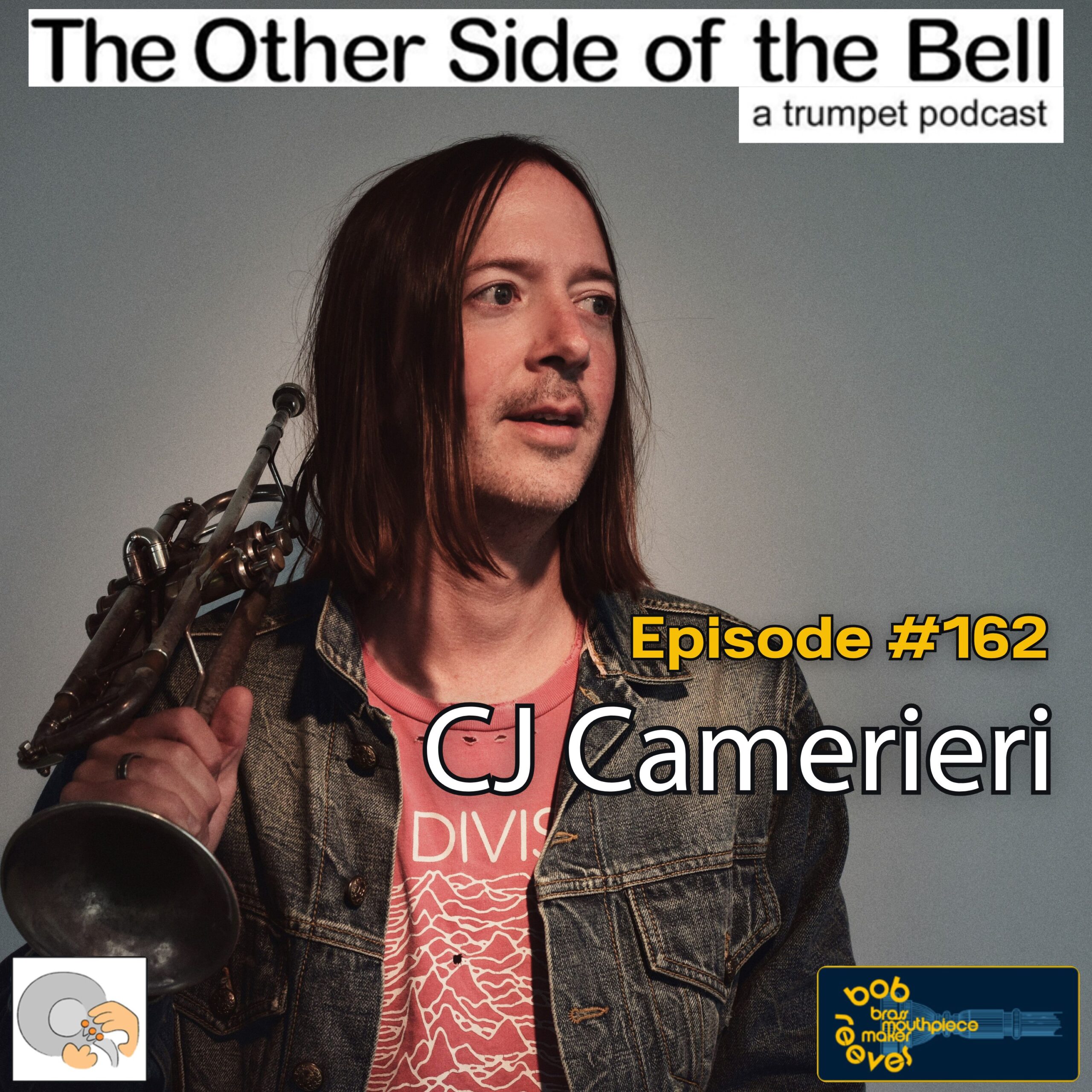
Welcome to the show notes for Episode #162 of The Other Side of the Bell – A Trumpet Podcast. This episode features trumpet performer, ensemble leader and recording artist CJ Camerieri.
“If you want to have a career in this, you have to know why you’re the right person to call, and why you have a skill set that’s exactly right for this particular thing. It’s hard to make a living at it if they can just hire a different person and pay ’em less.” – CJ Camerieri
Julliard grad, Grammy winner, collaborator with Bon Iver, Paul Simon, Rufus Wainwright, Sufjan Stevens, Ben Folds, Bruce Hornsby and so many more, CJ Camerieri is the personification of passion: starting piano lessons at 4 years old and never looking back.
But it’s one thing to be music-obsessed from childhood, it’s another to forge a successful, sustainable career in a cutthroat industry. Our conversation today is a fascinating and introspective look into the the business side of music: the back end, the royalties, the songwriting credits, the mindset and the versatility required to succeed and thrive.
For CJ, this has meant being adaptable, embracing different styles of music, being open to change and doing things that others may be less interested in.
But also, always, doing it for joy, not just a paycheque. You’ll rarely meet someone more passionate about trying new things and taking on new challenges. Hence the formation in 2008 of yMusic, “A chamber ensemble with a unique mission: to work on both sides of the classical/popular music divide, without sacrificing rigor, virtuosity, charisma or style.”
The threads of yMusic are woven throughout our conversation today. Transitioning to a new music scene can reignite your passion, while touring teaches practical lessons about maintaining your craft. CJ will inspire you with his insight and innovation!
Listen to or download the episode below:


About CJ Camerieri
Since graduating from The Juilliard School in 2004 with a degree in Classical Trumpet Performance, CJ Camerieri has become an esteemed artist, songwriter, producer, and an indispensable collaborator for some of the most important artists of our time.
Camerieri is a two-time Grammy award winner (Best New Artist, 2011 and Best Alternative Album, 2011) and a co-founder of the acclaimed contemporary classical sextet yMusic (who the New Yorker has called “six contemporary classical polymaths who playfully overstep the boundaries of musical genres”). Camerieri has toured the world as a core member of Paul Simon’s band since 2013 and with artists such as Bon Iver, Sufjan Stevens, Ben Folds, Plastic Ono Band, and Sting, among many others. He has contributed to over 300 recordings and has commissioned over 100 new works of chamber music featuring the trumpet, including pieces by Andrew Norman, Gabriella Smith, Nico Muhly, Marcos Balter, Ryan Lott, and Missy Mazzoli.
In 2021 Camerieri debuted his solo project CARM, which was highlighted by performances on The Colbert Show and Tiny Desk Concert. For Paul Simon’s “Farewell Tour” in 2018, Camerieri brought yMusic into Simon’s touring band. This resulted in contemporary classical arrangements of the artist’s iconic songs being performed in arenas around the world, as well as in featured performances on Saturday Night Live and The Colbert Show. His trio project, Heavy MakeUp, featuring himself, Edie Brickell, and Trever Hagen just released their second full length record on Sony Records.

Camerieri is also an accomplished French Horn player, keyboardist, arranger, composer, and improviser—comfortable in all styles and genres of music. In addition, Camerieri has held numerous chairs on Broadway; played principal trumpet with orchestras such as Orpheus, The Knights, and Orchestra of St. Lukes; and has written arrangements for many types of ensembles on countless recordings and performances.

CJ Camerieri episode links
- yMusic: https://www.ymusicensemble.com
- Linktree: linktr.ee/CJ_Camerieri
- Instagram: @carm_band
Bob Reeves Brass Events & Appearances
- Bob Reeves Brass pre-owned instruments, find your next treasure!
https://trumpetmouthpiece.com/collections/used-instruments
Podcast Credits
- “A Room with a View“ – composed and performed by Howie Shear
- Podcast Host – John Snell
- Photo Credits – Courtesy CJ Camerieri
- Audio Engineer – Ted Cragg
Transcript
Please note, this transcript is automatically generated. It may contain spelling and other errors. If you would like to assist us in editing or translating this transcript, please let us know at info@bobreeves.com.
[00:00:00]
CJ CAMERIERI: if you want to have a career in this you have to know why you’re the right person to call and why you have a skill set that’s exactly right for this particular thing.
And it’s hard to make a living at it if they can just hire a different person and pay ‘ em less.
You know, you gotta have a skillset that is like, “Well, no, that, that’s the guy. You gonna pay him what he wants because he’s the guy,
JOHN SNELL: Hello, and welcome to The Other Side of the Bell, a podcast dedicated to the world of trumpet, brought to you by Bob Reeves Brass. We want to inspire you to develop joy and confidence in your trumpet playing. I’m your host, John Snell, and joining me today is trumpeter CJ Camerieri.
But first, some trumpet news.
JOHN SNELL: We are in the midst of summer, and boy, is it hot out here in the shop? Um, actually, I’m not at the shop right now. I’m getting ready to go on vacation for a few [00:01:00] days. So, uh, but it’s hot here as well. Uh, it’s been in the high hundreds, hundred, over 110 at the shop last week. so a lot of North America’s, uh, dealing with the heat wave.
so this would be a good time to head down to Australia, to our friends down under where they’re, uh, in the midst of winter as we speak. real quick, I wanna shout out and give a special thanks to Dr. Ricky Spears. Uh, I just got back from, Adam Fest, and what a wonderful event it was. Uh, we sold out on alignments again.
sold three or four Charlie Davis trumpets. found some good homes for those. Of course, the mutes and the guard bags and the Reeves Mouthpieces. it was a wonderful event. So many great players there, young and old, professional and comeback player or just hobbyist. Uh, met lots of great people, including a shout out to Russ.
came up on the very first, uh, opening day to say that he loves the podcast and listens every night as he’s cooking. So, uh, I’ll have to come check the, check out your cooking, Russ, at some point. And what’s even cooler is his [00:02:00] wife listens along and apparently enjoys the sound of my voice. So, uh, that was a great way to kick off Adam Fest by having Russ stop by and say hello, along with, uh, several others of you who are dedicated podcast listeners.
So thank you again, and a huge thank you to Dr. Ricky Spears. They actually got us out of the vendor room. For those of you who are there, uh, this was a rare occurrence. they did a big band concert on Saturday night after everything shut down. And, uh, they swap through. They hire the, uh, big band and then they have a trumpet section that swaps through for all of the, um, the students and presenters, the presenting artists at Adam Fest.
and then they had a, a vendor trumpet section. So it was myself and Matthew Collins from the Reeves Booth, Ben Strickland, from the, uh, uh, Greg Black and Michael Caps, Camp Figure – Mike Capps and Ben Strickland from the Greg Black booth. And Fred Powell, of course, from Con Summer. So we play, uh, made up the trumpet section, played a couple tunes, uh, w – in the midst of [00:03:00] packing up our booths to get home, but it was a lot of fun.
A lot of fun to actually get the instrument out and remember, uh, why we do what we do. So huge thank you to that wonderful trumpet section, and of course, to Ricky and everyone who put together Adam Fest. Uh, couple things real quick coming up on the tour, uh, list. I will be in Japan, uh, Tokyo, Japan, September 17th to 24th at Joy Brass, doing vowel alignments and mouthpieces.
And, Lassa Lindgren will be coming out for that from Sweden, presenting the Olvin Mutes with us. So, uh, if you’re in and around Japan, we’ll have more details of that coming up shortly. we’ll be visiting Virtuosity Music in Boston, October 9th and 10th, Friday and Saturday. Always a great hang with Steve and Robbie and the gang there.
so if you’re in and around New England, October 9th and 10th. Uh, and then the following month, North Carolina will be at Greg Black Mouthpieces and the NCMEA Convention November 6th through 9th. So get those on your calendars. we will have more [00:04:00] details as we get closer to those dates for things like valve alignment si- signups and things like that.
couple things. Uh, real quick, I have some new horns that just came in, uh, f – on the consignment used, side of our website. A beautiful, uh, 1947, medium boar, Martin. Unfortunately, it’s not the highly, highly sought after large boar version, but the medium bore plays great, amazing condition. One owner from 1947, uh, have that up on the website.
And I just posted a few more Boyd Hood, trumpets from his collection. A couple queen-on high horns, a D-trumpet and an FG trumpet that are pretty rare. Uh, an olds ambassador E flat trumpet, beautiful horn, uh, especially for a student horn. it’s a really cool instrument. A Getzen Eterna D Trumpet that Boyd and Charlie Schluter helped design many years ago, uh, as well as a Olds Opera and a Khan 60B.
So pretty big instrument dump on the website. So if you’re interested in any of those, uh, and all of them [00:05:00] are in just astounding condition considering their age. So, uh, you go to trumpetmouthpiece.com and check our used instrument section if you’re interested in those, uh, as well as some cool old block mouthpieces from Boyd’s collection as well.
Those will be hitting the, uh, website this week. All right. I think that’s enough trumpet news. Let’s get right to my interview with CJ Camerieri.
[00:06:00]
JOHN SNELL: CJ Camerieri is a two-time Grammy Award-winning trumpeter, composer, a ranger, producer, and multi-instrumentalist whose career spans classical, pop, rock, and improvisation. A Julliard graduate and co-founder of yMusic. He has toured and recorded with artists, including Paul Simon, Bon Iver, Sufjan Stevens, Sting, and Ben Folds, while contributing to more than 300 recordings and commissioning over 100 new works featuring Trumpet.[00:07:00]
His own projects include Carm and heavy makeup, alongside extensive work on Broadway and with ensembles, including Orpheus, The Knights, and the Orchestra of St. Luke’s. And now here’s my interview with CJ Camerieri.
JOHN SNELL: I am so honored to have joining me today on the other side of the bell, CJ Camerieri. CJ, how you doing?
CJ CAMERIERI: Pretty good, John. Thanks for having me. I’m really excited to chat.
JOHN SNELL: yeah, we’re gonna talk about all kinds of things, um, because I’m multi-instrumentalist, you write, compose, arrange, do all kinds of things, but I wanna start, uh, first with the trumpeted – well, first- first question is, did you start on the trumpet?
Was that your first instrument
CJ CAMERIERI: So piano was my first instrument. My dad, was middle school band director in, in our hometown in Millville, New Jersey. And he taught private lessons, uh, private piano lessons at the house after school each day. And I remember being three or four years old so jealous of those kids and I was, you know, music obsessed, walking around singing all the time.
And [00:08:00] he also conducted our church choir and I would, like, instead of wanting to play with friends or whatever and do all that, I was just like, “I wanna, like, watch the choir rehearsal,” you know? Uh, so I was super obsessed. And so he started me on piano when I was four and that was, like, my whole world and I practiced hours a day and it was, like, that was, that was good.
I could do it. And then being a middle school band director, when I was in third grade, he needed trumpets in his band. And, you know, I was obviously musically inclined and doing well with piano and everything. So he was, like, and I had all my t- teeth, you know, uh, adult teeth in and all that, and wasn’t gonna need braces.
so he was like, “Oh, you should be play trumpet.” Uh, so he gave me a trumpet in third grade and, you know, I think in, like, fourth grade, I very dramatically, like, quit playing piano to focus on the trumpet, you know?
JOHN SNELL: Dramatically, I love it.
CJ CAMERIERI: So silly. But, uh, yeah, I was just immediately hooked. Uh, and one summer, I think it was the summer after fourth [00:09:00] grade or fifth grade, he said he would pay me a dollar, for every hour I practiced.
And, and I was like, “Oh, I was gonna do this anyway.” And so I was practicing, like, right away, like, four or five hours a day. He quickly, like, scrapped that deal. Uh, and, uh, so, yeah, I was just, like, you know,
like, like most kids, like, it was my whole world and I was obsessed immediately. And if I w- when I was 10 years old, if you asked me what I was gonna do with my life, I’d be like, “Professional trumpet player,” even though I had no concept whatsoever what that was or meant, but, you
JOHN SNELL: Yeah, you fell instantly in love
So did you, uh, did you learn from your dad or did you – did he get you a- another teacher?
CJ CAMERIERI: He got me another teacher, you know, in most small towns, like, the, he was the middle school band director. It was a couple different middle schools. And then the high school band director was a trumpet player. It was pretty good. And, uh, would, like, me – majored in trumpet and, and education, co-majored.
So he was, he was good. And he taught me until, his name is Jim Mark, and he taught me until eighth grade. And [00:10:00] then I studied with Roger Blackburn, the Philly Orchestra. He was kinda my classical teacher. And this guy, Rick Kerber, since pa – who passed away my senior year of high school, but he was kinda, like, the lead commercial player in town.
And he,
kinda ran the whole high school jazz mafia, Philadelphia. And, he was really, he heard me play when I was in, I think it was seventh grade at some, you know, high, uh, middle school band, jazz band competition. And wrote me a letter and was, like, you know, basically just, like, taught me free lessons for a long time because we didn’t have a lot of extra money and gave me a horn.
And, like, he was really amazing
mentor kinda figure. He and a lot of people.
JOHN SNELL: what was his name?
CJ CAMERIERI: His name was Rick Kerber.
JOHN SNELL: Kerber.
CJ CAMERIERI: Kerber. He, his, his brother, Ron Kerber is still very active in the Philadelphia scene.
He was a trumpet teacher at the University Arts in Philly, you know, and played at the, uh, what are the, whatever the, you know, the bro – he played all, lead drummer on all the Broadway shows that came through town and [00:11:00] all the stuff in Atlantic City.
And then, he was amazing.
JOHN SNELL: So were you studying with both of those teachers at the same
time or after
CJ CAMERIERI: Yeah. my dad was smart. I was, like, I think, like, most kids, like, jazz obsessed and trying to play high notes to do all that stuff. And he was like, “Oh, I want you to, like, have a classical teacher.” And they kinda tricked me into classical music.
Uh, you know, it wasn’t as fun. It wasn’t as cool. And, you know,
I was, I was into playing in the big bands and stuff like that. And we had an amazing big band, that was, uh, like, the tri-state area centering around Philly. So, like, Philly, Delaware, South Jersey. Um, it’s called the Mid-Atlantic Grammy Band.
And, like, everybody in that band is still kicking ass and playing tons of gigs. And, so that was, like, our big every Sunday afternoon, we’d just get together and we’d all go out for food afterwards and it was a big hang. And then, you know, that was, that was all, all of our favorite thing to do. And I, I listened back to those recordings, like, Nick Marcion’s playing trumpet, Mike Steever, me, um, Adam [00:12:00] Blackstone, who’s,
like, you know, music director the last Oscar, got a couple Oscars ago, was a bass player.
You know, it’s, like, just crusher after crusher of people, like, doing really well these days, in that band. And so that was a real, real inspiring kind of club to be in.
JOHN SNELL: Wow, that was in, uh, you said in that Philly,
CJ CAMERIERI: Yeah.
JOHN SNELL: area.
CJ CAMERIERI: Totally.
JOHN SNELL: so so what was it like taking lessons, um, did it confuse you at all, getting like, because then there’s a lot of different ways to play and so you’re getting this from one teacher and that from another.
CJ CAMERIERI: Yeah. Uh, not really. I mean, I just wanted, like, you know, I just needed lots of stuff to play, you know? and so, yeah, I just was, like, I was kinda just into everything. Uh, and I could see the handwriting on the wall that, like, practicing a Charlieer is gonna make you better at, playing beebop and playing characteristic studies is gonna make you better at being flexible and endurance to play lead in a big band.
You know, like, I could see that, like, you know, all these things fed into each other. I also, like, I didn’t know what I wanted to do, [00:13:00] you
know? Uh, I went to, uh, the Boston University Tangwood Institute for High School Kids, the orchestra program the summer before my senior in high school. And that was the first time I ever played an orchestra.
And, you know, I fell in love with that. It was amazing sitting and playing, you know, this huge repertoire. And, you know, I just kinda liked everything. And, uh,
I got to play a lot at Curtis, you know, in their orchestral concerts when I was in high school.
And that was insane, you know, that’s some of my favorite orchestra moments I’ve ever had.
Uh, and all while, you know, I got to do that and then the next week I was playing in the National Grammy Band and playing lead. And, you know, I loved doing everything. And I also had no idea what I wanted to do, you know?
Uh,
JOHN SNELL: But you’re just soaking it all in, absorbing, doing everything. yeah.
CJ CAMERIERI: Yeah. I was just, was obsessed. You know, I practiced, like, six hours a day and, that was it.
JOHN SNELL: Wow. So what – I mean, who are your inspirations at this point?
CJ CAMERIERI: I love, you know, I love Cliver Brown and Louis Armstrong and Miles Davis and that was all I listened to. I didn’t really, [00:14:00] like, listen to any classical music. I didn’t really care about it like that. I sort of was like, I could just, I knew I was, you know, I was, like, w- well-informed and well-taught enough to know it was important to practice all this stuff, but it wasn’t like, well, I didn’t see myself ever sitting in an orchestra.
I didn’t see myself, you know, playing in a brass quartet, playing the Canadian. Yeah, I d, never saw that for myself. I, but I also had no idea what I wanted to do,
JOHN SNELL: Yeah, you just like the trumpet. You love
CJ CAMERIERI: I was like, probably there’s more, more stuff to play, you
know? Uh,
JOHN SNELL: Yeah. so when it got time to start applying for, you know, colleges, universities, I mean, it sounds like it was pretty clear that you wanted to play trumpet. There was no other question. You
didn’t,
CJ CAMERIERI: No,
my,
JOHN SNELL: be a history major or anything like that.
CJ CAMERIERI: they asked me to go to Curtis before my senior year, like, after my junior year of high school, and I was all set to go. And the superintendent of my, the high school, school district was like… ‘Cause, you know, like, the football program at the school was really forward-facing and popular. And so the marching band [00:15:00] was also, because I played in halftime and sat in the stands and did all that.
And he was like, you, he wanted to keep me, and I was an ass and I just played at the Grammys and I’d done all this stuff that was, like, good for the school. And so he offered me, it sounds insane, but he was like, “What’ll it take to keep him in high school for another year?” And it was like a, like a baseball-free agent or some, some very low stake thing.
And so my dad told him, “Well, if he can stay home and practice for the first…” We had a seven-period day. So I stayed home and practice for the first four periods of the day. And then I went to school and had lunch, gym, jazz band, and English. Those are, like, the required courses I had to take. and so they let me do that, but the stipulation was I had to be in marching band, which I, like, loased.
but so that was my senior high school. So, like, I was, I was already just, like, a one-trick pony. Like, this is what I’m doing. I’m like, you
JOHN SNELL: Just practicing all day.
CJ CAMERIERI: practice. And I really did. I
used the time effectively, you know, like, [00:16:00] I, I, that’s what I wanted to do, you know.
JOHN SNELL: Incredible. You- you’d mentioned… So you were on the Grammys? Was that with the- Grammy band
CJ CAMERIERI: Yeah, exactly. Yeah.
JOHN SNELL: how did that come about?
CJ CAMERIERI: That was all through just, like, the, uh, the band I was telling you about before that Rick Kerber ran. they were all these regional Grammy bands. Um, they probably still are. Um, and yeah, just some audition for the Grammy band. So I, I did that my junior year. Uh, it was my, you know, my first time ever on an airplane.
I went to LA for 10 days and it was amazing, you
JOHN SNELL: Come out to LA? Wha was it like going to the Grammys?
CJ CAMERIERI: It was amazing. It was the year Jennifer Lopez wore that crazy dress. I remember seeing that in person and being like, uh, it was wild and so cool, you know?
JOHN SNELL: Any inkling that you wanted to be in that scene at that point or was that still too early?
CJ CAMERIERI: Way too early. I had no idea. I was, like, popular music was the f- furthest thing from my mind. Like, I was just a jazz nerd, you know, who practiced puppet and I knew nothing of, of anything, [00:17:00] you know? I was very, you know, very poo-pooing and elitist of all of that kind of stuff. And, uh, we listened to some Simon Garfunkel growing up, but also, like, you know, my dad is a middle school band director.
It wasn’t like he was getting home and so excited to put on music and listen to more music. It’s like, no, he just did that all day long. We had.
JOHN SNELL: he heard in a middle school band. day in and day out. So- so you delayed not going to Curtis, right? They wanted you and you stayed in the high school because you were a hot commodity in the marching band. Um, so then what happened?
CJ CAMERIERI: So then I did all the usual auditions for colleges. I auditioned for, you know, Julliard, Curtis, Eastman, Cleveland. Yeah, whatever, just the regular schools.
And, I took some lessons before those auditions. I had a lesson with Mark Gould and I was really nervous for it.
He taught all my favorite trumpet players, you know, and, and he was the only teacher who was like, ” Oh, you sound terrible. Like, you know, it’s like, rip me a new one.” Uh, and I was like, “I wanna study with this guy,” you know? And he was also, like, you know, he, he had, like, [00:18:00] you know, the great story of him is he auditioned for, Horace Silver’s band and the Met Opera in the same week or something like that and got both gigs and took the Met.
But, like, he was interested in jazz and improv- improvising and, you know, I had an opportunity to study with Bilger or Mike Sacks or all these other people who were taught by him. And I was like, let me just go to the horse’s mouth, you know?
Uh, also New York was really exciting to me and,
JOHN SNELL: Interesting. so so you got… Uh, you know, long story short is you got into Julliard, uh, first try that was – that was your first pick because, uh, Mark said you sounded terrible.
CJ CAMERIERI: pretty much, pretty much that. That’s exactly how it went. but also, like, you know, he was cool. He’s like, “All right, you know, like, gave me a hard time.” And then was like, you know, he didn’t charge me for my lessons in high school. You know, I didn’t have to come from a lot of money. And, it felt like the obviously right thing to do.
Um, so I studied with him all four years that I was there and, you know, our lessons, because I had practiced so much in high school, you know, [00:19:00] like, I, I, I had played everything pretty much. And our lessons were going for walks, talking about music industry, listening to records, playing chess, you know, and then if I was having the playing thing that I was working on, we would do that.
But, like, it was probably more unorthodox than most. And it was I had to write, write music, write songs. so it was a little, like, out of the box and he was just so great at knowing what I needed to do. I didn’t need to prepare an A2 and play it for him every week or, like, learn the solo. Like, I was, I’d done all of that in high school.
And, you know, we played a lot of duets and, already he was, like, you need to become, like, more than just a trumpet nerd and be a person who, like, if reads, but I had to read a book every week for him for my lessons. trying to shape me into, like, a guy that could also function at a dinner party and talk about more than just trumpet, you know?
Which I was.
JOHN SNELL: oil do you use? Yeah.
CJ CAMERIERI: Which I was not capable of doing when I first moved to New York, you know?
JOHN SNELL: Heavy valve caps and valve oils. It breaks the ice at parties.
CJ CAMERIERI: Yeah. [00:20:00] Yeah.
JOHN SNELL: so it sounds like though, it sounds like by the time you got to university, you like chop-wise, pedagogically speaking, you were pretty set up.
CJ CAMERIERI: yeah, 100%.
JOHN SNELL: And like, and you had, played the literature during your high school your, uh, mornings, uh, your senior year and, but you were playing in the orchestras.
Were you doing chamber music as well at- at-
at
Jilliard?
CJ CAMERIERI: I think I was, like, the only kid who did, uh, the American Press Guinea Seminar every semester, you know, like, it was eight semesters, I did every single one. I loved playing chamber music. and learned so much from that. And Rames and I were really close and even though I didn’t study with him, he would always kinda, like, he was really a mentor figure to me and really encouraged me.
And ended up coaching my brass quintet more often than not, you know? And yeah, I fell in love with doing chamber music. I loved playing the orchestra. I was just tortured, like, most of, uh, like, Gould quit his job at the Met, during my, like, third year in [00:21:00] school. And it was, like, just another example of, like, another guy in an orchestra who didn’t love his job, you know, or grew to not love his job.
And that was more and more often the case, at least with the people that I was around. And I looked at somebody like Ray, who had, you know, just kind of had a freelance chamber type career, and he did love his job, you know? And so I took that as, like, a bit of a mo – I was just, like, sort of making notes on what is life as a trumpet player like and what do I actually wanna do,
JOHN SNELL: And that’s an interesting discussion that, yeah, I don’t – I think a lot of us either didn’t have or had… We found out the hard way, meaning, you know, we grew up wanting to be principal trumpet of the Chicago Symphony or New York or wherever and we don’t actually understand or what the job entails and the dynamics and, you know, maybe the politic- politics
involved or the fact that you’re sitting next to the same people.
CJ CAMERIERI: sit next to somebody you hate for the next 30 years of your life, and you hate going to work. And that was, like, so often the case with everybody I met, you know? And yeah, it’s like, [00:22:00] oh, pick my colleagues, you know?
JOHN SNELL: Yeah, a little bit of that discovery. And granted, I mean, there are people that have played successful careers in the orchestra and loved every minute of it, you know, not to deter
anyone listening, but…
CJ CAMERIERI: audition process was so stupid. It was so stupid and nothing to do with music and divorce from the actual reality of how to do with the job. And, you know, like, I was just like, I don’t, I don’t wanna do this, you
JOHN SNELL: You’re not- not your – not your cup of tea. I’m- I’m curious, uh, it it seemed like your passion was more on the jazz side of things. Is there a reason why you chose a classical major as opposed to
CJ CAMERIERI: And I was just, I was conflicted. I didn’t know what I wanted to do. I knew jazz was, like, more fun to me, but, like, also, when I got to play in an orchestra, it was insanely fun, you know? And I loved playing in brass quintet and cha – doing chamber music. I really loved the new music thing. I had no idea what I wanted to do.
Julliard didn’t have a jazz program when I entered in 2000. They got it while I was there.
Um, I just went to Julliard because of cool. You know, I just picked a teacher, you [00:23:00] know? And, that seemed like the most important thing to pick rather than a program or, you know, And I, I think it was the right move.
It was great for me. it wasn’t, like, for a purpose of what a specific type of career, which I think it is more now, you know? I think that 12 out of 12 trumpet players at Julliard right now wanna jo – wanna be Chris Martin, you know? That’s their goal. Uh, and it was not that when I was there.
Everybody was interested in different stuff. It was a more varied, group of musicians. I think COVID and, uh, you know, led to a lot of career anxiety for people and the job in an orchestra looks more and more stable.
Um, I also think COVID led to a lot of people retiring and a lot of job openings.
So it’s this kind of false sense of, like, there are all these jobs. Everyone can win a job, you know? And that’s not gonna be the case in five years. Those jobs were filled for the next 25 years. but it was a much different kinda scene when I was there. I think it’s gotten a lot more conservative over
JOHN SNELL: Now, [00:24:00] um, were you starting to freelance at… I mean, you moved to New York City. There’s a lot of things going on there.
CJ CAMERIERI: Yeah, I
mean, you know, my, uh, my initial goal was, like, make a living blown into a trumpet, you know? And so, you know, I was gonna started doing some jingles, started doing some, you know, actual budget recording stuff. I was subbing on a million Broadway shows. but I was always looking for, like, what do I actually like?
What do I wanna do? And so, like, I, I started a group right out of college. It was, it was, it was, like, the new New York Trumpet Ensemble, you know, because I started, you know, when you listen to jazz, you start getting, you know, you, you follow the progression and you get to some pretty out free music, And Ornet Coleman and all, you know, just follow the, kind of the trajectory of history without going back. it gets pretty avant guard. And I was, followed that train and got… So the, uh, we started, like, the new New York Trumpet ensemble, which was Mark Gould, me, Peter Evans, uh, a bass player named Mapa Elliot.
Dave Taylor playing bass [00:25:00] trombone. And we started doing just, like, you know, the outest gigs you’ve ever heard, you know? No game plan, walking in, just totally free improv. And it was super-duper fun. And for a minute, I was like, “Oh, maybe this is more what I wanna do. ” But then, you know, it was, I was with Peter, which is what this guy does.
Like, he does this thing for real. And I was faking it. You know, I was, my heart was in it, but it wasn’t what, like, he was devoted to this and he was the real deal. And I was, like, interested in things that were interesting, but I wasn’t like my heart and soul was in this. so I’m just kinda, like, freelancing and working and looking for the next opportunity.
I also was, like, very aware of what I didn’t learn at Julliard. and part of that was, uh, harmony and arranging and being able to write. And so I started taking private, like, right out of school, started taking private harmony lessons and [00:26:00] arranging lessons. and that was super duper valuable. It was this guy named Paul Caputo who lived in the South Street Seaport.
And I had a lesson once a week I was paying for with my Broadway freelance money. and I didn’t even know what really, like, why I was doing it, but it was like, okay, like, this is a part of my musician. I don’t hear harmony. I’m hearing single line things. I have a perfect pitch. So I hear that the chord is going from GBD to CEG, but I’m not hearing that it’s 5-1.
You know, I was like, there were, like, holes, weird holes in my music chip that I was keenly aware of. but so, like, I’m kinda searching for what, what I wanna do with my life. And, we were driving up to Buffalo, New York to do a New- New York Trumpet Ensemble gig. And Peter Evans put on, uh, Superon Stevens’ Come On Feely, Illinois.
And I immediately was like, “That’s what I wanna do. ” Uh, and there, you know, it was, like, totally fresh sound, all these orchestra instruments. The arrangements were fascinating. The songwriting was incredible. And half the [00:27:00] songs had, like, you know, verse chorus, verse chorus. Trumpet’s gonna play the melody from the verse solo.
Double chorus song is over, you know? And so the trumpet was featured in all these ways that were, like, cool, like, playing these interesting melodies. and, you know, they weren’t played particularly well on the record, but it was, like, so charming and really lovely. And I was immediately like, “That’s what I wanna do.
Is there more stuff like this? ” so I kinda, like, I got back from this gig in Buffalo and I was like, “I gotta start going to, like, Tonic in the living room and all these clubs in the Lower East Side and checking out the scene, getting involved with this in any way I can, with the goal being Sufjan Stevens.”
And so basically, I just started going out every night to see music, and I became friends with a few people in Sufjan’s band and was like, “Just so you know, I love to play with him sometime.” But he had a, he had a band and he had a trumpet player. and there was this, like, this is, I’m gonna say this is, like, 2005 – ish, 2005, six.
And the scene in [00:28:00] Brooklyn on the Lower East Side was so incredible And, and it was filled with all these bands, like the National and the Dirty Projectors and, uh, and Sufian especially was, like, kind of the, the, the center of it. And Anthony and the Johnsons and all these bands that were using orchestral instruments, you know?
And really featuring them and really being smart about arrangements and how to craft things. And, I had just graduated with Julliard from all the – with all these skills and I was like, “Put me in, coach.” So I finally got a gig with Sufian, um, I wanna say, like, you know, eight or nine months after I was introduced to his music.
we played at Lincoln Center. I was playing second trumpet to his trumpet player at the time, who was totally awesome and played great, but he wasn’t a professional. You know, he, he, like, was a art restorer or something and
was the best trumpet player Sufian knew in high school. And he was just, they were friends, you know?
and so I just pulled Sufian aside after that gig, and I was like, “Hey, I love doing this. I wanna do this, like, anytime you want. Also, I just graduated from [00:29:00] Julliard and every one of my friends would love to be in your band and play with you. ” And he was like, “No, that’s not true.” And I was like, ” Yes, I, I swear to God it’s true.”
And so we kinda, like did a little bit of a takeover of his band with, you know, like – minded people, you know, we’ve all seen, like, pop gigs where, like, the orchestra, the classical music – the classical musicians on stage, like, think the music’s beneath them.
Don’t take it seriously. Like, just a gig. Oh, it’s gonna play these whole notes. Like, I love this stuff. And I wanted to treat this music like it’s Bach, you know, with a seriousness, with, like, the intent with, the ear for arrangement and orchestration and, like, you know, really take this seriously.
Treat this like all the other music that was a big part of my life up until that point. but I was immediately like, “This is, this is… If I can do this for a living, I would love to do that. ” So I immediately started touring with Sufjan. And that was probably, like, a year of, like, pretty big tours. Went to Japan, went all over the [00:30:00] world.
I got back from that and I immediately got a job with Rufus Wainwright. Uh, I toured with Rufus for a whole year. Um, and those are both, you know, awesome. I got to figure out what it was to tour on a tour bus. I’d never done that before. Got, you know, play a gig every night. I learned how to be a good touring citizen, you know?
Uh, yeah, it was thrilling. So I got home from the Rufus tour I wanted to be in town a little more. And I remember it was a very, like, seminal gig we played with the national, a few, you know, a few of us at the Bam Opera House. And I looked around the stage and they had all these orchestral instruments on stage.
And, half the people on stage didn’t wanna be there treating it just like a gig. And half people were like, “This is what I do for my life. This is what I, this is what I love to do. ” and so I started why music as a result of that. And I was like, “Let’s just get a group of, you know, uh, violin viola cello, uh, clarinet [00:31:00] player to play saxophone, flute player who can sing, me on trumpet.
so we’ll have, like, horns represented, woodwinds represented, strings represented. Everybody in the group can improvise. Everybody in the group, can arrange. if you need instruments for your band or solo, you know, or, or, you know, your band or your record or whatever, hire us.
We’ve got it all covered. We all freaking love it.
JOHN SNELL: And
you love what you do. Yeah.
CJ CAMERIERI: love what we do. that was the idea of starting wine music and a meet – and always like, there’s plenty of contemporary classical new music groups in town. We don’t wanna do that. We wanna carve out this ni- niche for ourselves. So, so that’s what we did.
We started spreading the word. We got this group. And immediately, all this, these songwriters and stuff that we had, we had worked with were like, “I wanna write a cla – piece of classical music for you. ” And we’re like, “No, that’s not what we wanna do. We wanna play music,” you know? Um, but immediately, we got pieces we got, like, the first piece we ever got was by Gabriel Kahan.
and then we had a piece by Sun Lux and Judd [00:32:00] Gridstein and Annie Clark from St. Vincent wrote us a piece of concert music. My Brightest Diamond, Sharon Nova wrote us a piece. Uh, Sufan wrote us a piece. So we got all these, like, pieces of classical music. and those people just kinda trusted us that we would, like, play it great and work with them on it.
I remember Annie sent her piece and a bunch of logic files, you know? And we just kinda figured out what she meant, um, w- with it. So, eh, so why music is we’re approaching our 20th year, um, and, you know, made a whole bunch of records and play a lot of concerts and it’s been a great ride. And then, but it was in – what was interesting about that was we started to play with bands and songwriters.
We immediately got all these pieces of concert music. So we put out records of concert music and then the bands and songwriters heard those records of pieces and were like, “Oh, you guys would be great to h – tourist band with. ” But they came to it from listening to the concert music rather than, like, you know, just l – the practicality of how we started it,
JOHN SNELL: Yeah, so you didn’t- The [00:33:00] intention wasn’t to be like a horn section or a, side project for an artist. You guys were your own group and
CJ CAMERIERI: Yeah.
JOHN SNELL: playing pieces. And- and- and that all stemmed from being on stage with a bunch of other board musicians that you
said you don’t wanna do this.
CJ CAMERIERI: yeah, it was like, you know, the philosophy was play the, the popular music like it’s Bach, but play our classical music like it’s pop music. Like, play it like we like it, Play it in a way that, like, has some energy and emotion and, like, passion, you know, and, and move around when we play.
And also, I think the, one of the cool parts of why music is, you know, because of the instrumentation, there was no music that existed for that ensemble when we started it. So we had to create a repertoire. you know, we’ve mission hundreds of pieces and, it’s been, you know, something we’re all really, really proud of.
JOHN SNELL: And I said, I, you know, you were taking, theory and composition lessons. Were you starting to write for the group as well?
CJ CAMERIERI: that happened a lot later, the
JOHN SNELL: Okay. So this was all people writing for you and…
CJ CAMERIERI: Yeah. I think one thing Julliard [00:34:00] imparted on me that was really negative and, uh, was like there are capital C composers and there are performers.
And performer jobs interpret, poser jobs write music. It’s never the two shall meet. And so the idea of like sitting down and writing a piece was like so foreign to me. Nobody I knew did, did it, who was playing music. You know, like jazz musicians do it. They like write a little tune and then they immediately forget about it and improvise for 20 minutes and maybe play it again at the end.
But like, the idea of being like a capital C composer collaborator was something that happened much later in life. And that was actually Paul Simon, but that’s kind of another story.
JOHN SNELL: Yeah, yeah, we’ll get into that. So I’m curious, yeah, so the why music was, were other members of the group contributing or was it strictly getting commissions and having other people write for you?
CJ CAMERIERI: strictly that. Um, we did some arrangements if, you know, an artist wanted to work with us. R- Rob, Violinist is a great string arranger. I do some arranging, as well. And so we would craft arrangements for those little projects for the [00:35:00] group. but no, it was like we play pieces by peer composers. and the other thing, philosophy we had was like, you know, you start a new music group, you wanna commission John Adams or Phillip Glass or whatever.
And we were like, no, let’s like, we have all these talented friends. Like let’s just keep them as our me – So Andrew Norman wrote the piece in 2009 for like $2,000 and nobody knew who Andrew Norman was and we played that piece hundreds of times and it’s like, you know, now he’s one of the biggest composers in the world.
And same with Gabriela Smith. She wrote his piece right when she got out of college and now she’s writes for, you know, just had a bunch of music with the LA Phil and, our peers, you know, it’s like a, a rising tide lifts all boats kind of thing. And it’s like, it was really cool to see like, oh, now, now there’s a composer she can’t really afford the commission.
Uh, but they always do it for us. You know, we, yeah, it was, it was, it was am – it was amazing to see your friends, everybody lift each other up, you know?
JOHN SNELL: Yeah. Oh, incredible. So, and at the same time, were you doing that full-time or [00:36:00] was that a thing where you were also, did you get, when you were back in New York off the road, were you still doing
CJ CAMERIERI: It’s always been kind of, you know, six to 20 weeks a year. 20 if we were, like, doing touring cycles with other artists. But, like, it’s always occupying this kind of, like, seven to 12 week maybe-ish kind of part of our life where it’s our favorite thing to do.
We’re so excited to see each other. We never get sick of each other. And we all go out and do different gigs, you know, and have different experiences and bring those back into the group and bring those songwriters or composers or, you know, just sort of musical experiences back into the group. And it feeds, feeds itself and keeps everything fresh and, and, and all that.
So we never really wanted to be a full-time group because, We were all interested in tons of different things, you
JOHN SNELL: Doing other things. Interesting. So, uh, so you find yourself in New York, were you still doing Broadway and,
CJ CAMERIERI: Still do a little Broadway. Yeah, I always kinda had a chair on Broadway. and everybody was always cool with me touring. And I figured out, like, a loophole [00:37:00] where, you know, if you have a chair on Broadway, you have to play 50% of the shows to keep your chair. But if you take a leave of absence, the time you miss for life, shouldn’t be telling everybody, but, you know, the time you miss a leave of absence counts as a show played.
So my percentages were always super, like, way lower than 50%, because I took all these leads of absence for tours. but, like, when you looked at the numbers and the producers looked at the numbers, it looked like I had played 60% of the shows, so nobody, nobody complained. Um, they complained a little bit, but,
like, it was, I was like, “All right, well, I’ll play it, ” you know?
but yeah, it was so nice, you know, like, uh, you know, as a trumpet player, you gotta log, time behind the mouthpiece anyway. And so I loved having a Broadway show when I wasn’t on the road because it’s just logging, logging those, getting paid to s- spend those hours behind the mouthpiece anyway, Uh,
JOHN SNELL: Keep, keep the chops up and,
any shows, uh, favorites to play or any of them that you dread having to ever play
again?
CJ CAMERIERI: know, there’s a great… Oh, what’s the trumpet player? Uh, uh, I’m not gonna remember whose, [00:38:00] uh, so bad I’m not gonna remember whose quote this was, but he said, he said, like, uh, uh, “After 10 shows, it’s all Hello, Dolly,” you know? Uh, uh, and, and, and, or after eight shows, it’s all Hello Dolly. Um, you know, anything you do every single night over and over and over and over again, you’re just gonna, you know, it becomes just, a little bit rote.
but, like, I had to chair on Matilda, the musical for the, its whole run and that was awesome. Like, these are the most talented kids in, in the world on stage and orchestrations were beautiful and it was fun, you know? but, you know, it was always, for me, a jaw. I never gave up. I never turned anything down for Broadway and I never, you know, they, they would let me miss lock-ins and do all that kind of stuff.
And I just felt really fortunate to have that as a, when I’m home, uh, kinda, kinda thing, you know?
JOHN SNELL: you got, got the regular gig, but it
sounded like you preferred to do, be out on the road or doing
CJ CAMERIERI: Yeah, I
JOHN SNELL: of the independent stuff. [00:39:00]
CJ CAMERIERI: Yeah, 100%. But, but I always appreciated it and I, you know, I never dreaded it.
JOHN SNELL: what were some of the tours that you would do as it was with Y Music or was this,
CJ CAMERIERI: so after I finished touring with Rufus, I did some touring with the national and around that time I was, like, really, really into this idea of, you know, working in alternative popular music and why music was cooking a little bit. And I was like, ” how do I become more valuable to a band or a songwriter rather than just somebody?”
‘Cause, you know, just somebody that can play a trumpet part in an indie rock or a pop band it’s not that many gigs for that. and if you have the skill set just for that, the money’s not gonna be super-duper great, you know, because, I, I saw that I wanted to make gigs that only I could do,
you know? So I started taking piano lessons. I bought a bunch of synthesizers, learned how they worked. And around this time, there was a French classical trumpet player, who I heard about who picked up the French horn and, like, you know, nine months later won Principal Horn, [00:40:00] the French ballet, or, you know, the French opera or some – you know, some- something like that.
Tell me the story and I was like, “French Horn, if I could play French Horn too for all these bands, like, now all of a sudden…” ‘Cause, you know, in the context of, like, a songwriter, when you play the trumpet on stage, people look at you.
And when you’re trying to serve a song and a song’s message, you’re supposed to be paying attention to this, to the singer, you know?
And you can play the trumpet around someone’s voice and do that, but, like, it’s limiting. and I had gotten lucky with Sufian and Rufus and the National and these kind of things where it’s like that was enough. so I just kinda secretly taught myself how to play French horn for six to nine months.
And then way before I was ready to do gigs, told people that I could do it, um, and had some really embarrassing first, you know, attempts. Uh, and eventually kind of figured it out. I w – you know, I, I was usually arranging my own horn parts, [00:41:00] so I wrote things that I could play, you know? Uh, and, I practiced it more than I did the trumpet.
I was just like, “This is gonna be a key, because I can, you can play the French horn through the chorus, p – like, pads and the chorus of a song, you know, little couple arrangement moments in a verse, and then pick up the trumpet and play on the outro, make it f- feel exciting. that formula could work, you know, in a band.
Um, and, the funny thing about the French horn too is, like, there are amazing French horn players in the world, but everybody thinks of the French horn as super hard. It’s the hardest instrument. I don’t think it’s true, but when you make a mistake on the French horn, people go, “Ugh, well, it is so hard, Uh, you know, I was at Harmonic and I heard somebody do the same thing,” you know?
Uh, and then when you do it right, they’re like, “Oh, my God, that’s amazing. that’s supposed to be really hard.” So the bar is, like, you know, for the uninformed, they’re like, “Oh, well, sure, you me – you cracked a couple of those, but that’s what happens, you
know? The, The, instrument lends itself to, like, you know, uh, kind of [00:42:00] a, you know, not as high bar as, uh, it, it could have,
JOHN SNELL: Cr- crack a note on the trumpet. Oh man, that’s a terrible trumpet player.
CJ CAMERIERI: exactly. French horn is, well, it is hard, you know? so yeah, so I, I just, I, I, I saw that as, like, this could be really, really cool for me. So I start, immediately started playing gigs on French horn, tell, and bring, just basically getting hired to be as a trumpet player for a gig and bringing my French horn along.
And nine times out of 10, people are like, “Oh, my God, French horn, that’d be great,” and working that in. And then… Yeah, so it was probably 2008, I started playing that. in 2010, yMusic played a festival in Cincinnati called Music Now that was run by the Aaron and Bryce Dessner, who were in the band, The National, and Bryce is a big composer and film score, and Aaron’s now, like, the biggest producer in the world, producers Taylor Swift and, you know, this huge stuff.
Uh, and, they had this festival and we were playing a wine music set, like, Friday night, and Saturday night, Justin Vernon from Bon [00:43:00] Iver was playing a set, not as Bon Iver just as a solo set. And he saw our yMusic concert and was like, ” Holy s I love this stuff.” He had, like, a, a Philip Glass tattoo on his arm and was, like, you know, like, just so into what we were doing.
He was like, “Can you guys stay and, sit in with me on my set?” And not everybody could, but I was such a huge fan of the first Bon Iver record. And I was like, “Hell yeah, I’m staying.” and so, you know, I subbed out of my Broadway show at home and, stayed and played this unforgettable night of music with Justin.
And, after that, we had a big hang that night, and he was like, “You guys gotta come out and check out my, my studio in Wisconsin. We’ll hang, and, you know, blah, blah, blah.” And I was like, “Sure, like, we’re hitting it off as friends and all that. ” And then, yeah, like, a we – So we bought, he bought us, like, tickets that night to go and hang out and, or we made plans that night.
And then, uh, like, uh, the night before we went there, he was like, “Oh, and I’m working on a new record, so bring all your instruments and, we’re gonna work the whole time.” And I was [00:44:00] like, “Oh, shit. Okay, great.” I mean, I kind of knew that was going to be the case anyway, but, so we came out there and he played us the bones of, it was, like, me, Rob, um, from Y Music.
Colin Stetson is a bass sax player. Mike Lewis was a, uh, a, a tenor player. We were all there. And he played us the bones of what would become the second Bon Iver record, just, like, without all the arrangements and stuff on it And he, and it was just, like, I just remember hearing it and being like, “This is gonna change music.
This is, like, the most unbelievable record I’ve ever heard.” so, And so we worked on that for two weeks and wrote all the arrangements and did all, did all, you know, did all the tracking. And then, he asked, uh, a few of us to join the band and made us equal partners in the band. And, you know, it was just an unbelievable thing.
We s – I think our first gigs we played were at the Pabst Theater in Milwaukee. It holds 800 people.
And a year and a half later, we had won two Grammys, played on SNL, played on all the TV shows, uh, [00:45:00] and were playing arenas, uh, all over the world. So it was just, like, crazy to be a part of that kinda arc, that I had heard about, but I’d never been on the ground floor of.
so
JOHN SNELL: Had to have been surreal to
be,
CJ CAMERIERI: it was incredible, but it was, you know,
it was, it was, it was also really obvious. Like, we heard that music and we were like, ” This is unbeliev – Like, of course, like, this is gon – this is, you know, you just knew it was undeniable, you know, and it came out in just every, ev – it was, it was unreliable.
and was just, like, forever grateful for that experience and, you know, yeah, when best new artists, best alternative album with Grammys and, you know, just, just to watch it build and also be like, I think, like, I really love this, too. It’s not like you’re a part of some pop band, you’re like, ” Oh, it’s huge.
But, like, I don’t like – “I was like, ” No, this is… “And it had all of our personalities in it, all the people that worked on it. And, uh, yeah, it was a transformative thing for me. And then that tour ended and a month later, uh, Paul Simon called me [00:46:00] and, or his, you know, manager called me and said,” Paul wants to have lunch with you tomorrow.
“And I was like, ” Paul, who? “You know? And you’re like, ” Simon. “I was like, ” Oh, okay. And he had been following wine music and Bonyver and was really, he’s, like, best friends with Phillip Glass and had been checking out what we were doing. And then, you know, just sort of knew his son had seen, uh, wine music open for the Dirty Projectors at Carnegie Hall and, like, bought our records and gave them to his dad and, like, you know.
so, Paul was, like, the most interesting music happening right now is all this contemporary classical stuff. It’s my favorite thing. He was really into Harry Parch and all this, you know, stuff that you wouldn’t suspect. so, yeah, we had a four-hour lunch at the Brill Building and he played me records and I played him stuff and never saw me play a note on, on an instrument and asked me to join his band.
Uh, and yeah, I did that for 10 years. And, and
JOHN SNELL: Geez.
CJ CAMERIERI: he started coming to wine music [00:47:00] concerts and asking, you know, like, figure- figure… And so then wine… He’s, he did a gig with just him not playing guitar, but him just singing with wine music backing him up. And then he added wine music to the touring band for his farewell tour and got to make tons of records together and, you know.
JOHN SNELL: That’s amazing. And, and all based on passion, you know, it’s being authentic, all, you know, all these cliche business words these days or whatever you wanna call it, but it’s absolutely true, you know?
Your authentic self, the stuff you’re passionate about is what led to your success.
CJ CAMERIERI: Yeah, I, I think that, like, yeah, I teach a little bit at Cal Arts. I just started. And, and the one thing I try to, like, impress them is like, what, you know, what’s the most important thing for a musician? Like, there’s so many trumpet operators, right? There’s so many bras players who can, like, operate the instruments and any instrument at that case.
And, like, the only thing that matters is, like, what is your taste? Like, what do you like? And, and, you know, that can be an un- unbelievable amount of things, but you have to be, like, so strong that, like, when you [00:48:00] know you’re gonna work with me or, you know, or all these different people, like, what’s the taste level gonna be?
What is the, you know? I think that’s what’s drawn me now into, like, producing and songwriting and all of that is just being, like, I know what I like. I know what I think is good. I don’t think I’m right about it, but I know what I, what I like, And, yeah, there are a lot of people that can do a lot of gigs.
You’ve tried to make it so that, like, you know, if I’m playing, like, a bunch of keyboard parts, picklow trumpet solo on the boxer, and then a bunch of French horn pads during the chorus of the song. There’s not a lot of people who can do those things, you know? but, you know, taste. Taste is, like, the most important part of, of anything you’re doing, you know?
JOHN SNELL: Yeah. Yeah. Well, and I, you know, looping back at your, your explanation of, well, why you picked up the French horn. I mean, it was two things. One, you know, you were thinking of what value you could add to whatever artist or group or band, which a lot of us don’t think about when we’re doing our lark studies you know? [00:49:00] Our, our value is, I can play this faster or I can play this higher or, you know, I could play this more musically, but it’s not, you know, that, that level. Um, and also mu – the musical application of like you’re explaining, well, behind the singer, like the horn, French horn would sound so much better compared to a trumpet, which is going to get in the way.
Like all of that stuff was going into your decision just to pick up a new instrument, you know, that’s, that’s brilliant.
CJ CAMERIERI: Yeah, I mean, like, you know, I’d say always, I think of it as, like, the toolbox, you know? Like, what do you got in your toolbox when you show up for work, And, having trumpet, piccolo chompet flugo horn, tons of mutes, and French horn and some mutes, that’s a lot of, like, that is usually enough when people hire me for horns on their record, you know, like, most of my life right now is, or most of my, like, horn playing life right now is going to a studio and there’s a record someone’s working on and we want horns on it.
And that’s the extent of the, like, idea. And, but, you know, I show up with enough things in my [00:50:00] toolkit that you wanna sound like classical music, boom, there. You want it to sound like, you know, horn hits on a rock record or, you know, a soul record, boom, I can do that. You want it to be sort of like an indie rock trumpet hero moment?
I can do that. Like, I, you know, just being the obvious person to call for that situation, you know, it’s always been kind of my goal. U,
JOHN SNELL: Making yourself indispensable.
CJ CAMERIERI: you can get paid. If you’re indispensable, you can get, you know, like, uh, you know, I’ve even, I’ve done some big Hollywood scores where I come in with all my horns and I’m playing French horn and trumpet, and you watch the people running this session, like, kind of freak out because they’re like, “This is gona cost a ton of money in doublings,” and all this kind of stuff.
And it’s like, well, um, less than another body, you know?
JOHN SNELL: being, being aware of that. Uh, I, I have to go back. What was it like going to the Grammys a second time and this time,
CJ CAMERIERI: I didn’t
JOHN SNELL: Grammy band, but oh, you weren’t, you didn’t get, you…
CJ CAMERIERI: go. We were asked to play, but it was, like, a stupid pairing with somebody else [00:51:00] and we, we turned it down. And, but I remember watching on TV and thinking there’s no way we’re gona win. Uh, and yeah, dude, he won and he, he walked up on stage and accepted it and was like, “Oh my God, this is gonna change everything for the band.”
And it really did, you know?
JOHN SNELL: So you didn’t get to actually physically be there and re- relive being there with the Grammy band versus then now being there as an artist. But I could see you
still won the award nonetheless.
CJ CAMERIERI: know, I got a couple trophies, you know, it’s
JOHN SNELL: yeah. But it, I mean, it, that, it was, uh, kind of a shift with, with you guys because then it opened the door to artists later on,
you know, for that, that I guess an acceptance by whatever the Grammys is, you know, however you wanna label
that,
CJ CAMERIERI: Totally. Yeah,
JOHN SNELL: cool to do things differently.
Um, so, you know, I wanna talk a litle bit a couple things.
One, like when you were learning to play the French horn, and the doubling, did it mess with your chops at all? Did you have any…
CJ CAMERIERI: It did. At first, I tried to, like, you know, oh, let me get a mouthpiece that’s similar, blah, blah, blah. And then I eventually just [00:52:00] had to be like, “You know what? It’s a totally different instrument. I’m just gonna treat it like a totally different instrument.” you know, funny thing with French horn is, like, you know, people get mad at me for saying this, but, like, a trumpet’s a trumpet’s a trumpet, right?
Like, you can give me a middle school brand trumpet and I can make it sound good, you know, and you can give me a custom – There’s not a lot of, like, engineering on the trumpet, right? Uh, I played a pretty good French horn for a while and I sounded pretty good. And then I went to, the, uh, Alexander faculty fa- fa- factory in Germany and got, you know, a French horn that cost four times what my other French horn cost.
And I sounded four times as good you know? Uh, the, like, engineering of these instruments, there’s just a lot more stuff to do. And so, like, getting a really quality instrument that was really special really helped more than, more than I think. I said I, I should’ve done it sooner, but I didn’t think it [00:53:00] would really matter, because, you know, trumpet’s a trumpet, you know, kinda.
Uh, but this, you know, and I’m also, like, a boring trumpet player. I play a Bach 37, I play the same 3C mouthpiece I played for the last, you know, million years, you know? Uh, so I’m not, like, in a, I was ever, like, a big equipment guy. And, but then with French horn, I was like, “Oh, this super-duper matters. This is, like, a lot more to do here.”
I mean, with French Horn, you know, the main difference, you know, left hand and, and registered and all that kind of stuff, it’s just, like, remembering it’s twice as long. So you gotta blow longer, whatever that, you know, abstractly means. and the French horn on pla – be – playing French horn has made my trumpet playing so much better, you know, because you’re blowing longer.
You’re, yeah, it’s just, like, you know, you’re using your air in it such a different way and it feels good the way it vibrates. There’s not the resistance. I pick up a trumpet and it feels like a toy. Um, vice versa. I’m playing a ton of trumpet, my French horn playing suffers, but, like, that’s fine, you know,
um, for what I’m asked to do.
JOHN SNELL: So, uh, the different embouchures [00:54:00] and different mouthpieces, you just, you practice switching kind of thing and that
CJ CAMERIERI: Crazy. Yeah, and it just, like, you know, as soon as I decided to make it a different thing, then it was just fine,
JOHN SNELL: Yeah.
So, uh, touring, anything you had to learn, on the different, uh, on your tours, that you didn’t learn in Julliard?
CJ CAMERIERI: Well,
JOHN SNELL: you had to learn on the road?
CJ CAMERIERI: every, you know, every experience is different. you learn what you need to practice on your off days, how often, you know, from tour, because you’re playing really hard, on the nights when you have shows, and what do you do when you have two days off and, you know, like, so, like, just figuring out the practicalities of how to do your job day in, day out without bothering all your neighbors in the hotel room and all that.
Um, The tour of Paul Simon was in- incredible, but we did a two-and-a-half to three-hour, uh, soundcheck/rehearsal every day, um, that from, like, you know, four to seven. And then we had an eight o’clock show where we played a two-and-a-half-hour show with, like, 28 tunes in it. and those rehearsals each [00:55:00] day were called soundchecks, but they weren’t.
He was rearranging things. So you have all this music memorized and all these intricate parts, and then each show, you had three or four really teeny, tiny details. Okay, we’re taking out this note the first time we played this figure, and then adding it in when it comes back around a later thing, okay, you gotta remember all that.
And if you didn’t, like, you know, he would never get mad, but he was disappointed. Like we just spent all this time working on these really, really intricate parts. And so, and that was his love. we always joked if we could do a tour of just rehearsing, he would do it, you know, but it doesn’t pay.
Um, like, that’s what he loved. He loves tinkering and getting it just right and it, like… that was a big challenge, learning how to, like, force your muscle memory, and now all of a sudden you’re in front of 20,000 people and he’s listening to make sure instead of playing, “Ba-da-ba-da-da-da,” you go, “Ba-da, ba-ba-ba.”
You know, that subtle difference means the world to him. He’s trying this out, you know? you know, a couple early times early on where I forgot one of the changes we had made, because [00:56:00] I practiced this other way of doing it so much was in my m – you know, and so, like, learning, like, no, that’s what’s important to this guy.
Like, refining things and making it a little bit better. And, like, that’s his joy on tour. And so, And my job is to make him happy on tour. learning to do that with him was so… And j – also just, like, learning the attention to detail. And he has this thing, the ear goes to the irritant, you know?
And so if he’s, something pokes out or something, it’s like, “That’s not right. Let’s work on that. ” And, now that I do more producing and stuff, that’s where I think about that, you know, almost every day. The ear goes to the irritant. One on this is bothering me. That, that sound, that, you know, shaker, that tambourine or whatever.
And,
JOHN SNELL: And yeah, and you said you were on the road, what, what, 10 years with him? Eight years? Something like that? That was a, was that full time? Like where’d he go on and off?
CJ CAMERIERI: it was pretty, pretty busy. he would always do, like, long stretches, you know, like, an eigh-week US run, eight week, you know, six-week Europe run. Uh, but it was pretty regular. It was regular enough, [00:57:00] Um,y.
JOHN SNELL: Okay. And then were you, were you trying to pick up gigs as well off on the off dates or did that…
CJ CAMERIERI: I always had a Broadway show.
Uh, wine music was doing stuff, that kinda, like, seven to 12-ish kinda weeks a year. So that fit into there. And so, it was busy, you know, between touring with Paul, the wine music weeks, you know, and we would do wine music. We do, like, we did a big collaboration with Ben Folds, where we, we were his band for a year.
We did the same thing with Jose Gonzalez and Tallest Man on Earth and all these different, you know, it was… So we would have stretches where we’d be busier and we’d have a four or five-week tour with somebody. and I was starting to play on more records, but, like, I was busy, you know, a touring gig, a Broadway show, and, like, my passion project, Chamber Music Group.
Um, and so, like, I had gig every night or, you know, 10 gigs a week,
JOHN SNELL: so even when you’re not on tour, there’s stuff waiting for you when you get home.
Amazing.
CJ CAMERIERI: totally. Yeah. And then COVID happened, um, and I have two [00:58:00] kids, I had two kids, and I realized wanted to be around more. I sort of realized that, like, you know, as awesome as all the touring and all that was, you know, there was no backend, you know, you get paid to do your job and then you go home and then you wait for the next job to come up.
you know, I didn’t wanna be playing a Broadway show and missing bedtime every night. and I was starting to do more and more recording. And, you know, I sort of looked around New York and was like, “Where everybody go? Oh, everybody went to LA.” and so moved to LA four and a half years ago and love it like crazy and having the best time and, you know,
JOHN SNELL: The winters are better, for sure.
CJ CAMERIERI: everything, everything’s better.
Don’t tell anybody.
JOHN SNELL: Well, I don’t, don’t don’t give the secrets away, but
CJ CAMERIERI: no, I just, I, I love it. I wake up every day. I’m so happy to be here. The music scene is… The music scene here right now is what the music scene was in New York for me, 15, 18 years ago.
Um, where, you know, it’s just the best players are here, the the quantity of music being made in LA right [00:59:00] now is staggering.
the amount of, like, recording sessions there are, the amount of people coming here to make records. It’s like, you know, I think that the kind of, like, more institutional, um, union-y, you know, jingle movie score, all that kind of stuff, I think that that’s not doing quite as well right now. But the, band coming to make a record, in LA is, it’s insane how much music there is right here.
And it’s all… So much of it is really, really great, really inspiring. And, uh, yeah, I, I’m, I’m kind of blown away by the LA scene right now. So many recording studios, so many producers making great stuff.
JOHN SNELL: that’s encouraging.
Any, uh, any projects you’re working on right now that you can share? Or are they all, uh, under NDAs?
CJ CAMERIERI: No, it’s, uh, uh, yeah, a record I just worked on by this artist, Ryan Beady, just came out. I’m really proud of that. Uh, it’s gorgeous songs. Ethan Greska produced it and it’s really incredible. I worked a lot on the new Phoebe Bridgers record, which [01:00:00] is gonna come out pretty soon. and then sort of one of my main projects I’ve been doing is, Susanna Hoffs, who is the lead singer of the Bengals, I was introduced to her and, uh, couple years ago and we’ve made three records. We’re starting on fourth, um, where I’m producing co-writing with her. an amazing band. Uh, we’re gonna… So we’re releasing, we’re gonna start releasing music this summer, and the full record’s gonna come out in September and we’re gona do a tour.
We’re gonna open for Billy Idol. Um, and so I’m her, like, producer, co-writer, music director, person. So we’re gonna, yeah, do some touring. We’re gonna do a residence at the Carlisle Hotel in New York, which I’ve never done, but I, I’m really excited about it. Yeah. she’s incredible. Like, uh, she’s 67 years old and sounds like she’s in her 20s and, like, always took great care of her voice and just sounds incredible and is one of the greatest people to work with.
And, uh, so she’s been keeping me busy and we just started writing songs for a new project of hers. And, u, [01:01:00] working on a musical with Edie Burkell and a few other people and Trevor Hagan, who’s another, you know, trumpet player producer-y type person. And so we’re working on this musical. Might be another musical in the work.
So it’s just busy, busy, busy.
JOHN SNELL: Uh, still get time to play trumpet?
CJ CAMERIERI: Yeah, you know, uh, It’s, it’s funny, it goes in waves. Like I was in North Carolina for two weeks working on this musical workshop and I didn’t play at all, you know? And it’s been an interesting journey to be like, “What’s my musical worth without this instrument?”
You know? And I think it’s going back to like the taste thing and, and all of that, but it’s like, if I’m playing trumpet, I know I belong in any kind of situation. But when you like divorce yourself from that kind of like crutch or like shield, artistically, you go like, “Oh, wait, what can I add to this as a non – you know, without, with taking away the thing that I do best?”
it’s been an interesting journey to, to realize that and, and realize what you’re worth without this other thing. and then [01:02:00] it’s been like, you know, so take two weeks off, now I got a session in four days, so get back into it and back to the hours a day. And, you know, it’s been fun. It’s fun going back and forth
JOHN SNELL: What, curious, what does that look like for you? Do you have a routine or do you have a, you know, get back in shape kind of thing or…
CJ CAMERIERI: Yeah. I mean, I kinda like, I don’t really believe in routines. I think that like, you know, there are things you have to play and ways of playing, you know, working on articulation and low notes and high notes and doing all of that kind of stuff. I think that, like, I’ve found people with really, really set routines get really good at doing their routine.
And, and it’s divorced from, like, your actual job of playing music. And so, like, you know, I have a no music stand, no looking at music rule, never play the same exercise one day to the next, but I’m playing kind of the same stuff. I’m just trying to always do it, like, from a point of, like, imagination, not a point of muscle memory and just, like, kind of rote stuff.
you know, but I’m doing all [01:03:00] the, I’m doing all the things you would do in a routine, but not thinking of it as a routine, thinking of it as, like, you know, playing different modes of a scale or doing it in fourths, but I did it in fifths yesterday, so I’m gonna do it in, you know, thirds today. And, and, you know, changing it up in that way so you’re kind of always occupying a different part of your brain.
You know, you’re keeping it in the creative side, not in the,
JOHN SNELL: Yeah. Keep yourself from going in autopilot and
CJ CAMERIERI: Yeah.
And keeping yourself in tune with what you’re actually doing and how it feels and what, you know, again, like, not, you know, you can play your routine because you’re good at playing your routine and you’re not paying attention to how all the things are actually feeling and working.
And you don’t need, like, you don’t need to over-warm up. You don’t need to, like, whenever I play a gig with, like, a young kid or whatever is, like, in college, out of college, I’m always just, like, I think it’s just hilarious they show up tired because they just did their 45-minute routine before the gig.
You’re like, “Dude, but th- th- this is the gig.” Like, you know, how much out – Whatever Ray May said to me one time [01:04:00] about, like, warming up, he’s like, ” Two minutes in, you’re practicing,” you know? Uh, like, “Right. Yeah. Okay. So let’s just, like, figure out how to be as efficient as possible. So you’re as fresh as possible for the day, you
know?
Um, but It’s an important difference to me. You’re always always doing something in a different key. that you’re just not, yeah, thinking of it as a routine, you know?
JOHN SNELL: Yeah. And, uh, one thing just to switch to the kind of the business side of things, because you said something earlier about, you know, if you’re playing in a Broadway show or if you’re the trumpet player, you get paid once for your time, you know, versus the back end. Can you describe that a little bit more and like in some of the choices you’ve made career wise?
CJ CAMERIERI: Sure. I mean, when you write a song, right, I’m not a prolific enough songwriter to be paid ahead of time for my time. So you write a song, I’ve done this countless times in LA. you’re just going there and working for nothing, right? But, you know, when I write a song with Trevor and Edie for a musical, we own, we each own a third of that [01:05:00] song.
I always kinda treat that as, like, a lottery ticket, you know? Or when I first produce a record, like, I’m producing this record for Sue that’s gonna come out, I have a percentage of the master that I own because I produced it. And so when a song gets licensed or it goes here or there or whatever, I get a percentage of that money, on the backend.
and, and so just having skin in the game in that way, which is, like, you know, it, if you’re so… I just wrote a song with Mike D of the Beastie Boys that’s coming out, I think, like, quite soon. you know, if that song does really well and gets in these ads or streams really well and does something that, like, my grandkids are gonna be seeing money from that, you know?
And, that just became important to me because I realized I, I hadn’t had that. When you write a song, you put it out, you make a record, um, you’ve got skin in the game from the back end and that, you can’t count on that. Like, I was treated as, like, I always try to have, like, four or five lottery tickets out there at any point.
And then, and then I’m going to studios and playing gigs, you
JOHN SNELL: Mm-hmm.
So there’s [01:06:00] some front, front end work, but combining that with backend and yeah, that’s the thing a lot of us like, again, we didn’t, at least I wasn’t taught that in music school that, you know.
CJ CAMERIERI: And either you talk, you,
you play and you get paid and, you know, that was kind of like the New York scene, you know, like, show up where you’re supposed to, you do a good job, you get between 50 and $2,500 and you go home, you pay your bills, And the thing in LA is, “Hey, man, do you wanna come over?
We’re, like, working on this idea and blah, blah, blah.” And you show up with all your stuff and you do the same amount of work with the same intensity and you leave with an understanding that, you know, everybody in the room is gonna share in the back end of that creation, And that’s not sustainable if you don’t, you know have family money or have the sort of day job as grass player musician, so it’s important to have both to me at all times.
JOHN SNELL: But I think a lot of us only know, hey, I’m getting paid for this gig and, and if you get sick or God forbid you have a [01:07:00] chop injury or something and you can’t work for a week or two months. Yeah.
Yeah. know, the pandemic woke me up to that because we had a big Paul Simon tour canceled and a whole bunch of other stuff. And I was like, “Oh, if I’m not working, I’m not making money.”
CJ CAMERIERI: You know? And all the people I know who work in this other side of the business, like, at a certain point, the labor that, creative labor that you’ve put in continues to profit, you know, if you’re so lucky.
But, it just became important to me to, like, see that. And I also, like, love songwriting and I love new challenges and I love writing music and I love producing for people and, encouraging them to be the best that they can be. And, you know, taking the experiences I’ve had from Suvion to Paul and putting it onto these other, you know, like, a younger artist and,
JOHN SNELL: Absolutely amazing. Can’t, can’t wait to see what, uh, what else you have in your future in terms of your projects and some of the ones that you’ve already, uh, shared with us. how can folks find out? Speaking of projects, uh, what’s the best way to find out what’s going on with you? Uh, social [01:08:00] media, website, anything like
CJ CAMERIERI: Instagram, it’s called Carm – I had a solo project. I have a solo project called Carm, um, C-A-R-M. My first name is Carmen, so it’s just C-A-R-M is what I was known for and known as, and Bony Bear is my nickname in the band. And so, Carm_band is my little handle for that, which I, you know, I’m pretty good about talking about stuff that’s coming out.
but yeah, there’s, it’ll be a pretty active, like, release year, for projects I’m involved in. And, uh, yeah, a little tour with Sue and, uh, yeah. things are
JOHN SNELL: Well, well, we’ll, we’ll check back in at some point in the future and, uh, see where you’re at in your, uh, in your career. It’s been an absolute honor having you on, CJ. Uh, before I let you go,
um, one last question for you. if you could leave our listeners with one piece of advice that you would consider your best piece of advice, what would that be?
CJ CAMERIERI: Be well-rounded. every single person I work with is both unbelievably great at what they do, but also nice. [01:09:00] Like, how you treat each other on a gig, on a tour. like, I don’t work with anybody who’s not also unbelievably kind and generous and sweet and loving and encouraging and all of that.
And, you think the best player always wins, but the best player is also really nice and, and easy to work with. Like, I, I don’t, you, you just, I just don’t know anybody that’s at the top of their game that’s seen as that, that’s anything other than lovely to work with. so that, that’s kind of the main thing.
And then just be well-rounded. B somebody who knows about cool new records. Be interesting. You know? Read cool books. See cool movies. Be a well-rounded person that fun at a dinner party, you know? so much of the.
JOHN SNELL: Mark Gould. Right?
CJ CAMERIERI: No, 100- 100%. Like, there’s not a lot of… I don’t work with a lot of boring people and I don’t work with a lot of people who aren’t nice.
And so those aspects are just as important as the playing, because kind of at a certain point, everybody can play, you
JOHN SNELL: Yeah.
CJ CAMERIERI: Um, and have a skillset that’s unique. I, I, at this point in [01:10:00] my life, rarely get hired for a gig, uh, that someone else could do. like, if you wanna have a career in this you have, you have to, like, you have to know why you’re the right person to call and why you have a skill set that’s exactly right for this particular thing.
And it’s hard to make a living at it if they can just hire a different person and pay ’em less.
You know, you gotta have a skillset that is like, “Well, no, that, that’s the guy. You gonna pay him what he wants because he’s the guy, you know? “
JOHN SNELL: Great, advice. I hope you write a book someday. With all the other stub projects you’re working on, uh, absolutely, yeah, amazing advice and yeah, you’re living proof of, following your passions and, uh, all the things you just talk about. So
great having you on CJ. Thank you so much.
CJ CAMERIERI: Absolutely. Thank you.
JOHN SNELL: What an uplifting interview. Thank you, CJ. Uh, you know, it’s so great to hear that music is alive and well, and folks like CJ [01:11:00] are as busy as ever, recording and writing and composing and working on projects. you know, just goes to show that, that the work is out there. You just have to be creative.
And, uh, a lot of the advice that CJ gave in this interview, you know, is a testament to his success. We can learn a whole lot about, how to make a living in today’s world with AI and Spotify streaming and all those kinds of things that, you know, a lot of us musicians think are doom and gloom.
but, uh, I mean, some of the takeaways, when he was working with the, the band and realized that by learning a new instrument, by learning horn, he could make himself more valuable. Uh, you know, just little things like that, you know, stepping away, kind of a 30,000 foot view of your career and what value you bring, to the artists or the groups you play with or work with.
so much to, to learn there and stuff I wished I learned when I was, uh, growing up in, uh, in music school and, trying to work as a, uh, professional, you know? no wonder he has, uh, won two Grammys [01:12:00] and probably gonna win more in his future the way he’s going. huge thank you to CJ. Uh, we’ll have links to his website and social media so you can follow along with his, uh, career.
And, uh, I mean, talk about serendipity. Uh, CJ literally teaches around the corner from the shop at Cal Arts. And he came in about six months ago with a student and, uh, just started talking and we hit it off as we were working, trying to find a mouthpiece for one of his students there. And, you know, as he’s telling me all of this stuff about his career, I was like, “You know, we shouldn’t be recording this.
We should be on the podcast.” Uh, so he literally just fell into our lap here at the shop. so, so glad I was able to, uh, interview him. And, uh, we’ll certainly follow up with him as his career progresses. We have some great guests, so hit that subscribe button. It’s been a few episodes. Uh, hit that five-star review button.
Hit those reviews. I really appreciate it, whether it’s on YouTube or if it’s on one of the podcast platforms. Help us remain more visible to the brass community. Every year, there’s young trumpet and brass players coming up that [01:13:00] may not have known about the podcast, and they might see it because you helped feed the algorithm.
So thank you very much. Thank you for listening. And until next time, let’s go out and make some music.