Dr. Chris Keach Trumpet Interview
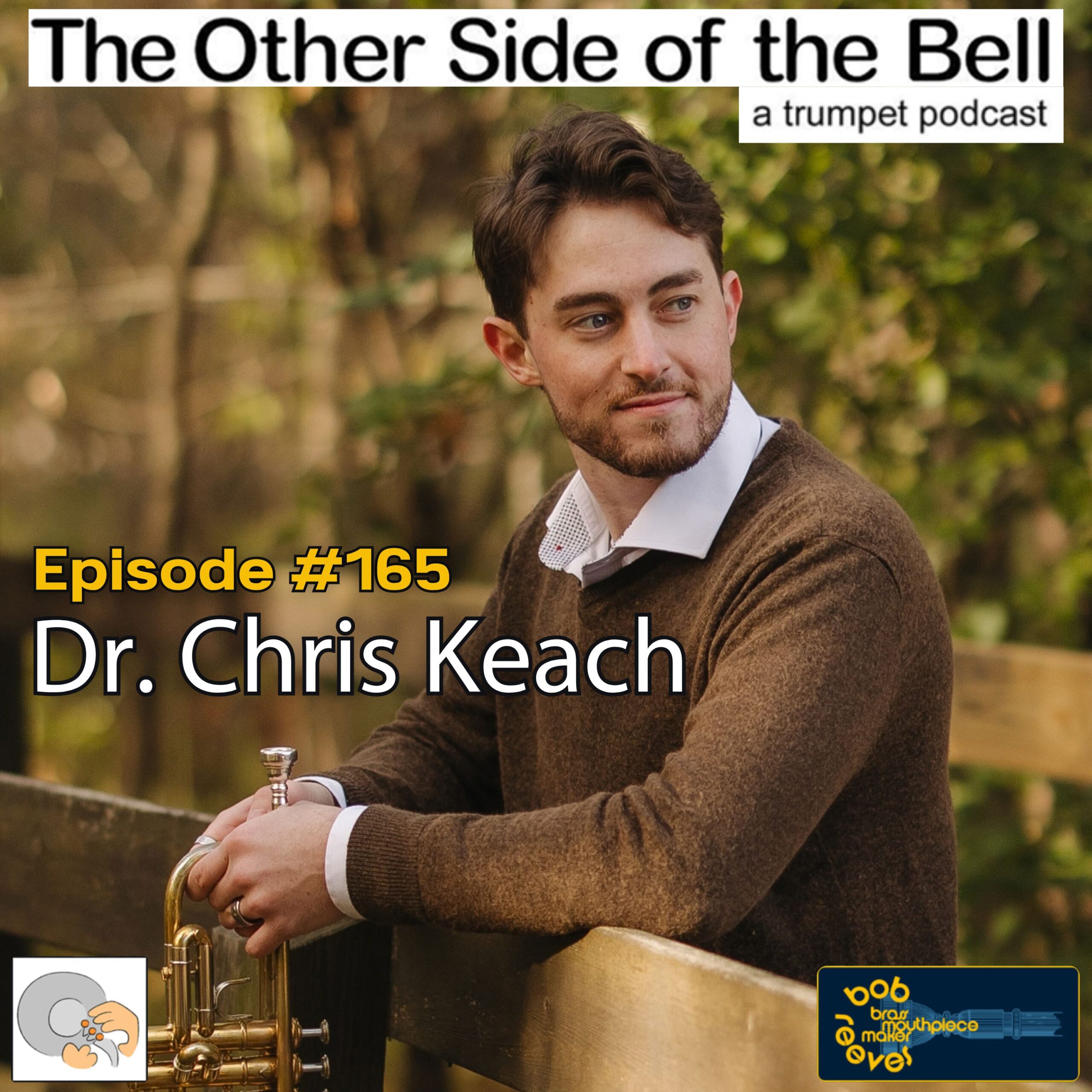
Welcome to the show notes for Episode #165 of The Other Side of the Bell – A Trumpet Podcast. This episode features educator, performer and composer Dr. Christopher Keach.
How do you apply vocal warmup and training techniques to trumpet playing?
And what if it unlocks an entire new approach to practice and pedagogy?
Dr. Chris Keach traces his path from a young Long Island trumpet student to college professor at the Crane School of Music, after studying at Crane and McGill University in Montreal, and reflects on how teaching, performing, and research have all shaped his journey. The vocal training techniques he learned along the way, such as jaw and tongue mobility, vowel concepts and nasal feedback, have helped him open up his sound and stamina, and give him further tools to help his students.
We chat about shifting from lead jazz trumpet to classical solo work, choosing graduate studies, landing a college teaching job before finishing his doctorate, and why creating new music matters for the trumpet community.
Chris began commissioning more original music after realizing how much trumpet repertoire repeats the same works, and wanting to expand the literature with new and diverse voices. His current and upcoming projects include trumpet and electronics, flugelhorn solo repertoire, chamber pieces, and a benefit concert concept tied to the local humane society.
And, Chris will of course play a central role in the the inaugural Brass Summit at the Crane School in September, a weekend full of performances, exhibitors, panels, workshops, masterclasses and more. The world-renowned Seraph Brass will be present and perform a featured recital. A great event that’s making world-class performance and instruction more accessible!
When choosing schools for a doctorate: “For me personally, the teacher is the number one choice that I would make. If I can study with someone who inspires me to be there, inspires me to be better, helps me to grow into the musician I want to be, then everything else can fall into place.” – Chris Keach
Listen to or download the episode below:


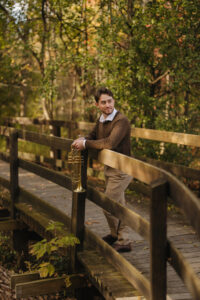
About Dr. Chris Keach

Dr. Chris Keach episode links
Bob Reeves Brass Events & Appearances
- Joy Brass, September 17-24, Tokyo Japan
http://joybrass.com
email to sign up: tp@joybrass.co.jp - Virtuosity Music, October 9-10, Boston, MA
Signup link - NCMEA Conference, November 8-9, Winston-Salem, NC
- Greg Black Mouthpieces, November 10, Mount Holly, NC
Podcast Credits
- “A Room with a View“ – composed and performed by Howie Shear
- Podcast Host – John Snell
- Photo Credits – Julia Kia Photography
- Audio Engineer – Ted Cragg
Transcript
Please note, this transcript is automatically generated. It may contain spelling and other errors. If you would like to assist us in editing or translating this transcript, please let us know at info@bobreeves.com.
[00:00:00]
CHRISTOPHER KEACH: Being a professional in this field and saying, “Okay, I know how to play the trumpet, but I don’t really know how to do this and that feels a little bad, but I’m gonna kinda like lean into that discomfort and, and really learn something new because it was fun and exciting, even though it was a little stressful.”
JOHN SNELL: Hello, and welcome to The Other Side of the Bell, a podcast dedicated to the world of trumpet, brought to you by Bob Reeves Brass. We want to inspire you to develop joy and confidence in your trumpet playing. I’m your host, John Snell, and joining me today is trumpeter Dr. Christopher Keach.
JOHN SNELL: We’ll get to Chris’s interview here in a moment, but first, some trumpet news.
JOHN SNELL: Well, I hope everyone’s summer is going well, or the end of winter, for those of you listening in the Southern Hemisphere. Uh, we finally got a break in the heat here. I’m only mildly sweating here in the front of the shop, uh, after some, [00:01:00] uh, a week of over 110 degrees and humid 60, 70%, uh, humidity here at the shop, uh, here in Valencia.
It was, it was crazy. So thank God for air conditioning when it does work. and, uh, thank God we’re inside and not out, uh, doing outdoor activities through that summer. so moving on into fall, um, but yeah, before I talk about the travel, as I was mentioning, a couple things. I got some emails and calls that were really moving.
This is what I wanna share with, uh, uh, share with you before I get into the trumpet talk. one in particular, um, uh, listener, his, uh, mother unfortunately had a heart attack and was, uh, taking care of her and, uh, having to drive and commute a few hours back and forth, to take care of her while she was getting the medical care that she needed.
And, uh, I got a very sweet email that, said that he, uh, listened to the podcast, listened to the other side of the bell during his commutes and listening about the trumpet stories and the gear talk and the valve oil and heavy valve caps and things that we talk about, [00:02:00] um, eased his mind, uh, when he had to sit in the car, worrying obviously about his, his mother.
And, um, so very sweet, and I’m, I’m just gonna keep the name private. I’m not gonna give a shout out, but, uh, if you know who you are you know that I really meant a lot from that email. it just goes to show you that even though this is just kind of nerdy trumpet talk, it goes a long way, uh, in making life normal when things like, a loved one having a heart attack or medical issues, makes things not so normal.
Um, so that was really, uh, you know, I, I come in here and I love doing the podcast, but it just adds a little extra to, um, what we do here at the shop and on this podcast. and kind of along the same veins, uh, I had a previous guest, whose, uh, mother was in hospice, and, um, when she was on, in her last days, one of her re- requests was to listen to, our interview that I did with that guest, to hear the story of their life and, uh, hear those stories about trumpet playing [00:03:00] and, and, uh, and, uh, it just, it blows my mind to think that, uh, what we do here, um, meant that much to, that artist’s mother, and of course, the artist, uh, that they would sit in, the nursing home room listening to the other side of the bell and bringing that kind of joy in those moments.
So, really, yeah, I, I, and I’m not, don’t have a way with words, but just to those people out there, I, I, I hear you and, uh, just means a lot that, this little podcast was able to bring comfort in those days. and as Mr. Adam used to say, “Write your mother.” If you haven’t written, uh, your mother or your father or someone who’s a mother or father figure, call them, write them a card, let them know how much you appreciate, um, them while they’re here on this earth.
That being said, back to my normal, course of action here. I, my bags are packed and, uh, as soon as I can log off here, I’m heading to the airport to go to Japan. Oh, this is, I think, what, my 15th or [00:04:00] 16th trip with the shop to Japan. So many great friends over there. It’s always a great time. I gained way too much weight over the week I’m there, but it’s worth it, uh, because the food and the drink and the, the company are absolutely amazing.
Uh, a few changes from what I’ve talked, uh, talked previously on the podcast. I’m doing a, a couple exhibitions outside of Tokyo. Uh, first one will be at Naitogaki, which is a, uh, very esteemed, uh, music store in Kofu, Yamanashi Prefecture. I will be there on September 19th. So if you’re in that area, I think they call Kofu the Gateway to Mount Fuji.
So I am looking forward to visiting. Uh, it’s a gorgeous area of Japan. And although I’ll be in a music store all day, there’s a lot of worse places I could be in a music store than just outside of Mount Fuji in the beautiful town of Kofu. So again, that’ll be on, uh, September 19th. On the 21st, I head over to Fukuyama, which is, uh, not too far from Hiroshima.
and, uh, I will be at the Brassworks [00:05:00] exhibition. Uh, there’s, uh, Glance Trombones, uh, I believe Shires, will be there. I’ll be there with mouthpieces as well as Charlie Davis trumpets, and of course, Ulvain Mutes. and then after that, I head back to Tokyo where I will be my home base at Joy Brass on the, uh, 22nd to the 24th.
So, uh, I think there are still some valve alignment spots available and consultation appointments, so contact the folks at Joy Brass. They are in charge of all of my schedule at all of those places, if you wanna get an alignment done or, uh, get booked for a consultation. So, I will see you all, uh, pretty soon.
Looking forward to that. Next bit of news, I’ve been talking about my trip to Virtuosity Music in Boston, October 9th and 10th. We do have the signup link now. Uh, we’ll have that below in the description if you’re watching this on YouTube, or if you, uh, open up your description on Spotify or Apple Podcast, we’ll have the link to where you can sign up for a valve alignment there.
I always sell out, Boston always shows up for the valve alignments and mouthpieces. [00:06:00] So if you’ve ever wanted to do one and you’re in the New England area, make sure you schedule that appointment, because I can’t change my flight. because after that, I’m excited. I’m going to Cincinnati to the, uh, Cincinnati Conservatory of Music.
Ashley Hall Tighe is having me out. I’m giving a, a lecture. Lecture’s not a great word. I’m giving a presentation on equipment and choosing equipment and life and all kinds of things that I can throw in acoustics, to, uh, the trumpet studio there at CCM. I’ll also be doing some valve alignments. I’m not sure if that’s open to the public or not, but if you’re interested in doing alignment and you’re in the Cincinnati area, reach out to the shop and if I can squeeze you in, I definitely will.
But honored to be at CCM. Uh, a lot of history there. A lot of great guests have gone through, uh, the previous guests on the podcast have gone through CCM, so excited to speak there for the first time. one last note, uh, my North Carolina trip has changed a little bit. Uh, the dates have changed a little bit.
We will still be in, uh, Winston-Salem at the NCMEA [00:07:00] convention, uh, November 8th and 9th. That’s a weird one. That’s a Sunday and Monday. That’s when they do the convention. And then our visit to Greg Black’s, mouthpieces in Mount Holly, we’ve switched, sides. So instead of being on that Friday beforehand, we are now gonna be there on Tuesday, November 10th.
So we’re heading from Winston-Salem and we’re gonna end the trip, in fashion with, uh, Greg Blackmouthpieces on Tuesday, November 10th, uh, which also happens to be Veterans Day here in the US. So even better if you have the day off, uh, you can come in and hang out. and as we like to say, if between Greg Black’s mouthpieces and our mouthpieces, if you can’t find a mouthpiece that works between the two of us, it probably does not exist.
So looking forward to seeing all of our friends on the East Coast in North Carolina in November, uh, 8th and 9th at NCMEA and the 10th in Mount Holly at Greg Black’s. All right, that’s all the news I have for today. I’m excited to get right to my guest, Dr. Christopher Keach.
[00:08:00][00:09:00]
JOHN SNELL: Dr. Christopher Keach is a New York-based trumpeter, educator, and researcher, and lecturer of trumpet at the Crane School of Music at SUNY Potsdam, A versatile performer across classical jazz and Afro-Cuban music. He is co-principal trumpet of the Orchestra of Northern New York And performs with the Northern Symphonic Winds and Potsdam Brass Quintet. Christopher earned his doctorate and master’s degree from McGill University, where his research explored performance science, practice techniques, and electronically augmented trumpet performance.
Please welcome to the other side of the bell, Dr. Christopher Keach.
JOHN SNELL: Well, I’m so honored to have joining me today, uh, across the country in, uh, Potsdam, New York, Christopher Keach. Chris, how’s it going?
CHRISTOPHER KEACH: Good, good. Thanks for having me today.
JOHN SNELL: Oh.
CHRISTOPHER KEACH: to, to be here and chat with you.
JOHN SNELL: Yeah. And, uh, yeah, I was honored to having you on. And, [00:10:00] uh, before we get going into, uh, my normal line of questioning, I just upfront want to let folks know about a, a brass summit, brass festival, what do you call it, coming up soon at your, at the university?
CHRISTOPHER KEACH: so the end of September, uh, September 25th and 27th to the 27th, Serf Brass will be coming up to the area. They’ll be doing a performance and masterclass with a lot of our students here. Um, and then our local, our college brass quintet, the brass quintet will be playing a show. Um, we have alumni coming.
it’s gonna be a whole big event. We have vendors who will be stopping by too. It’s gonna be a great time. So if you’re in the area, anywhere upstate northern New York, um, please stop by. It’s gonna be an, a fantastic time.
JOHN SNELL: We’re even Canada, right? Yo guys? My geography outside of LA is not that great, but you guys aren’t too far from, uh, what, Ottawa, uh,
CHRISTOPHER KEACH: About an hour from Ottawa, two and a half from Montreal. So if you are in Canada too, stop on by.
JOHN SNELL: Yeah. And, uh, unfortunately, uh, as I’m recording this, I’m getting ready to head off to Japan, otherwise we would be there. Um, you know, but we’re happy to, happy to support the, uh, the festival.
And Seraf Brass, we had Mary Elizabeth [00:11:00] Bowden on, um, I think a year or two ago, on the podcast, and she’s obviously a founding member of that organization. And, uh, I haven’t heard them live yet. I’ve heard tons of their recordings in social media, so, that’s gonna be an amazing event. Uh, we’ll have the information, down in the description of this podcast and on the show notes, so folks wanna head out and, uh, take part in this wonderful event.
Uh, we’ll have all the information for you. So with that plug out of the way let’s talk about you, Chris. and I wanna start right from the beginning. I wanna find out how you got into the trumpet. Did it search you out or did you search it out? How, what did that look like?
CHRISTOPHER KEACH: yeah, so I started playing the trumpet when I was or nine years old, about, about that range, um, when I was a very small child. I, I started, um, my, my local school has a music program that happens every summer, where we get lessons Monday, Wednesday, and Friday for 45 minutes, on a starting instrument, which is a fantastic way to start.
Um, and I actually was teaching it for, um, the past four or five [00:12:00] years.
JOHN SNELL: Hmm.
CHRISTOPHER KEACH: so nice to make it a little full circle moment. but it’s this fantastic program where you get set up with an instrument, you take lessons with all of the teachers from the district, and it’s, it’s really fantastic. Um, but I actually started on trombone,
funny enough. so when we’re picking our instruments for the, for the school, we, we have to pick our top three choices. so my top choice was trumpet. second choice was trombone, and my third was like saxophone or something. so they ended up giving me trombone and I was really upset. So I said I couldn’t reach.
I was a really short kid. So I said I couldn’t reach the last position. Um, and then my mom, I, I convinced her to get me to switch to trumpet. So um,
JOHN SNELL: Awesome.
CHRISTOPHER KEACH: there,
JOHN SNELL: Yeah.
CHRISTOPHER KEACH: one lesson on trombone and was like, “Nope.”
JOHN SNELL: That, that was, that, not for you. so, and you said eigt or nine years old. And what, so what, were you from upstate New York or where were you from originally?
CHRISTOPHER KEACH: so I’m from Long Island, New York,
JOHN SNELL: Okay. So the other side.
CHRISTOPHER KEACH: and a half hours. Yep, yep, yep, right by the city. so I grew up there and the, a lot of strong music programs on the [00:13:00] island.
JOHN SNELL: so you’re getting private lessons like paid for through the district at, as an eight year old, nine year old. Amazing. Amazing. Was it an instant love or was it a thing you just kind of did for fun?
CHRISTOPHER KEACH: it was definitely an instant love. So the, because I switched from trombone to trumpet, I didn’t have a trumpet for the first days, maybe week, and I just brought around my mouthpiece everywhere and I was buzzing all over the place and everybody was not happy with me, but.
JOHN SNELL: So, but you couldn’t get enough of it. Uh, anyone musical in your family, uh, or is it just something they, they kind of helped you, wanted you to do in school?
CHRISTOPHER KEACH: so my mom, uh, my mom took a lot of voice lessons in college, um, and she’s a big time singer. She actually recorded an album for, um, children’s songs. She,
JOHN SNELL: Oh.
CHRISTOPHER KEACH: um, first of all, she’s a mother of nine, um, so she loves children,
JOHN SNELL: Mm-hmm.
CHRISTOPHER KEACH: and she, definitely uses music a lot in her teaching, in her just parenting and everyday life.
Um, she’s always singing,
was definitely passed on to me [00:14:00] and pretty much all of my other siblings. my dad has actually never played a musical instrument in his life. Um, he also sings around the house and everything, but never picked up a musical instrument at all. but they were both very supportive of, of everything going on musically, so.
JOHN SNELL: So they foster, foster your growth. Um, any other siblings play instruments? Did you guys have like a or anything or were you kind
CHRISTOPHER KEACH: I
JOHN SNELL: one? Yeah.
CHRISTOPHER KEACH: my oldest brother played viola, my second oldest played, uh, drum set. They both quit at the end of high school. One of them quit in high school. my younger sister played flute for a while. My brother below him played sax for probably about a month and quit. and then my younger sister below him actually went to Crane,
JOHN SNELL: Mm-hmm.
CHRISTOPHER KEACH: of my first students here, which was hilarious.
JOHN SNELL: Oh, wow.
CHRISTOPHER KEACH: she, she’s at Berkeley now. Um, she’s doing music therapy there, so,
JOHN SNELL: Cool.
CHRISTOPHER KEACH: she’s a flute player.
JOHN SNELL: But so yeah, but ev- everyone played an instrument, that must have been fun after school. Just everyone finds a corner and is practicing [00:15:00] their cacophony of noise.
CHRISTOPHER KEACH: right?
JOHN SNELL: Uh, so take me through your progress then on trumpet. So you, you had your weekly lessons, you’re playing in school band. Uh, you know, at what point did it become, you know, more serious as it were?
CHRISTOPHER KEACH: I think s – from the beginning, my main passion has been education and being a teacher. I think it probably comes from being one of the oldest of nine siblings and, you know, being a helper around the house and always wanting to help and teach and inspire. so I was always growing up, I was like, “I’m gonna be a teacher.
I just don’t know what.” And I just kept playing the trumpet and I kept practicing and I loved it all the time, but I was just like, you know, kinda going through the motions of like, “Yeah, I’m gonna teach someday. I don’t know.” And then I got to high school, um, and that’s really when things kind of took a turn.
Um, I started studying with a new teacher. Um, his name is John Brierly. He was a, a local gigging musician who played a lot of screaming lead stuff. Um, really, really awesome player. and I started taking lessons with [00:16:00] him and, and everything kind of just like started to skyrocket in the direction of, uh, I’m gonna teach music now. Um, yeah.
JOHN SNELL: And how old were you then?
CHRISTOPHER KEACH: Uh, that was going into ninth grade.
JOHN SNELL: So, wow, that’s, that’s pretty young. Uh, and, and specifically into teaching. It, it didn’t have really interest in freelancing or orchestra position or anything like that?
CHRISTOPHER KEACH: Not really. Like I, I have always loved playing, but my main passion has been teaching. so I always consider myself a teacher first, player second, even though I always love playing and I love all the gigs that I get to do and, and all the tours that I get to play on. but always have been a teacher first.
JOHN SNELL: That’s fascinating. so, what did that look like then in terms of your practicing? Did you, you know, practice more with like an eye towards a pedagogical approach versus, well, I don’t know. Uh, I mean, obviously a fabulous player as well, so whatever you did was working out. But you know what I’m saying?
Like you, you, was that always through that lens that you were gonna be a, a teacher as you were getting [00:17:00] lessons and things like that?
CHRISTOPHER KEACH: Not always through that lens. Um, in, in fact, when I, when I was an undergrad, I actually had a shift where I was like, actually, I’ll just be a performer. I don’t wanna teach. Um, and it was like kind of a flip flop that happened midway through undergrad. And then towards the end was when I was like, actually, I wanna teach at a college because then that gets, you know, I get the best of both worlds.
I get to play in a local orchestra. I get to, teach every s – every day. I get to still put on recitals and, and do all the performing that I love to do. And then also I get to teach as like the main thing. Um, so it’s like I get to do the main thing that I love so much with everything on the side.
JOHN SNELL: Mm-hmm.
CHRISTOPHER KEACH: but in terms of like my practicing approach to, um, kind of gearing myself to be an educator is, and I still do this in the way that I practice and I encourage my students to do the same, but looking at it as a way of there’s someone over my shoulder telling me, “Hey, you’re doing that wrong.
Why don’t you try it like this? Try something like this.” And, and kind of taking the, the perspective of I’m my own teacher in the practice room. And that really [00:18:00] opened me up to so many things that I was missing in my playing and also just the things that I forgot about in my lessons that I was like, “Oh yeah, my, my teacher told me to do that when I was practicing.
I’ll try that now.”
JOHN SNELL: So start connecting those dots as it were, yeah.
CHRISTOPHER KEACH: Yeah.
JOHN SNELL: So, so you’re in, in high school. Did you have kind of a leaning in terms of, like styles of music? And I hate labeling, but, you know, players tend to grow up and say, “Oh, I wanna, wanna be a classical player, an orchestral player, or I like jazz, or I like everything.”
So what did that look like for you?
CHRISTOPHER KEACH: I was definitely a jazz player in high school.
Absolutely 100%. Um, I, I played. When I was in high school, I played on a, a Bob Reeves 42S. and then I switched to a 42ES, so very shallow. And I did a lot of lead playing, because my, my teacher in high school was a lead player.
JOHN SNELL: Yeah.
CHRISTOPHER KEACH: I just though that was so fun.
so I, I did a lot of lead playing. I actually went to, um, in New York, we [00:19:00] have an all-state program. Um, and I, I went to All State as the lead trumpeter for, the Rochester Conference in, in, uh, what year is that? 2015,
2016? One of those years. but I played lead trumpet for the, um, for the All State jazz ensemble, which was such a fun opportunity.
But definitely more of a jazz player, um, when I was in high school.
JOHN SNELL: So studying, studying with a lead player, did, was the upper register difficult for you or was it something you feel like was more attainable than others?
CHRISTOPHER KEACH: I think it was definitely more attainable,
and that’s something that I actually wish wasn’t as attainable as a teacher, because I’m like, if I had known what it was like to struggle so much with some of these notes, like, I could just help some students better. But at, at the same time, like, of, of course I’ve struggled with range
things, um, and I’ve still worked on them.
But I, I think just the initial start of it came a little bit easier to me, which then as a teacher, you know, I’m like, “Okay, we’ll just try it [00:20:00] again.” ‘Cause that’s what I did when I was in middle school and high school. I just played high.
JOHN SNELL: Well, I mean, it was the mouthpiece, right? It was the ES cup. That
CHRISTOPHER KEACH: That, yeah, definitely.
JOHN SNELL: says the mouthpiece maker.
CHRISTOPHER KEACH: right, so if you are looking to play high, just get a Bob
Reeves
JOHN SNELL: just get an ES cup. Uh, I, I, as the attorney in me said, “Please do not. It’s, it’s not the mouthpiece.” It was a joke all in good humor, as we all know. Uh, although the mouthpiece can help, but no. Um, so you were, so you were in the jazz, I mean, were doing jazz soloing as well or were you more just like lead player kind of thing?
CHRISTOPHER KEACH: I actually didn’t do any jazz soloing, and that was something that throughout high school, I was wishing that I did more of, but it was kind of a, a nervousness of I don’t really know how to do it and I know how to play the trumpet, but I don’t know how to improv, so I don’t wanna like put myself out there.
But actually, um, about two years ago now, yeah, two years ago now, I studied [00:21:00] with Tony Glausey. Do you know Tony Glausey at all?
JOHN SNELL: Mm-hmm. Yeah.
CHRISTOPHER KEACH: I studied with him for an entire summer, um, while I was on Long Island working at the old, my old summer music program. And I would drive up to the city and, and take lessons with him and I actually started to figure out better how to improv and it was such an amazing experience, not only because I started to learn how to improv actually,
JOHN SNELL: Yeah.
CHRISTOPHER KEACH: but also being a professional in this field and saying, “Okay, I know how to play the trumpet, but I don’t really know how to do this and that feels a little bad, but I’m gonna kinda like lean into that discomfort and, and really learn something new because it was fun and exciting, even though it was a little stressful.”
JOHN SNELL: Right. Leaning into the discomfort. That’s, that’s great. It’s a great way to think about it. you’re not gonna learn something new unless we, uh, we get a little bit uncomfortable. I’m curious now, like, in your terms of going on into your university studies, you know, with the idea that you wanted to become a college professor, did that impact your choices of schools that you applied to and where you eventually went [00:22:00] or, was it more about like the trumpet teacher,
CHRISTOPHER KEACH: not really for undergrad.
JOHN SNELL: Uh-huh.
CHRISTOPHER KEACH: I had a bunch of friends who, who went to Crane,
JOHN SNELL: Mm-hmm.
Mm-hmm.
CHRISTOPHER KEACH: and I, you know, I did all the things. I took a lesson with the teacher and I said, “Yep, I can study here.” ‘Cause back then, um, that was when I was more interested in just teaching music of any age. it wasn’t until I was here at Crane, um, in my undergrad where I decided that I wanted to be a college professor. and then from there, for my master’s and doctorate, that’s when I really got into, okay, how am I gonna find the best program, the best teacher, the best path to being a college professor?
JOHN SNELL: So we, we’re really intentional about that, it sounds like. so during your time at Crane, you know, what, what did your growth look like? you know, you were, wanted to be kind of a general music teacher, but then shifted to that college professor mentality. Did that change your playing at all or was it really just in the practice room shedding?[00:23:00]
CHRISTOPHER KEACH: I don’t think it changed my mentality that much. when I was in high school, I didn’t practice that much. and then as soon as I got to Crane, something just clicked and I was practicing like four hours a day for my entire first year. And I was just like practicing really hard and, and even though I wasn’t a performance major when I started here, I just loved practicing and I loved, you know, learning new things and, and exploring everything that I had never done on the trumpet before. so it, it was more just, I was just doing my thing and, and practicing really hard. And then I kept growing as a performer, I was like, “Okay, I could do this full-time. I could be a college professor. I could be a performer if I wanted,” um, which was a really, really cool experience. and then one other thing to add is because I came in here as a, a, mainly a jazz player, it was a big shift for me to say, “Okay, could play all the screaming high stuff.
I can play jazz whenever I want. Can I play the [00:24:00] Hindemyth in the same style that the Hindemyth should be in? Or am I playing it like I’m playing a lead chart?” that kind of juxtaposition of my playing was, was something that I really had to develop when I was here.
JOHN SNELL: Mm-hmm. how did that, how did that go? I mean was it, was it a, a challenge for you or was it something that your ear and, you know, you talking about growing up with your mother and the singing, um, that, you know, you were able to pick that up rather quickly?
CHRISTOPHER KEACH: Uh, no, I was not able to pick it up
JOHN SNELL: Okay. So the
CHRISTOPHER KEACH: it.
JOHN SNELL: singing part didn’t help that part of it, apparently.
CHRISTOPHER KEACH: No, no, no. I think the singing part definitely helped the development of my ear,
JOHN SNELL: Mm-hmm.
CHRISTOPHER KEACH: um, but I don’t know how much it was able to help shift my, uh, performing mentality, if that makes sense. because I, I think I was so much in the mindset of, like, loud, high, fast. And then when it was, like, classical, sometimes it needed a more delicate approach that I wasn’t that equipped to do yet.
JOHN SNELL: Mm-hmm.
CHRISTOPHER KEACH: [00:25:00] so kind of just out what kind of, exercises that I could do to help control my sound a little bit more and, and make it less harsh in, in your face, um was a real challenge for me.
And, and a lot of it came from nice, quiet, relaxed playing, low clarks, to kind of center everything and hone it a little bit better.
JOHN SNELL: and obviously under the guidance of your professor at the time as well, in which, who was that, by the way? The.
CHRISTOPHER KEACH: so I studied with, um, Dr. John Ellis. Um,
he’s fantastic player. Um, he is now retired. He lives down in, um, New York City, but really, really amazing teacher. and part of the reason he was so beneficial for me was, I’m a person who is very uptight and everything needs to be done a specific way.
And he was, he was so relaxed with his sound and his playing, and he just brought that into lessons, and then it helped me relax a little bit. And I, and I think that was a really big, aid in [00:26:00] the way that I was able to transfer from my screaming high jazz playing to nice classical playing, just because of how relaxed his sound was and how relaxed lessons became.
JOHN SNELL: And, uh, probably a good, great example as well as for a, a college professor you know, to see, you take on that role later in your life. Uh, a good example for you. I’m curious what, uh, other inspirations you had, other trump – you know, trumpet players or other musicians that were inspiring to you during this time?
CHRISTOPHER KEACH: after, um, I graduated from Crane, I, I went up to McGill University, um, up in Montreal, so two and a half hours from here. and I studied with Richard Stozel, um, who’s an amazing player, amazing teacher. I studied with him for six years, one of those being in COVID, so all virtual, which was just a blast. Um but, but he was an amazing influence on, on the sound that I get, and also just as a soloist, the kind of musical expressions that I add and the kind of phrasing and shaping to my lines. Um, so I [00:27:00] think he really elevated my playing to the next level in, in that regard. some other big teachers that I studied with that I still refer to in lessons almost every day, I took one lesson with Karen Donnelly, amazing player, amazing teacher.
she’s given, given, she gave me, in one lesson, so many tools that I have still used and still use in all my teaching, which is just so helpful. and I’ve also studied with, uh, Ashley Hall. I took a lesson with her and I did some of her, coaching for musicians, which was really helpful for me as a performer.
But then also, as someone who was new to a college teaching position who didn’t really know what he was doing, it was, it was really great guidance to kind of figure out, okay, I can adjust my schedule a little bit to make me less stressed throughout the week and, and all these things. and then I did take one lesson with Sergeano Karyakov, which was the scariest lesson of my life, but also really exciting.
JOHN SNELL: Wow. And how, how was that? [00:28:00] That’s, uh, I don’t know if I’ve had met, met anyone who’s taken a lesson from him. What, what’d you guys cover?
CHRISTOPHER KEACH: So, um, there was a, a program up in Montreal where, um, him and, him and his trio were doing a tour. so they came by and there was, like, an audition to be able to play for his recital, so I actually opened for him in concert, which was crazy. Um, but, uh, part of the, the program was I would get a lesson with him. So we were going over the piece that, um, that I was playing, which was the Boom Concerto. so we started at the beginning of the piece, and the, I, I’ll always remember this because he says, ” Now, do you want me to stop you or should we just play all the way through the piece?” And I said, “Well, why don’t you stop me?”
And he said, “Okay, we won’t get through the piece then.” But we did.
JOHN SNELL: Well, that’s amazing. That’s great.
CHRISTOPHER KEACH: So I, I wear that as a, a badge of honor.
JOHN SNELL: You, you made it to the end of the piece. Uh, wow. What, what, that’s, and it, but it, it goes to show just one lesson can, change your trajectory. you [00:29:00] know, folks think you need to study for years and years and years with the person, and so just call them up and play it, play for them. You know, you never know, like with Karen, uh, Donnelly and, and Sergei, you never know what, tips and tricks are gonna just, you know, change your mindset.
and I’m excited. I’m, I’m gonna go visit Ashley at CCM in, um, in a couple weeks here and, and when I get back from Japan, uh, she’s having me out. I’m gonna give a little, uh, uh, talk to her trumpet studio and, uh, do some valve alignments and stuff. So I’m gonna, maybe I’ll, I should get a lesson as well while I’m there.
Take my own advice. Uh, so I, I’m curious, uh, about your choice of going to McGill. Uh, did you go there for both your masters and doctorate or was it,
CHRISTOPHER KEACH: Yeah. So I went there for both my master’s and my doctorate. My master’s was right in the middle of COVID, so everything was virtual for the first entire year.
JOHN SNELL: Mm-hmm.
CHRISTOPHER KEACH: so I went back for the second year and I said, “This is not enough of Montreal.” So then I ended up staying for, the entirety of my doctoral program. and I finished up there. I finished [00:30:00] in three years, but my third year I was virtual because I got this job. So.
JOHN SNELL: Wow. So you were right into a full-time job before you even had your doctorate. Now, that, I mean, that seems kind of uncommon, I would say, if, uh, and especially in, uh, these days with higher education, because I know higher education jobs are, in much more demand than they used to be. so I’m, I’m curious, like, what advice you would give to someone, going through the education path in terms of choosing schools and, you know, especially as we get beyond undergraduate, masters and doctorate level, what, you know, where your mindset, where your focus should be.
CHRISTOPHER KEACH: I actually went up to McGill in April to do a class on. I, I gave a presentation on what it’s like to get a college teaching job and the whole process behind it, because it’s a really unique experience applying for so many jobs. and the, the biggest piece of advice that that I told all the students about and then I, I still think about, to this day is that it’s so important not to just be [00:31:00] another trumpet player, because there’s so many trumpet players in the world.
The more you can make yourself stand out, the more you can really lean into who you are, what you like to perform, how you like to teach, anything unique about you, whether, you know, you play a lot of lead trumpet and also classical trumpet, and also you love to teach. so like anything that really makes you stand out, lean into that.
Don’t just say, “I’m a good trumpet player because there’s a lot of good trumpet players out there.”
JOHN SNELL: and in, in terms of, uh, you know, choosing schools for doctorate, are you looking at the, the trumpet professor? Are you looking at the program as a whole? The esteem of the, the school itself? I mean, what matters most, do you think?
CHRISTOPHER KEACH: I think it’s a little bit of everything. The. I think for me personally, the teacher is the number one choice that I would like to make. I can study with someone who inspires me to be there, inspires me to be better, helps me to grow into the musician I wanna be, then [00:32:00] everything else can fall into place. Now, of course, there’s always the, the issue of, “Is the school the right fit for me too?” And, you know, a lot of times they’ll, they’ll line up and a lot of times they won’t. So you kind of have to pick your battle of, “I really love this teacher, but they don’t have the orchestra size that I wanna play in,” or something like that. so, uh, I do think it, you have to weigh your options and, and find what’s most important to you. and in terms of, like, the prestige of a school, I think that it’s less about the prestige of the school itself and more of the prestige of the connections that you make while you’re at the school. and while you’re at professional conferences and while you’re doing travel and research and all these things, it’s, it’s such a great way to meet people, which I think is more important than having the name of a really prestigious school on your diploma.
JOHN SNELL: Yeah, great advice. And, I mean, and now you’re doing this with your, your studio every year, right? But, when does this start as, like, a junior, senior year? Like, uh, we [00:33:00] start researching universities and teachers? When do you recommend?
CHRISTOPHER KEACH: my students start researching, um, kind of the program that they want to go into in their junior year, because this is mostly an ed school, but I have, uh, I think three or four trumpets this year who are looking to graduate and go into a, um, a master’s program. have them start in their junior year and just start to compile a list.
What do you want the next five years to look like? Are you gonna be teaching in a public school? Are you going to be going to get your doctorate? Are you going to be applying for orchestral gigs? ‘ Cause those are a whole bunch of different pathways that you can take, which kind of lead us in a direction of who you want to study with. you could pick someone who you’re just like, “I like their sound,” and that’s a great choice. but if you wanna study orchestral trumpet, go find someone who does that really well and who teaches it really well. If you wanna go and play in Canadian brass, if that’s your main goal in life, study with either someone who is in Canadian brass or someone who’s really [00:34:00] good in, at playing in a brass quintet, and kind of finding that pathway of, “This is what I wanna do, this is who can help me get there.”
JOHN SNELL: To have that goal in mind though. Yeah. Yeah. Have to have some sort of path. So I’m curious, why was McGill, the choice for you as doing that research?
CHRISTOPHER KEACH: For me, uh, when I was, uh, here, when I was graduating, I said, “I am mostly a soloist. I would love to just be a soloist.” and, and that was kind of my. As, as a performer, I was
like, “I will be a soloist as a performer.” and when I went up to take a lesson with Stozel, like, immediately he said so many great things that kind of shifted the way that I was thinking about things in a very helpful way. and he’s such a good, uh, soloist. I don’t know if you’ve heard any of his
albums. He has, like, five albums or something. and I, I just kept listening to his sound and the way he was phrasing his lines and the style of his playing, and I was like, “I wanna do that.” and that’s kinda where it went.
I was close enough to Montreal too, so I was able to [00:35:00] take a few lessons from him before I even got to decide, which was just really, really cool.
JOHN SNELL: And, and that’s a pretty common thing as well, right, is reaching out to the professor and if, if you can’t travel there, maybe getting a Zoom lesson or a Skype lesson or something like that. so by the time you were done with your undergraduate, you can, were you less of a lead player, you would say, and more of a, more of a soloist and got the classical thing going?
CHRISTOPHER KEACH: Yeah, absolutely. I, I
JOHN SNELL: Yeah.
CHRISTOPHER KEACH: was still some refining to do by the time I was graduating.
JOHN SNELL: Mm-hmm.
CHRISTOPHER KEACH: sometimes I have recordings for my, my senior recital here, and I listen back, and I’m like, “Okay, some of the things were, were really classically good.” And then other things I’m like, “Okay, I still hear a little bit of that lead playing in that, in that high D.” but
JOHN SNELL: Little bit of sizzle.
Yeah.
CHRISTOPHER KEACH: is a little extra punch that it didn’t need. but when I went to McGill, they have a really amazing jazz program too. So after the year of online COVID, I said, “I wanna play jazz again.” So I actually played lead trumpet with the, the McGill Jazz Orchestra too. So then again, I was figuring out that balance of, okay, [00:36:00] can I switch from lead jazz to playing? So I had to kind of flip that switch again, which was, which was a fun experience, but.
JOHN SNELL: And, uh, were you, uh, starting to freelancer at all in, uh, Montreal? Or I know it was COVID time, so, you know, music was hit or miss different places, but were you starting to get out and, and perform some more?
CHRISTOPHER KEACH: Yeah, th- there wasn’t too much in Montreal, um, because a lot of the population is French speaking, a lot of the gigs are French. Um, but I actually played in, in a theater organization, the Segal Center. we did Beautiful the Musical.
JOHN SNELL: Yeah.
CHRISTOPHER KEACH: and um, so I, I played, I, I think it was a month of shows and a few weeks of rehearsals, which was, was eight shows a week, and they went till, like, 11:00 PM, which is past my bedtime. But, but it was a, it was a really fun experience. I also played with some local youth orchestras, too. I did that, I think, three times, which was pretty unique, so.
JOHN SNELL: And, what was your routine like at, at that time? Or actually, we just talk about your routine in general. Do you have, like, a regular [00:37:00] kind of maintenance practice warmup routine or does it vary depending on your, the demands, who, you know, what you’re playing, who you’re teaching, that sort of thing?
CHRISTOPHER KEACH: It definitely varies. I like to switch up my warmup Um, pretty frequently. so I do a lot of buzzing book, um, Jim Thompson. Um, I, I, book, um, a lot of great things. So every once in a while I’ll bring that back and do that as like a, a kind of a checking in warmup of can I still do this the way I used to? Um, but, and usually the answer is yes, which is a good thing. Um, but most of the time, um, I actually wrote out my own warmup routine, that is based mostly on vocal pedagogies, which was really interesting to do. I was taking voice lessons for a while and it kind of changed the way that I think about, some of my playing sometimes.
and I’m actually working on a method book that, kind of takes us through singing exercises and how we can, uh, how we can bring those into the way we play the trumpet to make our lives easier on the trumpet because it’s [00:38:00] not an easy thing to do. so my warmup is, is kind of consistently that or the buzzing book and occasionally something else.
JOHN SNELL: That’s cool. I’d love to talk a little bit more about the, the vocal techniques. And, uh, correct me if I’m wrong, it wasn’t your, your thesis was on that, right? Or your dissertation wasn’t on comparing, uh, brass and vocal pedagogy?
CHRISTOPHER KEACH: So my thesis was actually on, um, different practice techniques. Um,
JOHN SNELL: Yeah.
CHRISTOPHER KEACH: it’s a technique called combined practice, that, uh, Christian Steenstrup, who’s a trumpeter and a researcher, he did a whole, research project on it. Um, and I kind of created, uh, recreated that research study and, and saw the effects of different learning techniques on retention. But at McGill, we actually have to have three topics of interest,
JOHN SNELL: Oh, wow.
CHRISTOPHER KEACH: have to prepare research on. So that was my main one. but one of the other ones was also vocal pedagogies and how we can adapt those and bring them into our trumpet playing.
JOHN SNELL: Is that kind of the impetus of the book from, from that research or?
CHRISTOPHER KEACH: Yeah, absolutely. So that’s where it started and I was like, I should write a book [00:39:00] about this.
JOHN SNELL: So, can you take us through it a little bit? Like what are some of the vocal techniques that would transfer over to brass playing?
CHRISTOPHER KEACH: Um, so first of all, I, I don’t know any trumpet player that does this, and if there is one that does this, please to me. Um, but something that I would always do in my voice lessons is first I would like, I would stretch out my jaw and massage my tongue and stretch out my, my tongue and, and everything here, which I don’t think I’ve ever done with trumpet playing before.
and like, especially when we have tightness it makes trumpet playing harder. So, you know, right off the bat, just stretching our jaw and massaging the tongue to just get everything ready to, to move the way we, we need it to. the first time I did that in a voice lesson, I was like, “Huh, I should do that on the trumpet.”
And I started to and, and just the, the difference in, especially on days where I felt really tired and tight, it just helped kind of open up my sound and, and it work way that it’s, it should. [00:40:00] Um,
JOHN SNELL: Interesting. Yeah, so just warming up the muscles and massaging the muscles, yeah, that
CHRISTOPHER KEACH: yeah.
JOHN SNELL: just like an athlete would, or a vocalist. Different, different form of athlete. Um,
CHRISTOPHER KEACH: Yeah.
JOHN SNELL: and, um, any other techniques or like studies or things like that that, you’ve incorporated?
CHRISTOPHER KEACH: Yeah. Uh, there’s so many so I could
talk for hours.
JOHN SNELL: a whole book, but I’ve just given, yeah, give us, give us a smattering, if you would.
CHRISTOPHER KEACH: Um, so one of the big things, and, and actually Stozel taught this to me in our trumpet lessons too, but the use of vowel shapes, is really, really helpful for the way that we’re phrasing different notes. Um, it could help with flexibility too.
a, a lot of the times in my voice lessons, I would do, um, like higher trails, um, and it, I would focus on the tongue moving and making the trail happen, which I then brought right over into my lip trails and it made it so much easier. another thing that’s a little less, something that makes a little less sense, is that when I was singing, I have the [00:41:00] tendency to take my tongue and bring it really far back, um, which creates kind of an openness in my oral, oral cavity, then makes the sound duller than I want it to be. something my voice teacher would do was have me plug my nose, which would naturally, the way that the valve would close, um, it would naturally bring my tongue forward, um, to kind of like focus the sound. So I started doing that with trumpet playing and I actually have these nose plugs now, so when I wanna do it for longer periods of time, I just put it on. Um, and, and that kind of helps to bring my tongue forward if I’m ever, you know, going to the lower register and opening up too much. Um, it helps to focus the sound and really center it.
JOHN SNELL: Wow, fascinating. And, uh, all this is going into your, uh, your method book
CHRISTOPHER KEACH: Yep, all
JOHN SNELL: that you,
CHRISTOPHER KEACH: more.
JOHN SNELL: and more, that you’ve talked about on the internet, so now you have to, you have to finish it
CHRISTOPHER KEACH: Now I,
JOHN SNELL: because
CHRISTOPHER KEACH: I’m
JOHN SNELL: have.
CHRISTOPHER KEACH: obligated.
JOHN SNELL: you le- le- legally. Well, please keep us in the loop because that sounds fascinating. just the thing, yeah, about stretching out the muscles.
I mean, I know trouble players will, like, flap their lips and things, which [00:42:00] to me just makes them tingly. That doesn’t actually make me feel good, but if it works for you, you know, uh, full disclosure, if it works for you, do it, don’t listen to what I say. But yeah, like, the cheek muscles and the further and the, the, like, all of that stuff, yeah, is where so much tension is held or, uh,
CHRISTOPHER KEACH: Yep.
JOHN SNELL: well, I’ll, I’ll try that today, see how it goes.
so, uh, I think where we left off, you were getting your doctorate with Stoltzel, but you, you said you got your, position at Crane before you actually finished your doctorate. Is that correct?
CHRISTOPHER KEACH: Yep.
JOHN SNELL: does that mean you were, so I’m assuming you were out applying for jobs while you were still, still in school?
CHRISTOPHER KEACH: Yeah, so the way that McGill’s program works is that, there’s two years of in-person lessons and classes, and then the third year is just for thesis writing. so I was still a full-time student, but I wasn’t enrolled in any classes or anything. so after the second, or during the second year is when I started applying to, um, some jobs, I was a finalist at two of them and then also got the crane job. but I was just on the, the job search and if I didn’t [00:43:00] get a job, I would have said, “Hey, I have more time to do my thesis and apply to even more jobs.” so it, I wasn’t, you know, super set on, “I need a job right now.”
JOHN SNELL: Mm-hmm.
CHRISTOPHER KEACH: it was more of is a great time to, to get into the field if I can, and if not, I have even more time for my research.
I have even more time to hone all of my applications that I plan on making and everything, so.
JOHN SNELL: Wow, it’s, and so your whole third year is dedicated to just your your papers. Uh, a lot of people are gonna apply to McGill after hearing that. All these doctoral students, they’re still taking, uh, classes and while still having to do their dissertation.
CHRISTOPHER KEACH: Yeah.
JOHN SNELL: so, uh, any advice you can give then on the, now the actual job search in terms of, I mean, is it similar to finding a, school to, that you wanna go as a student and, but just on the, on the professor side and also tips for putting together your CV and your application?
CHRISTOPHER KEACH: I think the, the most important thing when you’re doing the so – job search, if you’re [00:44:00] just looking for a job to have a job, that’s cool, but also make sure it’s a place you wanna live because. And I know there aren’t that many jobs out there, so it’s, you have to be a little picky, but also not picky.
It’s kind of a weird balance. but whenever you’re applying to a job, I found that the most important thing is to actually research the school and actually, take your, all of your application materials, which are gonna be primarily the same from school to school, from application to application, and hone it in a way that it takes what the college is looking for says, “Okay, you’re checking all those boxes that we’re looking for.” I think a lot of the times, and I did this for so many jobs that I wasn’t that interested in I would just take my cover letter, it was just, I filled in the name of the school and I hit submit and I didn’t hear back from that school.
JOHN SNELL: Mm-hmm.
CHRISTOPHER KEACH: and then the schools that I did, that I was a finalist for or got interviews for, [00:45:00] outside of that first round of, of applications were the ones that I did the research on what the area is like, what the teachers are, there are like, what their recruitment processes are now, and kind of taking those things and saying, “Okay, this is how I can fit into that and here’s how I can add to that.” so kind of saying, “This is what you have and this is what I can bring to fill what you’re missing,” sense.
JOHN SNELL: Yeah, yeah, yeah. I mean, you’re adding value, trying to add value to, you know, wherever you end up and hopefully you like where the location is. But yeah, I mean, if you’re, uh, obviously a job is a job and if you just need the paycheck or just to get your foot in the door, you know, you could leave, live anywhere, but you may also be miserable.
And it’s like, is the paycheck worth it at that point? Or having the entry, you know, the first job kind of thing. so then how did, how did Crane come about? I mean, that’s kind of cool, kind of like a homecoming back to your original school.
CHRISTOPHER KEACH: Yeah.
I knew the, the school already. So a lot of the research process that I was just talking about, I already had the [00:46:00] background on and, you know, most of the students here are music ed students. That’s awesome. That kind of fits my teaching philosophy in the way that I teach.
but during my, the end of my second year of my doctorate, um, one of the teachers got a job somewhere else. so she was leaving and they, they needed someone. So it was a perfect time that I just kind of snuck in as it were.
JOHN SNELL: and, started teaching while you were still finishing your doctorate, which seems kind of cr – seems pretty difficult just jumping in a new job, new job while finishing that up. Was there any, uh, difficulties with that or was it, uh, just working night and day?
CHRISTOPHER KEACH: There were definitely, definitely difficulties with it. I think it was helpful that my research was mostly done
JOHN SNELL: Mm-hmm.
CHRISTOPHER KEACH: more of just putting it in a document and making it sound nice. so it was more of just the formatting of everything and, and, you know, there were some research elements that I still had to go through.
like for, [00:47:00] for my, my, a lot of my research data, I had participants record a piece of music live, and then I went through and just marked with Xs whenever they missed a note, or whenever they played a rhythm wrong. and then I tallied those percentages. So that took a lot of time, but it, you know, it was just work that I sat down and did. so that was probably the most time-consuming thing that kind of overlapped with my teaching and it made it a little bit harder to kind of balance that, but that was the only real aspect of the doctoral process that was the most distressing.
JOHN SNELL: So, and then, but when it’s, when it’s done, it’s done. You get through your first year, you’ve got your first year under your belt of teaching and you’re a doctor now, so
CHRISTOPHER KEACH: Yep.
JOHN SNELL: it’s, it’s over with, you know, hard easy. Um, So I wanna shift back to kind of the musical side of things. Not that music and education are two separate things, but, uh, in terms of your [00:48:00] performance, it’s interesting with your background as a lead player and then becoming a soloist and going more towards classical music. I know the last several years you’ve been, um, a big proponent of modern works.
in fact, you’ve commissioned some works. And so I’m just curious how that path went. Was it through your undergrad? Uh, you started getting, interested in modern works and modern techniques on trumpet or, how did that come about?
CHRISTOPHER KEACH: Yeah, so once I graduated from Crane, I realized that I heard a lot of the same trumpet repertoire over and over again. kind of led me to look into, first of all, more music, um, more diverse music especially. I did a, a grant project through McGill, um, where I started to research diverse music written by underrepresented composers for trumpet, which kind of brought me into this, this pipeline of, okay, now I’m gonna have all this new music that, not many people played.
Um, a lot of the music that I did for my master’s recital or my doctoral recital, there were no recordings out there.
JOHN SNELL: Hm.
CHRISTOPHER KEACH: [00:49:00] so a lot of the times I’ll have my students play similar pieces and they’re like, “Dr. Keach, that’s you re – on the recording.” And I’m like, “That’s the only one there is.” So that pipeline of, “I wanna play new music. I wanna play music from underrepresented composers. I want to bring new music in.” that was kind of the pathway for me. Um, and it, it actually started with, um, a friend of mine, Hope Salmonson, um, who’s a composer from Canada, amazing composer. She had one piece for trumpet that I loved so much, and I said, “Okay, we need more of that.” so I commissioned her, um, me and my partner, who’s also a trumpet player, we commissioned her to play, uh, to write a piece for Two Trumpets and Piano. It’s called Snowscapes. really, really awesome piece. And that kind of started the, the process of getting more commissions out there, getting more pieces written.
there were two other pieces that we commissioned for Two Trumpets and Piano. and then recently I commissioned one for Flugelhorn and Marimba, which was a really cool piece. actually playing that again for the Brass Summit, so if you wanna
JOHN SNELL: Oh, cool.
CHRISTOPHER KEACH: on [00:50:00] Sunday, September 27th, you can hear me play it. Um, but it, a really, really awesome piece and, and, you know, so happy to keep adding more music to the, to the trumpet repertoire.
JOHN SNELL: Amazing. Amazing. Um, any other composers we should be aware of on your radar or any, other, uh, trumpet performers that are doing something similar?
CHRISTOPHER KEACH: hold on, let me find my list.
JOHN SNELL: While, while you’re looking that up is, uh, brief mention because, uh, you know, we, we’re in the process of, uh, we j – we just commissioned a work this last year with Dan Rosenboom, which, uh, was premiered last May, which I’m finally, we got the video and audio from. So I, I’m using this as a plug, but we’re gonna, on the Reeves social media, we’re gonna start playing some snippets of, um, Dan’s piece, his, uh, Rhapsody, uh, that he wrote for trumpet and brass.
Um, finally, the world will begi – unless you were in Pasadena, you can start hearing some clips of that. Uh, but I just found out that we’re gonna go into the studios and record it, with, uh, LA Studio brass players, hopefully by the end of the year, maybe early 2027. So all you folks out [00:51:00] there listening, uh, they’re interested in mus – new music, check that out on the Reeves social media, and there’ll be a recording of that coming up.
and then, hey, Chris, maybe we can do some commissions. Maybe we can work on. We’re looking for one to do next year, so we’ll, we’ll, we’ll talk after, uh, after the interview.
CHRISTOPHER KEACH: Awesome.
So these are just a list of consortiums and commissions that I’ve done. Um, Marcus Grant, he has a lot of, uh, consortiums out there. He writes really, really great music. Gala Flagello, she just had a, um, a consortium for mythologies, which is a really, really awesome piece, and I’m looking forward to playing it, not this year, because I have a whole recital planned already in March.
but in the future, I, I plan to throw that on a program. and so many other people that, um, uh, especially working with living composers, it’s, it’s so great to just reach out and say, “Hey, how about we work together?” and I find that composers are really interested in making music. As, as crazy as that sounds they wanna write music for people and, and, you know, we wanna play [00:52:00] music for people, so work together here.
JOHN SNELL: Yeah. Uh, that’s, that’s amazing. And need more people like you out there adding to the, uh, to the supply of trumpet and brass literature uh, otherwise we’ll be stuck playing the hydn for the rest of our lives. Well, there’s nothing wrong with that. I love, I love me a good hydn, but yeah, um, you know, we don’t, the, especially some of the other instruments, woodwinds and strings, their, their breadth of literature to, you know, pull on and work on is so much greater than what us brass players have.
it’s great that you’re doing those those kinds of things. So a lot of, lot of, uh, uh, fish in the pan, so to speak. You got a lot of, uh, projects coming up, a lot of e- even more works that you’re commissioning. So, and maybe we can be involved in some of those in the future. We’ll, we’ll talk about that.
I’m curious what your, what your process looks like when you’re working up a new piece. you know, uh, when you get a piece for the first time, obviously with no recording that you can reference, what does your practice look like when you’re, when you’re tackling something like that?
CHRISTOPHER KEACH: It really depends on the piece. typically [00:53:00] when I get a piece for the first time and I, there’s no recording to go through, I kind of just it through and see what it sounds like, and it’s usually not very good. Um, but I, but I play through it and, and I just kind of get a feel for what the composer was going for in a lot of places, um, and kind of find those, those musical patterns that they write or, any specific places where they have a growth and notice that pattern and say, “Okay, they like to use this co – chord progression to grow to this moment.”
Every time I see that, I’ll add a little bit of a growth, even if it’s not written. So kind of delving into, okay, this is what the composer was thinking. And, and a lot of the times, if it’s a new piece, I can just ask the composer, “Hey, what were you thinking about in this, for this phrase?” Which is another really, really awesome opportunity when working with living composers.
JOHN SNELL: Mm-hmm.
CHRISTOPHER KEACH: but a lot of the times, play it through, see what it sounds like, and then break it down into digestible chunks. Figure out what spots are really hard and really need work, and then what spots I [00:54:00] can kind of not worry about too much because it’s just three measures of whole notes, and I’ll hone that little bit when I’m doing longer runs. and then when I get those really, really tough sections, the first thing I do is I always get it in my ear. so I’ll usually go, go to the piano or sing through pitches, just to get it really solid in my head. Um, and if it’s a lot of jumping all over the place, uh, high note, low note, high note, low note, that kind of thing, I’ll usually adjust the octaves around so then I can hear, “Okay, it’s, it’s actually just a second going up.
It’s not this big jump from a G to an A or something.”
JOHN SNELL: So condensing the intervals so you can at least manage them before you can start doing the jumps. Yeah, that’s, yeah, brilliant. so how long, I guess it depends on the piece, but how long before you’re gonna perform or record the piece do you normally get the, uh, g – you know, start working on it? Is it weeks, months? What does that look like?
CHRISTOPHER KEACH: It depends. Um, I’m actually working with one of the [00:55:00] theory professors, um, at Crane this year. He’s writing a piece for me for trumpet and electronics, that I’m performing in March. and he said he’ll have it to me by the end of the semester, so like December-ish. Um, so a few months to work on it, which is, which is not too bad.
and I have all of my other recital rep picked out, so I’ve been working on that slowly but surely. with all my recital rep and on top of playing in my local orchestra and playing in, the Northern Symphonic Winds, which is a local wind ensemble and all the other gigs that I have, it’s nice to just take little chunks when I can and, and say, “Okay, today I’m gonna work on this chunk from this piece and this chunk from this piece.”
And it’s not, “I need to have this recital rep learn now so it’s ready months in advance.”
JOHN SNELL: you said that’s a piece for, uh, electronics. Is that, like, the electrified trumpet, like, pedals and things? Or is it trumpet with other electronics?
CHRISTOPHER KEACH: It’s trumpet with other electronics,
JOHN SNELL: Okay.
CHRISTOPHER KEACH: I actually haven’t seen a draft yet, so I’m, I’m excited to see what it, it turns out to, to sound like. Um, but it’s gonna be [00:56:00] with a Max MSP patch,
JOHN SNELL: Mm-hmm.
CHRISTOPHER KEACH: and I’ll be controlling effects with a pedal, so I’ll be switching, um, different sets and different effects as he writes them for the, for the piece.
JOHN SNELL: Oh, fascinating. I love that. I, I mean, I’ll stick to trumpet because that, that gets way over my head really quick, but that’s, that’s so exciting. I mean, in terms of, like, time management, you’re mentioning, like, you’re doing, you know, your freelance work, local symphony, the wind ensemble, plus your teaching schedule.
how do you fit it all into your week and not destroy your chops?
CHRISTOPHER KEACH: good question. Uh, sometimes it, it really depends on the week, um, and sometimes. Like this, this past weekend, I had a show with the, the local Wyn Ensemble and we had three hours of rehearsal on Thursday and three hours on Friday and three hours on Saturday plus the concert on Saturday. So a lot of my, my prep for that week was I’m gonna make sure I know my parts before Thursday, and then I’m just gonna do a solid warmup, a solid routine for those other days and fit in what else I can. and a lot of it for me is, [00:57:00] is priorities, right? Like my recitals in March, I don’t need to be spending three hours a day on my recital rep right now. focus on that when I get there. I’m playing a concert of Stravinsky’s Octet, um, in the beginning of October. so that’s kind of my top priority along with the Brass Summit, so getting that material is usually what I spend my weeks on.
And then what extra time I have for my practice, I spend on my recital rep or things that are future, farther in the future. for me, building a schedule is, is really important, so I like to set my schedule and keep my schedule as is. so when I’m booking, um, booking student lessons, I always leave, like, an hour in the middle of my day that’s just my practice time. That way, even when really busy, I have a lot of emails to send, I am so packed with students, I can have that one hour to sit and reflect and just practice. Even if I only [00:58:00] end up doing 30 minutes of that of practicing, that’s better than if I didn’t have that 30 minutes.
JOHN SNELL: Yeah.
CHRISTOPHER KEACH: so finding those little bits of time in my schedule where I can sit down and say, ” Now I can practice.”
JOHN SNELL: That’s, yeah, brilliant advice. I, I will spend a little time talking about equipment. I’m, I’m assuming you’re not just playing com – everything on the 42ES anymore. so if you’re gonna take us through, and you’re, uh, also having Bob Reeves artist, you’re also a Van Lar artist.
so I’m curious, uh, other than the mouthpieces, what Van Lars and other horns you use?
CHRISTOPHER KEACH: for my main classical mouthpiece, I use the Bob Reeves 43C, um, with a 692 backboard. for my flugal, I use a 43CDF.
JOHN SNELL: Mm-hmm.
CHRISTOPHER KEACH: and then Piccolo, I use a 41S. Those are my mouthpieces. I think that’s all of them. And then when I play lead stuff every once in a while, I’ll bring out the 42ES for fun.
JOHN SNELL: Just for kicks, yeah.
CHRISTOPHER KEACH: Yep.
JOHN SNELL: Just to get that extra sizzle. Um, and
what, what, what, horns, what horns are you using?
CHRISTOPHER KEACH: So for my Van Lars, [00:59:00] um, I play a Van Lar B Flat, a B7.
I play a Van Lar C4 as my C trumpet. And then I recently got, a Van Lar B2, the Flugalhorn, and it’s probably my favorite instrument I’ve ever played. but I, I love both Bob Reaves and Van Lars, as you can tell with all my equipment.
JOHN SNELL: And we love you. Uh, it’s, it’s a feelings mutual, but, uh, oh, and that’s, that’s funny you mentioned about, about the, especially the flugals. I mean, their horns are great. I mean, their trumpets are great.
the flugels, the number of people that have said that their flugal horn is the best instrument they’ve ever played, you know, BFL, piccolo, flugal, euphonium, trombone, whatever, it’s, their flugelhorns are just on another level.
and I, I have the R2, so they’re just more rounded bell version of, of the B2 that you have, and I, I love it. I love that horn.
it’s so warm and easy to play and just, yeah. Uh,
although, I, I, I, I just picked up a Fresu, an Oyram Fresu from, from Josh Landress. [01:00:00] It’s, it’s big. And it’s not tubby, but it, it’s big.
There’s something about the sound that’s just so special. So that’s gonna be, that’s my retirement. As soon as I retire from all of this, I’m just gonna sit and play the Fresu on,
CHRISTOPHER KEACH: go.
JOHN SNELL: uh, some corner of the planet, you know, that’s gonna be my retirement. I’ll still have the R2 as well. Maybe I’ll do a,
CHRISTOPHER KEACH: right. Uh,
JOHN SNELL: do two horns.
Yeah.
CHRISTOPHER KEACH: Yeah.
JOHN SNELL: Um, we talked about a lot of your upcoming projects. You mentioned the book, you ment- mentioned the Brass Festival coming up in a few weeks here, some of the commissions you’re working on. Any other projects in the pipeline that you wanna, wanna talk about or that we, we haven’t brought up already?
CHRISTOPHER KEACH: Mostly just a lot of performances coming up. I’m performing, uh, with the Crane Brass Ensemble. Um, I’m performing a piece called Spark by Jen Oliverio, which is a, a nice flugalorn solo, so I get to use that
JOHN SNELL: Yes.
CHRISTOPHER KEACH: more. there’s, you know, the local orchestra shows, uh, in October. Um, I have a solo recital, um, which is gonna be all trumpet and electronics, which I’ve never done before, which I’m very excited for.
that’s March 15th at [01:01:00] 7:30. and you can stream that online too. So if you are watching this from wherever you are in the world, you can stream that recital, and it’ll be really cool. I’m also planning which I hope will be a, a benefit, uh, an annual benefit concert for the, our local Humane Society, which I’m working with the composition students here at Crane, um, and they’re going to meet some of the animals at the Humane Society and write a short little two to three minute work about the piece.
And then I’m gonna put a whole recital together of that and kind of fundraise for the, the s – the Humane Society, which I, I think will be a really awesome
JOHN SNELL: How cool.
CHRISTOPHER KEACH: me and the students. Um, so I’m really excited for that.
JOHN SNELL: How cool.
CHRISTOPHER KEACH: and then one last thing, um, I’m working on. I’m gonna do a revisit of my old doctoral study and hopefully get a lot more participants and make it into an actual research paper. So.
JOHN SNELL: Awesome. Yeah. Well, that’s a lot on your plate. and any of those, if any of those, uh, dates and, uh, if there’s links to any of those, performances, send them our way and [01:02:00] we’ll make sure we have them down below in the description so folks can check them out. before I let you go, um, it’s, we’ve already gone an hour, so it’s such a fun conversation.
And I’m, I’m really kicking myself for not being able to get back from Japan in time to, to head out to that brass festival. Um, yeah, I’m curious, because you’ve, you’ve, when did you start in Crane? It’s been, uh, a few years now?.
CHRISTOPHER KEACH: Yeah, this is my third year, so I started in 2024.
JOHN SNELL: Okay. So now, you know, your, upbringing and wanting to be in education and now actually being on the job, I’m curious, uh, now that you’re holding down the job, what are some of the things that, were, like, unexpected about the job or in terms of what your role is as a professor that, you didn’t quite know going into it?
CHRISTOPHER KEACH: the thing that I complain about the most is, um, all the emails that I get and have to send and all the paperwork, which is the most annoying part, but hey, I’ll deal with that for getting to do what I love every single day. and then another thing is, it depends on the university too, but a, a lot of the [01:03:00] times you won’t just be doing trumpet
or won’t just teach whatever instrument you, you play.
I’m also teaching a music theory class right now, um, as to, to fill my credit load. so kind of being able to it all is really important. And then also expecting that you’re not gonna just do the one thing you really wanna do always. actually next semester I’m not teaching the theory anymore, so, you know, it depends, uh, semester to semester, year to year, so.
JOHN SNELL: Mm-hmm. And, uh, what about, uh, recruiting? Is that something that’s a big part of your job or a, or critical part of your job?
CHRISTOPHER KEACH: Yep. I, I give a lot of lessons to prospective students. Um, I usually give them free. So if you are a prospective student who’s interested in studying a crane and want a free lesson, let me know.
JOHN SNELL: Mm-hmm.
CHRISTOPHER KEACH: but last year, um, me and the other trumpet professor, Luke Spence, um, we did a tour to Long Island where we did a bunch of, duo recitals and workshops for, for local schools.
And we actually played most of the pieces that I commissioned, for two trumpets. Um, and then in the [01:04:00] spring, we also did a, a tour with our, faculty brass quintet, the Potsdam Brass Quintet. Um, we did another tour to Long Island. so a lot of touring, a lot of masterclasses, a lot of recruitment, um, definitely go into the position.
JOHN SNELL: Yeah, folks, folks thinks they’re gonna be, think if they’re gonna be a trumpet professor, they get to sit in their office and play solitaire on their computer in between lessons and then, okay, and then teach a lesson to a student and then go out and get lunch and then come back and maybe play some more so, you know, def- definitely not.
Little, little less solitaire. well, Chris, it’s been amazing having you on. Thank you so much for your time. christopherkeech.com is your website, right? And, uh, social media and any other places folks, can find you.
CHRISTOPHER KEACH: Yeah, I don’t post too often on Instagram, but @ChrisKeechMusic, all underscores in between. I usually post one thing every semester about what I have going on, so if you are interested in keeping up with any of my recitals or performances, most of them are streamed too, so, um, [01:05:00] yeah.
JOHN SNELL: We’ll, we’ll have links to all of that. And uh, Crane, the trumpet studio has their own, because I, I feel like you’re posting all the time but maybe it’s the Crane, uh, Crane studio. They have their own, um, Instagram as well, right?
CHRISTOPHER KEACH: Yep, I just share what they post.
JOHN SNELL: Okay. So, well, and we’ll link, we’ll link to that one as well. and as a listener of the podcast, you know what’s coming up next.
before I let you go, if you could leave our listeners, with your best piece of advice, could be about anything, what would that be?
CHRISTOPHER KEACH: Always be curious about your playing always approach your practicing with as much happiness and joy as you can. The more fun you have in the practice room, the more fun trumpet playing will be, the more fun life as a trumpet player will be.
JOHN SNELL: And we need that reminder a lot so I appreciate that. Wonderful advice, uh, wonderful conversation, Chris. good luck on your festival here in a few weeks we’ll definitely be a part of the next one and, uh, and an honor having you on.
CHRISTOPHER KEACH: Thank you [01:06:00] so much for having me. It’s been a pleasure.
JOHN SNELL: Well, a huge thank you to Chris for a fabulous interview. Um, it’s amazing to think that he’s gotten all of his degrees and has been teaching at a university and he’s still quite young. You know, what, what a trajectory he has. and it’s just a list of things that he’s done in terms of his recordings, his commissions, his, his consortiums.
I mean, he’s got so many, projects he’s involved with. Um, very inspiring individual, and you can see why. Um, you know, he brings so much joy and energy to everything he does, and that came through in his interview. so check out the, uh, um, if you’re listening to this, uh, episode when it posts, and you’re in New York, somewhere around, uh, Potsdam, New York or, uh, Ottawa across the border, see if you can check out, their brass festival that’s going on, 25th, 26th, 27th.
Uh, we’ll have the information below, in the description and [01:07:00] check out Serif Brass. And if you had, didn’t listen to the interview with Mary Elizabeth Bowden, check that out as well. That was another, another fascinating, great interview. she has an amazing life story and how she got to where she is today as well.
So, uh, get a chance to check out the Brass group. like I said, I’ve missed more great performances because of work, but it’s okay. I wouldn’t, wouldn’t trade it for, uh, anything, uh, because I love what I do. we’ll have, uh, links to where you can learn more about what Chris is doing, uh, his website, Christopherkeech.com.
And like he said, he’s not big on social media, but give him a follow anyway and certainly follow the Crane Trumpet Studio because they, are certainly more active as well. Thank you for listening. Be sure to leave us that five star review, leave us a comment or two, especially if you’re watching on YouTube.
Uh, I see the comments and I really appreciate it from the bottom of my heart. until next episode, let’s go out and make some music.
[01:08:00]