Charlie Porter Trumpet Interview
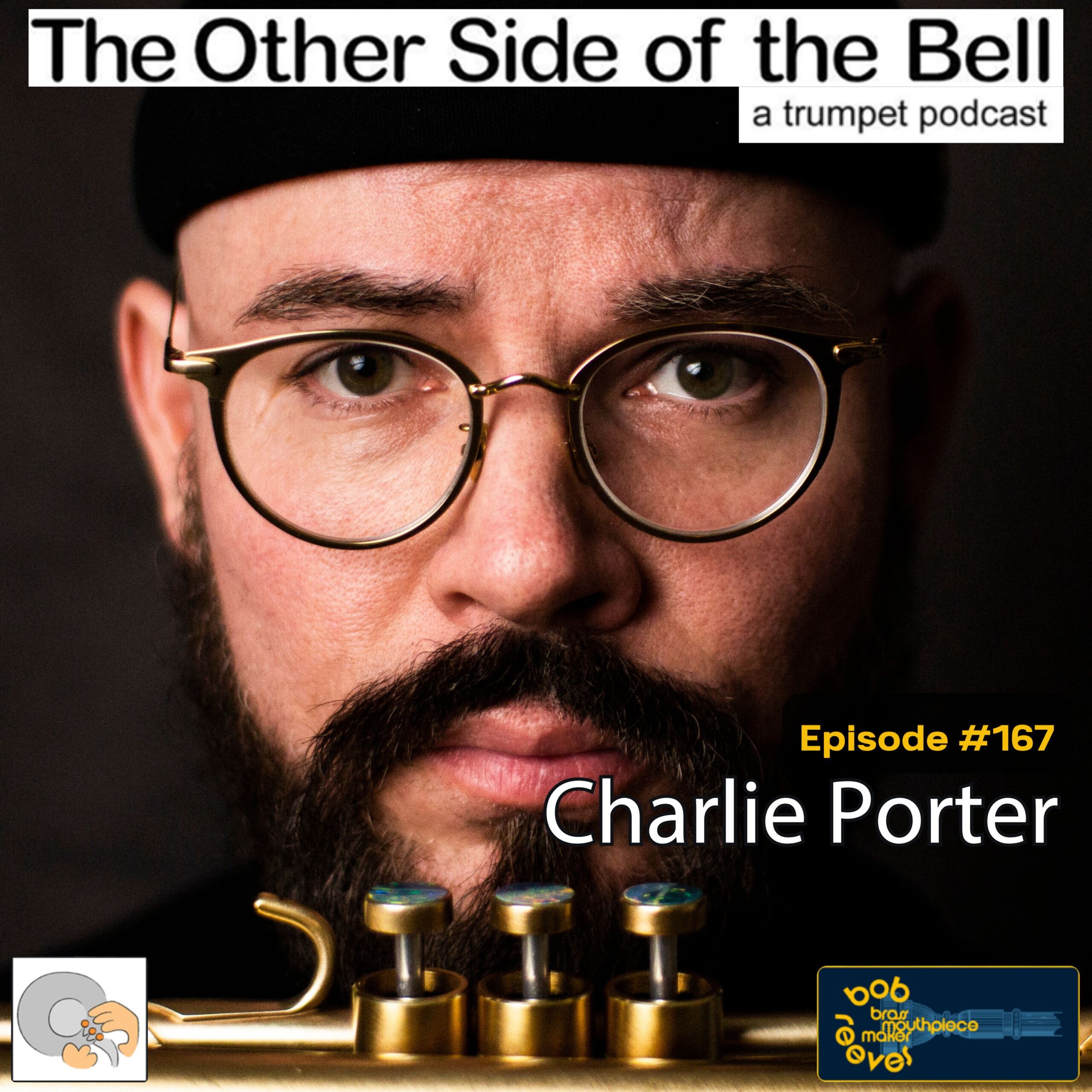
Welcome to the show notes for Episode #167 of The Other Side of the Bell – A Trumpet Podcast. This episode features trumpet educator, composer and performer Charlie Porter.
Charlie Porter turns a lifetime of trumpet breakthroughs, setbacks, and hard-won lessons into an absolute masterclass for us on The Other Side of the Bell: on sound, practice, endurance, and finding your own voice.
Charlie traces meeting as a kid Wynton Marsalis, backstage at a concert, which lit the fuse to a lifetime of inspiration. Yet he points out that inspiration has to be renewed constantly, not just found once.
After cruising along through high school music, Juilliard and the early years of touring, Charlie’s pursuit of a great sound without considering sustainability led to serious pain and embouchure issues, developing a blood blister and taking eight months off from playing to recover.
What followed was a total rebuild of his embouchure and approach, reshaping his ideas about oscillation and balance, and learning to understand airflow as more than just “pressure.”
Charlie tells us how transcribing, composing, and teaching has made him a better musician, and why he believes every player should save the advice they do not fully understand yet: it may come in key later!
“I love limitations. When there’s something that says, ‘No, you can’t do this,’ I say, ‘Well, how can I work around that?!'” – Charlie Porter
Listen to or download the episode below:


About Charlie Porter
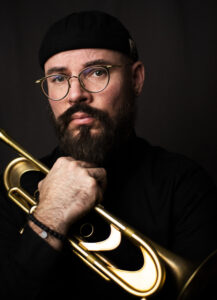
Charlie Porter is a GRAMMY Award–winning trumpeter, composer, educator, and internationally recognized trumpet pedagogue whose career spans jazz, classical music, Broadway, orchestral performance, and contemporary music. He studied trumpet with Wynton Marsalis, Raymond Mase, Mark Gould, Laurie Frink, Guy Touvron, and Pierre Thibaud, drawing on a wide range of traditions and approaches to develop his own distinctive musical voice.
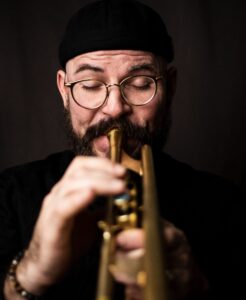
For twenty years, Porter performed as solo trumpeter with the Absolute Ensemble, the acclaimed electro-acoustic crossover chamber ensemble known for its adventurous programming and genre-defying collaborations. His diverse performance career has also included a year touring with Dallas Brass, performances in Broadway productions both as a featured performer and substitute, and work with orchestras throughout the New York area.
As a bandleader and recording artist, Porter has released seven albums, exploring original compositions, concept-driven projects, and new approaches to jazz performance. His recent projects include Cipher, an innovative musical treasure hunt embedded in an album, and Sci-Fi Standards, Vol. 1: The Future We Knew, which reimagines iconic science-fiction film music through the language of jazz.
Equally committed to trumpet education, Porter has presented clinics and master classes internationally and has reached a global audience through his extensive collection of YouTube instructional videos. His recent work includes writing trumpet étude books designed to develop musicianship, technical facility, and intelligent, purposeful practice. He is a Professor of Trumpet at New York University, where he continues to teach and mentor the next generation of trumpet players.
Across an unusually broad range of musical settings, Porter brings a perspective shaped by decades of professional performance, rigorous study, creative exploration, and a deep commitment to understanding the trumpet and helping others play it at their highest level.

Charlie Porter episode links
Bob Reeves Brass Events & Appearances
- NCMEA Conference, November 8-9, Winston-Salem, NC
- Greg Black Mouthpieces, November 10, Mount Holly, NC
Podcast Credits
- “A Room with a View“ – composed and performed by Howie Shear
- Podcast Host – John Snell
- Photo Credits – Courtesy Charlie Porter
- Audio Engineer – Ted Cragg
Transcript
Please note, this transcript is automatically generated. It may contain spelling and other errors. If you would like to assist us in editing or translating this transcript, please let us know at info@bobreeves.com.
CHARLIE PORTER (00:00)
Right. So and then from there I go to like these … pops.
And making sure that that there’s no … because if the lips are too close…
JOHN SNELL (00:24)
Hello and welcome to The Other Side of the Bell, a podcast dedicated to the world of trumpet, brought to you by Bob Reeves Brass. We want to inspire you to develop joy and confidence in your trumpet playing. I’m your host John Snell and joining me today is trumpeter Charlie Porter.
First, some trumpet news.
Well, as I mentioned last episode, I had just gotten back from a wonderful trip to Boston
John Snell (00:58)
and to Cincinnati. And I just want to spend a moment to give a huge shout out to the folks at Virtuosity Music and
all the trumpet trombone and horn players that showed up at Virtuosity. we were sold out. I think this is the fourth year in a row from alignments. I was finishing the last one at closing time on Saturday. some great hangs. Thank you to all the folks that came out to get alignments done, to try mouthpieces, and so thankful that
some trumpets played better, some mouthpieces found some good homes, and some Olvin mutes found a good home. And there’s a lot of excitement in Boston. I had the prototypes of the Bobby Shue and Terry Baylor soloist mutes with me to they got a great reception and some news coming up on those next episode. so that was that was great to get those into some hands of some players. And I had a wonderful dinner with the staff at Virtuosity and Tiger Okoshi.
former guest here on the podcast and good friend. So it was great to see tiger and spend some time with him and enjoy some fall weather. And after after Boston I headed out to Cincinnati and I was hosted by Ashley Hall Tighe and her husband Nate Tighe, both trumpet players and their wonderful family. I I was in their guest cabin out in the woods and did a bunch of alignments for Ashley and her friends on a
balcony overlooking the the woods outside of Cincinnati for a day. And then the next day I went into the Cincinnati Conservatory of Music, and gave a master class for the trumpet studio there and then did a ton of alignments for their studio. literally walking working all day. what a great turnout. So thank you to all the students. Hope your horns are playing better. And I got to visit another previous guest, Scott Belk as well.
had great lunch with him and worked on one of his horns and had a great So a huge thank you to Ashley and Nate for hosting me and all the wonderful folks in Cincinnati who came by for alignments. next up, next week, I’m heading to North Carolina, as I’ve mentioned a few times. We do have the link now. and I’ve actually put the link together so you can schedule alignments. just real quickly, we’ll be in Winston-Salem at the NCMEA conference.
November 8th and 9th, we’ll be at the Greg Black booth. Usually it’s in the back of the hall. We’ve been in the same location every for the last few years. I’ll have some mouthpieces, some olven mutes, some Charlie Davis trumpets, and of course I’ll be doing valve alignments there at the conference. So if you want to get them done while you wait, hit the link down below in the description and head over and pre-book your alignment. And then on Tuesday, November 10th, I’ll be heading down to Mount Holly, just outside of Charlotte, North Carolina.
Hanging out with my good friends at Greg Black mouthpieces. So hope to see you there. and that’s all the travel I have for the rest of the year. I think I’m taking taking December off. I’m gonna do some personal travel and then we’re right back into it for 2027. TMEA, NTC. we have some fun trips planned. I’m heading out to Dylan Music in New York. So a lot of things on the radar for 2027. So hope everyone’s enjoying fall, at least in the northern hemisphere.
and spring down in our Aussie friends down south and other folks that listen from the Southern Hemisphere. And let’s get on right to our special guest today, Charlie Porter.
JOHN SNELL (04:07)
Today’s episode is brought to you by Bob Reeves Brass.
Who share your passion for creating extraordinary music. You know that feeling when your instrument just clicks and the music flows effortlessly? That’s what Bob Reeves Brass has been helping customers do since 1968. We’ve helped brass musicians like you achieve their dreams by ensuring their equipment is always in perfect harmony. We know you want to immerse yourself in the art of music making, and we’re here to remove any barriers between you and your creative vision.
Bob Reeves Brass is truly your one-stop shop for everything you need to fuel your passion and create music that touches hearts and souls. So go ahead, let us help you elevate your sound to new heights. Don’t wait another moment to elevate your musical journey with Bob Reeves Brass. Connect with us at Bobreaves.com, shoot us an email at info at bobreaves.com, and keep up with the latest news on Facebook, Instagram, YouTube, and Twitter.
At Bob Reeves Brass. Embrace your passion for music and let Bob Reeves Brass be your partner in creating the extraordinary.
John Snell (05:20)
Charlie Porter is a Grammy Award-winning trumpeter, composer, educator, and internationally recognized trumpet pedagogue whose career has crossed jazz, classical music, Broadway,
orchestral performance and contemporary music. He studied with an extraordinary roster of teachers, including Wynton Marsalis, Ray Mace, Mark Gould, Laurie Freink, Guy Touvron, and Pierre Thibaut. For twenty years, Charlie has performed as solo trumpeter with a genre-defying absolute ensemble, while also appearing with orchestras, Broadway productions, and jazz artists around the world.
as a band leader, he has released seven albums, including Cypher, an ambitious musical treasure hunt built into an album, and Sci-Fi Standards, Volume 1, The Future We Knew. His compositions have been supported by the Doris Duke Foundation and Chamber Music America, including a new commission for 2027. Equally passionate about education, Charlie has built an international following.
Through his masterclasses, instructional videos, and trumpet étude books, and currently serves as professor of trumpet at New York University. And now here’s my interview with Charlie Porter.
JOHN SNELL (06:31)
Well, I’m so excited to have on the other side of Bell a guest that I’ve wanted for a long time and has been requested quite a lot. Charlie Porter. Charlie, how’s it going?
CHARLIE PORTER (06:41)
Hey John, pleasure to be here.
on the interweb. It’s gone gone
JOHN SNELL (06:44)
Yeah. Yeah.
CHARLIE PORTER (06:45)
great.
JOHN SNELL (06:45)
Virtually speaking, and what a lovely background. I d you’re you have a much better location than I do.
CHARLIE PORTER (06:51)
this is my
you know, my music man cave. when we were looking at different places, I was like, Wait, I don’t have to practice with a mute. I so I get my own place to actually make some music. So it’s pretty cool. Yeah.
JOHN SNELL (07:06)
So th for those that are watching this on YouTube instead of listening to the podcast, you can enjoy your your very cozy man cave.
CHARLIE PORTER (07:14)
I it’s funny, one time in a lesson
I had somebody say to me, ’cause I do some video lessons and they were like, Can can you turn the background off? I was like, no, this is actually I’m in this room right now. That was funny.
JOHN SNELL (07:25)
It looks too perfect. I love it. So
I want to start. Let’s go right from the beginning. I want to know how you started playing trumpet or did the trumpet search you out.
CHARLIE PORTER (07:35)
I didn’t come from a musical family, except for my my grandmother, who was a huge jazz fan, trumpet fan. loved Louis Armstrong, I mean all the great trumpeters, Harry James, Bunny Berrick, and She would just constantly be listening to jazz, you know, Harry “Sweets” Edison, Clark Terry, all that stuff. So I was kind of, you know, ambivalent to it, to be honest. I didn’t start playing
trumpet or music until I was about twelve and a half, going on thirteen. And that’s when I had to choose between football, and I had no interest in football, in in middle school and sixth grade or playing an instrument. And then of course I wanted to play the drums or the saxophone, like all the other cool kids. And my grandmother and my mom
Although my mom says it was her idea that it was trumpet. And she said my grandma actually said tuba. and I was like, what? I don’t remember that. Anyway, but
JOHN SNELL (08:34)
Ha ha ha.
CHARLIE PORTER (08:36)
I was I was kind of forced to play the trumpet. And I think my mom’s reasoning on it was, it was one of the least expensive instruments to rent. Little did she know it was one of the most annoying instruments to listen to someone try to get good at and practice on. So
JOHN SNELL (08:51)
Yeah.
CHARLIE PORTER (08:52)
anyway, that was kind of the beginning of that path. My grandma
was always playing music, like I said, and she decided she would take me to some concerts. So she took me to my very first live concert where I got to meet this trumpet player, by the name of “Wynton Marsalis.” And I’d never heard that name before, and
JOHN SNELL (09:07)
Oh my gosh.
CHARLIE PORTER (09:09)
I was like, “Wynt- w what what, Mar- ” you know, it’s such a bizarre name. And it’s so funny
JOHN SNELL (09:13)
Yeah.
CHARLIE PORTER (09:14)
that that name for me now is like just like, you know, saying my own name. I mean it’s it’s
how you become so familiar with things. But anyway, at that point
JOHN SNELL (09:22)
Mm-hmm.
CHARLIE PORTER (09:23)
I’d never heard of Wynton, and I’d never even been to a concert and heard a great trumpet player before. But at the end of that concert I was completely mesmerized and sold. And my grandma, being the the woman she is, said, “We’re gonna go backstage and meet Wynton.” So, you know, And you’ve probably heard a million stories like this of Wynton talking to younger players, and he’s so amazing that way. He he’s He’s always inspiring people and, and you know, letting them play his horn and that kind of thing. And
That was kind of the story I had. And and he said, he said, “Oh, you play the trumpet?” And I’d been playing for three months. And my grandma was like, “Yeah, he sounds great!” So he hands me his trumpet. He’s like, “Why don’t you play something for me? I’ve got to sign some some autographs, but I’ll be back, And
JOHN SNELL (10:00)
Mm. Yeah.
CHARLIE PORTER (10:02)
Why don’t you play something?” And I was like, I don’t know what to play. So I played a G major scale, and maybe
like half of a song. that I did my audition for. Cause well, I had done a little band audition previous to that. So
right then and there he kind of gave me a little embouchure change on the spot, he said, “Oh, you sound great. He sounds like Clark Terry, he sounds great!” Like, you know, being really nice and supportive, which is nice to do before you tell someone, “Oh, by the way, you’re doing all this wrong.” So then he took me into the mirror and kinda got – I was playing way over to the to the right or to the left,
JOHN SNELL (10:34)
Mm-hmm.
CHARLIE PORTER (10:35)
all the way down into the red, really deep.
JOHN SNELL (10:38)
Mm-hmm.
CHARLIE PORTER (10:39)
And it was just, you know, I was started by a violinist, so he didn’t know any better and
And so that was kind of my first meeting with him, my first embouchure change, and it was one of those things that really sparked me to become more serious and to check out music. Cause at the end of that, he told me, he said, Listen to Louis Armstrong and play what you hear. So the first thing I did was go home and just devour Louis Armstrong records because I knew my grandma had a ton of them. And I
JOHN SNELL (11:03)
Mm-hmm.
CHARLIE PORTER (11:03)
went back the next year to the same place and I had all these Louis Armstrong solos memorized and I was working on Carnival of Venice. And I think he could see at that point I was getting
more serious and and so I I kept the relationship going with him and eventually that’s why I wanted to move to to New York. because I knew that he even though he wasn’t technically on faculty at Juilliard, he was he was he was on the roster and he was nearby. And of course there’s,
JOHN SNELL (11:27)
Mm-hmm.
CHARLIE PORTER (11:28)
you know, also the jazz scene in New York. And so anyway I’m jumping ahead a bit. But that was that that was
JOHN SNELL (11:32)
Yeah.
CHARLIE PORTER (11:33)
the impetus of my my playing as a as a as a trumpeter. So
JOHN SNELL (11:37)
Well, and that’s
great ’cause that that’s a answers like three of my questions about how why why you ended up where you did and things like that. So but let me back up a second though. So you so with it basically within a year you went from playing your G scale in an audition piece to then having some Louis Armstrong solos memorized to play for Winton and you said Carnival of Venice as well. That’s like zero to sixty.
CHARLIE PORTER (11:58)
I was starting to work on it, yeah.
JOHN SNELL (12:02)
I mean, did you have a a private instructor or was that just picking up from your own? Yeah.
CHARLIE PORTER (12:06)
not yet at
that point. I had eventually I did get together actually my first instructor was someone by the name of Mark Zauss, who’s he’s really well known as a as a lead player, just does all the double and triple high Cs, all that kind of stuff. But I think I had s so many amateur issues at that time that he was just like, I’m gonna give you to this other guy. So he gave me to this guy, this gentleman named Cy Prywaller.
Who became my my teacher for many years. And until he passed away, we’re just great friends and a mentor. he studied with a lot of people, studied with Chikwitz, studied with Bill Adam for many years. He studied with Carmine Caruso. So I got a lot of different viewpoints through Psy. And in fact, my my latest A2 books that I wrote, they’re they’re dedicated to Psy. So but Psy.
You know, he was one of those kind of guys that was never dogmatic about things and he didn’t really have any specific things to say on Ambassador. He would just kind of let me figure things out and just give me certain, pointers from from what he understood. but I still felt like physically I was kind of on my own to figure things out, you know. so but getting from there to, as you say, zero to sixty, I I was really
Pumped that meeting hearing Winton. So I always tell students and teachers, you have to have these these wow moments. You know, you have to fuel kids and and adults. We have to keep fueling ourselves with that inspiration from checking out other people. And, you know, anytime I meet someone who’s at the top of their game, yeah. I know you did a an interview with Chris Bodie not too long ago. but I remember hanging with Chris, and he’s such a trumpet nerd. He loves
to talk about Winton and Clifford Brown and j just trumpet stuff, you know? And I I I feel like that part of you should never kind of start to just fade away. If it does, then
JOHN SNELL (14:02)
Mm-hmm.
CHARLIE PORTER (14:04)
you’re gonna stop searching and you’re gonna you know, part of the reason kids I think make such like especially young kids make such quick improvement in in things is because they have that hunger and they’re not they’re not so good yet.
that they worry about you know protecting their fragile ego and you know th this would make me look bad if I tried to do this or, that that sucks. That’s really bad. that’s awful. You know, just this this kind of self hatred that you start to develop later on. They don’t have that yet. That there’s no self doubt or, you know, it’s like I’m gonna do that.
And so I think I had a little bit of that as a kid too. It’s just, you know, nothing was keeping me down. I had plenty of time. It’s just like, I’m gonna just practice this damn trumpet and listen to a ton of music. Plus I was listening to so much music. I think listening is as important as practicing.
JOHN SNELL (14:54)
Mm-hmm.
CHARLIE PORTER (14:54)
And and, you know, I was definitely beyond what I could do here in terms of what I was hearing at that point, you know.
JOHN SNELL (15:01)
Just ’cause you were surrounding yourself with so much music. Who d other
CHARLIE PORTER (15:03)
Yeah.
JOHN SNELL (15:04)
than Louis Armstrong, who are you know, who were you inspired by at and Winton obviously meeting him, who else were you inspired by at a young age?
CHARLIE PORTER (15:08)
Yeah.
well my grandma took me to lots more concerts. I mean, she took me to see I remember this one concert she took me to. It was like who wasn’t there? the Count Basie orchestra was there, Scotty Barnhart was there with with all the other guys, Clark Terry was there, Harry Sweets Edison was there, Cat Callaway was there. I
JOHN SNELL (15:29)
well.
CHARLIE PORTER (15:29)
I mean the list goes on and on and on. There were so many great performers there.
And I I went up backstage and met all of them. It’s the first time I met Clark Terry. of course I was you know, once you check out Louis Armstrong, that takes you that’s the fountain head, right? You start to branch off into all the other things. So I was I was checking out Roy Eldridge, I was checking out, you know, Dizzy Gillespie. I I fell in love with all those players and would start transcribing a little bit that I could from those different players. And eventually, you know, that led to, you know.
Fast N Navarro, Clifford Brown, Freddie Hubbard, all all the greats. You know, at the same time I was also checking out a lot of classical music. because it went and was such an inspiration. And because I was also in the school orchestra and band program and all that. And and my seventh grade year, I got into like a a magnet art school. So you didn’t have to pay money, but you had to do an audition. And at that time they were desperate. They needed people. They were just starting off. So
I I got in not knowing much at all to do on the the the instrument in that first year. so that that fueled me to also wanna practice a lot of classical music. And of course my teachers there at the time, Randy Sontag and Wayne Miller, they were very they’re both trumpeters that were also leading the program there at what is now the Dreyfus School of the Arts in West Palm Beach, Florida. But they they were really pushing me and you know.
Encouraging me, giving me like I remember I wanted to play the Halsey Stevens and one of them ordered the music for the school, you know, and it was there like the next week. And they would also pull me into the room and like, hey, check this out. And he would put on Ralph Almendez playing Moto Perpetual. I was like, What the heck is that? my god. Like talk about a wow moment. My head was
JOHN SNELL (17:07)
What is that? Yeah.
CHARLIE PORTER (17:11)
just about to explode. But this would happen all the time, you know, and that’s these these guys were
so important to my early upbringing as a as a musician and trumpeter. And also as a person, you know, when when you’re in a band program, I think you learn to communicate with other people and you learn to have you know, respect and and how to to be to play in time, to be on time, all those different things that you need just as a as a person, not only a musician, you know? So and I will say that in going so quickly, I definitely
made some mistakes that I had to go back and fix, you know. So when when you do start practicing stuff faster than you’re ready to do or higher and louder than you’re ready to do, you you you might have to go back and undo some of those things. And that that that certainly was the case for me. So
JOHN SNELL (18:01)
Yeah.
So at what point did you realize you had skipped over some things or had developed some bad habits?
CHARLIE PORTER (18:08)
Probably,
you know, I would say in I I started to realize it a little bit in high school, but Definitely in Juilliard when I was there,
JOHN SNELL (18:16)
Mm-hmm.
CHARLIE PORTER (18:17)
for my bachelor’s degree. And after that, the year when I graduated, when I went to go study at the Paris Conservatory for a year, I was doing a sp full Fulbright scholarship there. And I I realized that my efficiency wasn’t there. And you know, I had just played with a lot of pain throughout my
Well, some of my high school years, but for sure in my college years, even winning competitions, stuff like that. If you know, that’s why I always tell players, you know, at the at the most base fundamental way of looking at things, we have the the intellectual pursuit and the intuitive pursuit. We need both, right? Sometimes you have to figure things out, you gotta think about them. But it always has to go back to that intuitive way of of reasoning, which is we use our body’s intelligence.
like Dave Monette would say the at in intuition is the body’s highest form of intelligence, right? So anyway, however you want to think of it, I would then divide that intuition into two different camps, which is feel and sound, or sound and feel. does it sound good? I mean, and does it sound good on every level, right? Not just loud, but soft, and not just mid range, but high and low, right? Is it the best possible sound? Not good, but
the best, right? Are are we getting the best? But then the other thing, and this is what I ignored in pursuit of that excellence, is does it feel good? Does it feel sustainable? Does it feel like something that is growing or something that is that is hurting you and and and ultimately it’s going to become a handicap. And that is kind of the thing that I tried to deal with. And I had great teachers, they taught me a lot of stuff studying with Ray Mase and Mark Gould and so many other players, including Wynton.
But none of them could really help me figure out why I was in pain. And I knew that I was pressing too much. I was playing in the red on the bottom. I was trying to get r rid of those things. But it’s hard when you’re, when you’re doing gigs and you’re doing competitions and you’re in school and you’re busy, right? So I once I had that
JOHN SNELL (20:16)
Yeah. Yeah.
CHARLIE PORTER (20:18)
year off, then I figured I was gonna, this is when I’m gonna figure it out, you know. And that’s that was kind of the start of me going back and trying to get to those fundamentals. But I will say this, you know.
Maurice and so many other great players, Maurice Andre, have talked about sound being the basis and prerequisite for all of the other things, whether it’s flexibility, articulation, all those things, right? So if there’s issues with the sound, then that’s a real big clue as to why you’re having issues elsewhere. But, same thing is true with feel to some degree, right? If there’s pain, that is one of those fundamental things that has to be addressed. And I would say for any young player.
It is possible to get a good sound and be in a lot of discomfort doing so.
JOHN SNELL (21:01)
Yeah.
Yeah. Well and that’s the thing. I th I th well there’s two I think there’s two issues to unpack there. One is I don’t call it like a dated pedagogy, but there is a mindset with a lot of brass players that who cares what it feels like. It’s you know, your product is your sound and you know, you gotta do what you gotta do to sound good. You know. Yeah,
CHARLIE PORTER (21:19)
Yeah. No pain, no gain. Yeah.
JOHN SNELL (21:21)
yeah. So there’s that side of that thing. And then the other thing is yeah, I when we’re young, especially
we can get away with a lot and still get results, you know.
CHARLIE PORTER (21:31)
Yeah.
JOHN SNELL (21:31)
And and I think, yeah, as you’ve you described that th at some point in your life or your career, it will come back and rear its ugly head at you because it will
CHARLIE PORTER (21:40)
Yeah.
JOHN SNELL (21:41)
catch up to you, because you won’t be young forever, or your job will be so demanding that you can’t muscle your way and, you know, brute force your way through things. Yeah.
CHARLIE PORTER (21:49)
I
I remember specifically when it did catch up with me too, in a big way, because
JOHN SNELL (21:53)
Mm-hmm.
CHARLIE PORTER (21:54)
I continued to play in ways that were not helpful in that respect. And so when I was on a tour, and it was one of the JALC Rhythm Road tours. So I that basically Jazz at Lincoln Center was hosting the the ambassador program. So you would audition and be kind of a jazz ambassador and they would send you to a country
To a specific location where they weren’t getting a lot of jazz music. So it was kind of like a cross cultural kind of you know, you’re you’re spreading the the word about jazz music and maybe some diplomacy, right? So it’s one of the nicer things we can share about the United States, right? Jazz music. Anyway,
JOHN SNELL (22:36)
Jazz music, yeah.
CHARLIE PORTER (22:37)
so we were I think we were playing in I believe it was China.
Or West Africa. It was one of those tours and the drummer that was w with me, Alvin Atkinson, he said, “Hey Charlie, you might want to look in the mirror, man. Something on your lip.” I looked in the mirror and I had this blood blister about I mean, it was growing, like I could see it getting bigger in front of me. And that was man, that was I think 2008, 2007. Something like that. So that was that was a a year that I ended up I I finished that tour and I I think right after that tour I had the
I was a a semifinalist in two different jazz competitions. There was the the Carmine Caruso and then there was also the the the Monk competition. And I mean they those were like a month or two away after that tour. So I I got through them. I didn’t play my best. And that a after that I took off eight months, and became an office manager at a doctor’s office, and did not play.
JOHN SNELL (23:38)
Literally took
off eight months?
CHARLIE PORTER (23:40)
Yes, I had to.
I couldn’t feel a single thing in my bottom lip. That blood blister, I still have the little mark there, but that’s where I was like, “I gotta get off the red on the bottom.” And you know, for a lot of players, they play in the red and the it works. They can make it work. But I always warn people, especially the top red, right? But I always
JOHN SNELL (23:57)
Mm-hmm.
CHARLIE PORTER (23:58)
warn people that, you know, that’s a possible time ticking time bomb. you know? And so better to deal with it. I mean, obviously we have to play in the red on the sides, but on the top.
Where we had the blood flow happening primarily, you’re cutting off that blood flow and and you’re you’re pushing all of that side on onto the red versus just the sides and and getting it primarily on this these nice pads that we have here of regular skin. So where the epidermal layer is much thicker and much more prone to being able to support the support of the mouthpiece, even if one isn’t over exerting with pressure, right? So
JOHN SNELL (24:34)
Mm-hmm.
CHARLIE PORTER (24:35)
plus at that point I hadn’t really thought of.
Other balances in the embassure, you know, there’s there’s so many forces that are are working. in and in the in the emboucher, you know, there’s and this is where I would say everyone’s right, kind of in their own way. It’s like you you
JOHN SNELL (24:48)
Mm-hmm.
CHARLIE PORTER (24:50)
could say this person’s right, they’re right, they’re right, but they’re all right. It all depends on the perspective you’re looking at it from. Because it’s all, you know, anything that’s a balance is an opposite, right? That’s being basically being weighed against its counterpart. And so
when I hear an opposing view, I usually try to now think of that as how does that fit into the puzzle in terms of opposition to something else that I already know versus
JOHN SNELL (25:11)
Mm-hmm.
CHARLIE PORTER (25:12)
discounting it right away. But at to at that point I hadn’t really thought much about pushing the horn away,
JOHN SNELL (25:21)
Mm-hmm.
CHARLIE PORTER (25:21)
you know, only bringing it in. I discovered that octave key and
JOHN SNELL (25:25)
Yeah.
CHARLIE PORTER (25:26)
that combined with playing in the red anyway, that led to that ticking time bomb, which eventually
led to me really reforming things and then taking some serious time off to to think about how I would approach this, reading everything I could on the web, getting some lessons with people, and flying across the country in some of those cases. of course now it’s so much easier. You can get a YouTube, you know, or get on Zoom or or any of
JOHN SNELL (25:51)
Yeah. Yeah.
CHARLIE PORTER (25:52)
these things. Yeah.
JOHN SNELL (25:53)
Yeah. So I I I and I do want to go back and and talk about your your school a little bit, but I also don’t want to leave on this cliffhanger. So so y how did how did you eventually, you know, turn the page?
CHARLIE PORTER (26:07)
I I wish it was a quick and easy process, but it was a lot of experimentation and trying this. Like eventually I I this and that. I tried rolling in, you know. and I of course I read so many different approaches that talk about that kind of way of playing. And it’s funny you hear people talk about closed aperture and open aperture, but an aperture is essentially an opening by definition. So there’s no such thing as a closed aperture. What I started to realize with was that
It’s not really an aperture. this helped me a lot to because at first I was I was really trying to close my lips up and essentially I was trying to play with with a very tight setting. And then
JOHN SNELL (26:48)
Mm-hmm.
CHARLIE PORTER (26:48)
then my sound, even though I was playing off the red, was very small and tight. And I and then I was trying to, you know, at one point I even tried doing this non pressure thing. They s they they call it non pressure. There’s obviously no non-pressure if you’re still touching the mouthpiece even.
JOHN SNELL (27:03)
He yeah.
CHARLIE PORTER (27:04)
But where I would just use a lot of lateral lip compression and kind of press it forward. That kind of worked, but the sound was not good at all. Articulation was awful, flexibility. So I just kept hitting these dead ends. But when I started to think of the aperture as more of a of an oscillation of the lips, right? So if you think about a low oscillation, like if this is my teeth and this is the lower lip, right? So if we got both those lips doing this.
When you look at someone, like if if I was to buzz a low note, like let’s say I go from a middle G down to a low G, if I go down, if you look at that, you’ll see a little what appears to be a black line between the lips, right? You say, his
JOHN SNELL (27:47)
Mm-hmm.
CHARLIE PORTER (27:48)
aperture got bigger. But that’s all we can see with our our limited ability to see each frame, right? So now if if like if we’re thinking about a 24 frame per second.
Kind of you know, speed on on camera roll for video, you’re not gonna see this. You’re gonna see the blend of that, which might look like this, you know. And so
JOHN SNELL (28:09)
Yeah.
CHARLIE PORTER (28:10)
if you slow it down, which we can easily do with an iPhone camera, at least on the lower register, you’ll see this oscillation happening, right? You’ll see the the the ability for the lips to swing in and out. That’s low, but as the lips become a little firmer in an
I I talk about this as the fretboard idea, as the lips kind of grip in towards the teeth like this, then that limits and precludes some of that vibration. So we get essentially a smaller oscillation, which creates effectively the overall smaller aperture, right? Which is
JOHN SNELL (28:44)
Mm-hmm.
CHARLIE PORTER (28:44)
really the the overall swingability of the lips. And so that’s gonna give us a much faster speed. It’s like a string going, you know, half the length or or a fourth of the length we’re gonna
every time we do that we’re gonna gain in register, right? And so anyway, figuring this out was helpful because then I started to realize that there is no greater pressure or less pressure of the lips towards each other when we go higher or lower. At least there shouldn’t be. It’s just we
JOHN SNELL (29:12)
Yeah.
CHARLIE PORTER (29:12)
want them to barely touch. I I always tell my students an analogy to imagine there’s a bar fight happening. you know not that I’m I’m advocating for fighting but
JOHN SNELL (29:22)
Ha ha
ha.
CHARLIE PORTER (29:22)
But
these g these two people are getting into this fight and they’re like and but then their friends pull them away. That’s kind of like
JOHN SNELL (29:28)
Mm-hmm.
CHARLIE PORTER (29:29)
the lips trying to get together. And then the friends pull away, right? And then they can only have a pinky fight. And that’s kind
JOHN SNELL (29:37)
Ha ha ha.
CHARLIE PORTER (29:38)
of like the way that I like to think about the lips. If the if if there’s ever more than a f a pinky fight, we start to get distortion, double buzz, other things in the lips, right? If we’re able to keep them at just that tiny, just the ability to just barely touch.
JOHN SNELL (29:52)
Mm-hmm.
CHARLIE PORTER (29:53)
then, you know, then we’re we’re starting to get more core to the sound, easier airflow, better, faster vibration, or just better vibration in general. Th these are some reasons I advocate for lip buzzing, but at the same time, I understand why people some people say I don’t lip buzz and lip buzzing is bad and blah, blah, blah. Because if you’re activating the corners like this, right, inward and forward, the way Thadis has told me to do and so many other people, when you get that activation happening.
While you’re playing, which is essentially working against all that pressure coming in this way, right? We get this push-push balance. It’s like a push of war that should have a sum zero. It really shouldn’t go this way and shouldn’t go this way, right? We’re not trying to break the seal by pushing the lips out so much or or break our lip by pushing it in so much. So what we end up having is that buzz happening. But then if I add corners to that,
gonna look a lot more like that. So when you have someone like Alan Vazutti and he pulls off the horn, he only has that happening, right?
JOHN SNELL (31:01)
Yeah.
CHARLIE PORTER (31:02)
because he’s got that engagement that helps so much in the upper register and just in in general, just for comfort of pushing the horn away, but also getting the aperture to stay open because we all want to clamp down as we go higher. Yeah. So
JOHN SNELL (31:18)
Yeah. We all want to pinch, yeah.
CHARLIE PORTER (31:20)
yeah. Anyway, I had to fit I’m sorry to be so verbose.
JOHN SNELL (31:23)
No, no, it was a great
master class. I love it.
CHARLIE PORTER (31:25)
But I had to figure these
things out though for myself. There wasn’t this, you know, prolific amount of stuff on the web back then. There was like a few videos. And this is one of the reasons I started trying to make some videos because I I figured that, you know, hopefully the information would be helpful to someone else. But really, I was helping myself because if I made a video, I would really have to understand it to explain it. And I remember somebody told me before that if you really want to understand something, try to teach it to someone else.
JOHN SNELL (31:54)
Yeah. Explain it to a seven year old, right? Or a ten year old. Yeah.
CHARLIE PORTER (31:56)
Exactly. In in the most simplistic terms too, yeah.
JOHN SNELL (32:00)
so after your eight months off you went through this journey. I mean, how how long after that eight months were you starting to get back on board again where you felt comfortable playing?
CHARLIE PORTER (32:09)
see, I had written a bunch of music and the thing that was a catalyst for me to get back on was I I decided to make a studio date and record a bunch of septet stuff that I’ve been writing. And so I got right back on the horse and started you know, playing probably more than I should. and I wouldn’t say that I was I had everything figured out and I’m I had enough figured out to know how I could get off the red and
And progress. But I would say it was another seven to ten years of figuring stuff out, you know, over that course of time. and still pushing my way through stuff too much. And it’s really hard to unlearn that habit. Once you learn once you’re in the habit of kind of locking the corners down and pressing into the teeth, really, and and just using the octave key, it’s hard to understand the idea of unlocking.
The corners, right? Like I when I was in Paris and I started with Guy Tivron, he would always say, playing trumpet is like a whistling. you know, right? And but I never quite understood that exactly what he meant. or then you have in the Arban book two says two. But I think a lot of Americans, and maybe other people interpret that as two, right? And not to, too. Living in in Paris, though, and speaking French, you get a workout here from all the du
Right. You could just these Yeah.
JOHN SNELL (33:34)
Yeah, that that that mouth shape. Yeah.
CHARLIE PORTER (33:36)
And I tell you there’s something really important about that. about how the corners are firm, but not like like pulling everything straight into the teeth. And I just I never really did understand that right away. There was pockets of time where I understood that and I I kind of did stuff like when I was playing I used to play a lot of lead in high school. I even got the Allstate
big band lead chair one one year and there was double g’s and a’s and I was playing all that stuff but I was using a lot of pressure. You know, I’m I’m just amazed that I was able to get through that. yeah I would never be able to play like that now. I would I would hurt myself so bad. It’s to co kind of go back to what you were saying before. Things we could do when we were younger. Yes, yes. Yeah. And I was
JOHN SNELL (34:15)
Yeah. Yeah. Yeah. Recovery’s quicker, you know, we’re we’re more malleable, you know. Also we can also brute force things better, you know? Yeah.
CHARLIE PORTER (34:27)
living proof of that. But it and but in final answer to that question, it it’s a progression that took a while. and, you know, again, because I I didn’t really have a an expert in the field that I knew of. I know there’s
JOHN SNELL (34:39)
Mm-hmm.
CHARLIE PORTER (34:40)
people that ha have a lot of expertise on that stuff. but I hadn’t met that person. I and maybe a couple people I did meet and they gave me some good information, but I just didn’t understand it. You know, the the the words people use sometimes
You just have to find the person who’s using a slightly different word or phrase and then you’re like, you know. But still even I feel like a lot of those lessons in hindsight were valuable because five years later, six years, eight years, ten years later, I I would I I’d have this big aha moment and and and know how that information was supposed to be understood, you know? And and then it
JOHN SNELL (35:15)
Yeah, absolutely. Yeah.
CHARLIE PORTER (35:17)
was actually kind of reinforcing to to what I was experiencing then. So
JOHN SNELL (35:21)
Yeah.
CHARLIE PORTER (35:21)
I would
say that also for for trumpeters, you know, don’t don’t discount information you don’t understand now or that’s not working now. Put that in your your data bank for later because it might be
JOHN SNELL (35:30)
Yeah.
CHARLIE PORTER (35:30)
really important to you. You know, save all the notes from your lessons, save all the videos from your lessons.
JOHN SNELL (35:36)
Mm-hmm. Absolutely. Yeah. No, one of the benefits of having a thick skull like myself is you know, things that my trumpet teachers told me when I was in college, like all of a sudden it’s like click in. I was like, great, I’m getting the benefits of the lessons thirty years later. You know. so
CHARLIE PORTER (35:49)
Sure. Yeah, yeah. Yep.
JOHN SNELL (35:51)
speaking of college, I I do want to jump back a little bit. you know, so you went straight in from high school to Juilliard, is that correct?
CHARLIE PORTER (35:58)
That’s it. Yep.
JOHN SNELL (35:59)
Okay. And what was your what was your did you have a career path? did you have aspirations of what your music career was gonna look like at that point?
CHARLIE PORTER (36:07)
I knew that I always loved playing jazz and classical music and and writing music, right? I’ve I’ve been writing since I was fourteen. I just that’s something I I love to do. I part of it is I I have this mind I have this mind that likes to take things apart and put it back together. I probably should have gone into engineering or something. because, you know, I I remember taking apart my mom’s electronics as a young kid and trying to fix them and
And I was successful a lot of the times. The first time was when I took apart the the remote control and I was I was about seven or eight and I took it apart and and it worked. And and after
JOHN SNELL (36:45)
Mm-hmm.
CHARLIE PORTER (36:45)
that she she let me take things apart. So but I I just I love that process. I always do the work on my own cars, you know, if it’s the clutch or any any of that stuff. I mean, or head gasket, all that stuff. I love I love doing it. it’s a double edged sword because I I don’t want to spend all my time fixing and taking everything apart.
But I think that that mindset definitely is pervasive in the sense that it it’s also part of how I think about omburger and and helping myself and other people fix things or figure things out. and also writing music, you know, and also digesting a piece of music. How does this piece work? What’s it built of? How can I break this apart and practice it? And how can I find the music in it? So I was always interested in that in both jazz and music.
Classical disciplines. And as far as career was concerned, I was starting to have a a growing appreciation for teaching as well. So even my first year at Juilliard, I started teaching some lessons and really enjoyed the process of of helping people and through teaching people, learning a lot myself, right? verifying and validating certain information I already held to to believe was true.
Right? Does it like what’s the efficacy in in terms of how this information helps other people? Is it only helping me? Can I explain it to them in a way that they understand? You know, so that’s always been really interesting to me. So I I’ve for me, I’ve felt that my path feels more complete, whether it’s right or wrong. if I’m if I’m teaching and if I’m playing music that appeals to me, no matter the genre, and so I’m not
Trying to promote being a jack of all trades. and I certainly don’t want to be a jack of all trades. But then I listened to Winton and I say, well, you know, he did both of those really damn well. Now he doesn’t do a lot of classical now, and it and I’ve even heard him say, you know, that you can’t really serve two masters. And I kind of agree to that. it’d be hard to do all of them simultaneously, but you can certainly devote time to one project and then devote time to another project and kind of ping pong between them.
And I feel like that’s what my career has kind of done so far. You know, I during Juilliard years, I was playing with this group called the Absolute Ensemble, which was a acoustic electric kind of crossover, new music ensemble that would we started off doing really just like new music kind of stuff and then branched off into doing all these cool projects. Like we played with Zappa’s band with Mike Keneally and and the Napoleon Murphy Brock and all those guys and then
We would do a a tour with with Joe Zalinol, and then we would do a tour with Biquito de Rivera and then we it was just like all
JOHN SNELL (39:26)
Well.
CHARLIE PORTER (39:26)
these different cool things. and we got to travel the whole world doing that. So and that was, you know, for twenty years I played in that ensemble and that sometimes you you don’t say what your career is gonna be. It just kind of starts happening. You’re like, I guess this is part of my career, you know. So,
JOHN SNELL (39:42)
Yeah.
CHARLIE PORTER (39:43)
but I never
Got to make my own album really until I was 40 because it’s expensive to make an album, takes time. but really the expense kind of held me back there. I’ve never come for money, I’ve never been rich. and so once I moved to the West Coast, I find finally had some more money, wasn’t paying that New York rent anymore.
to actually put into an album and think about what I wanted to record. And so that became a branch of the career that way where I was actually able to kind of record something and make a statement and say, this is my music. Here it’s out there. but you know I guess what I wanted going forward, what I knew that I didn’t just want to be an orchestral musician. I love playing orchestral music. Like playing the the first E flat part on the
Ein Heldenleben. I mean, that’s that’s a thrill, right? Playing Mahler 5, it’s a thrill. All that stuff. I mean, it’s it’s great. I love it.
JOHN SNELL (40:40)
Mm-hmm.
CHARLIE PORTER (40:40)
But ultimately I wanted to have more control over the projects I would do. I knew I wanted to write and be able to play some stuff that I’m writing. And I knew I’d I wanted to not only play in one group. so freelancing. I ended up doing a lot of freelancing in New York. But I also knew I didn’t want to do that forever and only do freelance gigs, you know.
so I I knew some things and I didn’t know some things. And I think for better or for worse, my attitude has always been, well, let’s see what’s gonna happen next, you know? versus I’m gonna plan out everything and know exactly and maybe that’s better in some ways, you know. There’s more security
JOHN SNELL (41:19)
Yeah.
CHARLIE PORTER (41:20)
there, all that, but but I didn’t get into music because I wanted to have job security. I got into music because it was exciting.
And I wanted to have fun and and challenge myself and dive into different projects and and learn and explore, you know, and meet people and travel the world and all those kind of things. Blah blah blah.
JOHN SNELL (41:42)
all those
opportunities. And speaking of opportunities, I’m curious about the you said it was a Fulbright scholarship you got, to
CHARLIE PORTER (41:48)
Yeah.
JOHN SNELL (41:48)
go to to the Paris Conservatory. Like what brought that about?
CHARLIE PORTER (41:52)
well, I was always in love with French music. first time I heard you Jolie Vet concertino and and Francaise sonatina or s sonata. Anyway, all these different pieces. Tomasi trumpet concerto. a lot of these were written as concor pieces, you know, solo competition pieces for the Paris Conservatory. And of course I love Maurice Andre and he was still alive back then and
Guy Touvron was his prized pupil. I was also, I fancied this this French girl
JOHN SNELL (42:24)
Mm-hmm.
CHARLIE PORTER (42:25)
named Marie, and I met her at the Tinglewood Institute when I was there. I th I believe I was sixteen or seventeen that that summer. I was doing the ABQ seminar, the Atlantic Brass Quintet seminar, which was an awesome program. And those guys were killing it back then. One of the best so good. Just
JOHN SNELL (42:42)
That was a great group. Yeah.
CHARLIE PORTER (42:45)
hearing Joe Foley just play all that piccolo stuff and
And D trumpet and E fla, I was just like in heaven. anyway, I I would say it was it was mostly just inspired by by by that music and wanting to go out there and also I had done a bunch of these solo competitions and I wanted to see what the whole, you know, conservatory, the European conservatory training was like versus what we have in the States. And it was vastly different. You know, we I would go in, we would warm up.
And do a whole maintenance routine for three hours with Ghee almost every day of the week. And then we would Yeah. In front of everybody.
JOHN SNELL (43:21)
The whole studio? The whole trumpet studio?
CHARLIE PORTER (43:25)
Yeah. In Trumpet Studio. And that’s just the way it was. You go in, you’re you’re you’re playing for everybody. You do all your your warm up like we would do warm ups playing out of the the the Vizudi book, right? And so I grew to like that book a lot. doing that. And then then we would play duets with each other.
we would play the Bailey book, which is a it’s a it’s a great book. There’s a lot of books by Guillaume Bailey, but this this particular one deals with scales and it has individual soloistic kind of ways of playing them, but also pairs you in duets. And it’s the pure scale, so there’s no other notes inside, and it’ll be either that major scale or that minor scale. and then afterwards we would we would play pieces for each other. And you’re so nervous at first, but
After a month of doing that, you don’t get nervous anymore. You’re just it’s like you’re you’re so used to having all of your your dirty laundry just air out in front of everyone, which is the opposite that I experienced at Julia, where you you could hide it away. You’re in the privacy of your own lesson, you know, nobody else has to know what’s going on. but that was that was really actually good for me. It was just getting a completely different perspective. Plus, of course, working on all this this you know, French literature.
with someone who knew the tradition really well. So that that was a fantastic experience. Plus I was also doing
JOHN SNELL (44:45)
Yeah.
CHARLIE PORTER (44:45)
jazz clubs every night at in the Latin Quarter and doing that. So
JOHN SNELL (44:48)
Yeah, so that’s
what I was gonna say. Like so you were still combining your, you know, the idioms and you know, still expanding your jazz repertoire and working on that side of the plane as well. Wow. So tell
CHARLIE PORTER (44:56)
yeah, for sure. Yeah. Yeah.
JOHN SNELL (44:59)
us tell us about the competitions. you know, what especially I I f I find well, I always have a hard time with competitions because, you know, judging music, you know, judging you know, obviously
there’s the are you playing the right notes? Are you playing this? But especially when it comes to jazz, like how do you judge
improvisation. You know, it’s like, well, he was
that that player was in the changes enough, but went out of the changes just enough to come back in. like what’s your take on that? And also like what are your tips for preparing for those kinds of competitions?
CHARLIE PORTER (45:28)
Well, number one, I think every every student should should do as many as they can afford to do.
but you have to go with the right mindset. and for me, the mindset is that you’re always in a competition with yourself, number one, right? You wanna you’re here, you wanna get there and there and there, like and whatever that is for you. Having a competition lights a fire under your butt, you know. for me, I needed that external thing.
That carrot, whatever you want to call it, right? The thing that says, that’s that’s a goal right there. and you know, even before it was popular to talk about being ADHD, because now it’s like everybody talks about it. I was definitely, definitely ADHD. I have to it’s very hard for me to organize myself, get myself to to do a certain task. I can do something else for fourteen hours straight and forget about everything else, you know. That’s but that’s also a detriment, you know.
So it’s like a superpower and it’s also not good. but having those focused my energy and allowed me to say, hey, I have a deadline, right? I got a piece I gotta learn, I gotta make a tape. And so I would just do it. And in doing that, for sure I lost way more than I won. You know, I
JOHN SNELL (46:38)
Mm-hmm.
CHARLIE PORTER (46:38)
I went to the NTC seven years in a row, didn’t place it all before I won it in the jazz and classical division. But there was many times where I I I
fell flat of that. there was even one time where I thought, hey, I did a great job. I’m gonna win. And no. And again, that comes down to subjectivity. So I was still happy because for me, I I checked the box, you know? So I think when you enter these things, you have to you have to be prepared to fail in terms of like you don’t win, even when you’re succeeding because you’re winning for yourself, you know?
So you you have to know really truly what winning is. Number one, giving it your best and following through is already winning. now a lot of people just don’t do that. Like I always tell students and you know, I tell myself, you know, if I give it a hundred percent, I can’t feel bad afterwards, because I actually tried.
JOHN SNELL (47:36)
Mm-hmm.
CHARLIE PORTER (47:37)
it’s when you when I feel bad is when I know I didn’t give it a hundred percent. I only, you know, I phoned it in, I did 50%, blah, blah, blah. And then,
There’s preparing to fail, right? If so if you if you fail to prepare, you’re preparing to fail. And so
JOHN SNELL (47:51)
Mm-hmm.
CHARLIE PORTER (47:52)
that mindset, that’s one people should have when doing competitions too. Like put a hundred percent effort into it or don’t do it, right?
But really go full, don’t go half ass, go full ass, right? If I can say ass on the okay. But
JOHN SNELL (48:07)
I think so. I think so. Yeah. Yeah.
CHARLIE PORTER (48:09)
but that’s you know, and speaking to the subjectivity of things.
There’s things that we can objectively say, hey, I got all the right notes. I got the right rhythms. I got the dynamics in a classical sense, right? In a jazz sense, I could say, yeah, I remembered the tune. I know the changes. I got the right kind of vibe on it, blah, blah, blah. But of course, there’s a lot more subjective stuff in that, right? but I think objectively you can also say, even within the subjective stuff, wow, this person is being more innovative and sounding.
more individualistic than the other people. And I think a lot of jazz competitions do give special credit for that. If you got two contestants, one’s nailing changes sounds great, but they everything they play sounds great, but it sounds very derivative, and I would say only derivative of a lot of other players, right? whereas this other person, you can hear that they’ve got you’ve they’ve got all those influences, but they bring something special and individualistic to it.
They’re gonna win. I can almost guarantee. Right. That’s that because that’s always been a hallmark of that music, of jazz music, of improvised music, is that can you do you? Can you bring something that’s you into this? And that’s not easy to do, especially when you’re thinking, I have to innovate, I have to be different, I have to be me. And I tell people all the time, look, you as a person, me, Charlie Porter, I I’m I don’t wake up every day saying I have to be Charlie Porter. How do I be Charlie Porter? Right? It’s all the
the myriad influences that we have that amalgamate into what we are, right? And that happens almost effortlessly by making sure that you have enough of those experiences. Right. So in music, if if you’re transcribing enough, if you’re assimilating that information enough, you start to get that formula that Clark Terry talked about, which is imitation, assimilation, innovation. And innovation, it’s like one plus one equals two. It it’s almost
It’s just an an inevitable part of the first two things that you do there. And I think the same is true in a sense with classical music. It’s just more through an interpretation kind of mode and less of a creation kind of mode. So do you are you checking out and copying enough great trumpeters, right? And really listening to their sound, digging into their articulation. And I’m talking Maurice Andrier, Hulken Hardenberger. you know, the list goes on. Like
Rhino Friedrich, anybody that you’re into, right? Are you really checking out their attack, their style? Are you playing along with them? Right. Are you actually playing along with Bud and the Chicago Symphony when Schulte’s conducting Mahler Five? You know, like if you play with it, that’s the best you’re gonna get to actually sitting in with them back in time, right? Which I couldn’t do, but I could
JOHN SNELL (50:52)
Mm-hmm. Yep.
CHARLIE PORTER (50:54)
blast it in my car and and practice along with that every morning before school started, you know, and that’s what I did. You immerse yourself and then
All of those experiences amalgamate into someone that’s informed on a higher degree of style and I remember how Voisin would do certain things. I remember how Bud Herseth would do certain things, you know, th those all became vocabulary for me in terms of that amalgamation in terms of my orchestral profile. But those things wouldn’t necessarily transfer over to playing in a big band.
For that, you got to be checking out, you know, so it’s twice the work, three times the work. and if you if you have the time and the tenacity to do that, you can you you can do that. It just takes, you know, you can’t be like, I play classical, but you know, for fun, I’m gonna do some jazz stuff. And
JOHN SNELL (51:43)
Mm-hmm.
CHARLIE PORTER (51:44)
and I see a lot of people do that. And it’s just like, yeah, just because you’re a great classical musician doesn’t mean that all of a sudden that transfer’s over. Like you got a lot of work to do to start over. And in some ways, you have to undo some of the stuff.
That very homogenous approach that you have where all the notes are completely even, it’s actually gonna work against you in a jazz approach because it’s more colloquial. It’s more the way we talk. It’s like Charlie Porter, not Charlie Porter. You know what mean? And so it’s you learn that. And in in some senses,
JOHN SNELL (52:09)
Yeah. Yeah. Yeah.
CHARLIE PORTER (52:14)
you you start to become almost like schizophrenic. It’s like, I gotta access this part of my brain now, you know?
JOHN SNELL (52:20)
Yeah, but
it’s but like you said, it’s vocabulary, it’s a language, you know, and we you know, we can train
CHARLIE PORTER (52:23)
It is, absolutely.
JOHN SNELL (52:24)
we you know, we can learn, well, I have a hard enough time with English, but you know, there’s folks that speak three, four, six languages and you know, savants that can speak as one I saw a guy in the news that speaks forty two languages, something like that, you know. So
CHARLIE PORTER (52:36)
yeah, yeah.
JOHN SNELL (52:37)
just accessing that part of the brain, compartmentalizing and you know.
CHARLIE PORTER (52:40)
But you know,
if you learn two, then three is that much easier. If you learn three, then four is that much easier. Because
JOHN SNELL (52:43)
Yeah. Yeah.
CHARLIE PORTER (52:46)
you start to learn not only a language, you learn the art of learning a language. And I think in that sense, this is why some people are so multifaceted and can do so many things. And I I try to think that to some degree, I I can take some core ideas of how to learn something and apply them to other things to learn them quicker, right? Because if you if you take those
And if you find the parallels that exist, you’re already breaking down some of the walls that would would stop you from from learning something in a in a quicker amount of time. So yeah. And even you mentioned, you know, speaking English to the to the effect of like like in a masterclass or something, I’ll talk about improvisation, right? and I’ll always say I’m not just talking about jazz improvisation, you know, classical players.
A lot of times don’t improvise and they a lot of times they’re not even they’re totally checked out in terms of the harmony of what they’re playing. If they’re playing a Bach partita, they don’t know they’re going from A minor to D seven to G major to G minor to E flat. They don’t r hear the progression that way. So they’re they’re not gonna they might intrinsically feel some of that, but in an e intellectual way, they wouldn’t be able to say, you know, this is a passing tone. I maybe should bring that note out and resolve into that
you know, that chord tone there. it and even for tuning, or just sight reading stuff and being able to say, This is how it sounds in my head. I hear it. And therefore I’m gonna be more accurate as a player. All that stuff that you learn in jazz is very helpful in classical music. But if let’s say if you don’t have that background in jazz, as a classical musician, you can certainly still dig in and learn harmony and and sing stuff. And I would say everybody
who writes is gonna have an upper hand to the people that don’t write. And if you think about again speaking English, you write English too, right? And you read English. So I don’t understand why it’s so abnormal to think that every musician, whether they’re just a performer or not, or classical or not, is also an avid writer of music, right? So just throwing that out there.
JOHN SNELL (54:52)
Yeah, I it makes
sense. I mean Yeah.
CHARLIE PORTER (54:54)
Yeah, you become a better reader and a better
interpreter when when you understand what it feels like to be the one writing, you know? And it’s
JOHN SNELL (55:01)
Yeah. Yeah.
CHARLIE PORTER (55:02)
kind of like asking that question, if I if I truly understand this, can I teach it? If I can truly read this, can I write it? You know?
JOHN SNELL (55:10)
Yeah. Yeah. Wow. I love it. I love I love the conversation. I wanna talk some ’cause you’re very prolific in terms of your albums and you’ve written some etude books and things like that. I wanna go back, you mentioned you did your first album when you were forty, right? As and that’s is that your the self titled Charlie Porter?
CHARLIE PORTER (55:25)
Yeah, Charlie Porter.
JOHN SNELL (55:27)
So so what was it like then, you know, you’ve got forty years of experience and career and
playing for all kinds of other people, what was it like then having your own baby? You know, your own project.
CHARLIE PORTER (55:39)
It was great and also terrifying. I mean, anybody
JOHN SNELL (55:41)
Mm-hmm.
CHARLIE PORTER (55:42)
will tell you your first album, unless somebody else is footing the bill and scheduling the whole thing and taking care of it for you. If you’re putting it all together yourself, it’s a lot of moving parts. It’s a lot to figure out. And I didn’t have one band. I chose to to be a little kind of crazy and have well the first track is just solo trumpet. The the sixth track, so it builds up duo, trio, quartet, quintet, sextet, and then builds down.
Quintet, quartet, trio, duo, solo again. And so for all those groups, I had different people. I was just I had been working at that time in Portland for a few years, and there was all these great players I wanted to record with. And I thought of it more as being like a time capsule of my experience there. So I I got all of them on the record. So then I had to schedule all those different rehearsals and had to pick a studio. Turns out it wasn’t the the best studio.
An engineer, sorry if you see this. I don’t think you will. but you know, this guy had done a lot of punk rock recording and I only found that afterwards. you know, found out that afterwards. But anyway, there’s there’s just things you gotta deal with, you know. The the piano being EQ’d so bright that it sounds like it’s made of glass, you know, like how do on the board, you know, on the mix. So anyway, I could I could bore you with all those details, but suffice it to say.
It was a learning experience, and I learned a lot. I remember talking to Winton after that. And one of the great pieces of advice that he gave me was have the band really well rehearsed, right? get a great sounding room. Yeah. Like, and then he said, record in the same room with the band, right? Like you can use baffles and stuff like that. And and don’t overblow into the microphone, you know, and so
It’s funny, I was able to do that on a couple of the numbers on that first album. Cause actually he gave me that advice right before I did the album. But I hadn’t really put that advice to to the test until maybe the next album. but what I found was that a lot of people, you know, they play too loud into the mic, even if it’s not clipping. It’s not, it’s like the microphone. Imagine that’s somebody’s ear, right? And they’re right in front of you. And what kind of sound would you want to play if somebody’s ear was right there? Can you play with intensity?
without playing triple forte, you know? So I think recording is a different animal altogether. it’s you know, it’s and especially recording a jazz album versus doing commercial recording. Like I did an ESPN recording once for like the baseball theme and all that. That’s different, you know, different type of mic and d it’s further away and you’re trying to get that zippy sound for this, you know, I’m closer. I’m trying to remember w what Winton was saying about kind of backing off. And but then, you know, having
That situation where you’re all recording in the same room, you really have to have a well-rehearsed band because otherwise you’re going to be doing a million takes in order to get the right take, especially if you’re not trying to edit everything. And if you are going to edit stuff the way a lot of people do, you want to multi-track everything. But then if you multi-track everything, it doesn’t have that same in the same place sound. you know, so there’s a lot of things to consider when
JOHN SNELL (58:55)
Mm-hmm.
CHARLIE PORTER (58:56)
you’re recording. And I feel like I’m still getting better at that, but I wish that there was a course.
Maybe some schools have this now. How to record your instrument course, you know? How to get
JOHN SNELL (59:06)
Yeah. Yeah.
CHARLIE PORTER (59:07)
the best sound out of your instrument for different situations, you know. This is how you record and get a great classical trumpet sound. This is how you record and get a great jazz sound, right? Or blah, blah, blah. Anyway. Now, even that’s subjective too. So you might
JOHN SNELL (59:20)
Well the
yeah, but yeah, I mean that’s why, you know, a good s audio engineer is worth their weight in gold, you know.
CHARLIE PORTER (59:26)
Absolutely.
JOHN SNELL (59:26)
people always say, you know, your accountant and your lawyer will pay for themselves, you know, if you get a good one. And I think the same you can add audio engineer on for that, ’cause yeah, the
CHARLIE PORTER (59:36)
Yeah.
JOHN SNELL (59:37)
yeah, hard finding an audio engineer that knows how to especially brass, can record trumpet and make it sound good is that’s why like Jerry Hay had Bruce Sweeten, you know, and
CHARLIE PORTER (59:47)
Yeah. Yeah, yeah. If you find it, stay with it. Yeah.
JOHN SNELL (59:47)
Stuck with him for decades because it’s like this is the person I trust to make us sound good. Yeah. Yeah.
CHARLIE PORTER (59:53)
But and you know, like even a recent album that I did, I won’t say who or where but you know, they they stuck me in front of a piece of like in front of a glass window with the microphone right in front of the window.
JOHN SNELL (1:00:02)
gosh. So you’re getting the echo.
CHARLIE PORTER (1:00:05)
and I’m in a little room. And I I wish that I was in a big room. Like I was thinking again, what went inside and you I’d listen to the sound when it came back. It’s like, no.
I had to redo some of that stuff in here. Cause
JOHN SNELL (1:00:16)
huh.
CHARLIE PORTER (1:00:16)
this is the right sound. You know, when you’re playing trumpet, it’s the mic is not just picking up your sound. It’s picking up the sound of the room, especially if you also have a room mic in there, right?
JOHN SNELL (1:00:26)
Mm-hmm.
CHARLIE PORTER (1:00:27)
And that becomes, I think our sound as a trumpet player is partially how the room reacts to our sound, right? because that’s
JOHN SNELL (1:00:33)
Yeah. Yeah.
CHARLIE PORTER (1:00:35)
what people experience unless they’re, you know.
only listening to you on a multi-track recording coming through. And that’s a different sound, you know, like, but in a live experience, it’s like the room is also my instrument. And especially with a monette bell, you know how the bell spreads out like this. It it it’s designed is meant to and I play other instruments too, but that bell is designed to make your sound go like this and experience it like that. So those those instruments are particular about how they need to be recorded. Close up on a mic doesn’t work so well. So
JOHN SNELL (1:01:07)
Yeah.
Yeah. Essentially, yeah. in fact Dave mentioned something I saw something interview or something with him a number of years ago where he talked about working with customers and how the the different variables and he’s like there obviously the human variable, the mouthpiece, the instrument, and the environment. And you have
CHARLIE PORTER (1:01:21)
Yeah.
JOHN SNELL (1:01:22)
to take them all into consideration. And so many of us don’t consider the environment we’re playing in. You know, are you playing in a concert hall or are you playing in a studio with a mic, you know, six inches from your bell or
you know, are you
playing in a s you know, hot, sweaty club, you know, on the strip or are you yeah, that could it’s gonna affect your equipment choices. so I do want to mention ’cause I I this when this came out it just piqued my curiosity. Your last album, Cypher.
CHARLIE PORTER (1:01:47)
yeah.
JOHN SNELL (1:01:48)
first of all, has anyone solved it yet? Is it still open? Is this still
CHARLIE PORTER (1:01:51)
I’m still getting
messages. the anniversary just came by. I’m not very good about staying on top of publicizing things. I’m I’m gonna get better with that. I’m not the the best self promoter, but I decided to wear my shirt today and and use my cup. so anyway,
JOHN SNELL (1:02:01)
Yeah.
CHARLIE PORTER (1:02:08)
but yeah, that album. let’s see, I’ve gotten two people that have gotten seven out of the nine clues. So
And for those of you watching that don’t know which album this is, it there’s a hidden treasure, so to speak, associated with the nine clues that are embedded in the eight tracks of the album via ciphers and codes and other things. so yeah, it was really interesting album to make. And I love the process of of figuring out different ways to make and create music.
for each album,
JOHN SNELL (1:02:43)
So I I how did did that idea just come to you one night? Like I created a whole album based off of a puzzle? Or
CHARLIE PORTER (1:02:51)
I’m I’m
also kind of a fan of of treasures myself. And
JOHN SNELL (1:02:54)
Mm-hmm.
CHARLIE PORTER (1:02:55)
so there was this treasure that was hidden by this guy named Forrest Finn and th this was like I don’t know fifteen years ago or something. He’s since passed away. He was eighty eight when he when he hid it. the story was he was dying of cancer back in his sixties and
He was this eccentric millionaire guy living in Santa Fe, New Mexico, and decided he would go out with a bang and he would just hide a bunch of you know, he he spent some time putting together some archaeological things, you know, gold necklaces and rubies and jewels and just like like a real treasure, right? And put it in this ornate Romanesque box that he would then hide somewhere north of Santa Fe, New Mexico, in the Rocky Mountains. And so
Which couldn’t cover a lot of territory. And so the clues were embedded in his his poem, which was in his memoir. And so I bought the book. All the proceeds from the book went to the bookstore. He didn’t need the money. but I think he loved the attention he was getting from it. And but he he ended up not hiding it when he was in his sixties because he beat Cancer. But and so then he had all this stuff sitting around. But when when when he was 88, he was like, you know what? I’m gonna I’m gonna do it now. And so
I like a lot of other people, I think something like 300,000 people went out looking for that. I got within 200 yards of the treasure.
JOHN SNELL (1:04:15)
No.
CHARLIE PORTER (1:04:15)
Yes. it it was found, it was found in Yellowstone National Park. That was a third place I went to. and I anyway, so I didn’t get the treasure, but I had a
JOHN SNELL (1:04:25)
Yeah.
CHARLIE PORTER (1:04:26)
lot of fun trying to figure it out and you know, going over the poem. And I always thought to myself, wow, that’d be so cool if somebody would embed a treasure hunt into music.
And you know, funny enough, it it took a while a while for me to do it. I thought I thought, man, this is so cool. P the word’s gonna get out, people are gonna be really into the you know, I I tried to shop it around to all the the news stations and blah blah blah. I put out press releases. I it’s not if it could be a feel good story, you know. My of course it would be great to make money off of an album.
JOHN SNELL (1:05:00)
Mm-hmm.
CHARLIE PORTER (1:05:01)
I always make albums because I believe in them and I believe that the music is good and I love writing music and I love the process of of of creating that, you know. So that’s first and foremost. It’s it’s authentic, it’s me, it I like it, it’s got my stamp of approval. But damn, it’d be nice to make money. And so then I thought this thing’s gonna promote itself. Well, no, maybe if it was a million dollar prize the way the other one was.
JOHN SNELL (1:05:27)
Yeah.
CHARLIE PORTER (1:05:27)
so you know.
I only say this because I wish more people knew about it.
not only from the point of view of like actually selling the album, but just just so that more people would enjoy the actual thing that I enjoyed about that Forest Fen treasure hunt. And there’s other treasure hunts that are actually happening now as well. I mean, because of Forest Fen doing that, a lot of people had the similar idea to to make their own hunts. there’s
JOHN SNELL (1:05:51)
Mm-hmm.
CHARLIE PORTER (1:05:52)
this guy, James Colin Black, and I’m actually
doing his treasure hunt right now as well. There’s a book called There’s Treasure Inside. And there’s actually five different treasure boxes hidden throughout the the the United States. And
JOHN SNELL (1:06:05)
Wow.
CHARLIE PORTER (1:06:06)
anyway, so for for people that might be interested in that kind of thing, that’s millions of dollars. but I yeah it’s for me it’s always about the process of creating and even if I found one formula that would work, I don’t want to use that formula every time. for me the
Thinking about how ciphers, you know, substitution ciphers and code, Morse code, all these things could work their way into creating the material that would be used within the music. You know, it’s like imagine you’re a sculptor and you always use, you know, one medium and then you decide to completely use a totally different medium. That’s gonna change your method of how you sculpt, you know? And so for me, it was it was still me making music, but
my source material had changed a little bit. I had some extra rules thrown in there. And that’s exciting. That I love limitations. I love it when, you know, th there’s something that says, no, you can’t do this. And then I said, well, how can I work around that?
JOHN SNELL (1:07:06)
Yeah. It’s like Dungeons and Dragons or something where it’s like, Well,
CHARLIE PORTER (1:07:08)
Yeah.
JOHN SNELL (1:07:08)
no, you know, something there’s a twist in the plot now that wasn’t there before. so yeah, the album cipher are do you have any albums in the pipeline? Anything, any projects in the pipeline?
CHARLIE PORTER (1:07:17)
Yeah, yeah.
the one is just being mastered. actually just got done being mastered. Mike Mar Marciano’s working on it. it is called the the future we knew. actually the whole title is sci-fi standards volume one, the future we knew. And so that is it’s it’s all my favorite, not all of them, but a bunch of my favorite sci-fi songs, primarily from the eighties, but some from the sixties. they’re
kind of just completely reimagined in the scope of you know, of jazz quintet. And we’re we’re playing lots of arrangements and blowing and it’s a really great band. we already toured the music on the West Coast because I thought the album was going to come out on May fourth. That can kind of be a a clue as to one of the tracks that’s on the album. so but it we’re gonna be releasing it I would say probably the beginning of next year.
I’m really excited about that one. I I I think it’s it’s a night it’s it’s a way to put out some standards without them having to be just from the American songbook. But, you know, from a it’s it’s from a different songbook that we all know, you know, ’cause
JOHN SNELL (1:08:23)
Yeah.
CHARLIE PORTER (1:08:24)
we all know Star Wars, we know Star Trek, we know Blade Runner, we know Dune, we know these different movies, you know, Back to the Future. but it’s in a way you’ve never heard before. So
JOHN SNELL (1:08:34)
What fun. What fun. I can’t wait for that. And we’ll make sure we get all of our listeners over to that when it’s out. and real quick, and I appreciate your time today, Charlie. two things I want to hit on. one, maintenance routine. do you still do the three hour Paris Conservatoire maintenance routine or every day?
CHARLIE PORTER (1:08:49)
I yeah.
JOHN SNELL (1:08:51)
Or what is what does that look like?
CHARLIE PORTER (1:08:52)
well I have this video at that I did do for anybody interested in a deeper dive into this, how to create a practice routine or something like that. that’s I actually how I met Chris Bodie because he saw the video and he was like, Man, this is great. So and and then he reached out to me. But in that video, basically I outlined kind of seven different target areas and I I try to basically hit all those areas every day. I think of practicing as
And maintaining and even building as a question of simplicity to complexity, right? If we start with complexity, that’s that’s much harder to to double check our foundation and all those things, right? If but if we start with the most simplest thing, if we say what is the most simple thing we can do on the instrument, that would have to be just create a sound, right? Just one sound. So I examine that and I go through my ability to just
Create a breath attack, maybe even a whisper tone first, right? And create the sound. And then from there, I can examine if things are working or not. If they’re not working, maybe I had a hard rough day the day before. Maybe I’ve had some days off, right? it’s like somebody kind of just carving the reed a little bit, right? They go, nope. Nope. Great, right? So I kind of think of that as my time to.
So so-called reads, carve them and well, we don’t carve these guys, but you know what mean. Get
JOHN SNELL (1:10:15)
Yeah.
CHARLIE PORTER (1:10:15)
everything kind of responding. Because if that response is not there and I start diving into flexibility, articulation, fingers, range, loud dynamics, blah, blah, blah. Then there’s a flaw in there that can be possibly affecting everything else, right? So I I it’s like a, you know, a pilot kind of doing all the little checks. That’s for me the mu most fundamental thing is sound production, breath attack.
The reason I say breath attack is is to really be able to examine how the lips are responding in that oscillation that they’re doing to the airflow. And also that allows me to prioritize air first and not lips. Even though I’m I love lip buzzing, even my lip buzzing is it’s based on airflow and not not lip first and then let the air come through it.
Right. So when you lip buzz that way, you’re sending a signal that air is the most important thing. The lips ride on that air. So I I’m doing that for that reason. And also just to make sure that the spacing and everything, you know, sometimes your lips are a little more swollen or they’re dry and they might respond a little differently on those days or in those different environments. So by doing some breath attacks, you can kind of calibrate to those different situations. so after that.
Then it’s like, what’s the next complexity. That would be connecting one note to another note, assuming I’ve already played a a few different, you know, breath attack notes, right? So I’ll do my long tones. And the way I like to do the long tones first is just breath attack. I’ll start on F sharp, go up chromatically and down chromatically till I get the C and C. if I don’t have a lot of time, I’ll do a shorter one. If I have more time, I’ll go F sharp to F sharp or high C to low C. I saw
JOHN SNELL (1:12:01)
Mm-hmm.
CHARLIE PORTER (1:12:02)
Lou Soloff one time in the in
he was warming up for a gig we were doing and he did the same exact thing but to double C and pedal C. Thing took like fifty minutes, right?
JOHN SNELL (1:12:11)
Yeah.
CHARLIE PORTER (1:12:12)
so but that was his his you know warm up routine. and then I’ll take less time to talk about the other ones. But basically the next complexity would be, you know, flexibility, and then adding either the fingers or the tongue and then adding dynamics. and before you know it you’re you’re getting into music because the music
Music is really a combination of all these different things. and sometimes I’ll even do some flexibilities where kind of like some of these Scott Belk flexibilities you’ll see. and I I swear I didn’t steal it from Scott, but like instead of just going like
I’ll go.
And that gives you like a different harmonic thing to think about too, right? So I’m just going through all my different fingerings and on that partial. And then I might do it on another partial, you know, like
Sorry, this thing is ice cold right here. But so I’ll
JOHN SNELL (1:13:26)
Yeah.
CHARLIE PORTER (1:13:26)
go through some of those. And and I I like to do those at different speeds, you know. So
I’ll go through them slowly and and fast. And I really believe in doing different tiers of speed. So if I do this one.
For me, that’s like pulling into the driveway of each house,
JOHN SNELL (1:13:48)
Mm-hmm.
CHARLIE PORTER (1:13:49)
right? But now if I want to do faster.
There I’m just pulling in slightly, right? But I’m mostly driving by. And then if I’m going faster than that.
It’s like you know where the slots are, but you’re gonna
JOHN SNELL (1:14:16)
Mm-hmm.
CHARLIE PORTER (1:14:16)
drive by and try to arrive in front of the house at the right time when the neighbor’s you know, waving. So it’s like
JOHN SNELL (1:14:23)
Waving at you.
CHARLIE PORTER (1:14:24)
it’s three very different mentalities that we use actually in three different types of of like if you’re playing fanfare for a common man, you’re gonna slot everything and have quick mo motion into those slots. But then if you’re
playing something that’s really fast like that, then you’re actually having in in a sense a slower motion of never slotting.
But it’s a continuous.
JOHN SNELL (1:14:44)
Mm-hmm.
CHARLIE PORTER (1:14:46)
So I think slow when I’m going fast and fast when I’m going slow. And I f I feel like that’s any anyway. I don’t want to unpack these too much. I said I wasn’t gonna be so verbose. And I they were Yeah. But but
JOHN SNELL (1:14:53)
Mm. No, it’s okay. It’s still great infra you it’s internet time, so I love it. yeah, that’s that’s fascinating.
CHARLIE PORTER (1:14:58)
the you know, that just takes me on to every other complexity. And when I get into each one, I want to dive into them and understand the concept of what I’m trying to do. You know, yeah, articulation is another one. We can just say, I’m gonna articulate, but we can go ta
Da la. We can do you know, doodle tonguing. there’s so many ways to articulate. So I might focus on one particular one of those and and I might do it without actually playing with a lot of air. So I might go to a whisper and go like
Right. So and then from there I go to like these pops, right?
And making sure that that there’s no
JOHN SNELL (1:15:42)
Interesting. Huh.
CHARLIE PORTER (1:15:45)
because if the lips are too close
We start to get a little split there, right? And a
JOHN SNELL (1:15:55)
Yeah.
CHARLIE PORTER (1:15:56)
lot of people experience that split right above the staff. You know, I I can’t tell you how many times I hear people come on on that F of Charliet number two. Da da da and a lot of that is nerves telling you, I really gotta make sure I don’t miss this note. Let me let me push the lips together and it’s the worst thing you can do. Because and that that’s not an attack problem. That’s that’s a lip problem that’s presenting as an attack problem because the lips are creating
A secondary attack of distortion. And of course, that that attack subsides the moment air goes through because now it pushes the lips open, right? Yeah. And these are all things
JOHN SNELL (1:16:32)
And now it’s moving. Yeah. But that
CHARLIE PORTER (1:16:34)
that I had to figure out through practice and taking it apart, you know, just like every trumpet player does. You teach yourself through these situations, right? And so I always think of this as a time to to break things down and to learn them, right? Well,
every day when we’re maintaining, we should also be exploring and checking and think of almost like rewriting code. If you have a computer and and the code’s going bad, what what do you do? You update, right?
So I think of the same thing as like, you know, this is a chance, the warm-up especially is a chance to update bad code and to make sure that we’re we’re getting those things sorted. Now, on a day where you don’t have as much time to do all these things, I would just do the micro version of this. Or I would pick the two that are the most important to me, which would probably be my long tones and flexibilities, right? And then making some music. I some trumpet players never get to making music in their pro in their. You got to get to that. Like,
JOHN SNELL (1:17:30)
Yeah.
CHARLIE PORTER (1:17:31)
That’s,
you know, I I would feel remiss to not have music as as a big portion. And I I think that atudes serve a a great function. atudes
JOHN SNELL (1:17:41)
Yeah. Which
CHARLIE PORTER (1:17:44)
they serve a great function in terms of having kind of being like multivitamins
JOHN SNELL (1:17:48)
Mm.
CHARLIE PORTER (1:17:49)
that are giving you lots of things that you’re working on and addressing in one short period of time, right? And some of them will focus more on articulating, some will focus more on
you know, the third valve or or certain areas. but you know, I have that and then I I have an endurance routine that I do and then also a high note routine. if you’re not doing a high note routine, you’re missing out on your high registered development. If you’re not doing a routine that deals with burning out the muscles and gets you to an act you know, as fatigued as you can be, you’re not gonna be getting the best endurance you could otherwise get. You’ll get some endurance from playing, but I believe
specifically targeting that. And this was told to me by Winton and Fattis so and so many other great players, you know, then you’re gonna reap the benefits of of having that that attention that you’re you’re, you know. So also on those days where I don’t have time to do a whole routine, I
JOHN SNELL (1:18:40)
Mm-hmm.
CHARLIE PORTER (1:18:41)
will definitely end with some either Arbin or Schloshberg lip slurs. and they’re called lip slurs, but they’re really mostly with the jaw. The the lip is in a static position and you’re doing most of the work
Here, which puts
JOHN SNELL (1:18:56)
Yeah.
CHARLIE PORTER (1:18:56)
a lot of demand on on the musculature right here. And so anyway, probably more of an answer than you wanted on that.
JOHN SNELL (1:19:03)
No, that’s great.
No, no, I I love it. so you so you start with the long tones and basically you stack from there, hitting each of those. You said it was seven different fundamentals. Yeah.
CHARLIE PORTER (1:19:12)
And and long tones can be one of those things that’s revolutionary to your playing or does absolutely nothing or actually tears you down, makes you worse. I’ve seen people do long tones where they’re just doing it like a tourniquet on their face. And, you know, for me, long tones are valuable when this aspect of my trumpet playing is working, right? So that’s the focus which is entailed by not only the muscles that pull away, right? We got the
levitors, got the depressors, got the bucinator muscles, but then we got the orbicularis oris. This pulls in, this pulls away, got those together, right? We got our our buzzing omateure, then we get that, and then we get our corners coming inward and forward, which are kind of pushing the horn away. Adam Rappa actually has this exercise he calls a fish face. I think it’s a great exercise because it demonstrates that we can both be focusing in and forward at the same time. So if you go forward.
And then
JOHN SNELL (1:20:10)
Yeah, doing the fish lips. Yeah.
CHARLIE PORTER (1:20:12)
Exactly. Then
we’re able to create resistance and have that as a variable even while we’re protecting here. And the reason I say this is because if I’m doing my long tones and I’m start if I was to lock my corners down and play like this, like sure, I I could maybe work on this aspect of my playing. But so many great players, I they they start to have endurance problems, even though their chops feel good. 20, 30 minutes in, maybe an hour in.
And they’re getting that really deep ring there. And they’re feeling like it’s kind of like the the frog in the pot of boiling water, you know, that doesn’t realize that it’s boiling until it it’s too late, right?
JOHN SNELL (1:20:52)
Too late. Yeah.
CHARLIE PORTER (1:20:53)
and I had to learn that lesson so many times. So now when I’m setting or for a long time now, but I I unlock the corners. So instead of being here, it’s more that motion right there when we go to whistle.
Clifford Brown did twenty minutes of inverted whistle exercises every day before he played, according to his wife. Why would somebody do that? Why waste your
JOHN SNELL (1:21:15)
Ha ha.
CHARLIE PORTER (1:21:16)
time with that? Why did Guy Fr Touron say whistling is like you know trumpet playing, right? So if I go now and if I disengage, if I set for G, but then I go to engage like whistling? That little motion right there. And now I play the the long tone that way.
And I’m holding that. And that for me has been a real key to long tones being useful and really building you versus yeah, I I kind of do them because I know I’m supposed to and I’m working on airflow, but they kind of make me feel not so good after I’m done. No, these you do them this way. You feel you feel so much better after you’re done. You feel like everything is clicking and it’s working. Think of that middle G, 20 minute G that’s in the Kat Anderson method, right?
JOHN SNELL (1:22:05)
Kat Anderson,
yeah, the Whisper G. Yeah. Yeah, yeah.
CHARLIE PORTER (1:22:07)
Yeah. And and
but the funny thing is if you do it right with good form, you’ll have I’m telling you the high notes actually come out even better right after you get done doing that, assuming you know how to play up there, but
JOHN SNELL (1:22:20)
Mm-hmm.
CHARLIE PORTER (1:22:20)
you’ve just supported that in a very low stakes environment, and now up there it’s gonna hold better because you’ve conditioned your body to be able to hold that. So there’s there’s all kinds of ways of approaching things, and sometimes, you know.
I’ll find a new thing and be like, let me check that out and also kind of welcome that in and see if it works and if it doesn’t. And that’s also another thing you can be doing with your practicing, you know. So and we might get bored doing some of the same exercises. So I always try to change up, have the same concept, but a different exercise. So for those of you that are still playing only your Clark exercises for technical studies on, you know, it’s like, well, you know, late 1800s. So and the harmony is has changed vastly since then.
Plus he hated jazz. So any
JOHN SNELL (1:23:04)
Yeah.
CHARLIE PORTER (1:23:04)
jazz trumpet players that are only playing Clark studies, you know, you might
JOHN SNELL (1:23:07)
Yeah. Yeah.
CHARLIE PORTER (1:23:09)
as well be doing like like if you w
You could do that, like a rhythm changes thing, and then tongue that and articulate that. And that’s your new Clark study. And you can actually end up using that. Or for you classical players that are playing the bolt rustiques, lick at the end, that could be a Clark study. You know what I mean? Play that in all twelve keys. Right. So there’s lots of ideas. But and some people they
JOHN SNELL (1:23:36)
Yeah. Yeah. Woo love it. and
CHARLIE PORTER (1:23:42)
they make their own practice routine up.
I always tell Trumpa players this too, like, make up some exercises of of your own and before n you know it, you might be writing your own book and publishing that book,
JOHN SNELL (1:23:52)
Well,
like you’re saying, you know, we spend so much time reading and it’s a language. We should be writing as well and speaking
CHARLIE PORTER (1:23:57)
Absolutely. Yeah, yeah.
JOHN SNELL (1:23:58)
and all of that. and I should let folks know. I mean, you’re pretty prolific as well on online, on social media, YouTube and so a lot of these ideas and you’re great at putting videos up. So we’ll make sure we link to all of those so
CHARLIE PORTER (1:24:09)
Sure. Well, and
it in that vein, I’m actually I I’m gonna be creating a YouTube membership course coming up. I’ve always shied away from like paid things. I I pretty much give everything away for free. but I’m I’m I I’m gonna c kind of be aiming that for you know, foundational stuff, comeback players might get something really out of that or or or beginners to some degree, but I want it to be something that’s that’s actually affordable. you know.
There’s a lot of predatory kind of like courses out there that charge people an arm and a leg. I I won’t say which ones, but some some people paying tens of thousands of dollars for a year subscription to one site. and you don’t have to spend that much money to get good at the trumpet. There’s lots of great information out there. So yeah, I have a lot of free information. for those of that are interested. I’m gonna have like a paid thing on on YouTube, which will be very affordable and I’ll have some extra information there that’ll be kind of
only for that membership. but I I’m also gonna be getting a lot more active now that I’ve got the studio up and running and I’ve got some new video equipment and all that stuff and making
JOHN SNELL (1:25:17)
wonderful.
CHARLIE PORTER (1:25:18)
some some new videos. I’ve got about four or five hundred video ideas to dive into. And so I I’m yeah, I’m looking forward to to doing that.
JOHN SNELL (1:25:24)
Woo. That’s well
we’ll make sure to link to all of that. real quick before we wrap up here, equipment. ‘Cause I always get I always forget the equipment side of things you brought up and you’re you’re playing your monet right there. what equipment are you using? And yeah, take us
CHARLIE PORTER (1:25:38)
Sure.
JOHN SNELL (1:25:39)
down the the the list.
CHARLIE PORTER (1:25:40)
well, it’s a B27. with and it’s the throat, I think it’s like a nine or a seven throat. It’s very big. which is kind of crazy if you’re used to a 24 or 22, even, right? it’s all relative. I remember the first time I played Went and Torn, I just fell into it. I had no idea how he was creating the the resistance necessary to play that thing. But by playing different types of equipment, you know, this is this is a Rajna monette trumpet.
I also have a box seventy two. have a bench sitting over there, Birdbank Benge. I’ll use some of yes, I I yeah. Yeah, well I and that’s a great horn in terms of
JOHN SNELL (1:26:13)
That’s you speaking my language there.
CHARLIE PORTER (1:26:18)
like putting different like if I put my Monad B two seven in it, it’s smoky and dark. If I put a lead mouthpiece and you can you know, peel paint on that horn. it’s just a it’s a great horn. It belonged to my old teacher, Cy Pryweller. so you know, I’ve got a few other things. This is
My trusty old boxy trumpet. So what is it? It’s 239 with the Adelstein pipe, right? so you know as far as mouthpieces go, one of the things in in my philosophy, and I learned this actually when I played with the Dallas Brass for a year and I had to play
a lot of different instruments back to back on a program, right? I play piccolo trumpet, I play E-flat trumpet, play flugal horn, play alto horn. so when you’re switching mouthpiece sizes all the time, some people are really worried about that, you know? And they tend to be the players that are playing with too much pressure and really creating a lot of a ring there. But sometimes also even really efficient players, because of how they set their lips, they’re always setting them exactly the same way. I remember talking to Fattis about this and one thing John Fattis said was
Your lips fit the mouthpiece, not the other way around, right? So I think of it like this. If this is the red of your lips, right, and you hide that away, if I was buzzing like that.
All right, I’m getting a buzz, it’s clear, doesn’t have a bunch of static because my my teeth are directed, my lips are directed towards the teeth, not towards each other. Having that direction frees me up to be able to then open up.
Now I can open up more, but then the question is can you support that that tissue and not let it blow out when you start blowing a lot of air? When you play on a 1C, you have access to fill up a lot more of the cup with with the the the you know the we call it the vermilion of the lips, right? The soft tissue, which
JOHN SNELL (1:28:13)
Mm.
CHARLIE PORTER (1:28:14)
is great for sound, great for creating a huge amount of you know.
not only the low register, but just a bigger sound in general, like orchestral stuff. But that’s like imagine holding a big sign up and the the wind blows versus holding a little sign. Which one are you going to be able to control more easily? Right. So, and so one thing I’ve learned to be able to play on lots of different equipment is that I can vary how much I I open up and unfurl that that red of of the lips into the mouthpiece. So that kind of entails also into that
setup video that I did on on setting up the mouthpiece. So if if I if I put it up the way Winton and Doc and Clark Terry and so many other people do with the lips together like this first
And then unfurl only to the edge of the rim, right? not beyond it. Then that allows me to adapt my lip to that mouthpiece. If I just stamp it on and I have this held open to whatever I hold it open to, it’s not gonna jive with, you know, maybe 80% of the mouthpieces. But because I figured out how to do that, I can play on a 17C1 mouthpiece, the Clifford Brown one, the one he played.
And I love that mouthpiece. It’s a great feel. I it and and it gives you an insight and a window into Clifford’s playing, you know? Just on a technical level. Like it when you play people’s equipment, I th I feel like it it you can’t play on their lips, but if you play their equipment, it gives you some insight. You know, if I play on a Bob Reeves you know, forty two ES,
JOHN SNELL (1:29:50)
Mm-hmm.
CHARLIE PORTER (1:29:52)
I remember playing on on that mouthpiece, ’cause one of my teachers played on it back in the day when he would do a bunch of lead stuff. And
I was like, how the hell do you get a sound out of this thing? Because I couldn’t
JOHN SNELL (1:30:00)
Yeah.
CHARLIE PORTER (1:30:01)
get a sound out of a lead mouthpiece. And I remember
JOHN SNELL (1:30:03)
Mm-hmm.
CHARLIE PORTER (1:30:04)
practicing on that mouthpiece for for a long time. And it taught me how to how to keep the lips inside the cup and not how to blow out. It taught me how to hold a better formation of the lips. And so it provided a sink or swim environment that was really helpful for me. This, in a
JOHN SNELL (1:30:20)
Mm-hmm.
CHARLIE PORTER (1:30:21)
way, provides that environment in terms of the throat size. You will not last on this horn if you play too open and too spread.
And so I feel like equipment,
I’ve gravitated towards certain types of equipment, but I have a love for a lot of other types of equipment and I feel like they’re they’re beneficial not only in terms of sound that you want to be able to create for different projects, but also in terms of pedagogical, you know, teaching tools for yourself and and maybe for other students that you might have,
JOHN SNELL (1:30:50)
Yeah.
And I’m so glad you brought that up. I mean, obviously this is my job day in and day out. And and it and it has changed in the 25 years I’ve been here. there’s a lot less pushback now about equipment. There’s not quite as much stigma as there used to be, which I think also because the pedagogy has advanced quite a bit. but yeah, like the the idea of using a mouthpiece as a teaching tool, or a gauge to your plane. Like you said, like, well, you you couldn’t play a shallow mouthpiece. I the number of times I get a
a c orchestral player that comes in and they say, I need something for pops. Well I can’t play something shallow. And it’s like, well, because you haven’t learned to play, you’ve you’ve learned to play a big mouthpiece your whole life.
CHARLIE PORTER (1:31:27)
Yeah, yeah.
JOHN SNELL (1:31:28)
You need to learn to play a small mouthpiece. And it’ll tell you, you know, when you’re pushing into or you’re overblowing, you know, things like that. And and then that’ll make you a good
CHARLIE PORTER (1:31:36)
Yep.
JOHN SNELL (1:31:37)
pops or lead player, you know, to do the job you need to do. So there, I’ll get off my soapbox. Yeah. Yeah.
CHARLIE PORTER (1:31:40)
Th there was a great Yeah, no, no, absolutely you you’re right. There was a great
lead player, did a lot of Broadway stuff, Dan Ernest, friend of mine from from college. And he was the one that told me the first time, it’s like one one piece of advice I’ll give to you, get the shallowest mouthpiece you can find and try to get a good sound on it. You know? And I hadn’t really done that other than that the experience I was telling you about. And then later on I got an even shallower mouthpiece, Austin Custom Brass, they sell this
called the El Gato and it’s the the cat one. And
JOHN SNELL (1:32:10)
yeah, the cat. Yeah. Mm-hmm.
CHARLIE PORTER (1:32:12)
that thing I just remember being at the this trumpet festival with Trent and one after another, it was like the Excalibur sword, nobody could pull it out, nobody could get a sound on this mouthpiece. And so I was like, I need one of those. Yeah, yeah.
JOHN SNELL (1:32:24)
Yeah. That’s if you can get a sound on that and function on that, yeah. You can you can you can make almost anything work. Yeah, absolutely.
Charlie, it’s been an absolute pleasure having you on. Thank you so much for your your time and extended time today. I know you got
CHARLIE PORTER (1:32:38)
Course, John. Yeah.
JOHN SNELL (1:32:39)
a million things going on. how can folks find you? Website, social media, YouTube, what’s the what’s the best place? Or all of the above. Yeah.
CHARLIE PORTER (1:32:45)
Charlie Portermusic dot com.
and that has links to to all the social media, to all the other stuff. of course, you know, the YouTube channel and and everything else. Yeah. So
JOHN SNELL (1:32:54)
Yeah, and we’ll make sure we
get folks there either down in the description or on the show notes page. Yeah. I
CHARLIE PORTER (1:32:57)
And I and I got some nifty t shirts too.
JOHN SNELL (1:32:59)
d well I actually I I meant to mention so you were talking about yeah, the mouth not just an obsession. I I need to get one of those, with the with the a sound investment.
CHARLIE PORTER (1:33:08)
Ha ha ha.
JOHN SNELL (1:33:09)
See the bottom. So you guys if for those of you listening on Spotify or Apple Podcasts, you’re missing out the the fun we have on YouTube here, getting to see the the the T shirt. I I d yeah, I need to get that T shirt. That’s I love it. So that’s yours, right?
CHARLIE PORTER (1:33:22)
yeah, my wife
and I I I was like, I need to have some you know, I saw that Cale Pusson and so many other people have all these shirts on their site and I like, I want some shirts but
JOHN SNELL (1:33:29)
Yeah. Yeah.
CHARLIE PORTER (1:33:30)
you know, we just worked together on the z design and she drew everything by hand and and we just yeah, uploaded she’s she’s a great visual artist as well. So
JOHN SNELL (1:33:38)
That’s awesome. All right.
Yeah, I need to get a few of those for me and my friends. all right. so before we go, you know what’s coming. The last question. If you could leave our listeners with your best piece of advice, it could be about anything. what would that be?
CHARLIE PORTER (1:33:51)
Yes. Okay. Be a nice person. Just be a nice person. and that includes being nice to yourself, right? because I think you know, I hear all this advice about how to make it in the music world, blah blah blah, you know. I think
People like to be around nice people, number one. They don’t like to be around people that make them feel bad about themselves or people that are always complaining and that are just jerks in general. So and if you’re a jerk, and you might be a jerk, and I’m a jerk sometimes, and I try to work on it, but that might come out in your playing too. Not only in how you act, but it might actually come out and you might exude that energy in your playing. so just
Working if you think about Clark Terry, if you think about Clifford Brown, if you think about some of the people that were not only extraordinary players, but are known for being such nice individuals, right? I’m not saying they were perfect, I’m sure they had their flaws. but I heard a story of Clark Terry. one of the these guys was giving them a ride to the airport after he did a three-day stint at their college doing master classes and stuff, and he said, Man, Clark, those those shoes are amazing. What what are those shoes?
He alligator skin, alligator skin. I was like, wow. man, I gotta get me a pair of those. He’s what size are you? He says, you know, 10, whatever the size. I can’t remember. Clark Terry takes his shoes off as he’s boarding the airplane and gives him his shoes and walks onto the airplane in his socks. And I just thought, man, and I’ve met Clark Terry three times and he’s always gone out of his way, or he always went out of his way to to just talk and and give me information. And you know, he didn’t owe me anything.
Right. And so
JOHN SNELL (1:35:36)
Yeah, yeah.
CHARLIE PORTER (1:35:37)
I aspire to that. I think everybody should aspire to kindness. And and it’s it’s hard sometimes because life is hard and and there’s a lot you can complain about but there’s a lot to be grateful for and a lot of things to to to to be nice about as well. So on the most simple level, I guess that’s what I got for you, John.
JOHN SNELL (1:35:57)
Absolutely.
Great, great advice. Charlie, it’s been an absolute pleasure having you on. I can’t wait to meet you in person one of these days. we’ll have to get together
CHARLIE PORTER (1:36:02)
Likewise. Yeah, man.
JOHN SNELL (1:36:04)
at some point. And yeah, thank you so much for the master class. I love it. After these I wanna get out and practice. I I get
CHARLIE PORTER (1:36:11)
Ha ha.
JOHN SNELL (1:36:11)
inspired by these conversations. So thank you so much for being on.
CHARLIE PORTER (1:36:14)
Thank you, John. Appreciate it.
John Snell (1:36:20)
huge thank you to Charlie for spending his morning. Actually, I guess it was afternoon for him. And behind the scenes, we had all kinds of technical glitches. So an even bigger thank you than I normally give because not only he did we spend quite a lot of time getting connected and getting a good connection, but then he just gave us a killer interview and went way over time, despite his busy schedule. So Charlie, I really appreciate your time.
And man, we packed so much information into that podcast. There’s a lot to listen into into in there. not only the information he gleaned from his wonderful teachers through his years, but also the pedagogical ideas that he’s come up with and is working on with his students and sharing freely online through his social media. I first learned about Charlie through his, I think it was the Instagram, maybe YouTube, and he’s really got some great ideas.
on the instrument and wind and the omburger, et cetera. And he puts them to good use listening to his album. So I’ve I wish I was smart enough to figure out his cypher, his his musical treasure hunt. I’ve I’ve listened to the album a lot and I’ve you know had delusions of grandeur like that I could sit down and start piecing the puzzle together but I don’t I don’t think I have the musical theory left from college or the the brain cells to to figure that out. But maybe you do.
like he said, he it’s still unsolved. So there is a ten thousand dollar prize still out there, at least at the recording of this podcast. by listening to the cipher album and going to his website. He’s got some kind of a worksheet and some you know ways to get you started to to start solving that cipher. And CharliePortermusic.com is his website. from there you can link to all of his YouTube and Instagram social media.
presence from there. And we’ll have the links, of course, down below in the description. Thank you for listening. We have some wonderful guests coming up. I’m not going to spill the beans yet, but hit that subscribe button, smash that like button on YouTube, like the like the kids say these days, it never gets old.