Gerry Pagano Trombone Interview
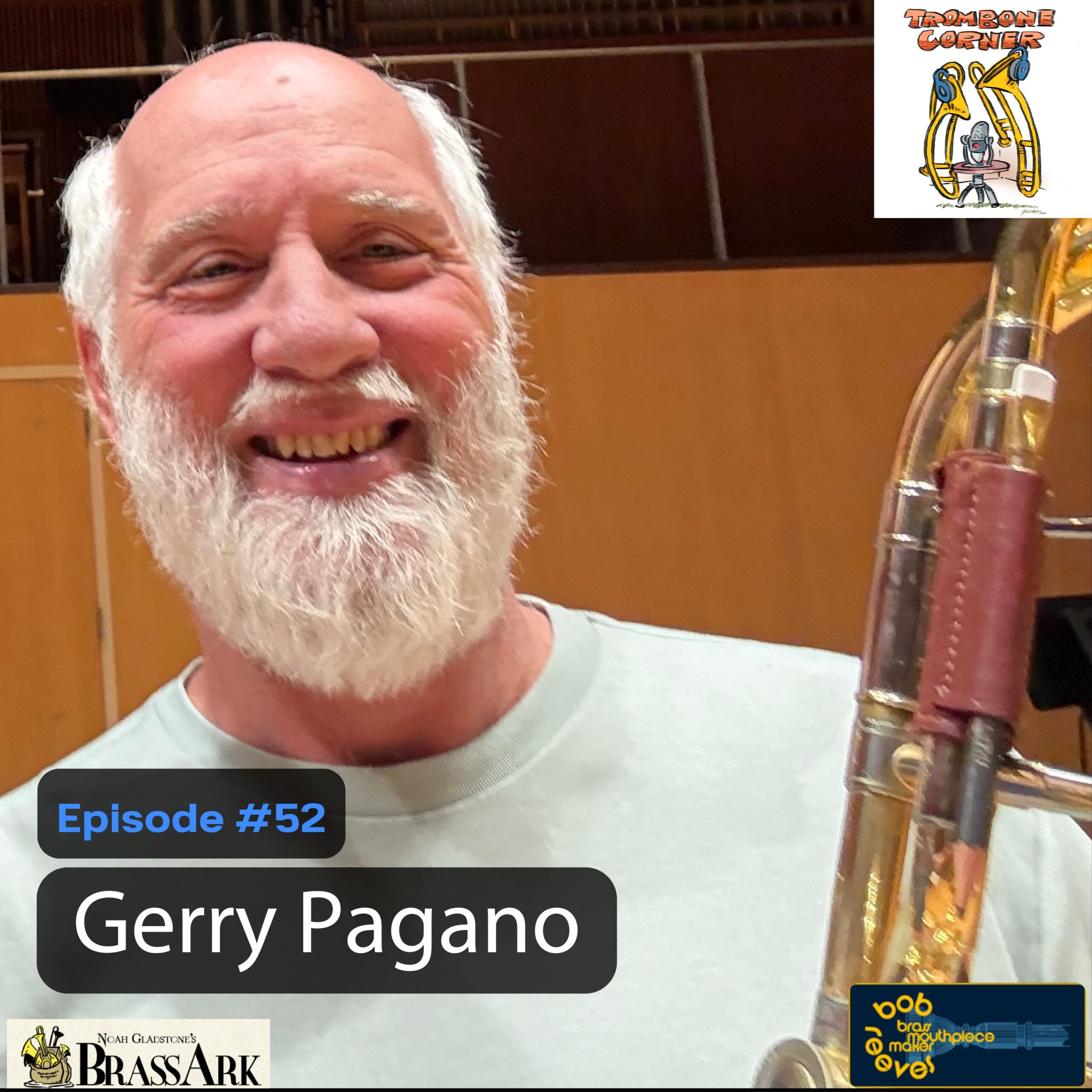
Welcome to the show notes for Episode #52 of the Trombone Corner podcast. This episode of features orchestral trombonist, arranger and composer Gerry Pagano.
From a kid digging out his dad’s old trombone case from the closet to 27 years in the St. Louis Symphony, Gerry Pagano shares the hard-won lessons, detours, and lucky breaks that shaped one of the most beloved bass trombonists in the game.
Gerry has great stories, sharp advice, and the kind of honesty only a veteran can deliver. He talks about the “practice at home” wake-up call that changed how he interacted with his fellow musicians, the teachers and colleagues who pushed him forward, and the years freelancing in Georgia, New York and San Francisco before landing the stable orchestral life he had chased.
We also dig into understanding great orchestral playing, the mindset required to thrive as a bass trombone player, and how retirement opened the door to composing, recording, and freelancing again.
And because this is Trombone Corner, there’s plenty for gear fans too: vintage Conns, a favorite Bach 42, an Edwards, contrabass adventures, and a love letter to old horns, music memories, and the sound of a truly great section.
Just a couple of the memorable quotes from Gerry:
“We gave up a really creative, interesting, humorous name for our instrument when we gave up sackbut… Imagine if you could say, ‘I play the sackbut.’ That would have a totally different impact!”
“Before you ever play an instrument, you’re a musician or you’re not. It’s inside of us… You can always learn an instrument, but music has to be a part of you to begin with.”


About Gerry Pagano
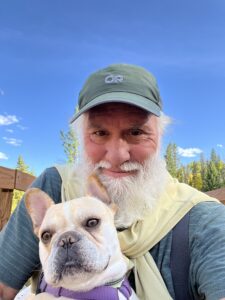
Gerry Pagano is a professional trombonist whose musical career has taken him around the world and across a wide range of musical styles. After studying at the University of Georgia and the Juilliard School, he performed with ensembles including the San Francisco Ballet and San Francisco Opera before joining the St. Louis Symphony Orchestra in 1995, where he built a distinguished career as bass trombonist.
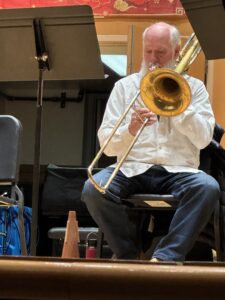
Throughout his career, Gerry has performed in orchestras, opera, ballet productions, Broadway shows, jazz ensembles, and more. He is also a dedicated educator and advocate for low brass, helping foster the next generation of musicians through masterclasses, workshops, and the St. Louis Low Brass Collective.
Gerry’s lifelong passion for music and the trombone continues to shape his work as a performer, collaborator, and mentor.
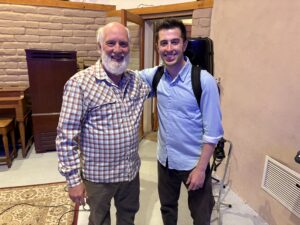
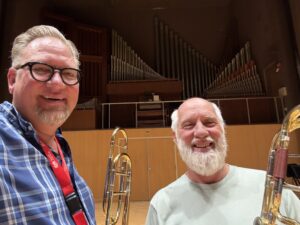
Bob Reeves Brass Events and Appearances:
- Greg Black Mouthpieces, November 6-7, Mount Holly, NC
- NCMEA Conference, November 8-9, Winston-Salem, NC
Podcast Credits
- Theme Music: The Trombone Choir Arrangements of Jay Friedman, Vol. 1
- Audio Engineer – Ted Cragg
- Photo Credits – Courtesy Gerry Pagano
- Podcast Hosts – Noah Gladstone & John Snell
Transcript
Please note, this transcript is automatically generated. It may contain spelling and other errors. If you would like to assist us in editing or translating this transcript, please let us know at info@bobreeves.com.
GERRY PAGANO (00:00)
I’m on this big band job, and there’s a guy who’s probably my age back then, played a million gigs, and and here I’m 21 year old on the bandstand trying to impress everybody, warming up, playing fast and high and low, and you know, everything you can think of. So look how good I am, right? Then this guy looks over at me and he said, Hey kid, practice at home. And I was like, Wow. Okay. That was you know, I needed to hear that, right?
JOHN SNELL (00:33)
Welcome to the Trombone Corner Podcast, where we feature interviews with trombonists from all over the globe. It’s great to have you join us as we talk all things trombone, brought to you by the Brass Ark and Bob Reeves Brass. I’m your host, John Snell from Bob Reeves Brass, and joining me as always is my trusty co-host Noah Gladstone of the Brass Ark. Noah, great to see you. It’s been a while.
NOAH GLADSTONE (00:56)
Hey John. Yeah, it’s been a while. Hey, you’re looking great today. You’re you got a nice hair day today, I gotta say.
JOHN SNELL (01:02)
Thank you, thank you. I’ve been in I’ve been enjoying the fall weather in the mid west. So that all the heat the heat my pH balance is better.
NOAH GLADSTONE (01:09)
Very distinguished though these days. I just I have to say, like
JOHN SNELL (01:13)
Yeah, no,
NOAH GLADSTONE (01:15)
It’s a nice look. It’s a the silver fox. Yeah.
JOHN SNELL (01:18)
Comes with running a business, but that’s another fun gap.
NOAH GLADSTONE (01:23)
my gosh. We have Jerry Pagano here in the Trumbone Corner today. One of our most requested guests, actually. You you’ve all been emailing for a while and being like, please have Jerry on. Please have Jerry on. So finally we were able to connect and and we have Jerry Pagano here with us today. And let me tell you, this interview is a doozy. You guys are gonna want to stay all the way to the end because it is just a blast.
JOHN SNELL (01:44)
He he is a storyteller.
NOAH GLADSTONE (01:46)
He is the storyteller, so
JOHN SNELL (01:49)
Yeah. So we’ll get to Jerry’s interview here in a moment after a word from our sponsors and some trombone news.
If you’re a trombone player, you already know that the right equipment is rarely just a matter of picking something off a shelf.
NOAH GLADSTONE (02:08)
That’s right, John, that’s why we decided to develop the Reeves Brass Arc mouthpieces. We wanted to make trombone mouthpieces that feel really great to play, sound terrific, and actually work with the way trombone players put their equipment together. And I wanted to draw from some of the best historical examples in my personal museum collection. These are all made right at your shop up in Valencia, California.
JOHN SNELL (02:28)
And besides these fabulous mouthpieces here at Bob Reeves Brass, you’ll also find other great things for trombonists including Shires trombones, oolvane mutes, and the ever popular guard bags.
NOAH GLADSTONE (02:39)
At the Brass Arc, we specialize in exceptional instruments, both new and used, exclusive new models from Miles O’Malley in Chicago, Marcus Leuchter, Stevens Brass by Steve Shires, Eger Historical Brass Instruments, among other S tier makers, along with one of the largest curated selections of vintage and unusual instruments that you’re not going to find in most shops. If you’ve got a special trombone or trumpet or something else sitting in your closet and you’re ready to find at a new home, I can help with that too through my consignment services.
JOHN SNELL (03:08)
Bob Reeves Brass and the Brass Arc, where generations of craft meet today’s artists.
Well, Noah, what have you been up to? Enjoying
NOAH GLADSTONE (03:21)
I mean, yeah, fall’s been nice. I was just had a nice weekend here playing some bass sack but with the Bach Collegium San Diego. We did the Michael Haydn Requiem, which I’ve never heard of this piece before. It’s a really lovely piece, very much like the Mozart Requiem, kind of inspiration for the Mozart Requiem and and they were colleagues, so it was fun to kind of hear that. And then we also did the Mozart Vespers, all on period instruments. We had a full section of Egger trombones, it was really great.
my colleagues played and it was nice to get to do some some historic music. So I’m back in the shop this week trying to catch up on a bunch of emails and shipping things out for folks. But just did a quick website update, some new instruments here in stock, lovely selection of bass trombones at the moment, and of course all the usual suspects, Steve Shires, O’Malley trombones, of course, working still on our bass prototype. We’re gonna have that hopefully on display at the the Midwest show.
in December for everyone to see and then making some announcements about when those will be available to pre-order. But exciting times over here at the Brass Arc. I have some new Egg or Sack butts coming in. I have a two tenors that’ll be coming in in the next couple weeks, a standard model and a historic model as well. The historic model features different brass alloy and kind of traditional seam tubing and and scraping methods on the bell whereas the standard model is a little bit more affordable.
they use seamless tubing, but a little less decoration, but still quite a a great instrument. And those are both copies of the Hain Line sackbutt. So if you want to buy yourself a sack butt for the holidays, come on over to the Brass Arc and check out my warriors.
JOHN SNELL (05:06)
My favourite Carols Sackbutt for the holidays.
NOAH GLADSTONE (05:08)
Holidays, yes, I love that one. That’s a classic. Yes, Bing Cross never
JOHN SNELL (05:12)
Who did Mel Tormay or forget?
NOAH GLADSTONE (05:15)
goes out of style. Nothing says holiday like a sackbutt. So what’s going on over go ahead. You got another joke for me.
JOHN SNELL (05:23)
No,
no, no, nothing says a holiday is like the Trombone Corner holiday episode. Second annual is coming up pretty soon.
NOAH GLADSTONE (05:29)
Second
annual eggnog festivities. Yeah. I’m looking forward to that. That’s one of my favorite episodes. I’ve been thinking about what kind of crazy trivia you’re gonna come up with.
JOHN SNELL (05:40)
What
can we do this time? What can we do this time? Yeah.
NOAH GLADSTONE (05:42)
I
don’t know. I’m sure you’ll come up with something, but I I’m looking forward to some eggnog and good cheer. yeah, we’re we’re we’re kinda at the end of this year already. It’s amazing how fast this goes. But we’ve had some great guests, I gotta say. This has been a fun a fun season for the From Bone Corner. what’s going on over at Reefs these days?
JOHN SNELL (06:01)
Well,
I just I was enjoying the fall weather outside of LA. I mean, as you all know, we’ve been having like ridiculous heat br waves and humidity and fires
NOAH GLADSTONE (06:10)
Fires and all sorts
JOHN SNELL (06:11)
and stuff. And last week I was out in in Boston where I got off the plane and it was a brisk fifty degrees out. I was in a breeze. I was like in heaven. I was out there visiting Virtuosity Music and so shout out to Steve Johnson and all the folks out there. Sam who does our wonderful photography for them and
Great trombone players always picking up some more brass arc mouthpieces. We had a lot of trombone players come in this time from NEC and Boston Conservatory. Found a a few new homes for our smallbora bass trombone piece and I think one of the tenor trombones was half
NOAH GLADSTONE (06:45)
I’ll try to come with you next time, I think.
JOHN SNELL (06:47)
it’s it’s a great hang. so shout out to all the folks at Virtuosity Boston. And if you’re a trombonist in the New England area and you want to try out the brass arc mouthpieces, they do have a good selection. So head over to
Virtuosity Caddy Corner from Symphony Hall and maybe can’t catch a concert that night. So and then I was over at the Cincinnati Conservatory of Music for a few days enjoying a Midwest fall. had some skyline chili out there and gave her presentation to the brass studio at C C So thank you to Ashley Hall Ty and for having me out and did mostly trumpet stuff, did mostly valve alignments out there, but gave a nice hopefully a nice master class and talked to the brass players out there. So
Nice to be back in the in the Bob Reeve shop and cranking stuff out for the holiday season. So we just got a few new Shires custom trombones came in. Curran was in for about a day and went back out. so congratulations to that client who picked up a hard to find horn. we just got a Marshall Jilkes in in that set of that shipment. So if you’re looking for a small bore with that cool screw bell, just like Marshall plays, we have one of those in.
Along with some other cool toys, so feel free to give us a call. Still
NOAH GLADSTONE (07:59)
You have a lot of guard bag cases behind you as well.
JOHN SNELL (08:01)
got plenty of guard bags, yeah. So if you’re looking we have a few more cut bag cut bell tenor cases left, as made popular by Peter Steiner. You know, we have a few of those left in stock before we get our next shipment later next year. So if you’re looking for a guard bag, now’s the time ’cause otherwise it’ll probably be six months or so.
But that’s that’s all it all we have on the shop front. I do want to mention next month, actually just in a few weeks here, we’ll be heading out to Greg Black Mouthpieces. There’ll be the NCMEA North Carolina Music Education Educators Association conference in Winston-Salem. That’s Monday and Tuesday, I believe that’s the eighth and ninth. Let me double check that. Yeah. no, Sunday and Monday. That’s a weird conference.
So Winston Salem, the November eighth and ninth, we’ll be there with Greg Black mouthpieces. So if you can’t find a trombone mouthpiece between our our brass art pieces and Greg Black’s line, it probably doesn’t exist. so wonderful. And you know, a lot of people like both mouthpieces and they want to be able to compare them back to back. So that would be a wonderful place to do that. So Sunday and Monday we’ll be at the convention and then Tuesday we’ll be heading down to Mount Mount Holly.
the home of Greg Black mouthpieces and spending a day at their shop, which is always a lot of fun. Always a lot of donuts. I gained several pounds that day. but yeah if you’re on the w east coast and in and around North Carolina, you can catch us to try some cool brass arc mouthpieces and we’ll have some old vein mutes as well to try. So that’s all the news I have now. A little bit of travel and then can’t wait for the eggnog for our our holiday episode.
NOAH GLADSTONE (09:39)
Sounds great. Let’s get into it with Jerry.
JOHN SNELL (09:40)
Let’s
do it.
Jerry Pagano is a professional trombonist whose musical career has taken him around the world and across a wide range of musical styles. After studying at the University of Georgia and the Juilliard School, he performed with ensembles including the San Francisco Ballet and San Francisco Opera before joining the St. Louis Symphony Orchestra in 1995, where he built a distinguished career as bass trombonist. Throughout his career, Jerry has performed in orchestras, opera, and ballet productions.
Broadway shows, jazz ensembles, and more. He is also a dedicated educator and advocate for low brass, helping foster the next generation of musicians through masterclasses, workshops, and the St. Louis Low Brass Collective. His lifelong passion for music and the trombone continues to shape his work as a performer, collaborator, and mentor. Now here’s our interview with Jerry Pagano.
We are honored to have joining us on the Trombone Corner today, Jerry Pagano. Jerry, how’s it going?
GERRY PAGANO (10:45)
I’m well, thank you. Hello everybody.
JOHN SNELL (10:48)
Great to see you. Hello. Yeah, and who who do we have? We have a friend, for those of you who watch this on YouTube, we have another friend who who’s sitting on your left there. Hi Callie.
NOAH GLADSTONE (10:58)
Cat is
GERRY PAGANO (10:58)
Listen,
she doesn’t have a good trombone armature. She
NOAH GLADSTONE (11:01)
A little jowly, maybe.
GERRY PAGANO (11:03)
provides moral support.
JOHN SNELL (11:05)
Well hop hopefully she’ll join us later on in the episode. Jerry, let’s start right from the beginning. how did you start on the trombone?
GERRY PAGANO (11:13)
When I was a kid, my dad had been a trombone player and there was a trombone, actually two trombones in the closet. And I don’t know I must have been preschool. I saw these you know, my assumption was it’s some kind of luggage, but it doesn’t look like a normal piece of luggage, right? So I opened it up and and, you know, put the thing together and I remember I used to sit and blow on it and, you know, at some point my mother said, Why don’t you take that to school so you can get like somebody can teach you how to play it? And which I did.
And I was a bad student, so I want to start right off by telling people there’s always hope, no matter how bad you are. I would look over, I had two other young student colleagues and they were they actually like learned like where the slide position was supposed to be and the notes on the page, which I did not do because I was always and have continued to be a bad student. And I would just look over it and you know, wherever they put their slide, I’d I’d put my slide.
which, you know, I’ve I’ve since come to understand where it’s supposed to be ahead of time. But that was kind of how I got started and and I I enjoyed Trambone, I guess, but when I started to get good and I’m not sure exactly how that happened, but when when I was getting, you know, decent on it, I was getting praise for that, you know, a pat on the back for being a good Trembone player, people appreciated
As a matter fact, at one point I had, you know, a band director come search me out because I hadn’t been signed up for band and he needed trombone, so he came to look for me. So when you’re getting, you know, attention and and accolades for doing something, it it encourages you to want to do it. I had originally wanted to be an athlete, you know, football, baseball, basketball. being small and slow and uncoordinated was a a detriment to that possibility. And I remember ninth grade, I think I was playing
Football and and I was in the band ’cause you could do both and then the next year it was like you had to choose ’cause they both took place at the same time and and I I remember one time I was I was playing football and I got hit and it didn’t feel good. And I thought, you know, I think trombone is probably a better way to go. I don’t get hit in the face when I play trombone, at least not regularly.
NOAH GLADSTONE (13:32)
Depends how fast you move your slide, I guess. You can hit yourself in the face.
GERRY PAGANO (13:35)
gotta be careful. Sometimes in the pit it gets dangerous. But
JOHN SNELL (13:38)
Right.
GERRY PAGANO (13:39)
so I just kind of I just kind of almost fell into it haphazardly. I I really, you know, was I think and I think this is true for everybody, before you ever play an instrument, you’re a musician or you’re not. It’s inside of us. And and some people are not instrumentalists, but they have music inside them. Mm-hmm. And I think you have to have that first and foremost. You can always learn an instrument, but music has to be a part of you to to begin with. And
You know, it helps if you have a decent ear.
JOHN SNELL (14:08)
Have a song and you so you had you had mentioned you your father was a a trombonist as well. Did he play professionally or just kinda for fun?
GERRY PAGANO (14:16)
Well no, he had just played, you know, I guess in his high school band and stuff like that. And I know people are looking at me and they’re thinking, Well, if if his dad played trombone, it must have been right after they invented it, ’cause this guy’s old. I mean, look at But I think he had s s it was just like in in the band in high school ’cause my dad didn’t go to college, so it must have been in high school. And I wish I had both those horns now. One of was in a big thick
leather case. And it had a flap at the end where the bell would you pull the pull it out from the one end where the bell was, and it was silver and it must have been ancient. It was probably made in the early 1900s. Must have been a curved
I didn’t hold on to it. I don’t think anybody in the family did. But now I’m curious ’cause at the time it was just an old horn. I could barely move the slide, so I I was not interested. But now I’d be curious because just if nothing else, because of the age of the instrument. and I remember that smell, you know, you open up an old case and there’s that old brass smell. Yeah. And the leather was old. It could have been, you know, like I don’t know, maybe it was even
Prior to nineteen hundred, I don’t know.
NOAH GLADSTONE (15:32)
Possible. Especially if the slide is really bad. It’s very possible.
GERRY PAGANO (15:36)
Well,
you know, I’ve seen a lot of slides that w were made a couple of years ago that aren’t in real good shape.
NOAH GLADSTONE (15:42)
Yeah, it’s true. It’s you know what? It turns out it’s hard to make a slide. gravity gravity is not your friend on the slide.
GERRY PAGANO (15:49)
And by the way, I wanna thank you, Noah. I’ve been enjoying playing the horn you sent me. The slide is good. Yeah. I don’t have any problems with the slide. And and as we know, it can be difficult. You know, you can fuss with them all the time and and still feel like I’m not happy with it.
NOAH GLADSTONE (16:03)
Yeah. Absolutely. So you you were playing in school. When did you start getting good? You said you you was it a just a natural thing that you just take to it or did you get lessons?
GERRY PAGANO (16:12)
I think I did have natural proclivity to play the instrument, but at some point I realized, you know, I needed to actually start practicing. My parents used to set a timer and I was supposed to practice for 30 minutes. And it was on the oven in, you know, because back in the old day you’d have a timer on the oven for, okay, I can take the cornbread out of the oven or whatever. Well, that makes me hungry. I shouldn’t have said that.
JOHN SNELL (16:35)
Me too.
GERRY PAGANO (16:36)
I love missing cornbread. Anyway.
The the timer was sitting there and I was in the room by myself and I’d sneak over and and turn it forward so I like it would go off earlier because I didn’t want to practice. So I don’t know how I ever got past that point to where I actually started practicing the instrument. But by maybe the eighth or ninth grade I I actually started to, you know, try and practice. As a matter of fact, one of my first teachers is was Phil Jameson, who was the Tremone instructor at the University of Georgia.
And many of the people in Athens where I grew up were already taking lessons from pretty much the whole band was already taking lessons from people who were the professors at the university. Mm-hmm. So we had pretty good bands because everybody was taking from the teachers there. But he had been like frustrated with me because I wasn’t practicing and he was telling his wife, I’m just gonna quit teaching this kid. He’s he’s no good, he’s not practicing. Every week he comes in and and she said, he’s a good kid, you should keep working with him.
So he did and I went through all through high school and into college with him and he was a really good teacher. I think he I don’t know a lot of his background. I know he s went to school in New York and he played with the Band of America and he had gone to interlocking camp and so he came from the he was a Yankee. He came from the north down to to teach at Georgia and really traded created a great trombone.
I don’t want to call it a studio because we weren’t even in college yet, but the kind of the con trombone community in high school and college was was created by Phil back in the sixties and into the seventies. We would play the Boats of Trambone Quartet in high school and take it to Solon Ensemble and the you know, the judges would like they couldn’t read Ten Ocleff or something, you know? Right, right. and I was I thought that was just typical, you know, I didn’t think anything of it, but that was one of the real
blessings I had as I grew up around all these good trombone players. And in high school, you know, you had to work your butt off if, you know, you didn’t want I remember one year, I think I was in tenth grade and I didn’t get in the top band. And there was like six or so trombones in the top band and I couldn’t get in it, you know. So I was practicing hard, practicing hard. Finally I I was able to do that. But I think that was the inspiration was all these people around me, they were good and they were practicing, they were working hard.
And so I had to keep up and eventually I I’m sure that it was fun to be in band and I enjoyed, you know, all the stuff that went with it ’cause, you know, especially in Georgia growing up, football’s a big thing. So the the marching band and going on trips and buses. It’s a very social and very fun fun thing to do. And that must have really caught my attention and at that age too, when you’re around, you know, early high school years, where do you belong, right?
And if you’re orchestra band, chorus, or if you’re in football or wrestling, you know, there’s a a place you find that is where these are my people. And being a musician, that was always, you know, that’s your group. So must have been right around that time, you know, eighth, ninth, tenth grade, I started actually practicing. And I I think again, one of the things that is very helpful, I think I’ve always had a pretty good ear. I don’t think I have perfect pitch, but I had a good ear, so playing trombone, I mean you can’t
Trimbone. If gonna have a good ear. I mean, you know, you can’t just push a button down and there’s the note. It’s it’s gotta be like every time you play, you’re listening and going, Is that right or or do I need to move it? So I think that was just a real benefit. I had a good ear and and figured sooner or later figured out the playing part of it and was off and running.
NOAH GLADSTONE (20:24)
Yeah, it’s great. It’s such an interesting thing. Yeah, with you with your ear, you really like you said, if you either have it or you don’t. Our instrument is so old and so archaic, it’s like there’s a thousand slide positions. And but that’s what makes it so great. It can play in any temperament and any in any pitch and any ensemble and any key. Yeah. And no one else can do that really. So
GERRY PAGANO (20:47)
Very vocal. I I was at a concert in town. The what’s the name of the group? Desert Corral was doing a concert of Renaissance music and I I like Renaissance music, so I, you know, got tickets, showed up there and they had sack butts and I didn’t even know they were gonna be there. Yeah. And I was like, What a nice bonus. I I met him afterwards and it was it was a really cool thing. But that sound is a really cool sound because then you hear, you know, you talk about the early instruments and
We’ve gotten so far away from it, we play so loud and we have all these technical abilities. But that sound with the human voice is is wonderful and I think that’s the trombone is a very vocal thing.
NOAH GLADSTONE (21:29)
I was just in San Diego this weekend playing early music. Actually, we were doing the Michael Haydn Requiem and the Mozart Vespers on period instruments at four thirty pitch. So yeah, it was a lot of fun. but you know, it’s just double we’re playing the whole time, just doubling the voices and and I I actually got to do the pre concert lecture, which was really fun ’cause I got to explain to everybody that the trombone was actually the most perfect instrument and their favorite instrument that they didn’t know.
and funny enough, they all walked out of that lecture being like, You know what? I think he’s right. I think the trombone is my most favorite instrument. and I was trying some of my stand up too, and it worked pretty well. I had some left.
GERRY PAGANO (22:06)
Always help
you know, when you’re talking to people in those situations, if you’re just giving them information, I mean nobody’s gonna be interested very for very long. You know, I I was just trying to think if I ever played early music, and I think the only time was once I had a a a dawn Easter service I had to play. It was like six in the morning, so it’s pretty early. But him Yep. Don’t forget your waitress. Yep. See, there’s there’s some there’s some humor. We need that we’ll add that.
NOAH GLADSTONE (22:34)
We’ll add that little drum rim shot at the
GERRY PAGANO (22:37)
Put
that in there. But you know, I think that’s it’s great experience to have. We got some sack butts to play on that I think came from Wash U. This is the Tremone Quartet that, you know, I was in in St. Louis. And Tim Myers, our principal, somehow he had a connection and found out they had these instruments. So we wanted to play on a Gabrielle just like to to do it and give people the idea of that sound. And it was so completely different. These people that do it all the time. I don’t know if you could go back and forth. I think you just kinda have to
Stay in that world ’cause it’s so different.
NOAH GLADSTONE (23:08)
It takes a few days to get back into it, but I try to practice mine most of the time. I mean I love I I love historic trumbone playing, so it’s it’s what I will do when I retire and I don’t have to play modern trumbone anymore. I plan to only play a historic instrument, but
GERRY PAGANO (23:22)
Well, and I think it gives you the chance to really when you go back to your instrument, start thinking about like all the music from those time period or or Mozart, Bach, anything like that, you know, I’m not gonna keep approaching it like we’re in marching band because now I understand the sound that would have been appropriate.
NOAH GLADSTONE (23:39)
Absolutely. I mean, the instrument hasn’t changed really at all if you think about it. It’s gotten bigger, but really the instrument itself hasn’t changed the way that we play it. And when you play in that context, I think it really enlightens you to articulation and the different colors and nuances that you can play, the different kinds of connections, the slurs, the the ar you know, the the the ping articulation, the clarity, the matching, the the the syllables of the vocalist. It’s a really unique thing. So I I love it and and I think, yeah, absolutely.
GERRY PAGANO (24:08)
One thing you mentioned was how many different ensembles can you can play in with a trombone and and I think that’s one of the other really great things about a trombone and the experience in it being to play in a big band or a salsa band or early music or ballet, opera, symphony, b Dixieland, all those different things. October you know. Yeah. Oktoberfest.
NOAH GLADSTONE (24:30)
Everything.
GERRY PAGANO (24:31)
or some people call it Octoberfest. It’s very great as a musician to be well rounded and not
you know, just do one thing. But yeah, and I think, like you say, it can be hard if you’re gonna be going back and forth. It’s a challenge. But if you get to the point where like I can do whatever I want, so now I can just hone in on the SAC butt, early music. It’s hard to do that for a living. The folks that I met that I talked to, they’re more putting together programs and I’m trying to remember the name. They’re based in Chicago.
NOAH GLADSTONE (25:04)
It’s probably Liza and her group, I would imagine. She’s great.
GERRY PAGANO (25:06)
Yes, exactly.
And and they do you know, the whole gamut. They put the programs together, they fundraise so they’re not necessarily making
NOAH GLADSTONE (25:15)
Whole thing.
GERRY PAGANO (25:16)
Yeah, they’re not necessarily making trombone money. They’re making group money or or program money. I don’t know how you call it, but it’s not like I I don’t think there’s probably anybody in the world that’s sitting there making a living on Sackbutton unless they live in a teepee or something. I don’t know how you
NOAH GLADSTONE (25:32)
It’s a Bohemian lifestyle, I suppose. But yeah, absolutely.
GERRY PAGANO (25:36)
Yeah, maybe they’re married to a a banker or something.
NOAH GLADSTONE (25:41)
that’s the ticket.
JOHN SNELL (25:41)
That’s it.
GERRY PAGANO (25:42)
I had I should have thought of that.
NOAH GLADSTONE (25:46)
anyway back to your your stuff, Jay. Sorry to hijack and the the Sackbutt stuff, but you know, we’re talking about it. I’ll talk about that for hours and hours and hours. John, get us back on
JOHN SNELL (25:54)
We we know that’s
why we love you.
GERRY PAGANO (25:58)
Well
and I and I do have to say we gave up a really creative, interesting, humorous name for our instrument when we gave up sackbutt. We
NOAH GLADSTONE (26:05)
Sure.
GERRY PAGANO (26:06)
I mean, you know, when people meet you and you say you play the trombone, they usually it’s this thing, right? But if imagine if you could say I’ll play the sack butt, that would have a totally different impact. It totally would most people just laugh.
NOAH GLADSTONE (26:17)
They’ll be like, What’s your Instagram? All
right, John, get us back on track here.
JOHN SNELL (26:23)
Yeah.
I think we I think we left off when you were heading off to college. So tell us about that process. I mean did you w by that point were you set on having a career in music or did you
GERRY PAGANO (26:34)
No, I was a music ed major at Georgia. You know, growing up in Athens, I knew no one that played music for a living. Everybody I knew was a band director or somehow involved teaching. They didn’t they didn’t play. And so as a music ed major and happily going through college, doing the usual things, you know. the the red coat band at Georgia was a a big social thing and it was a lot of fun and and the activities surrounding that mostly included, you know, drinking beer and chasing girls
The usual things when you’re twenty years old. But I s got hooked up with these guys in Athens that were playing jazz in some of the clubs in town. My last no, it was the last couple of years I was in town. And I started in as a junior, I started to sit in with them. And I liked jazz and that’s that was what I’d really want to do. But, you know, it was just a matter of sitting in for fun at that point as a junior. But as a senior, I put my own little jazz quartet together.
you know, bass drums, piano and trombone. And we were just playing on the weekends and and making fifty bucks or whatever, but it was like, hey, I’m getting paid as a musician. It was kind of the beginning of a an idea that maybe this could happen. Some of the guys that were earlier had been playing in Athens, had moved to Atlanta to try and make it big in jazz. And after about a year they realized they were gonna starve to death and they got a job with a local lounge group.
And they were making money playing music, but it was top forty and at the time it was a lot of disco. There was a singer whose name was Cody Marshall, and he was kind of a Tom Jones kind of wannabe. But they had a sax and a rhythm section and and Tom Jones or, you know, Cody, I should say, out front. And they they had a New Year’s gig they wanted to add some horns on. And they added myself and a trumpet player for New Year’s. And, you know, it went well and everything. And then they they got this job.
in of all places Saudi Arabia for two weeks. And they wanted to get the horns back and make a big band of it. So the trumpet player couldn’t make it, but I was able to to go on this tour. And my goal at the end of two weeks, this was at the end of my fourth year at Georgia, I thought, well, I’m just this is what I want to do. So I’m gonna I’m gonna make them hire me. At the end of two weeks, they’re gonna just say, keep keep playing with us. We’ll pay you to be our our new horn player. And they did. So I was with that band for about a year and a half and
We traveled all over. We went to Puerto Rico, Alaska. We played a few times in Nevada, both at Lake Tahoe and Reno. And so I was really getting my teeth cut in on, you know, playing every night or, you know, five nights, six nights a week. and you know, writing charts. If there was a tune like, you know, w could be any tune that was on the radio, our boss, Cody, would say, Well, I want to do this tune and the rhythm section would figure it out, but me and the sax player had to figure out like what are we gonna play?
And sometimes there would be horn parts, sometimes there wouldn’t be. There was a pretty famous Gloria Gainer song called I Will Survive that was real popular. Well, there’s horn looks on there, but you have to figure out like and and I had the ability since I had gone to music school, I could write out the chart and the sax player and I could play it. And it was it was so it was a good experience. It was an experience of know like using your ear, writing out an arrangement, you know, traveling, playing your horn for a living.
It was it was a great thing to do for about a year and a half. But then after a while, like being in a lounge band, you know, that’s it’s not really what I had expected of my career. Although I will tell you, it just popped in my head. I met Bob Re Bob Reeves when I was in Puerto Rico. He came up to me, he was here and I’m sure he drifted in because he heard this Pimone player playing in the lounge and he drifted in and met me on the break and t he was the guy that told me about Frank.
Rosalino Passing. And it had just happened and I was like, you know, in Puerto Rico, so the news wasn’t getting down there. But I met Bob, it would have been in like nineteen seventy nine, nineteen eighty. And so I just thought I’d throw that in there because that’s a little connection that you you you know.
JOHN SNELL (30:47)
Yeah, Bob’s wife was Puerto Rican and so yeah, he would go down there and visit her family from time to time. But what a coincidence though.
GERRY PAGANO (30:53)
There you go, that makes sense. Yeah. What a cool
wow. Yeah. So this when I decided this, you know, wasn’t gonna be something I wanted to do forever. The drummer in the band had some connections in Phoenix, and I had already met from going to Brevard Music Camp. I’d met Gail Wilson, who was at Brevard, and he taught at ASU at the time. So I had some connections in Phoenix, and I thought, well, I’m just gonna go to Phoenix. At that time, my goal was eventually
I’m gonna go to LA and make it in LA. So Phoenix, we’re getting closer, you know. And I went there and lived for a few years and was able to freelance. sitting in Los Angeles, I would have been without gigs for probably quite a few years in Phoenix. In a few months’ time, I got my name around. And, you know, once I did a good job somewhere, people realized they could hire me. And I could I could sub in the symphony, I could play tenor or bass trombone, I could play casual jobs. I had learned standard.
Tunes were not what I knew. I learned tunes out of the real book. Like you could play a tune by Miles Davis or a tune by Herbie Hancock and get up with your little jazz group on the weekend and play that. The the gigs I was getting called for, the casual gigs, they wanted to know old tunes from the 40s, 50s that, you know, the people in the audience would know, like Deep Purple or The Nearness of You or whatever. And suddenly I had a whole new world to learn.
piano player would look over at you and he’d give you three fingers and and and you like what does that mean? three flats, three sharps, whatever. And and that’s another thing. Some piano players up was sharps and down was flats. That makes sense to me. Other pianos pi some pianists it was the exact opposite. So you had to learn who you’re playing with because when you’d see that flash if you know, one, two, three, four, however many fingers, it meant that’s the key you’re in.
JOHN SNELL (32:46)
and Yes. They’re used to the southern hemisphere.
GERRY PAGANO (32:53)
I
was playing a casual gig. This is I I got too many stories. We’re gonna be on here for twenty hours.
JOHN SNELL (32:59)
Hey. It’s internet time. It’s great. We love it.
GERRY PAGANO (33:01)
I was on a gig with Bobby Rosengarten and I don’t know if you know that name. He had played in the Merv Griffin band. He was he was the drummer and he went around and he would hire musicians wherever he went when he came to Phoenix. It was just him and the you know, small group, six may maybe seven musicians he hired. And he’d sit up at the front with his drums and he’d turn around and he’d yell, you know, Sax player, you know, do this tune and then blah you do this and he’d look back and he’d Bone player.
Dorsey, what key? And you’re like, okay, he’s throwing down the gauntlet. Am I gonna do the easy key, B flat, or am I gonna do it in D, you know? So I thought, all right, you think I can’t do it ’cause I’m a young twenty year old. I’ll show you. So let’s do it in D, right? All the way up to the you know.
JOHN SNELL (33:46)
I don’t know.
GERRY PAGANO (33:48)
So I get to the bridge and I forget it. I just go blank. So then
Bobby’s looking around singing and I I catch back into it and play it. So, you know, on the break, he’s buying me a drink and he’s saying that’s okay, kid. But
JOHN SNELL (34:08)
Yeah.
GERRY PAGANO (34:09)
but that those are the experience yeah, when you’re twenty one, twenty two years old. You know, you I mean, they’re all all these I’m thinking of all these, they’re flooding back to me. I remember another I’m trying to be good, but I’m gonna get I’m gonna get
There’s another gig. You you learn these things. It’s so r valuable as a young person. I’m on this big band job and there’s a guy who’s probably my age back then, played a million gigs and and here I’m 21 year old on the bandstand trying to impress everybody, warming up, playing fast and high and low, and you know, everything you can think of. So look how good I am, right? Then this guy looks over at me and he said, Hey kid, practice at home. And I was like, Wow. Okay.
That was you know, I needed to hear that, right? And there have been a a few times since in my especially in my mature years, as I’m getting older now when I’ve looked around and felt like saying, Hey kid, practice at home. You know, and it’s really you need to learn those lessons. You need to have somebody that looks over and says, Hey, nobody wants to hear that. I’m sorry. You know, if you’re in a pit and it’s a small pit and you’re practicing ’cause you got an audition coming up and you’re blasting the ride at the viol player.
Y you know, you ain’t making any friends. But Yeah. That’s something y you get a good life lesson like that. You only if you’re paying attention, you only need to hear it once.
JOHN SNELL (35:33)
True. Absolutely. So you’re in in Phoenix and trying to make your way to LA. I mean, was your goal at this point to be like a commercial player, session player? Yeah.
GERRY PAGANO (35:41)
Yeah it was. It was and I remember I’d gone over to w someplace a music store in Glendale, which I may still be
NOAH GLADSTONE (35:48)
Charles Music, probably.
GERRY PAGANO (35:50)
I went over there to buy a box sixteen ’cause I wanted a small horn for these gigs. And I met gosh. I can almost remember his name, maybe it’ll come back to me. I met one of the guys that played on the Tonight Show. He just happened to be there at the time and was very friendly and was talking to me. No, no.
JOHN SNELL (36:09)
Maybe.
GERRY PAGANO (36:10)
Wasn’t
the bass drum on player, was a tenor player. Can’t come up with a name.
JOHN SNELL (36:12)
Okay. Yeah.
GERRY PAGANO (36:15)
He was very friendly. And but you know, that was what I wanted to do. I I had been in Phoenix long enough to start work and also see work start to get a little harder to get. before I left I I started seeing some of the shows that were coming in that used to hire musicians starting to come in self contained. And I started thinking, I don’t know if this is like
what the longevity of this is. And of course as a freelancer you could sit there and see a month with no work and be, you know, freaked out and looking at your kitchen cabinet and there’s only one more can of beans in there. So, you know, I I was mostly at that point just like, I I I don’t care what it is, I gotta play trombone. Somebody’s got to pay me to do this somehow. And there had been a number of auditions in Phoenix. At one point they had a basel audition, then they had a tender Tramon, I think it was second Tramont audition and
Over the time I was there, over the four years, they had at least three different auditions. You know, I could just drive across town and take them. And I didn’t ever advance and I was not at that point trained to take an audition or play the excerpts. So I decided, you know, getting an orchestra job, that seems like a good way to go if you can get one. So I decided to go back to school. And I remember at the time Steve Witzer was playing in Phoenix and he said, you know, you need to go back to some
just terrible cold northern school where all you can do is sit and practice. And I think he’d gone to gosh, Eastman. I think he’d gone to Eastman where you know like that wind comes off of Lake Erie and it’s just snow and cold all winter, starting at Halloween until Easter. So I took his advice and at that point I’d had a friend and I it’s funny, I haven’t mentioned Steve Norrell yet. Steve Norrell and I met in seventh grade. He was living in Athens, Georgia
He went to Georgia for one year and eventually went off to Juilliard after his freshman year, after our freshman year. And he was kind of in some ways the the the seed in my mind of, you can do these things. Because Steve did it. I guess it’s something that’s possible. So he went off to Juilliard, had a job in Phoenix. That was another contact in Phoenix. But he had had since l won the job in the Met. So now I had a friend in New York and I thought, well, I’ll go to New York.
go to Juilliard, I start working hard to try and win an audition. I actually stayed with Steve my first couple of years. He had a house up in Nyack, which was up towards West Point. You cross the river and drive north. And I by the time I left New York, I was seven at the Met, I was playing some other gigs around town. I played New Jersey, playing Connecticut. So I was I was starting to work, but the main thing was I got I got skilled and and trained on the auditions and taking
You know, learning the excerpts, I had a couple opportunities to go down to Philadelphia. They had I think it was second Tremont Audition and saw it and I, you know, had started to get kinda into the audition scene. And by the time I left, I won the job in the San Francisco ballet. Actually, the the fall after I finished Juilliard, I won the job in San Francisco. So pretty much after I finished Juilliard, I was out in San Francisco working.
I had started to work enough in New York that if I hadn’t got the job in San Francisco, I probably could have stayed and freelanced, but that’s that wasn’t my goal. It’s fine for the people that want to do it. I would get a little nervous because, you know, as a freelancer, I don’t have to tell you, you don’t know. i am I gonna have work in two months, three months, six months, whatever. And I just wanted to get a job that was gonna be, you know, consistently paying me. Ironically the
The job I got in San Francisco was half the year. The opera and the ballet are both in the same facility, so I still didn’t have year round employment, but I I loved living in San Francisco and the the ballet orchestra was a good orchestra. Of course, you know, anytime you’re in the pit, you’re you’re just the accompaniment. You’re not the main reason people have shown up. I remember we were playing something and in a performance and people started clapping in the middle of the piece where like if it was concert, they wouldn’t be clapping.
I was like, what are you doing? You know? Well, somebody just did a nice little spin on stage and very good. You know, it’s like I was, okay, that’s why we’re here. You’re not you didn’t come to hear us. You came to see the people on stage. And but I had a an opportunity to play a year with the opera as well. Matt Guilford, he was in the opera at the time I was there and he won National Symphony, and they didn’t have time to have an audition. So in the next season when it came around, they just brought me in to play bass trombone for that year.
Which was a great experience. I also got to play the ring cycle, when I was out in San Francisco and we did believe it or not, nineteen ninety, in the summer I think, we did four ring cycles, complete ring cycles, which was you know, crazy. But again, that was a great experience and put some money in the bank. Yeah. So I’d had a lot of a lot of experiences, you know, right after Juilliard here I am. I’m working, I’m playing some opera, playing some ballet, and you know, I
Almost you could almost say I accomplished my goal. I had a job, but it was still half the year, so I was still looking to get something more permanent. And taking some auditions. I remember I went to Salt Lake City. I went to I went to National when Matt won the job there. And I didn’t win anything until St. Louis came around. It was an interesting thing to leave San Francisco and go to St. Louis because they’re such totally different places. I mean, you’re living in California and you can drive to the beach, go see the Redwoods, go to
Yosemite and that that was some of what I really enjoyed over the time I lived in California. I would go out hiking and and backpacking and just living in California. That’s what you do. And to go to St. Louis where just not you’re not driving to the beach and you’re not gonna go see any redwoods. It was because, you know, finally I had a year round employment, a good job and everything. but there was a lot that I gave up in leaving San Francisco, a lot of friends and and just the beauty of that area. But you know
That’s the the whole goal was to get a job and and be playing and making money, you know, on the trombone. And at that point my wife had her baby two months after we moved to Saint Louis, our our daughter was born. So it was like, you know, I gotta have employment and benefits and all that kind of stuff. I remember when she told me that we were pregnant, I was I knew the audition in Saint Louis was was coming and I was like, I gotta win that job. You know, and it really I
I don’t know, you know, was that the extra incentive I needed or was just good fortune or whatever, but you know, that was life changing. And I I enjoyed playing in the orchestra in St. Louis. I was there for twenty seven years. But, you know, again, I feel like for me I’d done so many different things on trombone. And the orchestra still had a little bit of variety, but not as much as you might get if you’re playing with different people all the time, freelancing and whatnot. so
one of my great joys in St. Louis was that we had four trombones. And we put together a quartet and did a lot with the quartet and that was my musical outlet was the quartet, you know, it was like my day gig was playing in the orchestra. And we all got along so well. I I guess they were able to put up with me. Tremendous tenor players. And and that started when Steve Lang was there. When he left it was Vanessa Frelick for three years and then Amanda joined. So we just had these great tenor players and they could all play anything.
And so, you know, what a dream as a bass tromone player to sit at the bottom of a group like that and play. And and it was, you know, mostly other people’s music, but as we went along over the years we started doing more arrangements and playing a few originals and it really became more our own stamp on things. And it was really fun to be able to, you know, in the orchestra they tell you what you’re playing, when you’re playing it, how to play it. So to have a group where you’re making all those choices.
And it was very democratic. Tim was never the kind of principal player, both in the orchestra and the and in the quartet. He’s very, you know, what do you guys want to do? What do you think? You know, it was it was a I I couldn’t ask for a better principal player. probably a lot of people don’t know how good he is. He’s an amazing Tremone player. He started on Euphonium and one one year he got to go up in front of the orchestra and play the Carnival of Venice or something like that. And you’re just like, my God, listen to that. But on on Tenetronbone, just
Hardly ever made a mistake, always prepared to dance the Greek. he and Susan Slaughter were both like that. Just completely knew what they were doing when they showed up, made the assignments well out in advance so you knew what was going on. They were the great example of both a colleague, a player, and a print section leader, you know. Treat everybody respectfully, tell them what they’re doing so they’re not guessing at the last second, am I on this piece or whatever? So it was a it was really great.
time there. So I don’t know. I I’m just going on and on, maybe I’ll jump
JOHN SNELL (45:24)
That’s
great.
NOAH GLADSTONE (45:26)
Go,
I’m I’m enjoying listening to you talk, Jerry. But I do have a question and I I think this is a you you know, you’re one of my favorite bass trombone players, and I just want to know what do you think it takes and I think a lot of people want to know this, because actually you were one of our most requested guests on the trombone corner, if you can believe that. must
GERRY PAGANO (45:44)
Mm.
NOAH GLADSTONE (45:45)
be. What is the secret to being a really great bass trombone player in an orchestra? Like having all that experience and sitting there and you know, looking back now that you’re retired.
What does it take to be a successful bass trombone player and how is it different than the tenor players? And like what is your role and where do you fit in in the in the symphony?
GERRY PAGANO (46:04)
Well, I think for any Tremone player, maybe any musician in the orchestra, it starts with especially if you’re not the first player in the section, you know, your big ears and radar and listening and fitting in, I think is critically important. Having a lot of skill is great, but if you’re not fitting in because you think you don’t have to, ’cause you’re everybody should listen to you and follow you or some stupid idea like that. That’s it’s really important to just know y you’re gonna block for the guy that’s carrying the ball.
You know, and and that’s okay, ’cause we need a fullback or tight end or whatever. But I think for me, you know, I know there are a lot of bass from home players who play better than me. I mean, it it it wouldn’t be hard to in LA or New York or Chicago, just walk down the street and you probably bump into a couple. But the thing I think I have was I I had a good centered sound that like when you played with me in a section, you knew where that note was. And it was always gonna be centered enough to where you could build on that.
And it was gonna hopefully be in tune and in time. So, you know, it wasn’t about a lot of technique necessarily. It’s just about providing that completely stable bottom end to where everybody can build off of it. And I don’t know, you know, in as far as in the orchestra, again, not always like having to think that whatever you’re playing is the most important thing. I mean, you I I think our section prided ourselves on like, you know, we could red line it at any time, but we didn’t always. We could be
more, you know, like, okay, this is where we can take a back seat and that didn’t mean that we still weren’t getting the hand ’cause, you know, mostly the conductors decided the night before the rehearsal what they were going to tell the trombones. And so, you know, however you played they were still going to say, you know, you’re too loud. But, you know, you would start off softer just to be a a gentleman and then expect that they’re still going to say it was too loud and and then you’d okay. And you’d shake your head yes and you do the same thing you just did. But
And they’d say, That was great. Perfect. Yeah, I didn’t change the thing.
NOAH GLADSTONE (48:06)
Yeah, of course.
GERRY PAGANO (48:08)
Or or the or the times, you know, they they keep telling you over and over you’re too loud and then you’d put just horn up and hold it and don’t play and then they finally Yeah. That’s that’s perfect. I didn’t
NOAH GLADSTONE (48:17)
Perfect. Perfect.
GERRY PAGANO (48:18)
even play you dumb
JOHN SNELL (48:22)
We’ve all done that. We’ve all done that.
GERRY PAGANO (48:24)
Yeah, and they love it. And they think that was so really the sound in their head is an orchestra with no trombones. But I think I think playing playing as if like you’re again, you you gotta remember that this is a group process, whether it’s the orchestra or the section or whatever, being a team player and trying to, you know, when it’s your time to you got something important, sure, put it out there, make sure it’s it’s it’s heard.
But the rest of the time just trying to understand your role, play in tune. Don’t be obstinate. You know, if you think something’s not right, ask your colleague, maybe tune it up, maybe figure it out. We didn’t have a lot of problems in St. Louis. I mean, again, Tim was the kind of principal player that he didn’t say anything. If he had to say something, you weren’t doing your job because you should listen and adjust, and then you you’re off to the races. And it gets really tedious if you’ve got one of those people that think their job is to constantly tell you how to play.
I mean, you gotta assume we’ve all been hired as professionals. We all went on audition. I’m not a dumb, you know, idiot. I I don’t I don’t play third trombone because I came in third, you know.
JOHN SNELL (49:32)
Like
GERRY PAGANO (49:33)
But but that I think is kind of maybe condensed what I think is important as far as being in an orchestra or being really in any group, you know, like you gotta know what you’re supposed to be providing to that moment, to that group. Sometimes, you know, I I’ve done some amazingly different gigs.
I remember I had a gig once in the summer in Phoenix and and believe me, if you’re working in the summer in Phoenix, you’re doing pretty good, because there ain’t much. And this guy who wanted to be fancy himself like a Leon Redbone, if you know Leon Redbone is. And Leon at one point would play guitar. He kind of thing like this, and he had his sunglasses and a hat. And he had a tuba player. Why, I don’t know, but th this person would just boop boop boop boop boop. And he wanted to get
Something like Lileon Redbone had. So he got me. I’m playing bass drum bone, but it was, I guess, as close as he could get. So as you know, you’re sitting there playing with a guitar player who’s singing. So automatically you’re you’re not it’s not Wagner, you know. And any situation you’re in, you gotta match that situation. And real quickly, I gotta tell you the most interesting job I ever had. Somebody hired me once to sit on their patio outside while they had dinner and play for their dinner. It was like an anniversary.
And I was gonna sit out there for an hour and just play trombone. Now an hour straight on trombone is a little tiresome, you know. You’re like, man, give the sax player a couple tunes, man. I’m I’m dying here. But you know, it paid, so I took the gig and and I didn’t have any problem getting along on that gig. That was the one time I could get along with everybody.
NOAH GLADSTONE (51:09)
I mean there’s love songs and pirate songs, right? That’s what Jeff Reynolds always said. So
GERRY PAGANO (51:14)
I think, you know, if that if that is my
thought on playing well in orchestra, you know, that that it comes down to some common sense things. But as far as like how do you get that chair, that’s a different thing. I think when you’re auditioning, obviously you got to play the pieces technically well on the instrument. But also remember that not all the pieces are the same. And and if you play every piece like it’s the same, a lot of the committees I’m on, man, they’re like, no, see you later, because they don’t want to hear
They’ve asked for different pieces for diff you know, everything’s got its the way it should go. And La Gaza Ladra doesn’t sound like, you know, Strauss and so to really give a little bit of an insight that, Okay, this person plays great, got a nice sound, they play in tune, they got good rhythm, they know the tunes. And if I hire this person, they’re plug and play, they’re ready to go. I don’t have to train you know, which is nice.
NOAH GLADSTONE (52:11)
Mm-hmm.
JOHN SNELL (52:11)
Yeah. Great great advice. And it’s interesting, all of the you’re doing the trombone quartet and the outside projects, like how important was that for your career? ‘Cause I know especially we have a lot of young listeners where, you know, winning an orchestral job is like the pinnacle, right? And it’s great for the steady paycheck, but also not necessarily the most fulfilling musically. Yeah, you know, depending on the season. So does doing that stuff that did work out for you in terms of getting that fulfillment?
GERRY PAGANO (52:40)
Yeah, I think for me, you know, again, I was very fortunate because I had a Tremone quartet, which is really a lot of fun. And you can’t always manufacture that if if you don’t have, you know, enough people around you or if they’re not interested. And in some places, people who have busy lives and they’re like, I don’t have time for it. Especially ’cause our stuff, I mean, we got paid to do things, but mostly we fed it right back into the group we recorded and that cost money and we would get commissions. And so
We didn’t really it was never even a you know, we weren’t in the black, we were just bleeding money, all our gig money went into st doing something, but it was so musically rewarding, you know, like you get a piece of music that’s never been played, you get to be the first footprints in the snow and you can hire the people that you like their music. It got to be so much more rewarding to play I don’t want this to come out poorly, I don’t want to make it sound like we didn’t like playing an orchestra, but again, you have so little control that
when you can actually play the pieces you want to play, get them written for you or write them yourself, arrange them. We we did a lot of arrangements for things that we did where we were like, we’re going into a lot of African American churches and and we’re not gonna play Bruckner for these people. That’s not really what we think is going to be that much fun. So we would arrange you know, just a closer walk or Timor had a great arrangement, I’m trying to remember the name of it, Joshua, the battle
Joshua fit to battle. I think that’s the name of it. And, you know, we started playing these things because we would go in once, twice or more a year into a church, like a stone’s throw from Powell. And they would eat it up. And and partly because they knew the tunes, it was their music, and the fact that we went to the trouble to try and say, we’re not just going to come in here and play Mozart and Bruckner at you and th and think that’s what you want to hear. Plus, it was a lot more fun for us. So we ended up with a pretty wide pallet of
arrangements and the solo stuff kind of was instigated by I you know, I had a mentor I actu actually felt met Charlie Vernon when I was a junior in high school at Brevard. And, you know, when you’re a high school and you meet Charlie, that becomes a big like aha moment. Mm-hmm. And I saw a number of it we he wasn’t the only one, but I saw a number of bass drumone players that were playing solos and doing stuff, recording. And
It was apparent to me that that was the kind of thing that could keep you motivated to practice, to get better, to work hard. Because, you know, if you keep going in and playing chike four, five, and six every year and, you know, the usual suspects, after ten, twenty, fifteen, however many years, you might maybe not gonna be at your best. Because those pieces don’t you could play on one valve, you could play some of them on no valve, and they’re not gonna explore all the instrument, all the things that you
could be doing to push yourself to be better. And, you know, nowadays these solos they’re writing are getting crazy hard. You know, back when I started after you got the Sonata brev and you got the, you know, usual suspects, the Hartley and and and now you look at what people are writing and they’re like the you start out the piece with double tonguing on on pedal D and and you go up to a high Geronimo or whatever over the stuff. It’s just it’s crazy. And and people are playing it. You know, I was just here in
Albuquerque this summer they do this Southwest Trombone thing and they do the one in Columbus, Georgia, and they’re doing all these things everywhere. And these people, you hear them play, and you’re just like, that’s it, I’m done. I’m not gonna play anymore. They just play great technically. And that’s the thing I I I get back to what I said earlier about I know there are people that can do more things on Trombone than I can, but sometimes that’s not the job. And if you’re not able to go in and and contain yourself, we had a
unfortunate situation where we didn’t give tenure to a player that could play anything. You could just have fly poo on the page and he’d play and it’d be perfect. But it couldn’t fit in. And and you know, sometimes when you have an extraordinary gift, it’s hard for you to not always wanna like, you know, show everybody that you can do all that stuff. Whereas most of the time people don’t need all I’m gonna put this little girl down. She’s getting heavy. But kinda
Hard to tell people when they can play things that very few people on the planet can play, it’s hard to tell them, hey, chill out, just play, you know, what’s in the page, don’t take it up or down an octave or three and just do just do what they hired you to do because they wanna, you know, they wanna be and I think that’s one of the things that if you don’t understand that it you’re not Principal Horn or some other
lead instrument that it’s gonna be a hard life for you because you you even if you get the job you’re gonna be bored or you’re gonna be frustrated. And and sometimes you’ll have a wonderful moment, but a lot of the times just no, just, you know, try not to fall asleep and come in and play your, you know, long tones. But the the stuff that I did outside was both musically rewarding but kept me moving forward and getting better. And I I had a lot of fun
doing it because I think again, if you’re expecting that all you have to do is show up at work and all your musical jollies are going to get taken care of, you’ll probably be frustrated. If they do come along and and you get something fun, that’s a bonus. But you’re not there because you’re supposed to be playing solos in front of the orchestra every week. You know, I was so fortunate I got one chance to play a solo with the orchestra and it was a piece that was written for me by Jim Stevenson. And he
He wrote this really cool piece called The Arch Rhapsody. Now, if you live in St. Louis and you’re playing in that orchestra, to have somebody write you a piece called The Arch, I mean, that’s just perfect. And and when I played it with the orchestra, I had a good friend that in the upstairs in management that found the at the at the arch they have all this historical records on the building of the arch. And they have some video of when they put it together and the last piece they had to drop in with a helicopter to
hope that it fit and all that. They she put together this whole montage of of stuff from the a National Historic Preservation, whatever they call it. She got access to it and they had all that on the screen while I was playing the arch. They showed the building of the arch. I mean, how cool is that? And
JOHN SNELL (59:16)
Yeah.
GERRY PAGANO (59:17)
and I was so fortunate I had a friend that was willing to put in the time and effort and did that for me. And and the extra added
interest, you’re sitting in St. Louis watching a piece called The Arch, watching build it. That’s pretty cool.
JOHN SNELL (59:32)
Amazing. Yes.
NOAH GLADSTONE (59:33)
Super cool.
JOHN SNELL (59:34)
So so now you’re semi retired, right? So you’re you’re you’re not in the retired from St. Louis, but you’re still playing any projects that you’re working on?
GERRY PAGANO (59:43)
Well, not currently. I just had a a recording I think it’s been about three or four months that I put out called Turquoise Trails. I started arranging for the quartet and then I started doing some original stuff and now I’ve gone off the deep end and I’m writing music that doesn’t even include trombons. It’s blasphemy. But I’ve had a lot of fun in retirement writing music and it’s been more interesting for my years to start hearing things
played by other instruments and I I started taking things that I wrote for trombone, like I had some Trombone duets, and I thought, well I’ll I’ll put them in finale with different instruments and see how it sounds. And I added a couple parts and I had this trio that was originally a trombone duet that I I had it shifted over to be played by two violas and bassoon. And it turned out pretty cool and I had it recorded and my colleagues in St. Louis played it. They sounded great
So then I did another couple, and this one I did with violin, viola, and bass clarinet. And it’s really this person, Su Ying, she said it’s so awesome on bass clarinet. It was like I remember I sent this to somebody and they said, I’ve never heard bass clarinet played so well. That’s amazing. And it was just really cool to hear that what my role would be, you know, in the piece. Suddenly it was a bass clarinet instead of a trombone. And that recording, turquoise trails.
Which you can get at my website, jarpgonel.org.
NOAH GLADSTONE (1:01:10)
We’ll we’ll put a link.
GERRY PAGANO (1:01:12)
Yes,
please. I I had all the pieces on that recording I wrote. So it’s about an hour’s worth of music, maybe a little under. And it’s I think I’m pretty amazed at at the fact that I came up with a an hour’s worth of original music that I recorded and some of it is is strings, some of it strings with you know various woodwinds, some of it is just brass. I wrote a piece for the new section in St. Louis which
There aren’t a lot of pieces that are for four trombones and tuba and a lot of times if you go to some place and they’re all they have to play with tuba is excerpts. They might be one or two pieces, but that’s it. So I thought, you know, there needs to be more stuff that a section can play. So I wrote this piece that there are a couple of movements that include euphonium, so it’s three trombones, euphonium, and tuba, but most of it’s just four trombones and tuba. And they all have southwestern titles,
like the album titled Turquoise Trails. And I had a lot of fun out here when I would write a piece and I would, you know, say something about the area I live in now and and call something like the Pinon Tree versus the Jupiter tree or something. Yeah, Juniper I should say. But this is just the latest thing I’ve done. And I’m I’m actually I just recorded Brad Edwards wrote a duet called Lachin Duets, which is a three movement work. And so Chris Buckholz who
Teaches down at University of New Mexico. He and I recorded it in August, and we’re going to get some video so we can put it out as a video with people. So I’m I’m still doing some stuff, and and certainly this week, you know, you you’d think be quiet. She’s starting to get antsy now. She just wants me to play with her all the time. I’m your human toy. the this this week, and I I think Noah, you’ll find this funny. I I got the horn on Tuesday, Tuesday night I was planning it on.
NOAH GLADSTONE (1:03:07)
I
know, you said you had a gig on Tuesday, so
GERRY PAGANO (1:03:09)
I played it all week and it’s been great. I I played with the Santa Fe Symphony this week while at the same time starting rehearsal with Opera Southwest.
NOAH GLADSTONE (1:03:17)
You can’t even get away from it. You try to you try to get away and you can’t get away.
GERRY PAGANO (1:03:21)
didn’t
work for about three years ’cause I didn’t come into town and give my name to anybody and I was just like, you know, I didn’t feel you know, I needed some time off, but I also didn’t feel like, you know, I had a good job for a lot of years. If people are working around here, the last thing they need is me coming into town trying to shove out of the way, you know. Sure. If somebody needs a trimone, well, I’ll I’ll play f you know, pay me enough. But I’m not looking to, you know, cause somebody else to lose work. But this this past last year I started getting called and
So now f people found my phone number and I’m doing I did the New Mexico Phil, I did the Santa Fe Symphony, Opera Southwest, I’m playing Christmas gigs at the cathedral. It’s it’s gotten out of hand, but I did three services yesterday, a rehearsal, a concert, and then another rehearsal.
NOAH GLADSTONE (1:04:08)
So now you’re freelancing and and how is it? Do you do you you’re enjoying it actually, it sounds
GERRY PAGANO (1:04:13)
I
am. Well the thing is it’s funny because I was sitting on stage Big Quiet Come here. She’s howling now.
JOHN SNELL (1:04:20)
Yeah.
GERRY PAGANO (1:04:21)
So I was we were playing the Schubert Unfinished, which I it has a really nice bass drum on part. That’s great.
NOAH GLADSTONE (1:04:28)
Basically.
GERRY PAGANO (1:04:30)
one of the things every once in a while that you get to play where you’ve got a a moving part and it’s not just whole notes and it’s doubling basses and cellos and it’s fun to play. be good. Look at this. She’s so impatient. so I I was sitting on stage, we we were I think we were finished playing.
Not that it would be unusual for me to be s doing this while we were playing, but I was thinking, I really miss this. You know, I miss being able to sit and play on stage with an orchestra. But you know, when you’re doing it all the time, every week, every day, you have less appreciation for it.
NOAH GLADSTONE (1:05:07)
Yeah, yeah.
GERRY PAGANO (1:05:08)
It’s like anything, you know, if they take it away from you, then you’re like, you know, I wish we had traffic. I miss it. no, that’s not something I’d miss.
NOAH GLADSTONE (1:05:18)
Stockholm
syndrome, I guess, maybe, yeah.
GERRY PAGANO (1:05:20)
Yeah.
And you know, now I’m this was a unusually busy week. A after this week, you know, I’ll have the opera kind of s pr spreads out over time. The singers can’t, you know, work like three, four days in a row. So they’ll spread it out and I enjoy it, you know, and it’s it’s different too because I was social my whole life. I’m a pretty social person. You know, some people think I’m an introvert. But I I ended up
Missing being around a lot of people because when you’re on orchestra with a stage, I know it’s lot of people. On the break you’re talking, you’re hanging out, you can carpool, whatever. And I miss that too. So now being back playing gigs and these are a whole new group of people that don’t know my jokes yet.
NOAH GLADSTONE (1:06:03)
Yeah, you get to try all your material all over.
GERRY PAGANO (1:06:06)
Yeah, yeah. Until they’re tired of it and then I’ll have to move again.
NOAH GLADSTONE (1:06:09)
Big I love it.
GERRY PAGANO (1:06:12)
But it’s been fun and I I really like not to talk too much business, but I really like that one. It’s funny because you know, as you get older, you know, sometimes you want something that makes it a little easier. Yeah. I’ll be seventy tomorrow. Don’t bother sending me anything. It’s okay, I’ve got everything I need. Although I don’t have a Ferrari, so if you do have one
NOAH GLADSTONE (1:06:32)
Start
the GoFundMe. Jerry’s Fruit. Yeah.
GERRY PAGANO (1:06:36)
But I I really like the thing about that horn, it’s funny ’cause the the first thing I did yesterday was in a section, you know, playing some stuff that’s all over the horn, some low Cs, which which work fine. It’s it’s it’s playing everything I need to play, but then the in the evening it’s a caballera rusticana, which they’ve reduced to one trombone. Yeah. So you’re playing more like tenor trombone stuff. So I put a a two G in there and I’m playing, you know
More tenor than bass. Yeah. But the horn works and in the Schubert when I had soft stuff, it’s easy to just play soft and let it happen. And the everything’s working real well on the horn. You know, sometimes you’ll have a issue with the horn and it’s not fun to play just because your slide’s not great or something’s slow or whatever. And and you know, I just got that horn and put it to work right away. And I am not gonna
sell my other one. Don’t worry, I’m not gonna send you another horn, Noah. Although I’m sure you’d like that. But but it’s it’s just nice to have that now and and to take it on gigs where in my old orchestra everybody was playing a a horn made by the same maker and so we had a uniform thing going on. But here, you know, I can play with
NOAH GLADSTONE (1:07:47)
Do whatever you want, right?
GERRY PAGANO (1:07:49)
if I’m having fun, it doesn’t it doesn’t matter what I choose. And yeah this is this has been fun to play and I can adjust my mouthpiece. I can go
any number of directions, you know, anything from really big to not so big and yeah filling you know, I’ve got a a Easter and Christmas gig like I mentioned, which is brass quintet. So you don’t need to be blowing the walls down.
NOAH GLADSTONE (1:08:10)
Yeah. For you nerds out there, this is a con seventy two Hart seventy
JOHN SNELL (1:08:13)
I was gonna it’s it’s killing me over.
NOAH GLADSTONE (1:08:15)
two H, nineteen fifties, nineteen fifty eight, I think, if I remember correctly. double valve. It has a plug-in second valve. It’s been on my website for a little while, but it’s a lovely horn, yellow brass bell. You know, the seventy twos are are basically the bell tuning version of the seventy H, so without the tuning in the slide, but it’s the same same proportion, same instrument. So you have a long slide, so you have a low C.
in seventh, which is cool. But the plug in second valve that’s removable. So you can make it a single valve too if you want. So it’s it’s a pretty neat axe and well executed. So I’m glad Jerry’s got it. And it’s so funny. It’s been here for a while, Jerry, and then you you emailed and then like four other people wanted to buy it the same day. It’s pretty wild. I was like sorry Jerry, Jerry got it.
GERRY PAGANO (1:09:03)
That’s the way things work, and it is. Yeah. It is they’ve done these studies with like monkeys on an island figure out how to open a coconut and four thousand miles away at the same time monkeys figure out how to open
NOAH GLADSTONE (1:09:14)
Exactly.
GERRY PAGANO (1:09:15)
Which is pretty analogous to Chumon players.
JOHN SNELL (1:09:20)
Yeah.
GERRY PAGANO (1:09:20)
But you know, the it’s funny because the the the feeling you have when you’re like, Okay, you know, I’ve been I’ve been a Chevy guy my whole life. I can’t buy a Ford. You know, so there’s there’s some of that. And and actually one of the things that’s that’s cool is that being made, I don’t know, fifty seven, fifty eight. Yeah. I was made in fifty six.
NOAH GLADSTONE (1:09:43)
There you go.
GERRY PAGANO (1:09:44)
It’s almost as old as me.
NOAH GLADSTONE (1:09:45)
There you go. Perfect. There’s something nice about an old con bass Trembone. They’re they really have a a a very special sound quality. I mean, I I love con instruments. I’m I’m a huge collector, as everybody knows. But we know Yeah. There’s there’s there’s just something really special about that that time. I mean, the thirties cons have their own vibe, thirties and forties cons have their own vibe, but then the the fifties cons have this really special
vibrancy to their the bells. They have a really unique resonance, I find.
GERRY PAGANO (1:10:17)
Well, and I I’ve it’s really nice. I wanna thank you because you know, when I got this horn, I had a lot of confidence ’cause, you know, we’ve had a few horns go back and forth and work with each other. So I was like, I’m not worried about this being a good horn or being able to play it because, you know, I’m dealing with Noah. You sent me a little video, you talked about it, and it was like, This is gonna be fine, it’s gonna work. Yeah. And and it did, and and you know, I I got this little and I’m maybe I shouldn’t say I got this cheap little gig bag, so it works perfect. I got a little
It’s all set up. I just you know Yeah, and and you know, the thing is I’m not gonna sell my other horn, maybe eventually, but for for now it’s like I got a couple of horns. I had sold a lot of horns in retirement because you figure, well, you don’t need this stuff, you’re not playing anymore. But it’s always nice if and I am since I am working some, if you only have one horn and something happens, what do you do? So now I I don’t have to worry. It it’s I’m always covered if if I need if I need to send a slide off or if something happens
I got another horn that I can play and I love both my horns. They’re different. And that’s another nice thing is that you can have the opportunity, like, you know, I can take out my little Ferrari one day and the next day I can take out my Range Rover.
NOAH GLADSTONE (1:11:29)
That’s right. That’s
right. They’re like little playable pieces of artwork. So Yeah.
GERRY PAGANO (1:11:33)
Yeah, and I do kinda like that they left the original intact. You know, they didn’t start slicing it up and use ’cause, you know, if you got no Bach or no con and it’s in good shape, you don’t really want to touch leave it alone. And
NOAH GLADSTONE (1:11:46)
I agree. I agree. For posterity. But yeah. I mean I’ve cut I’ve I’ve certainly cut up my fair share of of instruments.
GERRY PAGANO (1:11:55)
I had
a chance to get a New York Bach from Billy Robinson. I don’t know if you know a
NOAH GLADSTONE (1:12:00)
Well yeah, of course.
GERRY PAGANO (1:12:02)
San Francisco guy and he was about to mail it to me and then he found out I was gonna put axial flow valves on it and he wouldn’t send it. And I I understand that. You know, I
NOAH GLADSTONE (1:12:11)
I think I sold that horn for him actually.
GERRY PAGANO (1:12:14)
Well, I’m sure somebody out there’s happy with it and it’s still in its original condition.
NOAH GLADSTONE (1:12:18)
Yeah. Yeah. He had a couple he he was weird. He he put G valves in the in the tuning slides. That was his thing. So he’d cut the tuning slide and put a like a like a tuba rotor at the top of the of the tuning slide. And that would be his inline second G valve, which was pretty wacky. Surprisingly it worked remarkably well. It shouldn’t, but you know,
And sometimes they work. I think it’s just you know, but that that was a really nice a New York fifty. Yeah, Billy had a lot of instruments. I his son is a trombone player also and he he came down with like fifty trombones the first time or something like that. And I I it’s pretty crazy. I’m down to my last couple Billy Robinson horns at the shop. I think I still have like one or two New York sixes, but
GERRY PAGANO (1:13:09)
It’s tough because if I had I’ve there are a lot of horns that I sold over the years that I wish I’d held on to, but usually it was like I gotta sell this one ’cause this is another one I wanna get and I need the money to pay for that and it it’s also like how many can you play at one time? and if they’re enough different, every time you pick one up, it takes you a while to settle in and get ready to sound good on it. And, you know, I’m having to adjust all the compositions are up higher, everything’s different. I by the end of the week I’m starting to, you know, get comfortable with where things are.
But if you’ve got too many different horns, I I would think it’s hard to keep all of that in rotation and and not every once in a while get a little confused because unless they’re really similar.
NOAH GLADSTONE (1:13:50)
Well, I’m not gonna say how many I have, but it’s it’s a sickness, but it’s for for me it’s it’s the museum posterity part of it now. But it is it is fun to play. I mean I’ll I’ll just you know I have some really old trombones. I have a sackbutt from sixteen seventy one and I have a a classical tenor from seventeen seventy eight. both of them are playable and I do use them, which it is really fun to play the repertoire on the actual instrument. Yeah. You know.
GERRY PAGANO (1:14:19)
Well and that’s the thing, is like you’ve got them, you’re gonna take good care of they still get played. It’s better than they’re in a closet or with somebody else, you know.
NOAH GLADSTONE (1:14:28)
And
I have them on the museum and it’s you it’s I also I wanna educate people about the makers and the the processes and you know, I mean we’re making instruments now with om O’Malley and and and Jay and I’m I’m using a lot of these as as as you know, inspiration for for things that I wanna do, you know, getting to play, like you said, like a fifties con and like knowing what that is and and the qualities of that and then kind of putting that
into like a modern setting is is is really fun to see like how close can you get that DNA to that sound when you’re really, you know, not necessarily making a copy, but like that’s the s that’s what I’m looking for. So how can I tweak it to to really get there? It’s been it’s been a fun
GERRY PAGANO (1:15:10)
You’re like
the You’re like the Jay Leno of Trombone.
NOAH GLADSTONE (1:15:13)
I guess I’m like the Jay Leno of Trombones. That’s right. It’ll it’ll be Noah’s garage pretty soon. but you know the fact here’s
GERRY PAGANO (1:15:20)
There’s s there’s a slight difference in in value financial he he must have and I don’t know if it’s something you could find out, but it must be millions and millions of dollars worth of car
NOAH GLADSTONE (1:15:31)
He has millions of dollars of cars. I do not have I mean trombones are trombones. You know, they’re they’re glorified radiators. But I I will say one of my favorites, I don’t know if you’ve ever played this one or seen it, but it’s the con contrabass from nineteen two that was Roger Bobo’s. it
GERRY PAGANO (1:15:47)
Well, I think I heard about the market a few years ago, right?
NOAH GLADSTONE (1:15:51)
was it was I was selling it for Murray Crew. Murray Crew and then I actually sold it for him
to a collector in Europe and was regretting it immediately because it it it’s one of the most extraordinary from bones I’ve ever played. And it was just like, so much money I can’t justify keeping this. So I actually had Brad Close make me a a replica of it because I had the measurement. So he made me a a replica, which plays great and and Ito plays that now in the studios, but I had the chance to get it back from the collector. So I own it now and
It is just an extraordinary instrument. First of all, B flat contra basses shouldn’t play as well as this one does, especially being from nineteen two. It’s all raw brass four slide tubes. It’s wild. But I just was in Chicago. We did a a little ring video with with Jay on O’Malley trombones and I was playing the f the contra part. And I was like, you I’m gonna pull the B flat out just to just to practice on it. And it’s so nice to play Wagner on a on a good B flat contra.
all that stuff really makes a lot of sense. I was like, Wow, this is pretty cool actually, but I was too scared to ship it to Chicago because it’s too expensive.
GERRY PAGANO (1:17:06)
That that’s
like you say, it doesn’t make sense. It’s almost like military intelligence. You think there’s no such thing as a good be and just a good contra to begin with, my first contra was not great. And you know, it’s like chimbaso and other instruments. If you get a good one, it’s usually so expensive it’s hard to I can I justify spending that much money for this instrument. Yeah. But if you don’t have some something at a high enough level, you don’t want to play it.
NOAH GLADSTONE (1:17:33)
Well, especially for a lot of that high contra stuff, because I think that’s where you really I mean, all of them can kind of fart out low notes, but it’s that mid register, upper register on the contra on the F trombone that really gets squirrely and that’s where you really notice the good ones and the bad ones. So
GERRY PAGANO (1:17:48)
Yeah. I had a very interesting experience. I played a piece that John Adams wrote that was written on the part Contrabas Drumbone and it was way above the staff a lot of the time. And I’m like, Why, John? You know, you just you wanted to be on this instrument, you wanted to be up there. But you know, John I had another experience that kind of enlightened me. we were doing a program and we did a lot of his music and he would come and do the pre concert lecture. And so I was
It was one of those weekends where we were voting on something. So I’m standing, you know, in where the musicians would come in on the side of the stage handing out ballots, and he’s standing there before he did his lecture. And he came over and he asked me, We were doing magic fluta, I think, and and Tim was playing alto. And he said, Jerry, what’s that small trombone that Tim is playing? And I’m like, You don’t know. The great John Adams, you don’t know what an alto trombone is. You should go back and take orchestration again.
And then he asked me what key it was in and all this stuff. And so I left that experience thinking, you know, these guys write stuff and that they don’t necessarily know. I mean, he just probably thought, Well, this would be cool. I’ll put it on Contrabass, but like, why is it up there? ‘Cause I could play it on another instrument a lot easier. My Contra didn’t really like being up there, so I didn’t have your your instrument.
NOAH GLADSTONE (1:19:05)
Do you have a time? Yes. Yep. Yeah. Yeah. Yeah.
GERRY PAGANO (1:19:08)
And
I spent I you know, double what I would spend on a a bass trombone. You know, you could buy two basses or or three tenors or something. You could buy a lot of horns for what the contra b I was glad I had it. I went through about maybe fifteen years of my career without one and then we started playing these movies.
NOAH GLADSTONE (1:19:26)
Yeah, you need them for that. Yeah.
GERRY PAGANO (1:19:28)
These movies are crazy. Pirates of the Caribbean, you know, you’re down pedal double you know, and I was not the kind of bass trombone player that could just sit down there and play pedal D all day long. Yeah. So the contra really saved my butt. Plus it’s a different sound.
NOAH GLADSTONE (1:19:42)
It is, yeah, the F.
GERRY PAGANO (1:19:43)
We did and I know it was done before in New York. Ben Van Dyke had a chance to record with New York Philharmonic trombones and he did something with all I think it was all time, maybe not, but we did
three Brooklyn Motets on my first C D where we all played tiny instruments, Alpha, Tena, Dass, and Contra. And if you listen to that, it’s a really cool sound to have all the different instruments but have them made by the same manufacturer.
NOAH GLADSTONE (1:20:11)
Absolutely. It makes a it makes a it makes a big difference. It’s really great. I I could talk about this for hours and and I I usually do. but we’re getting kinda close to the end here. So John, why don’t you why don’t you wrap us up?
JOHN SNELL (1:20:26)
Yeah, I just kind of put a cap on this. Can can can you just go through what your arsenal is? I know you mentioned the the con you just picked up. You mentioned the the Tyne Contra. what else is in your arsenal?
GERRY PAGANO (1:20:37)
I actually I think Noah you helped me sell that tyne. Yep. Yeah,
NOAH GLADSTONE (1:20:40)
I think I did actually. Yeah.
GERRY PAGANO (1:20:42)
it’s been a few years ago. You know, it’s really hard to justify having that sitting in a closet and it’s better to let someone else play it. So I didn’t hold on to it. You know, I think if I’d had it here, I could have lent it out to the opera from time to time.
NOAH GLADSTONE (1:20:58)
time to time. Sorry.
JOHN SNELL (1:20:59)
Tiny.
NOAH GLADSTONE (1:21:01)
Sorry. You know.
GERRY PAGANO (1:21:03)
Look as I said it I had the same thought.
But I I think that, you know, a lot of my instruments over the years that I had and enjoyed, I got rid of some in in the COVID period ’cause no one knew what was going on and you know, I let go of a few things. I had a really nice Wilson euphonium. But now the only thing I have now is that con that I just got and I have my Edwards dual inline rose brass or gold brass, whatever the bell is. Not a dual slide, a single bore slide.
And I have another horn that Noah got me. I have an older Bach forty two with an axial flow.
NOAH GLADSTONE (1:21:45)
That’s right. That was that’s a nice one. I remember that one. Yeah.
GERRY PAGANO (1:21:48)
Yeah,
it’s interesting ’cause it’s got a silver slide too and it’s like I don’t know how it came to be paired with that bell, but I really like when I have to play tenor, I like having that because, you know, back in my day when the axial flow was first coming out, I remember I got one on my tenor. This is back when I was in school in Juilliard, and it has basically the same setup that that Bach has now. And so it’s kinda reminiscent. I feel nostalgic when I play it. I I feel like I’m back in school learning my pieces. But that’s
That’s my three horns now, the con, the Edwards, and the Bach. And it’s it’s all I really need. I every once in a while I get the itch, you know. It is tough, you know, you have this disease as Tremont play, you’re always looking at other horns and I’ll get on the brass arc and start scrolling and my wife gets nervous. That
JOHN SNELL (1:22:36)
Ha ha.
GERRY PAGANO (1:22:37)
down. Quit cooking it back. It’s you know, it’s like I’m looking at dirty pictures ’cause, ooh, look at this was made in nineteen
NOAH GLADSTONE (1:22:45)
No. I’m such an enabler, you know. You need to blacklist my website. You there’s a they should have like a a thing on your iPhone to just like block brass over the control. Exactly.
JOHN SNELL (1:22:55)
But you know it’s
GERRY PAGANO (1:22:57)
It’s nice to have a passion that you can keep going through your life with. My dad was a pilot and he flew until he couldn’t fly anymore and then he still would go he had a guy that he was working for that had airplanes. he was a realtor in the Georgia area and he would fly to different properties and stuff. And he would go and help keep his planes going and be at the airport and talking airplanes and it was in his butt. He didn’t want quit doing it. And and so as a musician, you know, I I don’t know how long I’ll play. I I
I’m playing right now still and and people are you know, the phone rings, or it doesn’t ring so much, but they text her email. And I and I get gigs and you know, every time I put my horn in the case I think was that last time? I don’t know. But at some point I won’t be playing, but it’s hard to turn that switch off, especially all the years I was a musician and I’m glad that I can still play now. I live in a beautiful place. It’s absolutely gorgeous in Santa Fe and and you know, I can get out like, you know
day like today I can go take a hike and next night I can be doing a gig and that’s kinda what I envisioned when I moved here was to have, you know, n not a constant life of playing, but still be active a little bit and I can do that with my projects, writing pieces, getting them recorded, doing little things and and and still be living here and enjoying life and in semi retirement. So
JOHN SNELL (1:24:20)
Wonderful. Well it’s been an honor having you on, Jerry. Thank you for all the stories back from your lounge band days all the way up to your current projects. Before we let you go though, if we can leave you with one last c question for our listeners, if you could leave us with your best piece of advice, and it could be about anything, doesn’t necessarily have to be about music or trombone, what would your best piece of advice be?
GERRY PAGANO (1:24:42)
Find a good conditioner. I think that’s the key. You want something that won’t fray out. If you’ve got some humidity, you gotta be careful w with what you use. and and always if this is what you’ve got going on, it’s a good idea to always have a hat handy. The sun can be brutal and and you don’t wanna fry it too much. I appreciate you guys having me on and I and I continue to think you’re just being kind when you say people wanna
You know, like, let’s hear what he has to say. Around here, my wife shouldn’t not so much. So, you know. It’s nice that people wanna hear my thoughts and and certainly I do have a lifelong bank of of music and trombone stuff to share, so it’s nice to get a chance to do that.
NOAH GLADSTONE (1:25:28)
We’ll have to get you to join our holiday episode, Jerry, for a little cameo, I think. So
GERRY PAGANO (1:25:32)
Well I could be talked into putting on my side outfit.
JOHN SNELL (1:25:35)
I love that. Well there we go. The foreshadowing
NOAH GLADSTONE (1:25:38)
Gig side hustle there.
GERRY PAGANO (1:25:40)
They make good money somehow.
NOAH GLADSTONE (1:25:41)
Hey,
they do. Lauren Marsteller d does it and still does it. I think he I think he still does it for for years. So he’s he he makes a quite a quite a nice Christmas bonus, I would say. Jerry, thank you so much. It’s been an absolute pleasure having you on. Thank you so much for your time.
GERRY PAGANO (1:25:57)
Thanks for having me.
JOHN SNELL (1:26:02)
So now I know, Noah, why we’ve gotten so many requests for Jerry, my good
NOAH GLADSTONE (1:26:06)
I
know, he’s such a hoot. Yeah. I was just telling you, you know, what a lovely person and I amazing colleague and it w must be just so much fun to get to go to work and sit next to Jerry. So what a love lucky section in Saint Louis they had to have him for such a long time. And now he’s doing his thing in Santa Fe and I’ll have to get out to Santa Fe and and hang out with him ’cause what a great person. So yeah. I just love talking to him. I could go hours and hours and hours.
JOHN SNELL (1:26:36)
So many great stories. And I love his kind of the twists and turns in his life where he was playing in a lounge band and traveling around the world and, you know, realized he wants some security. And it, you know, he kind of got the sense that he could have, you know, had a a good career as a freelancer in LA or New York if he had stuck with it, but, you know, wanted the stability of a of a orchestral position and and went for it, you know. Nice to know that it’s not you know, so many times we think orchestral players are like you’re born with wanting to play in an orchestra and it’s like one track.
You know, and if you waver from it at all, you may or may not get the position. So it’s nice to know that you can experiment with some things, try some different things in your career and and still have a long tenure as a
NOAH GLADSTONE (1:27:17)
It makes me happy to know that he’s getting the kind of freelance too now. Yeah, yeah. Kind of get that whole experience, you know in in in semi retirement then you get to kind of do the freeway philharmonic thing then and and that’s you know, like you said, the carpools and you know, the hang and and and all that stuff is is part of the part of the allure of being a freelance player, I think, and and and kind of something that I imagined for myself when I get to be that age. So it’s fun to talk to him and and and what a great person.
thank you, Jerry, for your time and and you know, hopefully we’ll have you back on because I feel like we just scratched the surface of of all of the wealth of knowledge that is Jerry Pagano. So thanks for all the folks that wrote us and and and requested Jerry. we’re glad we were able to to make that happen for you. I hope you know who you are out there. So I hope you enjoyed this episode. And, you know, for for folks that are listening and if you have a trombonus that you want to hear us interview on the Trumbone Corner.
send us a message and you know we’ll do our due diligence to try to have them on and and interview them and you know get a kind of glimpse into their life and their careers for you all. So thanks for listening all the time. We really appreciate it. I’ll I’ll reiterate what John always says, you know, smash that subscribe button as the kids say. you know, follow us on the socials and and do leave us reviews. It helps our our our status on things and visibility for our podcast and allows us to continue to
bring this service for you all. John and I love this. it’s a labor of love. We do these podcasts for you all. And but it it’s it’s great fun to talk to folks and kind of get a window and we are always learning something new that you kind of had unexpectedly in these podcasts. So
JOHN SNELL (1:29:00)
Getting those stories out there. Yeah, getting those stories out there and the community it creates. I mean, now everywhere I’m sure you get this too, Noah. Like everywhere you go, folks come up and feel like they know us, which is great, you know, because we’re we’re all community. We’re all crazy brass.
NOAH GLADSTONE (1:29:13)
It’s so fun. I mean, even doing my pre concert lecture yesterday with Boc Collegium, my you know, was just talking about the trombone, just like I was on the the podcast and all these people that aren’t even trombone players are like, that was so interesting. I would love to follow you more. And I’m like, Well, you can listen to my trombone podcast and they’re like, Are you joking with us? Is do you have a trombone podcast? No, I really do. It’s called the Trombone Corner.
So for our new listeners from the audience at Bot Colleague in San Diego, thank you and welcome to the Trumbone Corner. we’re glad to have you on board. But but siri in all seriousness, thank you all for for liking what we do and we we really appreciate that feedback. So yeah.
JOHN SNELL (1:29:54)
We’ll be we’ll be back.
NOAH GLADSTONE (1:29:56)
We’ll be back in the next month.