Jumaane Smith Trumpet Interview
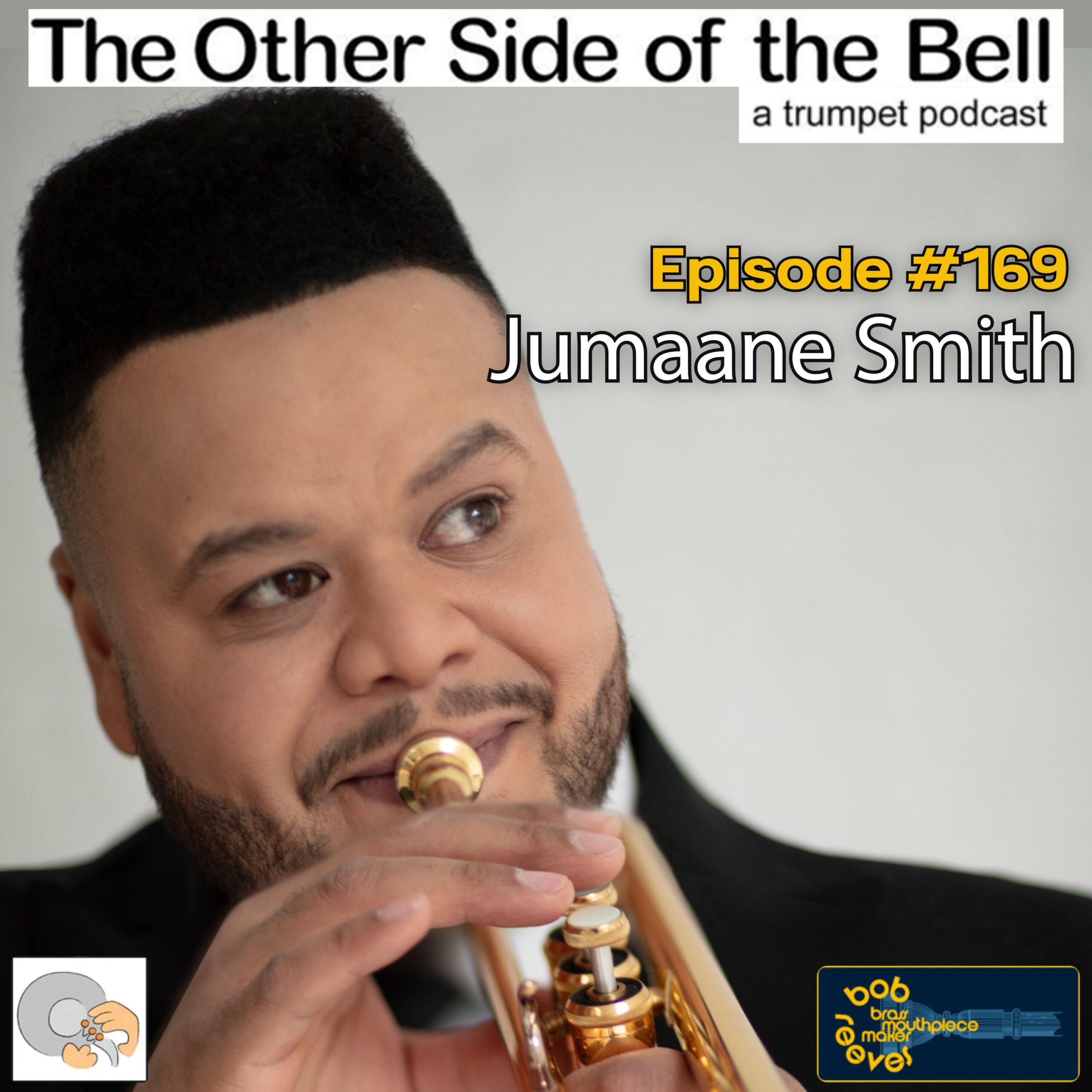
Welcome to the show notes for Episode #169 of The Other Side of the Bell – A Trumpet Podcast. This episode features trumpet performer, composer and soloist Jumaane Smith.
From Seattle school bands to New York jazz studies, touring with Michael Bublé, and building a solo career, Jumaane Smith has enjoyed an exciting and diverse career, bridging the early days of the internet and today’s multidimensional media scene.
Jumaane reflects on the teachers and musical community that encouraged him, the practice and technique that help him sustain his playing on the road, and the craft of connecting with an audience.
A trip to Europe with his high school band helped open a path to New York, where he studied at the New School and Juilliard, learned from Wynton Marsalis, and drew on jazz history, harmony, and the music of influential players as he developed his own voice.
It was an old college acquaintance that led to a first gig with Michael Bublé, while Jumaane was still at Juilliard, and two decades later he and the Bublé band are still going strong together, like a second family.
Jumaane talks about balancing lead trumpet playing and jazz, sustaining his chops through demanding tours, and adapting his technique to play efficiently and avoid injury. Alongside his work as a sideman, he has continued to pursue a solo career, perform with other ensembles, and take on Broadway work.
We also touch on the business skills that can help freelance musicians build opportunities. The modern music career is as much about entrepreneurship as musicianship, and the more education and mentorship you can find, the better placed you’ll be to thrive.
“Music completely opened up my world, and it taught me so much about life and discipline. It’s allowed me to see the world, and I’m just so grateful for this experience.” – Jumaane Smith
Listen to or download the episode below:


About Jumaane Smith
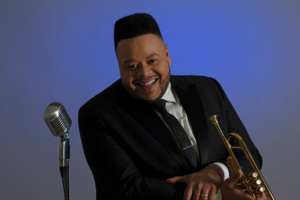
Jumaane Smith has performed on 5 GRAMMY-winning records (selling more than 60 million copies), 2 Emmy-nominated TV performances, the GRAMMY Awards with Stevie Wonder, in Steven Spielberg’s “West Side Story,” and more.
Jumaane has toured to such world-class venues as Jazz At Lincoln Center, The Blue Note, Birdland Jazz Club, Tanglewood, Ronnie Scott’s, SF Jazz, Vail Jazz Festival, Java Jazz Festival, Jazz Alley, North Star Festival, Marian’s Jazz Room, Rochester International Jazz Festival, Catalina Island Jazz Festival, and many more.

Musical legends that Jumaane has worked with include Quincy Jones, Herbie Hancock, Christian McBride, Aretha Franklin, Barbra Streisand, Alicia Keys, Jon Batiste, Kamasi Washington, Theo Croker, and Michael Bublé (as featured trumpet/vocals soloist). As a full scholarship recipient at the Juilliard School of Music’s Jazz Studies program, Wynton Marsalis was Smith’s primary trumpet teacher.
Jumaane Smith’s critically-acclaimed debut album, “I Only Have Eyes For You,” features special guests Michael Bublé, Jackie Evancho, and Naturally 7. His sophomore album, “When You’re Smiling,” was released to much praise in January 2020. His highly-anticipated third album, “Come on Home,” was released to wide critical acclaim in August 2024.
As a composer, Smith has scored music for films such as “Handsome Harry” (starring Steve Buscemi and Jamey Sheridan) and the documentary “Being in the World,” as well as for his own recordings and the interactive sheet music company, Tomplay.

Bob Reeves Brass Events & Appearances
Stay tuned for more events, festivals and trumpet alignment opportunities in the new year! Thanks for joining us at our many events around the world in 2026!
Podcast Credits
- “A Room with a View“ – composed and performed by Howie Shear
- Podcast Host – John Snell
- Photo Credits – Sandrine Lee
- Audio Engineer – Ted Cragg
Transcript
Please note, this transcript is automatically generated. It may contain spelling and other errors. If you would like to assist us in editing or translating this transcript, please let us know at info@bobreeves.com.
(00:00)
JUMAANE SMITH: Music completely opened up my world and and it taught me so much about like life and discipline and it’s allowed me to see the world and I’m just so grateful for this experience, you know.
JOHN SNELL: Hello and welcome to The Other Side of the Bell, a podcast dedicated to the world of trumpet, brought to you by Bob Reeves Brass. We want to inspire you to develop joy and confidence in your trumpet playing. I’m your host, John Snell, and joining me today is trumpeter Jumaane Smith. But first, some trumpet news.
Well, this week we are celebrating Thanksgiving here in the United States, and we have a lot to be thankful for this year. We’ve had lots of great experiences traveling around the world, uh, certainly around the US and to Japan. We didn’t make it to Europe this year. Hopefully, uh that will be in the books for 2027. I just want to take a moment to thank everyone who’s hosted us this year, starting back in the was it the Southeast Trumpet Festival that was held outside of Atlanta, TMEA.
Ashley Hall Tighe and Nate Tighe at the Cincinnati Conservatory Music, Virtuosity Music, Dylan Music, where else have we been? Joy Brass, can’t forget Greg Black music, and the reason the impetus for this podcast, Metropolitan Music up in Seattle, Paul and Gene McVicker are the first folks to put Jumaane Smith on my radar and get me in contact with him. So a quick shout out.
To Paul and Gene, who run a fabulous store up in the Pacific, a few stores, a few locations up in the Pacific Northwest, had a great time up there this year. And now, thanks to them, this podcast was made possible. And with a little help of Jumaane’s wife Laura, who got the ball rolling for us. Can’t forget Nairam Samoas and Tyler down in Arkansas State University for the trumpet festival they hosted down there, had a wonderful time there as well.
we NTC, uh we’ve been out at Adam Fest, Ricky Spears, Dr. Ricky Spears hosting a wonderful Adam Fest this year. Amazing time. Thank you to everyone. I mean this from the bottom of my heart. Everyone who came by the booth to talk about the podcast. whether you got an alignment or bought a mouthpiece or not. So many of you came by just to thank me for the podcast or to just chat it up. and I absolutely love that. Brings a lot of fulfillment to what we do here at the shop. So thank you.
A lot in store for 2027. A lot of the places I’ve already mentioned. We have a New York trip scheduled. In fact, I just got off the phone with Metropolitan Music with Paul McVicker, and we will be heading back up there. We might be doing NABA this year, the the brass band championships. looking forward to going to that our first time in April and many, many other things. So, and again, as long as I’m thanking people, thank you for listening. We’re going on our 14th year as a podcast.
And it’s incredible. What a what a journey and so thankful to bring all of these stories to you. Also want to take a moment to give a shout out to our podcast producer Ted Cragg, who turns these podcasts around. And no matter what I give him in terms of quality of recordings or quality of intros, he turns into a masterpiece and gets them uploaded and put everywhere on the internet. So Ted does a fabulous job with that. And of course
We wouldn’t be able to do the podcast if it wasn’t for the support of all the folks in the shop who are working hard, tirelessly making mouthpieces and answering the phones and emails while I’m up here in the front room having fun. So thank you to everyone at the shop. And with that, I think that’s enough thanks. Um let’s get right on to my interview today with Jumaani Smith. Today’s episode is brought to you by Bob Reeves Brass, who share your passion for creating extraordinary music. You know that feeling?
When your instrument just clicks and the music flows effortlessly, that’s what Bob Reeves Brass has been helping customers do since 1968. We’ve helped brass musicians like you achieve their dreams by ensuring their equipment is always in perfect harmony. We know you want to immerse yourself in the art of music making, and we’re here to remove any barriers between you and your creative vision. Bob Reeves Brass is truly your one-stop shop for everything you need to fuel your passion.
And create music that touches hearts and souls. So go ahead, let us help you elevate your sound to new heights. Don’t wait another moment to elevate your musical journey with Bob Reeves Brass. Connect with us at Bobreaves.com, shoot us an email at infobreaves.com, and keep up with the latest news on Facebook, Instagram, YouTube, and Twitter at Bobreeves Brass. Embrace your passion for music and let Bob Reeves Brass
Be your partner in creating the extraordinary. Jumaane Smith is an acclaimed soul jazz and blues trumpeter, vocalist, and composer, whose credits include contributing to five Grammy winning recordings, two Emmy nominated television performances, the Grammy Awards with Stevie Wonder and Steven Spielberg’s West Side Story, a full scholarship recipient at Juilliard, where he studied trumpet with Wynton Marsalis.
Jumaani has worked with an extraordinary roster of artists, including Quincy Jones, Herbie Hancock, Christian McBride, Aretha Franklin, Barbara Streisand, Alicia Keyes, and Michael Bublé, with whom he has performed as a featured trumpet and vocal soloist. As a solo artist, Jumaane has performed at some of the world’s most prestigious jazz venues and festivals, including Jazz at Lincoln Center, The Blue Note, Birdland, and Ronnie Scott’s. He has released three critically acclaimed albums.
I only have eyes for you when you’re smiling, and most recently, come on home. An accomplished composer, Jumaane has also written music for feature films, documentaries, and his own recordings. Now here’s my interview with Jumaane Smith.
JOHN SNELL (06:16)
I’m so honored to have joining me today on the other side of the bell, Jumaane Smith. Jumaane, how you doing?
JUMAANE SMITH (06:21)
Hey, I’m good. How about you?
JOHN SNELL (06:23)
doing great. We’re getting a little bit of rain here in Southern California. It actually finally
feels like s like fall weather, so I can’t can’t complain. Um
JUMAANE SMITH (06:29)
Okay.
JOHN SNELL (06:31)
I wanted to start right from the beginning with you and and from what I understand, if things had come a little turned a little out a little differently, we would be having you on the Horn Podcast, right? Isn’t that? Uh how did you start playing trumpet?
JUMAANE SMITH (06:41)
Yeah, yeah.
That’s right. Uh well, I started playing the horn when I was about nine years old, ten years old, somewhere in there. And and uh there was uh person that came to my elementary school and they had a bunch of different instruments and I knew I wanted to try something. Uh, but I loved the sound of the French horn, really. And
You know, looking back at it, I don’t know if it was just that he did or the this person did not have a good tone on the trumpet or if I just loved I fell in love with the French horn, but none of the teachers knew how to teach the French horn. And so they gave me a trumpet and they were like, Here, do this and then we’ll see where you go from there. And and then, you know, it just sort of stuck. I haven’t I still haven’t really ever learned how to play the French horn or really explored it. So
JOHN SNELL (07:37)
Well, I
you never say never. Who knows? Maybe
JUMAANE SMITH (07:40)
Yeah, yeah. It’s
I I always find it’s like it screws with my head though, ’cause uh how I hear music like and and associate it with trumpet and everything, you know, like I I’ve tried to play it a a few times, but I’m like, Okay, this should be a G but then it’s like not, you know, it’s like what is it, a B flat or something? So it’s
JOHN SNELL (08:02)
So so s
so maybe you just don’t hear an F. Um,
JUMAANE SMITH (08:05)
Yeah, yeah.
JOHN SNELL (08:08)
so did you have anyone musical in your family or why did you why’d you start getting into music?
JUMAANE SMITH (08:13)
You know, I didn’t have anybody particularly musical uh in my family. My mother, she grew up when she was growing up, she played flute and band in like high school and stuff. And and then uh my stepfather, he played the guitar a little bit and he hit me to some some Stevie Wonder and and Earth Wind and Fire and some blues stuff and things of that nature. And and I d I don’t know. At that time I was just looking for an outlet,
you know, and I had had a lot of like trauma go on in my life and and it seemed to like be an easy way for me to find self-expression and also um uh some something positive and I could I I was able to to see like my my growth in the horn and and see like if I put in
If I put in some work, then I get some stickers. And then if I I put in some more work, I get better. And then other opportunities started happening. And then, you know, like getting to play in in the the older kids’ band or whatever. And then and then from there it just sort of started to spiral in that way. And and uh then I got to go to high school and I and I was able to get into a a great jazz band in high school.
And then we started traveling and everything and everything it it was just like music completely opened up my world and and it taught me so much about like life and discipline and it’s allowed me to see the world and I’m just so grateful for this experience, you know.
JOHN SNELL (09:54)
Amazing. Amazing. Yeah. I mean, there’s a lot to unpack there, especially about, you know, kind of like music, especially. you know, you start getting those rewards like early on. You know, if you’re like learning a language, you know, it’s months, if not years, before you can, you know, actually start feeling like you’re fluent. But, you know, I really once you’re in the beginning band book and you complete the first line and you’re like, Hey, I just played that, you know. And then within a few weeks, maybe you’re playing your first song and
JUMAANE SMITH (10:18)
Yeah.
JOHN SNELL (10:19)
Yeah, like you’re saying, you get back what you put in. So
JUMAANE SMITH (10:22)
I really
needed that like uh positive reinforcement and encouragement in that regard. And I I feel like
I had some some teachers that were really positive too, you
JOHN SNELL (10:33)
Mm-hmm.
JUMAANE SMITH (10:34)
know? And and especially at that time, that’s what I needed. I needed to see that music is fun, you know.
JOHN SNELL (10:40)
Yeah.
Yeah. What w were they band rectors or private instructors?
JUMAANE SMITH (10:45)
Yeah, primarily band directors, but also some some private instructors as well, you know.
and at a point I was ready to receive the discipline aspect of it.
JOHN SNELL (10:55)
Mm-hmm.
JUMAANE SMITH (10:55)
but you know, it I I feel like it’s I always hear these stories about uh I I I meet so many people on the road and they’re like, yeah, I used to play the trumpet or I used to play this and that and then they’re like, Well, yeah, when I had a teacher in the
tenth grade and he was just, you know, he was really mean and so I quit. You know, it’s uh or or it’s sixth grade or seventh grade. And I, you know, I just think it’s so important for us as as uh musicians and and and teachers to just remember that feeling of just being so excited about music and how to instill that in the future generations so that they continue to
Become musicians and perform and everything.
JOHN SNELL (11:46)
Yeah, I think I think we get so tied up in the discipline side of practicing, and you know, we kind of lose sight of the art form and the creative nature and and the fun that that making music is, you know. um so I I’m curious, like would you mind sharing who your teachers were that were influential at that age?
JUMAANE SMITH (12:05)
yeah, for sure. Yeah. Uh the the first one that comes to mind, uh, when I was in middle school, I got to work with this trumpet teacher in the summertime, private teacher named Floyd Sandifer. And Floyd, he was uh part of Quincy Jones band when they got stuck in Europe. And uh and so
So, you know, he was he was the cat in Seattle, you know. He everybody knew him to be the trumpet guy, you know? And so I got to work with him and and he really inspired me. And and also in middle school I had this this band direction band director in seventh grade that was really inspiring named Chris Harshman. And then when I was in ninth grade, I got to work with this band director named Scott Brown.
at the Roosevelt High School. And it, you know, that was uh an incredibly inspiring experience. And and it was partially peer-driven. Uh, you know, the older classmen always would help the younger classmen in sort of that way. But it was also sort the he just had this like persona about him, this like inspiration
you know, like love, passion and and and it was just such a special thing. And it that sort of trickled down into the whole uh a community of musicians. and everybody it was like we were all in it together going for this thing. And not only that, but in Seattle at that time when I was growing up, there I there were at least a hundred of us that wanted to be jazz musicians, you know.
JOHN SNELL (13:48)
Really?
That that that big of an yeah.
JUMAANE SMITH (13:49)
Which is it’s
it’s so weird, you know. There was like a huge community of musicians. Cause there was uh another band director uh that I didn’t have the the fortune of working with directly, but his influence throughout Seattle was uh was well known. His name was Robert Nat. And and he
used to get his middle school jazz band sounding better than all the high school jazz bands. And they would go to these competitions and beat everybody, you know, it was it was crazy, you know, and they they could all sight read good and middle school and everything. And you know, it was like it was wild. So so there was this element of competition amongst the bands around town, but then there was also this element of community and and just all being inspired to do.
this thing and to, you know, be musicians and and grow. And many of us still play, you know, to this day. Some a long time later. I’m not gonna say how many years, but you know, it’s it’s been it’s been a while. And and it just goes to show too that, you know, the community aspect of music is so important and iron sharpens iron, as they say. And everybody lifted everybody else up and uh yeah. I
I I regularly see other trumpet players even in New York City that I grew up with, you know.
JOHN SNELL (15:18)
From from the Pacific Northwest, huh? Yeah. Amazing.
JUMAANE SMITH (15:20)
From Seattle, yeah. Yeah.
JOHN SNELL (15:22)
What a what a scene. And and thank you for acknowledging those those teachers, you know, especially the band directors, you know, that they’re in the trenches day in and day out. And you know, it’s amazing
JUMAANE SMITH (15:29)
Absolutely.
JOHN SNELL (15:31)
what an impact they have on uh so many lives through their careers.
JUMAANE SMITH (15:35)
Absolutely.
JOHN SNELL (15:36)
yeah, so yeah, you mentioned in high school you had already started traveling. Was that with your high school band?
JUMAANE SMITH (15:41)
Yeah. Yeah. When I
was in high school, my very first trip really traveling was to Europe. We went to Europe when I was like 14 years old. And it was
JOHN SNELL (15:53)
Wow.
JUMAANE SMITH (15:55)
so incredible, you know, and and there’s such a great community of supporters and everything. I I grew up like really broke too. And so I couldn’t afford to make that trip, but the boosters of the the
band and the school, they helped provide enough uh funds to make it possible for all of the students to go, regardless of their financial uh s situation. And so, you know, we helped with the fundraising of things, but you know, by in in large part, it was it was the parents and the community that really made it possible. And so we traveled to Europe and we went on, I believe it was a
Was at least a two-week tour in Europe that we went over the summer.
JOHN SNELL (16:43)
Jeez.
JUMAANE SMITH (16:46)
And so I got to go to the Montreau Jazz Festival. I got to go to the North Sea Jazz Festival. And we traveled all around Europe. And that experience was just incredible. And and getting to be over there and see.
all these legendary musicians perform live and like really put the the the face to the name, you know, and actually see it for the first time was just such a special s such a special experience.
JOHN SNELL (17:20)
At 14 years old. I mean, had you ever been out of the country or traveled like that? But that’s why so it’s her first experience. Um
JUMAANE SMITH (17:23)
No, no. But you
can imagine what that’ll do to somebody. It’ll it may mean say, Hey, this is it. I’m I’m in. I’m all in. Let’s let’s put in the work and see see what happens.
JOHN SNELL (17:37)
So who who who were
you listening to at that time? And you you did you know you wanted to go into the jazz idiom at this point?
JUMAANE SMITH (17:43)
Well
yeah, at that point I I I had I had gotten hip to some some of the greats and you know, I was listening to a lot of Freddie Hubbard and Clark Terry and Clifford Brown, really. Those those were my my primary influences at that time. Yeah.
JOHN SNELL (18:00)
Mm hmm.
Now, uh, were you taking uh private lessons in high school or just playing in band and learning on your own?
JUMAANE SMITH (18:07)
Yeah, I took some private lessons as well. Yeah. I I did. I studied with a a lead trumpet player out there for a while named Dennis Haldane. I studied with him for a while. And I also studied with a uh a jazz saxophonist named uh uh Dan Greenblatt.
Whose son, actually, Tatum Greenblatt is one of the people I mentioned before when I when I said that, yeah, I I regularly see musicians in New York, you know. Yeah, yeah.
JOHN SNELL (18:38)
He’s he’s out there and it’s his son, small world. So so
so uh after going to Europe and saying, Yeah, this is it, this is just what you wanted to do with your life, where did you go from there? Or do you start auditioning for colleges and applying, that sort of thing?
JUMAANE SMITH (18:54)
You know, I actually I I wasn’t very confident in myself at that point. I knew what I wanted, but I didn’t think it would be possible. I was kind of closed-minded in that sense. But then, you know, over the over the course of the over the course of the next couple years, I started to to grow a little bit in that regard. But really, it wasn’t until
We went to the essentially Ellington Festival in New York City to compete the first year that they opened it to uh to bands across across the country that I uh I really was open to the idea maybe this could be a possibility because I remember I was I I I was uh standing behind the trumpet section of the LCJO.
Or that’s what they used to call it, or now they call it the the Jazz and Lincoln Center Orchestra. Uh and Winton he turned around and he was like, Oh yeah, I heard your tape, or he said something to the effect of I heard your tape and you can play. You should come to New York, you know? And and I I thought that
JOHN SNELL (20:04)
He recognized you. ah
JUMAANE SMITH (20:07)
was such an amazing thing, you know. And and then I I got to connect with him, and then from
From that point, you know, things started to just happen. And this this lady named Ellie Howe from the New School University came to Roosevelt and spoke to us about, you know, maybe uh coming to New York to participate in their program. And and uh I was speaking to her and and I kept that communication open and we eventually figured out a way to make it possible and and then
I was so excited about that because I was so into our Blakey’s band at that point. And and I had all of Blakey’s records and especially an anything. I had all of Blakey’s records and basically anything Freddie Hubbard had ever made, you know? And so it and and at the new school, it was a program led by Reggie Workman. And and at that school.
They had all these great musicians who were working there, who many of which used to be in Coltrane’s band or or Art Blakey’s band or you know, a variety of people and experiences that I could draw from. And so I uh I went to the new school uh for my first year in college. and uh, you know, I I had some some relatives, my my aunt.
Who really supported me and she made it possible for me to come to New York and she helped me get to New York. And uh I’m so grateful for that. And then the next year they started a program at Juilliard, and I didn’t initially apply for it because I was still, you know, I I wasn’t very confident in my abilities at that point. And
And uh so I didn’t apply for it. but then at some point they realized that they had some trumpet players that were great, but they needed they needed a lead player. And I guess I had gotten known around town a little bit as being an up-and-coming lead player, and somehow they ended up checking me out and and this great lead player.
Seneca Black came to one of my concerts and then he recommended me uh you know, along with Mike Rodriguez, uh, you know, to the people who were putting together the Juilliard program. And and that sort of just blossomed into getting an audition, a live audition. And then, you know, fortunately I was accepted into that program. And when I got there, it was
JOHN SNELL (22:28)
oh Amazing. Amazing.
JUMAANE SMITH (22:56)
It was really what I needed at that time. there was so much structure and discipline and and everybody was like immensely dedicated to their craft and to improving and learning and growing and and it was also a crazy time because this is like this is like September of two thousand one, you know, when the school started. And so the very first thing
you know, that happens in the in the first week is, you know, nine eleven happens, right? And and so that was a very scary time for all of us. And I I remember seeing the towers burning from my window at the dorms, which was,
JOHN SNELL (23:42)
Jeez.
JUMAANE SMITH (23:43)
you know, that was that was crazy. And then I also remember uh we were just getting to know each other and
They brought us all downstairs into Paul Hall, which was in the basement of Juilliard. Sort of like in hindsight, I guess they were they decided to bring all the students into their bunker area, right? So
JOHN SNELL (24:04)
Mm-hmm.
JUMAANE SMITH (24:06)
so we’re all down there getting to know each other. And one of the students is like, Hey, you got your horn? You got your horn? Let’s how about we play some? Let’s, you know, so next thing you know, we’re we’re down there like making music and and uh
you know, getting to know each other and you know, it was that was crazy. It was but it it it was sort of you know how sometimes traumatic events can sort of uh build a sense of community within the the group that you’re surrounded by. It sort of sort of helped to to develop that in a way, you know?
JOHN SNELL (24:41)
Yeah, that’s it.
the for that expression. It’s a an outlet. Yeah. Be able
JUMAANE SMITH (24:45)
Yeah.
JOHN SNELL (24:46)
to yeah, communicate and to connect with other humans at a time like that when the brain doesn’t know how to handle an event like that, right? Uh wow.
JUMAANE SMITH (24:54)
Yeah. Yeah.
JOHN SNELL (24:56)
So that was your so uh to take us through Juilliard. So you studied with Winton while you were there? Is that
JUMAANE SMITH (25:01)
I did, yeah, yeah. He was my Yeah. Yeah, we we had kept in touch a bit and
JOHN SNELL (25:02)
Wow, what was what was that like? Did he remember you from from the
JUMAANE SMITH (25:10)
and uh you know it was it was incredible. It was it was a really great experience. It was also extremely humbling, you
JOHN SNELL (25:18)
Mm-hmm.
JUMAANE SMITH (25:18)
know. And yeah, yeah, I mean he’s obviously one of the greatest, if not the greatest to do it, you know.
and it was just so inspiring. I wish that I had known what I know now at that point, because I’d have a lot more questions for him. I would have had a lot more questions. But nowadays, anytime I see him, I’m like, Hey, what’s what’s this?
What’s that? You know, what do I and and I I’ve always looked to him for guidance and and
You know, he’s he’s such an inspiration and I’m I’m grateful to to know him and to to keep that relationship alive and and not only that, but to just like just on the level of like seeing what’s possible as as a young man, you know, to get to know somebody who’s
at that point in their career and in their life and and you know, who’s just so well established and doing all of these incredible things and so well spoken and intelligent and everything. And it it it was just like it was incredible. It really was. It really was. And
JOHN SNELL (26:31)
Yeah.
JUMAANE SMITH (26:34)
and one of the most humbling things in the in the in the lessons that I had with him was uh
I vividly remember this time when he was like writing in my Clark book. He was like telling me which exercise to do. And and he like picks up the pencil and he starts writing with his left hand. And I’m like, wait a second, what? You’re left-handed? It’s like that doesn’t make any sense. You play the trumpet like this, and he’s like my my left hand.
I’m right handed and it my left hand is like
JOHN SNELL (27:08)
Yeah.
JUMAANE SMITH (27:11)
like I can’t I can’t even move it barely, but you know you know what I mean? Like Yeah. Yeah.
JOHN SNELL (27:15)
Yeah, I can’t can’t even open a door with my left hand. Yeah. And he’s that’s
amazing. So so you I you brought up Clark. I mean, what were your lessons with him? I mean, a mix between pedagogy and jazz, uh improvisation. How did that how did that work?
JUMAANE SMITH (27:31)
Yeah, yeah, there was a lot of uh well at that point especially well, always I the I I have to deal with the fundamentals and and there was a lot of that really, uh just learning the basics, the fundamentals and and and you know, I w I wanted to to learn from him like what his strategy was as far as like playing the instrument and
And he used to always say that, you know, it’s he’s not doing anything new. It’s just he’s he got deep into the books and and he read what the authors had to say and and you know took their advice and studied, you know, and yeah, he gave me a lot of a lot of great great stuff out of the books to check out and
JOHN SNELL (28:13)
Mm-hmm. Yeah,
so so many of us play the notes, but we don’t actually read the concepts in in the front of the book, right? Yeah. Yeah.
JUMAANE SMITH (28:25)
yeah, for sure. For sure. Yeah.
when you when you study those concepts too, you start to see the intention behind it. And then that deepens your understanding of of what’s what what you’re actually striving to achieve through that exercise.
JOHN SNELL (28:42)
Mm-hmm. Um, and uh what about his approach to jazz? any insights you can give to how he teaches jazz and what you learn from him?
JUMAANE SMITH (28:50)
Yeah, I mean the first and probably most important thing was learning the history. You know, he used to always tell me like uh like a a doctor or a surgeon isn’t gonna go and perform a surgery without knowing the history of of those types of surgeries or knowing you know i exactly how to do the procedure. So so essentially that
To me translated to um, you know, learning learning about all the different uh different jazz artists that had come up and and uh transcribing and and taking more than just the bits of Freddie Hubbard that I had absorbed, you know? And and thinking outside of that box and then and then that grew, you know, to to being able to essentially steal from all kinds of people, you know, and then
At a certain point though, I decided I I didn’t really want to transcribe as much, for better or for worse, I guess. I I think I wanted I wanted to focus on uh just my knowledge of harmony more and then just develop my own melodies and and sort of voice through that if I could, versus trying to sound like everybody else. You know what I mean?
JOHN SNELL (30:16)
Mm-hmm. And did he help you de l develop that? I mean, would you play would he play long with you or, you know, trade off or something
in lessons? Yeah.
JUMAANE SMITH (30:22)
yeah, for sure. Yeah. Yeah, he helped me develop that for sure. But at that point too, I just needed to learn how to play changes, you know, and and I needed to learn the theory and and all of that stuff, all the all the fundamental things that are involved in order to really have that well educated conversation that is improvised music over.
JOHN SNELL (30:50)
Mm-hmm.
JUMAANE SMITH (30:50)
harm are over a harmonic structure in time, you know?
JOHN SNELL (30:54)
Mm-hmm. And I mean, you’re in the middle of Manhattan. Are you freelancing at this point? Are you starting to work in town?
JUMAANE SMITH (31:01)
Uh I did uh in my I guess it was in my second or third year, I started to work with Bobby Short’s band a little bit at the Carlisle Hotel. And a a great historian, jazz historian who runs the uh the jazz museum in Harlem, Lauren Schoenberg. He was the MD for that band and he got me involved. And it was it was also a a really cool
educational experience because not only did he oftentimes have a few young musicians in the band, he would also have these like legendary older musicians. Like like for example, uh the trombonists were regularly Bobby Pring and and uh Eddie Burt. And the other trumpet player was was regularly Virgil Jones. Now Virgil Jones
spent a a great number of years playing with Ray Charles band, among others. Uh Eddie Burt was on the uh the Thelonious Monk live at Town Hall and he was one of the most recorded trombonists and session musicians of his time. And and Bobby Pring used to play with Louis Armstrong, you know? So so it was it was a really cool thing to get to like interact with
JOHN SNELL (32:16)
Yeah.
JUMAANE SMITH (32:22)
them and and learn from them. And, you know, it was
It was it was pretty heavy.
JOHN SNELL (32:27)
Yeah. Yeah. One of the benefits of going to a place like New York when you have guys like that around town working, you you net you never know who you’re gonna end up sitting next to. Um
JUMAANE SMITH (32:33)
yeah, for sure. Yeah.
JOHN SNELL (32:37)
so I’m curious, you so you mentioned you were kind of known as a lead player, but you obviously working on jazz. I mean, was there kind of a conflict between the two as you started working, um, getting called for the lead chair versus uh jazz player? Or did you just were you just happy to work whatever call came around?
JUMAANE SMITH (32:55)
I guess I wouldn’t I wouldn’t necessarily call it a conflict. I would I would call it more of an open set of opportunities that not everybody had access to. Um I and and when I was growing up, uh I I learned how to sort of develop my chops from a young young age and could play high and and then that you know.
And then I started checking out Snooky Young and and uh Jerry Hay and you know great lead players and stuff and and I just thought it was so cool, you know, and and so I I wanted to really develop that and I enjoyed playing lead in the big bands. at a certain point I realized that maybe that was one of my strengths.
worth developing further. And so I tried to embrace it in the sense I that I I figured in order to build a sustainable career, it would be a good approach to be uh well versed in a variety of different uh things that I could have an opportunity with.
You know, i in other words, I I decided that I wanted to be as versatile as I could, so then you when the gigs started coming in for playing lead, I would do that. And and then when the gigs came in for for playing solos and playing jazz, I would do that too. And it’s been really cool being able to do both and also
realizing that one sort of it informs the other. And that was really
I had the great fortune of working with Snooky Young for a little bit. Uh I was living in Los Angeles playing with the Clayton Hamilton jazz band. And uh and Snooky was in the band and I got to ask him, you know, what’s what’s what do you what’s your thing? And you know, essentially, and he’s like, Well, you know, I I always was a soloist first, you know.
And when I think about the way that he plays lead or played lead, it had such a musicality to it and uh vibrance and liveliness to it that oftentimes uh musicians when they solo, they will present all of this musicality, all of this stuff they can do with just one note and and it’s just amazing.
And then when they go to play the part, it’s like the stiffest layman stuff that you’ve ever heard. But then, you know, the solo comes and they’re like all over it. Just, you know, and I I just I I wanted to to figure out how to
JOHN SNELL (35:48)
Yeah.
JUMAANE SMITH (36:00)
make any melody sing in that way, you know? And
JOHN SNELL (36:03)
Mm-hmm.
JUMAANE SMITH (36:03)
I I feel like Snooky’s a person that really was great at doing that, you know. Jerry Hay was great at doing that. Wayne Bergeron.
JOHN SNELL (36:11)
Absolutely.
Yeah. Yeah. Lynn, oh man. Yeah.
JUMAANE SMITH (36:14)
Lynn Biviano, even, you know, Bottom Shu, you know. It’s
like so, so you know, I was I was always inspired by that and trying to to sort of put those pieces together. You know who else? Miles Davis, greater playing melodies, Clifford Brown, uh, Freddie Herbert, Clark Terry, you know, all of the all the cats, Louis Armstrong, you know.
JOHN SNELL (36:42)
We’re all they were all melodic, yeah.
JUMAANE SMITH (36:44)
Yeah.
JOHN SNELL (36:44)
Yeah.
Um So tell me the story about how you got on Bublé’s band. Was it around this time? Were you still in Juilliard? or were you had you graduated by that point? Mm-hmm.
JUMAANE SMITH (36:55)
I was still at Juilliard,
and I had gone to college with this bass player named Craig Pelasco. And He was a little bit older than me, and he had graduated a couple years before. and and uh They decided to expand their horn section, uh Michael’s horn section from four horns to eight horns. And I hadn’t had known him from college, yeah, that’s kind of a big way of
expanding your network really is the people that you meet in in in high school and in college, and nowadays on social media. But back in those days it was it was primarily still in person and everything. And and so when they decided to expand the horn section, he put put my name into the uh into the pot of people to consider. and Then they came to New York and and they did this recording for AOL.
The “AOL sessions.” I know some there’s probably gonna be a lot of people who watch this who don’t even know what AOL
JOHN SNELL (38:05)
What’s that?
JUMAANE SMITH (38:06)
is. But it used to be like the biggest email uh uh website. you know, that that existed. And so we did this this this session, uh it was at
JOHN SNELL (38:14)
Mm-hmm.
JUMAANE SMITH (38:23)
I think it was at the Hit Factory in New York, which is now defunct as well. They turned that into an apartment building. But that used to be one of the glorious studios in New York. and that was my first gig. It was like a live video audio session. And uh, You know, I was nervous and I didn’t know what to expect. And I just came in and and you know, They had the charts and it was
like some Basie type stuff, and I love Basie band stuff. And I was like, you know, this is my I’m I’m in my zone right here, you
know. So I was like all about it and and uh you know it was just it was a lot of fun and And then that led to getting the call for a a summer tour summer tour. and
And I did the summer tour with them, and that was it was a blast. And I thought that I was going to just go back to school and finish my last semester. I was in my last semester at Juilliard at that point. And uh But I I ended up continuing on the road with Michael, and you know, now here we are. It’s it’s It’s been quite some time. So over 20 years. I think uh I don’t know, twenty-one.
JOHN SNELL (39:41)
Uh
huh.
JUMAANE SMITH (39:46)
approaching
22 years I’ve been working with him and it’s been an extraordinary thing, you know. I I’ve grown up, we’ve We’ve all sort of grown up together. And it’s like a you know, we’re like a big family at this point, you know. like my road family. Some years some years we’ve spent more time together with with each other than than we have our own biological families, you know, and and
It’s just such a special thing to have that type of a uh a long relationship uh with with a band, and
JOHN SNELL (40:22)
Mm-hmm.
JUMAANE SMITH (40:23)
to have to have people sort of stick around for that long.
JOHN SNELL (40:29)
Now does he tour with a full big band or does it depend on the gig?
JUMAANE SMITH (40:33)
At points, yes. He’s he’s toured with a full big band. Even at points he brought a string section string section as well.
JOHN SNELL (40:35)
Mm-hmm. Cheese.
JUMAANE SMITH (40:42)
You know, but it it really depends on on what’s affordable and and how ticket sales are doing and and all of that stuff too. Um but
JOHN SNELL (40:52)
Yeah.
JUMAANE SMITH (40:52)
it’s it’s been really cool, you know. Sometimes it’s a smaller band as well, and and that’s also really fun too. It’s a it’s a different animal, you know.
It’s cool, didn’t it?
JOHN SNELL (41:03)
So so
what is life like on the road? Were the things you had to learn uh when you started uh I mean, how long are the tours? Is it a thing where he’s doing
on the road for months at a time, or does he do like one offs or, you know, hits on the east coast or west coast, that sort of thing?
JUMAANE SMITH (41:19)
Well, in the last several years, touring has slowed down a bit and gotten to be more manageable and we all have families and stuff now. So so there’s that. And and we uh it it’s it’s gotten to be uh uh a little less than it was well substantially less than it was when I started. When I started it was like seven weeks on and then we would take like a week or two off and then go back out and you know.
continuously for like the better part of a couple years. And uh yeah, I had to learn really fast like how to maintain my chops and and I struggled with it for a long time, actually. I I think there was one world tour where I spent like at least six months, if not almost a year, where I had a split on my lip. And uh, you know, I I was talking to uh
to John Fattis, who was I I had the fortune of taking some lessons with him over the years and and he was like, well, you know what you gotta do? You just gotta do a uh an omate change and you gotta change how you play. Cause I I have always played really low on my lip. You know, if you can see, you can see where where the marking is and that’s
JOHN SNELL (42:32)
Mm-hmm.
JUMAANE SMITH (42:37)
that’s because I anchor low, because I got big lips, you know, and
And that’s how I’ve I sort of just learned to play, but everybody told me I gotta put it up, you know, more on the skin and and this and that. And I tried the umbresure change for a little bit, but it just felt so foreign and I was already working and I couldn’t sort of break up my calendar in that way in order to make it happen that that I just I I felt like I had to find another way, another approach. And uh
So I I did a lot of lot of study. I I took a lot of lessons with a variety of people and and it really wasn’t until I was working with Quincy Jones band and uh I was uh I I was on a gig with with Harry Kim. And Harry, I was talking to him about what he does because you know he was such a great, efficient trumpet player.
and just super accurate, looked effortless all the time. And he hit me to this sort of strategy of um approaching things more like almost like a whistle and and controlling the the tongue level and the air speed um more than using brute strength and force to get
up into the upper register. And it is sort is sort of more like a sort of more like a stretch and finding the positioning of of all the different partials. And once I started really diving into that and exploring things and switching up my equipment to uh make sure that I was playing the appropriate equipment for the job that I was doing.
I was I was able to really start to finally figure out how to do it without injuring myself. Also, that point we were we were playing in these like large theaters and sometimes arenas and stuff as well. And and it was sort of like it was sort of a a uh trippy situation because you’re using in ears, but you feel like
you you need to fill up this room but you don’t right you just gotta you gotta be able to hear yourself clear and and comfortable you gotta sort of trick your mind to to believe that your sound is like completely filling up this massive space with no problem and you know and just like play super comfortably and learning how to to sort of trick
trick my mind into feeling that and also dealing with the in-ears because you know if you’ve ever tried to play the trumpet with a with a finger in your ear, you know, or or it’s like when you speak with the finger in your ear, it it changes the sound of it and it changes the frequencies with which you hear the majority of. And as a lead player, you need a lot of top end, you need to hear that and you need to hear the
how the frequencies sort of align, you know, in order to sort of set that uh um sort of resonance for the entire horn section so everybody can blend together and get the chord to really lock in, you know? And so if you’re not hearing those overtones in your sound, it it’s it’s complicated. You know, it’s it’s
JOHN SNELL (46:21)
Yeah.
JUMAANE SMITH (46:22)
hard to really find your pitch. Or or for me, it’s hard. It it gets hard to find the pitch and then
You know, I I start adjusting not based on uh trying to play in the center of the horn, but more just like based on what I’m hearing, which sometimes can be misleading uh based on the dominant frequencies or dominant frequency range with which I’m hearing.
JOHN SNELL (46:50)
Mm-hmm. Yeah. That’s yeah, that’s the stuff they don’t teach in school until you get ne
JUMAANE SMITH (46:56)
yeah.
JOHN SNELL (46:57)
until you’re, you know, fortunate to find yourself on stage with, you know, fifty thousand people in the stadium. But by that point
JUMAANE SMITH (47:03)
Yeah.
JOHN SNELL (47:04)
it’s too late. And and the yeah. Um and it a shout out to Harry Kim. Of course, you know, we lost uh relatively
JUMAANE SMITH (47:10)
Yeah.
JOHN SNELL (47:11)
recent what a dear soul, good friend of the shops. And anyone who got to see him on stage, I mean, he’s he was one of those guys that could go out and
play on it for a sold selled out stadium sold out stadium and just bring it every night. You know,
JUMAANE SMITH (47:24)
Yeah,
JOHN SNELL (47:24)
I remember I got to see him in Paris on Bastille Day at the
JUMAANE SMITH (47:28)
Oh wow.
JOHN SNELL (47:29)
um Eiffel Tower with Johnny Halliday, him and his horns, Vine Street horns, and you know, eight hundred thousand people. He did it again. I mean the millennium concert was a million people that he played for. And there’s a check out the YouTube videos of of Johnny Halliday at the Eiffel Tower. I mean there’s some amazing stuff that he and Dan Fernero
JUMAANE SMITH (47:45)
Yeah.
JOHN SNELL (47:46)
are playing.
And Artful Asco, um, you know, his Vine Street Horn section, some amazing stuff.
JUMAANE SMITH (47:51)
Mm-hmm.
JOHN SNELL (47:52)
But that it’s a it’s an art form to be able to do that kind of stuff at that high of a level with those kinds of things. Earn or in ear monitors, being on a stage where maybe the next performer is 20 feet from you, things like that. And you
JUMAANE SMITH (48:03)
Yeah.
JOHN SNELL (48:03)
know, your natural tendencies when you’re used to playing in a section or in a small jazz club or something, you know, those all go out the window. So
I’m curious what’s your um
You know, did you have like a w routine or stuff that you would do on the road just to keep your chops up or what did that look like? um
JUMAANE SMITH (48:20)
Yeah, definitely. I I definitely had a routine. But I I before before we get into my routine, I just wanted to mention that uh you you touched on something that’s so important in that situation, which is like figuring out how to be able to do it night after night, you know, because it’s one thing to just
To do
it once, you know, you can you can use that brute strength or whatever. And you might be able to do it once. You might not be able to play for like three or four days after that. But you know, it’s another thing to figure out how to be efficient enough to be able to do it night after night and try to try your best to not injure yourself or make poor technical choices just to achieve the note, you know.
JOHN SNELL (49:08)
Yeah.
JUMAANE SMITH (49:08)
Uh but
yes, I I developed a routine. I I have a variety of different routines. Uh one thing that Winton showed me was uh was to sort of isolate the bigger picture parts of my technique, whether it’s tone production or velocity of my fingers or or flexibility or tonguing and and and uh you know put in specific work directed towards those.
components. And in my practice, I try I still do that. And I have a variety of different routines. Uh most of them are around an hour, you know, that I’ll do. And and I sort of at this point I cycled between them. But when I was deep in the shed, I would try to hit as many of them every day as I could. And along with, you know, making sure that musicality was also dealt with and and transcription and
you know, things that serve my general artistry. Uh, but then that’s one thing that I did not have a lot of time for when I uh have been in situations where I’ve been touring a lot. And and and so I had to sort of learn how to troubleshoot in that way where where you you get your warm up in and you, you know, you sort of figure out where you are for the day.
And and you try to refamiliarize yourself with the horn and and uh and then I would go through and just you know my basic stuff and see how everything’s feeling and and then try to keep the plates spinning essentially. You know, I might not necessarily been growing in a technical way, uh, but you know, you can always sort of see which aspects might be
Doing well and you can spend a little bit less time with them and then spend some more time with the aspects that are sort of lagging behind a little bit, you know? And uh I remember also uh talking with John Fattis and and he and he was saying like a good approach to keeping the chops up on the road is is uh whatever you do uh in the gig, do the opposite in the
in your practice. So if you’re if I’m up there playing loud high notes all night, then that means I gotta play some soft low notes to balance it out, you know?
JOHN SNELL (51:46)
Mm-hmm.
JUMAANE SMITH (51:46)
that type of approach has been helpful as well, for sure.
JOHN SNELL (51:50)
Yeah, great advice. Um, so I’m curious to where where in this process or when in this process of you know, touring with Michael Bublet and I’m you would be freelancing, I’m sure, when you’re off the road. did you decide to start going off on your own in terms of creating your own recording your own records, you know, being the the instead of the lead player or the person said the jazz player, but being the star?
on stage. when did that start in the process?
JUMAANE SMITH (52:16)
Well, it was something that I always wanted. Even going back when I was in college, I made my first album, which is never it hasn’t come out like officially on like digital platforms, but I uh I made my first album in college when I was at Juilliard. and I always wanted to be a leader, you know, it was always a big dream of mine. And
And you know, and some on some levels for a while I put that on hold to to go on the road with Booblay and and you know it was always in the back of my mind and it was like this like ache that I could never just let go of, you know, without feeling like I was doing some sort of injustice to my soul and spirit, you know, for what it’s worth. I’ve had a great career as a sideman and I’m I’m so grateful for that.
And I’m also grateful that I can have this career as a leader as well. And and uh become more established over the years. And and you know, I I’m doing all kinds of stuff with that as well, that I’m I’m very proud of. And and we’re touring more and more every year. Uh like just this week I I was just in Spain and and uh you know I we travel all the time with my band and I got a great
core group of people that I work with and we’ve been together for the last, well, the drummer and I, we went to college together. And then the uh my my uh regular guitar player and and organist, they’ve been with me for about three years now. And and over the course of those three years, we played I don’t know, 150 or so maybe more shows together, traveling around the world and doing all kinds of stuff. So it it’s incredible, you know and
And I still maintain I I still maintain my uh my sightman career and I’m still doing a variety of things with that. I’m I I sub regularly with the roots on the tonight show and and that’s a lot of fun too and and it’s cool. I also have a Broadway show that I’m involved with right now called Justin Time and and uh you know, I I do that pretty regularly.
I I’m usually there at least a couple of times a week. And uh and then, you know, I’m maintaining my solo career and everything and and I’m still working with Booblay. We got some stuff coming up this coming week and and you know, it’s it’s been uh it’s really an inspiring time. It’s like I I got a lot of a lot of different irons in the fire and a lot of different plates spinning.
You know, but it’s uh it’s all exciting stuff and and uh it’s stuff that helps to keep me engaged in a variety of different ways and and uh you know, having new experiences regularly sort of uh keeps me in the moment.
JOHN SNELL (55:25)
Yeah, I was gonna say that’s yeah, a lot of plate spinning. Um, but that I mean, that’s a lot of energy, you know, to to keep so many of those different projects going. you know, it’s uh especially the the the solo projects. I mean, ’cause that’s I mean, do you have I’m assuming you have management and stuff that handles all of that stuff for you, or like how much are you involved in booking your gigs and arranging travel and all that stuff that goes behind the scenes?
JUMAANE SMITH (55:48)
Yeah, I’m I’m heavily involved in the uh in the travel arrangements. Uh at this point I do have a manager who’s she’s so great. Her name is Anna Becker, and I’m so grateful for her. And and we’ve been working together for oh gosh, maybe like four or five years now, I wanna say. And it’s been great. You know, over the years I’ve
I think she’s my sixth or seventh manager that I’ve had, you know. And most of the time it takes a while to figure out if it’s really working or not. And this is the first time that I’ve really felt like it’s it’s a br really a great fit she helps with with a lot of the, you know, ins and outs. And then I have some agents here and there and
around the world that help with the bookings and Anna helps with the bookings as well and and you know and then it’s it’s it’s just putting all all these pieces together sort of it’s like uh it’s almost like a spider’s web in a way. You know, you just that’s that’s how you gotta do it. Um almost as
JOHN SNELL (56:55)
Yeah.
JUMAANE SMITH (56:55)
a as a freelance artist and as as a person who
Who just couldn’t give up his dream of uh
JOHN SNELL (57:03)
Mm-hmm.
JUMAANE SMITH (57:04)
being a solo artist too, you know.
JOHN SNELL (57:07)
Yeah, well, and it’s I don’t know, it’s just the pressure of, you know, When it’s your name on the marquee, uh versus you know, you sitting in the trumpet section or in the band for someone else’s name who’s on the marquee, you know, it’s there’s a lot of pressure to – I mean, you’re it! You’re the one who’s got to put on a good show. And you know, what is What’s the creative process behind that for you? So, you know, you fill the seats. Yeah, what does that look like?
JUMAANE SMITH (57:27)
I love it. I love it.
it. You know, it’s uh It’s so thrilling being being there. You have to be in the moment. You gotta uh you Like you say, you gotta bring it. You gotta You gotta be the one who lights the fire. But
JOHN SNELL (57:44)
Mm-hmm.
JUMAANE SMITH (57:45)
sometimes Sometimes i it’s i if you’re out on the road and you’re tired, maybe maybe it won’t be you that actually gets the fire going. Maybe it’ll be the drummer, you know.
Or the guitar player, or or the the organist. organist. Somebody needs to light that spark, and then you guys can all get in mo in the moment together, and just, you know, really make something special. And you know, it’s so cool. It’s so amazing. Now, as far as like the aspects of promoting shows and and concerts and everything, yeah, there’s there’s definitely a business component to being an entrepreneur. that
I There’s a a a curve that I’ve had to a learning curve that I’ve had to uh to grow with. and and learn a lot of different components that I did not know, you know, when I was younger. And in some in some regards, I sort of wish that when I was younger I had spent more time really learning business, and learning how to be an entrepreneur. And I
I I honestly I feel like that’s a really important thing for musicians in general, especially because so many of us end up in some sort of freelance environment, and we’ve just got to figure out like how to make it work. And if you have those like business tools, it becomes easier to approach. and And you feel you don’t feel so closed-minded with your
uh your approach, in a tunnel vision sort of way. uh it’s more like it’s more like uh you start to see that there might be other opportunities that can come from the knowledge that you have or or from your experience or or You know, you might be able to open some doors that you didn’t even know were there.
JOHN SNELL (59:45)
Yeah, absolutely. Yeah. I mean, if you’re a freelance musician, you have to consider yourself an entrepreneur, you know, a solo entrepreneur. And
I mean, besides running yourself like a business,
JUMAANE SMITH (59:56)
Yeah.
JOHN SNELL (59:57)
you want to be in the green every year at least, not over leverage things like that. But just the marketing
JUMAANE SMITH (1:00:01)
Yeah.
JOHN SNELL (1:00:01)
side of things, how you handle yourself, the way you think. Yeah, all of those. A little bit of business savvy goes a long way. you know, for that
JUMAANE SMITH (1:00:07)
Absolutely.
JOHN SNELL (1:00:08)
that type of musician. I wanna s switch gears a little bit now. uh, talk get a little bit geeky. Um, I mean, you did talk about kind of your hour routine,
that changed now? Or like does it depend on if you’re on the road or if you’re at home uh with a few weeks off? what does your practice schedule look like?
JUMAANE SMITH (1:00:27)
My practice schedule right now is just do it as much as I can when I can. I mean it’s I’m I’m very busy right now with a variety of different projects as we just talked about. And so a lot of it is is
JOHN SNELL (1:00:31)
Mm-hmm.
JUMAANE SMITH (1:00:43)
uh the troubleshooting aspects and and uh and just trying to get to the horn and and it it depends on what I got coming up.
too, you know, if I got some stuff coming up as a soloist, then I’ll focus more on on my preparation towards that. If I got some stuff coming up as a lead player, I’ll focus more on my preparation towards that and what what those things entail, you know.
JOHN SNELL (1:01:08)
Mm-hmm. Um, and then gear, you know, can’t be a trumpet podcast unless we talk about gear. What do you what do you play on? there it is.
JUMAANE SMITH (1:01:17)
This is a beautiful horn made by my friends at BAC. BAC, Mike Corgan.
JOHN SNELL (1:01:23)
Yeah, Mike Corrigan.
Shout out shout out to Mike and the crew out there.
JUMAANE SMITH (1:01:28)
Yes. They uh they built me this horn. I guess it’s uh we’re I’ve been playing it for the better part of the last year and a half, maybe two years almost. And I love this horn. It’s uh it well it it was this is the prototype for their pro series. oh And uh they put it together for me to check out and I never sent it back.
I was like, you guys
JOHN SNELL (1:01:57)
That’s a good sign.
JUMAANE SMITH (1:01:58)
can have the other ones back, but this one has to stay.
JOHN SNELL (1:02:03)
Yeah.
JUMAANE SMITH (1:02:04)
And then they ended up turning it into a series. And uh it’s you know, it’s such a great horn. It’s uh it’s based on an old bench and they have all of the bench tooling. He bought all the the old bench tooling from Canstal and Canstel Pass and
And they really know what they’re doing over there and they’re building some great horns in a variety of different ways. And uh I’m just so satisfied with how versatile this horn is and I play it in every setting really and it’s got it’s got what I need for it, you know? And so so yeah, this is uh that’s been an incredible thing. Yeah.
JOHN SNELL (1:02:49)
And uh
any other horns in your arsenal? Every flu goal, anything else you ever get to play?
JUMAANE SMITH (1:02:54)
yeah, I
got a flugel horn. I I play regularly. Yeah. It’s um yeah, you know, I I love the sound of the flugel horn and you know, I yeah, it de it depends on the on the job, really, you know. Uh I for nowadays this is this is pretty much all I need for most things.
JOHN SNELL (1:03:15)
Yeah.
JUMAANE SMITH (1:03:15)
Um but yes, I do play flugel. I I play some flugel in uh in the Broadway show.
And somet I’m I’m playing some flugal on some of my work for my new album and uh you know, yeah.
JOHN SNELL (1:03:31)
Cool.
And GR mouthpiece looks like, right? Yeah.
JUMAANE SMITH (1:03:33)
Yeah, yeah.
JOHN SNELL (1:03:35)
Which do you know which model or is it uh is is
JUMAANE SMITH (1:03:37)
Yeah, yeah, I I
uh I play the the ones that uh that GR designed for Wayne Bergeron.
And I I have the whole series of them. Yeah, I’ve been playing those for for a bunch of years now, basically since they came out. And
JOHN SNELL (1:03:47)
Mm-hmm.
JUMAANE SMITH (1:03:55)
um yeah, before that I was playing this uh Jerome Khaled mouthpiece, the super chops, and before that
I was playing some other GRs and some Marsinkowits and some I played a Yamaha mouthpiece for a bit. I played uh the Shoki mouthpiece. I you know, it’s I’ve I’ve been I’ve I’ve played Bach mouthpieces, you know, all over the place, some Monet mouthpieces over the years.
some Lotus mouthpieces as well. But the one that really seems to work for me is the setup of this uh particular piece that uh that uh he designed in collaboration with Wayne Bergeron and the variety of different cup depths that it has. Yeah. And I would I would love to explore some Bob Reeves mouthpieces. oh
JOHN SNELL (1:04:42)
Mm-hmm. Yeah. Hey, we c we can make that happen. I know I know
a guy. uh I
JUMAANE SMITH (1:04:50)
Yeah, yeah.
JOHN SNELL (1:04:51)
know a guy. We can make that happen at some point. and real real quick before we wrap up here, um I did I did want to mention ’cause you’ve you know being on the road with Michael Bublet for so many years, were there things you picked up, you know
Being part of that show that you know you incorporated or helped you when you were designing or putting together your own solo act.
JUMAANE SMITH (1:05:11)
Of course. Of I’ve stolen so much stuff from Michael, really. You know. He’s
JOHN SNELL (1:05:16)
Stolen or inspired by, right? That’s the Yeah. Yeah.
JUMAANE SMITH (1:05:18)
Well, you know, I I mean inspired by but also stolen, you know, it’s just like just like any of us do when we wanna learn the history of something and learn how to be great at something. You take
you take
JOHN SNELL (1:05:33)
Mm-hmm.
JUMAANE SMITH (1:05:33)
what you like and so Michael, he’s an incredible entertainer and and he’s got that old classic entertainer thing.
because he’s he’s stolen and studied from all the classic entertainers, you know, Frank Sinatra and and uh you know all of those guys from back then Tony Bennett Bing Crosby Nat King Cole Sammy Davis Jr. Ella Fitzgerald you know and the list goes on and on all of those great entertainers and and all of those like classic comedians too and and seeing how he
approaches it really inspires me uh when when i joined the band
JUMAANE SMITH (1:06:18)
we were doing these these small theaters and uh and and that expanded into larger theaters and then blossomed into into arenas and now we play stadiums and it’s just you know it’s an incredible thing to see, especially since
At least half of the set is still big band jazz. And at a time when everybody’s saying, like, this music is dead, and and you know, the swing era, what is that? You know, it’s all old, nobody wants to hear all of this. But then I’ll look out into the audience and see, you know, twenty, thirty, forty, fifty, eighty, a hundred thousand people, you know.
And it’s just such a such a thing. And over time, I started to realize that it’s not just about the music, it’s also about the person who’s delivering it. And it’s about their ability to connect with the audience and bring them into that moment with them. And to really make that moment special for them.
It doesn’t matter how many times I’ve played the music or sang the music or done whatever, the you know, it’s still the first time for the audience and and making it feel like it’s the first time and making it feel like just as special as it was to you that very first time that you played it, for them every time. And having that connection and doing things that really captivate them.
Doing things that keep them entertained and keep them in the moment and show them like, you know, you better pay attention, you know. You don’t you don’t wanna have to ask for their attention. You wanna grab their attention. And and that’s one thing that I’ve I’ve learned from Michael that’s been really inspiring, you know.
JOHN SNELL (1:08:22)
Yeah.
Great advice. Great advice. Well, Jumani, it’s been been wonderful having you on. Jumani Smith.com is your website. Uh, and you’re pretty active on social media as well.
JUMAANE SMITH (1:08:38)
Yeah.
JOHN SNELL (1:08:38)
where can people follow you?
JUMAANE SMITH (1:08:40)
I’m on I’m primarily on Instagram and you know, I do Facebook as well and and uh t uh I I’m on TikTok and
JOHN SNELL (1:08:49)
Mm.
JUMAANE SMITH (1:08:50)
you know, you follow me basically anywhere. Yeah. Yeah.
JOHN SNELL (1:08:53)
All right. And we’ll we’ll make sure
to have the links to all of those. it’s been an honor having you on. Thank you so much for your time. Before I let you go though, if I can ask
you one last question. Um if you could leave our audience with your best piece of advice, what would that be?
JUMAANE SMITH (1:09:10)
Follow your heart, follow your dreams. Don’t forget who you aspire to be. don’t lose yourself in the daily grind. Don’t get lost on the on the hamster wheel. Try to remember who you desire to be. And every day put a little work in towards that. And before you know it.
you’ll be closer than ever to being able to just do that. And and you’ll find a way. And and at some point you will be able to just do that.
JOHN SNELL (1:09:54)
Absolutely. Thank you so much for your time and your wonderful stories
JUMAANE SMITH (1:09:57)
Thank you.
JOHN SNELL (1:09:58)
and advice. And we’ll we’ll get to meet one of these days, hopefully.
JUMAANE SMITH (1:10:00)
Yeah, yeah, I look forward to it.
JOHN SNELL (1:10:02)
likewise. Thank you, Jumaane.
JUMAANE SMITH (1:10:04)
Thank you.
169 news & bio insert (1:10:06)
Well, what a wonderful interview. Thank you, Jumaane, so much for spending your morning with me, or actually afternoon, in the East Coast. and especially this time of year, I mean, Jumaane is getting torn in so many different directions between his own career as an artist, uh, recording and touring with Michael Bublé and his busy New York freelance career. Uh, he’s getting torn many different directions. And so to have that much time with him, really appreciate it.
Some wonderful stories starting from, you know, the early days and, you know, using music as an outlet for quite difficult childhood and upbringing to then being the star that he is today, sharing his music, his joy, his knowledge with the world. Uh very inspiring. So thank you, Jumaane. Look forward to uh seeing you. I’m this actually we were supposed to cross paths last year or earlier this year, and unfortunately my mom had a medical emergency. She’s okay now, but uh
I was gonna go see him out at the Cerritos Performing Arts Center and uh meet him backstage and that never came to fruition. But we was able to take care of my mom. She’s okay. And next time Giumani’s out here, I can’t wait to see him play and sing and for the hang afterwards. Thank you for listening. Uh we have some wonderful episodes coming up. the pipeline of guests I have. It’s almost too long. I’ve kind of lost track and I’m kind of scatterbrained, but I know
We have Ingrid Jensen coming up in the near future. She’s agreed to do one. Bobby Shu, um, uh Ed Hirschman, who else do I have? Steve Carillo of Mariachi Cobra. Uh, there’s three or four more that I know have said yes that I’m forgetting right now. So uh better not forget to listen and know when an episode is going to be posted by hitting that subscribe button, hitting that thumbs up button. And I as always I appreciate the five star reviews you give us wherever you can give them.
That’s it for today. Until next time, let’s go out and make some music.
Please note, this transcript is automatically generated. It may contain spelling and other errors. If you would like to assist us in editing or translating this transcript, please let us know at info@bobreeves.com.
CHARLIE PORTER (00:00)
Right. So and then from there I go to like these … pops.
And making sure that that there’s no … because if the lips are too close…
JOHN SNELL (00:24)
Hello and welcome to The Other Side of the Bell, a podcast dedicated to the world of trumpet, brought to you by Bob Reeves Brass. We want to inspire you to develop joy and confidence in your trumpet playing. I’m your host John Snell and joining me today is trumpeter Charlie Porter.
First, some trumpet news.
Well, as I mentioned last episode, I had just gotten back from a wonderful trip to Boston
John Snell (00:58)
and to Cincinnati. And I just want to spend a moment to give a huge shout out to the folks at Virtuosity Music and
all the trumpet trombone and horn players that showed up at Virtuosity. we were sold out. I think this is the fourth year in a row from alignments. I was finishing the last one at closing time on Saturday. some great hangs. Thank you to all the folks that came out to get alignments done, to try mouthpieces, and so thankful that
some trumpets played better, some mouthpieces found some good homes, and some Olvin mutes found a good home. And there’s a lot of excitement in Boston. I had the prototypes of the Bobby Shue and Terry Baylor soloist mutes with me to they got a great reception and some news coming up on those next episode. so that was that was great to get those into some hands of some players. And I had a wonderful dinner with the staff at Virtuosity and Tiger Okoshi.
former guest here on the podcast and good friend. So it was great to see tiger and spend some time with him and enjoy some fall weather. And after after Boston I headed out to Cincinnati and I was hosted by Ashley Hall Tighe and her husband Nate Tighe, both trumpet players and their wonderful family. I I was in their guest cabin out in the woods and did a bunch of alignments for Ashley and her friends on a
balcony overlooking the the woods outside of Cincinnati for a day. And then the next day I went into the Cincinnati Conservatory of Music, and gave a master class for the trumpet studio there and then did a ton of alignments for their studio. literally walking working all day. what a great turnout. So thank you to all the students. Hope your horns are playing better. And I got to visit another previous guest, Scott Belk as well.
had great lunch with him and worked on one of his horns and had a great So a huge thank you to Ashley and Nate for hosting me and all the wonderful folks in Cincinnati who came by for alignments. next up, next week, I’m heading to North Carolina, as I’ve mentioned a few times. We do have the link now. and I’ve actually put the link together so you can schedule alignments. just real quickly, we’ll be in Winston-Salem at the NCMEA conference.
November 8th and 9th, we’ll be at the Greg Black booth. Usually it’s in the back of the hall. We’ve been in the same location every for the last few years. I’ll have some mouthpieces, some olven mutes, some Charlie Davis trumpets, and of course I’ll be doing valve alignments there at the conference. So if you want to get them done while you wait, hit the link down below in the description and head over and pre-book your alignment. And then on Tuesday, November 10th, I’ll be heading down to Mount Holly, just outside of Charlotte, North Carolina.
Hanging out with my good friends at Greg Black mouthpieces. So hope to see you there. and that’s all the travel I have for the rest of the year. I think I’m taking taking December off. I’m gonna do some personal travel and then we’re right back into it for 2027. TMEA, NTC. we have some fun trips planned. I’m heading out to Dylan Music in New York. So a lot of things on the radar for 2027. So hope everyone’s enjoying fall, at least in the northern hemisphere.
and spring down in our Aussie friends down south and other folks that listen from the Southern Hemisphere. And let’s get on right to our special guest today, Charlie Porter.
JOHN SNELL (04:07)
Today’s episode is brought to you by Bob Reeves Brass.
Who share your passion for creating extraordinary music. You know that feeling when your instrument just clicks and the music flows effortlessly? That’s what Bob Reeves Brass has been helping customers do since 1968. We’ve helped brass musicians like you achieve their dreams by ensuring their equipment is always in perfect harmony. We know you want to immerse yourself in the art of music making, and we’re here to remove any barriers between you and your creative vision.
Bob Reeves Brass is truly your one-stop shop for everything you need to fuel your passion and create music that touches hearts and souls. So go ahead, let us help you elevate your sound to new heights. Don’t wait another moment to elevate your musical journey with Bob Reeves Brass. Connect with us at Bobreaves.com, shoot us an email at info at bobreaves.com, and keep up with the latest news on Facebook, Instagram, YouTube, and Twitter.
At Bob Reeves Brass. Embrace your passion for music and let Bob Reeves Brass be your partner in creating the extraordinary.
John Snell (05:20)
Charlie Porter is a Grammy Award-winning trumpeter, composer, educator, and internationally recognized trumpet pedagogue whose career has crossed jazz, classical music, Broadway,
orchestral performance and contemporary music. He studied with an extraordinary roster of teachers, including Wynton Marsalis, Ray Mace, Mark Gould, Laurie Freink, Guy Touvron, and Pierre Thibaut. For twenty years, Charlie has performed as solo trumpeter with a genre-defying absolute ensemble, while also appearing with orchestras, Broadway productions, and jazz artists around the world.
as a band leader, he has released seven albums, including Cypher, an ambitious musical treasure hunt built into an album, and Sci-Fi Standards, Volume 1, The Future We Knew. His compositions have been supported by the Doris Duke Foundation and Chamber Music America, including a new commission for 2027. Equally passionate about education, Charlie has built an international following.
Through his masterclasses, instructional videos, and trumpet étude books, and currently serves as professor of trumpet at New York University. And now here’s my interview with Charlie Porter.
JOHN SNELL (06:31)
Well, I’m so excited to have on the other side of Bell a guest that I’ve wanted for a long time and has been requested quite a lot. Charlie Porter. Charlie, how’s it going?
CHARLIE PORTER (06:41)
Hey John, pleasure to be here.
on the interweb. It’s gone gone
JOHN SNELL (06:44)
Yeah. Yeah.
CHARLIE PORTER (06:45)
great.
JOHN SNELL (06:45)
Virtually speaking, and what a lovely background. I d you’re you have a much better location than I do.
CHARLIE PORTER (06:51)
this is my
you know, my music man cave. when we were looking at different places, I was like, Wait, I don’t have to practice with a mute. I so I get my own place to actually make some music. So it’s pretty cool. Yeah.
JOHN SNELL (07:06)
So th for those that are watching this on YouTube instead of listening to the podcast, you can enjoy your your very cozy man cave.
CHARLIE PORTER (07:14)
I it’s funny, one time in a lesson
I had somebody say to me, ’cause I do some video lessons and they were like, Can can you turn the background off? I was like, no, this is actually I’m in this room right now. That was funny.
JOHN SNELL (07:25)
It looks too perfect. I love it. So
I want to start. Let’s go right from the beginning. I want to know how you started playing trumpet or did the trumpet search you out.
CHARLIE PORTER (07:35)
I didn’t come from a musical family, except for my my grandmother, who was a huge jazz fan, trumpet fan. loved Louis Armstrong, I mean all the great trumpeters, Harry James, Bunny Berrick, and She would just constantly be listening to jazz, you know, Harry “Sweets” Edison, Clark Terry, all that stuff. So I was kind of, you know, ambivalent to it, to be honest. I didn’t start playing
trumpet or music until I was about twelve and a half, going on thirteen. And that’s when I had to choose between football, and I had no interest in football, in in middle school and sixth grade or playing an instrument. And then of course I wanted to play the drums or the saxophone, like all the other cool kids. And my grandmother and my mom
Although my mom says it was her idea that it was trumpet. And she said my grandma actually said tuba. and I was like, what? I don’t remember that. Anyway, but
JOHN SNELL (08:34)
Ha ha ha.
CHARLIE PORTER (08:36)
I was I was kind of forced to play the trumpet. And I think my mom’s reasoning on it was, it was one of the least expensive instruments to rent. Little did she know it was one of the most annoying instruments to listen to someone try to get good at and practice on. So
JOHN SNELL (08:51)
Yeah.
CHARLIE PORTER (08:52)
anyway, that was kind of the beginning of that path. My grandma
was always playing music, like I said, and she decided she would take me to some concerts. So she took me to my very first live concert where I got to meet this trumpet player, by the name of “Wynton Marsalis.” And I’d never heard that name before, and
JOHN SNELL (09:07)
Oh my gosh.
CHARLIE PORTER (09:09)
I was like, “Wynt- w what what, Mar- ” you know, it’s such a bizarre name. And it’s so funny
JOHN SNELL (09:13)
Yeah.
CHARLIE PORTER (09:14)
that that name for me now is like just like, you know, saying my own name. I mean it’s it’s
how you become so familiar with things. But anyway, at that point
JOHN SNELL (09:22)
Mm-hmm.
CHARLIE PORTER (09:23)
I’d never heard of Wynton, and I’d never even been to a concert and heard a great trumpet player before. But at the end of that concert I was completely mesmerized and sold. And my grandma, being the the woman she is, said, “We’re gonna go backstage and meet Wynton.” So, you know, And you’ve probably heard a million stories like this of Wynton talking to younger players, and he’s so amazing that way. He he’s He’s always inspiring people and, and you know, letting them play his horn and that kind of thing. And
That was kind of the story I had. And and he said, he said, “Oh, you play the trumpet?” And I’d been playing for three months. And my grandma was like, “Yeah, he sounds great!” So he hands me his trumpet. He’s like, “Why don’t you play something for me? I’ve got to sign some some autographs, but I’ll be back, And
JOHN SNELL (10:00)
Mm. Yeah.
CHARLIE PORTER (10:02)
Why don’t you play something?” And I was like, I don’t know what to play. So I played a G major scale, and maybe
like half of a song. that I did my audition for. Cause well, I had done a little band audition previous to that. So
right then and there he kind of gave me a little embouchure change on the spot, he said, “Oh, you sound great. He sounds like Clark Terry, he sounds great!” Like, you know, being really nice and supportive, which is nice to do before you tell someone, “Oh, by the way, you’re doing all this wrong.” So then he took me into the mirror and kinda got – I was playing way over to the to the right or to the left,
JOHN SNELL (10:34)
Mm-hmm.
CHARLIE PORTER (10:35)
all the way down into the red, really deep.
JOHN SNELL (10:38)
Mm-hmm.
CHARLIE PORTER (10:39)
And it was just, you know, I was started by a violinist, so he didn’t know any better and
And so that was kind of my first meeting with him, my first embouchure change, and it was one of those things that really sparked me to become more serious and to check out music. Cause at the end of that, he told me, he said, Listen to Louis Armstrong and play what you hear. So the first thing I did was go home and just devour Louis Armstrong records because I knew my grandma had a ton of them. And I
JOHN SNELL (11:03)
Mm-hmm.
CHARLIE PORTER (11:03)
went back the next year to the same place and I had all these Louis Armstrong solos memorized and I was working on Carnival of Venice. And I think he could see at that point I was getting
more serious and and so I I kept the relationship going with him and eventually that’s why I wanted to move to to New York. because I knew that he even though he wasn’t technically on faculty at Juilliard, he was he was he was on the roster and he was nearby. And of course there’s,
JOHN SNELL (11:27)
Mm-hmm.
CHARLIE PORTER (11:28)
you know, also the jazz scene in New York. And so anyway I’m jumping ahead a bit. But that was that that was
JOHN SNELL (11:32)
Yeah.
CHARLIE PORTER (11:33)
the impetus of my my playing as a as a as a trumpeter. So
JOHN SNELL (11:37)
Well, and that’s
great ’cause that that’s a answers like three of my questions about how why why you ended up where you did and things like that. So but let me back up a second though. So you so with it basically within a year you went from playing your G scale in an audition piece to then having some Louis Armstrong solos memorized to play for Winton and you said Carnival of Venice as well. That’s like zero to sixty.
CHARLIE PORTER (11:58)
I was starting to work on it, yeah.
JOHN SNELL (12:02)
I mean, did you have a a private instructor or was that just picking up from your own? Yeah.
CHARLIE PORTER (12:06)
not yet at
that point. I had eventually I did get together actually my first instructor was someone by the name of Mark Zauss, who’s he’s really well known as a as a lead player, just does all the double and triple high Cs, all that kind of stuff. But I think I had s so many amateur issues at that time that he was just like, I’m gonna give you to this other guy. So he gave me to this guy, this gentleman named Cy Prywaller.
Who became my my teacher for many years. And until he passed away, we’re just great friends and a mentor. he studied with a lot of people, studied with Chikwitz, studied with Bill Adam for many years. He studied with Carmine Caruso. So I got a lot of different viewpoints through Psy. And in fact, my my latest A2 books that I wrote, they’re they’re dedicated to Psy. So but Psy.
You know, he was one of those kind of guys that was never dogmatic about things and he didn’t really have any specific things to say on Ambassador. He would just kind of let me figure things out and just give me certain, pointers from from what he understood. but I still felt like physically I was kind of on my own to figure things out, you know. so but getting from there to, as you say, zero to sixty, I I was really
Pumped that meeting hearing Winton. So I always tell students and teachers, you have to have these these wow moments. You know, you have to fuel kids and and adults. We have to keep fueling ourselves with that inspiration from checking out other people. And, you know, anytime I meet someone who’s at the top of their game, yeah. I know you did a an interview with Chris Bodie not too long ago. but I remember hanging with Chris, and he’s such a trumpet nerd. He loves
to talk about Winton and Clifford Brown and j just trumpet stuff, you know? And I I I feel like that part of you should never kind of start to just fade away. If it does, then
JOHN SNELL (14:02)
Mm-hmm.
CHARLIE PORTER (14:04)
you’re gonna stop searching and you’re gonna you know, part of the reason kids I think make such like especially young kids make such quick improvement in in things is because they have that hunger and they’re not they’re not so good yet.
that they worry about you know protecting their fragile ego and you know th this would make me look bad if I tried to do this or, that that sucks. That’s really bad. that’s awful. You know, just this this kind of self hatred that you start to develop later on. They don’t have that yet. That there’s no self doubt or, you know, it’s like I’m gonna do that.
And so I think I had a little bit of that as a kid too. It’s just, you know, nothing was keeping me down. I had plenty of time. It’s just like, I’m gonna just practice this damn trumpet and listen to a ton of music. Plus I was listening to so much music. I think listening is as important as practicing.
JOHN SNELL (14:54)
Mm-hmm.
CHARLIE PORTER (14:54)
And and, you know, I was definitely beyond what I could do here in terms of what I was hearing at that point, you know.
JOHN SNELL (15:01)
Just ’cause you were surrounding yourself with so much music. Who d other
CHARLIE PORTER (15:03)
Yeah.
JOHN SNELL (15:04)
than Louis Armstrong, who are you know, who were you inspired by at and Winton obviously meeting him, who else were you inspired by at a young age?
CHARLIE PORTER (15:08)
Yeah.
well my grandma took me to lots more concerts. I mean, she took me to see I remember this one concert she took me to. It was like who wasn’t there? the Count Basie orchestra was there, Scotty Barnhart was there with with all the other guys, Clark Terry was there, Harry Sweets Edison was there, Cat Callaway was there. I
JOHN SNELL (15:29)
well.
CHARLIE PORTER (15:29)
I mean the list goes on and on and on. There were so many great performers there.
And I I went up backstage and met all of them. It’s the first time I met Clark Terry. of course I was you know, once you check out Louis Armstrong, that takes you that’s the fountain head, right? You start to branch off into all the other things. So I was I was checking out Roy Eldridge, I was checking out, you know, Dizzy Gillespie. I I fell in love with all those players and would start transcribing a little bit that I could from those different players. And eventually, you know, that led to, you know.
Fast N Navarro, Clifford Brown, Freddie Hubbard, all all the greats. You know, at the same time I was also checking out a lot of classical music. because it went and was such an inspiration. And because I was also in the school orchestra and band program and all that. And and my seventh grade year, I got into like a a magnet art school. So you didn’t have to pay money, but you had to do an audition. And at that time they were desperate. They needed people. They were just starting off. So
I I got in not knowing much at all to do on the the the instrument in that first year. so that that fueled me to also wanna practice a lot of classical music. And of course my teachers there at the time, Randy Sontag and Wayne Miller, they were very they’re both trumpeters that were also leading the program there at what is now the Dreyfus School of the Arts in West Palm Beach, Florida. But they they were really pushing me and you know.
Encouraging me, giving me like I remember I wanted to play the Halsey Stevens and one of them ordered the music for the school, you know, and it was there like the next week. And they would also pull me into the room and like, hey, check this out. And he would put on Ralph Almendez playing Moto Perpetual. I was like, What the heck is that? my god. Like talk about a wow moment. My head was
JOHN SNELL (17:07)
What is that? Yeah.
CHARLIE PORTER (17:11)
just about to explode. But this would happen all the time, you know, and that’s these these guys were
so important to my early upbringing as a as a musician and trumpeter. And also as a person, you know, when when you’re in a band program, I think you learn to communicate with other people and you learn to have you know, respect and and how to to be to play in time, to be on time, all those different things that you need just as a as a person, not only a musician, you know? So and I will say that in going so quickly, I definitely
made some mistakes that I had to go back and fix, you know. So when when you do start practicing stuff faster than you’re ready to do or higher and louder than you’re ready to do, you you you might have to go back and undo some of those things. And that that that certainly was the case for me. So
JOHN SNELL (18:01)
Yeah.
So at what point did you realize you had skipped over some things or had developed some bad habits?
CHARLIE PORTER (18:08)
Probably,
you know, I would say in I I started to realize it a little bit in high school, but Definitely in Juilliard when I was there,
JOHN SNELL (18:16)
Mm-hmm.
CHARLIE PORTER (18:17)
for my bachelor’s degree. And after that, the year when I graduated, when I went to go study at the Paris Conservatory for a year, I was doing a sp full Fulbright scholarship there. And I I realized that my efficiency wasn’t there. And you know, I had just played with a lot of pain throughout my
Well, some of my high school years, but for sure in my college years, even winning competitions, stuff like that. If you know, that’s why I always tell players, you know, at the at the most base fundamental way of looking at things, we have the the intellectual pursuit and the intuitive pursuit. We need both, right? Sometimes you have to figure things out, you gotta think about them. But it always has to go back to that intuitive way of of reasoning, which is we use our body’s intelligence.
like Dave Monette would say the at in intuition is the body’s highest form of intelligence, right? So anyway, however you want to think of it, I would then divide that intuition into two different camps, which is feel and sound, or sound and feel. does it sound good? I mean, and does it sound good on every level, right? Not just loud, but soft, and not just mid range, but high and low, right? Is it the best possible sound? Not good, but
the best, right? Are are we getting the best? But then the other thing, and this is what I ignored in pursuit of that excellence, is does it feel good? Does it feel sustainable? Does it feel like something that is growing or something that is that is hurting you and and and ultimately it’s going to become a handicap. And that is kind of the thing that I tried to deal with. And I had great teachers, they taught me a lot of stuff studying with Ray Mase and Mark Gould and so many other players, including Wynton.
But none of them could really help me figure out why I was in pain. And I knew that I was pressing too much. I was playing in the red on the bottom. I was trying to get r rid of those things. But it’s hard when you’re, when you’re doing gigs and you’re doing competitions and you’re in school and you’re busy, right? So I once I had that
JOHN SNELL (20:16)
Yeah. Yeah.
CHARLIE PORTER (20:18)
year off, then I figured I was gonna, this is when I’m gonna figure it out, you know. And that’s that was kind of the start of me going back and trying to get to those fundamentals. But I will say this, you know.
Maurice and so many other great players, Maurice Andre, have talked about sound being the basis and prerequisite for all of the other things, whether it’s flexibility, articulation, all those things, right? So if there’s issues with the sound, then that’s a real big clue as to why you’re having issues elsewhere. But, same thing is true with feel to some degree, right? If there’s pain, that is one of those fundamental things that has to be addressed. And I would say for any young player.
It is possible to get a good sound and be in a lot of discomfort doing so.
JOHN SNELL (21:01)
Yeah.
Yeah. Well and that’s the thing. I th I th well there’s two I think there’s two issues to unpack there. One is I don’t call it like a dated pedagogy, but there is a mindset with a lot of brass players that who cares what it feels like. It’s you know, your product is your sound and you know, you gotta do what you gotta do to sound good. You know. Yeah,
CHARLIE PORTER (21:19)
Yeah. No pain, no gain. Yeah.
JOHN SNELL (21:21)
yeah. So there’s that side of that thing. And then the other thing is yeah, I when we’re young, especially
we can get away with a lot and still get results, you know.
CHARLIE PORTER (21:31)
Yeah.
JOHN SNELL (21:31)
And and I think, yeah, as you’ve you described that th at some point in your life or your career, it will come back and rear its ugly head at you because it will
CHARLIE PORTER (21:40)
Yeah.
JOHN SNELL (21:41)
catch up to you, because you won’t be young forever, or your job will be so demanding that you can’t muscle your way and, you know, brute force your way through things. Yeah.
CHARLIE PORTER (21:49)
I
I remember specifically when it did catch up with me too, in a big way, because
JOHN SNELL (21:53)
Mm-hmm.
CHARLIE PORTER (21:54)
I continued to play in ways that were not helpful in that respect. And so when I was on a tour, and it was one of the JALC Rhythm Road tours. So I that basically Jazz at Lincoln Center was hosting the the ambassador program. So you would audition and be kind of a jazz ambassador and they would send you to a country
To a specific location where they weren’t getting a lot of jazz music. So it was kind of like a cross cultural kind of you know, you’re you’re spreading the the word about jazz music and maybe some diplomacy, right? So it’s one of the nicer things we can share about the United States, right? Jazz music. Anyway,
JOHN SNELL (22:36)
Jazz music, yeah.
CHARLIE PORTER (22:37)
so we were I think we were playing in I believe it was China.
Or West Africa. It was one of those tours and the drummer that was w with me, Alvin Atkinson, he said, “Hey Charlie, you might want to look in the mirror, man. Something on your lip.” I looked in the mirror and I had this blood blister about I mean, it was growing, like I could see it getting bigger in front of me. And that was man, that was I think 2008, 2007. Something like that. So that was that was a a year that I ended up I I finished that tour and I I think right after that tour I had the
I was a a semifinalist in two different jazz competitions. There was the the Carmine Caruso and then there was also the the the Monk competition. And I mean they those were like a month or two away after that tour. So I I got through them. I didn’t play my best. And that a after that I took off eight months, and became an office manager at a doctor’s office, and did not play.
JOHN SNELL (23:38)
Literally took
off eight months?
CHARLIE PORTER (23:40)
Yes, I had to.
I couldn’t feel a single thing in my bottom lip. That blood blister, I still have the little mark there, but that’s where I was like, “I gotta get off the red on the bottom.” And you know, for a lot of players, they play in the red and the it works. They can make it work. But I always warn people, especially the top red, right? But I always
JOHN SNELL (23:57)
Mm-hmm.
CHARLIE PORTER (23:58)
warn people that, you know, that’s a possible time ticking time bomb. you know? And so better to deal with it. I mean, obviously we have to play in the red on the sides, but on the top.
Where we had the blood flow happening primarily, you’re cutting off that blood flow and and you’re you’re pushing all of that side on onto the red versus just the sides and and getting it primarily on this these nice pads that we have here of regular skin. So where the epidermal layer is much thicker and much more prone to being able to support the support of the mouthpiece, even if one isn’t over exerting with pressure, right? So
JOHN SNELL (24:34)
Mm-hmm.
CHARLIE PORTER (24:35)
plus at that point I hadn’t really thought of.
Other balances in the embassure, you know, there’s there’s so many forces that are are working. in and in the in the emboucher, you know, there’s and this is where I would say everyone’s right, kind of in their own way. It’s like you you
JOHN SNELL (24:48)
Mm-hmm.
CHARLIE PORTER (24:50)
could say this person’s right, they’re right, they’re right, but they’re all right. It all depends on the perspective you’re looking at it from. Because it’s all, you know, anything that’s a balance is an opposite, right? That’s being basically being weighed against its counterpart. And so
when I hear an opposing view, I usually try to now think of that as how does that fit into the puzzle in terms of opposition to something else that I already know versus
JOHN SNELL (25:11)
Mm-hmm.
CHARLIE PORTER (25:12)
discounting it right away. But at to at that point I hadn’t really thought much about pushing the horn away,
JOHN SNELL (25:21)
Mm-hmm.
CHARLIE PORTER (25:21)
you know, only bringing it in. I discovered that octave key and
JOHN SNELL (25:25)
Yeah.
CHARLIE PORTER (25:26)
that combined with playing in the red anyway, that led to that ticking time bomb, which eventually
led to me really reforming things and then taking some serious time off to to think about how I would approach this, reading everything I could on the web, getting some lessons with people, and flying across the country in some of those cases. of course now it’s so much easier. You can get a YouTube, you know, or get on Zoom or or any of
JOHN SNELL (25:51)
Yeah. Yeah.
CHARLIE PORTER (25:52)
these things. Yeah.
JOHN SNELL (25:53)
Yeah. So I I I and I do want to go back and and talk about your your school a little bit, but I also don’t want to leave on this cliffhanger. So so y how did how did you eventually, you know, turn the page?
CHARLIE PORTER (26:07)
I I wish it was a quick and easy process, but it was a lot of experimentation and trying this. Like eventually I I this and that. I tried rolling in, you know. and I of course I read so many different approaches that talk about that kind of way of playing. And it’s funny you hear people talk about closed aperture and open aperture, but an aperture is essentially an opening by definition. So there’s no such thing as a closed aperture. What I started to realize with was that
It’s not really an aperture. this helped me a lot to because at first I was I was really trying to close my lips up and essentially I was trying to play with with a very tight setting. And then
JOHN SNELL (26:48)
Mm-hmm.
CHARLIE PORTER (26:48)
then my sound, even though I was playing off the red, was very small and tight. And I and then I was trying to, you know, at one point I even tried doing this non pressure thing. They s they they call it non pressure. There’s obviously no non-pressure if you’re still touching the mouthpiece even.
JOHN SNELL (27:03)
He yeah.
CHARLIE PORTER (27:04)
But where I would just use a lot of lateral lip compression and kind of press it forward. That kind of worked, but the sound was not good at all. Articulation was awful, flexibility. So I just kept hitting these dead ends. But when I started to think of the aperture as more of a of an oscillation of the lips, right? So if you think about a low oscillation, like if this is my teeth and this is the lower lip, right? So if we got both those lips doing this.
When you look at someone, like if if I was to buzz a low note, like let’s say I go from a middle G down to a low G, if I go down, if you look at that, you’ll see a little what appears to be a black line between the lips, right? You say, his
JOHN SNELL (27:47)
Mm-hmm.
CHARLIE PORTER (27:48)
aperture got bigger. But that’s all we can see with our our limited ability to see each frame, right? So now if if like if we’re thinking about a 24 frame per second.
Kind of you know, speed on on camera roll for video, you’re not gonna see this. You’re gonna see the blend of that, which might look like this, you know. And so
JOHN SNELL (28:09)
Yeah.
CHARLIE PORTER (28:10)
if you slow it down, which we can easily do with an iPhone camera, at least on the lower register, you’ll see this oscillation happening, right? You’ll see the the the ability for the lips to swing in and out. That’s low, but as the lips become a little firmer in an
I I talk about this as the fretboard idea, as the lips kind of grip in towards the teeth like this, then that limits and precludes some of that vibration. So we get essentially a smaller oscillation, which creates effectively the overall smaller aperture, right? Which is
JOHN SNELL (28:44)
Mm-hmm.
CHARLIE PORTER (28:44)
really the the overall swingability of the lips. And so that’s gonna give us a much faster speed. It’s like a string going, you know, half the length or or a fourth of the length we’re gonna
every time we do that we’re gonna gain in register, right? And so anyway, figuring this out was helpful because then I started to realize that there is no greater pressure or less pressure of the lips towards each other when we go higher or lower. At least there shouldn’t be. It’s just we
JOHN SNELL (29:12)
Yeah.
CHARLIE PORTER (29:12)
want them to barely touch. I I always tell my students an analogy to imagine there’s a bar fight happening. you know not that I’m I’m advocating for fighting but
JOHN SNELL (29:22)
Ha ha
ha.
CHARLIE PORTER (29:22)
But
these g these two people are getting into this fight and they’re like and but then their friends pull them away. That’s kind of like
JOHN SNELL (29:28)
Mm-hmm.
CHARLIE PORTER (29:29)
the lips trying to get together. And then the friends pull away, right? And then they can only have a pinky fight. And that’s kind
JOHN SNELL (29:37)
Ha ha ha.
CHARLIE PORTER (29:38)
of like the way that I like to think about the lips. If the if if there’s ever more than a f a pinky fight, we start to get distortion, double buzz, other things in the lips, right? If we’re able to keep them at just that tiny, just the ability to just barely touch.
JOHN SNELL (29:52)
Mm-hmm.
CHARLIE PORTER (29:53)
then, you know, then we’re we’re starting to get more core to the sound, easier airflow, better, faster vibration, or just better vibration in general. Th these are some reasons I advocate for lip buzzing, but at the same time, I understand why people some people say I don’t lip buzz and lip buzzing is bad and blah, blah, blah. Because if you’re activating the corners like this, right, inward and forward, the way Thadis has told me to do and so many other people, when you get that activation happening.
While you’re playing, which is essentially working against all that pressure coming in this way, right? We get this push-push balance. It’s like a push of war that should have a sum zero. It really shouldn’t go this way and shouldn’t go this way, right? We’re not trying to break the seal by pushing the lips out so much or or break our lip by pushing it in so much. So what we end up having is that buzz happening. But then if I add corners to that,
gonna look a lot more like that. So when you have someone like Alan Vazutti and he pulls off the horn, he only has that happening, right?
JOHN SNELL (31:01)
Yeah.
CHARLIE PORTER (31:02)
because he’s got that engagement that helps so much in the upper register and just in in general, just for comfort of pushing the horn away, but also getting the aperture to stay open because we all want to clamp down as we go higher. Yeah. So
JOHN SNELL (31:18)
Yeah. We all want to pinch, yeah.
CHARLIE PORTER (31:20)
yeah. Anyway, I had to fit I’m sorry to be so verbose.
JOHN SNELL (31:23)
No, no, it was a great
master class. I love it.
CHARLIE PORTER (31:25)
But I had to figure these
things out though for myself. There wasn’t this, you know, prolific amount of stuff on the web back then. There was like a few videos. And this is one of the reasons I started trying to make some videos because I I figured that, you know, hopefully the information would be helpful to someone else. But really, I was helping myself because if I made a video, I would really have to understand it to explain it. And I remember somebody told me before that if you really want to understand something, try to teach it to someone else.
JOHN SNELL (31:54)
Yeah. Explain it to a seven year old, right? Or a ten year old. Yeah.
CHARLIE PORTER (31:56)
Exactly. In in the most simplistic terms too, yeah.
JOHN SNELL (32:00)
so after your eight months off you went through this journey. I mean, how how long after that eight months were you starting to get back on board again where you felt comfortable playing?
CHARLIE PORTER (32:09)
see, I had written a bunch of music and the thing that was a catalyst for me to get back on was I I decided to make a studio date and record a bunch of septet stuff that I’ve been writing. And so I got right back on the horse and started you know, playing probably more than I should. and I wouldn’t say that I was I had everything figured out and I’m I had enough figured out to know how I could get off the red and
And progress. But I would say it was another seven to ten years of figuring stuff out, you know, over that course of time. and still pushing my way through stuff too much. And it’s really hard to unlearn that habit. Once you learn once you’re in the habit of kind of locking the corners down and pressing into the teeth, really, and and just using the octave key, it’s hard to understand the idea of unlocking.
The corners, right? Like I when I was in Paris and I started with Guy Tivron, he would always say, playing trumpet is like a whistling. you know, right? And but I never quite understood that exactly what he meant. or then you have in the Arban book two says two. But I think a lot of Americans, and maybe other people interpret that as two, right? And not to, too. Living in in Paris, though, and speaking French, you get a workout here from all the du
Right. You could just these Yeah.
JOHN SNELL (33:34)
Yeah, that that that mouth shape. Yeah.
CHARLIE PORTER (33:36)
And I tell you there’s something really important about that. about how the corners are firm, but not like like pulling everything straight into the teeth. And I just I never really did understand that right away. There was pockets of time where I understood that and I I kind of did stuff like when I was playing I used to play a lot of lead in high school. I even got the Allstate
big band lead chair one one year and there was double g’s and a’s and I was playing all that stuff but I was using a lot of pressure. You know, I’m I’m just amazed that I was able to get through that. yeah I would never be able to play like that now. I would I would hurt myself so bad. It’s to co kind of go back to what you were saying before. Things we could do when we were younger. Yes, yes. Yeah. And I was
JOHN SNELL (34:15)
Yeah. Yeah. Yeah. Recovery’s quicker, you know, we’re we’re more malleable, you know. Also we can also brute force things better, you know? Yeah.
CHARLIE PORTER (34:27)
living proof of that. But it and but in final answer to that question, it it’s a progression that took a while. and, you know, again, because I I didn’t really have a an expert in the field that I knew of. I know there’s
JOHN SNELL (34:39)
Mm-hmm.
CHARLIE PORTER (34:40)
people that ha have a lot of expertise on that stuff. but I hadn’t met that person. I and maybe a couple people I did meet and they gave me some good information, but I just didn’t understand it. You know, the the the words people use sometimes
You just have to find the person who’s using a slightly different word or phrase and then you’re like, you know. But still even I feel like a lot of those lessons in hindsight were valuable because five years later, six years, eight years, ten years later, I I would I I’d have this big aha moment and and and know how that information was supposed to be understood, you know? And and then it
JOHN SNELL (35:15)
Yeah, absolutely. Yeah.
CHARLIE PORTER (35:17)
was actually kind of reinforcing to to what I was experiencing then. So
JOHN SNELL (35:21)
Yeah.
CHARLIE PORTER (35:21)
I would
say that also for for trumpeters, you know, don’t don’t discount information you don’t understand now or that’s not working now. Put that in your your data bank for later because it might be
JOHN SNELL (35:30)
Yeah.
CHARLIE PORTER (35:30)
really important to you. You know, save all the notes from your lessons, save all the videos from your lessons.
JOHN SNELL (35:36)
Mm-hmm. Absolutely. Yeah. No, one of the benefits of having a thick skull like myself is you know, things that my trumpet teachers told me when I was in college, like all of a sudden it’s like click in. I was like, great, I’m getting the benefits of the lessons thirty years later. You know. so
CHARLIE PORTER (35:49)
Sure. Yeah, yeah. Yep.
JOHN SNELL (35:51)
speaking of college, I I do want to jump back a little bit. you know, so you went straight in from high school to Juilliard, is that correct?
CHARLIE PORTER (35:58)
That’s it. Yep.
JOHN SNELL (35:59)
Okay. And what was your what was your did you have a career path? did you have aspirations of what your music career was gonna look like at that point?
CHARLIE PORTER (36:07)
I knew that I always loved playing jazz and classical music and and writing music, right? I’ve I’ve been writing since I was fourteen. I just that’s something I I love to do. I part of it is I I have this mind I have this mind that likes to take things apart and put it back together. I probably should have gone into engineering or something. because, you know, I I remember taking apart my mom’s electronics as a young kid and trying to fix them and
And I was successful a lot of the times. The first time was when I took apart the the remote control and I was I was about seven or eight and I took it apart and and it worked. And and after
JOHN SNELL (36:45)
Mm-hmm.
CHARLIE PORTER (36:45)
that she she let me take things apart. So but I I just I love that process. I always do the work on my own cars, you know, if it’s the clutch or any any of that stuff. I mean, or head gasket, all that stuff. I love I love doing it. it’s a double edged sword because I I don’t want to spend all my time fixing and taking everything apart.
But I think that that mindset definitely is pervasive in the sense that it it’s also part of how I think about omburger and and helping myself and other people fix things or figure things out. and also writing music, you know, and also digesting a piece of music. How does this piece work? What’s it built of? How can I break this apart and practice it? And how can I find the music in it? So I was always interested in that in both jazz and music.
Classical disciplines. And as far as career was concerned, I was starting to have a a growing appreciation for teaching as well. So even my first year at Juilliard, I started teaching some lessons and really enjoyed the process of of helping people and through teaching people, learning a lot myself, right? verifying and validating certain information I already held to to believe was true.
Right? Does it like what’s the efficacy in in terms of how this information helps other people? Is it only helping me? Can I explain it to them in a way that they understand? You know, so that’s always been really interesting to me. So I I’ve for me, I’ve felt that my path feels more complete, whether it’s right or wrong. if I’m if I’m teaching and if I’m playing music that appeals to me, no matter the genre, and so I’m not
Trying to promote being a jack of all trades. and I certainly don’t want to be a jack of all trades. But then I listened to Winton and I say, well, you know, he did both of those really damn well. Now he doesn’t do a lot of classical now, and it and I’ve even heard him say, you know, that you can’t really serve two masters. And I kind of agree to that. it’d be hard to do all of them simultaneously, but you can certainly devote time to one project and then devote time to another project and kind of ping pong between them.
And I feel like that’s what my career has kind of done so far. You know, I during Juilliard years, I was playing with this group called the Absolute Ensemble, which was a acoustic electric kind of crossover, new music ensemble that would we started off doing really just like new music kind of stuff and then branched off into doing all these cool projects. Like we played with Zappa’s band with Mike Keneally and and the Napoleon Murphy Brock and all those guys and then
We would do a a tour with with Joe Zalinol, and then we would do a tour with Biquito de Rivera and then we it was just like all
JOHN SNELL (39:26)
Well.
CHARLIE PORTER (39:26)
these different cool things. and we got to travel the whole world doing that. So and that was, you know, for twenty years I played in that ensemble and that sometimes you you don’t say what your career is gonna be. It just kind of starts happening. You’re like, I guess this is part of my career, you know. So,
JOHN SNELL (39:42)
Yeah.
CHARLIE PORTER (39:43)
but I never
Got to make my own album really until I was 40 because it’s expensive to make an album, takes time. but really the expense kind of held me back there. I’ve never come for money, I’ve never been rich. and so once I moved to the West Coast, I find finally had some more money, wasn’t paying that New York rent anymore.
to actually put into an album and think about what I wanted to record. And so that became a branch of the career that way where I was actually able to kind of record something and make a statement and say, this is my music. Here it’s out there. but you know I guess what I wanted going forward, what I knew that I didn’t just want to be an orchestral musician. I love playing orchestral music. Like playing the the first E flat part on the
Ein Heldenleben. I mean, that’s that’s a thrill, right? Playing Mahler 5, it’s a thrill. All that stuff. I mean, it’s it’s great. I love it.
JOHN SNELL (40:40)
Mm-hmm.
CHARLIE PORTER (40:40)
But ultimately I wanted to have more control over the projects I would do. I knew I wanted to write and be able to play some stuff that I’m writing. And I knew I’d I wanted to not only play in one group. so freelancing. I ended up doing a lot of freelancing in New York. But I also knew I didn’t want to do that forever and only do freelance gigs, you know.
so I I knew some things and I didn’t know some things. And I think for better or for worse, my attitude has always been, well, let’s see what’s gonna happen next, you know? versus I’m gonna plan out everything and know exactly and maybe that’s better in some ways, you know. There’s more security
JOHN SNELL (41:19)
Yeah.
CHARLIE PORTER (41:20)
there, all that, but but I didn’t get into music because I wanted to have job security. I got into music because it was exciting.
And I wanted to have fun and and challenge myself and dive into different projects and and learn and explore, you know, and meet people and travel the world and all those kind of things. Blah blah blah.
JOHN SNELL (41:42)
all those
opportunities. And speaking of opportunities, I’m curious about the you said it was a Fulbright scholarship you got, to
CHARLIE PORTER (41:48)
Yeah.
JOHN SNELL (41:48)
go to to the Paris Conservatory. Like what brought that about?
CHARLIE PORTER (41:52)
well, I was always in love with French music. first time I heard you Jolie Vet concertino and and Francaise sonatina or s sonata. Anyway, all these different pieces. Tomasi trumpet concerto. a lot of these were written as concor pieces, you know, solo competition pieces for the Paris Conservatory. And of course I love Maurice Andre and he was still alive back then and
Guy Touvron was his prized pupil. I was also, I fancied this this French girl
JOHN SNELL (42:24)
Mm-hmm.
CHARLIE PORTER (42:25)
named Marie, and I met her at the Tinglewood Institute when I was there. I th I believe I was sixteen or seventeen that that summer. I was doing the ABQ seminar, the Atlantic Brass Quintet seminar, which was an awesome program. And those guys were killing it back then. One of the best so good. Just
JOHN SNELL (42:42)
That was a great group. Yeah.
CHARLIE PORTER (42:45)
hearing Joe Foley just play all that piccolo stuff and
And D trumpet and E fla, I was just like in heaven. anyway, I I would say it was it was mostly just inspired by by by that music and wanting to go out there and also I had done a bunch of these solo competitions and I wanted to see what the whole, you know, conservatory, the European conservatory training was like versus what we have in the States. And it was vastly different. You know, we I would go in, we would warm up.
And do a whole maintenance routine for three hours with Ghee almost every day of the week. And then we would Yeah. In front of everybody.
JOHN SNELL (43:21)
The whole studio? The whole trumpet studio?
CHARLIE PORTER (43:25)
Yeah. In Trumpet Studio. And that’s just the way it was. You go in, you’re you’re you’re playing for everybody. You do all your your warm up like we would do warm ups playing out of the the the Vizudi book, right? And so I grew to like that book a lot. doing that. And then then we would play duets with each other.
we would play the Bailey book, which is a it’s a it’s a great book. There’s a lot of books by Guillaume Bailey, but this this particular one deals with scales and it has individual soloistic kind of ways of playing them, but also pairs you in duets. And it’s the pure scale, so there’s no other notes inside, and it’ll be either that major scale or that minor scale. and then afterwards we would we would play pieces for each other. And you’re so nervous at first, but
After a month of doing that, you don’t get nervous anymore. You’re just it’s like you’re you’re so used to having all of your your dirty laundry just air out in front of everyone, which is the opposite that I experienced at Julia, where you you could hide it away. You’re in the privacy of your own lesson, you know, nobody else has to know what’s going on. but that was that was really actually good for me. It was just getting a completely different perspective. Plus, of course, working on all this this you know, French literature.
with someone who knew the tradition really well. So that that was a fantastic experience. Plus I was also doing
JOHN SNELL (44:45)
Yeah.
CHARLIE PORTER (44:45)
jazz clubs every night at in the Latin Quarter and doing that. So
JOHN SNELL (44:48)
Yeah, so that’s
what I was gonna say. Like so you were still combining your, you know, the idioms and you know, still expanding your jazz repertoire and working on that side of the plane as well. Wow. So tell
CHARLIE PORTER (44:56)
yeah, for sure. Yeah. Yeah.
JOHN SNELL (44:59)
us tell us about the competitions. you know, what especially I I f I find well, I always have a hard time with competitions because, you know, judging music, you know, judging you know, obviously
there’s the are you playing the right notes? Are you playing this? But especially when it comes to jazz, like how do you judge
improvisation. You know, it’s like, well, he was
that that player was in the changes enough, but went out of the changes just enough to come back in. like what’s your take on that? And also like what are your tips for preparing for those kinds of competitions?
CHARLIE PORTER (45:28)
Well, number one, I think every every student should should do as many as they can afford to do.
but you have to go with the right mindset. and for me, the mindset is that you’re always in a competition with yourself, number one, right? You wanna you’re here, you wanna get there and there and there, like and whatever that is for you. Having a competition lights a fire under your butt, you know. for me, I needed that external thing.
That carrot, whatever you want to call it, right? The thing that says, that’s that’s a goal right there. and you know, even before it was popular to talk about being ADHD, because now it’s like everybody talks about it. I was definitely, definitely ADHD. I have to it’s very hard for me to organize myself, get myself to to do a certain task. I can do something else for fourteen hours straight and forget about everything else, you know. That’s but that’s also a detriment, you know.
So it’s like a superpower and it’s also not good. but having those focused my energy and allowed me to say, hey, I have a deadline, right? I got a piece I gotta learn, I gotta make a tape. And so I would just do it. And in doing that, for sure I lost way more than I won. You know, I
JOHN SNELL (46:38)
Mm-hmm.
CHARLIE PORTER (46:38)
I went to the NTC seven years in a row, didn’t place it all before I won it in the jazz and classical division. But there was many times where I I I
fell flat of that. there was even one time where I thought, hey, I did a great job. I’m gonna win. And no. And again, that comes down to subjectivity. So I was still happy because for me, I I checked the box, you know? So I think when you enter these things, you have to you have to be prepared to fail in terms of like you don’t win, even when you’re succeeding because you’re winning for yourself, you know?
So you you have to know really truly what winning is. Number one, giving it your best and following through is already winning. now a lot of people just don’t do that. Like I always tell students and you know, I tell myself, you know, if I give it a hundred percent, I can’t feel bad afterwards, because I actually tried.
JOHN SNELL (47:36)
Mm-hmm.
CHARLIE PORTER (47:37)
it’s when you when I feel bad is when I know I didn’t give it a hundred percent. I only, you know, I phoned it in, I did 50%, blah, blah, blah. And then,
There’s preparing to fail, right? If so if you if you fail to prepare, you’re preparing to fail. And so
JOHN SNELL (47:51)
Mm-hmm.
CHARLIE PORTER (47:52)
that mindset, that’s one people should have when doing competitions too. Like put a hundred percent effort into it or don’t do it, right?
But really go full, don’t go half ass, go full ass, right? If I can say ass on the okay. But
JOHN SNELL (48:07)
I think so. I think so. Yeah. Yeah.
CHARLIE PORTER (48:09)
but that’s you know, and speaking to the subjectivity of things.
There’s things that we can objectively say, hey, I got all the right notes. I got the right rhythms. I got the dynamics in a classical sense, right? In a jazz sense, I could say, yeah, I remembered the tune. I know the changes. I got the right kind of vibe on it, blah, blah, blah. But of course, there’s a lot more subjective stuff in that, right? but I think objectively you can also say, even within the subjective stuff, wow, this person is being more innovative and sounding.
more individualistic than the other people. And I think a lot of jazz competitions do give special credit for that. If you got two contestants, one’s nailing changes sounds great, but they everything they play sounds great, but it sounds very derivative, and I would say only derivative of a lot of other players, right? whereas this other person, you can hear that they’ve got you’ve they’ve got all those influences, but they bring something special and individualistic to it.
They’re gonna win. I can almost guarantee. Right. That’s that because that’s always been a hallmark of that music, of jazz music, of improvised music, is that can you do you? Can you bring something that’s you into this? And that’s not easy to do, especially when you’re thinking, I have to innovate, I have to be different, I have to be me. And I tell people all the time, look, you as a person, me, Charlie Porter, I I’m I don’t wake up every day saying I have to be Charlie Porter. How do I be Charlie Porter? Right? It’s all the
the myriad influences that we have that amalgamate into what we are, right? And that happens almost effortlessly by making sure that you have enough of those experiences. Right. So in music, if if you’re transcribing enough, if you’re assimilating that information enough, you start to get that formula that Clark Terry talked about, which is imitation, assimilation, innovation. And innovation, it’s like one plus one equals two. It it’s almost
It’s just an an inevitable part of the first two things that you do there. And I think the same is true in a sense with classical music. It’s just more through an interpretation kind of mode and less of a creation kind of mode. So do you are you checking out and copying enough great trumpeters, right? And really listening to their sound, digging into their articulation. And I’m talking Maurice Andrier, Hulken Hardenberger. you know, the list goes on. Like
Rhino Friedrich, anybody that you’re into, right? Are you really checking out their attack, their style? Are you playing along with them? Right. Are you actually playing along with Bud and the Chicago Symphony when Schulte’s conducting Mahler Five? You know, like if you play with it, that’s the best you’re gonna get to actually sitting in with them back in time, right? Which I couldn’t do, but I could
JOHN SNELL (50:52)
Mm-hmm. Yep.
CHARLIE PORTER (50:54)
blast it in my car and and practice along with that every morning before school started, you know, and that’s what I did. You immerse yourself and then
All of those experiences amalgamate into someone that’s informed on a higher degree of style and I remember how Voisin would do certain things. I remember how Bud Herseth would do certain things, you know, th those all became vocabulary for me in terms of that amalgamation in terms of my orchestral profile. But those things wouldn’t necessarily transfer over to playing in a big band.
For that, you got to be checking out, you know, so it’s twice the work, three times the work. and if you if you have the time and the tenacity to do that, you can you you can do that. It just takes, you know, you can’t be like, I play classical, but you know, for fun, I’m gonna do some jazz stuff. And
JOHN SNELL (51:43)
Mm-hmm.
CHARLIE PORTER (51:44)
and I see a lot of people do that. And it’s just like, yeah, just because you’re a great classical musician doesn’t mean that all of a sudden that transfer’s over. Like you got a lot of work to do to start over. And in some ways, you have to undo some of the stuff.
That very homogenous approach that you have where all the notes are completely even, it’s actually gonna work against you in a jazz approach because it’s more colloquial. It’s more the way we talk. It’s like Charlie Porter, not Charlie Porter. You know what mean? And so it’s you learn that. And in in some senses,
JOHN SNELL (52:09)
Yeah. Yeah. Yeah.
CHARLIE PORTER (52:14)
you you start to become almost like schizophrenic. It’s like, I gotta access this part of my brain now, you know?
JOHN SNELL (52:20)
Yeah, but
it’s but like you said, it’s vocabulary, it’s a language, you know, and we you know, we can train
CHARLIE PORTER (52:23)
It is, absolutely.
JOHN SNELL (52:24)
we you know, we can learn, well, I have a hard enough time with English, but you know, there’s folks that speak three, four, six languages and you know, savants that can speak as one I saw a guy in the news that speaks forty two languages, something like that, you know. So
CHARLIE PORTER (52:36)
yeah, yeah.
JOHN SNELL (52:37)
just accessing that part of the brain, compartmentalizing and you know.
CHARLIE PORTER (52:40)
But you know,
if you learn two, then three is that much easier. If you learn three, then four is that much easier. Because
JOHN SNELL (52:43)
Yeah. Yeah.
CHARLIE PORTER (52:46)
you start to learn not only a language, you learn the art of learning a language. And I think in that sense, this is why some people are so multifaceted and can do so many things. And I I try to think that to some degree, I I can take some core ideas of how to learn something and apply them to other things to learn them quicker, right? Because if you if you take those
And if you find the parallels that exist, you’re already breaking down some of the walls that would would stop you from from learning something in a in a quicker amount of time. So yeah. And even you mentioned, you know, speaking English to the to the effect of like like in a masterclass or something, I’ll talk about improvisation, right? and I’ll always say I’m not just talking about jazz improvisation, you know, classical players.
A lot of times don’t improvise and they a lot of times they’re not even they’re totally checked out in terms of the harmony of what they’re playing. If they’re playing a Bach partita, they don’t know they’re going from A minor to D seven to G major to G minor to E flat. They don’t r hear the progression that way. So they’re they’re not gonna they might intrinsically feel some of that, but in an e intellectual way, they wouldn’t be able to say, you know, this is a passing tone. I maybe should bring that note out and resolve into that
you know, that chord tone there. it and even for tuning, or just sight reading stuff and being able to say, This is how it sounds in my head. I hear it. And therefore I’m gonna be more accurate as a player. All that stuff that you learn in jazz is very helpful in classical music. But if let’s say if you don’t have that background in jazz, as a classical musician, you can certainly still dig in and learn harmony and and sing stuff. And I would say everybody
who writes is gonna have an upper hand to the people that don’t write. And if you think about again speaking English, you write English too, right? And you read English. So I don’t understand why it’s so abnormal to think that every musician, whether they’re just a performer or not, or classical or not, is also an avid writer of music, right? So just throwing that out there.
JOHN SNELL (54:52)
Yeah, I it makes
sense. I mean Yeah.
CHARLIE PORTER (54:54)
Yeah, you become a better reader and a better
interpreter when when you understand what it feels like to be the one writing, you know? And it’s
JOHN SNELL (55:01)
Yeah. Yeah.
CHARLIE PORTER (55:02)
kind of like asking that question, if I if I truly understand this, can I teach it? If I can truly read this, can I write it? You know?
JOHN SNELL (55:10)
Yeah. Yeah. Wow. I love it. I love I love the conversation. I wanna talk some ’cause you’re very prolific in terms of your albums and you’ve written some etude books and things like that. I wanna go back, you mentioned you did your first album when you were forty, right? As and that’s is that your the self titled Charlie Porter?
CHARLIE PORTER (55:25)
Yeah, Charlie Porter.
JOHN SNELL (55:27)
So so what was it like then, you know, you’ve got forty years of experience and career and
playing for all kinds of other people, what was it like then having your own baby? You know, your own project.
CHARLIE PORTER (55:39)
It was great and also terrifying. I mean, anybody
JOHN SNELL (55:41)
Mm-hmm.
CHARLIE PORTER (55:42)
will tell you your first album, unless somebody else is footing the bill and scheduling the whole thing and taking care of it for you. If you’re putting it all together yourself, it’s a lot of moving parts. It’s a lot to figure out. And I didn’t have one band. I chose to to be a little kind of crazy and have well the first track is just solo trumpet. The the sixth track, so it builds up duo, trio, quartet, quintet, sextet, and then builds down.
Quintet, quartet, trio, duo, solo again. And so for all those groups, I had different people. I was just I had been working at that time in Portland for a few years, and there was all these great players I wanted to record with. And I thought of it more as being like a time capsule of my experience there. So I I got all of them on the record. So then I had to schedule all those different rehearsals and had to pick a studio. Turns out it wasn’t the the best studio.
An engineer, sorry if you see this. I don’t think you will. but you know, this guy had done a lot of punk rock recording and I only found that afterwards. you know, found out that afterwards. But anyway, there’s there’s just things you gotta deal with, you know. The the piano being EQ’d so bright that it sounds like it’s made of glass, you know, like how do on the board, you know, on the mix. So anyway, I could I could bore you with all those details, but suffice it to say.
It was a learning experience, and I learned a lot. I remember talking to Winton after that. And one of the great pieces of advice that he gave me was have the band really well rehearsed, right? get a great sounding room. Yeah. Like, and then he said, record in the same room with the band, right? Like you can use baffles and stuff like that. And and don’t overblow into the microphone, you know, and so
It’s funny, I was able to do that on a couple of the numbers on that first album. Cause actually he gave me that advice right before I did the album. But I hadn’t really put that advice to to the test until maybe the next album. but what I found was that a lot of people, you know, they play too loud into the mic, even if it’s not clipping. It’s not, it’s like the microphone. Imagine that’s somebody’s ear, right? And they’re right in front of you. And what kind of sound would you want to play if somebody’s ear was right there? Can you play with intensity?
without playing triple forte, you know? So I think recording is a different animal altogether. it’s you know, it’s and especially recording a jazz album versus doing commercial recording. Like I did an ESPN recording once for like the baseball theme and all that. That’s different, you know, different type of mic and d it’s further away and you’re trying to get that zippy sound for this, you know, I’m closer. I’m trying to remember w what Winton was saying about kind of backing off. And but then, you know, having
That situation where you’re all recording in the same room, you really have to have a well-rehearsed band because otherwise you’re going to be doing a million takes in order to get the right take, especially if you’re not trying to edit everything. And if you are going to edit stuff the way a lot of people do, you want to multi-track everything. But then if you multi-track everything, it doesn’t have that same in the same place sound. you know, so there’s a lot of things to consider when
JOHN SNELL (58:55)
Mm-hmm.
CHARLIE PORTER (58:56)
you’re recording. And I feel like I’m still getting better at that, but I wish that there was a course.
Maybe some schools have this now. How to record your instrument course, you know? How to get
JOHN SNELL (59:06)
Yeah. Yeah.
CHARLIE PORTER (59:07)
the best sound out of your instrument for different situations, you know. This is how you record and get a great classical trumpet sound. This is how you record and get a great jazz sound, right? Or blah, blah, blah. Anyway. Now, even that’s subjective too. So you might
JOHN SNELL (59:20)
Well the
yeah, but yeah, I mean that’s why, you know, a good s audio engineer is worth their weight in gold, you know.
CHARLIE PORTER (59:26)
Absolutely.
JOHN SNELL (59:26)
people always say, you know, your accountant and your lawyer will pay for themselves, you know, if you get a good one. And I think the same you can add audio engineer on for that, ’cause yeah, the
CHARLIE PORTER (59:36)
Yeah.
JOHN SNELL (59:37)
yeah, hard finding an audio engineer that knows how to especially brass, can record trumpet and make it sound good is that’s why like Jerry Hay had Bruce Sweeten, you know, and
CHARLIE PORTER (59:47)
Yeah. Yeah, yeah. If you find it, stay with it. Yeah.
JOHN SNELL (59:47)
Stuck with him for decades because it’s like this is the person I trust to make us sound good. Yeah. Yeah.
CHARLIE PORTER (59:53)
But and you know, like even a recent album that I did, I won’t say who or where but you know, they they stuck me in front of a piece of like in front of a glass window with the microphone right in front of the window.
JOHN SNELL (1:00:02)
gosh. So you’re getting the echo.
CHARLIE PORTER (1:00:05)
and I’m in a little room. And I I wish that I was in a big room. Like I was thinking again, what went inside and you I’d listen to the sound when it came back. It’s like, no.
I had to redo some of that stuff in here. Cause
JOHN SNELL (1:00:16)
huh.
CHARLIE PORTER (1:00:16)
this is the right sound. You know, when you’re playing trumpet, it’s the mic is not just picking up your sound. It’s picking up the sound of the room, especially if you also have a room mic in there, right?
JOHN SNELL (1:00:26)
Mm-hmm.
CHARLIE PORTER (1:00:27)
And that becomes, I think our sound as a trumpet player is partially how the room reacts to our sound, right? because that’s
JOHN SNELL (1:00:33)
Yeah. Yeah.
CHARLIE PORTER (1:00:35)
what people experience unless they’re, you know.
only listening to you on a multi-track recording coming through. And that’s a different sound, you know, like, but in a live experience, it’s like the room is also my instrument. And especially with a monette bell, you know how the bell spreads out like this. It it it’s designed is meant to and I play other instruments too, but that bell is designed to make your sound go like this and experience it like that. So those those instruments are particular about how they need to be recorded. Close up on a mic doesn’t work so well. So
JOHN SNELL (1:01:07)
Yeah.
Yeah. Essentially, yeah. in fact Dave mentioned something I saw something interview or something with him a number of years ago where he talked about working with customers and how the the different variables and he’s like there obviously the human variable, the mouthpiece, the instrument, and the environment. And you have
CHARLIE PORTER (1:01:21)
Yeah.
JOHN SNELL (1:01:22)
to take them all into consideration. And so many of us don’t consider the environment we’re playing in. You know, are you playing in a concert hall or are you playing in a studio with a mic, you know, six inches from your bell or
you know, are you
playing in a s you know, hot, sweaty club, you know, on the strip or are you yeah, that could it’s gonna affect your equipment choices. so I do want to mention ’cause I I this when this came out it just piqued my curiosity. Your last album, Cypher.
CHARLIE PORTER (1:01:47)
yeah.
JOHN SNELL (1:01:48)
first of all, has anyone solved it yet? Is it still open? Is this still
CHARLIE PORTER (1:01:51)
I’m still getting
messages. the anniversary just came by. I’m not very good about staying on top of publicizing things. I’m I’m gonna get better with that. I’m not the the best self promoter, but I decided to wear my shirt today and and use my cup. so anyway,
JOHN SNELL (1:02:01)
Yeah.
CHARLIE PORTER (1:02:08)
but yeah, that album. let’s see, I’ve gotten two people that have gotten seven out of the nine clues. So
And for those of you watching that don’t know which album this is, it there’s a hidden treasure, so to speak, associated with the nine clues that are embedded in the eight tracks of the album via ciphers and codes and other things. so yeah, it was really interesting album to make. And I love the process of of figuring out different ways to make and create music.
for each album,
JOHN SNELL (1:02:43)
So I I how did did that idea just come to you one night? Like I created a whole album based off of a puzzle? Or
CHARLIE PORTER (1:02:51)
I’m I’m
also kind of a fan of of treasures myself. And
JOHN SNELL (1:02:54)
Mm-hmm.
CHARLIE PORTER (1:02:55)
so there was this treasure that was hidden by this guy named Forrest Finn and th this was like I don’t know fifteen years ago or something. He’s since passed away. He was eighty eight when he when he hid it. the story was he was dying of cancer back in his sixties and
He was this eccentric millionaire guy living in Santa Fe, New Mexico, and decided he would go out with a bang and he would just hide a bunch of you know, he he spent some time putting together some archaeological things, you know, gold necklaces and rubies and jewels and just like like a real treasure, right? And put it in this ornate Romanesque box that he would then hide somewhere north of Santa Fe, New Mexico, in the Rocky Mountains. And so
Which couldn’t cover a lot of territory. And so the clues were embedded in his his poem, which was in his memoir. And so I bought the book. All the proceeds from the book went to the bookstore. He didn’t need the money. but I think he loved the attention he was getting from it. And but he he ended up not hiding it when he was in his sixties because he beat Cancer. But and so then he had all this stuff sitting around. But when when when he was 88, he was like, you know what? I’m gonna I’m gonna do it now. And so
I like a lot of other people, I think something like 300,000 people went out looking for that. I got within 200 yards of the treasure.
JOHN SNELL (1:04:15)
No.
CHARLIE PORTER (1:04:15)
Yes. it it was found, it was found in Yellowstone National Park. That was a third place I went to. and I anyway, so I didn’t get the treasure, but I had a
JOHN SNELL (1:04:25)
Yeah.
CHARLIE PORTER (1:04:26)
lot of fun trying to figure it out and you know, going over the poem. And I always thought to myself, wow, that’d be so cool if somebody would embed a treasure hunt into music.
And you know, funny enough, it it took a while a while for me to do it. I thought I thought, man, this is so cool. P the word’s gonna get out, people are gonna be really into the you know, I I tried to shop it around to all the the news stations and blah blah blah. I put out press releases. I it’s not if it could be a feel good story, you know. My of course it would be great to make money off of an album.
JOHN SNELL (1:05:00)
Mm-hmm.
CHARLIE PORTER (1:05:01)
I always make albums because I believe in them and I believe that the music is good and I love writing music and I love the process of of of creating that, you know. So that’s first and foremost. It’s it’s authentic, it’s me, it I like it, it’s got my stamp of approval. But damn, it’d be nice to make money. And so then I thought this thing’s gonna promote itself. Well, no, maybe if it was a million dollar prize the way the other one was.
JOHN SNELL (1:05:27)
Yeah.
CHARLIE PORTER (1:05:27)
so you know.
I only say this because I wish more people knew about it.
not only from the point of view of like actually selling the album, but just just so that more people would enjoy the actual thing that I enjoyed about that Forest Fen treasure hunt. And there’s other treasure hunts that are actually happening now as well. I mean, because of Forest Fen doing that, a lot of people had the similar idea to to make their own hunts. there’s
JOHN SNELL (1:05:51)
Mm-hmm.
CHARLIE PORTER (1:05:52)
this guy, James Colin Black, and I’m actually
doing his treasure hunt right now as well. There’s a book called There’s Treasure Inside. And there’s actually five different treasure boxes hidden throughout the the the United States. And
JOHN SNELL (1:06:05)
Wow.
CHARLIE PORTER (1:06:06)
anyway, so for for people that might be interested in that kind of thing, that’s millions of dollars. but I yeah it’s for me it’s always about the process of creating and even if I found one formula that would work, I don’t want to use that formula every time. for me the
Thinking about how ciphers, you know, substitution ciphers and code, Morse code, all these things could work their way into creating the material that would be used within the music. You know, it’s like imagine you’re a sculptor and you always use, you know, one medium and then you decide to completely use a totally different medium. That’s gonna change your method of how you sculpt, you know? And so for me, it was it was still me making music, but
my source material had changed a little bit. I had some extra rules thrown in there. And that’s exciting. That I love limitations. I love it when, you know, th there’s something that says, no, you can’t do this. And then I said, well, how can I work around that?
JOHN SNELL (1:07:06)
Yeah. It’s like Dungeons and Dragons or something where it’s like, Well,
CHARLIE PORTER (1:07:08)
Yeah.
JOHN SNELL (1:07:08)
no, you know, something there’s a twist in the plot now that wasn’t there before. so yeah, the album cipher are do you have any albums in the pipeline? Anything, any projects in the pipeline?
CHARLIE PORTER (1:07:17)
Yeah, yeah.
the one is just being mastered. actually just got done being mastered. Mike Mar Marciano’s working on it. it is called the the future we knew. actually the whole title is sci-fi standards volume one, the future we knew. And so that is it’s it’s all my favorite, not all of them, but a bunch of my favorite sci-fi songs, primarily from the eighties, but some from the sixties. they’re
kind of just completely reimagined in the scope of you know, of jazz quintet. And we’re we’re playing lots of arrangements and blowing and it’s a really great band. we already toured the music on the West Coast because I thought the album was going to come out on May fourth. That can kind of be a a clue as to one of the tracks that’s on the album. so but it we’re gonna be releasing it I would say probably the beginning of next year.
I’m really excited about that one. I I I think it’s it’s a night it’s it’s a way to put out some standards without them having to be just from the American songbook. But, you know, from a it’s it’s from a different songbook that we all know, you know, ’cause
JOHN SNELL (1:08:23)
Yeah.
CHARLIE PORTER (1:08:24)
we all know Star Wars, we know Star Trek, we know Blade Runner, we know Dune, we know these different movies, you know, Back to the Future. but it’s in a way you’ve never heard before. So
JOHN SNELL (1:08:34)
What fun. What fun. I can’t wait for that. And we’ll make sure we get all of our listeners over to that when it’s out. and real quick, and I appreciate your time today, Charlie. two things I want to hit on. one, maintenance routine. do you still do the three hour Paris Conservatoire maintenance routine or every day?
CHARLIE PORTER (1:08:49)
I yeah.
JOHN SNELL (1:08:51)
Or what is what does that look like?
CHARLIE PORTER (1:08:52)
well I have this video at that I did do for anybody interested in a deeper dive into this, how to create a practice routine or something like that. that’s I actually how I met Chris Bodie because he saw the video and he was like, Man, this is great. So and and then he reached out to me. But in that video, basically I outlined kind of seven different target areas and I I try to basically hit all those areas every day. I think of practicing as
And maintaining and even building as a question of simplicity to complexity, right? If we start with complexity, that’s that’s much harder to to double check our foundation and all those things, right? If but if we start with the most simplest thing, if we say what is the most simple thing we can do on the instrument, that would have to be just create a sound, right? Just one sound. So I examine that and I go through my ability to just
Create a breath attack, maybe even a whisper tone first, right? And create the sound. And then from there, I can examine if things are working or not. If they’re not working, maybe I had a hard rough day the day before. Maybe I’ve had some days off, right? it’s like somebody kind of just carving the reed a little bit, right? They go, nope. Nope. Great, right? So I kind of think of that as my time to.
So so-called reads, carve them and well, we don’t carve these guys, but you know what mean. Get
JOHN SNELL (1:10:15)
Yeah.
CHARLIE PORTER (1:10:15)
everything kind of responding. Because if that response is not there and I start diving into flexibility, articulation, fingers, range, loud dynamics, blah, blah, blah. Then there’s a flaw in there that can be possibly affecting everything else, right? So I I it’s like a, you know, a pilot kind of doing all the little checks. That’s for me the mu most fundamental thing is sound production, breath attack.
The reason I say breath attack is is to really be able to examine how the lips are responding in that oscillation that they’re doing to the airflow. And also that allows me to prioritize air first and not lips. Even though I’m I love lip buzzing, even my lip buzzing is it’s based on airflow and not not lip first and then let the air come through it.
Right. So when you lip buzz that way, you’re sending a signal that air is the most important thing. The lips ride on that air. So I I’m doing that for that reason. And also just to make sure that the spacing and everything, you know, sometimes your lips are a little more swollen or they’re dry and they might respond a little differently on those days or in those different environments. So by doing some breath attacks, you can kind of calibrate to those different situations. so after that.
Then it’s like, what’s the next complexity. That would be connecting one note to another note, assuming I’ve already played a a few different, you know, breath attack notes, right? So I’ll do my long tones. And the way I like to do the long tones first is just breath attack. I’ll start on F sharp, go up chromatically and down chromatically till I get the C and C. if I don’t have a lot of time, I’ll do a shorter one. If I have more time, I’ll go F sharp to F sharp or high C to low C. I saw
JOHN SNELL (1:12:01)
Mm-hmm.
CHARLIE PORTER (1:12:02)
Lou Soloff one time in the in
he was warming up for a gig we were doing and he did the same exact thing but to double C and pedal C. Thing took like fifty minutes, right?
JOHN SNELL (1:12:11)
Yeah.
CHARLIE PORTER (1:12:12)
so but that was his his you know warm up routine. and then I’ll take less time to talk about the other ones. But basically the next complexity would be, you know, flexibility, and then adding either the fingers or the tongue and then adding dynamics. and before you know it you’re you’re getting into music because the music
Music is really a combination of all these different things. and sometimes I’ll even do some flexibilities where kind of like some of these Scott Belk flexibilities you’ll see. and I I swear I didn’t steal it from Scott, but like instead of just going like
I’ll go.
And that gives you like a different harmonic thing to think about too, right? So I’m just going through all my different fingerings and on that partial. And then I might do it on another partial, you know, like
Sorry, this thing is ice cold right here. But so I’ll
JOHN SNELL (1:13:26)
Yeah.
CHARLIE PORTER (1:13:26)
go through some of those. And and I I like to do those at different speeds, you know. So
I’ll go through them slowly and and fast. And I really believe in doing different tiers of speed. So if I do this one.
For me, that’s like pulling into the driveway of each house,
JOHN SNELL (1:13:48)
Mm-hmm.
CHARLIE PORTER (1:13:49)
right? But now if I want to do faster.
There I’m just pulling in slightly, right? But I’m mostly driving by. And then if I’m going faster than that.
It’s like you know where the slots are, but you’re gonna
JOHN SNELL (1:14:16)
Mm-hmm.
CHARLIE PORTER (1:14:16)
drive by and try to arrive in front of the house at the right time when the neighbor’s you know, waving. So it’s like
JOHN SNELL (1:14:23)
Waving at you.
CHARLIE PORTER (1:14:24)
it’s three very different mentalities that we use actually in three different types of of like if you’re playing fanfare for a common man, you’re gonna slot everything and have quick mo motion into those slots. But then if you’re
playing something that’s really fast like that, then you’re actually having in in a sense a slower motion of never slotting.
But it’s a continuous.
JOHN SNELL (1:14:44)
Mm-hmm.
CHARLIE PORTER (1:14:46)
So I think slow when I’m going fast and fast when I’m going slow. And I f I feel like that’s any anyway. I don’t want to unpack these too much. I said I wasn’t gonna be so verbose. And I they were Yeah. But but
JOHN SNELL (1:14:53)
Mm. No, it’s okay. It’s still great infra you it’s internet time, so I love it. yeah, that’s that’s fascinating.
CHARLIE PORTER (1:14:58)
the you know, that just takes me on to every other complexity. And when I get into each one, I want to dive into them and understand the concept of what I’m trying to do. You know, yeah, articulation is another one. We can just say, I’m gonna articulate, but we can go ta
Da la. We can do you know, doodle tonguing. there’s so many ways to articulate. So I might focus on one particular one of those and and I might do it without actually playing with a lot of air. So I might go to a whisper and go like
Right. So and then from there I go to like these pops, right?
And making sure that that there’s no
JOHN SNELL (1:15:42)
Interesting. Huh.
CHARLIE PORTER (1:15:45)
because if the lips are too close
We start to get a little split there, right? And a
JOHN SNELL (1:15:55)
Yeah.
CHARLIE PORTER (1:15:56)
lot of people experience that split right above the staff. You know, I I can’t tell you how many times I hear people come on on that F of Charliet number two. Da da da and a lot of that is nerves telling you, I really gotta make sure I don’t miss this note. Let me let me push the lips together and it’s the worst thing you can do. Because and that that’s not an attack problem. That’s that’s a lip problem that’s presenting as an attack problem because the lips are creating
A secondary attack of distortion. And of course, that that attack subsides the moment air goes through because now it pushes the lips open, right? Yeah. And these are all things
JOHN SNELL (1:16:32)
And now it’s moving. Yeah. But that
CHARLIE PORTER (1:16:34)
that I had to figure out through practice and taking it apart, you know, just like every trumpet player does. You teach yourself through these situations, right? And so I always think of this as a time to to break things down and to learn them, right? Well,
every day when we’re maintaining, we should also be exploring and checking and think of almost like rewriting code. If you have a computer and and the code’s going bad, what what do you do? You update, right?
So I think of the same thing as like, you know, this is a chance, the warm-up especially is a chance to update bad code and to make sure that we’re we’re getting those things sorted. Now, on a day where you don’t have as much time to do all these things, I would just do the micro version of this. Or I would pick the two that are the most important to me, which would probably be my long tones and flexibilities, right? And then making some music. I some trumpet players never get to making music in their pro in their. You got to get to that. Like,
JOHN SNELL (1:17:30)
Yeah.
CHARLIE PORTER (1:17:31)
That’s,
you know, I I would feel remiss to not have music as as a big portion. And I I think that atudes serve a a great function. atudes
JOHN SNELL (1:17:41)
Yeah. Which
CHARLIE PORTER (1:17:44)
they serve a great function in terms of having kind of being like multivitamins
JOHN SNELL (1:17:48)
Mm.
CHARLIE PORTER (1:17:49)
that are giving you lots of things that you’re working on and addressing in one short period of time, right? And some of them will focus more on articulating, some will focus more on
you know, the third valve or or certain areas. but you know, I have that and then I I have an endurance routine that I do and then also a high note routine. if you’re not doing a high note routine, you’re missing out on your high registered development. If you’re not doing a routine that deals with burning out the muscles and gets you to an act you know, as fatigued as you can be, you’re not gonna be getting the best endurance you could otherwise get. You’ll get some endurance from playing, but I believe
specifically targeting that. And this was told to me by Winton and Fattis so and so many other great players, you know, then you’re gonna reap the benefits of of having that that attention that you’re you’re, you know. So also on those days where I don’t have time to do a whole routine, I
JOHN SNELL (1:18:40)
Mm-hmm.
CHARLIE PORTER (1:18:41)
will definitely end with some either Arbin or Schloshberg lip slurs. and they’re called lip slurs, but they’re really mostly with the jaw. The the lip is in a static position and you’re doing most of the work
Here, which puts
JOHN SNELL (1:18:56)
Yeah.
CHARLIE PORTER (1:18:56)
a lot of demand on on the musculature right here. And so anyway, probably more of an answer than you wanted on that.
JOHN SNELL (1:19:03)
No, that’s great.
No, no, I I love it. so you so you start with the long tones and basically you stack from there, hitting each of those. You said it was seven different fundamentals. Yeah.
CHARLIE PORTER (1:19:12)
And and long tones can be one of those things that’s revolutionary to your playing or does absolutely nothing or actually tears you down, makes you worse. I’ve seen people do long tones where they’re just doing it like a tourniquet on their face. And, you know, for me, long tones are valuable when this aspect of my trumpet playing is working, right? So that’s the focus which is entailed by not only the muscles that pull away, right? We got the
levitors, got the depressors, got the bucinator muscles, but then we got the orbicularis oris. This pulls in, this pulls away, got those together, right? We got our our buzzing omateure, then we get that, and then we get our corners coming inward and forward, which are kind of pushing the horn away. Adam Rappa actually has this exercise he calls a fish face. I think it’s a great exercise because it demonstrates that we can both be focusing in and forward at the same time. So if you go forward.
And then
JOHN SNELL (1:20:10)
Yeah, doing the fish lips. Yeah.
CHARLIE PORTER (1:20:12)
Exactly. Then
we’re able to create resistance and have that as a variable even while we’re protecting here. And the reason I say this is because if I’m doing my long tones and I’m start if I was to lock my corners down and play like this, like sure, I I could maybe work on this aspect of my playing. But so many great players, I they they start to have endurance problems, even though their chops feel good. 20, 30 minutes in, maybe an hour in.
And they’re getting that really deep ring there. And they’re feeling like it’s kind of like the the frog in the pot of boiling water, you know, that doesn’t realize that it’s boiling until it it’s too late, right?
JOHN SNELL (1:20:52)
Too late. Yeah.
CHARLIE PORTER (1:20:53)
and I had to learn that lesson so many times. So now when I’m setting or for a long time now, but I I unlock the corners. So instead of being here, it’s more that motion right there when we go to whistle.
Clifford Brown did twenty minutes of inverted whistle exercises every day before he played, according to his wife. Why would somebody do that? Why waste your
JOHN SNELL (1:21:15)
Ha ha.
CHARLIE PORTER (1:21:16)
time with that? Why did Guy Fr Touron say whistling is like you know trumpet playing, right? So if I go now and if I disengage, if I set for G, but then I go to engage like whistling? That little motion right there. And now I play the the long tone that way.
And I’m holding that. And that for me has been a real key to long tones being useful and really building you versus yeah, I I kind of do them because I know I’m supposed to and I’m working on airflow, but they kind of make me feel not so good after I’m done. No, these you do them this way. You feel you feel so much better after you’re done. You feel like everything is clicking and it’s working. Think of that middle G, 20 minute G that’s in the Kat Anderson method, right?
JOHN SNELL (1:22:05)
Kat Anderson,
yeah, the Whisper G. Yeah. Yeah, yeah.
CHARLIE PORTER (1:22:07)
Yeah. And and
but the funny thing is if you do it right with good form, you’ll have I’m telling you the high notes actually come out even better right after you get done doing that, assuming you know how to play up there, but
JOHN SNELL (1:22:20)
Mm-hmm.
CHARLIE PORTER (1:22:20)
you’ve just supported that in a very low stakes environment, and now up there it’s gonna hold better because you’ve conditioned your body to be able to hold that. So there’s there’s all kinds of ways of approaching things, and sometimes, you know.
I’ll find a new thing and be like, let me check that out and also kind of welcome that in and see if it works and if it doesn’t. And that’s also another thing you can be doing with your practicing, you know. So and we might get bored doing some of the same exercises. So I always try to change up, have the same concept, but a different exercise. So for those of you that are still playing only your Clark exercises for technical studies on, you know, it’s like, well, you know, late 1800s. So and the harmony is has changed vastly since then.
Plus he hated jazz. So any
JOHN SNELL (1:23:04)
Yeah.
CHARLIE PORTER (1:23:04)
jazz trumpet players that are only playing Clark studies, you know, you might
JOHN SNELL (1:23:07)
Yeah. Yeah.
CHARLIE PORTER (1:23:09)
as well be doing like like if you w
You could do that, like a rhythm changes thing, and then tongue that and articulate that. And that’s your new Clark study. And you can actually end up using that. Or for you classical players that are playing the bolt rustiques, lick at the end, that could be a Clark study. You know what I mean? Play that in all twelve keys. Right. So there’s lots of ideas. But and some people they
JOHN SNELL (1:23:36)
Yeah. Yeah. Woo love it. and
CHARLIE PORTER (1:23:42)
they make their own practice routine up.
I always tell Trumpa players this too, like, make up some exercises of of your own and before n you know it, you might be writing your own book and publishing that book,
JOHN SNELL (1:23:52)
Well,
like you’re saying, you know, we spend so much time reading and it’s a language. We should be writing as well and speaking
CHARLIE PORTER (1:23:57)
Absolutely. Yeah, yeah.
JOHN SNELL (1:23:58)
and all of that. and I should let folks know. I mean, you’re pretty prolific as well on online, on social media, YouTube and so a lot of these ideas and you’re great at putting videos up. So we’ll make sure we link to all of those so
CHARLIE PORTER (1:24:09)
Sure. Well, and
it in that vein, I’m actually I I’m gonna be creating a YouTube membership course coming up. I’ve always shied away from like paid things. I I pretty much give everything away for free. but I’m I’m I I’m gonna c kind of be aiming that for you know, foundational stuff, comeback players might get something really out of that or or or beginners to some degree, but I want it to be something that’s that’s actually affordable. you know.
There’s a lot of predatory kind of like courses out there that charge people an arm and a leg. I I won’t say which ones, but some some people paying tens of thousands of dollars for a year subscription to one site. and you don’t have to spend that much money to get good at the trumpet. There’s lots of great information out there. So yeah, I have a lot of free information. for those of that are interested. I’m gonna have like a paid thing on on YouTube, which will be very affordable and I’ll have some extra information there that’ll be kind of
only for that membership. but I I’m also gonna be getting a lot more active now that I’ve got the studio up and running and I’ve got some new video equipment and all that stuff and making
JOHN SNELL (1:25:17)
wonderful.
CHARLIE PORTER (1:25:18)
some some new videos. I’ve got about four or five hundred video ideas to dive into. And so I I’m yeah, I’m looking forward to to doing that.
JOHN SNELL (1:25:24)
Woo. That’s well
we’ll make sure to link to all of that. real quick before we wrap up here, equipment. ‘Cause I always get I always forget the equipment side of things you brought up and you’re you’re playing your monet right there. what equipment are you using? And yeah, take us
CHARLIE PORTER (1:25:38)
Sure.
JOHN SNELL (1:25:39)
down the the the list.
CHARLIE PORTER (1:25:40)
well, it’s a B27. with and it’s the throat, I think it’s like a nine or a seven throat. It’s very big. which is kind of crazy if you’re used to a 24 or 22, even, right? it’s all relative. I remember the first time I played Went and Torn, I just fell into it. I had no idea how he was creating the the resistance necessary to play that thing. But by playing different types of equipment, you know, this is this is a Rajna monette trumpet.
I also have a box seventy two. have a bench sitting over there, Birdbank Benge. I’ll use some of yes, I I yeah. Yeah, well I and that’s a great horn in terms of
JOHN SNELL (1:26:13)
That’s you speaking my language there.
CHARLIE PORTER (1:26:18)
like putting different like if I put my Monad B two seven in it, it’s smoky and dark. If I put a lead mouthpiece and you can you know, peel paint on that horn. it’s just a it’s a great horn. It belonged to my old teacher, Cy Pryweller. so you know, I’ve got a few other things. This is
My trusty old boxy trumpet. So what is it? It’s 239 with the Adelstein pipe, right? so you know as far as mouthpieces go, one of the things in in my philosophy, and I learned this actually when I played with the Dallas Brass for a year and I had to play
a lot of different instruments back to back on a program, right? I play piccolo trumpet, I play E-flat trumpet, play flugal horn, play alto horn. so when you’re switching mouthpiece sizes all the time, some people are really worried about that, you know? And they tend to be the players that are playing with too much pressure and really creating a lot of a ring there. But sometimes also even really efficient players, because of how they set their lips, they’re always setting them exactly the same way. I remember talking to Fattis about this and one thing John Fattis said was
Your lips fit the mouthpiece, not the other way around, right? So I think of it like this. If this is the red of your lips, right, and you hide that away, if I was buzzing like that.
All right, I’m getting a buzz, it’s clear, doesn’t have a bunch of static because my my teeth are directed, my lips are directed towards the teeth, not towards each other. Having that direction frees me up to be able to then open up.
Now I can open up more, but then the question is can you support that that tissue and not let it blow out when you start blowing a lot of air? When you play on a 1C, you have access to fill up a lot more of the cup with with the the the you know the we call it the vermilion of the lips, right? The soft tissue, which
JOHN SNELL (1:28:13)
Mm.
CHARLIE PORTER (1:28:14)
is great for sound, great for creating a huge amount of you know.
not only the low register, but just a bigger sound in general, like orchestral stuff. But that’s like imagine holding a big sign up and the the wind blows versus holding a little sign. Which one are you going to be able to control more easily? Right. So, and so one thing I’ve learned to be able to play on lots of different equipment is that I can vary how much I I open up and unfurl that that red of of the lips into the mouthpiece. So that kind of entails also into that
setup video that I did on on setting up the mouthpiece. So if if I if I put it up the way Winton and Doc and Clark Terry and so many other people do with the lips together like this first
And then unfurl only to the edge of the rim, right? not beyond it. Then that allows me to adapt my lip to that mouthpiece. If I just stamp it on and I have this held open to whatever I hold it open to, it’s not gonna jive with, you know, maybe 80% of the mouthpieces. But because I figured out how to do that, I can play on a 17C1 mouthpiece, the Clifford Brown one, the one he played.
And I love that mouthpiece. It’s a great feel. I it and and it gives you an insight and a window into Clifford’s playing, you know? Just on a technical level. Like it when you play people’s equipment, I th I feel like it it you can’t play on their lips, but if you play their equipment, it gives you some insight. You know, if I play on a Bob Reeves you know, forty two ES,
JOHN SNELL (1:29:50)
Mm-hmm.
CHARLIE PORTER (1:29:52)
I remember playing on on that mouthpiece, ’cause one of my teachers played on it back in the day when he would do a bunch of lead stuff. And
I was like, how the hell do you get a sound out of this thing? Because I couldn’t
JOHN SNELL (1:30:00)
Yeah.
CHARLIE PORTER (1:30:01)
get a sound out of a lead mouthpiece. And I remember
JOHN SNELL (1:30:03)
Mm-hmm.
CHARLIE PORTER (1:30:04)
practicing on that mouthpiece for for a long time. And it taught me how to how to keep the lips inside the cup and not how to blow out. It taught me how to hold a better formation of the lips. And so it provided a sink or swim environment that was really helpful for me. This, in a
JOHN SNELL (1:30:20)
Mm-hmm.
CHARLIE PORTER (1:30:21)
way, provides that environment in terms of the throat size. You will not last on this horn if you play too open and too spread.
And so I feel like equipment,
I’ve gravitated towards certain types of equipment, but I have a love for a lot of other types of equipment and I feel like they’re they’re beneficial not only in terms of sound that you want to be able to create for different projects, but also in terms of pedagogical, you know, teaching tools for yourself and and maybe for other students that you might have,
JOHN SNELL (1:30:50)
Yeah.
And I’m so glad you brought that up. I mean, obviously this is my job day in and day out. And and it and it has changed in the 25 years I’ve been here. there’s a lot less pushback now about equipment. There’s not quite as much stigma as there used to be, which I think also because the pedagogy has advanced quite a bit. but yeah, like the the idea of using a mouthpiece as a teaching tool, or a gauge to your plane. Like you said, like, well, you you couldn’t play a shallow mouthpiece. I the number of times I get a
a c orchestral player that comes in and they say, I need something for pops. Well I can’t play something shallow. And it’s like, well, because you haven’t learned to play, you’ve you’ve learned to play a big mouthpiece your whole life.
CHARLIE PORTER (1:31:27)
Yeah, yeah.
JOHN SNELL (1:31:28)
You need to learn to play a small mouthpiece. And it’ll tell you, you know, when you’re pushing into or you’re overblowing, you know, things like that. And and then that’ll make you a good
CHARLIE PORTER (1:31:36)
Yep.
JOHN SNELL (1:31:37)
pops or lead player, you know, to do the job you need to do. So there, I’ll get off my soapbox. Yeah. Yeah.
CHARLIE PORTER (1:31:40)
Th there was a great Yeah, no, no, absolutely you you’re right. There was a great
lead player, did a lot of Broadway stuff, Dan Ernest, friend of mine from from college. And he was the one that told me the first time, it’s like one one piece of advice I’ll give to you, get the shallowest mouthpiece you can find and try to get a good sound on it. You know? And I hadn’t really done that other than that the experience I was telling you about. And then later on I got an even shallower mouthpiece, Austin Custom Brass, they sell this
called the El Gato and it’s the the cat one. And
JOHN SNELL (1:32:10)
yeah, the cat. Yeah. Mm-hmm.
CHARLIE PORTER (1:32:12)
that thing I just remember being at the this trumpet festival with Trent and one after another, it was like the Excalibur sword, nobody could pull it out, nobody could get a sound on this mouthpiece. And so I was like, I need one of those. Yeah, yeah.
JOHN SNELL (1:32:24)
Yeah. That’s if you can get a sound on that and function on that, yeah. You can you can you can make almost anything work. Yeah, absolutely.
Charlie, it’s been an absolute pleasure having you on. Thank you so much for your your time and extended time today. I know you got
CHARLIE PORTER (1:32:38)
Course, John. Yeah.
JOHN SNELL (1:32:39)
a million things going on. how can folks find you? Website, social media, YouTube, what’s the what’s the best place? Or all of the above. Yeah.
CHARLIE PORTER (1:32:45)
Charlie Portermusic dot com.
and that has links to to all the social media, to all the other stuff. of course, you know, the YouTube channel and and everything else. Yeah. So
JOHN SNELL (1:32:54)
Yeah, and we’ll make sure we
get folks there either down in the description or on the show notes page. Yeah. I
CHARLIE PORTER (1:32:57)
And I and I got some nifty t shirts too.
JOHN SNELL (1:32:59)
d well I actually I I meant to mention so you were talking about yeah, the mouth not just an obsession. I I need to get one of those, with the with the a sound investment.
CHARLIE PORTER (1:33:08)
Ha ha ha.
JOHN SNELL (1:33:09)
See the bottom. So you guys if for those of you listening on Spotify or Apple Podcasts, you’re missing out the the fun we have on YouTube here, getting to see the the the T shirt. I I d yeah, I need to get that T shirt. That’s I love it. So that’s yours, right?
CHARLIE PORTER (1:33:22)
yeah, my wife
and I I I was like, I need to have some you know, I saw that Cale Pusson and so many other people have all these shirts on their site and I like, I want some shirts but
JOHN SNELL (1:33:29)
Yeah. Yeah.
CHARLIE PORTER (1:33:30)
you know, we just worked together on the z design and she drew everything by hand and and we just yeah, uploaded she’s she’s a great visual artist as well. So
JOHN SNELL (1:33:38)
That’s awesome. All right.
Yeah, I need to get a few of those for me and my friends. all right. so before we go, you know what’s coming. The last question. If you could leave our listeners with your best piece of advice, it could be about anything. what would that be?
CHARLIE PORTER (1:33:51)
Yes. Okay. Be a nice person. Just be a nice person. and that includes being nice to yourself, right? because I think you know, I hear all this advice about how to make it in the music world, blah blah blah, you know. I think
People like to be around nice people, number one. They don’t like to be around people that make them feel bad about themselves or people that are always complaining and that are just jerks in general. So and if you’re a jerk, and you might be a jerk, and I’m a jerk sometimes, and I try to work on it, but that might come out in your playing too. Not only in how you act, but it might actually come out and you might exude that energy in your playing. so just
Working if you think about Clark Terry, if you think about Clifford Brown, if you think about some of the people that were not only extraordinary players, but are known for being such nice individuals, right? I’m not saying they were perfect, I’m sure they had their flaws. but I heard a story of Clark Terry. one of the these guys was giving them a ride to the airport after he did a three-day stint at their college doing master classes and stuff, and he said, Man, Clark, those those shoes are amazing. What what are those shoes?
He alligator skin, alligator skin. I was like, wow. man, I gotta get me a pair of those. He’s what size are you? He says, you know, 10, whatever the size. I can’t remember. Clark Terry takes his shoes off as he’s boarding the airplane and gives him his shoes and walks onto the airplane in his socks. And I just thought, man, and I’ve met Clark Terry three times and he’s always gone out of his way, or he always went out of his way to to just talk and and give me information. And you know, he didn’t owe me anything.
Right. And so
JOHN SNELL (1:35:36)
Yeah, yeah.
CHARLIE PORTER (1:35:37)
I aspire to that. I think everybody should aspire to kindness. And and it’s it’s hard sometimes because life is hard and and there’s a lot you can complain about but there’s a lot to be grateful for and a lot of things to to to to be nice about as well. So on the most simple level, I guess that’s what I got for you, John.
JOHN SNELL (1:35:57)
Absolutely.
Great, great advice. Charlie, it’s been an absolute pleasure having you on. I can’t wait to meet you in person one of these days. we’ll have to get together
CHARLIE PORTER (1:36:02)
Likewise. Yeah, man.
JOHN SNELL (1:36:04)
at some point. And yeah, thank you so much for the master class. I love it. After these I wanna get out and practice. I I get
CHARLIE PORTER (1:36:11)
Ha ha.
JOHN SNELL (1:36:11)
inspired by these conversations. So thank you so much for being on.
CHARLIE PORTER (1:36:14)
Thank you, John. Appreciate it.
John Snell (1:36:20)
huge thank you to Charlie for spending his morning. Actually, I guess it was afternoon for him. And behind the scenes, we had all kinds of technical glitches. So an even bigger thank you than I normally give because not only he did we spend quite a lot of time getting connected and getting a good connection, but then he just gave us a killer interview and went way over time, despite his busy schedule. So Charlie, I really appreciate your time.
And man, we packed so much information into that podcast. There’s a lot to listen into into in there. not only the information he gleaned from his wonderful teachers through his years, but also the pedagogical ideas that he’s come up with and is working on with his students and sharing freely online through his social media. I first learned about Charlie through his, I think it was the Instagram, maybe YouTube, and he’s really got some great ideas.
on the instrument and wind and the omburger, et cetera. And he puts them to good use listening to his album. So I’ve I wish I was smart enough to figure out his cypher, his his musical treasure hunt. I’ve I’ve listened to the album a lot and I’ve you know had delusions of grandeur like that I could sit down and start piecing the puzzle together but I don’t I don’t think I have the musical theory left from college or the the brain cells to to figure that out. But maybe you do.
like he said, he it’s still unsolved. So there is a ten thousand dollar prize still out there, at least at the recording of this podcast. by listening to the cipher album and going to his website. He’s got some kind of a worksheet and some you know ways to get you started to to start solving that cipher. And CharliePortermusic.com is his website. from there you can link to all of his YouTube and Instagram social media.
presence from there. And we’ll have the links, of course, down below in the description. Thank you for listening. We have some wonderful guests coming up. I’m not going to spill the beans yet, but hit that subscribe button, smash that like button on YouTube, like the like the kids say these days, it never gets old.