
Tom “Bones” Malone Trombone Interview
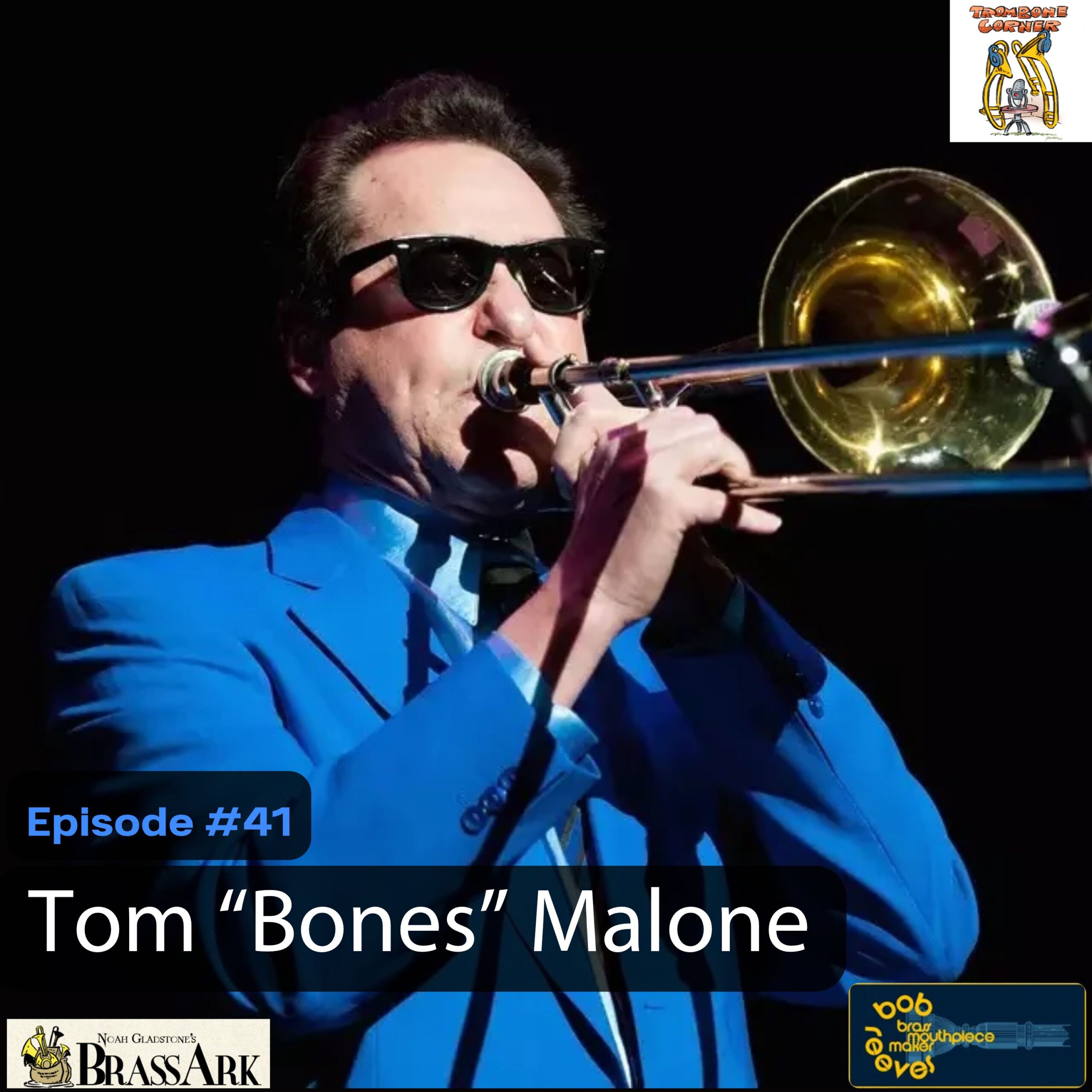
Welcome to the show notes for Episode #41 of the Trombone Corner podcast. This episode features trombone performer, arranger and recording artist, Tom “Bones” Malone.
From the early days of the Blues Brothers on Saturday Night Live to decades with David Letterman’s band, Tom “Bones” Malone shares memories of a remarkable career on this special episode of The Trombone Corner. Originally published as an audio episode last year, we’re pleased to bring it back to you in video form as part of the new podcast upgrades!
Few musicians of any stripe or instrument have appeared on as many recordings, television shows and commercials as Bones Malone. It’s a name drop of artists from the past 50+ years, from Miles Davis, Gil Evans, Ray Charles and Wilson Pickett to Whitney Houston, Lady Gaga, John Mayer and so, so many more.
And then there’s the Blues Brothers! Tom “wrote the chart for the skit that introduced John Belushi and Dan Aykroyd as the Blues Brothers.”
We dreamt of this one from the moment we launched the podcast, and now we get to publish it twice! Watch along on YouTube and Spotify and learn about music legends, advice on practice, kindness, and finding the right mouthpiece.
“I’m seventy eight years old now and just getting started!” – Bones Malone
Podcast: Play in new window | Download


About Tom “Bones” Malone
About Tom Malone:
Tom “Bones” Malone, trombonist, multi-instrumentalist, arranger & producer is best known for his work with The Blues Brothers, David Letterman Show and Saturday Night Live. Tom has played on 4,400+ television shows, 3,500+ radio & television commercials, over 1,500 recordings and thousands of live performances throughout the world, and has done 3,000 arrangements for television.
Tom plays trombone, tuba, bass trombone, contrabass trombone, euphonium, bass trumpet, trumpet, flugelhorn, piccolo trumpet, alto sax, tenor sax, baritone sax, flute, piccolo, alto flute and bass flute. He has performed, recorded and/or arranged with a who’s-who of artists, including James Brown, Stevie Wonder, Paul McCartney, Frank Zappa, Paul Simon and many others.
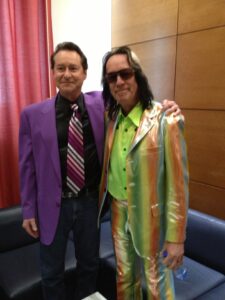
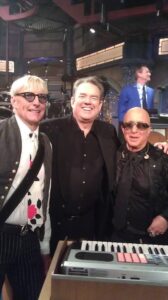
“Tom Bones Malone, a multi-instrumentalist, is perhaps the most successful musician in the history of film, live television and sound recording production.” – Ray Hair, president, American Federation of Musicians
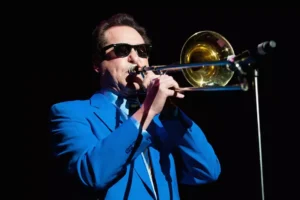
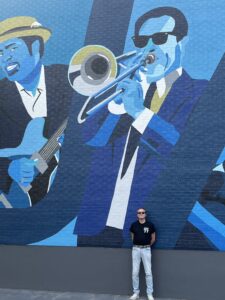
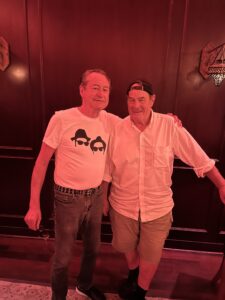
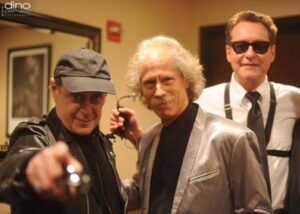
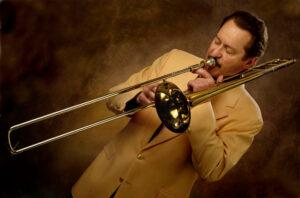
Tom “Bones” Malone, of the CBS Orchestra
Photo: John Paul FiloCBS
©2005 CBS Broadcasting Inc. All Rights Reserved.
Tom “Bones” Malone Episode Links:
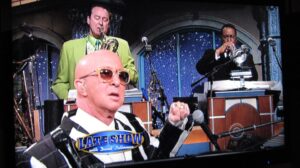
- Tom’s joke on the Late Show with David Letterman: https://youtu.be/zJ9ZYbQWjKc?si=KPrjMGmG3CqZ6KtX
- Website: https://www.tombonesmalone.net/
- Tom’s book, Alternate Position System for Trombone: https://www.jazzbooks.com/jazz/product/APT
Podcast Credits
- Theme Music: The Trombone Choir Arrangements of Jay Friedman, Vol. 1
- Audio Engineer – Preston Shepard
- Photo Credits – Courtesy Tom Malone
- Podcast Hosts – Noah Gladstone & John Snell
Transcript
Please note, this transcript is automatically generated. It may contain spelling and other errors. If you would like to assist us in editing or translating this transcript, please let us know at info@bobreeves.com.
JOHN SNELL (00:05)
Welcome to the Trombone Corner Podcast, where we feature interviews with trombonists from all over the globe. It’s great to have you join us as we talk all things trombone, brought to you by the Brass Ark and Bob Reeves Brass. I’m John Snell from Bob Reeves Brass, and joining me today and looking very dapper with my trusty co-host Noah Gladstone. Noah.
NOAH GLADSTONE (00:26)
John, you’re looking extremely bluesy this morning.
JOHN SNELL (00:29)
You look like you’re on a mission from God.
NOAH GLADSTONE (00:32)
Oh man, and I’m wearing sunglasses and it’s dark. Um who do we have in the trombone corner today, John?
JOHN SNELL (00:39)
This is like Christmas. I’ve I’ve been waiting for this interview for uh uh
NOAH GLADSTONE (00:44)
Literally since we started the podcast, I think the first person you wanted to have on the show was our guest today, Tom Bones Malone. Legendary,
TOM MALONE (00:53)
Uh
NOAH GLADSTONE (00:55)
legendary musician. Incredible. Tel tell us what we’re in store for.
JOHN SNELL (01:00)
my god. I mean Blues Brothers iconic you don’t know this about me, Noah, but I actually have a write in campaign to make Blues Brothers uh the number one movie on the AFI list instead of um Citizen Kane. It’s not I’m not getting as much traction as I had hoped, but maybe after this episode.
NOAH GLADSTONE (01:18)
Maybe, maybe. You know what? I know a lot of things about you. I did not know that until this moment. So thank you.
JOHN SNELL (01:24)
I have a link. I’ll send you a link. You can sign up for the online petition. Uh we’re talking about
NOAH GLADSTONE (01:27)
I’ll sign it. No problem. Put a link in the podcast too, actually, right?
JOHN SNELL (01:34)
let’s do it. Um I mean what? Blues brothers, Saturday Night Live, the late show with David Letterman, and I mean he’s uh he’s got like a fourteen page C V of like people he’s played with.
NOAH GLADSTONE (01:46)
Paul Simon, I mean unbelievable.
JOHN SNELL (01:48)
Yeah and and Yeah.
Yeah. Uh so Tom Bones Malone. We’ll get to Tom’s interview here in a moment. After a word from our sponsors.
NOAH GLADSTONE (01:57)
You look so cool in those sunglasses.
TOM MALONE (02:00)
Ha ha ha.
JOHN SNELL (02:05)
If you’re a trombone player, you already know that the right equipment is rarely just a matter of picking something off a shelf.
NOAH GLADSTONE (02:12)
That’s right, John, that’s why we decided to develop the Reeves Brass Arc mouthpieces. We wanted to make trombone mouthpieces that feel really great to play, sound terrific, and actually work with the way trombone players put their equipment together. And I wanted to draw from some of the best historical examples in my personal museum collection. These are all made right at your shop up in Valencia, California.
JOHN SNELL (02:32)
And besides these fabulous mouthpieces here at Bob Reeves Brass, you’ll also find other great things for trombonists including Shires trombones, olvane mutes, and the ever popular guard bags.
NOAH GLADSTONE (02:43)
At the Brass Arc, we specialize in exceptional instruments, both new and used, exclusive new models from Miles O’Malley in Chicago, Marcus Leuchter, Stevens Brass by Steve Shires, Edgar Historical Brass Instruments, among other S tier makers, along with one of the largest curated selections of vintage and unusual instruments that you’re not going to find in most shops. If you’ve got a special trombone or trumpet or something else sitting in your closet and you’re ready to find at a new home, I can help with that too through my consignment services.
JOHN SNELL (03:12)
Breaves Brass and the Brass Ark, where generations of craft meet today’s artists.
Tom Bones Malone, trombonist, multi instrumentalist, arranger and producer, is best known for his work with The Blues Brothers, David Letterman Show, and Saturday Night Live. Tom has played on four thousand four hundred television shows, over thirty five hundred radio and television commercials, and over fifteen hundred recordings, including thousands of live performances throughout the world. Tom has also done over three thousand arrangements for television.
Tom plays trombone, tuba, bass trombone, contra bass trombone, euphonium, bass trumpet, trumpet, flugelhorn, piccolo trumpet, alto tenor, berry sacks, flute piccolo, alto flute, and bass flute. Tom has performed and recorded and or arranged with artists like Ray Charles, James Brown, Stevie Wonder, Paul McCartney, and many, many others. And now here’s our interview with Tom Bones Malone.
six miles to Chicago, we got a full tank of gas, half a pack of cigarettes, it’s dark, and we’re wearing sunglasses.
TOM MALONE (04:37)
Hit it.
JOHN SNELL (04:45)
So excited to have joining us in the Trombone Corner today, Tom Bones Malone. Tom, great to see you. How are you doing?
TOM MALONE (04:52)
I’m feeling great. how are you?
JOHN SNELL (04:55)
I’m doing doing fabulous. everyone’s looking no, you’re looking great today, Tom, you’re looking fabulous. Not bad for a bunch of
TOM MALONE (05:01)
I’m seventy eight years old now and just getting started.
JOHN SNELL (05:04)
Yeah. That’s well you gotta Doc Severinson a run for his money.
TOM MALONE (05:08)
Well, I used to play in Doc’s weekend band, nineteen seventy one. Yeah, Lou Marini and I and Lou Tobacken and Snooky Young. We were on the we played every Saturday and Sunday during nineteen seventy one. Doc had the Tonight Show band in New York with Johnny Carson. During that same year, the Tonight Show moved to LA. Weekend band kept playing. And it paid two fifty a gig, which was a lot of money in nineteen seventy one. So I was thrilled to have that gig.
NOAH GLADSTONE (05:34)
Still more money than some gigs pay now. So
JOHN SNELL (05:37)
That’s good money now. Um well Tom, I know a lot’s already been known about you, you know it’s already out there, but just for sake of completeness, if we can kind of start from the beginning, correct me if I’m wrong, you didn’t start on Trombone, right? You started on two books?
TOM MALONE (05:51)
Actually, I started on playing violin when I was five years old. Really? In in the Hawaii. Uh my father was a uh US Navy pilot, Pearl Harbor survivor. I was born in Honolulu in 1947. We moved almost every year, but we ended up in we were in Hawaii when I was four, five, and six years old. So my um older brother, two years older, got a violin when he was six and I was four. And so
I wanted a violin for no other reason except my brother had one. I want one too. So so I so I got a violin when I was five and uh I still have it. It’s a one sixteenth size violin and I started uh setting with Wotan Zollner of the Honolulu Symphony that I played
JOHN SNELL (06:35)
Geez.
TOM MALONE (06:36)
Honolulu Youth Symphony when I was five years old. So I was reading um music notes before I was reading ABCs. Uh anyway, so I continued to play the violin. Uh we’ve moved
al almost every year. The next year was the Garden Grove Youth Symphony in uh Orange County. We we lived there for two years. And then um Pensacola Youth Symphony. Uh and uh then my dad retired from the military, bought a farm in the middle of nowhere in South Mississippi, and there was no symphony. So um I stopped playing the violin. So I’m I’m in school at uh at this school in Sumerall, Mississippi, population eight hundred and nineteen. The school was w grades one through twelve. And
uh the the sixth grade classroom window looked out on the football field for the high school football games and every afternoon in the fall I heard the marching band and something about the band felt good to me. So one day they said uh anybody wants to be in the band, come to the band hall on uh Thursday night and bring your parents. So I show up there with my older brother and my mother and dad and I picked up a trombone. You the the guy from the music store had all the stuff laid out.
So I picked up a trombone and I could almost play it. So uh my dad says, How much is it? And the guy tells him the price. My dad says, We can’t afford it. So he’s he’s dragging us out of the band hall and the band director grabs me and my brother and it says, you can play the school’s tuba. You don’t to buy anything. So I’m like, Okay. So my brother and I started playing the sousaphone that summer and we started marching in the band that fall playing, you know, this uh brass sousaphones.
And uh so the next year we got a a new band director and he was a professional trombone player, president of the union in Hattiesburg, Mississippi. It was a uh medium sized town about eighteen miles away from Sumral. And he saw me looking at his trombone, he says, You want to play that, don’t you? I said, Yeah, I explained uh my problem. And he said, You can borrow my trombone. You can you know, he showed me where the positions were, gave me a beginner book, and uh said, uh, go home and learn how to play it.
So I understood that the coordination of the uh valve notes on the B flat tuba and the trombone positions on the slide. I understood the relationship of those. So I learned to play it pretty quickly. I was first chair in about two weeks. Uh that well, the band wasn’t uh that uh you know, wasn’t r operating on a higher level off what is that way. You know, we had fourth graders in the band too. So anyway, but um I was I love playing the trombone and then my my little brother got a coronet.
Uh so when he wasn’t playing the coronet, I learned to play the coronet at home. Uh so now I’m fourteen and some kids come over to my house and we’re gonna start a rock and roll band. You wanna be in it? I’m like, yeah. So I got out my trombone. Now this is nineteen sixty. I got out my trombone and they looked at me and like it was crazy. And I said, What’s up? And they said, You don’t have trombones in rock and roll bands. I didn’t know what rock and roll was. I just wanted to hang with the guys and meet girls. So I so what am I supposed to do? I wanna be in the band.
is you gotta play saxophone. So my best friend, Alan Sumral, uh was there and he had an alto and a tenor sax and he started teaching me how to play tenor sax right then and there. And uh and we worked out some songs that night, and I was very motivated to play the saxophone because I wanted to be in the band. So I uh got a fingering chart and a book and a beginner book uh took it home. Five weeks later we’re playing our first gig with this band in the middle of a song that
leader of the band, s singer, guitar player, leans over to me and says, Play a solo. What am I supposed to play? You say anything you want. So I jumped in there and that’s uh you know, I learned to improvise kind of like throwing a baby under the swimming pool. You know, you just somehow figure it out and I like, wow, what what cure are we on? What notes should I play? And that was my beginning of improvisation.
JOHN SNELL (10:38)
Amazing. So I mean you wa so fourteen years old, I I’ve lost count already. You were already on what, your fourth instrument? Fifth instrument?
TOM MALONE (10:45)
I was playing four instruments at that point. Yeah. Uh tuba, trombone, trumpet, and tenor sacks.
JOHN SNELL (10:52)
And all all self taught. You d you had private you didn’t have any private teachers on any of those?
TOM MALONE (10:56)
Didn’t really have any private teachers, uh, but I I was uh I was motivated and I started arranging music when I was thirteen. I heard a record on the radio. It was called Midnight in Moscow by Kenny Ball and his jazz men. It was a a a a a band in London, but it was based on a Russian folk song. Uh so anyway, I I wanted to know how this why this song sounded the way it i it did. And I so I transcribed it. I got on the piano and I listened to the record and
I I did an arrangement of the song. And then one day in the back of the music store the the the arrangement was published, so I got to check my homework and uh I made about a ninety-six on it. So I continued to arrange music. So I s I started off uh college at University of Southern Mississippi in Hattiesburg. I started off as a music major and I was on a tuba scholarship in the marching band for for two years. And I so I started off, I took a course called Music Theory 101. Uh and
I answered all the questions for the first couple of weeks and the teacher takes me out in the hall and says, um, you don’t have to come to class anymore. You get an A says you already got know all this stuff. So uh I changed my major to psychology and I ended up getting my degree in psychology uh four years later at North Texas State.
JOHN SNELL (12:13)
Interesting. Why why did you do that?
TOM MALONE (12:15)
Well, I I I just I liked uh I liked psychology and I didn’t like the historical way that they taught music in the school. You know, they went way back into, you know, to Bach and Haydn and and all this stuff. And I I didn’t care about that. I wanted to know about chord symbols and playing jazz and playing rock and roll. And so I I realized that I would waste a lot of time being a music major. So, you know, I s I was pretty s pretty much self taught as a musician. Anyway, so I’m playing in the um stage band.
in Hattiesburg, University of Southern Mississippi, my second year there. Uh spring of nineteen sixty seven, we play at the Mobile Jazz Festival. So I wrote some charts, played some solos. I ran it to Lou Marini from North Texas State. He he wrote some charts, played some solos, and he says, Man, you should really transfer to North Texas State next year. So I did. And I it was changed the rest of my life.
JOHN SNELL (13:06)
Just so just running into Blue Lou and then he convinced you to go to North Texas. Yeah.
TOM MALONE (13:11)
Yeah
and uh so I I I I went on the road with a Jimmy Dorsey band that summer and saved up enough money for the first semester’s tuition and uh maybe a a month or two rent. Uh my roommate at North Texas was a guy named Gary Grant, famous trumpet player from the Jerry Hay Horns in Los Angeles.
JOHN SNELL (13:29)
I think I’ve heard of Gary. Yeah.
TOM MALONE (13:30)
uh
NOAH GLADSTONE (13:31)
Just passed away.
Character
TOM MALONE (13:41)
Amazing trumpet player. Yeah. Yeah, he’s a piece of work too.
NOAH GLADSTONE (13:44)
He has a piece of work.
JOHN SNELL (13:45)
But one of the nicest guys uh in town too. I mean
NOAH GLADSTONE (13:49)
Unbelievable stories.
JOHN SNELL (13:50)
So so he was your roommate.
TOM MALONE (13:53)
But he was my roommate nineteen sixty seven at North Texas State.
JOHN SNELL (13:56)
And you guys did one o’clock together, I’m assuming.
TOM MALONE (13:59)
Five men with Lumarini.
JOHN SNELL (14:00)
Yeah. What a ban. I need record there’s gotta be recordings from back then, right? Of you guys?
TOM MALONE (14:05)
What’s that?
JOHN SNELL (14:05)
I said there’s gotta be recordings of you guys from back then. Yeah, some more
TOM MALONE (14:09)
Yeah, we made uh yes there are some records. Uh Bruce Fowler sat next to me in the trombone section too, at North Texas State. He uh he and I ended up playing with Frank Zappa in nineteen seventy two. uh yeah, d amazing amazing trombone player. I learned a lot from him just sitting next to him. So I’m
NOAH GLADSTONE (14:28)
First gigs I ever did in town was with Bruce Fowler. uh
TOM MALONE (14:32)
Oh.
Yeah. Well, um, so uh I played lead trombone in the one o’clock band and I played lead trumpet in the three o’clock band. So I auditioned on tenor sax and the the uh the sax professor, uh John Giordano, eventually became the conductor of the Fort Worth Symphony. Anyway, I went in and auditioned on Tenor Sachs. He says, Okay, get out of here. I say, What do you mean? I sight read the part perfectly. He says, I have sixty jazz saxophone majors here this semester.
We only have thirty chairs. You know, we only have six bands. It says, You’re already playing two bands and you’re not even a music major. So get out of here. So I got thrown out. but uh anyway. Continued to play, moved to moved to New York in nineteen seventy after being on the road with Woody Herman and uh Lou Marini came to town and uh we started playing with Doc Severson’s weekend band. and then um Doc Saverson had the big band with Johnny Carson on the Tonight Show in New York.
During that same year, nineteen seventy one, the show moves to LA. Weekend band keeps playing. We just we go to the airport every every weekend. And uh one night we found ourselves the guest music on the tonight show with Johnny Carson in LA, and we played only the beginnings by Chicago, so I played a trombone solo on national TV. We go back to the hotel after the gig and uh this trumpet player named Sal Marquez comes over to the room. Now he was in the one o’clock band with us at North Texas State, and he moved to LA. We haven’t seen him for
A few years, so Sal, what are you doing in LA? He says I’m playing with Frank Zappa’s Grand Oiseo. I said, What what is that? He says it’s a eight no, it’s a twenty piece all instrumental band. He says, By the way, our tuba player Howard Johnson is uh moving back to New York. We’re looking for a tuba player. Do you know anybody that plays tuba? About that time Sal trips over the tuba that’s on the floor in my hotel room and he says, You play tuba, don’t you, Tom? I said, Yeah. He says, Well, you want to play with Frank? I said, Sure.
So he gets on the phone with Frank, a hotel room phone. you know, Frank, I know this guy. And then his face drops and he says, Well, Frank, I’ve never heard him play the tuba. Tom, how do you sound on the tuba? So I picked up the tuba and played it for Frank over the telephone and he hired me. We go over to Frank’s house the next day, and uh Frank says, Sal tells me you play some other instruments besides the tuba. I said, Yeah. He says, Well, give me a list. So I put down um bass trombone, trombone, trumpet, flugelhorn.
Piccolo trumpet, tenor sacks, flute, and piccolo. And uh I showed up for rehearsal two weeks later, and Frank had rearranged his music so I had a part on every instrument. Now, I remember the first rehearsal, I’m sight reading a piccolo trumpet solo, and I’m sitting next to Malcolm McNabb. If
JOHN SNELL (17:18)
my god.
TOM MALONE (17:18)
you’ve ever been to the movie and heard a trumpet, it was Malcolm. You know, he played on like five hundred movie scores.
And at the time he was the principal in the Pasadena Symphony, you know, but he was quite famous then. I I had no idea who he was. I just hi, I’m Tom. Oh, hi, I am you know, I just met him. I had no idea who he was, and I would have been him I would have been embarrassed if I knew who he was. But anyway, I was, you know, playing my music and doing my thing. and you know, Bruce Fowler was in the band. I had met the f all the Fowler brothers uh when I was at North Texas State, spring of nineteen sixty eight, the lab band went to
Went to Seattle to play at the E N C Conference. And we got on a bus and we stopped several places on the way and played concerts. One of was in Salt Lake City. So I crashed at the Fowler House with all five Fowler brothers. Wow. Later Walt and I were on the road with Billy Cobb in nineteen seventy five. So I go way back with the Fowler family.
JOHN SNELL (18:13)
What a hang, man.
NOAH GLADSTONE (18:15)
Here’s a crazy one. I actually hire Rhea Fowler, Bruce’s daughter, on violin these days. Uh
TOM MALONE (18:20)
Yeah, she’s a nation.
NOAH GLADSTONE (18:21)
there you go. Full full circle of the Fowlers. They can’t very musical family.
TOM MALONE (18:25)
Totally. Yeah. I I met her over at the dentist.
NOAH GLADSTONE (18:29)
She’s wonderful.
TOM MALONE (18:30)
We go to the same dentist. yeah. uh Well wonderful. Wonderful.
NOAH GLADSTONE (18:33)
ah Beautiful
family. Wonderful people. Walt Walt is hilarious. I mean they’re all hilarious, but
TOM MALONE (18:41)
So I I I I played with Frank. I played uh the twenty piece Grando Zoo tour, Europe, United States, Hollywood Bowl. And then uh Frank cuts the band down to twelve pieces, calls it the mothers of invention. And uh we do another tour in the United States, and I’m still in the band. And um then we he cuts the band down to ten pieces and we uh Mothers of Invention we did another tour in the United States. When I wasn’t w was in town rehearsing with Frank, I would play with
Lou Lee Trumble with the Louis Belson big band at Dante’s over in Lancasham. And uh that was a lot of fun. But anyway, so then after the ten piece tour, Frank says, Next tour is going to be a six piece band and it’s only going to be one horn and that one horn is going to be Bruce Fowler. I said, Okay. And he says, Bruce tells me you pla you play electric bass. I said, Yeah. He says, You want to audition? I said, Sure. So I went over to Frank’s house and I remember George Duke was there.
JOHN SNELL (19:37)
It’s it’s like, my gosh, what are the chances?
TOM MALONE (19:39)
Strangely
strangely enough, George Duke has a degree in trombone, in co you know, college degree in trombone. But anyway, I
JOHN SNELL (19:44)
I did not know that.
TOM MALONE (19:46)
I I I was playing electric bass at the audition and I I thought it sounded pretty good. And some of the music was hard. So a couple of weeks go by, I don’t hear anything from Frank. I hear through the grapevine that he’s auditioning other bass players, guys that played with him before, guys that uh sing and play. So I call up Frank, I leave a message on his phone. Frank, it’s Tom. Let me know what’s going on.
Another week goes by, I’m sitting around LA with no gig, and uh I get a call from Lou Soloff in New York. He says, uh Chuck Winfield is leaving the band, blood, sweat, and tears. We need you to play trumpet in the band. Can you be in New York tomorrow? I said, Sure. Bang. Gave away my car, checked all my s instruments on the plane, and moved to New York. Bang. Day after I left, Frank Zappa called to say I had the job playing electric bass with
Jean Luc Bonnie and George Duke, tour three tours of Europe and a tour of Japan for twice the money, twice the money that Blood, Sweat and Tears had paying me. I was already in Dallas playing trumpet Blood Sweat and Tears, so I never looked back. I recommended Tom Fowler, one of the Fowler brothers, bass player. Frank hired him. He played with Frank for years, sounded great, so I covered myself. But my I think my whole professional career would have been different if I had
NOAH GLADSTONE (21:07)
To to rehearse with Frank Zappa like what was a Frank Zappa re
TOM MALONE (21:10)
runs
he runs a very strict rehearsal. I later played an album a around nineteen seventy eight, it was called Zappa in New York and I got a horn section together for Frank. And it was um Randy Brecker, Mike Breckert, Blue Marini, Ronnie Cuber and myself. Five horns. It was
NOAH GLADSTONE (21:28)
Was he picky? Did he know what he wants? Did he want you guys to contribute?
TOM MALONE (21:32)
And here’s his psychology was this. He would write something that you couldn’t just sight read. You would have to take it home and practice it. Now he’s got you. He’s got you in his hand. He’s got your attention. Now you show up for rehearsal, you know, and he’s got it it this thing that he’s written is almost impossible. So uh now he’s gotcha. And so he wrote a play chart called The Black Page. And the blue the story behind the black page was this guy goes to college and he learns to play and then he moves to the big city and
And he gets called for his first recording session. So the guy’s on the subway going to going to work and he says he’s thinking to himself, Wow, man, I’m I’m doing my first recording session in New York. This is great. And then a little flash goes through his brain and it says, Wow, what if the music’s so hard I can’t play it? So now the guy’s nervous and he goes and sits down in the recording studio. It’s all whole notes. You know, it’s like the simplest thing he’s ever seen in his life, you know. So he’s like, my God. So twenty years later,
Same guy. You know, he lives out in the suburbs. He’s comes to town for a recording session wearing his golf shirt and you know, he knows all the guys, he knows the contract. Hey, how you guys doing? Everything and he sits down and and there’s the black page. He can’t play it. So that’s his that’s Frank’s story about the black page. So I played I played Piccolo on the black page at on the Zappa in New York album.
NOAH GLADSTONE (22:53)
Amazing. A and like would he just would you guys finish rehearsal and then he’s like, Let’s go hang out or was he like, Peace out, you guys do your thing? Or was it like
TOM MALONE (23:02)
Sal Marquez and and Bruce Fowler and I would go over to his house and hang out and he’d he didn’t use any drugs, you know. We’d smoke pot before we’d get there, you know, and uh you know, Frank liked to drink he’d have c occasional beer and they like to drink coffee.
NOAH GLADSTONE (23:17)
What do you have like crazy existential discussions with you guys?
TOM MALONE (23:21)
Well know, one day uh Sal Marquez says, Man, this is really good coffee, Frank. Frank says, Yeah, it’s Colombian, it’s the best. We’re all stoned on Colombian marijuana. We’re just laughing our laughing ourselves to death. Amazing. Frank was he was a great guy. He he was personable, friendly, ran a strict rehearsal, but it was always fun playing with him. And when he got on stage, you didn’t know what he was gonna do. Right. I and you didn’t know what he was gonna say. One time we were on uh the last tour I did with him were in uh Philadelphia.
There’s about ten inches of snow on the ground. We get off the bus, there’s a fire hydrant that’s got little yellow streaks around it. So during the sound check, Frank wrote a song called Don’t Eat the Yellow Snow. Amazing. He was he was beyond creative.
NOAH GLADSTONE (24:04)
Amazing. Incredible.
JOHN SNELL (24:06)
And the the tour the touring John. Yeah, I was gonna say the to like touring, like was that grueling? Uh you know, people think it’s glorious being a rock star and playing all these big halls and things, but I mean, was there any point like the travel caught up to you or the
TOM MALONE (24:21)
Well
it you just you just get used to it and just roll with it. You know, whatever has happens, happens. You know, you get on the bus or you get on the plane, you you know, it it just you just go with it. Going ahead a few years I did uh two and a half month tour of Europe on a double decker bus, sixteen bunks upstairs. It was a band I put together um nineteen eighty eight. things were a little slow for me in New York and uh kids are about to go into college, so I organized uh I put
six original members of the Blues Brothers together and called it the Blues Brothers band. Got a licensing deal with uh Dan Aykroyd and Judy Belushi, John’s widow, and uh I got a booking agent in Paris, Raymond Gonzalez. See, the band was um Magatar Murphy, Steve Cropper, Duck Dunn, Alan Rubin, Lou Marini, and myself. And we got Eddie Floyd to sing. Remember Knock on Wood, Eddie Floyd? Uh
JOHN SNELL (25:12)
yeah. Yeah.
TOM MALONE (25:14)
and uh he got this booking agent in Paris. First year he booked
a million dollars worth of gigs for us. And and you know, we all the seven biggest jazz festivals in Europe, we we were just all over the place. Everybody wanted us. And uh it was actually a good band. We well so I played with that band for three years and uh you know helped send my kids to college.
JOHN SNELL (25:37)
Yeah. Well I mean that’s amazing. You can you when times are slow you can throw something like that together and then yeah have a hit like that. Speaking of the Blues Brothers, I how did you get your break into um I started with Saturday Live, right? Well let’s
TOM MALONE (25:48)
Let’s
let’s see, let’s let’s rewind a little bit. Um I moved to New York I called this guy. I I said, Can I crash on your floor? He says, Yeah, come on up. So I came up to New York and this guy had a cheap apartment on Broadway. So I’m crashed on his floor and a couple of months later he goes back on the road with Woody Herman’s band. So I inherited this cheap apartment, sixty seven dollars and fifty cents a month. And you know, one there’s one room, no kitchen, a refrigerator and a bathroom. That was it.
And this friend of mine named Hannibal Marvin Peterson calls me up. he was a black jazz trumpet player, soul singer uh in Denton that I a good friend of mine in Denton, Texas, you where I was North Texas State. He says, Can I crash on your floor? Can I move to New York and crash on your floor? I said, Sure, come on up. So Hannibal immediately started working with uh Rasan Rowland Kirk, the guy that plays three saxophones at the same time.
And with Gil Evans, you know, the famous arranger from Miles Savis. So one night he says, uh, I have two gigs tonight. The gig with uh Gil Evans doesn’t pay anything. You want to sub for me on Trumpet? I said, sure. So I met all these people that changed the rest of my life. I met Howard Johnson, Jay’s tuba player, you know. And I met um David Sanborn. I met Lou Soloff. I met Dave Bargeron. I met on and on. Like I met all these people that
you know, changed my life. Howard Johnson, he liked me because I played jazz on the tuba, like he did. We became good friends. A few years later, uh, they’re starting this T V show called Saturday Night Live and uh they asked Howard to put a horn section together. So I was the uh I I was basically the trombone player. I also played you know, tenor sacks and baritone sacks and alto flute and trumpet and, you know, all bass trombone and all all kinds of stuff.
You know, and uh you got it paid extra on the musicians union contract if you play more than one instrument. So that that that was a good thing. Anyway, so now I’m at Saturday Night Live and I became the arranger for the show. You know, I had done arrangements for um Blood, Sweat and Tears. I gave the guy a demo and boom, now I’m the arranger for the T V show. Early April nineteen seventy eight, I’m called into a meeting with three people. Dan Aykroyd, John Felusci and me. And uh they’re
They’re developing his characters that wear sunglasses day and night. So uh I wrote an arrangement of Rocket eighty eight by James Cotton. Rehearsed the Saturday Night Live Band. We did the song for Lauren Michaels, the producer, didn’t make the show. Next week, John and Danny are still hot on the Blues Brothers. So I arranged Hey Bartender. Rehearsed the band, did it for Lauren Michaels, the producer. Week number two. Didn’t make the show. Lauren turned us down. Frankly,
NOAH GLADSTONE (28:36)
He didn’t like it.
TOM MALONE (28:39)
frankly, I don’t see anything funny about the Blues Brothers.
So uh week number three, John, Danny said if Lauren doesn’t like it, we’re wasting our time if we’re not getting on the show. So week number three, we did nothing. Lauren comes out of read through Wednesday about three fifteen. He says, The show’s three minutes short. What the hell are we gonna do? And uh John and Danny jumped on him. Lauren, the blues brothers. So Lauren said, We have nothing worthwhile to put in those three minutes. You guys might as well make fools of yourselves. He put us on. And
I think he put us on at the end of the show, so if the show ran long he could cut us. But the show did not run long. We got on and I guess the rest is history. But it was this close to never happening.
JOHN SNELL (29:20)
Incredible. And you were there. You were you were at the birth of it in with that meeting with Dan
NOAH GLADSTONE (29:24)
Where it happens as they
JOHN SNELL (29:26)
Dan and John. And I mean what w what did they say to you?
TOM MALONE (29:29)
We did the Blues Brothers with a Saturday night live band a couple of times, and then John and Danny decided they wanted their own band, the Blues Brothers band. So he they chose me and Marini and um uh Steve Jordan and Paul Schaefer from the Saturday night band to be on the Blues Brothers band. And I was gonna be they wanted me to be the horn arranger, so if I needed another horn, it was up to me. So I got Alan Rubin in the band. And also I recommended Steve Cropper and Duck Dunn. I had played with them in a band.
uh for a few years. Going back to nineteen seventy six at Saturday Night Live, uh spring of seventy six, a group called The Band came on the show. Did you guys Band? Yeah. The band from Woodstock. Yeah. Okay. So they came on and and the music director asked me to write some horn charts for so I wrote some horn charts for him and they fell in love with me. Saturday Night Live had three or four months off in the summer, so the band took me on tour with them in the summer of seventy six.
And then Thanksgiving 76, we did a movie called The Last Waltz with Martin Sarcei. So uh That was a big deal in my career too. So uh yeah. And uh anyway, uh The Last Waltz meant that Robbie Robinson was leaving the b the band. So after The Last Waltz, Levon Helm formed his own band. Levon was a singing drummer and uh from Arkansas. And um he loved me because I was a Mississippi redneck too. So
Anyway, he had his he started his own band called Levon Helm and the RCO All Stars. And it was uh Paul Butterfield on Harmonica, Dr. John on Piano, Vocals, Booker T. Jones on Oregon, Booker T and the MGs, uh, Steve Cropper and Duck Dunn from Booker T and the MGs. And um Alan Rubin, Lumarini, myself, and uh Howard Johnson with the Horn section. So this band was together for two or three years. We did uh a tour of Japan, we did
couple of albums and uh so when John and Danny were looking for guitar and bass for the band, I recommended them because I knew that they’d be perfect. And also it changed the direction of the band a little bit too because prior to Duck and Steve, the band was just strictly Chicago blues. Now the Memphis Rhythm and Blues influence came into the band. F our first gig as the Blues Brothers band was opening act for Steve Martin at Carnegie Hall.
So who says nobody starts at the top? And then uh
JOHN SNELL (32:00)
Seriously.
TOM MALONE (32:01)
September September nineteen seventy eight, we were opening act for Steve Martin at the Universal Amphitheater out in LA, near your house. we did nine nights and they edited the album uh Briefcase Full of Blues out of that nine nights. And there’s no one song that’s won performance. Those are th some of those songs have thirty edits in The
Engineer producer Bob Tischler uh
JOHN SNELL (32:28)
I got my coffee juice.
TOM MALONE (32:29)
and engineered and mixed all the blues the Blues Brothers albums. There were only three real Blues Brothers albums
NOAH GLADSTONE (32:35)
Here it is.
TOM MALONE (32:36)
blues, the movie score, and then there’s one called Made in America. It was the tour we did prior to the movie. There was we did a uh tour on a a private jet about for about five weeks in May June when the movie came out. So uh yeah, Bob Tischler comes into the resume a little later too.
That was a big deal and and uh Soul Man was a hit hit single off of that first album too. So that was uh Doc and Steve’s influence. So we the movie came along and that I got to arrange the music for the movie. we did the uh soundtrack in in July nineteen seventy nine in Universal Studios in Chicago. That’s where uh James Brown recorded This is a Man’s World with the big orchestra. And we did it they did a lot of external
shots for the movie there that pile up underneath the causeway and the in the movie. I saw the dailies that day. They had ten stunt drivers. They made a deal for two hundred cars. So ten cars piled up and then they went and got ten more cars with the same ten guys and they piled those cars on top of that. And then they went back and got ten more cars and piled those up. In the editing, they make it look like one one big thing. And
They put a camera in the pile of cars too, so you could see the cars approaching the pile. And the camera was destroyed, but the film survived to be in the movie. that was uh uh you know, not really knowing much about film the film industry, that seeing that those dailies that day uh was something I’ll never forget.
NOAH GLADSTONE (34:12)
Movie magic
JOHN SNELL (34:13)
Yeah. That’s amazing.
TOM MALONE (34:14)
Okay.
NOAH GLADSTONE (34:16)
How long how long did it take to film that
TOM MALONE (34:19)
Well,
uh they did a lot of external shots for the movie that the band was not involved with. The only external shot we did was walking into Ray’s music exchange, you know, for the Ray Charles scene. Of course. Now the internal we went we we were in LA at the Universal Sheraton, November, December, January, seventy nine, eighty, uh, filming the interiors. They built Bob’s country bunker out on the back back lot of Universal. Mm-hmm. And we did the in inside. We were in there for a week inside with the
Chicken wire.
JOHN SNELL (34:50)
Chicken wire.
TOM MALONE (34:52)
Chicken. Okay, 1979. We’re still doing Saturday Night Live. So one night after the show, you know, the show was a live show. It ended, it was from 11 30 to 1 a.m. After the show one night, Aykroyd says, he says, Um, Bones, could you come up to the dressing room? For what? He said, I I’m I’m I’m writing a movie script and I’d like to talk to you about your life. So I went up there and I one of the stories I told him was playing in Mississippi in a sleazy place that had chicken wire with a bandstand.
So that the band wouldn’t get hit if there was a fight or it’s people started throwing shit. And he put that in a movie.
JOHN SNELL (35:26)
That’s Bob’s country bunker.
TOM MALONE (35:27)
Yeah. We did the um I did most of the vocals on uh on that song too, by the way. Uh Bob Tischler had me overdubbed the vocal over and over and over. Rollin’, rollin’. Yeah.
JOHN SNELL (35:38)
On rah Rawhide.
TOM MALONE (35:40)
Yeah. Well hide. Uh
JOHN SNELL (35:43)
Uh we were there for about a week.
TOM MALONE (35:45)
doing the interior of Bob’s Country Bunker. They had smoke machines in there and they had uh cases and cases of these long neck brown beer bottles that were made of sugar so that they would smash easily. So and you know during the break we’d smash over each other’s head, you know, and you know, just have, you know, f childish fun with those things. So yeah, Phil the movie was uh was really a lot of fun. We did the interior of uh Ray Charles when the horn section dances around.
Yeah, the choreographer, I’m trying to remember his name, the choreographer choreographer for the temptations was telling telling us how to how to move and what to do. Yeah. yeah, working with Ray Charles was amazing too. my god. And Arisa Franklin too. Amazing.
NOAH GLADSTONE (36:30)
Calloway. my god.
TOM MALONE (36:31)
Cab
Callaway too. my God. Yeah, he had his own band in nineteen twenty nine. Mm-hmm. Yeah. So we were we were at the uh Hollywood Palladium filming that for a week too. They had uh six hundred in the audience they had six hundred screen actors guild. Uh and and then they went to the unemployment line and got like twelve hundred more and it paid them like thirty dollars in lunch. You know, unemployment people. And uh yeah, we were in there for a whole week.
JOHN SNELL (37:00)
uh Little known fact. So what I love about the movie, the many things, is that that I mean you guys are all session musicians, you know, and to throw you guys into acting roles and like uh
TOM MALONE (37:13)
So
JOHN SNELL (37:27)
the way John Landis arrived, I mean maybe it was J Belushi and Aykroyd that pulled out your characters and made it seem so natural. I mean, did you guys get any kind of like acting lessons or anything, or would it you just kinda go with the flow?
TOM MALONE (37:40)
No, Landis was just kind of patient with us, you know, and he was whenever we’d be on camera he says, Don’t act, you know. Okay, so just j just read the lines and uh, you know, be normal. They you know, don’t try to and I I I I guess it was good advice. I mean anymore
JOHN SNELL (37:57)
Tell a bunch of musicians be there.
NOAH GLADSTONE (37:59)
Right. I mean that’s what that’s yeah.
TOM MALONE (38:01)
But you know, it was it it’s it’s a whole other experience to be on camera. Uh now all the music was pre recorded for the movie, except for Maxwell Street, John Lee Hooker. That scene was actually live music, but the rest of we recorded everything you know, in July and Lannis didn’t want somebody to say, Hey, we have to shoot that scene over. I missed a note. So everything was pre recorded and we just pretended we were playing. Musicians are good at that. You know, if if if if if if we’re good at anything at acting, it’s
pretending that we’re playing the stuff that we already played. That made Landis’s job a lot easier and uh saved our chops.
NOAH GLADSTONE (38:38)
Once the film came out and it’s a huge hit, are people recognizing you on the street? Or like people stopping you? You’re the guy from the movie or you know
TOM MALONE (38:48)
Well,
it was it was good publicity and it was good publicity in my business as a studio musician, too. Of course. Oh let’s get this guy. You know. Uh I I got to play a s solo in Sweet Home Chicago. It was in the movie. And uh that’s in the that’s in the textbook in Japan. And so that that didn’t hurt. You know, it Saturday Night Live didn’t hurt too. They’d see see me on camera and say, Well we we better hire him for our session next week, you know. And it was the same thing for the movie, so you it didn’t hurt my career at all.
JOHN SNELL (39:15)
So I d did you get to keep the suit from Murph and the Magic Tones? Did they let you keep that?
TOM MALONE (39:20)
unfortunately I don’t have I didn’t get to keep that.
JOHN SNELL (39:24)
I had I had the pleasure. He he judge speaking of how he sheared. I used to play a songfest out in Pepperdine University out here. Yeah. And all the student groups Yeah, all the student groups would put on like kind of basically a pop show kind of thing. Murphy was one of the uh one of the judges for one of the one of the one of the evenings. And I I I was down in the pit and when I heard that he was one of the judges, I like ran out as soon as we played the last note to to get to meet him and what a sweet man he was. Gave me a big
TOM MALONE (39:52)
He was he you know, he didn’t actually play anything in the movie because everything was pre recorded by somebody else. But when you know when when Schaefer turned down the movie to do the Broadway show with Gilda, uh, it took three people to replace him music supervisor and um keyboard player and on camera um piano player. So uh Murphy Murphy, you know, was he was a real actor. He’d actually been in movies, unlike the rest of us. So he, you know, he got a few more
A few more lines because he, you know, he was real. So anyway, after the Blues Brothers, you know, I was in the Saturday Night Live band from nineteen seventy five to nineteen eighty-five. And in nineteen eighty-one, this is after the Blues Brothers, Bob Tischler, the producer engineer of all those records, became a line producer at Saturday Night Live. And Lauren Myelkins had quit, and so uh Dick Ebersoll came in to be the executive producer and
Bob Chischler came came in to be a line producer on Saturday Night Live, and he hired me to be the music director because he knew, you know, that I could handle it from our experience, you know, making records. Um anyway, Don passed away in nineteen eighty two. Jim Belushi came on the cast in nineteen eighty three. Uh you know, we became good friends, of course, from my experience with his brother. Anyway, I want to tell you a story. In nineteen eighty two, I get a call from my unit manager, Liz Anderson. This girl downstairs, uh, I was
when I was the music director, I was also the arranger and the union contractor. So I would fill out a a contractor’s report every week and I’d send it down to Liz Anderson, my unit manager, and she’d type out the entire uh union contract. Okay, so Liz calls me up one day, she says, She says, Tom, I got a new job. I’m the associate producer of the David Letterman show. I said, What’s that? She says, You’ve never seen it before. It comes on real early in the morning. We’ll be changing the show to late, late night.
Comedy show and we’re looking for somebody to lead a four-piece band and be a personality. Would you be interested? So I said, Well, how much does it pay? So the price she gave me was about twenty percent of what I was making at Saturday Night Live. So uh I said, You should call this kid Paul Schaefer. He c he’ll take care of it. I gave her Paul Schaefer’s phone number. Paul had gone out to uh LA to be on a uh a sitcom called A Year at the Top with Greg Abigan, uh went about six, seven episodes
Network pulled the plug. The ratings weren’t high enough. So uh Paul came back to New York about two weeks before this phone call. You should call Paul Schaefer, he’ll take care of it. I never heard another word, and then I’m up in my office about a month later and I’m writing an arrangement. I had a network feed monitor in my office and I I hear this band playing and I look over there and it’s uh Paul Schaefer, Steve Jordan, Iron Bullock, and Will Lee. Well, you know, he got he got the gig and nobody told me. Anyway,
So Paul was nice enough to hire me to be in the band at CBS when the show moved to CBS. And I became his arranger and musician, multi-instrumental musician for twenty-two years. Yeah.
NOAH GLADSTONE (42:56)
Amazing.
JOHN SNELL (42:57)
And so
TOM MALONE (42:58)
So we were we wore whatever we wanted to. We just came in off I it the it was actually two horns for the first four years. It was I was playing trumpet and um uh Bruce Kapler on tenor sacks and then about to f
Fifth year, Paul hired a full time trumpet player, so I was more trombone, tenor sacks, baritone sacks, whatever else they needed. Anyway, about the fifth year of the show, we up to that point we just came in off the street, whatever we had on, we just walked on the stage and we did the show. And uh we get a memo from Dave that says, I want the band to wear jackets tomorrow. So we wear jackets. We get a memo from Dave. The band looks great in jackets. Tomorrow I want the band to wear jacket and tie. Next day we wore jacket and tie. We get a memo from Dave.
Band looks great in jacket and tie. I want you guys to dress like that until I retire. So the trumpet player that we’d added to the band. He says, Man, I had to go out and buy a tie. Al, you don’t have a tie. He says, Well, I have a bow tie. I have a bow tie for tux gigs, but why would I have a long tie? He says, I don’t go to church. So a little bell went off in my head, and I I I called the executive producer the next day and I told her the story.
And I said, you know, the band really wants to look good for Dave. I wonder if a wardrobe allowance would be in order. So the next day, the executive producer, in addition to our existing contract, thousand dollars a year for wardrobe. And if he didn’t spend it in the three hundred and sixty five days, the rest of the remainder disappeared. You know, 9 30 at night, I’d be at the mint store you know, the last day, you know, I’ll take that tie and I’ll take that shirt and all. So
I’ve got sixty-four thousand dollars worth of clothes in my closet. I’ve got every color of the rainbow jacket. I’ve got hundreds of ties, hundreds of shirts. I’ve got at least forty shirts that still have the pins in them. I never wore you know, I haven’t put on yet. This is one of you know. And so
NOAH GLADSTONE (44:48)
Thank you, Dave Letterman.
TOM MALONE (44:49)
you know, it’s uh Robert Graham, you know, expensive shirt. So yeah, I got I got all this uh all this stuff. And no T V show to be on.
NOAH GLADSTONE (44:59)
Was it was it crazy just, you know, the day in and day out of of Letterman and seeing the celebrities come through and just or you get desensitized to it at some point?
TOM MALONE (45:08)
Well yeah it was it was always exciting for me. Like um you know all these all these famous people come in and they’d you know we’d back them up and uh and uh John Popper, you know the the
NOAH GLADSTONE (45:20)
Amazing. Yeah.
TOM MALONE (45:22)
he comes up, you know, uh Blues Traveler, they’re on the show. So he comes up to the band saying, Bones Malone says, I’ve been a fan of yours for ever since the Blues Brothers. He says, I started playing harmonica when I heard Dan Ackroyd in the movie. You know? So I
I told the story to Dan and Dan put him in the movie the Blues Brothers two thousand the follow up.
JOHN SNELL (45:42)
Yeah. yeah.
TOM MALONE (45:44)
Yeah. So uh and he put the whole band in there too. Yeah. the whole Blues Rabber band in the movie.
JOHN SNELL (45:51)
That’s right. Yeah, this all from being on David Letterman and making that connection.
NOAH GLADSTONE (45:56)
Incredible. What was the what was the craziest thing you ever saw on the Letterman show?
TOM MALONE (46:01)
my God. One of the most amazing things was uh we did MacArthur Park with Will Lee singing and playing bass. People he’s singing and playing bass without a chart. He’s walking around. He’s walking around, you know, wireless during the whole song. Sounded unbelievable. I got to do the arrangement too, you know, big string section, French horns with wins. You know, the whole the whole thing. That was one of the most exciting, memorable moments for me.
on the show. And James Brown sitting in with us all night. yeah. uh who who else? uh so many uh Grover Washington Junior sat in with us for the whole show. You know, over so many so many memories I just can’t
NOAH GLADSTONE (46:48)
Yeah, I know. It’s amazing. It’s an amazing job.
TOM MALONE (46:51)
Twenty two years, hundred and ninety five shows a year.
NOAH GLADSTONE (46:54)
Amazing body.
TOM MALONE (46:54)
I got to arrange for some of my favorite people. You know, I got to arrange for the temptations, for the four tops, for the stylistics.
NOAH GLADSTONE (47:02)
I this i this is this is culture. This is American culture right here.
TOM MALONE (47:05)
Yeah.
I mean incredible. my god. Yeah, I got to arrange some of my favorite songs for some of my favorite musicians. I got to play live with James Brown, by the way. I played on Funky President. in early seventies I played on all the James Brown production records. Uh their arranger would would fly in from LA and you know, I’d play on the sessions with him. Fred Wesley, one of my favorite trombone players, by the way. And the nice guy. Yeah, amazing. He’s a real rhythm and blues trombone player. So he can play.
JOHN SNELL (47:33)
Yeah.
NOAH GLADSTONE (47:34)
That’s
TOM MALONE (47:36)
He calls me up one day, he says, he says, Bones, he says, I miss my plane. Can you cover for me on a recording session in White Plains? I said, sure. You know, two o’clock in the afternoon with White Plains. So I go up there and I I’m on a J B’s record with Macy O’Carker. Yeah. Seven for him. Yeah. Really super nice guy, great arranger, amazing trombone player. He’s still still playing. Still playing. Still funky as ever. Just
NOAH GLADSTONE (48:01)
Dick Nash is still playing and I think he’s a hundred years old, so
TOM MALONE (48:04)
Uh
I just played with him at a rehearsal about four months ago. Yeah. Ninety six. Ninety six. Amazing. And Kenny Schroer was there and um you know, it was just uh it was just amazing. I would I was actually playing lead trumpet with the band. But uh you know, I was just to hang with him was uh Of course. When I play gigs around town, he always shows up. He and his wife always brings him, you he’s in a wheelchair.
NOAH GLADSTONE (48:28)
No, he’s he’s he’s uh he loves music. I mean
TOM MALONE (48:32)
Kenny Schroyer had a has a had a b a big band that I subbed in once and it was in in the driveway of Dick Nash’s house. Band was set up in the driveway, yeah.
NOAH GLADSTONE (48:43)
Amazing.
TOM MALONE (48:44)
Yeah.
JOHN SNELL (48:44)
So so what what was your day like when you were doing the the late show? Would you I mean would you practice? Like do you have any? oh
TOM MALONE (48:50)
Routines. And then Dave would come out and do the monologue. And I got my I got my little fifteen seconds one time. Uh Dave comes out in in the monologue and he says, Uh a guy was arrested in in uh Kansas City yesterday for having sex with a cash machine. So I I whispered in the intercom to Schaefer, I said, He wanted to come into money.
And and so Schaefer stops the show. He says, Dave, says my drum ball player’s got a better punchline and the show stopped, you know, and and Dave was like, Where were you at the meeting? The band has to write the show now, has to write the comedy for the show now. That was my little fifteen seconds. That’s on YouTube.
JOHN SNELL (49:40)
I love it. Uh I mean dirt dress
NOAH GLADSTONE (49:43)
Yeah.
TOM MALONE (49:44)
Yeah. And one time one time it starts snowing outside, Dave goes outside, he makes some snowballs, goes back to the desk, and he starts throwing snowballs at the band, and I caught one of in the barrel of my bare tone sacks on camera. Yeah, and they got the the cam the the video and the still camera got it too. So uh yeah, that’s those are memorable moments.
JOHN SNELL (50:06)
So um during this time you were also doing sessions, right, during the day or like did you do other freelancing?
TOM MALONE (50:11)
Yeah. Well, session work had kinda slowed down a little bit like that. Back in the Saturday Night Live days, back in the seventies and eighties, you know, it was like you know, all day every day.
NOAH GLADSTONE (50:19)
Triples, triples all day. I
TOM MALONE (50:21)
Yeah, it was crazy. It wasn’t just records. It was yeah.
NOAH GLADSTONE (50:26)
Jingle just a lot of jingles.
TOM MALONE (50:27)
Yeah, that that whole business has gone to uh MIDI now. You know, people do it on their com computers at home now. But back then it was it was a big deal and uh yeah, worked for all the big advertising agencies.
JOHN SNELL (50:42)
So d I mean, did you ever have to put time in on all of your instruments? I mean assuming like you had to did you have a routine on your trombone or your saxes or did you
TOM MALONE (50:50)
Well, when I was when I was uh living on the farm, when I was in junior high and high school, I practiced four or five hours a day. You know, because uh I didn’t want to live on the farm the rest of my life. I didn’t want to milk cows, pick corn, haul hay. I d I didn’t want to do that the rest of my life. There’s nothing wrong with that. But it wasn’t for me. And so uh uh when I first started playing the trombone, I bought an album called The Persuasive Trombone of Erbie Green. Erby Green was a famous studio trombone player in New York. And so
You know, I didn’t really have a teacher, but I just played along with the record with Erbie Green. And back in my mind I said, Well, if I can play what Herbie Green plays, I should be able to move to New York and be a studio musician. And you know, I’m thirteen, fourteen years old. So I practice all the time. You know, and my my mother would say, Tommy, Tommy, we’re trying it’s time for us to go to sleep. It says you have to stop playing. So, you know, sometimes I’d quietly noodle around on the piano after everybody was gone to bed and shut the doors. But uh
Yeah, I practice I practice all the time.
JOHN SNELL (51:49)
And then but when you had your I mean, your arranging and your music director and all of those things later, would you and you still
TOM MALONE (51:57)
The
good thing was that I was still playing a lot of instruments in the bands. When I was music director, I got um Leon Fin Darvasson to be the conductor. So I I played instead of standing out in front conducting like most music I was in the band playing i on my horns. So I still spent time playing my instruments in rehearsals
NOAH GLADSTONE (52:15)
Face talk.
TOM MALONE (52:17)
and things like yeah. And I did you know, the music director job at Saturday Night Live was ninety six hours a week. Well, that’s awesome. Yeah. I got there at eight in the morning and left around eleven at night.
NOAH GLADSTONE (52:27)
George Roberts told me a great Herbie Green story about
TOM MALONE (52:30)
He was a friend of mine. uh
NOAH GLADSTONE (52:32)
George was he was he was just the best. And uh we were at an ITF I think in Ithaca, New York, and I was young and kind of his handler for the week ’cause George was was a little fri and uh and he was saying, I asked George, how did you get to be a bass trombone player? He’s like, Well I was a tenor trombone player at first, but I did my showed up my first gig and Irving Green’s there and I heard him play tenor trombone. I said, I’m never gonna be able to play as good as Irving Green, so maybe I’ll just switch to bass trombone ’cause nobody plays that and the re you know.
That’s it. That’s why George played bass Dramon.
TOM MALONE (53:03)
Well I I I was on Woody’s Band playing third trombone and I realized that some of the parts should be down in Octave, you know, being an arranger. So I w I bought a uh a King Duo Gravis, you the the Alan Raffle based trombone. so I I got to New York and I’m scuffling around doing like little shit gigs and um you’d you’d you’d play a a gig with the uh the Glenn Miller Orchestra that you’d drive to uh West Virginia, you know, three hundred miles and you’d g for fifty dollars and you’d sight read music for four hours and come back. And so anyway
I I I went to the there went with Bob Burgess to this. There was a bar called Jim and Andy’s where all the studio musicians hung out in New York. And he introduced me to this tenor sax player. This guy was on Woody’s band too. And he tells, tells this guy, um, this is Tom Malone. He says he’s a great trombone player. Nothing. He’s also a great bass trombone player. The guy lit up like, give me your phone number. I gave him my business card. He called me the next day and hired me to play.
Six nights a week at the Waldorf Astoria in the House Band. Okay. Now the House Band played they played two shows a night. They played dance music before the show, they played the show, and then they played dance music after. You know, it was a a dinner theater kind of gig, kind of like a lot Las Vegas type. Acts would come through, you Sonny and Cher, uh Johnny Mathis, stuff like that. So I didn’t have to play anything except the show. They just I just played the two shows and I got the same money.
And uh Bob Milliken on Lead Trumpet, Quentin Butter Jackson on Trombone from from Duke Ellington’s band, Jerry Dodge and Lead Alto from the Bad Jones Mel Lewis band. Uh Tenor Sacks flute and hobo. Yousef Latif, yeah. Joe Temperley on Bear Tone Sacks. You know, so it was a good band. my god. Yeah. And so uh Alan Raff heard about me and he started sending me into sub for him on recording sessions.
Mm-hmm. Bass trombone. The supply and demand for bass trombone was way out of whack. And so um, you know, he’d he’d send me in the sub for him on Broadway shows and recording sessions. Turn the beat around, Pikisu Robinson. That’s me on bass trombone. Check it out.
JOHN SNELL (55:13)
Yeah, it’s one.
TOM MALONE (55:14)
That was why he turned down and he had a better gig. Yeah. So uh anyway, Alan Raff helped me out an awful lot. And uh so yeah. Yeah, and uh so I’m I’m I’m doing Saturday Night Live and
Bill Watchers calls me up. Now, he was my good friend from New York. He got me into the recording business in New York, playing tenor from Bone. And uh he calls me up. He’s in LA. He says, I’m coming to New York with a band called The Orchestra. It’s a it’s a full symphony orchestra that plays music score excerpts. He says, uh, we’re playing in your studio on Saturday night, Saturday night. He says, the band’s rehearsing Thursday and Friday. He says, I can’t make the rehearsals. Can you sub for me on the rehearsals?
So uh sound like yeah. Okay, so George Roberts on bass trombone, Lloyd Elliott, you Lloyd Lloyd Elliott, yeah. Yeah, on uh lead trombone, Charlie Loper Loper, yeah on trombone. I mean what a section. And uh uh Malcolm McNabb, the lead trumpet player from Doc Severance’s band, I’m trying to remember his name.
JOHN SNELL (56:21)
Ardino. What’s it? Johnny Ardino? Johnny Ardino? Yeah. Yeah.
TOM MALONE (56:25)
And uh Conti Condoli and Chuck Finley, you know, and that famous French horn player, Julie
NOAH GLADSTONE (56:32)
Vince Rinster Rosa.
TOM MALONE (56:34)
Rosa.
Yeah. uh my God. You know, what an amazing uh what an amazing group of people.
NOAH GLADSTONE (56:41)
Tommy Johnson on Tuba? Yes.
TOM MALONE (56:43)
Of course. Yeah. I’m trying to remember who the ne the leader of that band was, but that was a a wonderful experience for me.
JOHN SNELL (56:49)
No one missed a note in that group.
TOM MALONE (56:51)
you got that right. yeah, there wasn’t time for missed notes.
NOAH GLADSTONE (56:54)
Red
light is on.
TOM MALONE (56:57)
One of the best bands I ever played with. Well the best big band I ever played with was one three hour session. And we only played one song. And it was late in the evening for Paul Simon. Okay, this is in New York. Trumpet players. John Fattis, uh, Lou Soloff, Randy Brecker, Alan Rubin. That’s a trumpet section. Trumbo section. Me, Jim Pugh, Dave Taylor, and um Barry Rogers.
I mean come on. And Sack section, George Young, Lou Marini, Michael Brecker, Ronnie Kuber, and uh who’s a famous clarinet flute player? Eddie Daniels. Sack
JOHN SNELL (57:41)
That was the
TOM MALONE (57:42)
section, yeah. And Steve Gadd, uh drums, Tony Levin on bass, uh Richard T on piano. We just played the one song, we did sixteen takes on it, and uh Paul Simon would listen to it and he’d say,
They were all takes. And I you know, I’d I’d s stay and play seventeen. I didn’t care. I I just love playing with that band. No credit on the album, by the way.
JOHN SNELL (58:06)
Yeah.
NOAH GLADSTONE (58:07)
Now we have it we have it memorialized here, so
TOM MALONE (58:10)
I played on the play I played on Paul Simon’s last record too in New York. I was a member of the Muscle Shoals Horns. Charles Rose, famous trombone player from Muscle Shoals, called me for the session. And I said, uh and I I was living in New York, the session’s in LA. I said, Charles, why are you calling me for this session? He says, Well, we don’t know what we’re gonna play. With they haven’t sent us any audio, they haven’t sent us any written charts. So I th I better get somebody that plays a lot of different instruments. So I’m like, Okay. So
Well, you know, we all fly in. They didn’t even tell us where the session was. You know, we’ll pick you up at eleven o’clock at the hotel. Bus comes by, picks us up, takes us to uh Henson Studios. Yep. Uh Sunset and La Brea. Used to be A and R. A and R, yeah. So we set up and uh we started out with trumpet, trombone, two tenor sacks and baritone sacks. I’m playing tenor sacks. Paul comes out, they start playing the first song, he comes out with his guitar. I want you guys to play this line. So he plays this line on the guitar. We
We pick up the line, that’s it. We punch it into the song four or five times. Next song, Paul comes out and they and they says tells the engineer, turn up keyboard two. Keyboard two is playing the line. I want the horns to play this line. So we we pick up the line. That’s it. We punch it into the song four or five times. Song number three, Paul comes out with his guitar again. He plays this line. I want the horns to play this line. We play the line. He says, Well, the notes are right, but it it’s too low. Bear tone sacks, do something.
So he picks he puts down the baritone and picks up the alto sacks. And we play the line. Well, the notes are right and it sounds better, but it’s still too low. Somebody do something. So I put down the tenor sacks and pick up the piccolo.
NOAH GLADSTONE (59:53)
That’s it.
TOM MALONE (59:54)
We punch it into the song three or four times. Anyway, we did six songs in six hours, no charts, no nothing. You know, we put chords in songs, we did all kinds of stuff. And he was the nicest guy, bought us lunch, and uh once again, no credit on the album. No credit. anyway, we got paid.
And um we got on the contract too, you know, his sister’s unique contract. That was yeah, two thousand eighteen.
JOHN SNELL (1:00:17)
jeez.
TOM MALONE (1:00:19)
I played with the Muscle Shoals Horns a couple of times before in Muscle Shoals. I played the Alabama Music Hall of Fame Awards when the Muscle Shoals Horns got inducted. I they flew me in to induct them and then I also played on the house band. Played like Barry Sacks and Tuba on the house band. And we also did the fortieth anniversary of the last Waltz movie that I was in. I played the Tuba Tuba Baritone Sacks chair that uh Howard Johnson played in the movie.
and I did the arrangements for that show too. But but it was Muscle Shoals Horns and uh uh in in Muscle Shoals. So that was really uh two two really fun gigs with a great band. You know, Muscle Shoals Rhythm section too. This is I recorded my own rhythm and blues album in Muscle Shoals. Yeah, I you know, a lot of time down there. And I I played on uh my god, Bobby Blue Bland’s last album. Who was the artist on Who’s Making Love? Johnny Taylor?
I played on his last album, The Muscle Shoals, too. So uh a lot of
JOHN SNELL (1:01:16)
Johnny Taylor, yeah.
TOM MALONE (1:01:17)
Johnny Ta wonder a lot of wonderful experiences uh in Muscle Shoals. Uh my friend Wolf Stevenson owned Muscle Show Shoals Sound studios for thirty years, you know, so I w went down there and did my own album there, you know, arranged slept in the studio. Yeah. Yeah.
JOHN SNELL (1:01:33)
I mean, do you love what you do? That’s the kind of work you have to put in
TOM MALONE (1:01:36)
I’ve been I’ve I’ve been very lucky. But you know that w one of the most important things, and people leave this out a lot, uh just be nice to everybody. Boom. Okay, so if the contractor has to hire a a trombone player and he’s th th it’s either you or this other guy who’s at the same on the same performance level, who’s he gonna call? Is he gonna call the guy that argues and
Pain pain in the ass or is he gonna call the nice guy? He’s gonna call the nice guy. So you wanna be the nice guy and just be nice to everybody. There’s no reason not to be nice to somebody. You know, some people oh, he’s from a different country. That’s not a reason. his skin’s a different color. No, that’s not a reason. No, you’ve got to be nice to everybody and it you’ll it’ll always pay off in your lifetime.
JOHN SNELL (1:02:23)
Yeah. Yeah. Great advice. I before we wrap up, I do I want to talk about one of heroes of mine that uh you had brought up a few times, Alan Rubin. Um what w why did you choose him for the section? Uh when you said you were putting the the horn section together way back when
TOM MALONE (1:02:38)
Well, he was in he was in the Saturday Night Live bands playing with us with you know, with Lou Marini and and myself and uh so he was just a natural guy. I met Alan Rubin uh this is a funny story. Between North Texas University of Southern Mississippi when I’m the summer in between, summer sixty seven, I went out with uh Lee Castle and the Jimmy Dorsey band and I’m playing the Tommy Dorsey solos. so we go to New York, we’re playing at the Rainbow Room in the basement of the uh Empire State Building.
And we it’s another once it’s like a six hour gig where you play dance music and you play Bob Everly and Helen O’Connell, you Broadway type show. And and then the you you play s it’s a six hour gig. You play you play the show and you play before and after the show, and then you change audience and you do the same thing again. And uh so the bus picks us up in front of the President Hotel on forty eighth Street. That’s where all the bands used to stay. So I get on the bus and where’s Frank? You know, the lead trumpet player, Frank Chabrinski, twenty six years old. Where’s Frank?
Well he died last night. What do you mean he died last night? What happened? Nobody knows. I said, Well, who’s gonna play trumpet? we got a guy flying in from blah blah blah tomorrow, you know. I said, Well, who’s gonna play trumpet tonight? Well, we got this guy. Robert Goulay is lead trumpet player, just happens to be in town. So he’s gonna play he’s gonna sub tonight. It was Alan Rubin. Okay, so he sight read no rehearsal. He sight read the whole show. Sounded better.
than the regular guy. So out in front of the band stand at at the end of the gig, Lee Castle’s pen, Alan Rubin. You know, he gives him the cash and he says, Uh, You sounded pretty good, kid. And I Alan’s got the money in his hand and he says, Yeah, I sounded a hell of lot better than you did. Lee Castle was a trumpet player too. So he he got him. that was that was my introduction to Alan Rubin. And you know, we had
We had played on on some sessions and then suddenly we’re on Saturday Night Live together and uh he I just thought he was the guy. Yeah. And uh you gotta you have to admit that he sounds good.
JOHN SNELL (1:04:44)
That’s it. And and and I’m I’ve he correct me if I’m wrong. I th he was his upbringing was classical trumpet and then he ended up going more of like the commercial
TOM MALONE (1:04:53)
Well yeah, Alan
the the trumpet teacher Juilliard said Alan was his favorite student. He was his best best student. Alan
JOHN SNELL (1:05:00)
He could have won any orchestra job in the country.
TOM MALONE (1:05:03)
Alan dropped out of Juilliard after his third year to go on the road with Robert Goulet. Yeah, he was classically trained. He could play classical too. Yeah. Yeah. But you know, the studio scene, he just fell into the studio scene and he and Marvin Stam were the top two guys in the recording industry there for all these years. Yeah.
They uh especially when Flugelhorns came into the thing. You know, after the Dion Warwick records with the Flugelhorns, suddenly you know, there’s two Flugelhorns on every commercial. And lots of records too. So uh those guys uh made a pile of money.
JOHN SNELL (1:05:38)
Yeah. Yeah.
TOM MALONE (1:05:39)
Alan was a nice guy too. He had a great sense of humor. You know, he was just a nice guy to hang out with. So that uh the nice guy story comes back.
JOHN SNELL (1:05:47)
Yeah. Unfortunately he passed away I ’cause I you know I do a trumpet podcast and I’ve done that for thirteen years.
TOM MALONE (1:05:52)
I was devastated when he passed.
JOHN SNELL (1:05:54)
Yeah. And I w he was number one on my list to have on and I knew him through he’d call the shop every now and then to get stuff, mouthpieces and things and
TOM MALONE (1:06:02)
Yeah, yeah. Well he he no, he he um he smoked cigarettes and they died of lung cancer.
JOHN SNELL (1:06:08)
Yeah. So sad ’cause I I you know wanted to chat with him obviously about the podcast. And I’m fortunate I I I’ve picked up a few of his horns, including th Flugelhorn, his queen on Flugelhorn. So I have that in my collection. Um ah
TOM MALONE (1:06:21)
Yeah,
yeah. Josh Landers is selling his instruments.
JOHN SNELL (1:06:24)
Yeah. Yeah. Josh sent me a text before he put on the website. Nobody else.
TOM MALONE (1:06:29)
Trombone
except Josh Landers. Yeah.
JOHN SNELL (1:06:31)
Yeah.
TOM MALONE (1:06:32)
He does a sly job and it it’s better than noon. Yeah, ridiculous. Close friendly.
JOHN SNELL (1:06:34)
Mm-hmm. So
but yeah, thank you for sharing some stories about Alan ’cause I wanted to, you know, get more about him out there ’cause uh yeah, as not what I’m obviously the folks in New York and the number of sessions he’s on, but like you said, a lot of those sessions aren’t credited. So um
TOM MALONE (1:06:51)
My my senior year at North Texas State, the spring concert, uh Leon Breden brings in Urbie Green to be the guest guest artist with the North Texas band. Now I’m on stage play swapping fours with Urbie Green. And Urbie the the night before Urbie comes over to my house and has a beer with the guys. Uh he takes me out to breakfast. I mean, talk about dream come true. Nicest guy, by the way, Urbie Green. So um years later, I’m you know, I’m doing commercials in New York and the and the guy
The guy calls me up and uh he says, you’re doing the session tomorrow at eleven, yeah? Yeah. He says, Well Tony can’t make it. Uh who can we get to play trombone? I Urbie Green, call Urbie Green. Urbie Green, he’s not gonna do my session. Yes he is, call him. And so I got to play with Urbie Green on the session and and he made me play lead.
JOHN SNELL (1:07:40)
so cool. Yeah. Amazing. Be nice to everybody and you never know when it’s gonna come around. Uh before we wrap up, um can we talk a little bit about equipment and uh specifically trombone? We’ll be here all day if we talk about all the all all the instruments you have, but what’s your main trombone equipment? Mouthpieces, things like that?
TOM MALONE (1:07:58)
played the Box 16 MLT with a seven and a half inch bell, New York bell, 1949. The New York bells were made of different metal, you know, the different combination of uh uh brass and I mean copper and zinc. Fox favorite, I saw it in his manual. It was uh 7228 was the ideal resonant brass. When World War II started they started making uh bullet shells and they changed the alloy. So the commercially available
ideal was not available anymore. So uh uh that’s why I played the the New York Bells. And I play uh Bach Trumpet 1936, which is also New York, early New York. And I play Selmer Mark Six Tenor, eighty two thousand. I have two of those. I play uh Selmer uh Mark Six Alta, one thirty four series, same as uh same as David Sanborn. And uh I played the
Yanagasawa Sterling Silver Lower Baritone. $16,000. They stopped making them. I have two of ’em. I sold both of my Mark Sixes when I got these because it just it just sounds great. And uh I endorse Jodie Jazz mouthpieces on the saxophone. I play uh Haynes flute piccolo, uh uh Sonora Sterling Silver Alto flute, and I I can’t remember the the make of my bass flute. I play uh Walter Seer.
B flat double B flat tuba. I play contra bass trombone and B flat. It’s a double slide and key of B flat. It’s made by uh some company in Germany. I played the uh duo gravis silver bell bass trombone. Uh I play the uh Quinon Flugelhorn and I play the um Selmer Piccolo trumpet with the A lead pipe. And I play uh six and a half AL mouthpiece on the trombone.
That doesn’t mean you should go out and get the same mouthpiece that I play. No, no. You you gotta find the one that’s right for you. Yeah, everybody’s different. If I told you I wore a ten and a half C shoe, would you go out and buy a ten and a half C shoe? No. Ridiculous. You gotta find the one that works for you. And it you know, it might take a little search. You know, smallest mouthpieces you can get a good sound on is best five advice I can give you. Six and a half A L is not a small mouthpiece. I ca I couldn’t get a good sound out of ten and a half C or a you know, eleven C or twelve C or any of those any so
six and a half AL. I’ve been playing it for uh my God sixty years.
JOHN SNELL (1:10:33)
Geez.
TOM MALONE (1:10:35)
But
get a good mouthpiece and stick with it. More than sixteen minutes.
JOHN SNELL (1:10:38)
Yeah. If if you ever stupid question, but if you ever showed up to a gig with the wrong instrument? Like you show up with a trumpet and be like, Hey, we hired you for trombone. I should
TOM MALONE (1:10:48)
Showed
up for for gig one time and I and I forgot to put my mouthpiece in the case and the trouble next to me had two mouthpieces, so I save me. But yeah.
JOHN SNELL (1:10:56)
I mean I’ve I I’ve I’ve shown up to a a big man gig with a sea trumpet and, you know, had the had the wrong horn and I only play one instrument. I couldn’t imagine uh with your arsenal of horns and the the variety of things you do. I guess you just have all there all the time, right?
TOM MALONE (1:11:11)
Well I had uh I I had uh Lou Soloff used to bring three trumpets to the gig. He had two box and one uh Shilke and the Shilki had two bells and and he had five mouthpieces. You know, he had uh he had a a seven C, a five C, a three C, and he had a uh Solov one, which was made for him by Shilke, that was a shallow version of a three C, and then he had uh the Solof two was an even shallower version of the the three C.
And so he was nice enough to let me copy Solof one and Solof two, you know, for high notes. Because sometimes uh you know, you gotta change mouthpieces for the high notes. Later in life, Lou lost his mouthpiece pouch. So I gave him those mouthpieces back you know, gave him gave him the ones that he had allowed me to copy. I gave them to him.
JOHN SNELL (1:12:02)
Oh neat. So you saved you saved him. Saved him. He yeah, he’s one of those guys. Him and Doc Sevinson have certainly kept us in uh business for years. He was always uh fiddling. It I was fortunate to spend some time with him. He’d fly out, he was he’d play with Steve Tyrrell out here at Catalina’s. Yeah. Um and he’d fly out and he’d always f spend a day at the shop and have Bob Reeves do stuff and uh so had some wonderful conversations with him.
Um again unfortunate he passed before we could get him on the podcast as well ’cause another
TOM MALONE (1:12:33)
Doc playing with Doc Sevinson was amazing too. And Snooky Young was the trumpet player in Doc Severinson’s weekend band too. Another unbelievable trumpet player and super nice guy. You know, he was playing lead trumpet with Fletcher Henderson at nineteen thirty nine and now here we are in uh nineteen seventy one getting to play with this guy. my god.
JOHN SNELL (1:12:51)
Yeah, just and he was he still playing up to uh what, ten years ago or so, eleven years ago with Clayton Hamilton out here, you know. Uh
TOM MALONE (1:12:58)
Yeah,
and and he was on Dox Docks Band on the show and you know, right up to the end, you know. Amazing. Amazing. So I’ve had some amazing experiences w with some amazing brass players.
JOHN SNELL (1:13:08)
Yeah. you we start calling you the Kevin Bacon of the Brass World. Uh I mean I think every uh w you know, you’re s within six degrees of separation from probably every musician in the last hundred years. The number of people that you’ve played with or have played with you, so
TOM MALONE (1:13:23)
My resume, my fourteen page single space resume is on the on my website and uh and I played with everybody in the business. I’m writing a book now and then the the the name of the book is Name Dropper because I played with everybody in the business. Literally and I got it except for Frank Sinatra. And when I was in New York I got called to play with him in Atlantic City and I had another gig and I had to I had to turn down Frank Sinatra. But I have I have all his albums and I’ve analyzed all of his arrangements ’cause he had especially Nelson Riddle, he he had all the best arrangers in the business. So uh
You know, if you analyze those charts. Unforgettable by Nat Cole is is uh also is one of his arrangements too. Uh uh Nelson Riddle. And he was a trombone player, by the way, little known fact. A lot of trombone players end up uh arrangers. I think it’s because you know, you’re sitting in the middle of the band and the you know, the trumpet trumpets and the saxophones are playing all the melodies and you’re sitting there playing whole notes, so you you start thinking, Well, why what chord is this? How does it what chord leads from this chord to this chord? And then you start the next thing you know, you’re writing arrangements.
JOHN SNELL (1:14:21)
Give yourself something interesting to play in the future.
NOAH GLADSTONE (1:14:25)
Tom, you’re you’re out in Los Angeles now, right? You’re
TOM MALONE (1:14:28)
Yeah, Woodland Hills right on the Calabasas line.
NOAH GLADSTONE (1:14:30)
Right. When did you when did you move
TOM MALONE (1:14:33)
About three and a half years ago. I was in New York City for fifty two years. After the Letterman show ended, w we let the we let the uh city apartment go and uh we’re at the country house in New Jersey. Had four acres, backyard was our own lake, you know, it was all woods, fed the deer in the backyard. You know, it wasn’t that wasn’t so bad. And anyway, the pandemic kicked in and then most of our friends are in the city, so we’re afraid to get on the train, go to the city. And so we’re kinda stuck out there and
Making the best of it. February first, two hundred two two, it snows twenty inches. Next day it snows ten more inches. Now there’s thirty inches of snow on the ground. You can’t even open the door or the garage door, let alone, you know, drive the car. So uh the only thing nice about getting snowed in is that you build a fire in a fireplace and hang out with your lady, right? So but by the time the ki I had two seven foot high piles of firewood at the end of the driveway.
By the time the kid with the plow truck plowed my driveway six times, there’s eight feet of snow at the end of the driveway. You can’t even see the wood pile, let alone build a fire. So uh you know, my wife and I are thinking, well, maybe there’s a better way to live somehow. Now my wife r raised her kids right in this neighborhood where we are, Woodland Hills, south of the one one. And it’s a little bit up the hill, you know, out of the out of the valley a little bit. Her son, who’s a a lawyer and a real estate agent, found the house and did the closing. Bang.
Here we are. sold the house uh
NOAH GLADSTONE (1:16:06)
Took a leap of faith.
TOM MALONE (1:16:07)
yeah, sold the house in New Jersey and here we are at uh swimming pool, hot tub, fire pit. Uh love
NOAH GLADSTONE (1:16:14)
Living the dream.
JOHN SNELL (1:16:15)
No snow.
TOM MALONE (1:16:16)
yeah, could be worse.
NOAH GLADSTONE (1:16:18)
Could be worse. The weather we do have nice weather out here.
TOM MALONE (1:16:20)
Basic
and I basically I basically go to the airport to go to work. You know. Right. Right.
JOHN SNELL (1:16:26)
Oh. Absolutely amazing having Yon Tom. We could talk for another four hours, uh and one one day we’ll have to do that because uh in person. uh I don’t know if anyone’s ever seen that Chris Farley sketch on Saturday Night Live where he does you know, he has a talk show and he has like, you know, Jack Nicholson on and he says, Hey, you like you remember that scene from Batman, you know, to to Michael Keaton or Jack Nicholson? yeah. Wasn’t that cool?
It’s like I I’ve been trying my best not to do that this whole time. Remember that scene from the Blues Brothers when
uh so I thanks for making it
TOM MALONE (1:17:07)
Yeah. It was my pleasure to hang out with you guys and and talk. And thanks for having me on your show.
JOHN SNELL (1:17:12)
So Tombones Malone dot net is your website? anywhere else folks on
TOM MALONE (1:17:16)
dot
net or TombonesLone dot com. Either one will
JOHN SNELL (1:17:19)
Yeah. Okay. Yeah. We’ll have links to all that. So see, ’cause you are still doing like doing Blues Brothers covers band, you’re going out to Denton and you’re still uh playing out a lot so folks can know what’s going on and and when your book comes out, yeah, please let us know ’cause I I want the first copy or maybe the second copy. I’m sure there’s more important people. Um before we let you go, Tom, and y you might have given this advice already or maybe you want to choose something else, but if you could leave our listeners with one last piece of advi advice
That would you would consider your best piece of advice? What would that be?
TOM MALONE (1:17:50)
The only way to play better is to practice. If I knew a better way, I’d be doing it. But uh you gotta you gotta put in the hours and you gotta put in the time and you gotta learn this and that. Playing the trombone, you gotta learn the alternate positions. I wrote a book about alternate positions uh years ago. Uh you can get it Jamie Abersall sells it, jazzbooks dot com. And uh the reason professional trombone players sound so smooth is because they use alternate positions.
lot of trombone players just go back and forth with a slide, you know, like there’s sawing logs. But that’s not necessary. If you know the alternate positions, you can play smoothly from one note to the other. So that’s my advice to trombone players that want to sound better. Learn the alternate positions. The my book has is the only complete fingering chart for the trombone.
JOHN SNELL (1:18:38)
We’ll link to that as well and also wonderful advice. For someone who’s mastered not just one instrument but several in his lifetime. I mean the the proof is in the the results there. And thank you so much for being on. Thank you so much for the wonderful stories. And uh yeah, look forward to chatting with you again sometime, Tom. Been an absolute honor.
TOM MALONE (1:18:54)
Any any any time and it was a pleasure talking with you gentlemen and uh keep up the good work.
NOAH GLADSTONE (1:18:59)
Thank you. Well, he said it himself. that was some epic name dropping um in this episode. I think, you know, we’ve had some we’ve had some people on the on the show before that have done some name dropping, but not like this. I think this was definitely a record. So amazing career to hear all that you joke. Six degrees of Tom Bones Malone. And uh incredible. What a what
What a life, what a career. What a musician. I mean, what do you say? It’s incredible.
JOHN SNELL (1:19:34)
Yeah, and I I love his advice about just there’s only one way practicing. You know, for someone I mean, I just assume like the guy could play sax, he can play trumpet, he can play trombone, he’s just what do you call him, talented, nationally gifted, it comes easy to him. And I mean some of those may be true, but he was playing four or five hours a day in elementary school, in grade school. You know, like he oozes music and instruments and like that’s all he wanted to do and and the fact that he didn’t want to
be on a farm. Like what did he say? Like he heard Urbie Green and was like, Well Urbie lives in New York, so if I can play like him, I can make it in New York. I mean it’s a very simple concept, but it’s it’s true, you know? Set goal setting and uh figure out, get yourself there.
NOAH GLADSTONE (1:20:21)
That’s it. Hard work. Pays off.
JOHN SNELL (1:20:23)
Easy, easy. And you know the Blues Brothers stuff too. That was fun.
NOAH GLADSTONE (1:20:28)
Well was
it was it everything you were were hoping and dreaming?
JOHN SNELL (1:20:31)
I had no idea that he was in I mean, he was literally at the the planning stage. He he it was him and John Belushi and Dan Aykroyd.
NOAH GLADSTONE (1:20:39)
You got some inside scoop right there.
JOHN SNELL (1:20:41)
I absolved to be a fly on the wall in that meeting meeting and and uh I mean I’ve heard stories about how it’d been canned, you know, they tried a couple of times that which that’s out there in the Blues Brothers forums uh that our I may or may not frequent. But uh just an amazing, amazing story and what a horn section. I mean, for kind of a I don’t wanna call it a novelty band, ’cause I mean they obviously had commercial success and a movie was based out of and toured and whatnot, but really just kind of a thrown together band
for Saturday Night Live that the horn section sound is iconic and I put that up there with all of the other great horn sections uh you know before and after them. So and but it’s a testament to the players. I mean you’ve Blue Lumerini and Alan Rubin and uh Tom, obviously, and and his arrangements that really make the horns sound good and fit in with the band. So I I’ve it’s amazing. I love
NOAH GLADSTONE (1:21:37)
Chicken
wire the chicken wire story for me was pretty cool to hear that. So
JOHN SNELL (1:21:41)
Bob’s country bunker.
NOAH GLADSTONE (1:21:43)
amazing. I might watch that on YouTube after we sign off here.
JOHN SNELL (1:21:46)
I I I watched I watched the movie last night again. Just
NOAH GLADSTONE (1:21:49)
Just to get inspiration.
JOHN SNELL (1:21:50)
to get yeah, I didn’t sleep. I was so excited. So absolute pleasure. you know, thank you, Tom, for your time. Uh I mean, yeah, we went what almost an hour and a half. Uh with his busy schedule. Uh as we had mentioned, Tombones Malone dot com, and you can ch get it his alternate uh position book, his trombone fingering book, so to speak, at jazzbooks dot com.
from Jamie Abersall and looking forward to the name dropper of the book. I’m I’m gonna be first in line and hopefully get an autographed copy. So we’ll let you folks know when when that book comes out so you can get a copy as well.
NOAH GLADSTONE (1:22:28)
So, John, um, pretty exciting ’cause we have a another big name coming up on the podcast. Who who do we have next?
JOHN SNELL (1:22:35)
Yeah. Well so we should be interviewing Joe Alesi for one of an upcoming episode. We have a few other folks on the wings.
NOAH GLADSTONE (1:22:43)
I
know. So smash that subscribe button, right? What are the follow us? Give us a f five star review. All the things that you love to do for the Trumpbone Corner. Give us some love. Uh keeps us going, keeps us motivated to to present this for you all. Uh and appreciate our fans very much. We love hearing from you. Send us emails, let us know who you wanna ha have on the podcast and and we’ll keep on doing it.
JOHN SNELL (1:23:05)
Yeah. So until next episode, keep on slighting.