Kris Tiner Trumpet Interview
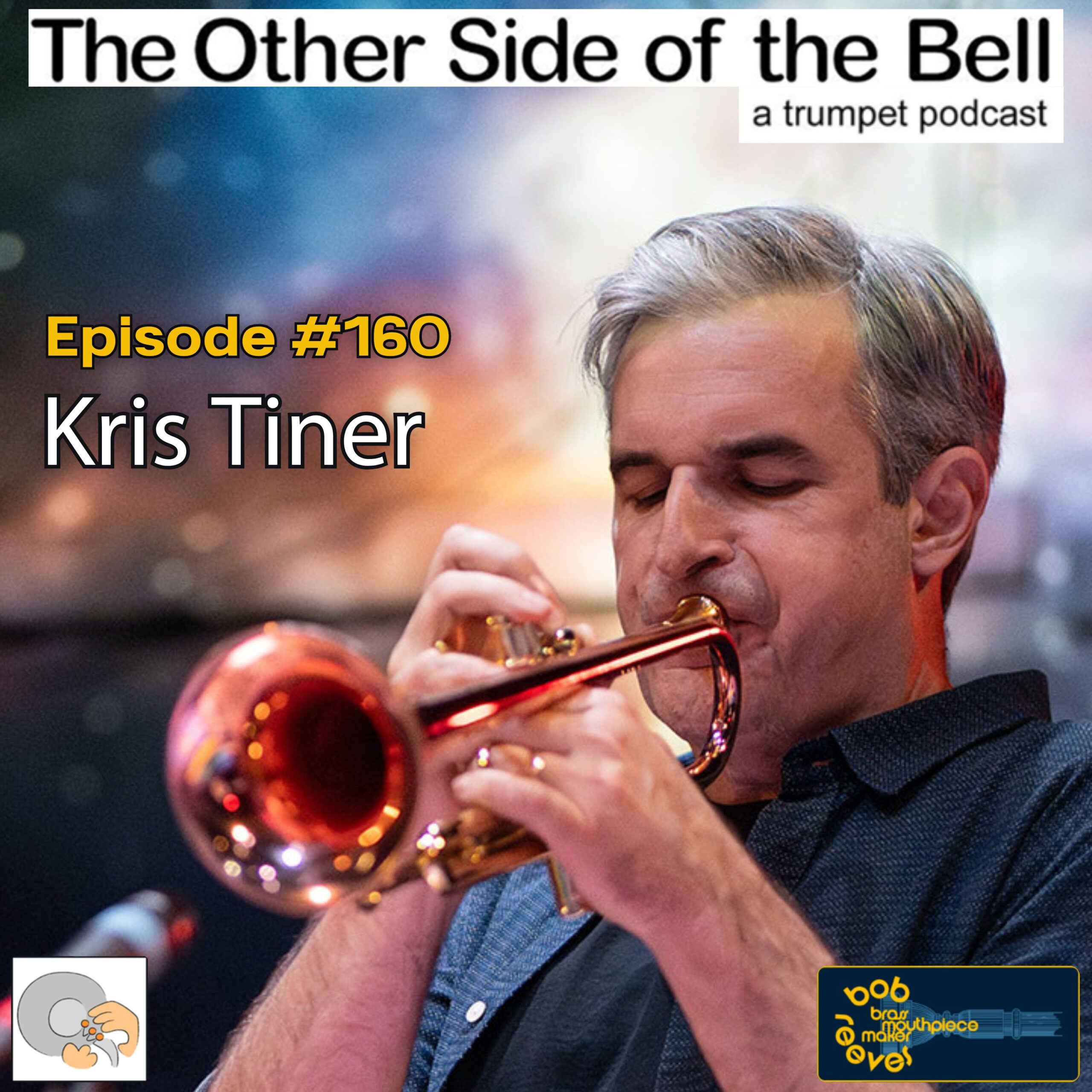
Welcome to the show notes for Episode #160 of The Other Side of the Bell – A Trumpet Podcast. This episode features trumpet educator, improviser and composer Kris Tiner.
How do you turn improvisation into an album, without taking forever to finish? How do you know when it’s ready and complete?
Kris Tiner has been improvising his whole life, in fact, he would point out that we all are: ”We’re all improvising right now. You get up and walk to the door, and which room do you go into next? That’s an improvisation. What are you going to have for dinner? You get in your car and you drive down the highway, that’s an improvisation.”
Improvisation is a natural state of being for musicians, just witness when kids pick up an instrument and start exploring.
But as adults (and professional recording musicians), well, time is money, the album’s gotta get released, and you’ve got to decide when to stamp that recording and send it out into the zeitgeist.
Kris shares some of the fascinating mindset of recording improvisational jazz pieces, as reflected on his brand new album, “Sung,” a collaboration with pianist Cathlene Pineda.
We also talk about the experience of providing music education in a small city, not a big urban hub, and the connections and community that can be found therein. Kris teaches trumpet, jazz, composition and improvisation as Professor of Music at Bakersfield College in California, helping students gain access to music and opportunities that they may not receive otherwise.
Of whom one of those students was himself, having embarked on his musical education at CSU Bakersfield in the 1990s. A full circle journey, indeed.
Listen to or download the episode below:


About Kris Tiner
KRIS TINER is a California-based trumpet artist, composer, and educator.
His music has been performed on five continents, his 100+ recordings have been enthusiastically reviewed in the international jazz press, and he has performance credits on MTV, NBC, PBS and Comedy Central.
Tiner has received awards from ASCAP, the American Composers Forum, Chamber Music America, Montalvo Arts Center, and in 2023 was recognized as the CMEA statewide jazz educator of the year. He is a member of the Empty Cage Quartet with recordings on Portugal’s Clean Feed label, and he collaborates with guitarist Mike Baggetta in the duo Tin/Bag.
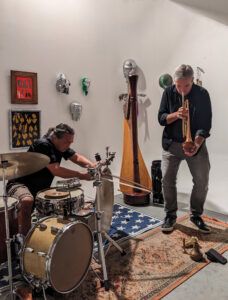
Tiner also performs with the Cathlene Pineda Quartet, Psychic Temple, the Industrial Jazz Group, and the Bakersfield Symphony Orchestra.
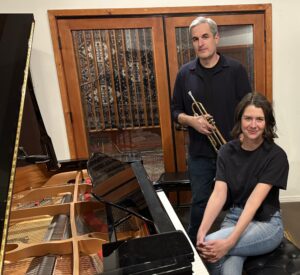
He is the Director of Jazz Studies at Bakersfield College, and has also taught at CalArts and CSU Bakersfield. Tiner is the founder of Epigraph Records, an independent label dedicated to new creative music recorded in Bakersfield.
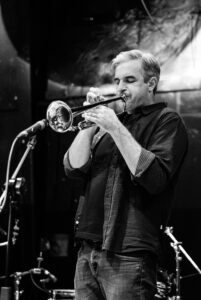
Kris Tiner episode links
- Sung, the new album: https://orendarecords.bandcamp.com/album/sung
- Website: www.kristiner.com
- Bandcamp: https://epigraph.bandcamp.com
- YouTube: https://www.youtube.com/kctiner
- Facebook: https://facebook.com/kctiner
- Instagram: @kris.tiner
Bob Reeves Brass Events & Appearances
-
July 9-12, Southern Illinois University, Carbondale, Ill.
Book your trumpet alignment here:
https://trumpetmouthpiece.com/products/william-adam-trumpet-festival-valve-alignment-presale
Podcast Credits
- “A Room with a View“ – composed and performed by Howie Shear
- Podcast Host – John Snell
- Photo Credits – AJ Rodriguez, Aviva Diamond, Talley Sherwood, Corey Stock
- Audio Engineer – Ted Cragg
Transcript
Please note, this transcript is automatically generated. It may contain spelling and other errors. If you would like to assist us in editing or translating this transcript, please let us know at info@bobreeves.com.
KRIS TINER: [00:00:00] improvisation is bigger than jazz, harmony and jazz theory, right? That’s one application of it.
But improvisation is more, about just kind of what we do every moment. You know, I’m improvising right now. We’re all improvising right now.
JOHN SNELL: Hello and welcome to The Other Side of the Bell, a podcast dedicated to the world of trumpet, brought to you by Bob Reeves Brass. We want to inspire you to develop joy and confidence in your trumpet plane. I’m your host, John Snell. Joining me today is trumpeter and educator, Kris Tiner.
Before we get to Kris’ interview, let’s look at our latest trumpet news.
JOHN SNELL: Well, we are officially in summer. Last episode I officially started the unofficial summer however you wanna say it, uh, getting through a Memorial Day and having schools starting to get out and now we’re after June, uh, 21st, marking the [00:01:00] official start of summer and it is hot here in LA. but we’re cranking out mouthpieces, cranking out valve alignments and having a lot of fun at the shop.
we are traveling as I’ve mentioned several times now. the dates are almost upon us for the William Adam International Trumpet Festival, 2026 edition hosted by Dr. Ricky Spears at the Southern Illinois University in Carbondale, Illinois. The dates for that, July 9th through 12th.
we will be there, myself and Matt Collins, who will be joining us, from Austin, Texas. we’ll be doing valve alignments. We’ll have 300 plus mouthpieces to try. we’ll have guard bags including some of their fiberglass versions. We have a triple and a double fiberglass case that we’ll be bringing along with us.
I just got a, huge selection of Charlie Davis mutes, Harmon and, uh, straight mutes of all colors, shapes and sizes. And, uh, Charlie will be there, of course. [00:02:00] Charlie Davis will be there with, I think, uh, 12 or 14 of his trumpets, uh, several of his B flats, the Kalichio style 1S2, 1S7, the CD, the signature bell, Charlie Davis signature bell with, I think, a 25 pipe and a six pipe.
Uh, his, uh, sea trumpets, which are surprisingly good with 229 and 239 bells, he put together a D trumpet because you could never have too many D trumpets in the world. and it, it plays its socks off. Uh, so if you’re in the market for a D trumpet and are gonna be in Carbondale, come by and check it out.
he really has a knack for, uh, putting horns together, from either various parts or things that he’s had an idea to do and, uh, puts the parts together and magically makes these horns just smoke. It’s so fun to play. Uh, so anyway, and come by and, uh, see Charlie. We’ll have his books, the Tribute to William Adam book, there and, uh, get him to sign it, get a picture with Charlie and, uh, [00:03:00] get the full experience.
We just got a shipment of Olvey Mutes, from Sweden. Uh, we got a bunch of their poppy cup mutes, the dizzy cup mutes that have been out of stock for a while and the stubby Harmon mute, uh, that was designed by Lassa Lindgren. so we’ll have those at the booth and if you don’t want to buy anything, just come by and chat.
pull up a chair next to the alignment table and we can have some, uh, trumpet therapy. Uh, one of the best parts about going to the William Adam Trumpet Conference. So hope to see you there in the week or two and, we’ll have the links to where you can sign up, uh, to williamadamtrumpet.com where you can sign up for the conference and we’ll have the links below, where you can pre-schedule your valve alignment.
I’ve confirmed the dates for Japan. Uh, it’ll be at the, uh, tail end of summer, September, uh, 17th to the 24th. We’ll be a joy brass in Tokyo, that’s our home base. I don’t know if we’re doing any excursions. Uh, we usually try to get to, uh, Iwati, uh, Iwate Prefecture or, [00:04:00] uh, to Osaka, Nagoya.
I don’t know if that’s on the, the calendar yet, but I will be in Japan for that week, September 17th to the 24th. So come by, uh, make an appointment, get your, uh, horns, uh, valve aligned while I’m there. It’s a lot cheaper than shipping it to the US. we also have a, uh, visit to Virtuosity Music in Boston on the books for sometime in October.
I will have that, date a little bit later this summer when we confirm which weekend. I’ll be out there and, uh, I just confirmed our, uh, third annual visit to North Carolina visiting our good friends, Greg Black in Mount Holly and then traveling north to, uh, Winston-Salem for the NCMEA conference. So, making a lot of friends out that direction and I know some folks weren’t able to do alignments last year, so I will be out there again in November.
That’s always over that, uh, Veterans Day weekend, um, usually the first, uh, weekend there in November. [00:05:00] So I don’t have the dates in front of me, but we have some time to plan. other than that, that’s all, uh, all the news I have in terms of traveling. I actually got out of the shop this weekend and I had the honor of playing at the Walt Disney Concert Hall in downtown LA.
for those of you who, uh, watched my interview a few months ago, I played with, uh, the Lawyer Big Band, the Los Angeles Big Band of Barristers and, uh, we did a, uh, happy birthday, uh, America concert featuring the Lawyers Orchestra, uh, which I don’t play in anymore. and then, uh, the big band was featured on the second half on Five Charts to s- uh, you know, span a few decades of, uh, uh, big band history in America and it was a lot of fun.
It’s a fun haul to play in, uh, certainly beautiful hall and it was really cool. We, we, uh, played, uh, Corner Pocket, of course, Count Basie’s Classic Tune and, uh, we have, uh, proud to own Snooky Young’s, Getz and Severnson. Uh, he didn’t record CornerPocket [00:06:00] with that one. He, he didn’t have that horn yet. Uh, but we have Snooky’s personal horn in our collection and, uh, I pulled it out of the vault and used it on Corner Bo- Pocket.
And it was, uh, I, I was more emotional than I thought. Uh, you know, the touchstone of one of my heroes, um, certainly, you know, I tried to model my lead playing after Snooky as I’m sure most of us have so to get his instrument out and to make, uh, music on, that instrument in that gorgeous hall, um, I, I was, it really got to me.
It was a lot of fun and, uh, hopefully a little, uh, humble, tribute to Snooky. so there. So I got out of the shop, got to play some few notes and, uh, you know, that’s what it’s all about. Speaking of that, let’s get to my interview with Kris Tyner, good friend of mine, uh, the longtime customer of the shops and, uh, he’s doing amazing things up in Bakersfield and just released a fabulous new album.
So let’s talk to Kris Tiner.
[00:07:00][00:08:00]
JOHN SNELL: Kris Tiner is a California-based trumpet artist, composer, and educator. His music has been performed on five continents. His hundred plus recordings have been enthusiastically reviewed in the international jazz press and he has performance credits on MTV, NBC, PBS, and Comedy Central.
Kris has received awards from ASCAP, the American Composers Forum, Chamber of Music America, and in 2023, was recognized as the CMEA Statewide Jazz Educator of the Year. He is a member of the Empty Cage Quartet with recordings on Portugal’s Clean Feed Label and he collaborates with guitarist Mike Bagetta in the duo Tin Bag. Kris also performs with the Kathleen Pineda Quartet, Psychic Temple, the Industrial Jazz Group, and the Bakersfield Symphony Orchestra. He is the director of jazz studies at [00:09:00] Bakersfield College and has also taught at CalArts and CSU Bakersfield.
Kris is the founder of Epigraph Records, an independent label dedicated to new creative music recorded in Bakersfield. His latest release, Sung, with Kathleen Pineda, was just released on Orenda Records, and we’ll talk about that in his interview. And now, here’s my interview with Kris Tiner.
JOHN SNELL: Well, I’m so honored to have joining me today, Kris Tiner. Kris, how’s it going?
KRIS TINER: Great. Great.
JOHN SNELL: we were just talking. I’m doing wonderful. Uh, we were just talking end of the semester, so you’re on your, uh, kind of summer break, but not really a break,
KRIS TINER: that’s why you get the two greats. It’s great. Great. Yeah.
JOHN SNELL: ready to talk about trumpet and jazz improvisation. so let’s start right from the beginning before we get into the serious stuff. how did you find the trumpet?
KRIS TINER: Oh gosh. I, uh, I was absent, on the day in fourth grade when the band director handed out instruments. So my first choice, I had written down a [00:10:00] saxophone. Of course, that’s the coolest instrument, right? and then number two was gonna be drums, second coolest instrument.
And then, uh, I didn’t know what to put for number three.
so my dad had played brass instruments. He, he played low brass and, valve trombone. He was a drum major in high school, but he told me, uh, put the trumpet down. You know, you’ll always have the melody, you know, you know, you’ll always have like the main part. so I put trumpet as number three.
And like, like I said, I was absent the day they actually distributed the instruments out. And so I came a day or two later and talked to the band director and everybody had already picked saxophone and drums. There were no more spots left. So I got the trumpet.
this was like 10 years old and I had no desire to do anything with the instrument.
It was, it was painful. It sounded painful. It was, I was like a shy, quiet kid, you know. I’m still am like total introvert. and, you know, you put the loudest possible instrument in my hands and, you know, all you do, you know, when you start playing the trumpet, it’s just, it’s all mistakes. And the mistakes are loud.
They’re loud mistakes. [00:11:00] so I didn’t practice. I refused, I begged my mom to let me quit, you know, for a couple of years, and she told me I had to stick with it until junior high. so it was just kind of a side thing, you know, I was doing it to please my parents. And then, um, man, it was probably two or three years later I happened to, come across a recording of Louis Armstrong.
and I think it was something in my grandparents’ record collection I was digging through. And that just hit me like a electric shock, suddenly that, sort of introvert nature and, and sort of being a shy kid, I, I realized like here was a guy who was able to just like, transmit all of this beauty and personality and, and joy through that instrument.
And it’s the same instrument that I have. Like maybe this could be a path, you know, to like. Learn how to talk to girls and, and, you know, all the, all those things that a 13-year-old shy kid was, uh, nervous about. So I just started listening to the music and went from there.
JOHN SNELL: Interesting. Wow. Louis Armstrong. Well, yeah, I mean, that’s, you’re, you’re in a, uh, club [00:12:00] of, uh, you know, how many thousands of trumpet players that heard Louis for the first time and just were struck by it. what did that look like afterwards? did you start playing along with albums or did you, uh, you know, start just digging into the trumpet itself?
KRIS TINER: yeah, anything I could get ahold of. I went to the public library, where I grew up in Wasco, California, and, checked out, I think they had maybe two or three those Armstrong CDs and some Duke Ellington and Dizzy Gillespie and stuff like that. And I would just check them out over and over and over and over, and play along and just listen.
I still didn’t care for, the band at school really. It was never my thing. concert band, marching band. I did it all through high school, but it was never really something I cared about. But, uh, you know, just this, side of obsession with, learning all about jazz. And by the time I got to high school, it was like miles and Coltrane.
Those were my obsession. Thelonious Monk. and I got, I got really into the avant-garde side of things by my senior in high school. The upside of that is, you know, my [00:13:00] parents were really into music. my parents met each other at a Santana concert. You know, my dad was a guitarist.
He, he always jammed on his guitar after work. He was really into Jimi Hendrix, that was his guy. So, if I played rock and roll in my room, my dad would want to come in and hang out. You know, my parents would, you know, they enjoyed that. But if I was playing like John Coltrane’s, stellar Regions, or a Love Supreme or something like that, it kept my parents away.
so, you know, it gave, it gave me some solitude and some alone time and, and, uh, just sort of a, I just became really curious about how you could, develop a voice, you know, and a, and an individual sound and creativity through music. That’s always what fascinated me. Not really the performance side of it, not really the, like, being in front of people and, and doing the whole show part of it, but just the exploration.
JOHN SNELL: Fascinating. And this is at a young age. I mean, that’s a, that’s
KRIS TINER: High school. Yeah.
JOHN SNELL: yeah. Pretty deep thought. as a young player, did you, I mean, did you have any, private lessons or were you, self-taught or was it just through the band,
your school band?
KRIS TINER: yeah, school band and, and I had a, the, [00:14:00] fortunately the band director, where I went to high school was a trumpet player. He had just come in, a guy named Rob Martins, and he’s still a colleague. He still teaches up here in Bakersfield. so I got some private lessons from him and he took me through, like the Clark studies and started working on the hide in Concerto and everything.
That was in junior high. and then I, I saved my money and, you know, paid for some lessons with some of the symphony guys in Bakersfield when I got to high school. But really it was, college before I really got to, focus on it properly.
JOHN SNELL: and in terms of your jazz playing, you know, was that the kind of just a organic growth in terms of going from Louis Armstrong up through the bebop era into avant-garde?
KRIS TINER: Yeah, it was, sort of like just following that trail of breadcrumbs, you know, we didn’t, this was like all before the internet. So I graduated high school in 1996 and then that, that summer is when I, you know, logged onto the internet the first time. So it was all like public library and mail, mail order, and,
JOHN SNELL: Like we’re dinosaurs.
KRIS TINER: Yeah, I don’t wanna sound too old and grumpy, but, you [00:15:00] know, it was, it was a lot of work to, uh, discover things. And, when you did get a album in your hands, or you paid 20 bucks for like a cd and it was, you know, I remember going to the record store and like flipping through the Miles Davis bin and you just looking at the album covers, all right.
So Miles Smiles and then Bitches Brew and then like do bop and like trying to figure out what the, or, you know, imagine what the music sounds like based on what the cover looks like. And then you’d bring it home and it would be just, sometimes I would just look at the album cover for a couple days and just imagine what the, what the music might sound like before I got the guts to put it on.
’cause you know, there’s 20 bucks, you know, that, that was like your income for the week or allowance or whatever,
JOHN SNELL: Yeah.
KRIS TINER: you’ve invested. And so it, it, it really meant a lot to like, get an album and, and just dive into it. and, and I guess I was kind of unique in that way, but I, I eventually found some.
Some college students, that were part of the jazz program at CSU Bakersfield and started jamming with them a little bit junior and senior year in high school. And, and the director out there, Dr. Doug Davis, kind of mentored me and [00:16:00] got me into playing with the big band and, playing on some of the small combo concerts with the college guys then I had a band and, you know, started hitting up coffee houses around town and just playing wherever I could, writing music, you know, writing some of my own tunes.
Yeah.
JOHN SNELL: 17, 18 years old. You said this is all high school? Yeah. Amazing. Amazing. so when it came time to, you know, your graduating high school, was it, was it an easy choice to go on? You decided to go on into music. did, what did that look like?
KRIS TINER: It was, uh, you know, there was a scholarship involved. if I stayed in town, and I mean, I, Wasco, where I grew up was about 30 miles north of Bakersfield. So, um, going to CSUB, was easy. It was affordable. My parents didn’t really have money to send me to college. but music was my ticket to college and, and college was my ticket to being able to play more music.
And I’d already had kind of a connection there. So, you know, I was playing gigs for, for money professionally by the time I graduated high school. And. you know, my parents were [00:17:00] supportive. Like I, I remember the first time I came home from a two hour gig and, you know, showed my dad I had made like 150 bucks.
And, um, and he looked at that and, and realized that’s probably about as much as he made, you know, working hard labor. He was a mechanic, uh,
you know, eight or nine hour day. So I, I remember like there being an, an understanding established that, you know, this is something you could do. So my parents were always supportive.
mom still comes to every, every show, you know, she’s, she’s my number one fan, so yeah, she, she lives nearby.
JOHN SNELL: Amazing. And for folks listening, international listeners, uh, you know, so Bakersfield is what? It’s about an hour and a half outside of Los Angeles. Right? in the San Joaquin Valley. So primarily known for what farms, ranches and, and oil, I guess. Right. And.
KRIS TINER: Uh, yeah. And, you know, and Bakersfield historically was a center for country music, uh, music. Put this town on the map in the fifties and sixties, and Buck Owens and Merl Haggard, of course. But there were a whole decades of, [00:18:00] of, you know, people before that who paved the way for that. And there was always been a, healthy jazz scene, a small jazz scene, but a lot of really wonderful, great musicians and players who have come here.
and a symphony orchestra that’s just about to celebrate 90 years, as an institution. My private instructor, when I got to CSUB, uh, was Charles Brady, who had been, he had grown up in Delano, which is a little bit further north. but he went to USC and was roommates with Tom Stevens. and then Charles famously recorded this, uh, uh, Stravinsky conducting, uh, Le Lee story to sold out.
Uh, Charles played Cornett on that legendary recording, and then went on to principal trumpet in the National Symphony in Washington, DC for I think most of the 1960s. And then Charles came back to Bakersfield and just taught private lessons in middle school band. So I, I got to see him every week and,
JOHN SNELL: Amazing.
Player. Player. Yeah. Talk,
KRIS TINER: Yeah, he was,
JOHN SNELL: talk about a hidden gem. Yeah.
Yeah.
I dunno. My dad, dad got to play with him [00:19:00] once up there. yeah he got, I dunno if it was a Bakersfield Symphony or, I mean, he knew of Charles Brady, didn’t know he was any of that back history and sitting
next to him. and I think my dad was straight outta college and you’re Charles Brady,
you
KRIS TINER: And
you know, people who knew, you know, knew that, he was a special thing, you know, to have in this community. It took me a, a little while to realize that, you know, of course when I realized who learned who Stravinsky was and, and what that all meant. but when I, went to Cal Arts for my, um, master’s degree, My first year at Cal Arts was Ed Carroll’s. First year. He was just been, been hired to start the jazz program or his, uh, brass program. I was there to study with Leo Smith in the, um, kind of the jazz and performer composer world. so I was able to hit up Ed Carroll for lessons and got some classical lessons with Ed and he really didn’t have any trumpet students at that time.
And he had asked me kind of who I’d study with and I, I mentioned Charles Brady and he is just like, his mouth dropped because of course he’s a legend. That recording is legendary, but a lot of people just [00:20:00] weren’t aware of like where he ended up or why or anything.
JOHN SNELL: Yeah. Well,
so I’m curious what your lessons were like with him.
KRIS TINER: he was a very, uh, very religious guy.
Very, um. deeply Christian man. And, it was a lot of, uh, sort of connecting together the dots between music, why we play music, you know, the, the dedication that’s involved. and it was a spiritual thing for him, you know, it was a deeply spiritual thing for him. so a lot of times it was like he was, it felt like he was more concerned with how I was doing in my life, you know, than, than my trippit playing.
but I, I gradually became to understand, you know, and appreciate that it was all connected for him. Um, and so he, he would tell stories and, uh, gimme a lot of really deep lessons. And, and, and musically it was a lot of, you know, interpretation. We studied all the classical solo literature, undergrad level solo stuff.
And, uh, that was never really my ambition to perform any of that professionally. But, just kind of seeing him work through these things and [00:21:00] playing along with him and. it was, it was a lot about like, how do we bring the music off the page? You know, uh, very not a whole lot of like nuts and bolts. If I asked him about a mouthpiece or a, you know, a lip thing or a tongue thing, he would, he, he would never get very specific, with that.
but it w it was a lot of just kind of finding the beauty and interpreting and having a voice Yeah.
JOHN SNELL: Interesting to see. And so during that time you were also, I mean, were you primarily focused? I know he was teaching you classical orchestral style playing, I mean, was your primary focus to become a, a jazz player composer? What were your aspirations?
KRIS TINER: my main thing was writing music and, and having a band and playing and just exploring more, you know, creative music with my friends. Um, you know, I would do pit work and, you know, concert band stuff here and there, but, I, even, even at that time in undergrad, I wasn’t a hundred percent sure I wanted to pursue music as a, performing profession or, you know, as, as like a commercial trumpet player or studio trumpet player.
That never really appealed to [00:22:00] me. I just wanted to learn more about music and explore more and really kind of understand how improvisation and the creative side of things all fit together. And that was what that, I mean, still that’s what excites me about it, is being able to teach and, go and play and create spontaneous music with my friends, you know?
that’s the fun in it for me.
JOHN SNELL: Yeah. Well, I, we’ll, we’ll get into that. Um, I want to, finish up at least your, the education part of things. so you, you’d mentioned you went to Cal Arts. Was that immediately after Bakersfield? And what was, uh, your choice to go there?
KRIS TINER: another just kind of a crazy coincidence, I, I, I finished my bachelor’s degree and I was actually teaching, visual art at the high school. I went to up in Wasco, covering long term for, uh, my former teacher. I had a art minor and a music major in my bachelor’s. So I was able to do that, taught for like six months high school art.
And that led me to decide that I did not want to be a high school teacher. [00:23:00] Um, uh, but I had a couple years before that I had, uh, encountered, uh, ADA Leo Smith who was teaching at Cal Arts, uh, at like an IAJE conference. I remember hearing his trumpet through the walls. I was in this, uh, music industry panel discussion session with like Herbie Hancock and a bunch of producers and executives.
And the room was packed at this, uh, hotel down in Anaheim. and I heard this trumpet blast from next door and then again Wow. What is that? You know? And it went on for a few minutes and finally I decided I’ve gotta get outta here. I gotta go here. I, I gotta know who that is. And I looked at my program and, and you know, I, I saw that it was a Cal Arts faculty concert, and this was, uh, what Ada Leo Smith was performing.
And I had heard about him. I kind of knew of the program at Cal Arts. so I, I, I, I was like on the inside row against the wall with just hundreds of people packed into this little conference room at Herbie’s. Herbie Hancock is like speaking about something. And I [00:24:00] like, as discreetly as I could, like, got up, stood up.
Climbed over these people. I remember like looking up at Herbie and making eye contact with him, and he gave me kind of a dirty look and, and I just knew I had to get outta there. So I, I, uh, hightailed it out and went next door and, and Ada was doing a duet just trumpet with, uh, John Bergamo on just a frame drum, just the two of them.
And it was like, that was, that was like, this is where I want to be. This is the guy I, I’ve gotta, I’ve gotta meet him. And so I stayed for this concert and then I went up and, and approached him afterwards and he gave me his address. He was so sweet. Said like, come by the house. You know, I asked him if he taught lessons, you know, and how much it would be, and.
so I would go to his house, after that about once a month on a Sunday afternoon, and I’d give him 40 bucks for an hour, but I’d end up staying three or four hours and his wife would make tea and eventually dinner and we’d watch basketball and just hang out. and
JOHN SNELL: Well.
KRIS TINER: that was a monthly, um, thing for me, and that that really [00:25:00] gave me the drive to, to finish my degree And have a destination. You know, CalArts became a very clear goal at that point. ’cause I didn’t, like I said, I didn’t know what I wanted to do, really. Maybe teach, I was starting to think about, you know, being a professor and being able to have the freedom to, to do music the way I wanted to do it was, was appealing.
But, then I then I realized like, high school was not gonna be it. I gotta avoid being a band director or whatever at all costs. His high school kids just were brutal.
JOHN SNELL: not for you.
KRIS TINER: Yeah.
JOHN SNELL: Sometimes
life is more about finding what you don’t want to do than,
KRIS TINER: Exactly. Yeah.
JOHN SNELL: than Finding
the, yeah.
Finding the, uh, the, uh, the magic mouthpiece or the magic, uh, whatever it
is. so I, I want to get into your lessons with Wata ’cause uh, you know, we’ve had Dan Rosenbaum on here and he is talked about some of, uh, his, teaching.
So what was your experience like, with Ada?
KRIS TINER: You know, at, at it, at his house. Uh, it was a different thing than like at Cal Arts. And fortunately, like by the time I got to Cal Arts, uh, in 2001, he, his career resurgence was beginning and he was, you [00:26:00] know, he would go out for weeks at a time and tour all over year Europe at that point. And, and he actually was in on sabbatical my second semester at, at Cal Arts, um, and brought in Leroy Jenkins, who was another colleague of his from the A A CM.
so I gotta study with Leroy and I was really at Cal Arts to do a lot of other things, and I still took composition lessons with ADA and all his classes. But, being able to hang with him just like we, we got very, very close, you know, just, just through these monthly sessions at his house. And, when we did play together, I have recordings of all this, you know, I’d set a mini disc recording and we’d play duets and whatever he was working on or whatever he was composing at the time, he was working on the Golden Quartet album, the first Golden Quartet album, Jack De Jeanette, and, um, Anthony Davis on piano.
And Malachi, Augustus from the Art Ensemble of Chicago and Bass, and he was writing music for that. So he would put the, the melodies in front of me. and I would play through them so he could hear how they sounded on the trumpet, which was amazing. He would show me kind of what he would do with them, and then he would let me [00:27:00] do it, and then, he’d say, don’t, don’t copy me.
Don’t, don’t do what I did. Like do, do what you’re gonna do with it. one day he, uh, he was talking about being in the army and he brought out his little book of Sosa marches, like the little flip book of trumpet parts to the Sosa marches. And, and we played through some of those little, you know, first and second trumpet parts on the Sosa book together.
And then we’d improvise on him. It’s like, now we, let’s improvise a march together, right? And then we’ll come back to the composition.
JOHN SNELL: Interesting.
KRIS TINER: 1 day we talked about intervals. We specifically making melodies out of sixths for like two hours. We just played together and tried to create melodies all over the horn, just using the, a sixth, you know, so really, really, really extremely focused, merging of creativity and improvisation and philosophy and, you know, I ate it all up, that, that was, that was exactly what I needed and wanted at the time.
And fortunately when I got to Cal Arts, you know, I, I had, his classes were still great. I mean, he, he would do seminars on, like, one of ’em was Bob Marley and Billy Holiday, and Jimi [00:28:00] Hendrix one semester was just comparing the music of those three artists. but I was able to pick up a lot of other stuff at Cal Arts and like, study with Ed and do some African music and Indonesian music cause I didn’t, I didn’t feel like I had to get everything from Ada.
We, we’d, we’d gone through a lot already.
JOHN SNELL: Yeah. Well, and the, correct me if I’m wrong, but one of the benefits of Cal Arts is they, you know, you can kind of not make your own degree, but you know, you can kind of pave your own path in terms of, you know, you don’t have to do certain, you know, like if you go to a, I wanna say like Julliard or Conservatory, and you wanna be a classical player, you have to do, you know, you have this path, or you have the jazz path, or you have the composer path, you know, whereas Cal Arts are a little more free about what you want to become.
KRIS TINER: That’s true. And it’s a lot more integrated than most. And I think, you know, it’s, it’s about maybe 50 years ahead of where, you know, most institutions are, uh, at this point. Just like bringing together world music and jazz theory along with, you know, [00:29:00] European music theory and, and looking at all those on the same plane.
and what i’s program? It was like you were required to take his classes and you’re required to take African drumming ensemble every semester. And then there were a couple other, like 20th century music classes you had to take everything else. Like probably 50% of my curriculum was my choice. So, and that’s what he wanted was for the students in his program to be able to fill in their schedules with, based on their instruments and their, or their, their goals and their own, research, so I was able to do a lot. You know, I got, uh, took all of Charlie Hayden’s classes, you know, every semester and got to work with Mark Nik, who was like an electronic music pioneer. He was still teaching there. I knew I was only gonna be there for two years, so I took, uh, you know, 20, 22 units a semester and
JOHN SNELL: Woo.
KRIS TINER: absorbed as much as I possibly could.
JOHN SNELL: Grandma as much in as you can. Wow.
KRIS TINER: Yeah. Graduation was a sad day, man.
It was. It was hard to say goodbye to that place.
JOHN SNELL: during this time you’re also, you still have your, [00:30:00] you’re, you’re running your own groups, you’re still freelancing, that sort of thing.
KRIS TINER: Yeah, I started a band, um, with some other students who were there to study with Boada, uh, called the Empty Cage Quartet. And, we did our first West Coast tour, uh, March of oh three. That was the year I graduated. and so we started writing music for that group maybe six months before, and just rehearsed every, every week before we finally took it out.
but I was with that quartet for 15 years and we made a bunch of records and toured Europe and all across the US multiple times. And, started working in a, another band at that time called the Industrial Jazz Group, which was kind of like a all original music. It eventually became a big band. It was seven musicians when I started playing with them.
And Dan Rosen Boom eventually joined that group. but we toured all over the place too. So I, I, you know, through that Cal Arts experience, I was able to meet a lot of musicians that I still play with still today.
JOHN SNELL: And you ended up, uh, teaching there for a while, right?
KRIS TINER: Yeah. Um, I covered for John Fumo teaching jazz trumpet when he was [00:31:00] out with Neil Diamond for a couple of years.
Uh, some of those final tours, yeah.
JOHN SNELL: must have been a cool experience to go back and be a professor at a place that you love so much as a student.
KRIS TINER: Yeah. Um, I mean, it’s different. Definitely different to see it from the other side. I mean, the more dramatic experience was going back maybe a couple years after I’d graduated, to do like a workshop or to speak to a class or something. Ed would bring me in to talk to his, trumpet majors about, you know, how to book gigs and start a record label and things like that.
And it was like two years out from when I was there, I didn’t recognize anybody but the faculty. And so you’re walking through the halls and, and I’ve talked to, you know, friends of mine who had this experience. You’re walking through the halls and everything seems familiar like home, but all of the people are, are strangers,
JOHN SNELL: Yeah.
KRIS TINER: that was hard.
Once, once I was over that. teaching there was, was a lot of fun for sure.
JOHN SNELL: Yeah. So, talk about some of your projects. So after, you know, uh, I’m gonna say you’re in getting into the real world because you’ve [00:32:00] been in school, but you were already in the real world performing and recording and, putting your own groups together, et cetera. how does putting together a career look like now, through touring and through recording and, you know, what were you doing?
KRIS TINER: gosh, it looked a lot different 20 years ago, uh, or 23 years ago now than it, it does today even. I mean, there was no social media. We were still, like, when we started touring and, and making records, it was CDs and mail mailings. Like I was at the post office every other day sending CDs out and making posters, sending those out when we did a tour.
lots of email. but yeah, we were just figuring it out as we went, you know? and I, one of the keys for me was to try to collaborate with people, from other parts of the country. And, and one of the great things about Cal Arts is like, people were coming in from all over the world. So when we all graduated, everybody kind of went back to where they were from.
A lot of, a lot of people went to New York. I stayed here actually, ’cause I, I got married to, to my wife Kim, and, we moved in together in Bakersfield. And I started teaching part-time at Bakersfield College where I still [00:33:00] work, but as an adjunct. So that was a day gig that kept me busy maybe two or three days a week.
but allowed me to be able to perform at night and, and drive to LA almost every other day. And, uh, play or, you know, record whatever. And, um, yeah, just, just really trying to network into a community of like-minded musicians who were making original music and trying to figure out how to get it out. the other side of that is like being in a small community like this, I have been able to, you know, coordinate a lot of events and, and bring people through.
So, you know, I try to establish this model where, uh, we would book performances, uh, that would feature local bands alongside of touring artists that would come through. So it’s a, it is a lot of bartering, you know, give and take in, in the industry and, um. what, what we were doing is like, you know, creative jazz, original music.
Uh, and so a lot of it has felt like very much outside of, you know, what, what, you know, the conventional wisdom of like how to succeed in the music industry. This, this is all about like [00:34:00] who you know and who you can support and who can support you. So if I book a show, you know, for somebody coming down the west coast and they, they’re from, you know, some other town, New York or Chicago or whatever, then I go out to those places and I have a contact and I can, um, you know, I can hit them up.
you have to be careful not to overdo it, you know, and, and not to exploit those things, but to, to really keep it at a supportive, network of like-minded creative people. I feel like it, it’s, it’s a healthy scene. There’s a lot of really beautiful, improvising creative musicians out there that, are willing to work for each other to make sure that we can all get our music heard.
Um, so that’s, you know, that’s the work I’ve been doing for 25 years now, and a lot of the projects that I put my name on are really collaborative project, so there’s, there’s always someone else has as much of a creative stake in it as I do.
JOHN SNELL: Yeah. And I, there’s some wonderful insight into, you know, kind of a, I mean, jazz is not necessarily mainstream. And then, you know, [00:35:00] as you said, the kind of creative, original improvisation is kind of its own little niche, associated to jazz. And, but it’s still a vibrant, vibrant scene, as you were saying. so I, I wanna spend some time talking about your latest, uh, album that’s actually it just came out as of when this podcast will post, right? Um, sung right is the name of the album.
KRIS TINER: Sung.
Yep.
JOHN SNELL: Tell us about that.
KRIS TINER: There’s no singing on it. just, it’s trumpet and trumpet and piano. I’ve been performing with Kathleen Pineda, who’s a, a wonderful pianist and composer from la, for over 15 years. initially with her quartet, which has released some albums on Orinda Records, which is Dan Rosenbaum’s label.
Kathleen was at Cal Arts as an undergraduate classical piano major when I was there. so we, we never really met each other. but then she went away, moved to New York and decided she wanted to be a jazz musician instead. and so then she came back to Cal Arts for a master’s degree and that’s when we started playing with each other.
Bunch of [00:36:00] years back. And, uh, we kind of started once in a while playing a duo gig here and there, maybe like a background jazz standards type situation. And then, we started writing some music, uh, or, you know, interpreting our own music as a duo in the context of her quartet concerts. We would do a little duo moment and, um, we just loved it so much playing with each other.
I mean, um, she’s, she’s one of the most, listening and supportive musicians I’ve ever played with. Uh, like we, we just have a telepathy that’s, that’s pretty magical. so we finally put a recording session together last summer. We’ve been talking about it for, for years. I was able to get a grant to, to pay for a lot of it, but we, recorded down at Tritone Studios in Glendale with a master engineer named Tally Sherwood and one of the best grand pianos in la.
I mean the, the instrument is just immaculate and, um, the sound on the record and we’re just both so proud of it. So it is, uh, seven original [00:37:00] compositions and then one piece, uh, that was written by Charlie Hayden, who we both studied with at Cal Arts.
JOHN SNELL: What fun. What fun. and I’ve, I heard a little, some snippets of it. Um, where can folks, uh, find it? you have it streaming or is it through or render records or
KRIS TINER: Yeah, it’ll be on all the streaming, services and we, we did a limited run of the vinyl, so you can order that from just about anywhere. the Bandcamp page for Orenda records, uh, would probably be the best way to do it.
JOHN SNELL: Okay, then it directly supports the artists,
KRIS TINER: Absolutely.
JOHN SNELL: unlike some of those other streaming platforms that shall not be nickname, and would you mind talking a little bit about, ’cause I know, uh, I read some of the liner notes that, you have a piece on there kind of as a tribute to Kenny Wheeler or inspired by Kenny Wheeler?
Is that correct?
KRIS TINER: Yeah, it was actually written for another band I’ve got called, uh, present Past with some musicians from San Francisco. And, and our idea was to, with that band, was to use the instrumentation of the Angel Song record, which is, uh, Kenny Wheeler and Lee Connet and Bill Frizzell and [00:38:00] Dave Holland.
Really beautiful Kenny Wheeler record on ECM, but to write our own music for that instrumentation. So I wrote that piece for them, but then Kathleen and I recorded it. and it came out so nice with Kathleen. but it’s kind of, it was a thing that I just kind of was practicing and I sat down and started playing, improvising this line a little bit and then kind of liked it.
So I hit the record, you know, recorded a voice memo and. And just played it from start to finish and then transcribed it later, and then that became the composition. that’s happened maybe two or three times in my life where, you know, a piece gets written, just, you know, and it, it’s like, comes from somewhere else, entirely.
so, uh, yeah, that, that’s the opening piece on the record. Um, there’s a piece on there that I wrote 25 years ago for my mentor, Doug Davis, who was my, Composition and Jazz, uh, professor at CSUB. He was the first person to really encourage me to write music.
Uh, that’s the piece called Sung, which the album gets its title from.
and then I’ve got a piece that I wrote the [00:39:00] day before the recording session, just a short thing that Kathleen and I improvise on. Kathleen’s music on the record, was written more recently. Most of her tunes were written, during that period. Uh, she lives in Altadena and was forced out of her home during the fires last year.
And, um, her home didn’t burden down, but, uh, the process of, you know, working with the insurance company and eventually a lawsuit, you know, with the insurance company, uh, over just the process of them getting back into their home before it was really safe. she wrote, uh, several pieces of music during that time when her family, she was living with her family in a hotel room, I think something like 13 different hotels.
They had to.
JOHN SNELL: Geez.
KRIS TINER: Move between, uh, over this like months and months and months. so new build is a piece that was kind of about the, uh, Altadena community rebuilding after those, fires. there’s a couple other pieces, uh, on that album from that time. So the whole side too of the record is really kind of the suite of compositions, that are about, that those experiences, newer pieces.
JOHN SNELL: [00:40:00] Wow. And I, so I, I wanna talk about the, with the recording process and then not, I mean, it doesn’t necessarily have to be this specific album, but just in general, especially when so much of it is improvised. you know, you go in with, sometimes you have sheet music or some kind of form, but then how do you know when you’re done?
You know, like, because you can always, it sounds like a dumb question, but like, everything’s improvised. How do you, how do you judge that this is good enough for the album or that you’re happy with the result? Does that make sense?
KRIS TINER: Yeah. You know, we, we play and then we listen And then we play and then we listen some more. So it’s, it’s, you know, you can’t just go in and try to like knock it all out ’cause you don’t really have a sense of the flow of the music. So it’s kind of like creating one piece of the puzzle at a time.
we had eight pieces to, we wanted to record and we knew that was gonna be about 40 minutes. so we were thinking vinyl record, it’s actually ended up being about 35. A couple of second takes in there. But, um, you know, there was a lot of kind of [00:41:00] sitting and listening to what we had done in between the tracking, and then deciding how we wanted to do the next piece and, you know, which piece do we play next and, and how do we want this to all fit together?
So you’re kind of, there’s pre-planning. I mean, we’d rehearsed a couple times, and some of the music we’ve been playing together for years and then some of it was really recent that we just learned that week, you know. and so yeah, it’s, a lot of trust involved, you know, trusting each other and, um, knowing that we’re not gonna.
not that we’re not going to have differences in the, in the session, but if differences come up, differences of opinion, or thought about what to do next, that we can work through that and talk through it and, and decide where we want the album to go. And that’s a lot easier when there are only two people in the band
then if you’re dealing with four or five,
JOHN SNELL: yeah, it gets exponentially, uh, harder,
because I just think like you’re listening back and you’re like, okay, well that’s good. But then that may bring up another idea that
you
then you’d want to put down. And it’s just like, I feel like that creative process can never end. And
it’s like, okay,
where do you draw the line that like, yep,
this is the piece.
You [00:42:00] just have to say, well,
time we, you know,
we gotta get eight of these done.
You know,
we’re
happy with this.
KRIS TINER: fortunately, like studio time is expensive, so we knew, we, we knew we actually ended about a half an hour early. I mean, part of that was like, tally was so great. He, he, he was just on it from the beginning. I mean, it took him about two minutes to get the perfect sounds dialed in and he, he mixed the record as well and hardly had to do anything at all in the mixing.
JOHN SNELL: so I was listening. The one you have online, uh, right now, is that Ugal Horn? I mean, it’s just, you sound gorgeous on that. what were
you using?
Yeah. New build.
KRIS TINER: New build is Fluor, right?
JOHN SNELL: It’s
gorgeous. I could listen to That,
all day.
KRIS TINER: Kathleen wrote that, like I said, as, as sort of a, a tribute to the Altadena community and, and her inspiration.
There was like the Stravinsky sort of jazz marches, you know, that Stravinsky would write. Um, and, and she didn’t know anything about my studying with Charles Brady and that, I mean, I love that, you know, that stravinsky’s sort of fake jazz music, you know, um, that you get a little bit of that and Lesi, but you know, the, the [00:43:00] Ebony Concerto and things like that.
I just, I love that music so much. ’cause he, Stravinsky loved jazz, but he had this very narrow picture of what it was, you know, at least in the beginning, before I moved to the US. And, so, you know, she wrote this and said, I’ve got this Stravinsky type thing. And of course, like I, I immediately knew what I wanted to do with it.
It’s a good
JOHN SNELL: Gorgeous, gorgeous. Um, so I mean, on the rest of the album, is it mix of ugal and trumpet or was it just that one you used Ugal for, if you remember?
KRIS TINER: Yeah, I, I used Fugal on, uh, the Charlie Hayden piece, silence, which is probably my favorite piece of music ever written. I mean, it, it’s just, it’s just a few bars, you know, that Charlie wrote. But it’s, it’s, this sort of like Bach Corral type thing, but with these Charlie Hayden harmonies. And, I really love what we did with that, and that’s a piece that we play a lot at our concerts.
There’s a corral that Kathleen wrote that ends the album that I play Fulu on, fool Horn. The rest of it is trumpet. And there’s a couple of muted things. I use, uh, one of Tom Cleary’s cut mutes on a [00:44:00] piece that Kathleen wrote for an old friend. It’s kind of like a chopan type, you know, real sad, uh, ballad type thing.
and so the, cut mute gives it kind of this sad clown kind of smiling, sad clown quality, you know, uh, where there, there’s this, this, uh, this smile on the outside, but this sort of, nostalgia and sentimentality on the inside. Um, I can’t wait to play that for Tom ’cause it, it came out so nice with that
JOHN SNELL: Oh yeah. So you gotta send it to him. Oh, he’ll love it. Uh, what is, what a dear friend. so, uh, yeah, the album is already out. We’ll have the links to where folks can get it. I wanna spend some time, talking about your, um, education career or career in education up in Bakersfield. and, uh, and some, you know, get into some improvisation topics.
’cause I know you’re, um, deep into those. so I, I kind of picking up your education, career, you were a part-time faculty for a while and eventually, you know, a full-time position opened up or you decided to go all [00:45:00] in. How did that turn out?
KRIS TINER: that’s all accurate. and you’re describing about a 15 year period in my life that, you know, when I started it was great teaching a couple of classes, you know, enough to bring in enough money to cover my side of things, you know, at home. And, I started at Bakersfield College running the jazz ensemble and teaching a couple of music appreciation classes in 2004.
and then I picked up a couple classes at CSU Bakersfield, and eventually started running the trumpet studio there. few years after that, I got called, to sub for John Fumo at Cal Arts. I was picking up classes along the way at like Taft College and, uh, college of the Canyons in Valencia.
and all of it, you know, made it to where I could still play gigs, as I said, you know, and like travel a lot and go out for a week if I needed to on tour. But man, by the time, the full-time position came up at BC I was teaching at four different colleges. I think I had five ensembles, about 12 private students, maybe four or [00:46:00] five music appreciation classes, jazz appreciation, an online class.
And, I was just burning myself out, uh, completely. So, fortunately the administration at Bakersfield College, we had a, a college president who’s now chancellor of the entire community college system, Sonya Christian. And she came in and, um, we had just gotten our performing art center refurbished.
It was back in like 2014. And, opened up this beautiful performing art center with the outdoor theater, indoor theater, recording studio, all the facilities. And, uh, she said, I want to put, you know, world class programs in this world class facility. And we had just never had that kind of support. It was just a shoestring budget and mostly adjunct faculty running everything for a long time.
and so yeah, 2016 the announcement went out that they were gonna create a, a, you know, a full-time jazz studies position, and I’d been there 13 years running that program as an adjunct by that point. So I had to go through all the hoops, you know, it was like a six month process of interview after interview and teaching [00:47:00] demonstrations and finally a, a meeting with the president.
and that final interview, she just kind of thanked me for all the work I had done. But it, I was so sick by that, that point, you know? Um, but yeah, that, job started in 2017. So this is now my ninth year. I just finished, uh, teaching full-time and I was able to drop a lot of the other stuff and really focus on building.
something here. So we already had the jazz ensemble. That’s a big band, and that class started in 1962. Uh, so way, way back, a guy named Ken Fassbender started the Bakersfield College Jazz Ensemble. And, uh, we’ve actually, our archives have dug up, uh, history going back to the 1930s of swing bands on campus.
JOHN SNELL: Geez.
KRIS TINER: yeah, you know, some of the earliest jazz education, in the country was happening at Bakersfield College even before the campus was built in the fifties.
JOHN SNELL: Amazing.
KRIS TINER: and so, you know, it was 2017, when we finally made that a full-time position. And, I created a jazz combos class and a jazz improvisation class.
And so now we’re up to, uh, four [00:48:00] faculty-led combos. So a different faculty member with each combo. And I still run the big band teach jazz improvisation, jazz appreciation. which is a gen ed class, and I teach trumpet most. I split the trumpet students with another faculty member. So she takes most of the classical students, and I take most of the jazz students now.
JOHN SNELL: Geez, what a program And the program won a downbeat award. Right. Yeah. and you were recognized as a teacher of the year with, uh, California State, was it, CASMEC or what’s, what’s they have so many abbreviations.
KRIS TINER: Yeah. That was, uh, that at CASMEC 2023. They gave me the Jazz Educator
of the Year award.
JOHN SNELL: I got it right. CASMEC Yeah. I,
I know my education
associations,
KRIS TINER: you’ve
done your, done your research, man. I’m flattered.
JOHN SNELL: I was, was gonna say Scsboa, the, uh, literally the worst, abbreviation.
This was
Southern California String Bands, strings and band, whatever, scsboa. It’s like, it
couldn’t come up with anything better. Uh, but so, you know, been recognized for that, which is amazing after all the hard work [00:49:00] you’ve put in. so then, you know, I, I’m curious, we talked about this earlier about, you know, kind of combining, your creativity out in the, you know, the performance world and bringing that into the classroom, and then teaching your students about improv. Like, how does that connected.
KRIS TINER: Um, you know, it’s, it is really a gift to be able to, you know, walk into the classroom and just talk about the things that are important to me, you know, the music that’s important to me and, and it, and try to find a way to make it all relevant to these students. And, um. You know, I, came from these outlying areas.
A lot of my students come from, you know, shaft or Wasco, Taft, uh, Tehachapi and, uh, Arvin, you know, and they can’t always afford to go away for school, so they come to BC and, we’ve had quite a few that are really stellar musicians who have gone on and transferred. I’ve got six or seven students at CSUN right now.
You know, um, a lot of ’em are doing jazz studies, but the majority of the students are really, like, they played music in high school and it’s really the only thing they care about or are good at. And, it’s [00:50:00] their point of connection with school and with their community of friends. And I was exactly in that place.
You know, I, I loved music and I was really interested in music, but I didn’t really have the money to go away for college. And so to be able to, you know, find a way to get these students to experience having their own voice, you know, we, we really emphasize original music in the program. so, you know, if students who come into the jazz combos, they’re right away playing each other’s music.
They’re helping each other create arrangements. our final exam is always a recording session. So we, we, with the four combos, we typically record anywhere from 20 to 30 original student compositions every semester. and I’ve gotten on a cycle where, we’re releasing an album, a cd, and a band camp album just about every year to a year and a half, of those recordings.
So, you know, taking the students through that whole process of like, writing something out in the practice room, bringing it into rehearsal, playing it with your friends, you know, working it out, making some decisions, performing it maybe in a concert or two, and [00:51:00] then recording it and then seeing it come back, you know, professionally mixed and mastered and, and on a cd, that never gets old Man.
That, that still is exciting for me to get the album in the mail. And just to know in your heart how much work went into that. So.
JOHN SNELL: Amazing. Yeah. that sense of creation and there’s something now that exists that wasn’t there, you know, a day or a semester ago kind of thing. so, and I mean, just in like, kind of as a general improvisation, uh, I don’t know, pedagogy, like, do you have like one foot in kind of that Okay, you gotta learn the kind of the bebop swing style of, you know, who came before us versus original, I would say more creative, but, you know, creative music, original music, how do you kind of tow that line?
KRIS TINER: it’s important to know the tradition and, and the way we organize it in our program, as the students who are jazz majors, they take private lessons and in their lessons, they work on standards and, you know, jazz harmony. And they’ll start with the blues and a rhythm changes and a, you know, Stella by [00:52:00] Starlight or something like that.
And they put together combos and they perform for the class, uh, for a recital class. and that, that happens, uh, parallel with what’s going on in the actual combos program, where, which is more focused on original music. So they’re, they’re getting both sides and it’s been pretty effective to do it that way.
’cause uh, I don’t want to minimize, uh, either one of those things. You know, you, you, you can learn how to be more creative and to tap into your own voice. when you’re also studying these transcriptions and learning the tunes and learning the history, it’ll give you sort of a catapult to finding your own sound when you hear like what Miles did and what, uh, you know, Coltrane did and what Anette Coleman did.
we’ve got both of those sides going on and then I, I have a jazz improvisation class where I try to pull it all together, you know, so we, we start in that class, uh, with a lot of open improvisation, a lot of just kind of tapping into what improvisation actually is. and gradually start to drop in the, the theory [00:53:00] and the two five ones and the major and minor and whole tone and augmented and all that kind of stuff.
so, you know, the important thing for me is like, you know, improvisation is bigger than jazz, harmony and jazz theory, right? That’s one application of it. But improvisation is more, uh, about just kind of what we do every moment. You know, I’m improvising right now. We’re all improvising right now. You know, you get up and walk to the door and which room you go into next.
That’s an improvisation. What you’re gonna have for dinner. you know, you get on your car and you drive down the highway, that’s an improvisation. Everybody’s improvising together, you know, and there’s trust involved, you and there’s, creativity that’s involved. You know, if somebody cuts you off, what do you do?
And, and your experience as a, as a human being and as a, whether you’re driving or, you know, making lunch or whatever, is going to lead you up to that point where you make a wise decision or a, a functional decision, or whether it becomes a life or, or death situation. Right? and, uh, you know, when we’re being creative, [00:54:00] we tap in to all of that.
And, and, um, you know, we, we, we think we’re learning to play music together, but we’re really learning about these, these bigger things, you know, and, and kind of understanding the processes that are more natural, more innate than we would maybe give them credit for, right?
JOHN SNELL: Fascinating. you’ve mentioned a few times about, you know, helping students find their own voice. I mean, what’s, what are some things as a teacher you can do to help that? I mean, it’s can’t be systematic, right? Is ’cause everyone’s different.
KRIS TINER: Yeah, I mean, just one thing is like opening them up, you know, and just kind of taking, taking the music theory out of it for a minute. Of course, they’re all studying music theory, but you know, students in, in my class, they’re, some of ’em are classical musicians who have never improvised. Some of them are jazz musicians who really wanna learn more about it.
Some of ’em are just scared to death, you know, at the, just the word. there’s like, you know, when you start playing music, you, you, you might learn like hot cross buns or something right off the page and your first music lesson is like, here are the notes on the page now play these notes. No, [00:55:00] that note was wrong.
Go back and play that note again and get ’em all right. You know? And, uh, so there’s this respect that is, established for the, composition for the music on the page. And one thing that I’ve observed, you know, being around, especially being around, people who have only played classical music for their whole lives is that there’s a gulf that just gets wider and wider between, The person who plays music and the person who composed that music and wrote that music, and it starts with like hot cross buns. And it ends up with like somebody playing Stravinsky in a symphony orchestra. You know, the, the composer is, is like this godlike figure that gets further and further away from us.
And if we identify that act of composition with creativity, then that possibility, gets further and further away from us, you know, as creative musicians. And so in order to bring that back, and I’m working with 18 and 19 year olds, you know, so, so it, it, it doesn’t take long to like bring them back to that and just to say like, you can you, how [00:56:00] many notes can you play?
All right, let’s just use two or three of them. Right now and, and, and create something with these two or three notes, or, I have little things that I’ll do where like, uh, they’ll take their phone number and use the, the digits of their phone number, uh, as like, okay, so let’s say your first number and your phone number is six.
You’re gonna play a note for six beats, and then your next number is six. You’re gonna rest for six beats, and then your next number is maybe one. You’ll play a note for one beat. and then they’ll go along with their phone number like that, or we can assign intervals to those numbers or use the letters in their name to, you know, do, do different things.
And just if they can see that, music can be designed from such a, a familiar place or familiar little piece of information, then you almost kind of like trick them into being creative, And, and, and realizing that, you know, improvisation and composition are similar, but it’s not the same.
I mean, they’re overlapping. improvisation is really like a study of the present and what you have to [00:57:00] work with in that present moment. of the first things I’ll do is have them, uh, have the musicians play their favorite note. Like, what’s your favorite note on your instrument? What’s your, what’s the, your favorite?
And, and I and I, and most of ’em have never thought about this before, and I’ll show ’em, like for me, my favorite note is E top space e on the trumpet. ’cause you can play that four different ways and you can get all these different half valve sounds, which just because of all the different overlapping fingerings for that.
And so I’ll give ’em an example. That’s my favorite sound on the trumpet. So they’ve, they’ll figure out their favorite sound and then, and then pick a sound that’s like, doesn’t sound like your instrument at all. Could you make a sound on your instrument that is completely non idiomatic? So playing a trumpet in a way where it doesn’t sound like a trumpet or playing a violin in a way where it doesn’t sound like a violin.
Okay, now you’ve got these two sounds. Let’s create with those. And when I point at you, you decide which one of those sounds to play and how long and how loud or soft. So you understand that we begin to understand that improvising is making choices, you know, [00:58:00] and it’s as simple as that. but the, tricky part is knowing what you have to choose from,
JOHN SNELL: Yeah.
KRIS TINER: right?
JOHN SNELL: Yeah. That
makes it fun. Oh my gosh, that’s,
KRIS TINER: Oh, it’s a lot of fun. Yeah, it’s a lot of fun. Uh, I have to drive over the grapevine and start taking classes. It’s
JOHN SNELL: my, my my, my seventh career. I, I want
KRIS TINER: I’ll give you a scholarship.
JOHN SNELL: ah, right now we’re talking, uh, and you say Bakersfield College. It’s a two year program, right? It’s a, is it a
community college or is it a four year?
KRIS TINER: It’s a community college.
JOHN SNELL: So you get your students for two years and then they transfer on. It’s amazing what you can get done in that amount of time.
KRIS TINER: We recommend they stay for three years. ’cause there’s so much to do. We, we have a commercial music certificate program so they can take music, music technology, you know, they can take this improvisation class isn’t part of the degree yet. It will be eventually. But there’s so many things. I mean, community colleges cheap.
it’s a great place to just kind of explore your interests and, um, you know, and, and ride out those [00:59:00] interests you already have. The students who are coming, like I said before, you know, they played music in high school and they just, that’s what they enjoy and that’s the thing that gets them on campus in the first place.
yeah, it’s just a, it’s a really beautiful place to be. You know, I, I would, I love teaching at Cal Arts and then in the four year system as well, but, I would much rather be here.
JOHN SNELL: Amazing. and we actually, we had one of your students, uh, work here for a while. Uh, Andrew Morgan was
a of a yeah. Drummer in a trumpet shop. He was a
fabulous employee and he’s actually back up there now.
KRIS TINER: Yeah, we’ve been hanging out a little bit. He’s a great guy.
JOHN SNELL: yeah. wonderful employee, wonderful jazz drummer and death metal drummer as well. We really enjoyed ha him having him, uh, here for a few years. before I let you go, uh, Chris, a couple things, uh, wanna talk about, and I, I hate always asking this ’cause you just, you know, you have an album release and that’s one of your babies, uh, out there and you just got through that. Any other projects in the pipeline? Any other recordings or, uh, performing?
What, what do you have coming up?
KRIS TINER: Yeah. [01:00:00] Kathleen and I we will be playing, um, in June at, uh, healing Force of the Universe, which is a record store in Pasadena that also has a really great, concert programming going on.
have some collaborations with some musicians in San Francisco coming up in June. thing with Vinny Golia, a large ensemble thing in, in July. Vinny’s a great legendary band leader and creative musician in la. yeah, little things here and there. I have a trio with, uh, a bassist from LA named, uh, Miller Ren, and, uh, EIF er, who’s a harpist, from Turkey, but she lives in la.
Um, and we’ve got a couple things going on, maybe recording soon. And that’s all improvised music
JOHN SNELL: busy summer? No, no. Summer’s off, right?
KRIS TINER: No, well this, I gotta do it in the summer ’cause I get so busy during the school year.
JOHN SNELL: I love it. I love it. And, uh, so, website, social media, uh, chris tyner.com. Uh, is the website, uh, what’s the best place for folks to find out when you’re playing or how to get your albums website, social [01:01:00] media.
KRIS TINER: Yeah, website. I try to do the Instagram and Facebook thing. Yeah, it drives me crazy, but I’m on there.
JOHN SNELL: You, me and everybody. So again, we’ll have the links those down in the show notes and the description so folks can just click over and see where you’re playing. before I get to the last question, uh, we didn’t talk about equipment and I always get angry emails when I don’t ask about equipment. Uh, you’d mentioned flua horn, but which fluger horn and which trumpet you’re using and mouthpieces and that kind of fun stuff.
KRIS TINER: I’m into silky, uh, instruments. So I’ve been playing, uh, silky trumpet and frugal horn for about the last 10 plus years. so my, my frugal is the sh silky, uh, the first model that they made at Frugal Horn. Um, I. Of the 10 40, uh, ugal. and then I, my B flat trumpet is Aho the copper handcraft, HC two, which is an incredible instrument for improvised music that Copper Bell responds so quickly.
It’s like, I can think something, a sound, and it’s immediately on the other side of the [01:02:00] room. but it’s difficult. It doesn’t, it doesn’t work for everything. but I try to make it work for everything. and it, it’s really just, it’s, it’s allowed me to find, you know, new colors and dimensions to my voice that, uh, like nothing else has ever, ever done.
And I’m kind of a minimalist man. I don’t really collect a lot of horns or anything. I’ve got a sea trumpet that’s also a shike, that I’ll use if I play in the orchestra or something like that. But, um, yeah. And as far as mouthpieces, it’s, uh, I’ve been using Mark Curry’s stuff for a long time. I’m on his artist page.
and then, uh, Monnet mouthpieces here and there, but just
whatever works, you know, I try not to lose too much time thinking about gear, you know, and if, and I’m like, if, if I’m not using it, it has to be out of the house, I give it away or I sell it, you know? ’cause, uh, I don’t want to be like the gearhead.
I, I feel like every time you change something, it sets you back, you know? And then you have to kind of catch back up to where you were or would’ve been if you hadn’t changed anything. So, I have a, uh, [01:03:00] a very, uh, difficult relationship with that, that kind of stuff. You know?
JOHN SNELL: Well,
but then
KRIS TINER: to try to make it work.
JOHN SNELL: you found out what works for you and, and you know, don’t put it in the house either. That’s set it and forget it. Right? Isn’t that, uh, the old, uh, QVC line or Ron
Poppi or something like that,
KRIS TINER: Charles Brady gave me, gave me the best mouthpiece advice ever. I was asking him about something, about mouthpieces. I was always, you know, I was in college, I was experimenting with stuff, always trying to figure something out, and he would just never, he would never like give me anything. But one, day he said, you know, Chris, it’s better to have one bad mouthpiece than two.
Good one. And you know, you know why? And I, I said no. Uh, and he said, ’cause if you’re up on stage playing and you’ve only got one bad mouthpiece, you’ve gotta make it work. And so you’ll figure out what you have to do to make that work. If you’ve got two good mouthpieces and you’re on stage and you’re playing one of ’em and something goes wrong, then all you’re thinking about is if I could only get back to my case and grab that other mouthpiece, everything’s gonna be all right.
You know? So you’re [01:04:00] always swapping it out and that, I’ve tried to live by that philosophy, but know who I’m talking to here. You know, you guys, make your living off of, uh, the a hundred mouthpiece. Guys, you know, much less the two
mouthpieces, but.
JOHN SNELL: know, for every, for every Chris Tyner, there’s a, there’s a doc Severson, you know,
it’s, it’s like, it’s a spectrum and you find what works for you and, you know, it’s, that’s all that matters, you know? And that’s wonderful advice too. Like, that’s, you know, having confidence in your equipment is
KRIS TINER: yeah, you want a, a story about that, that legendary Charles recording of SSIS with Stravinsky. Uh, Tom Stevens told this, uh, to one of my students who was working with him at Chosen Bill. and Tom and Charles were really tight, you know, so Charles left the house that morning for the recording session and he left his cornet mouthpiece at home, a two C or whatever that he was familiar with, and he didn’t have time to go back and get it.
So Tom Stevens was with him and gave, loaned him, a old seven C, which Tom said was just a complete piece of shit. And, [01:05:00] Charles played that entire recording session, legendary recording on a seven C piece of crap mouthpiece that he was completely unfamiliar with and had never touched before that day.
And he played beautifully.
You know,
he didn’t mention that when he was telling me the, two mouthpiece thing, but you know, it’s like that’s what he did.
JOHN SNELL: Get the job done. Bottom line. Amazing. Well, yeah, the great story. I’m glad we got that in there. Chris, man, this has been awesome. I can’t wait to hear the whole album here in a few days.
And if you’re listening to this podcast, you can go and listen to the whole album, or even better yet, buy it or buy it on vinyl and listen to it on your turntable. so Chris, uh, with that, before I let you go, if I can ask you one last question, and that would be, if you could leave our listeners with your best piece of advice, and it could be about anything, what would that be?
KRIS TINER: Improvise something every day, you know, as, as part of your practice. make sure there’s a spot in there where you, uh, you just go for it, and stay in contact with that creativity. Like I was saying, you know, we get [01:06:00] further and further away from it when we, when we separate ourselves from the point of creating music.
But that’s what we are as musicians, you know? we improvise all day long. and this, became really real for me when I had kids and you, you know, you can see like, hand a musical instrument to a child. What do they do? They immediately start improvising with it. You know, it’s a, it’s our natural state of being.
they don’t need a score. They don’t need to learn how to read music before they do anything. You, you know, hand a, a drum or a trumpet or something to a, a, a kid and they’ll immediately start playing. So, that’s what brings me back to, kind of who I am and what I want to do, uh, every day is just sitting down and getting past the sound and the technique and the scales and the exercises, but just like, now play.
Yeah.
JOHN SNELL: Wonderful advice. Wonderful to have you on today. Chris. You gotta come next time you’re coming down through la You gotta stop by the shop. On your way down, we’ll have, uh, lunch or something.
KRIS TINER: Last few times I’ve been there, you’ve, you’ve been outta town or in Japan or something. So I always, it’s nice to talk to you ’cause I
always seem to miss you.
JOHN SNELL: Yeah. Uh, so we’ll, [01:07:00] we’ll have to make a point of getting together and, uh, Can’t wait to listen to the full album song. We’ll have the links down below. And thank you for the, uh, for being on the other side of the bell.
KRIS TINER: Thanks, John.
JOHN SNELL: Well, as I opened the interview with, this was an interview long time in the making. Um, I had actually scheduled Kris, to do an interview at ITG a couple years ago and, uh, he was the last interview of the day and the day went long and then there was some, uh, chaos that broke out at the Bob Reeves brass booth that prevented me, uh, from doing what I really enjoy doing and talking to people.
and so unfortunately I had to, cancel Kris’s, uh, interview back then And I’m so glad I did because now I got to talk to him about his latest album song and, uh, what a fabulous … I, I’ve listened to a couple tracks before the interview and, uh, now that the album’s out, got to listen to the full album and I, I just love Kris’s plane and Kathleen’s, piano on that.
what an amazing duo so filled with, uh, communication and [01:08:00] colors and the sound, trading back and forth they just recently did their, um, CD release party here locally and, um, can’t wait to s- hear what they are doing next. also fascinating conversation about, education and creating a program in Bakersfield that, uh, you know, I naively thought because I think of, uh Bakersfield as an old ranch in oil town and it’s, uh, really the hotbed of, uh, jazz in Southern California.
It’s, it sounds like there’s a lot more going up there, going on up there than, um, in the much bigger, uh, local LA, proper area. So, a huge testament to Kris and his dedication to his students and to creating a, um, uh, a flourishing jazz and creative music scene, up in Bakersfield. So I’ll be heading up the grapevine more often and, uh, checking out the players up there for sure.
kristyner.com is his website and then from there you’ll have links to his, uh, social media, YouTube, band camp and all that stuff, we’ll make sure we have all [01:09:00] of those links, especially to where you can get, uh, Kris’s, new album song, down in the description, either of this video if you’re watching on YouTube or in the description on, uh, Spotify or Apple Podcasts or whatever podcast platform you are using.
Thank you for listening. We have some wonderful guests coming up this summer. the next episode will be Nick Smart, who you heard on the Kenny Wheeler special a few episodes back. we will be dedicating an episode to Nick and his career, uh, so it would be great to talk about him. And there’s some Kenny Wheeler mixed in with that, of course.
so stay tuned for that in a few weeks and, uh, couple guests that I can’t quite, spill the beans on yet. So hit that subscribe button, hit that five star review button. Uh, if you’re on YouTube, hit that thumbs up. Leave us a comment. What did you like about, what our guests said today? Um, what resonated with you, no pun intended, and, uh, that always helps feed the algorithm monster.
Thank you for listening and watching. Until next time, let’s go out and make some music.
[01:10:00]