Nick Smart Trumpet Interview
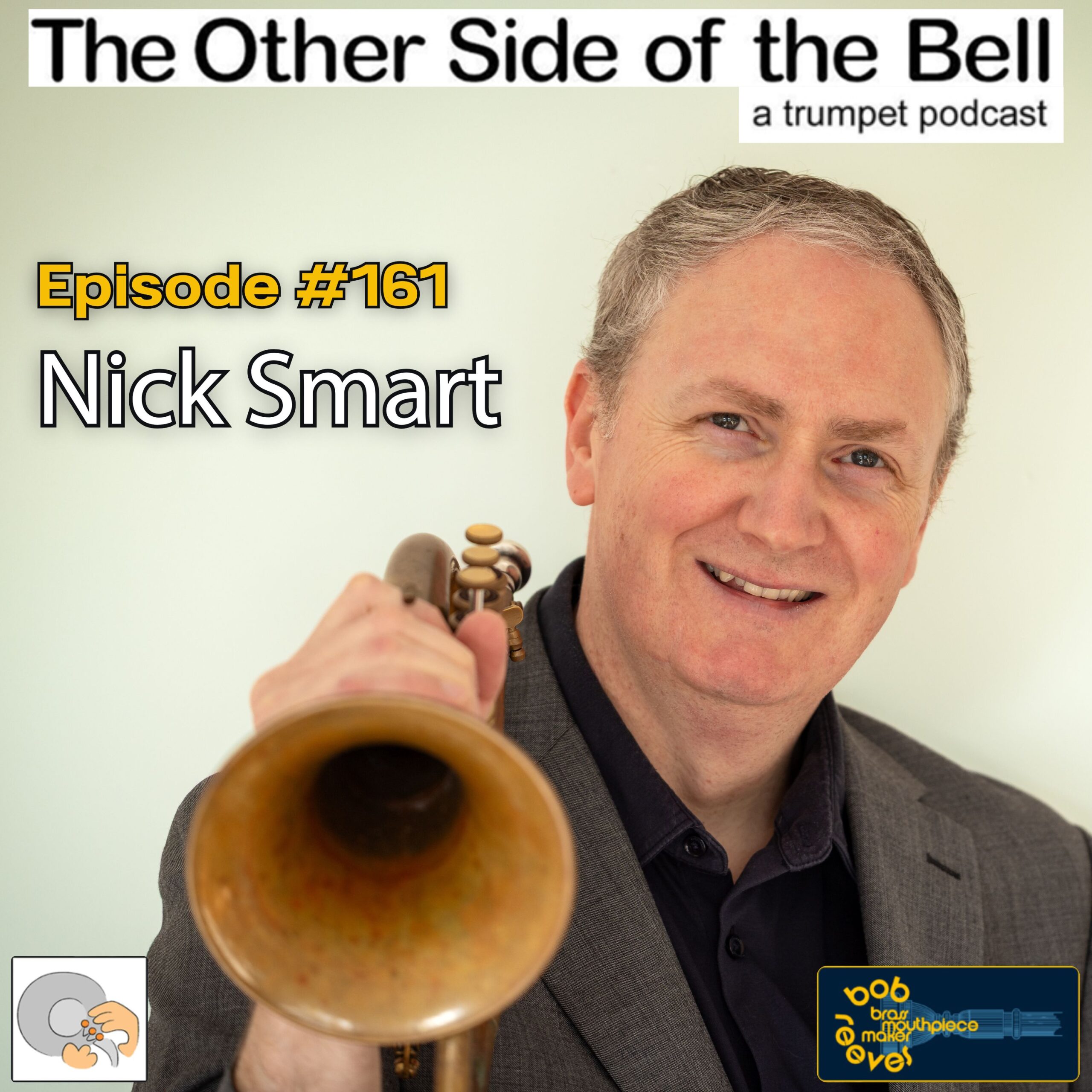
Welcome to the show notes for Episode #161 of The Other Side of the Bell – A Trumpet Podcast. This episode features trumpet educator, conductor and performer Nick Smart.
When Nick Smart was a teenager in Toddington, England, a retired professional trumpet player bought a local pub and turned it into a venue for daily jazz performances, from big band to traditional, mainstream and more, 8 shows per week. Nick was hooked, and set off on a career in music.
But although that career has involved lots of composing, performing, touring and recording, he ultimately found his passion (and a steady gig) as an educator, eventually becoming Head of Jazz Programmes at the Royal Academy of Music in London.
Nick is thus in excellent position to give us solid advice on not just being a student in higher education, but pursuing a career as a professional music educator. Nick’s approach is carefully centred around what will ultimately be of best service to students, and understanding your role as the member of an academic department.
How do you prepare for such roles? Like any job application, do your research, read the posting carefully, and identify what they are looking for.
But for music specifically, there are further nuances. Do you understand the role and placement of the department within the broader community? What are their objectives and priorities when it comes to music education and reputation? What do they want to be known for? How would you fit into that scene?
As a student applicant, remember that a program may not be judging you so much on your ability as to how well you’ll work together with others, and integrate into the spirit of the program.
We talk about jazz education, music theory, the construct of scales and arpeggios, and understanding structure: to then dance and improvise around that structure. That’s what makes theory so fascinating.
Nick was with us recently alongside Brian Shaw, talking about their recent biography of Kenny Wheeler: Song For Someone: The Musical Life of Kenny Wheeler
Now, they’ve each had their own spotlight on The Other Side of the Bell, make sure to check out both episodes! Brian Shaw: Versatility, Baroque Trumpet and Serendipity. Ep. 158
“As an educator, get your ego out of the way too. It’s about the students and it’s about their range of experience and what you’re into doesn’t have to be important. It’s only part of it.” – Nick Smart
Listen to or download the episode below:


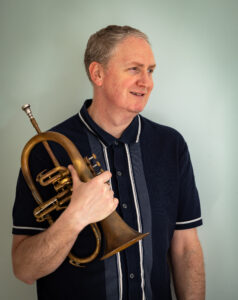
About Nick Smart
Nick Smart episode links
- Royal Academy of Music: www.ram.ac.uk/profile/nick-smart
- Facebook: www.facebook.com/nicksmartmusic/
- Instagram: www.instagram.com/nicksmartmusic/
Bob Reeves Brass Events & Appearances
-
July 9-12, Southern Illinois University, Carbondale, Ill.
Book your trumpet alignment here:
https://trumpetmouthpiece.com/products/william-adam-trumpet-festival-valve-alignment-presale
Podcast Credits
- “A Room with a View“ – composed and performed by Howie Shear
- Podcast Host – John Snell
- Photo Credits – Courtesy Nick Smart
- Audio Engineer – Ted Cragg
Transcript
Please note, this transcript is automatically generated. It may contain spelling and other errors. If you would like to assist us in editing or translating this transcript, please let us know at info@bobreeves.com.
[00:00:00] NICK SMART: For me, the, one of the things I really believe in and, and say to the students too, is that we have a responsibility to ensure as employable and successful as you can be we want you to be able to say yes to as many opportunities as, you’re lucky enough to get.
JOHN SNELL: Hello and welcome to The Other Side of the Bell, a podcast dedicated to the world of trumpet brought to you by Bob Reeves Brass. We want to inspire you to develop joy and confidence in your plane. I’m your host, John Snell, and joining me today is Nick Smart, trumpeter, author, and head of jazz programs at the Royal Academy of Music.
JOHN SNELL: But first, let’s look at some trumpet news.
JOHN SNELL: I am so excited the time is finally arrived, and I’m talking about the William Adam Trumpet [00:01:00] Festival. In fact, probably at the, around the time you’re watching or listening to this, I’ll be heading to Carbondale, Illinois to the William Adam Trumpet Festival, July 9th through 12th. Uh, if you haven’t made your plans yet or if you’re already there, come by the booth and say hi.
it is still not too late to sign up for valve alignment and, uh, hopefully you can come by for a wonderful, wonderful time. it’s always a great event and a huge thank you to Dr. Ricky Spears for hosting this year and of course the whole board of the William Adam Trumpet Festival, um, Board of Directors, Dr.
Carl Seavers, Phil May, and I’m sure there’s others that I’ll mention next time. They do a wonderful … It’s a labor of love, to continue on d- uh, Mr. Adams’ legacy and they do a wonderful job doing it and the event, it’s like going to church every year. Uh, there’s so much camaraderie and among the people that go every year and all the newcomers, regularly become, regulars.
Regularly become regulars, uh, but immediately get, uh, brought into the fold, either in practicing or [00:02:00] in lessons or in the masterclasses and performances. in fact, this year, uh, Dr. Spears is having a vendor big band. Uh, it’s tradition at the Adam Festival, because they’re, we’re mostly all trumpet players.
They do a big band night and they pick some really hard charts, usually Buddy Rich and the like. and they rotate out the trumpet section, to give folks a chance to play either among the presenters, uh, or among the, uh, the hosts, the local school hosts. and this year they’re doing a vendor trumpet section, uh, with myself and Fred Powell and I think Ben Strickland from Greg Black, and I think probably Charlie Davis, can’t leave Charlie out of that.
so it’s gonna be a lot of fun. I guess I’m gonna have to practice a little bit. anyway, hope to see you there. we’re taking the rest of the summer off in terms of traveling, until September where we’ll be heading to Joy Brass in Tokyo, Japan, uh, September 17th to the 24th are the dates for that.
More details to come, especially if we’re doing any travel [00:03:00] around Japan, or if we’ll just be staying in Tokyo the whole time. we’re still working on confirming the dates for, uh, Virtuosity Music, our trip to Boston that will be in October, one of the weekends in October, as soon as we have the, the final date.
Uh, they do a few other events with some of the Reed companies and saxophone companies, so depending on their schedule, will determine my schedule. I’m the most flexible. I, I can fly out there anytime, get some clam chowder, um, and see a Red Sox game. as soon as we have that weekend confirmed, I’ll let you know.
But yeah, sometime in October we will head back to Virtuosity Music the following month in November, uh, we will be visiting our good friends at Greg Black Mouthpieces in Mount Holly and going to the NCMEA conference in Winston-Salem over Veterans Day weekend. So check that out. That’s my travel, at least as far as I know so far.
So I have a little secret here that I can, I’ve been holding onto for a while. It’s been difficult not to share, but I can [00:04:00] finally, uh, let you guys into a secret yet. We haven’t announced it on the website or on social media yet, but we figured our podcast listeners would be the first to wanna know. so as, as you’re aware, about a year ago, we purchased the Olvin Mute Company, in Sweden and, uh, lo and behold, uh, Olivin Mutz and Bobby Shu were in, the works to, uh, reissue the infamous, uh, shoe soloist mute that was, um, quite ubiquitous is probably the word.
Uh, everyone I knew, in the 90s and two, early 2000s had a shoe soloist mute. so we have the original mandrels from the mute. We’ve been in the works with Bobby, to get that reissued and, as is our, um, always our want, we try to improve things. Uh, so we’re issuing two versions of the mute, a light and a dark mute.
Uh, the dark mute is a little bit heavier, more like the original, uh, shoe soloist mute, but there’s also a lighter version that we’re issuing, um, it’s b- both made in copper, [00:05:00] that, uh, is a little brighter, more for section plane and off microphone plane. Uh, because if you remember, the original soloist mute was very dark and meant to be, uh, used on microphone as a so- that’s why it’s called the soloist mute.
so very happy to be working with Bobby about that, uh, on that. Uh, as soon as we have details on, we’ll do a pre-sale for the first initial production run. These are all gonna be handmade, just like the, uh, Olivin mutes are. They’re gonna be spun by our master, metal spinner in Sweden and then finished up here in the shop in the US.
So, um, o- once I have details of when they’ll be available to the public, we’ll let you know, there’ll be a presale, we’ll give you links for that and then, uh, from here on out, they will be available to the public. So, uh, very excited to, reissue that fabulous mute along with the other great Olvin mutes, that we make.
So that’s all the news for today. Really excited to talk to my guest today, Nick Smart, uh, as, uh, we’ll mention, you know, he was just on the podcast a few episodes ago talking [00:06:00] about Kenny Wheeler and, um, just like we had Brian Shaw was our, other guest on that one, the co-author of the book. they both, uh, agreed to have their own interviews.
So today we have Nick Smart back on talking about his own life. So let’s get right to Nick’s interview.
[00:07:00]
JOHN SNELL: Nick Smart is a Grammy nominated jazz trumpeter, conductor, educator, and head of jazz programs at the Royal Academy of Music. Recognized as one of the leading figures in UK jazz, he has performed and recorded widely as both a band leader and sideman with credits spanning jazz, pop, and large ensemble work.
His acclaimed projects include Remembering Nick Drake, remembering Louis Armstrong, and Tower Kasa, and his playing has appeared on recordings by artists, including Spiritualized and Elbow. A major force in jazz [00:08:00] education, Nick founded key programs at the Royal Academy, established the Kenny Wheeler Prize and has directed ensembles and given masterclasses around the world.
A close colleague of Kenny Wheeler, he has become one of the leading authorities on Wheeler’s life and music, co-authoring song for someone, securing the Kenny Wheeler archive for the Royal Academy and leading the Grammy nominated album Kenny Wheeler Legacy Some Days Are Better. and now here’s my interview with Nick Smart.
JOHN SNELL: Well, I am so honored to have joining me for the second time, uh, and this time talking about himself and not, uh, Kenny Wheeler. the fabulous Nick Smart. Nick, how are you doing?
NICK SMART: Very good. Yeah, thanks so much for having me back on. It’s great to talk.
JOHN SNELL: Oh, absolutely. And, uh, you know, when we did that Kenny Wheeler, uh, episode, a few episodes back, of course, I mean, a lot, a lot of our regular listeners really loved that. but, uh, if we have any new listeners, uh, go back, uh, probably three or four episodes and we did a great interview with Nick and Brian [00:09:00] Shaw, the co-authors of the, uh, Kenny Wheeler Biography.
so we’ll, uh, we’ll touch on that a little bit, but, uh, let’s talk about you, Nick, and let’s talk about how you found the trumpet.
NICK SMART: Yeah, well I, uh, I started about eight. I’m 51 now so it’s been the, the decades are racking up and it’s not getting any easier.
But the, um, but yeah, I, mom and dad were both musical, you know, not professional musicians but a lot of music in the home and mom played piano so I kind of started on that. but yeah, there was a lady in the village who played Cornet because being in England there’s outside the orchestras there’s a lot of brass bands, you know. and in my village was called Toddington, just about an hour north of London.
and there there was a, just a t- a small brass band. The near, the nearest good band was Lewton brass band, Luton Town. But, um, the, Toddington [00:10:00] was just a village band and I got involved in that and got lessons through the, just the public, uh, music service that used to send peripatetic teachers to the schools and, and things and, and yeah, I, I loved it and, uh,
on the whole still do.
JOHN SNELL: You still do so far, so far so good, right?
NICK SMART: Mostly.
JOHN SNELL: Uh, now did you start on Cornett then, um, instead of trumpet?
NICK SMART: Yeah. I kind of weirdly never played trumpet, you know, because I, I never did the orchestra thing. I, I, it just for some reason it didn’t capture me, you know, so I, I didn’t really do a lot of trumpet and I think probably to this day it’s why I still feel a little more at home on the flugal.
You know, I’ve always beaten myself up about thinking that it’s just a cop out and all the rest of it, but I, but there is kind of a, like a lot of history that would [00:11:00] explain that as just in terms of a feeling most like yourself, you know. So
yeah, it was brass bands and concert like wind bands and then jazz of course did, I was moving onto the trumpet, but I never, never did a lot of orchestral trumpet, which I, I wish I had, of course.
JOHN SNELL: Yeah. So, uh, s- could you take since we have a lot of international listeners, you know, what is it like playing, joining the community band, the brass band, and getting instruction through there?
NICK SMART: Well, just fantastic fun. I, I think for me that, that’s been one of the things that has motivated me through this life in, in music is that I still feel like a kid when we’re going on a foreign trip or something like that. I still show up with that same kind of childish, like, “Yeah, we, we get to do this amazing thing together.” That’s a, an incredible feeling and it was, and so that was by far the [00:12:00] most important thing for me, not, not the quality of the music. I mean, this was not high quality championship band playing where it would have got very serious. There were some good players and my main teacher as a kid, Mr. Nichols, he was the conductor so of course he could then take things into lessons and say, “Hey, look, this could help.”
And, you know, but really it was about the community thing. So just weekly rehearsals, you know, but I, honestly, I, I don’t have the experience with that very high level of, of brass band playing. That, that would be a very different thing, I imagine.
JOHN SNELL: So, so you started more of, like, a community band level and, I mean, you said you, you, you s- sounded like you really enjoyed it. Um, when did the, like, the jazz kind of creep in?.
NICK SMART: Well, the really extraordinary thing was, you, you know, this, for all of us in music, it’s a series of lucky events, isn’t it? And they’re almost always connected [00:13:00] to extraordinary individuals that you’re just lucky enough to encounter. And it’s not, you know, like, “Oh, I got a lesson off Clark Terry.” You’re, that’s, that’s very rare when that’s your extraordinary person that you bump into.
Mostly it’s just someone in the local teaching community that goes the extra mile, sets up a band and makes it great fun. ‘Cause you, it’s so much work, A, to get jazz together and B, to play the trumpet. So you’ve got to love it first, you know what I mean? You, you can’t start with the work. You’ve got to understand why the work will make the fun bit even more fun and rewarding, you know? So it was really that. A couple of local teachers set up, uh, jazz groups at the school and then the, the huge thing for me was in, in Toddington in the village, check this out, the, there was a retired professional [00:14:00] trumpet player bought the pub called The Angel and he, he put jazz on in a pub
eight times a week, every single night and Sunday lunchtime.
JOHN SNELL: Wow.
NICK SMART: Unbelievable. So when I was a teenager, I was in the pub eight times a week. Um, you know, it was like Monday night was big band night. There was a, like a, all kind of loosely themed, like mainstream night, trad night, you know. So I just, yeah, that, that really got me fired up and going, you know.
JOHN SNELL: So you started getting exposed to all kinds of different kinds of jazz and, and hearing that. Um, any players that you remember that were playing there or was it all just kinda local people
NICK SMART: It was all, all local people, but it was so close to London that there were really good players and a lot of retired kind of pros, and things like that and, and [00:15:00] round our way quite a few ex- military band people, you know, that was always considered a one option a, a, a, as a, a pathway into professional music is join one of the, the military bands and, and actually, uh, that is what I did first. I can tell you a bit more about that, but, but there was a lot of those kinds of players around. So it was a high standard and, and of course I was just reading all the time. Like there were blow, blow bands we’d call them here where you’re just reading through charts. So you, you do get quite good at the sight reading side of things.
JOHN SNELL: So this, was this all when you were in, uh, grade school?
NICK SMART: yeah.
like pre- up to the age of 18, yeah,
JOHN SNELL: Wow. Um, and what about in your school? Was there a music program that you were
NICK SMART: but a- a- again, really lucky that it was just brilliant, enthusiastic people who made it great fun and inclusive in [00:16:00] the best possible way, you know, it just, it, it, everybody could get involved. It naturally sorted itself out into levels, but without any sort of snobbery involved and, and a lot of those people are still great friends and quite a few are, are still in the music.
You know, there were some people that are really doing well, you know.
JOHN SNELL: All from, all from your litle town.
NICK SMART: Yeah, yeah.
JOHN SNELL: Little hotbed of, of jazz and music. so, uh, and you had mentioned that you had some, uh, you know, music was pretty strong in your family. Was, uh, as you were getting older in your teenage years, was it, uh, you know, like the thought of doing a career or being a professional musician appealing
NICK SMART: Yeah. Well, that was how the military thing happened really, because the nature of, of being where I was and, and a lot of peripatetic teachers had been like ret- you know, you retire if you, if you sign up for 22 years, which actually [00:17:00] I did at the age of 18. Well, you can retire at 40 and then you might move somewhere and start teaching, you know.
So, uh, and, and I should also say I I wasn’t very good. Like I was, I was fine. I was absolutely fine, but not, nothing remarkable, not like the over, not even the best kid in the, in the county or anything like that, you know? So no one was looking at me thinking, “Hey, you know what? You, you, we should get in touch with Winton Marsalis.
He’s gonna wanna hear about you, you know? There, there was nothing like, like that. All of which to say that the, some of the local teachers were like, “Well, look, why not consider a military band? You know, you get to, to play for a living and get a salary for, for practicing and getting more tuition.” So that’s what I did.
I, I joined, applied for and got in to the Royal Marines [00:18:00] Band. but I, I, for me, it wasn’t right. I wasn’t sort of happy. I think I’m not a massive sort of fatalistic kind of guy, but I, I was incredibly homesick, which isn’t really like me and I think it was my body
sort of reacting to this decision that somewhere deep down I knew was wrong and so it was making me uncomfortable till I got till I figured that out, you know. It was weird actually because I, when I realized I was gonna leave and, and luckily there were a load of military cutbacks so they were as happy to see me go as I was to go and I was part- like this wave of sort of relief at realizing, oh my God, because, you know, I signed up for 22 years and I, and I did just short of on year and then went to university to do music, you know.
JOHN SNELL: S- so you did one year with the [00:19:00] Marines, uh, the Royal Marines at 18. So, um, I, how does the, the military bands work in the UK? Is it similar to, like, the US? I mean, do you still have to go through, like, a bit bootcamp or training,
NICK SMART: yeah.
JOHN SNELL: musician? So you had to go through all that.
NICK SMART: And especially in the Marines, I, from memory, at least in my day, the, the army bands would do about six weeks and in my era, the Marines musicians did 15 weeks and then I think for my, a very small window of time that I was lucky enough to land in, they did 30 weeks. So we did another whole bunch of military training with a, with a little more music thrown in, but it was still considered basic training, you know. So yeah, it wasn’t, it wasn’t for me. I’m glad I did it and I grew up a lot and it made me good with stress and calm under fire as it were, but I, um, but I, yeah, I was very [00:20:00] glad to, to move on.
JOHN SNELL: So, so what did the, I mean, the decision to go to university, you started applying, uh, while you were still in the Marines?
NICK SMART: Well, what I, I have to give credit to my mom there. I think she somehow knew also that if this was probably not a move and I’d got a place at Sulford University, which is in, which is just outside Manchester and Manchester’s a brilliant city there and back then, this is 90 … I, I joined the Marines in 93, um, back then there were way fewer conservatoire jazz courses.
So the, the university music courses were much stronger for, for jazz and music because there were, was a higher feed into those kinds of levels and as conservatoire courses have expanded, I think more people of course want to go to them because they’re amazing, but it means that [00:21:00] maybe the, the
same number of people are around and so perhaps the, as a consequence, the, the pool of applicants gets more diluted.
But Sulford was, was amazing and I, and I’d got in and my mom rather than saying I’m not going, she actually quietly, without telling me, deferred my place for a year. So
when the, which is quite cool, isn’t it? So when the inevitable happened in the Marines, she’s like, “Well, you know, there is a plan B and it, and so that’s what I did.
JOHN SNELL: So you were already accepted into that school. Did you, but you didn’t know
NICK SMART: I didn’t know.
JOHN SNELL: that whole year,
NICK SMART: Yeah.
JOHN SNELL: That’s, uh, what a brilliant mother. I love her. so you shifted into the academic life and, um, I mean, did you have a trumpet teacher or
NICK SMART: Yeah.
that’s when I got, got, things got more serious. I had a great trumpet teacher who was a kind of old Manchester legend called Dave [00:22:00] Browning. but the,
big, the, really the huge one for me was somewhere towards the end of my second year. I got lessons with Richard Iles, who was the jazz trumpet teacher in leads and he was a really brilliant teacher. He b- made a … He just explained a few things and I, and I realized even then I, uh, you know, you go through phases sometimes where you suddenly have a kind of growth spurt, whether it’s technically or musically in some way, you’re like a greater level of understanding and Richard just unpacked and demystified a few crucial things and I, and I massively improved.
And I, and really I say without any fake humility at all, I still wasn’t brilliant. I, I still was just like decent, you know? Um, and, but Richard massively, massively [00:23:00] like hoyked me up and, and because of, because that level improved, I did then manage to get a place at the Guildhall School of Music to do a, postgraduate single year, like after the bachelor’s finished, you know.
JOHN SNELL: Because, because of those breakthroughs. I’m curious, what, what were the, some of the things that he demystified?
NICK SMART: Well, just things like, like scales and our pegios and, and, but really crucially, and I, I happy to talk a bit more about this later because it, for me, it’s very important is you’ve got to connect that stuff to the music and I think jazz education sometimes comes under fire when scales and arpeggios and, and that kind of theory is taught somehow in isolation from the music. But if you, if you can relate it and understand how it feeds into what you’re doing, then becomes very helpful indeed, you know? And you can start to look at a chord symbol and [00:24:00] think, “Oh, okay, that’s, that’s that family of information. That’s what this is. It’s not just a, something you’re trying to decode.
It’s something that you can relate to a bunch of practice that you’ve done, you know?
JOHN SNELL: So connecting those dots. Yeah. Uh, yeah. Ev- nothing in isolation.
NICK SMART: No
and, and, uh, crucially, the other thing Richard Iles did was introduce me to Kenny Wheeler’s trumpet play. That was where that began.
JOHN SNELL: That’s the first time you heard Kenny,
NICK SMART: Yeah. Or even heard of Kenny.
And at that, at that point, the, the two of the famous trumpet players in, uh, London and, and kind of internationally were Kenny Ball and Kenny Baker.
So as soon as Richard said Kenny, I assumed he was like some trad jazz
JOHN SNELL: Yeah. Yeah, I know, I know those cats, yeah.
NICK SMART: I was like, I was like, ” Yeah, I, I think I’ve heard of him. “And there was like, ” Oh, no, no, this is very different.
JOHN SNELL: The, the third Kenny. Um, and I was gonna ask you, you know, uh, before [00:25:00] you were, um, uh, introduced to Kenny Wheeler, um, who were you listening to? Who inspired you in your, uh, your jazz playing up to this point?
NICK SMART: Well, you, this is where I think I feel you start to sound a- a bit older because you begin to talk about, ” You’re back in my day with, you know, cassette tapes in cars. “But it, I’m sorry, it’s true that if you, you know, if you only have on Clifford Brown cassette in your car, you’re gonna listen to it a lot and if you listen to things a lot, they become part of you. There’s just no avoiding that fact whereas if you’ve got a Spotify shuffle that can change tunes, like yes, you hear more music, but it, it doesn’t go in at the same depth. So yeah, those things for me was a, a lot of, uh, Clifford Brown, a lot of Miles, a lot of Dizzy and, and because of what I was doing a lot of big bands, you know, I remember [00:26:00] hearing mostly Count Basie, I didn’t really get, no one hipped me to anything weird considered cool like Bob Brookmeyer or Thad Jones Mel Lewis or anything like that.
It was, it was real staple stuff, you know?
JOHN SNELL: Mm-hmm. Yeah, that, that’s a fascinating point. I, I mean, to this day, uh, I haven’t, you know, I haven’t really studied jazz, practiced jazz in probably 25 years and there’s still solos from CDs that I would listen to on my drive to school that I can sing mistakes and everything, you know?
NICK SMART: Absolutely.
JOHN SNELL: And I probably haven’t heard the tune in 15 years.
That’s that imprint that you get from listening, you know, because you have no other choice like you’re
NICK SMART: Yeah, exactly.
JOHN SNELL: wow, um, I mean, not to jump ahead, but, uh, I mean, is that something like with your students today that you impress upon them,
NICK SMART: Yeah, I mean, look, I think with so many things like, like this, when you’re comparing eras of, of learning and, and [00:27:00] just kind of social context in a way, all you can do is talk about it and hope the penny drops in some way. But yeah, all, all the students have to do, transcriptions by ear where they play along with the, the records and things like that.
And so obviously by doing that they have to listen to it over and over again. But, but, uh, I think what’s interesting is what you and I are talking about is not something we tried to do,
JOHN SNELL: Yeah.
NICK SMART: you know?
JOHN SNELL: just happened.
NICK SMART: there’s, I’ve got one story for you about that, that was, this, this was completely mind blowing. In 2003, we started Gerard Presenter, who’s an amazing trumpet player in, uh, in the U- where he doesn’t live in the UK anymore, but he was then.
And he was the head of jazz at the Royal Academy before me and he got me to start a junior academy program in September. So it was Saturday morning [00:28:00] school for kids up to the age of 18. And there were some amazing jazz musicians in that first cycle, Kit Downs, who’s an extraordinary pianist, he was there, Freddie Gavita is a brilliant trumpet player. Um, George Hogg, another amazing player came through and later, Jacob Collier did Junior Academy and all, all sorts of people, James Copis. but this early in this year we had a, we had a, um, email from this organization that looks after, uh, blind children and they had this young boy who was, I don’t know, 15, 16, but honest to God, he was from Siberia and he was blind and he had five jazz records and he ca- and he came in and sat in with us and, and it was unbelievable.
Uh, the one thing I remember was, um, we played Joyspring and he could clock it all by ear [00:29:00] and not only that, this one thing that completely blew my mind was at the end of his solo he set the head up. He did like like he, he sort of set it up
JOHN SNELL: Like a drummer?
NICK SMART: like a drummer ha- wa- having owned five records. I forget what they are, uh, uh, El Garma was one I remember,
but it goes to show it’s the depth of listening, not perhaps the breadth of listening when you’re learning, you know.
JOHN SNELL: Fascinating. Uh, so I, I wanna jump back to where you were introduced, uh, musically speaking to Kenny Wheeler and, I mean, your, your basis in jazz, like you said, was pretty fundamental, kind of the classics as it were. So when you first started hearing Kenny Wheeler stuff, what did you think about it?
NICK SMART: Well, I, I think so many people relate to this with Kenny and I think it mirrors his, uh, journey in a way, which is that [00:30:00] for a lot of people that as much as they love the kind of tradition and, and that way of playing those masters, it, it just somehow doesn’t, it’s not what they do and I think the thing, or it’s not where you’re sort of emotional, this sounds slightly pompous, but like your emotional truth or your authentic self, there’s no getting away from touching on those things.
It, it’s not my history, you know? And I, and, and as much as you love it and you never, ever question its foundational significance and importance, I, I sort of couldn’t do it. And I think then immediately at that point, again, I wasn’t terrible at it, but it, it wasn’t grabbing me and, and, and flying. I was, you know, I was feeling like I was doing a bad impression of it and I think that’s how Kenny felt with, with [00:31:00] B-bop as well.
And, um, the, the thing that’s really important when you’re a student is you’ve, you’ve got to confront, am I kind of making up this emotional sense because I can’t be bothered to do the work? And then sometimes probably there’s a bit of column A and a bit of column B, you know, I, maybe there was that, but I don’t think so.
Like I, I got my chops together, I was practicing every day, I could play beginner decent piano. So I don’t, I don’t think I was lacking work, but anyway, what Kenny provided for me hearing that was this real strong sense, which is a, something he felt when he heard Booker Little of like, “Oh, there are other ways of, of doing this.
You know, when you start to hear Kenny Wheeler, Thomas Stanko, Enrico [00:32:00] rather, especially being in Europe, Paolo Fraser, even, even Don Cherry, Lester Bowie, like there are other ways of doing this that, that, that you could
explore and, and maybe they’re valid. And that’s what it
spoke to me about, I think.
JOHN SNELL: And, and you were still fairly young, right? You said, uh, when you were in, uh, Guild Hall or was this, uh,
NICK SMART: This was still Sulfured, yeah.
JOHN SNELL: still Sulphur. Yeah. Wow. Um, so, so, did that kinda change your trajectory then and where you were going by that point or what, um, did you just kind of add it
NICK SMART: I, I added it in and I think a lot of people that go through this go through a phase of then kind of impersonating Kenny sort of cliches and all and I, I, you know, I think I feel differently about that now. I w- I wouldn’t really wanna do that. Um, just literally yesterday back from a [00:33:00] week at the NDR in Hamburg where we were doing a celebration of Kenny Wheeler with, with Dave Holland on bass and Norma Winston on voice, Nicky Iles was conducting and me and the other Trump
I, I was like the extra trumpet player brought in because there’s the, the section of four and then a Kenny Wheeler chair down the front so we were taking it in turns to go down the front and I’d fill the gaps as we went. But we were all saying like how, how much of a thing that is that that music is so
Because Kenny’s identity’s enshrined in his playing and his composition together. So even playing that music you can get pulled into doing, uh, uh, doing the accent. It’s like trying to quote Michael Kane from the Italian job but not doing the voice, you know. you, you, the, the dialogue is, is synonymous with the voice, you know, so you, you
get kind of pulled [00:34:00] into that mode, you know.
JOHN SNELL: Yeah. What a fun gig, though. And what a,
NICK SMART: That was an extraordinary week, Yeah.
absolutely a wonderful thing to have been a part of.
JOHN SNELL: Oh, man. so then were, at this point in your schooling, you were convinced you wanted to do some sort of jazz playing teaching. What did your career aspirations look like?
NICK SMART: I always loved teaching and both parents, mom and dad were both teachers and so I, I enjoyed that a lot and it, it, and throughout Sulford I’d gone back to Bedfordshire every summer, Easter, Christmas, and been like the trumpet tutor in the, in the Bedfordshire County Wind Band and things like that. So I was doing bits of teaching and really loving that.
So there was, there was no question that was gonna be part of my life. And after, after Guild Hall,
there was a, a summer school that was [00:35:00] incredibly important in Wales actually. It was one of the first jazz summer schools in the UK and at, and at this time it was in Glen Morgan and, and the people teaching at Guildhall were involved in, in running it like Simon Purcell for me and he said, “Do you wanna come on this summer school as an assistant teacher?” And I did that and that introduced me to a bunch more people, uh, who I, you know, who then would say, “Hey, can you cover this class?” Uh, not at conservatoires right away, but friends started getting me to do bits of teaching at Middlesex University and things like that, that it slowly grew from there.
JOHN SNELL: And, and at the same time, are you also freelancing? do you have your own groups?
NICK SMART: Yeah, a, a little. I didn’t, but I, I, the first big gigs I got out of college were a couple of shows. I did, did a, you know, a couple of little runs on some shows, but I always had this, like [00:36:00] my right front tooth is slightly crossed over my left and it would cut into my lip a
bit. So I was always a little stressed about the stamina side of things.
I’ve never been a lead player. Again, solid but not the, the real thing and that was always a little bit of a source of anxiety. So I, even from I got this like retainer thing that, that flattened it off a bit, um, and helped and I still wear that maybe once a week. It’s disgusting. It’s 22 years old, but the, um, but the, uh, that helped a little, but I, I think I knew I’m, I’m not gonn be like proper A- list frontline trumpet player here.
I need to find other ways to, to survive with a sort of a breadth of activity, you know?
JOHN SNELL: [00:37:00] Mm-hmm. So then what approach did you take? Did you
NICK SMART: Well, the s- beginnings with, with bits of, um, of teaching opportunities came up, you know, the, the depths or subs- initially at, at Middlesex University, which was a really a great jazz course with … It was a conservator course in, in all, but Institutional name, but the level of the students, the level of the, the, the teachers. So that, really helped. And then Gerard presents a, who I mentioned, he, he was head of jazz at the academy and he got me set up running the junior academy, which then of course you get to meet more people and next thing he’s like, “Oh, could you cover this thing at, at the actual academy, like in Monday to Friday?”
And doing bits of trumpet teaching started for Guildhall and, and other conservators. But I, yeah, I was, I, I did get my own groups together and was [00:38:00] becoming friendly with Kenny Wheeler we became close. I met him in 98 and we were pretty good friends by the early 2000s and Kenny had a kind of extended musical family with Nicky Isles and Pete Churchill and, and more so people like Stan Saltzman, saxophone player who had played with Kenny.
Stan and I became very close and still are. So he’d get me depths in his big bands and things like that. So yeah, I, I was playing, people knew who I was on, on the London scene, but honestly, I always felt
a little inferior. I always struggled a bit with that, you know.
JOHN SNELL: but you were still … Uh, yeah, it sounds like you were more focused on pursuing your academic career and then I won’t say playing for fun, but, you know, that
NICK SMART: yeah, it certainly, yeah, I certainly wasn’t relying on playing for money. [00:39:00] It was more of an fun in, in terms of the, the seriousness with which I was pursuing it, but I think I, I, I mean, in a way I was just following my nose as well, you know, but once you have a base of activity that you’re doing, which is taking care of the bills, you can be more, uh, like artistically driven in your playing because it, you’re not relying on it to pay the bills, you know. And also I should say, I don’t
consider them separate. You learn an enormous amount ta- talking a- about jazz and teaching jazz. If you’re teaching brilliant players like Tom Walsh and James Kopus and Louis Dowsworth, you know, it’s not exactly the little F and G march, you know what I mean?
It’s, it, you’re really talking about concepts and listening and so it, it really informs your own practice as well, you know,
JOHN SNELL: Mm-hmm. Yeah. And, and the playing you do [00:40:00] reinforces your teaching. It’s a circular. Yeah,
NICK SMART: totally, absolutely.
JOHN SNELL: so I’m curious the first time, uh, if you remember the first time you met Kenny, how did that come about?
NICK SMART: Yeah, well,
JOHN SNELL: Wheeler, not the other Kenny’s.
NICK SMART: Yeah, yeah, exactly. I didn’t meet either of them, sadly. But yeah, Kenny Wheeler, I, because I, I, I’d really sort of fallen in love with his playing and, and, and, you know, felt like he was very important to me in my last year in Manchester and then when I moved to London at the Guild Hall, there were a lot of people around who, like Stan, who knew Kenny so it’s not long before you’re in their orbit, you know? So the first time I saw him was at the Pizza Express Jazz Club in 97, I guess. And he was approachable, you know, a nice guy. It’s not like he, he was straight away like, “Hey, let’s be friends. Do you fancy a pint?” You know, but he was very approachable and nice and if you showed up at, at more [00:41:00] gigs and your face becomes familiar and especially if you’re there with people, friends of his who you are becoming friends with, uh, then you’re just increasingly a, a slightly more familiar and trusted face.
I, I mean, I wasn’t doing any of this for kind of self-interest. It, it was just what I loved, you know. Um, and so yeah, then what happened was I ended up actually not living that far from him. I was 10 minutes around the corner and so I’d go and see him sometimes and we’d occasionally go for dinner and Kenny couldn’t drive and I, I had a car so again, I wa- I wasn’t trying to get close really.
It was a great privilege to spend time with him, but I genuinely didn’t mind to just say, “Well, look, I’ll take you to the gig, you know? Um, so then we’d chat and, and hang out and we did occasionally like practice. He’d say, ” Come around for a blow,” and, you know, that sort of thing, but
JOHN SNELL: Yeah, was, I mean, was [00:42:00] it ever like a formal lesson or was it just, “Hey, get your horn out, let’s play, play some, we play some tunes? What would you guys go
NICK SMART: he took me through his warmup once, which was all just sort of moving air and this insane range he had, he’d, he’d be playing sort of double Cs almost immediately, but just sort of huffed. It didn’t, it didn’t seem to put any pressure on his
lip. It was just like all air, uh, you know, and if, and kind of efficiency.
They weren’t, they weren’t like big screamers, it was just accessing the full range of the, of the horn and, and the shapes you need to make that happen, you know.
And yeah, we’d play along with like Abersold things and he’d put the, he liked putting on Keith Jarrett’s standards trio and playing along with that, you know, that sort of thing.
But yeah, I remember trading on stomping at the Sabai on the Jamie Abersold, you know.[00:43:00]
JOHN SNELL: What fun. Uh, I mean, anything you picked up from sitting next to him in terms of, or did he say anything, you know, explicitly about
NICK SMART: And
JOHN SNELL: about chord changes or whatever, you know?
NICK SMART: not really, but just it, because it, there’s just so much, uh, uh, to learn being next to someone like that. So yeah, the sense of e- everything had a melodic line, you know, but he was never like He, he definitely knew this stuff, but he wasn’t to me like, “Oh yeah, make sure you hit the sharp 11 here.”
That, you know, it wasn’t like that, but he, um, he, you know, he, you could hear what he was doing and, and of course when you’re playing with a trumpet player, even if you haven’t got total Uber perfect pitch, you can see what they’re doing as well. Um, so yeah, and just to
get the, the feeling of that sound and that time feel right next to him in the, in the flesh, you know.
JOHN SNELL: Mm-hmm. And would, would you guys be playing trumpets or [00:44:00] flugals or
NICK SMART: Trumpets I
seem to remember then, yeah,
but there was often like a bunch of instruments out on the floor and trying different mouthpieces and all that stuff, you know,
JOHN SNELL: What fun. Uh, so did, did that eventually lead to you joining the band or how did that come about?
NICK SMART: we were more and, you know, really getting, were quite close at that point and he became the patron of the Junior Academy jazz department for me. So he’d come in once a semester and, and play with the kids. Sometimes he’d bring Doreen in, his wife and they’d just chat about their life and his trips and, and then yeah, I did a, was doing a, occasionally a few gigs, but Kenny was very loyal so the, the sad inevitable truth is that there wasn’t a place in the big band until there was a place in the big band and, and that meant someone had passed away, you know. So if you go back to
music for large and small ensembles, it was Derek [00:45:00] Watkins, Ale- uh, uh, Alan Downey, uh, Henry Lowther and Ian Hamer and when Alan Downey passed away, John Barkley took over and when Ian Hamer passed away, I took over. So the, that last section was, was Derek, John, Henry, and me.
JOHN SNELL: And, uh, about when was that?
NICK SMART: About, around his 80th birthday, 2010, so that, that final tour, the last record that he made, the long waiting, um, in that period
JOHN SNELL: Wow. Uh, I mean, what a section too. Had, I mean, you’ve been freelancing at this point. Had you played with Derek and, and those other guys?
NICK SMART: a, a little. I, John I knew well and Henry I knew well and Derek I’d met a good few times and played with him a bit in Stan Saltzman’s
big band, but, uh, Derek didn’t know me and I think I was probably saved by the fact I was close to [00:46:00] Henry and, and Kenny so he, he knew I was cool even though he wasn’t a face, I wasn’t a face he was seeing in other situations or sessions, you know, he knew I was there for the right reasons and, but he, he was, he was always very,
uh, very lovely to me, yeah.
JOHN SNELL: Yeah. Wait, what was, I mean, he was a legend. What was it like playing in a section with him,
NICK SMART: it was genuinely, uh, uh, uh, incredible. Like he, he was so fantastic and it’s that sort of mystical thing where they somehow, I mean, I know as trumpet players we know all this, but it’s worth repeating that the, the power of a lead player at the top of a pyramid can make the whole band better and it’s not the range, it, it’s the authority.
The, the range is just whatever is required by the music, but actual leading was And he, and he didn’t talk much about it. If, [00:47:00] if you asked, he, I think he always treated me like it was a bit inexperienced to be going, “Oh, we coming off on four there, Deb.” You know, it’s like, “Well, listen, because whatever I do, I will do every single time.” Um, so the, uh, only thing we’d ever discuss is the odd little dynamic thing, but even that he would lead by example more of a direction and also breathing if there was a long place just to make sure we all breathed in the same place. But there wasn’t all of the things of, well, how fat is this quarter note or, you know, that is like, well, listen to what I’m doing and you’ll get the answer, you know? But he, yeah, it was, it was an
amazing sort of authority, but there, he was getting sick a couple of years after that in 2012 when we did our last, Kenny big band gig at the Queen Elizabeth [00:48:00] Hall, I was conducting the Royal Academy Jazz Orchestra before so I got one of my students who’s a brilliant trumpet player and a brilliant writer called Ruben Fowler and Ruben depth for me for the soundcheck in the, in the Queen Elizabeth Hall and Derek, it’s very sad, uh, Derek said to him, because Ruben said, I just, uh, uh, he said, like, it’s so amazing to meet you and such an honor to, to play with you.
And Derek said, “I, I ju- I wish you could have heard me when I could still play.” ‘Cause, uh, it was heartbreaking, but
he, he still sounded really brilliant. It, it
just, I guess maybe some of the intensity or strength, he felt at least it had gone. I, I, I’m not, honestly, I’m not sure I noticed.
He sounded fantastic, but
he was obviously feeling by that point it, it had a few hernias and, and by that point had the [00:49:00] cancer as well, it was very, um, very sad to, to,
hear that,
JOHN SNELL: yeah, that inner confidence. Oh, that’s heartbreaking, but, but it may speaks to the level of player he was to be s- still sound
NICK SMART: Yeah, exactly. And he never did it all on his own. Like John always did some and I played lead on one. Derek ha- which is if you, anybody knows my playing is nothing short of hilarious, but the, the fact is Derek was a thing for like, “No, we’re all getting the same money, like everyone helps, you know, but he wouldn’t deliberately roast you and make the music bad, but there was one that was just normal register and I did that and Henry did one and, uh, you know, so it was, there was some democracy there, but yeah, he was incredible.
JOHN SNELL: What a fun section. and you had mentioned, so you were already running the, the Royal Academy Jazz Band, at this, by this point.
NICK SMART: yeah. Uh, Gerald left to go [00:50:00] to Europe and join the Danish Radio Big Men. So in 2010, I became head of jazz at the, at the main Royal Academy and, and still there now.
JOHN SNELL: And was that, uh, is that we just asked to do it or is that something you applied for?
NICK SMART: I had to properly apply.
I, I, I was working there so I was, I was not unknown, but I certainly was never given any indication like, “All right, son, don’t you worry about this? Uh, this job’s yours.” You know, no, it was not a, a sort of shoe in as far as I knew. If, if they had decided they were gonna give it to me, nobody told me that, I wish they had. But yeah, so I, I applied and, and a lot of really great people applied, but, um, I, I was appointed, you know, and, and I, I was always good with the admin side of thing. I’m well [00:51:00] organized and all that stuff. So I think that they could see that that was important, you know?
JOHN SNELL: Well, yeah, let’s, if we can speak a moment, uh, that, you know, because we talk all the time about audition prep. How about, uh, you know, what about applying for a job in higher education? ‘Cause I’m sure, you know, I mean, you applied for your job and now over the years, I’m sure you’ve been on many, um, hiring panels.
so for someone who wants to get into higher education, what are, what are some tips?
NICK SMART: Well, I, I think you, you must know about the department that you’re applying to be a part of and I, think it’s, in a way, everything is helpful for us if we always relate it back to the music. So if you’re, if you get an opportunity to play with Maria Schneider’s jazz orchestra, well, check out some Maria Schneider records, you know, like see yourself from the inside up and then if you’re, so if you know, who’s [00:52:00] running it, who’s teaching what, what could I add to that?
I think your first approach is imposing your will down from above, there might be circumstances where that’s needed, like something’s in disarray and strong leadership is required, but you’d still feel that from the inside up if that was the context and ask around, you don’t have to be nosy and get in the gossip, but just who’s doing what, what are the dynamics, it, it, how much work is there, what’s the sort of general aesthetic of the department know, and I think just contextually where the department sits within the wider institution, like is there a lot of collaboration or is the jazz department like this little siloed outpost where they do their own thing just so you then understand some things that you might be able to say that could, that could chime with [00:53:00] their, uh, culture.
JOHN SNELL: Mm-hmm. Yeah. F- fabulous advice, because, yeah, and, and I suppose also what value are you bringing, beyond what’s just in your CV, right? I mean, everyone’s recorded albums or played with people or gotten the degrees, but, you know,
NICK SMART: I think being, putting that in context of like, yes, I made this great album and I got four stars in JazzWise, but it’s more the fact that that shows I could come up with creative projects for the students to, to take part in. ‘Cause, you know, but my job at the academy is, it’s like being an administrator, an academic, and then like a jazz festival curator all at once, you know, you’re, you’re having to schedule the big band projects, the small group projects, think about who would be inspiring masterclass, guests, you know, all that stuff.
And, and for me, I, [00:54:00] I believe get your ego out the way too. It’s not about you. It’s about the students and it’s about their range of experience and what you’re into doesn’t have to be important. It’s only part of it. It’s not the, the driving identity because that might be great, but what if it isn’t? What if you’re absolutely mad bang into this one thing, but actually the students aren’t feeling that, I think again, see yourself on the inside and be part of what is there and then you, you grow it upwards, you don’t drag it upwards, that’s harder to do and that’s when you exert those kinds of pressures onto a, onto something and cracks appear, you know?
JOHN SNELL: we’ve, we’ve talked about applying for teaching position. What about incoming students, uh, especially on the [00:55:00] jazz side of things? You know, what are you looking for, when you have a jazz, uh, applic- applicant auditioning for you?
NICK SMART: I think I try and tell all this, th- this same message to the applicants when we have our kind of open days and things like that is, you can’t control it. So you, you really can only go and, and show your love for the music and play your best and any sort of anxiety about the outcome is only gona put tension into the mix and it’s much, much easier to say than to do, but I, like if you’re 17 year old trumpet player in Lincolnshire and you’re like really into it and sounding great, you don’t know who’s applying from Cornwall or from London or from Manchester. So it, uh, our decision is, is the difficult one of who we take. It’s [00:56:00] really hard for us having to accept who we can’t take because it’s quite a small, smaller program that you, you know, you’re not really weeding anyone out, you’re looking at who would work well together and, and that kind of thing.
So I mean, I think obviously be prepared, try and present something that, that’s fairly well representative of what the course does, you know? So maybe not so
used going and, and playing completely free jazz a, a, a, a very straight ahead course or whatever, you know, think about the foundations and the roots of the music and, and also a really easy one is for goodness sake, read the criteria well.
If it says play a Clifford Brown transcription from memory, but bring a copy of the written part for a panel, well, then do that. Don’t show up with a, you know, [00:57:00] Pavarotti transcription that you sing along with a video.
They’re not the same thing.
So be, just be really thorough and careful because they’re, they’re easy things to just take care of, you know?
JOHN SNELL: Yeah. Yeah. It’s like putting your name on the corner of the paper. Get, take care of the easy stuff, uh, you know, make sure you dot your I’s, cross your T’s. Um, I wanna go back, um, to our earlier conversation, when we were talking about, uh, con- speaking, connecting, you know, the scales, your Apegio work, the patterns, uh, with the music.
can we go in that a little deeper? And, um, obviously that sounds like something you cover with your students. I’m curious how you incorporate that into the curriculum.
NICK SMART: Yeah, well, thi- this is really more in my like one-to-one lessons, but it, uh, it, I just knew how much it helped me to go through these kind of like breaking the s- firstly understanding that chords and scales are the same thing, right? If you [00:58:00] play a, if you play a scale but miss out every second note, well, it’s an arpeggio and that’s a chord and then if you keep going, those are the extensions.
So just understanding first off these are the same building block, it’s just one move step-wise, one moves every other note-wise. So that was, fundamentally important, realizing why that, that harmony came from like diatonic families of, of stuff. So when you, when you’re playing Pdido and it goes 25, 2-5, 2-5, you know, 2-5-1, that, and someone says, “Hey, you could just play C major scale over this.
If you don’t, once I started to understand why is because C major scale actually generates the notes of that scale generate D minus seven and G7 and C major seven, then you realize, ah, and I, and I, because of this stamina, [00:59:00] like this lip thing and I do wanna talk about I had like an actual injury later in life, but thinking, well, look, if I can practice a bunch of stuff which is trumpet practice but also getting my brain working on jazz and theory and harmony at the same time, surely that’s two birds with one stone, right? So I was doing these like two octave arpeggio exercises, you know but realize the fingers I’m doing G major, but it’s like G major seven, A minus seven, B minus seven, C major seven, but you’re just wasting the opportunity to tune into that if you don’t observe it. So it was mostly crank up the brain a little harder. Like, uh, none of this is instead of playing by ear, but the fact is [01:00:00] all harmony and theory is just the labeling of sound so tune into it because when you’re reading a chord sequence, yeah, maybe you’ll hear it, maybe you won’t.
Everyone’s ears are, are a different level, but if you see E half diminished natural nine over A, maybe you’ll hear it, maybe you won’t. But if your brain goes, “Oh yeah, that’s G melodic minor, that’s what, or at least that’s one of the options, then your s- your ear is supported by your understanding of the music. And I think sometimes we can lose sight of the fact all the great players of the past, a, a lot of them studied in- incredibly hard. It’s not like they were just winging this stuff, you know? They I, I do resist the criticism of jazz education that [01:01:00] this sterilizes the music. It only does that if it’s done in a brain dead painting by numbers way, but if it’s done by a great understanding
And this is where I think jazz education has something akin to say architecture of like, yeah, be creative, like express yourself, but the things still gotta stand up or, or people are gonna die. Like you, you’ve gotta know the theory of, of how structures are. It, that doesn’t diminish the artistry, it’s
part of the execution of the artistry.
So what I think has happened as a little aside is that jazz education and the, really the codifying of the harmony has got, got really, really good so that a lot of just kind of bog standard amateur and [01:02:00] decent student musicians sound really good. Like they sound nearly like the real thing because the quality and the packaging up of the information has got so good. but that’s not jazz education’s fault, that just means that the lower … I’m being very reductive in my descriptions of what is a low bar or a high bar. Like I don’t really feel that way about art,
but you know, it means that the, the, the more intermediate bars got raised, but it doesn’t mean there are any fewer or any more true geniuses.
That’s still rare, but hey, if, if more
people who are learning know what scale to play on an altered chord, that’s not a bad thing unless they’re doing it without listening and you, it, it has, has to be done responsibly, you know?
JOHN SNELL: Yeah. Oh, that’s fascinating. And, uh, yeah, I, I can definitely relate. There’s been some jam sessions that I’ve sat in where I’ve [01:03:00] felt like I wanted to die because, uh, whoever was soloing on their, uh, 40th chorus, uh, did not care about the structure at all to learn the structure. Uh, but, and I just, I think there’s some parallels to poetry as well that, you know, same thing, learning the, you know, all of the, the grammar and the language to, you know, then have the choice to throw it away if you want in the right places, you know, versus just throwing words at a page and saying,
NICK SMART: freestyling, Yeah,
JOHN SNELL: Yeah,
NICK SMART: And I, I, and for me, the, one of the things I really believe in and, and say to the students too, is that we have a responsibility to ensure you’re as employable and successful as, as you can be and we want you to be able to say yes to as many opportunities as, as you’re lucky enough to get, and that means taking care of the reading and the harmony and the theory and being able to write
Say you get a gi [01:04:00] with a pop band if you’re the musician that can also do the horn arrangements and things like that, well, then you’re useful. Like that stuff matters for them. It’s our, I think it’s a duty of care and responsibility not to neglect those professional music skills. And, and again, I’m sorry, but that brings us back to Kenny Wheeler, like this utter giant of a artistically individual and important innovative voice, but also could go and play trumpet on a James Bond film session or a, a TV show, you know, that’s not the case with a lot of, of musicians.
So he does remain whether you, you’re, you know, he’s your favorite thing in the world musically or not, he does remain an outstanding role model as a professional jazz musician and jazz artist.
JOHN SNELL: Mm-hmm. And, and I think we’re starting to see more [01:05:00] of that today, especially in, like, London, Los Angeles. I mean, there’s dozens of players in Los Angeles that are great jazz artists that work in the studios every day doing, you know, like what Kenny used to do,
uh, you know, and, uh, and the, yeah, and they go out and they play at a jazz club for fun but they pay the bills doing the, the studio work or teaching.
I want to get back into your playing because you had mentioned, going through chop issues.
NICK SMART: Yeah.
JOHN SNELL: when did that come about and
NICK SMART: Well, the, so the reason I wanna talk about it is because so little I think is, is shared about this because people are natur- you know, obviously concerned about you, you don’t wanna be telling everyone in a freelance scene, “Hey, I’ve got this pain in my lip after a couple of hours of playing because you’re worried about the effect.”
But what, what happened for me, I’ll try and sum it up, but I, I I for a long time did this band called the James Taylor Quartet, which is like a hammond organ funk sort of acid jazz [01:06:00] band. and there’s this horn part on a low E, it’s like bar. And on one of these low Es, it was at the Jazz Café in 2016 I felt like a, agh like a tss a shooting pain in my lip
and I kept going, but it, I, it, I didn’t like it. It felt serious without being catastrophic, but it was, it wasn’t fatigue and it, and anyway, I came back the next day, sort of did it again, but it was like, you know, and, and then I took some rests, but every time it would come back and basically, It, it stayed that way for, for nearly seven years and I was increasingly worried about it and thank God I had my job so I was safe financially.
And I [01:07:00] could play enough to, you know, I made records during this period and it, it wasn’t disastrous, but I was aware of it but it, it wouldn’t go. And I, I was increasingly starting to ask some friends like the head of brass at the academy at the time and Ingrid Jensen and like really great friends who I knew cared about me of like, look, I’ve got this thing. And everyone wanted to help and, and, but I, I felt like most of the advice I was getting was about my play, like my breathing or, well, you know, try and support a bit more here or your tongue position or tension in your throat, you know, like these things, a- all of which were probably true too. I, you know, I’ve all got things to learn. But basically it went on like this. I was buying all these like that Tom, Tom Hooten’s embosure [01:08:00] thing, you know, and,
and various other tools to try and strengthen. But basically what happened, thank God, is I was doing a week at Colorado, university in Boulder, great friend of mine, saxophone player,
runs the department there, John Gunther.
And the trumpet teacher is Brad Goode, who was a big Kenny fan. And so we’d, we’ve loosely been in touch, but I was there with Dave Holland and Nicky Isles doing the, the music of Kenny Wheeler and, and Brad came to a couple of rehearsals and we went for breakfast and just luckily I said, I, um, I said, “D- how do you cope with the sort of like the admin and, you know, dealing with emails and all this stuff?” And, and then, and he said, “Well, I, I play a lot.” And I said, “Well, look, I, you know, for me, and, and this is still true and difficult when you have a job like mine, [01:09:00] that you’re not playing a lot, but then when you do play, it’s often quite high pressured because your job has a certain prestige. So frankly, I think sometimes my position elevates my status higher than my trumpet playing would have done on its own. Um, and, um, what happened was, I was, uh, I think just still trying to play in the way I did when I was playing a lot and something snapped and Brad, uh, I told him about this pain and his sort of face changed and he looked over and goes, “I think I can help with that. ” And I, I nearly burst into tears. I think possibly even I did because it was like, “Really?”
And he said, “Yeah.” And a few of the things he said, I knew immediately he knows what’s going on because he said, ” did you ever have like a shooting pain?” I’m like, “Yeah.” ‘Cause Brad, uh, what happened was he, when he was a trumpet teacher at Cincinnati, he was playing [01:10:00] and, and someone opened the door into the bell
and, and smashed his face really bad. And so he learned, he connected with this doctor who showed him various things about rehabilitation from an injury. So Brad said, “You, you know, what happened to me? ” And he said, ” Have you ever, like, taken two, three weeks off and come back and it’s still there?” Uh, and I’m like, “Yeah, that’s exactly what’s happened.” And he said, “That’s because it’s an injury and you haven’t fixed the injury.” And we paid up and went back to his house and he showed me what to do and it’s really, was really simple. And the other thing he said that was so reassuring because he’d heard me in rehearsals is like, “Whatever you’ve done i- i- is not serious because I’ve heard you and it, and if it was serious, you couldn’t do that.
JOHN SNELL: Yeah. he showed me these exercise that he got from this doctor called Dr. McGrail in Canada and they were just not to do with [01:11:00] playing but to do with strengthening these muscles. And he even explained to me at the age of 48, I didn’t know that the buccinators are these strong muscles here and the orbicularis auris is the round muscle here. So they’re not the same thing, which is why I never knew why you could be firm at the corners and relaxed in the middle is because they’re two different muscles. I thought it’s just your ombudsure, you
Hmm. Yeah.
NICK SMART: idiot, you know, it’s like saying, “Tense your bicep, but keep it relaxed in the middle, you know. So he explained all this and he showed me these exercises and, I, I got these like little medical gauzes that you roll up, shove them up here and like do these exercises pushing against them and it’s and, and it’s healed. And I, you know, this last week [01:12:00] in the NDR was a really heavy week playing. I would have said it was better within about three or four months, maybe sooner.
I mean, it was an, it was an absolute miracle so God
bless Brad.
JOHN SNELL: Yeah. And i you said that you, for seven years you were dealing with
this. yeah. And I was asking for help, you know, and he was the first person that was like, “Yeah, well, you’ve, it’s an injury. Until you fix the injury, it won’t get better.”
NICK SMART: Yeah. it was a must have been like a little tear, a little mini tear in the
muscle, you know?
JOHN SNELL: I mean, they’re muscles just like if you’re running or lifting or yeah, tennis or what, you know, any kind of activity and that’s what we’re doing. Wow. Well, thank God you figured it out and, and, but it does, I mean, it’s not the first time we’ve heard that, I don’t know, say stigma brought up about, you know, asking a section mate or someone in the brass section, um, for advice for something that might, you know, affect your plane because of a, you know, uh, a Bell’s palsy or focal dystonia or a [01:13:00] muscle tear or something like that, you know?
NICK SMART: Yeah, absolutely.
JOHN SNELL: yeah. Well-
NICK SMART: yeah, I mean, I, I really understand the seriousness of, of freelance reputation and, and how vulnerable that wor- world can be. So, you know, I’m not suggesting everyone blots out their greatest sort of insecurities and potentially injuries or issues. I, I get that, but I do think more healthy discussion and, and people who are lucky enough like me to have a, different job, uh, you know, being head of jazz at the academy, I don’t mind talking openly about it and thank God it’s better now,
but if maybe at least then if there’s more of these conversations, someone listening to this might have a student or a so- know someone who’s going through something that maybe knows where to ask for help, you know?
JOHN SNELL: Mm-hmm. Um, I wanna spend some time, uh, because you had mentioned, the jazz program at the Royal Academy and, you don’t get as much time [01:14:00] playing as you I’m sure would like to. what is your, do you have a daily practice routine or do you just try to get the horn out as much as possible?
What does that
NICK SMART: Yeah, I still am very disciplined in, in the playing, but I just, it’s just gigs. So I can keep my chops and my sound together, but the thing I find hard is if you’re not improvising a lot in, in the heat of a, of a gig, not just, you know, playing along at home, but you, sometimes that fluency of, of getting your ideas out without a, a software glitch can be, uh, you know, can get a little sticky. But I do the Laurie Frink integrated warmup, those things. I, always a bit of a stickler for routine. So I’ve had phases with the stamp a little bit with the Maggio and these, and the, I did the Visuti warmups for a long time, um, and then Tom Walsh is a really [01:15:00] close friend now. I knew Tom since he was 15, 14 when he did junior academy with me and then came through academy and, and he’s now a, a great friend.
So we’ve talked a lot about exercises and he’s shared some of the things with me that he’s got from Gary and Jerry and things like that. So I’ll do some of those routines and, uh, yeah, just try and make sure I’ve done a couple of hours and, and keep the, the machine well oiled even if the, even if the arty bit in the background is, is not getting used quite in the s- in the, in a real way so much, you know?
JOHN SNELL: So you still get in a few hours a day, even with everything that’s going on at the, the academy.
NICK SMART: I do try and I
have to say, I, for me, I’ve found these, I got Ingrid to bring me over a, a friend of mine told me about these things, you know, the Buzz Kill,
JOHN SNELL: Gill, [01:16:00] yeah.
NICK SMART: and, uh, and Larry’s compression training thing is just anything I’m, I’m not saying that it is or isn’t good and it is, and especially that it is or isn’t related to playing, but for me, getting a mouthpiece on my face strengthening, activating these muscles and doing something that, that feels like a trumpet.
I’m not saying the technique is the same, but
that means if you’ve had a trip or a, a holiday when you come back to the horn, it doesn’t feel like you’ve had seven days off, you know?
JOHN SNELL: Yeah, absolutely. Yeah. And I, the, yeah, the CTS, um, Larry’s, uh, device. I know for my own plane, same kind of thing when customers, we have, we sell them at the shop, um, because Larry’s a, a buddy of mine and I believe in the product, but it’s, you know, it’s not gona teach you the hiden. It’s not gonna teach you to play in tune.
It’s not gonna make you sound like Freddie Hubbard, but like you’re saying, it really does [01:17:00] activate those like I’ve played for five hours, um, you know, on the days when I can’t play for five hours and get that
NICK SMART: exactly. And you can safely, of course, you can do it in the car or on the train or,
you know, and it does just mean when you’re busy and life is a bit complicated, you’ve, you’ve got some strategies to keep some sort of stamina in shape, you know?
JOHN SNELL: Mm-hmm. I, I do have to wait till my wife falls asleep on the, on the plane or the train. So when I, when I pull it out, uh, John, put that away. Everyone’s looking at you, but I gotta keep my corners. Come on.
NICK SMART: Yeah,
JOHN SNELL: uh, and then let’s, uh, get a litle geeky here for a second. Um, let’s talk about your equipment. What do you, uh, you know, horns, mouthpieces, what are you using?
NICK SMART: Well, since, oof, I reckon tw- it’s more than 20 years that I’ve been on eclipse instruments and Lee McKinney, do you know Lee?
JOHN SNELL: Oh, I, yeah, what a sweet, sweet gentleman he is. A [01:18:00] lovely, yeah.
NICK SMART: Lee grew up in the same, like really the same area as me. My mom even taught Lee at school
JOHN SNELL: Oh, how
NICK SMART: and, I just love, I’m a big people person and for me, I love the fact we have this history I can go to him and ask what I need and what I want and we’ve got a long past together so I’m happy.
I know that other people will get into the details of what is or isn’t a slightly more resonant blah and a more free flowing blah and they’re probably right, but I, honestly, I feel like my level of trumpet playing would probably top out at whatever the, the level of the best horns is anyway. I think if you’re incredibly good and busy, you can probably feel those difference.
Whereas I’ve always, as you can tell, like fairly self-deprecating and it, [01:19:00] but it’s not kind of fake humility. I, I do feel that, that way, but I, I always feel like I’m sure it’s probably just I should practice more if I, if something’s not quite in tune or whatever.
So Yeah.
I, I I love Lee and I love those eclipses and, and that flugel there was Kenny Wheeler’s flugel.
That was his, uh, his last one when he had an eclipse and I went up to see Lee and Mark Wheeler, Kenny’s son was there and Henry Lowther and I have my flugel which was the same and we were all meeting there and they sort of presented me with that and said, “We think you should have this. ” And, and it was just a straight swap for mine, you know.
JOHN SNELL: How cool. Yeah. Uh, well, that’s, and, uh, mouthpieces.
NICK SMART: I’m on GRs. Again, I think before I fixed my lip, I’d been on Warburton for years and I, uh, I, I didn’t [01:20:00] know at that point what was wrong and if there was something that would be more comfortable or, you know, had I realized it was an injury and I needed to fix it, but Tom and everyone were, were playing these, these GRs and I, and I liked the look of them and the, the feel and the sound.
So I got a 66 something trumpet and a 65 something flugal because they didn’t have any 66s. But I’m used to it now.
JOHN SNELL: And it works. It works. Um, funny, uh, uh, I mean, uh, we always knew we were at a, uh, ITG at the International Trumpet Guild, uh, conferences because Lee and Bob Reeves would find each other and go out for a pint. On the first day of the setup, they were, they were good friends and they always looked for each other and, you know, unfortunately, well, I, I think I leased, I think, stopped going for a while or didn’t go for a year and then Bob, as he got older and had health issues, um, stopped going and Lee would search us out, “Where’s Bob?
We gotta get our pint, you know, go get a pint againness or whatever was on draft.” So, [01:21:00] uh, yeah. Well, please give, please give him our regards next
NICK SMART: Yeah, I will.
JOHN SNELL: long. Yeah.
NICK SMART: due a, I’m due a visit there. Yeah. And I, I may even look at new trumpets because it, I think I got mine in 2013 so it may be things have moved on a bit and I’m always looking to be a bit more comfortable on the trumpet because I’m such a flugal guy, you know, so it would, I might, I might open that can of worms now the, the Kenny Wheeler books finished and all that.
I’ve got a bit more time, you know?
JOHN SNELL: Yeah. Uh, never hurts to try, says the, uh, the mouthpiecemaker.
NICK SMART: Yeah.
JOHN SNELL: Uh, invested interest in people trying equipment. Um, uh, and I know you’ve been traveling all over the place. Uh, any projects coming up, any, uh, thing you want … Uh, you know, you just mentioned you just finished the book last year, again and point folks back to the, uh, couple episodes where we talk more in depth about that.
but anything in the pipeline?
NICK SMART: Well, I think I’ve got some, you know, gigs and [01:22:00] things coming up. I’m going, uh, actually going to Mongolia next week
to the, uh, International Association of the Schools of Jazz. Danilo Perez is the artist in residence. Paul Tynan’s gonna be there, do you know Paul? Great
JOHN SNELL: I know of him. Yeah. Yeah, know of him. I haven’t met him.
NICK SMART: uh, so yeah, that’s gonna be a nice trip and then some different gigs over the summer, but I, this, last couple of Kenny Wheeler things, we, we did these psalms.
He set these salms to music, um, and a great Italian pianist, Galco veneer, he kind of put this project back together. So I think that’s something that we should look to record in the future and so yeah, there’s, there’s ongoing, uh, ongoing projects and I guess maybe getting something of my own going again now, now I have the space.
JOHN SNELL: Now that the book’s done. Um, and then, uh, what’s the best, way for [01:23:00] folks to, uh, find out what’s going on? Website, social media? Do you
NICK SMART: Social media really, I just found, I, I know I should do better, but I just found the website to onerous to kind of update. So my, the e- I kept the email address, the nick@nicksmart.co.uk email address, but I just let the actual
page go dormant. It also, it got so complicated having to have like GDPR compliance and secure I was like, “I don’t even know what any of this is.
So we, I, I, I think Instagram and Facebook and those things are, uh, they kind of do the job. If I ever
need to do better than that, I will, I will revisit it, you know.
JOHN SNELL: Okay. Uh, and we’ll have the links to all those as well as we’ll have the, the links to where they can get you the Kenny Wheeler biography. and Nick, absolute pleasure to have you on, um, for the second time. This is fun. We can do this all day. I love it.
NICK SMART: Well, thank you so much [01:24:00] for, Uh, for, for having me, yeah.
JOHN SNELL: a- and I wish I could join you in Mongolia that’s been on my bucket list.
Um, yeah, what a, what a beautiful country and maybe hear some, uh, throat singing, some tubing throat singing out there while you’re there. Ah,
NICK SMART: And you can probably tell I’m kind of a bird guy, bird photographer
thing, so there’s bound to be some interesting things out there.
JOHN SNELL: Bring a camera with you, I hope.
NICK SMART: I will,
absolutely. May- maybe instead of a trumpet
JOHN SNELL: um, so, and, uh, before I, before I let you go, the infamous last question, uh, if you could leave our listeners, uh, with your best piece of advice, it could be about anything, not necessarily limited to jazz or trumpet, uh, what would that be?
NICK SMART: Well, I’m gonna say something about jazz trumpet playing,
which is there’s a, there’s an artist h- here called Grayson Perry and he once said, um, this great thing I just saw on a TV documentary with him [01:25:00] about if, painting was perfect, like if you could paint something perfectly, it would look like a photograph. So therefore your flaws are, they are the things that are, that make up your artistic identity. So I feel like be kind to yourself, like do the work, do the homework, but you must understand that sometimes some of the things you hear in yourself that you don’t like are actually the truest things about you and other people don’t hear them the way you do and so don’t be too quick to iron out all of your individuality in the search for something sort of quote unquote perfect because actually that type of perfection can be a little sterile and your musical [01:26:00] expression is supposed to reflect the full breadth of your humanity and that’s complicated.
It has corners, it has floors, it has rough edges and smooth sides in different parts and with different moods. So don’t be too quick to kind of iron everything out and, and be so- called perfect, like live with who you are and just deepen that.
JOHN SNELL: well, Nick, absolutely brilliant advice. Thank you so much, um, for the conversation I love the discussion. I can’t wait to visit you, uh, for a pint and, uh, maybe some fish and chips one day.
NICK SMART: Absolutely. No,
it’d be great to have you over and, and yeah, thanks so much for this and, and as I said last time, just for all you’re doing for the brass community with the podcast and everything else. So yeah, what a pleasure and see you again.
JOHN SNELL: Absolute honor. Thank you.
JOHN SNELL: fabulous having Nic talk about his career and the different twists and [01:27:00] turns that it took, the things he knew he wanted to do or was, uh, certainly good at, like the teaching side of things, but also the, you know, his, the limitations, how he was talking about, uh, in his very humble way that, you know, he wasn’t the strong, powerful lead player, but would step in when needed.
but his jazz playing is fabulous, please check out his albums that, uh, he has, uh, released. go back and listen to the Kenny Wheeler episode if you haven’t lots of great information on Kenny and his life and the book he has available and, uh, yeah, we’ll have the links to, uh, Nick’s, uh, social media so you can find out where he’s traveling and what he’s doing because I’m sure he’s got some more projects in the pipeline that we’ll all wanna know about.
So thanks again, Nick, for the fabulous conversation. Can’t wait to have Fish and Chips and maybe a pint with you next time I’m over on that side of the pond. Uh, we have some fabulous guests coming up pretty soon. Uh, hit that subscribe button, leave us a comment. you guys have been following instructions.
It’s great. Our, our, um, our metrics are up so to speak on YouTube. we’re getting more [01:28:00] views every episode and we’re getting more comments. Uh, a lot of you commented on Gabe Johnson’s episode. fact, we had, uh, Gabe’s old high school band director, chime in and, uh, a lot of you really liked, uh, Gabe’s, when he he was honest about the Arbin’s book, so to speak.
you know, things we have to do and will do, but, you know, certainly not things we look forward to doing, and having fun and playing. Uh, a lot, a lot of that resonated, no pun intended, with you guys. So keep on listening, give us that thumbs up and we’ll see you in the next episode. Til then, let’s go out and make some music.